
The Director of Operations and Advocacy at the UN aid coordination office (OCHA), Edem Wosornu, warned on Monday that over 60 people reportedly died from malnutrition during a single week in the besieged government-controlled city of El Fasher in North Darfur State. Most of the deaths are those in vulnerable groups, such as women and children.
Famine was first detected in the Zamzam displacement camp in North Darfur about a year ago, likely expanding to other areas since.
OCHA is also concerned about ongoing violence in the Kordofan region, including reports of attacks on villages in North Kordofan just last week. Eighteen civilians were reportedly killed and dozens more were wounded.
“It is tragic that we need to underscore on a regular basis that civilians must never be targeted, and all parties must uphold their obligations under international humanitarian law,” said UN Spokesperson Stéphane Dujarric at Monday’s daily briefing in New York.
Cholera outbreak and response
The UN and humanitarian partners continue to scale up the response to cholera in Sudan, where 100,000 cases have been recorded nationwide since July 2024.
Since 21 June, there have been 5,300 suspected and confirmed cases and 84 deaths due to the waterborne disease in North Darfur State. Most of these have been in the Tawila locality, where around 330,000 civilians displaced from the Zamzam Camp and El Fasher are sheltering in dire conditions.
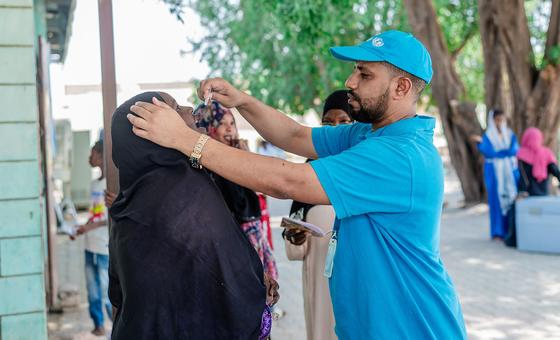
UN partners are on the ground responding with cholera treatment centres, but overcrowding, poor sanitation, limited access and the ongoing rainy season are accelerating the spread of disease and restricting aid delivery.
Nonetheless, on 10 August, a new vaccination campaign supported by the World Health Organization (WHO) began in Khartoum State, targeting 1.1 million people.
Guterres deeply saddened by death of Colombian presidential candidate
Secretary-General António Guterres released a statement on Monday expressing his deep sadness over the death of Colombian presidential candidate and former senator, Miguel Uribe, sending condolences to his family and the Colombian people.
Mr. Uribe’s death followed two months in intensive care after he was shot multiple times during what was reportedly a targeted attack at a campaign rally in the capital of Bogotá on 7 June.
UN High Commissioner for Human Rights, Volker Türk, also released a statement expressing his shock and sadness over the death of the presidential candidate.
The top UN officials both noted the active investigations are ongoing into the shooting. A teenager who is believed to have carried out the attack has been arrested but the motive is still unclear, according to news reports.
Mr. Türk stressed that this death “is a stark reminder of the importance that Colombia’s upcoming elections be conducted with respect for the lives of all, free from violence and in a climate that allows for safe and inclusive participation.”
The UN rights chief said his office in Colombia will continue to assist Colombian authorities and civil society in their human rights work ahead of the upcoming election.
In the same vein, the Secretary-General urged Colombia’s authorities to take all necessary measures to ensure a peaceful election and security for all candidates taking part.
Let’s hear it for the Caribbean’s own steelpan
11 August marks World Steelpan Day, celebrating the exuberant musical instrument that originated in Trinidad and Tobago and is now enjoyed worldwide.
The steelpan, otherwise known as a steel drum, has roots in the early 20th-century carnival percussion groups of the Caribbean islands and is played with rubber-tipped sticks.
The UN recognises the joyous steelpan for its rich cultural and historical significance as well as its role in promoting sustainable development and diversity.
In honour of the day, the UN General Assembly is encouraging activities that raise awareness of the cultural significance of the beloved instrument and its connection to the Sustainable Development Goals (SDGs).
This celebration highlights how music and culture can foster inclusive and sustainable communities worldwide.