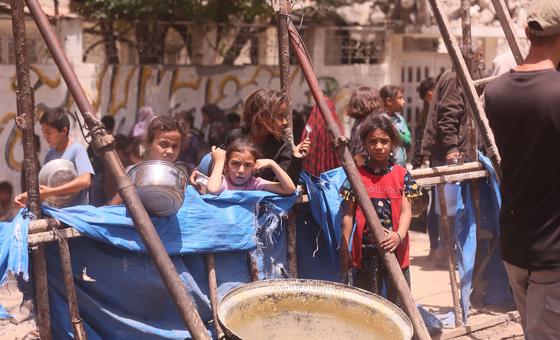
Gaza: Ceasefire urgently needed as civilians left with ‘no safe place’ to go

“We are witnessing a dangerous escalation in Gaza City, where Israeli forces have stepped up their operations and ordered everyone to move south,” said the Humanitarian Country Team in the Occupied Palestinian Territory.

Nearly one million people are now left with no safe or viable options – neither the north nor the south offers safety.

The warning comes two weeks after famine was confirmed in Gaza Governorate.

Starving and exhausted

According to latest figures from the World Health Organization-led Health Cluster, 361 Palestinians have died due to malnutrition since the war began nearly two years ago, including 130 children.

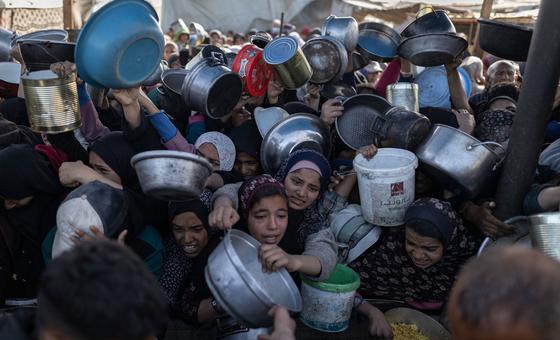
Over half a million people are in living with catastrophic conditions marked by starvation, destitution, and death.

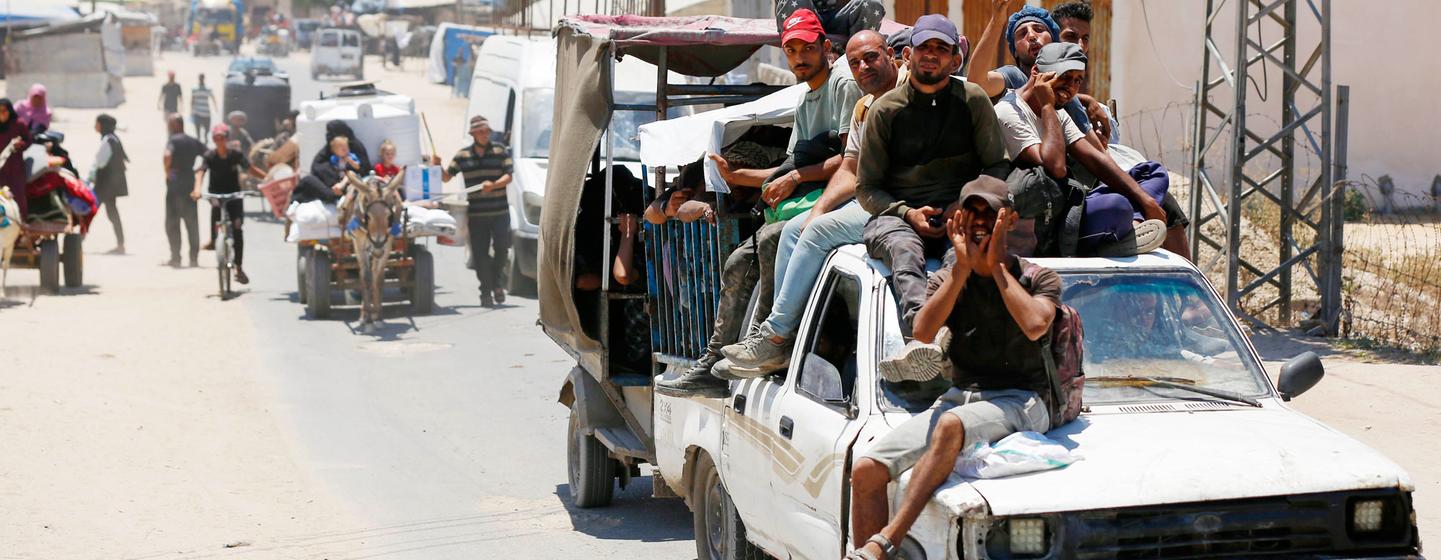
Civilians who try to leave northern Gaza face dangerous and barely passable roads, overcrowded shelters, and prohibitive transport costs – sums that most families simply cannot afford.

“Survivors in Gaza are exhausted,” aid agencies said, underscoring that both civilians and the health infrastructure they rely on “must never be targeted.”

Hospitals overwhelmed

Hospitals are overwhelmed and collapsing under the strain.

Al-Shifa and Al-Ahli facilities in Gaza City are operating at nearly three-times capacity, with mass casualty incidents averaging eight per day.

If a wider Israeli offensive proceeds, the Gaza Strip could lose half its remaining hospital beds, the health agencies warned.

Aid restrictions continue

The Humanitarian Country Team also noted ongoing Israeli impediments on aid, stating that “current levels of humanitarian support are wholly insufficient.”

Fuel, water, and supply routes must remain open and uninterrupted, agencies said, warning of “devastating consequences” if access is further obstructed.

“To families in Gaza: the humanitarian community will remain in Gaza City for as long as we can and will remain across the Strip, doing all we can to bring aid and deliver lifesaving services,” they said.

To the international community: Act. Call for an immediate ceasefire. Uphold international humanitarian law, including the release of hostages and those arbitrarily detained. This catastrophe is human-made, and responsibility rests with us all.”

Source link

‘Nuclear weapons have no place in our world,’ UN chief tells mayors in Nagasaki

Inspired by the hibakusha, survivors of the atomic bombings at the end of World War Two who turned their suffering into a powerful appeal for peace, António Guterres renewed his call for a world free of nuclear weapons in a video message to the 11th General Conference of Mayors for Peace in Nagasaki.

United against nuclear weapons, the conference is an opportunity for mayors from around the world to discuss and adopt key priorities in support of global denuclearisation.

‘No place in our world’

“Nuclear weapons have no place in our world,” said Mr. Guterres in his video-message, as they only offer the “illusion of safety and the certainty of devastation,” he said.

Calling for the total elimination of nuclear weapons, the Secretary-General urged all participants at the conference to “keep mobilising communities, inspiring young people, and building peace from the ground up.”

“I urge all States to recommit to nuclear disarmament,” he said.

A better world

I commend Mayors for Peace for your unwavering commitment to a better world,” said Secretary-General, as the organization aims at creating real momentum for the realisation of a peaceful world without nuclear weapons.

In honour of the hibakusha, and in the memory of the victims of Hiroshima and Nagasaki, Mr. Guterres made an impassioned call for action to end the nuclear threat once and for all.

Read more about the work of the hibakusha here in previous UN News coverage, and listen to this extraordinary story of survival in our Lid is On podcast:

Source link

Gaza First Person: ‘The best of humankind in a place abandoned by humanity’

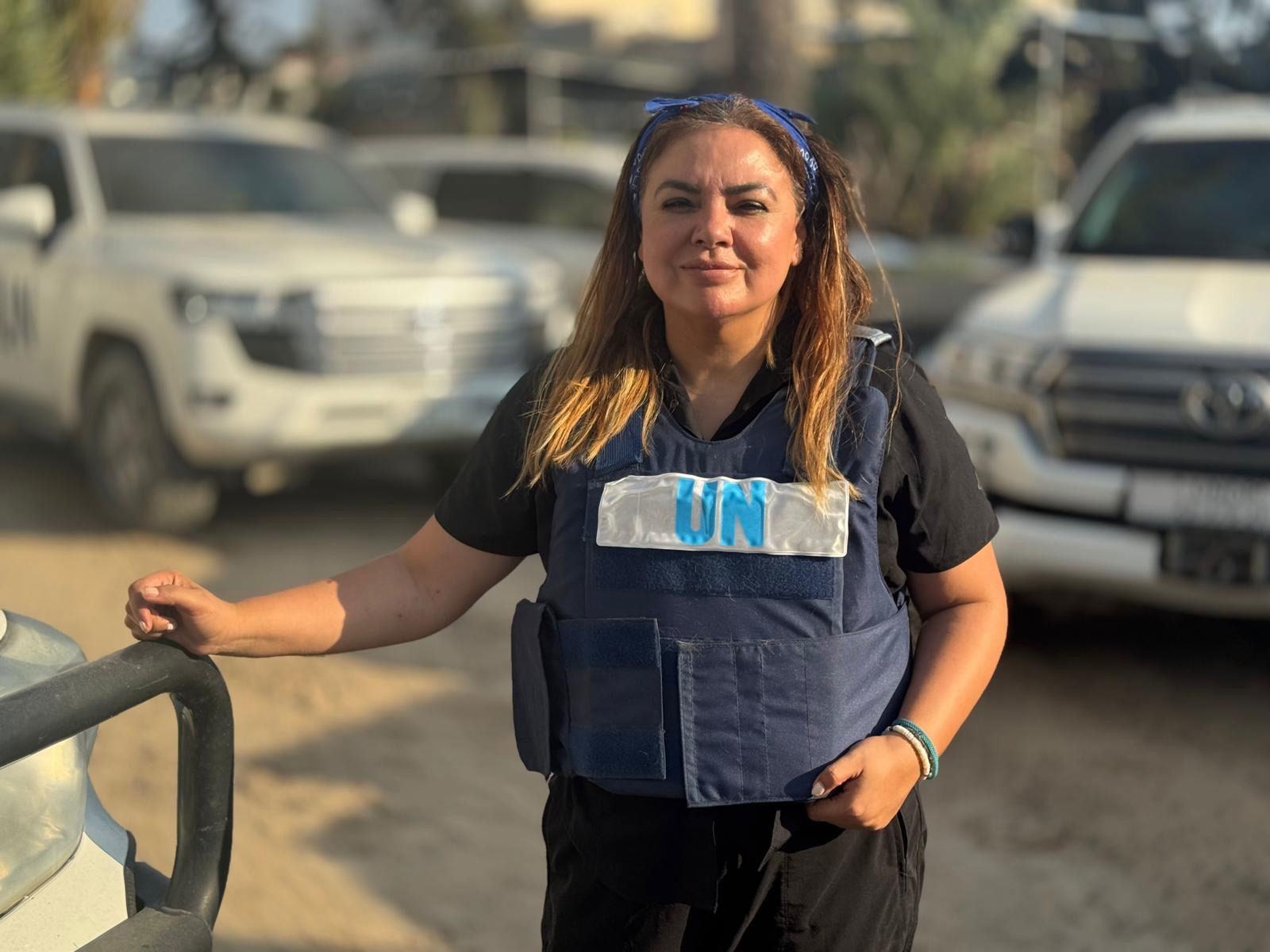
Sonia Silva has been working in the embattled enclave since the beginning of November 2023, just one-month after the terror attack by Hamas and other armed groups in southern Israel that sparked the brutal conflict.

She spoke to UN News about the misery people have experienced in recent days.

“In my one year and eight months in Gaza, this past week has been by far the worst. The only comparable experience was the Rafah incursion in May 2024, when the border was closed, but this week has been significantly more intense.

I live in UNICEF accommodation in Deir Al-Balah, a city in central Gaza.

Sonia Silva, UNICEF Head of Office in Gaza.

When you drive from south to north in the Gaza Strip, it looks as if there has just been a major natural disaster. The level of destruction has reached an unprecedented scale, devastating civilian infrastructure and entire neighborhoods.

Buildings are no longer standing. People are living in destroyed houses, tents and on the streets.

Seeing humanity in this condition is scary and fills me with a sense of doom and fear.

Terrifying offensive

Deir Al-Balah is or had been different.

It’s one of the few places in the Gaza Strip where urban infrastructure remains. It has been somewhat spared, compared to other areas.

That is until last Sunday evening, when a terrifying offensive was unleashed on Deir Al-Balah.

I have yet to see the level of destruction over the last few days, but reports indicate it is significant.

A building was destroyed by a rocket blast only 100 metres from where I normally sleep.

But, for 72 hours my colleagues and I barely slept. The explosions and gunfire were incessant.

It is stronger than you.

Your body knows something is wrong and is in an upper state of alertness.

I was not scared, but I was deeply concerned about my national colleagues who were very close to the crossfire and who were trying to comfort young children.

Families evacuate from Deir Al-Balah in the Gaza Strip

I am fortunate because I am an international civil servant and am entitled to a break. Every 4 to 6 weeks, I get to leave, I get to rest, I get to recharge my batteries.

But, not my Palestinian colleagues and their families, who have lived through this for more than 21 months, who have lost everything, their loved ones and belongings.

They don’t get to switch off.

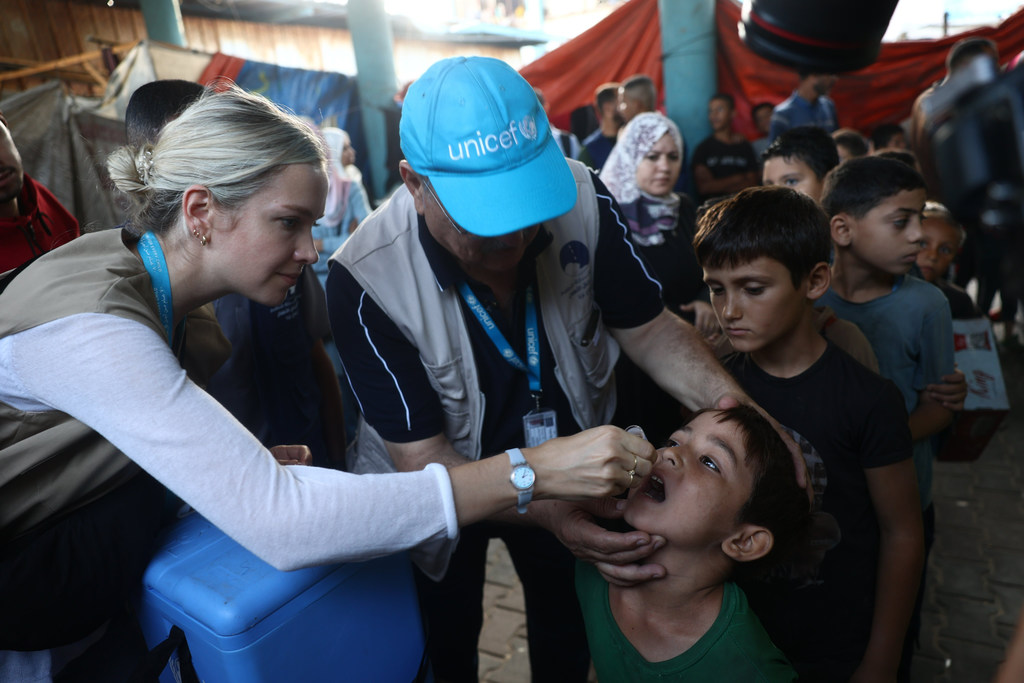
UNICEF staff vaccinate children against polio in September 2024.

The ongoing shortages of food are making things worse. It affects the entire population, including our frontline partners, our national colleagues and all the supporting staff.

What has struck me most about Gaza is that despite the hardship, colleagues keep going, colleagues keep teasing each other, colleagues who have lost everything show the utmost generosity and solidarity.

I would like to pay tribute to all of my colleagues and our partners who are hanging on to fragments of hope for a better life but still keep essential services running.

They are the best of humankind in a place abandoned by humanity.”

Source link

Gaza ‘hungriest place on earth’, as Israel continues stranglehold on aid

“Gaza is the hungriest place on Earth,” OCHA spokesperson Jens Laerke told reporters in Geneva, stressing that it is the only defined territory in the world where the entire population is at risk of famine.

The aid operation that we have ready to roll is being put in an operational straitjacket that makes it one of the most obstructed aid operations, not only in the world today, but in recent history,” he said.

Mr. Laerke explained that out of nearly 900 aid trucks that were approved to enter from the Israeli side since the reopening of the Kerem Shalom border crossing between Israel and the war-torn enclave ten days ago, less than 600 have been offloaded on the Gaza side.

An even lower number has been picked up for distribution in Gaza, he said, pointing to the “congested, insecure” routes which humanitarians are assigned to use by the Israeli authorities, as well as “significant delays” in the approvals.

Drip-feed of desperation

The OCHA spokesperson stressed that the limited number of truckloads coming in is a “trickle”.

It is drip-feeding food into an area on the verge of catastrophic hunger,” he insisted.

Mr. Laerke added that many of the trucks were “swarmed by desperate people” on the way.

“It’s a survival reaction by desperate people who want to feed their families,” he said, adding that the aid on the trucks “had been paid for by the donors to go to those people”.

“I don’t blame them one second for taking the aid that essentially is already theirs, but it’s not distributed in a way we wanted,” he explained.

On Wednesday, hungry crowds overran a UN World Food Programme (WFP) warehouse in Deir Al-Balah in central Gaza, where limited stocks of wheat flour had been pre-positioned for use by the few bakeries able to resume operations.

The incident reportedly left two people dead. In a statement WFP reiterated warnings over “the risks imposed by limiting humanitarian aid to hungry people in desperate need of assistance”.

‘Paid for’ aid must be delivered

OCHA’s Mr. Laerke insisted once again on the fact that the UN and partners have “tens of thousands of pallets of food and other life-saving assistance” ready to enter Gaza to relieve the suffering.

The aid has been paid for by the world’s donors, who expect us on their behalf to deliver it. It is cleared for customs, it is approved and it’s ready to move,” he said.

A new US and Israeli-backed aid distribution scheme run by a private entity called the Gaza Humanitarian Foundation started operating independently of the UN this week in the Strip.

On Tuesday at least 47 Palestinians were reportedly shot and injured trying to collect aid from its distribution facility in the south, according to information received by UN human rights office, OHCHR.

Aid scheme to bypass UN ‘not working’

In reaction to the incident OCHA head in the Occupied Palestinian Territory Jonathan Whittall warned on Wednesday that the US-Israeli distribution scheme was “engineered scarcity: four distribution hubs located in central and southern Gaza, secured by private US security contractors, where those Palestinians who can reach them will receive rations.”

Mr. Laerke told reporters that this “alternative modality” is “not working” as it does not meet people’s needs.

He added that it constitutes a “violation of basic principle of impartiality”, and that criteria for getting aid have to be based on need, and not the ability to walk for kilometres to a distribution point.

It creates chaos, and it creates a situation that is extremely dangerous for people,” Mr. Laerke said. “Even if you enter one of those distribution points, pick up a package, the minute you’re out of it… Are you a target for looters again? Yes, you are.”

The OCHA spokesperson reiterated calls by the humanitarian community for the reopening of all crossing points into Gaza, to enable delivery from all corridors, including from Jordan and Egypt.

“We need to be able to deliver food directly to families where they are,” as has been the case in the past, he said.

Highlighting the challenges for humanitarian access, Mr. Laerke said that over 80 per cent of the Gaza Strip is currently within Israeli militarized zones or under displacement orders. Since the ceasefire between Israel and Hamas collapsed on 18 March nearly 635,000 people in the enclave have been displaced yet again.

Source link