First Person: ‘Tomorrow is too late’ to scale up humanitarian aid in Haiti

Women and girls face the brunt of this crisis. Gender-based violence (GBV) such as gang rape is rampant, particularly in the capital Port-au-Prince, and is exacerbated by precarious conditions in displacement camps.

Yet, recent funding cuts have shut down centres for sexual and reproductive health and GBV services. Displacement and insecurity make the services that do exist often too difficult to access.

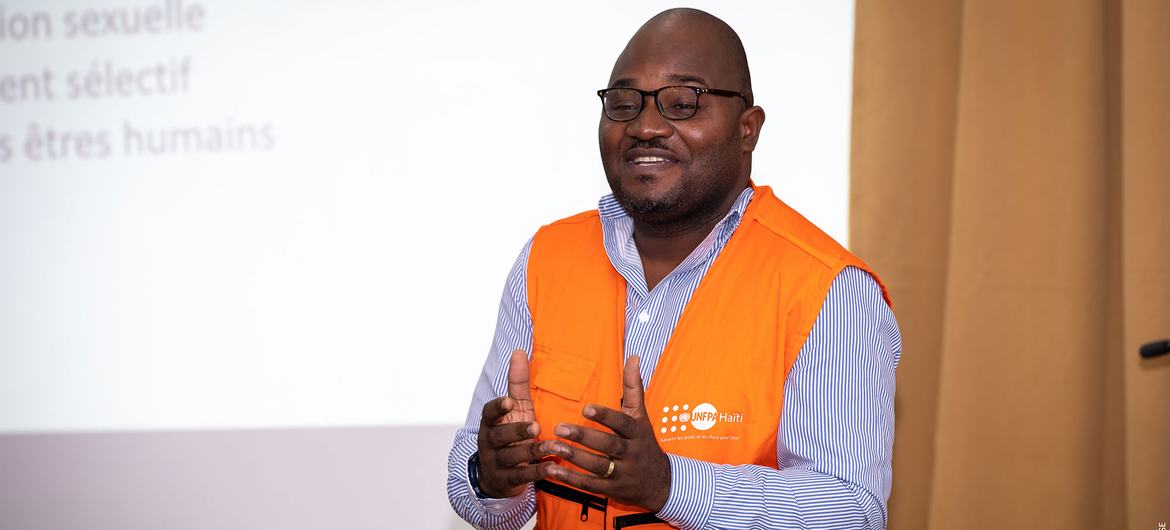
Christian Vovi, the UN reproductive health agency’s (UNFPA) Humanitarian Coordinator in Haiti, has been working in the Caribbean island nation since 2022.

He sat down with UN News ahead of World Humanitarian Day to discuss this crisis and his perspective as a humanitarian on the ground.

© Christian Vovi Lubanzadio

Christian Vovi, UNFPA Humanitarian Coordinator in Haiti.

Remote work

“Sometimes there is the possibility of an attack, so we are obliged to work from home.

This situation has limited our capacity to go to the field to see the affected people, to meet with women, to observe the situation in the camps and communities, so security is a barrier for us sometimes.

We can organize meetings virtually, meet with women online and with the partners to follow up and monitor activities.

Increase in GBV cases

Continued displacement creates new GBV needs that humanitarian actors must respond to, despite the limited financial capacities. There is a continuous increase in the number of reported cases of GBV.

In some of the cases we manage, we hear about how gang members arrive in the community, burn houses and then rape a mother or father in front of the family.

When you talk with women, they are desperate as they struggle to secure even the most basic necessities.

Because women don’t have access to financial resources, there has been an increase in the cases of prostitution.
© PAHO/WHO/David Lorens Mentor

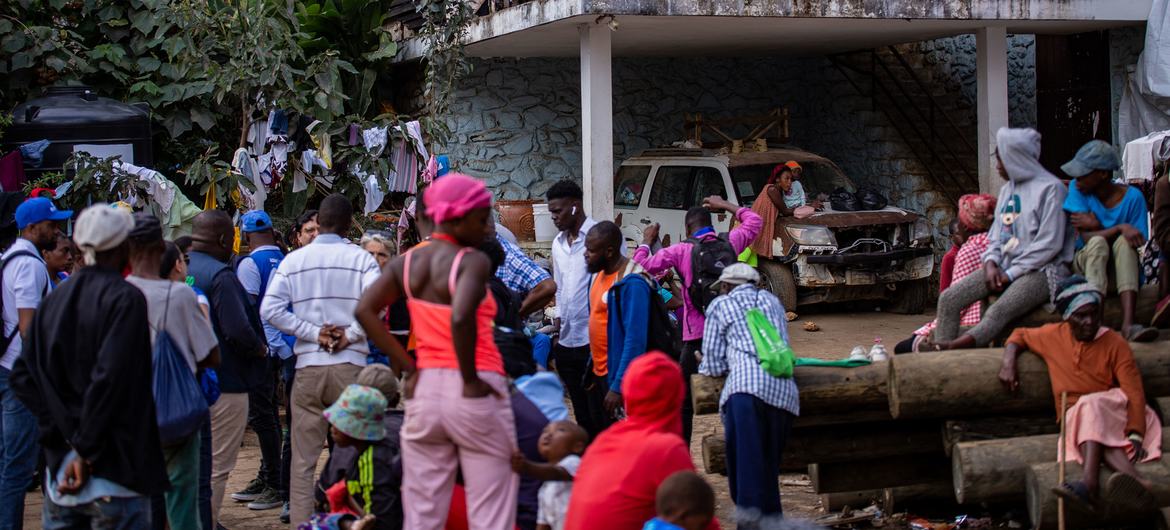
People gather at a site for displaced people in Port-au-Prince, Haiti.

Desperate for services

Protection services are urgently needed. We have more than 100 sites for displaced people, but only 11 or 12 sites are covered with the GBV protection services.

There is also the issue in terms of shelter, because when we have many families living together in a small room, there is a larger risk of GBV.

Urgent funding needs

UNFPA distributes dignity kits, which contain items that women need, and provides other goods and services, but it’s not enough, we need more.

In Haiti, there are now over one million displaced people. Since 26 per cent are women of reproductive age, we need to mobilise millions of dollars so we can meet their urgent needs.

In 2020, the US provided around 65 per cent of the humanitarian funding for the response plan in Haiti. But with the US funding cuts, we are no longer able to provide services to 25,000 women and girls in certain displacement sites.

The US also funded 100 per cent of the post-rape kit procured since 2023, so now, our stocks of these kits are very low.
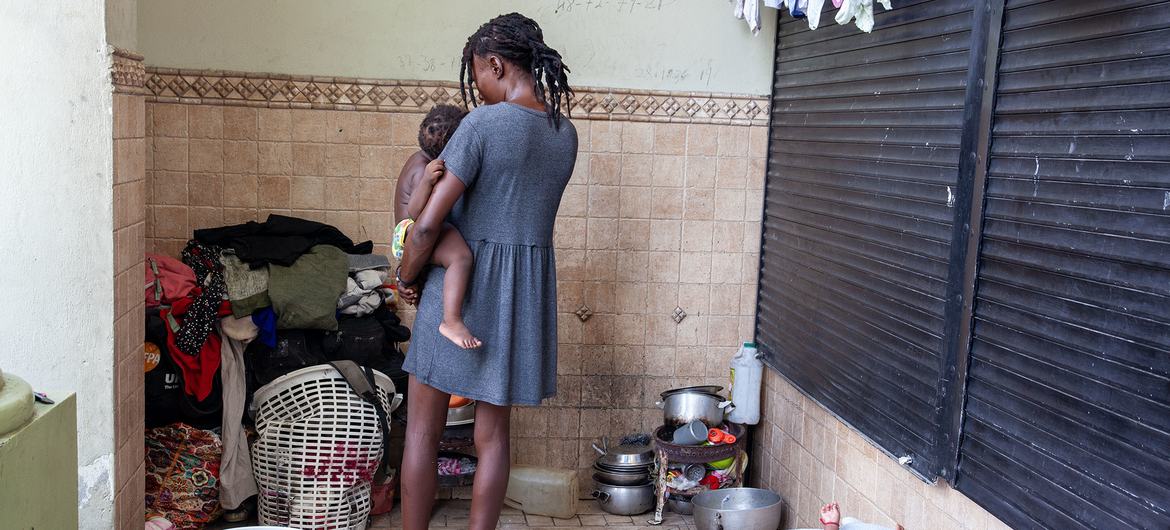
A woman says she was raped while fleeing from gang violence with her six children and while she was four months pregnant.

Work of UNFPA despite limitations

Despite these funding and access limitations, UNFPA and its partners continue to stay in Haiti.

UNFPA leads the GBV coordination mechanism. We continue to provide remote support for the GBV cases through the hotline to ensure that the cases can access services despite the security limitations.

We continue to ensure that if movement is limited, the affected people can access the services, psychosocial support and information on available services through the telephone hotline.

Call to action

The international community and donors must fill the large funding gap in the Haitian humanitarian response plan.

The Haitians think that their situation is neglected because they believe that the humanitarian international community has all the assets and funding to stop the violence and assist the affected people.

The government, diplomats and the international community should advocate now for a clear end to the current violence and to stop the retaliation against women and girls in Haiti.

It is important to act now because for me, tomorrow is too late regarding the humanitarian need and the living conditions of the women in the displacement sites.”

Source link

First Person: On Ukraine’s frontlines, humanitarians risk all to bring hope

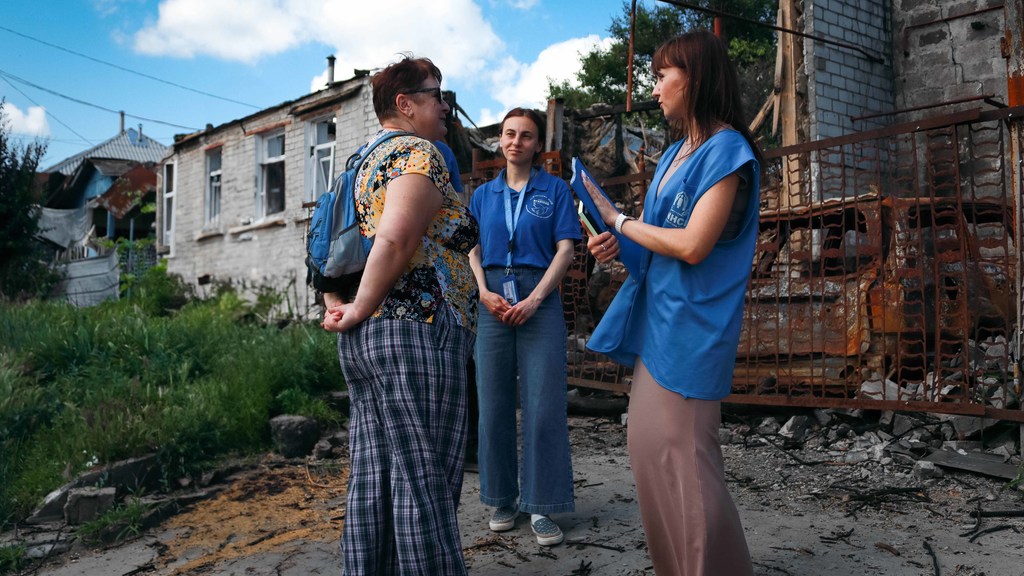
“Sometimes it feels like we’re swimming against a current that never slows down,” says Ms. Tiutiunnyk, a protection specialist working in Ukraine for the UN Refugee Agency (UNHCR). Viktoria herself is a displaced person from Luhansk, forced to flee following the onset of hostilities.

“I was not a part of the humanitarian community”, she recalls, speaking about the early days of the invasion, ahead of World Humanitarian Day.

“I was not with the UNHCR at that time. I was a civil servant, but I think those events that occurred in my life and the life of the whole country were the trigger for me: I switched to the humanitarian sector, and I joined UNHCR.”

With evacuations ongoing in eastern Ukraine, Ms. Tiutiunnyk is now helping support evacuees and newly displaced people in the Dnipro region, as well as those who remain in frontline areas.

Since 1 August last year, more than 192,000 people have left the region, either on their own or with support from authorities and volunteers – and UNHCR is providing them with much-needed assistance. 

Viktoria Tiutiunnyk, a protection associate working in Ukraine for the UN Refugee Agency, UNHCR.

‘I’m where I’m meant to be’

“When I meet those people after an attack or at a site where they are currently staying, it reminds me why I do this work,” says Ms. Tiutiunnyk, who recently returned from a field mission. “When they open up, when they share their stories, what they’ve gone through, it moves me so deeply. And at that moment, I truly feel like I’m where I’m meant to be.”

Many displaced people are under extreme stress; their lives are filled with fear and anxiety. Some fled in a hurry without passports and other essential documents, while others urgently need money to buy food and medicine.

UNHCR’s emergency response includes psychological support, legal aid, and cash assistance. “We also provide support to some of the collective sites where people can stay for a while until they find other places,” explains Ms. Tiutiunnyk.

With the war now in its fourth year and 3.7 million people internally displaced, humanitarian needs continue to escalate. “The war goes on, the attacks continue, the needs keep growing,” she says.

‘This should not be the new normal’

Providing assistance on the frontlines often means working under dangerous conditions, including drone attacks and aerial strikes: as she spoke to UN News, an air-raid siren blared in the background.

“It is stressful for sure. For a lot of people, now it’s their daily life. They are remaining in the frontline areas despite daily shelling and attacks. Why? Because this is their home.”

If I can bring them hope, it fills my life with some meaning

In their work, Ms. Tiutiunnyk and her colleagues speak daily with people who are deeply traumatized and anxious – many of them plead with humanitarian workers not to abandon them.

“I’m the same. I’m also displaced, and if I can bring them that hope, that small assistance, contribute at least to stabilizing their situation, it fills my life with some meaning.

“Some people say they get used to the air-raid alerts and the situation in general. But you cannot get used to this, right? This is not normal. It shouldn’t be the new normal,” she adds.

When asked what keeps her going, Ms. Tiutiunnyk says she draws inspiration from her colleagues – people she often spends more time with than her own family – and from her managers, who, as she puts it, “work around the clock.”

“When I see that they can continue, why can’t I continue? You need to think, are we pursuing a common goal? Yes, we are. So, we’re in the right place.”

Source link

First Person: From aid worker to refugee and back in war-torn Sudan

Sudan is one of the world’s largest and most complex humanitarian crises, with more than 30.4 million people – over half the population – urgently needing humanitarian assistance, yet the 2025 Sudan humanitarian needs and response plan is severely underfunded, with only 13.3 per cent of the required resources received so far.

Forced to flee the country with his family after the war intensified, Mr. Ibrahim returned to help people affected by the war in Darfur. Ahead of World Humanitarian Day, marked annually on 19 August, he described his journey, from aid worker to refugee and back again to Sudan.

“I was at home helping my daughter revise for her grade six exams, scheduled for the next day. Then, out of nowhere, the sound of heavy gunfire shattered the silence in my hometown, Zalingei, the capital of Central Darfur state, which remains gripped by insecurity and critical shortages of basic services.

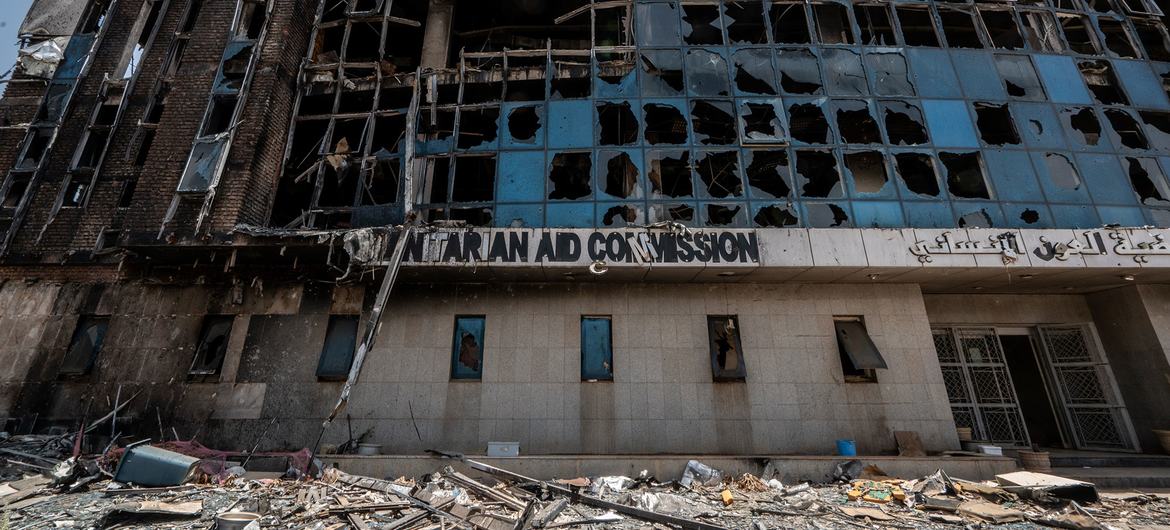
The former Humanitarian Aid Commission Building in Khartoum, Sudan.

At first, I thought the gunfire would pass quickly. I rushed to stock up on food supplies and water, enough for six days. But, the streets became battlegrounds. All I could do was try to keep my family safe.

Despite the chaos, I continued to work. Electricity and Internet access were sporadic, but I kept my phone charged to send daily updates to the OCHA Head of Office. It gave me purpose amid the uncertainty.

Eventually, it became too dangerous to stay.

The journey of displacement

On the 39th day, we fled. Our family of 10 began a harrowing journey with no clear destination, only the desperate need to escape. We left behind more than just walls and belongings; we left behind a life built with love and hope.

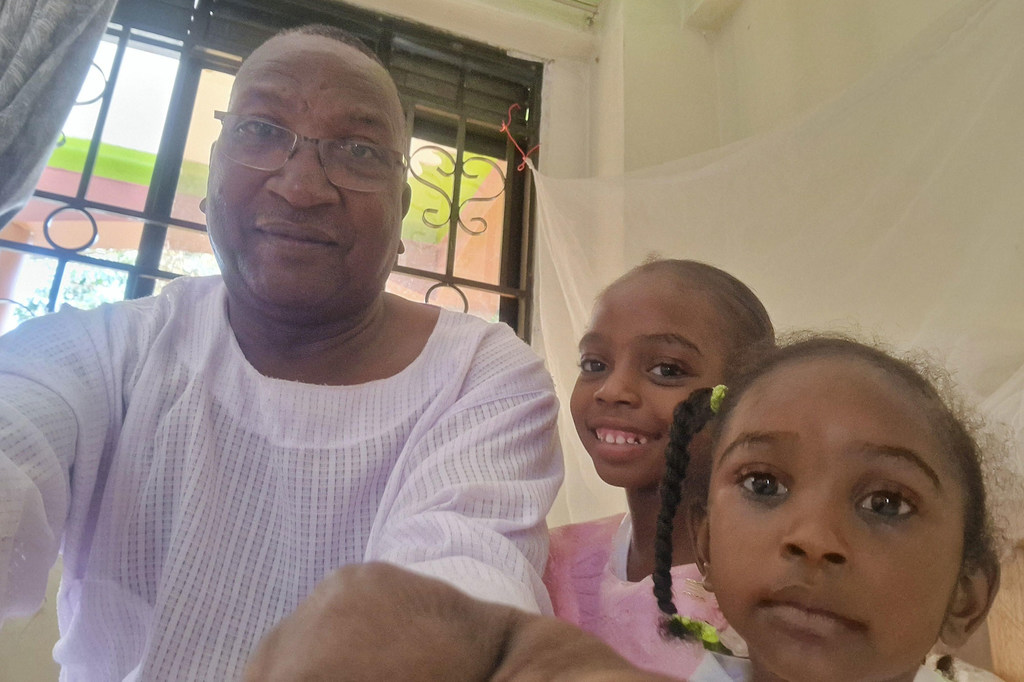
Adam with two of his daughters in Uganda.

Our journey took us first to Nyala in South Darfur, then to Kosti in White Nile State. From there, we crossed the border into neighbouring South Sudan and eventually reached Uganda, a country I had heard offered stability and a good education system for children. The journey by car took 23 days. My children had no passports, and there were no refugee camps for Sudanese nationals at the time.

To my relief, migration authorities in both countries were kind and supportive. In Kampala, we rented a house and received asylum status within three days. The moment I held our refugee cards, I exhaled deeply and thought ‘we’ve made it.’

I enrolled my children in school and began working online, finally finding a sense of stability.

Here I was, an aid worker now a refugee, needing the same support I once provided to others.

Returning to Zalingei

Months later, I faced a difficult decision. Do I stay with my family or return to Darfur and continue the work I had done for years? I chose to return.

Leaving my family behind was incredibly hard, but their safety was paramount.

I returned to Zalingei with a renewed sense of duty to serve those still trapped in the hardship I had endured. I was also the sole breadwinner for my family and needed to ensure they could survive in Uganda.

My hometown changed

When I arrived in Zalingei, I barely recognised it. Buildings were scarred with bullet holes.

I found another family sheltering inside our house, a doctor and his family whose own home had been destroyed. I let them stay, setting aside a small section for myself and a colleague. The house had been looted. Windows were gone and our belongings had vanished. I had hoped to find my children’s school certificates, photos, any documents left behind. But, they were gone.

Everyone was armed, even children as young as 15. People were tense, traumatised and always bracing for the next wave of violence.

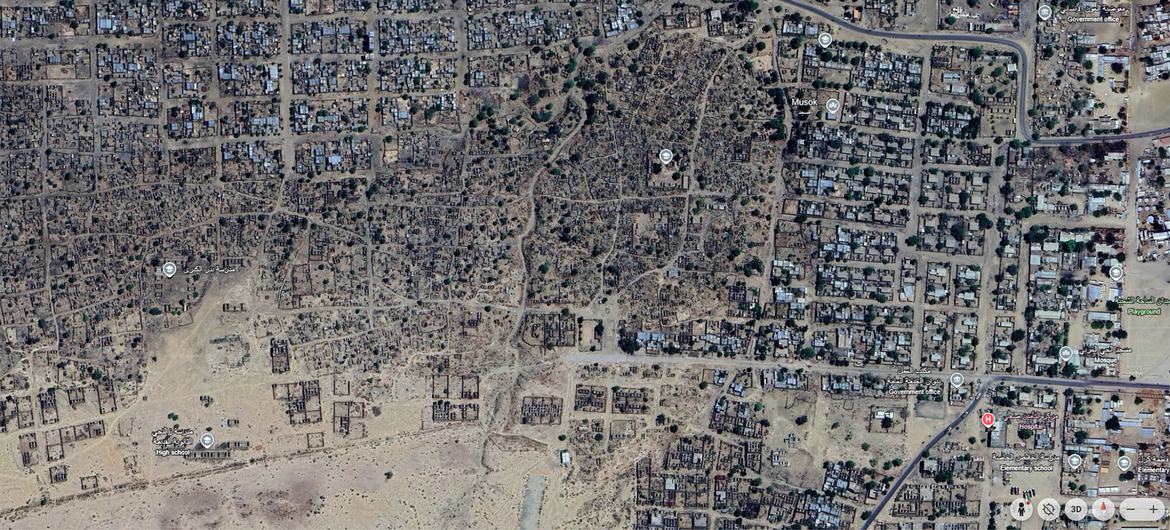
Google Earth image of Zalingei as of 21 March 2025 with visible signs of house destruction on the southern part of the city.

Machine guns and wreckage in West Darfur

I didn’t stay long in Zalingei. Soon I was called to El Geneina in West Darfur, a town devastated by violence, and whose people desperately needed humanitarian support.

El Geneina’s streets were strewn with the wreckage of burned-out military vehicles. Armed men patrolled in pickup trucks mounted with machine guns.

The humanitarian needs were immense. People lacked food, shelter, household essentials, healthcare, clean water and protection, but we never had enough resources for them.

Family, sacrifice and hope for Sudan

It’s heartbreaking to witness the suffering caused by the recent donor funding cuts. Many organizations have been forced to scale back their operations, leaving countless people without help.

It’s heartbreaking to witness the suffering caused by the recent donor funding cuts.

Still, we did all we could.

Between 2023 and 2025, we reached more than 800,000 displaced people with critical assistance, in West and Central Darfur.

I also went on to work with OCHA colleagues in Chad to coordinate cross-border humanitarian convoys into Darfur.

These convoys were lifelines, delivering food, medicine and supplies to communities cut off by conflict.

Today, I remain in Sudan. 

My family is still in Uganda. I visit them once a year, but the separation is painful.”

Source link

First Person: Echoes of war as aid arrives in Syria’s historical city

Eleonora Servino was on the first UN aid convoy to Suweida, which saw a recent escalation of violence that left many dead and thousands displaced.

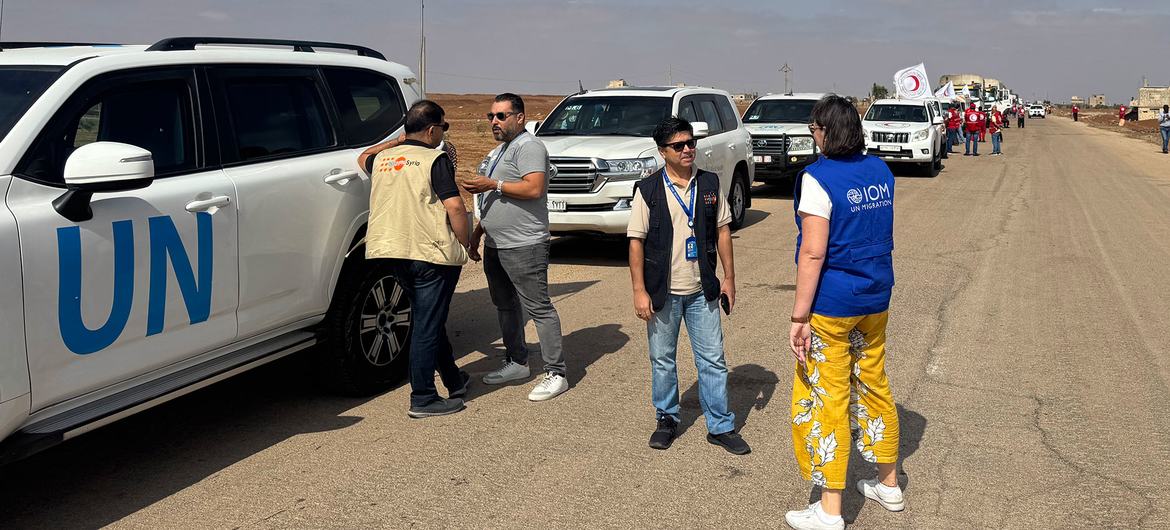
As the International Organization for Migration (IOM) chief of mission to Syria, Ms. Servino said the difference on the road to Bosra is stark.

“You know that feeling when you visit somewhere as a tourist, how the memories embed themselves in your mind? Happy, peaceful places filled with stunning sights, delicious food, warm smiles and a relaxed mood. That’s how I remember Bosra, Syria, 20 years ago.

©UNESCO/Véronique Dauge

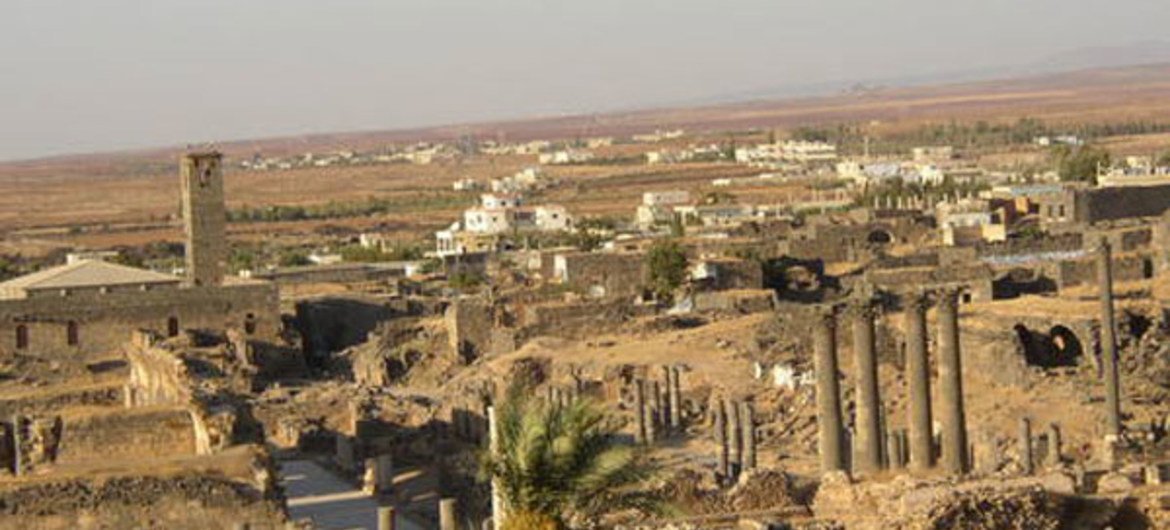
The ancient city of Bosra, Syria, a UNESCO World Heritage site, in 2015. (file)

Rivals ancient Italian relics

I went to see its ancient Roman theatre, a [UN Educational, Scientific and Cultural Organization] UNESCO World Heritage site. I recall the perfectly preserved brickwork in the tunnels leading to the stage, the intricate carvings.

Everything rivalled, even surpassed, the monuments in my native Italy. I felt at home, with a shared history. 

Recently, I returned for very different reasons.

IOM chief of mission to Syria Eleonora Servino (right) on the first UN aid convoy to the city of Sweida.

Tourists long gone

Syria has endured 14 years of brutal civil war, displacing millions. The tourists are long gone. But now, with the war over and stability slowly returning, people are coming back. My organisation, IOM, has just been officially allowed to resume operations. One of my first acts as chief of mission ad interim was to take the road back to Bosra.

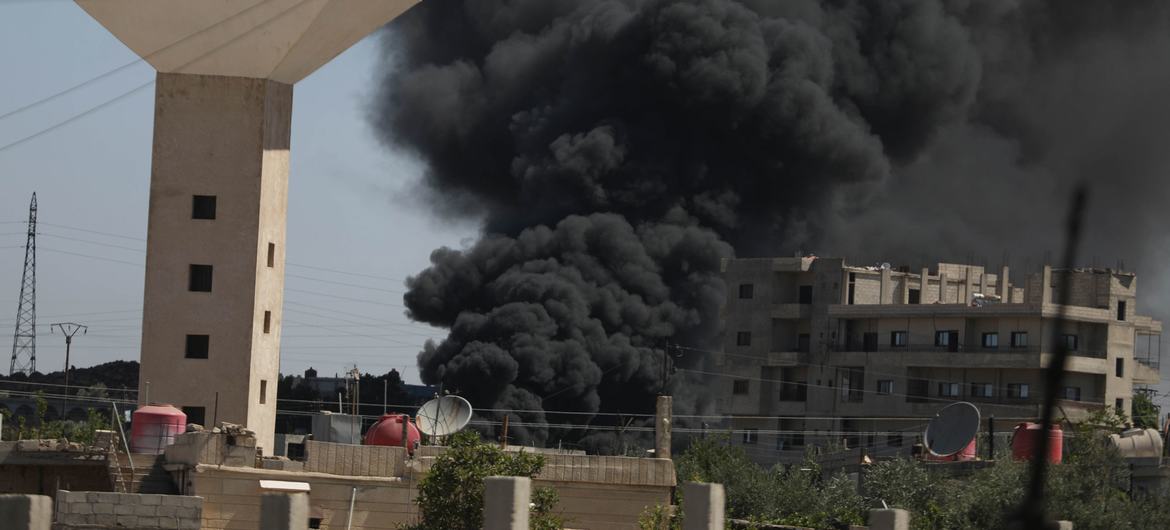
It’s the only route to As-Sweida governorate, which recently experienced weeks of violence, leaving many dead and over 168,000 displaced.

I was part of the first UN assessment mission. With support from OCHA [UN humanitarian agency] and the Syrian Arab Red Crescent, the convoy delivered 40 truckloads of aid from various agencies and organizations.

© UNOCHA/Ali Haj Suleiman

Hostilities erupt in Sweida in July 2025. (file)

‘Signs of violence everywhere’

Signs of violence were everywhere. The streets were eerily quiet in Sweida. No traffic. None of the hustle and bustle you’d expect in a city that once had a population of over 70,000.

Burnt out buildings, wrecked cars and a pervading sense of tension dominated the landscape. 

We visited three areas where internally displaced people have found shelter, either within host communities or in communal centres. People have opened their homes to those forced to flee. But, the lack of electricity, water, and the blocked main road are straining resources, making everything more difficult despite the goodwill and humanitarian spirit of ordinary citizens.

‘People are still in shock’

The need for humanitarian assistance is clear, from what we saw and what we heard. People are still in shock. We spoke to individuals who have lost so much: homes, families, possessions, livelihoods.

Our DTM (displacement tracking matrix) teams are on the ground conducting regular surveys. The needs are basic yet essential: food, cash, hygiene items, clothing, cooking sets, fuel and shelter materials.

We are a vital part of humanitarian community, advocating for and supporting those displaced by the conflict. We will continue working to keep access open and improve it, ensuring people get what they need.”

Source link

First Person: Documenting despair and finding hope amidst the rubble of Gaza

Some 21 months have passed since the 7 October armed attacks on Israel which sparked the current brutal conflict.

Thousands have died and much of Gaza has been laid to waste, but life must continue, according to the correspondent, who is remaining anonymous for security reasons.

“Those who live here in Gaza don’t need long explanations to understand the meaning of this war.

It is enough to listen for a few minutes: Planes buzz incessantly overhead, and airstrikes silence everything except fear which, although invisible, fills every space between our tents and seeps into our bodies.

© UNICEF/Mohammed Nateel

A young boy is rescued after he was caught in an attack on a school shelter.

At night, there’s absolute darkness except for the flashes of bombing.

We sleep knowing that waking up is not guaranteed.

Every morning in Gaza is a new attempt to live, and every evening a challenge to survive. This is the harsh reality we live in.

I am one of more than two million Palestinians living under the burden of displacement. I document stories of war and despair while experiencing their full bitterness.

Since our home was destroyed in November 2023, the tent has become our safety. My family, once part of my private world, is now part of the stories I share with the world.

Here, life is simple and tragic.

Sleeping on the hard ground, cooking over firewood and the exhausting pursuit of a morsel of bread are no longer options, but a way of life imposed by the cruelty of war.

In the face of my eldest son, who is not yet 14, I see a reflection of a war that has stolen his childhood and imposed burdens on him greater than his years.

He has become an expert at water distribution routes, haggling for bread and carrying heavy gallons of water. I feel boundless pride in his courage, yet simultaneously a painful sense of powerlessness because I can’t protect him from what’s happening around us.

Oasis of hope

My wife is trying to create an oasis of hope for our other children. My two eldest daughters continue to learn online when the internet is intermittently working and to read whatever books are available.

My youngest daughter draws on worn pieces of cardboard while my youngest son, who is four, has no memory of anything other than the sound of explosions.

We stand helpless in the face of his innocent questions. There are no schools, no education, only desperate attempts to keep the brightness of childhood alive in them, in the face of a brutal reality.

More than 625,000 children in Gaza have been deprived of an education.

This is due to the destruction of schools and the lack of a safe environment in which to learn.

The future of an entire generation is threatened.

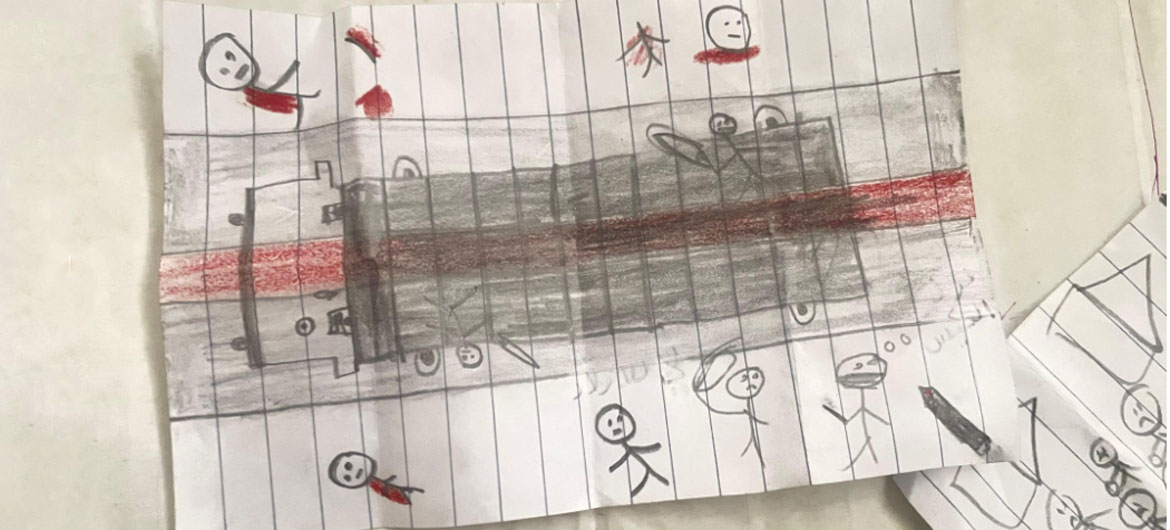
A drawing depicts people dying as they try to access food from a truck in Gaza.

Bearing witness

I work alongside other journalists. We wander between hospitals, streets and shelters.

We carry our journalistic equipment not only to document events, but also to be a voice for those whose voices have been silenced.

We film a child suffering from severe malnutrition, listen to the story of a man who has lost everything and witness the tears of a woman unable to provide food for her children.

We document a scene which is repeated daily: Thousands of people rush to reach a flour truck. They run after the trucks, collecting the last grains of flour from the ground.

They don’t care about danger as the hope of getting their hands on a loaf of bread is more precious than life.

Each time, casualties fall along the convoys’ routes and militarised distribution points.

We walk the streets, alert to every sound, as if we’re waiting for the end with every turn we make.

There’s no longer time for surprises or sadness, only constant tension and anxiety that has become part of the survivors’ DNA here.

This is the reality that cameras don’t capture, but it is the daily truth we try to explain to the world.

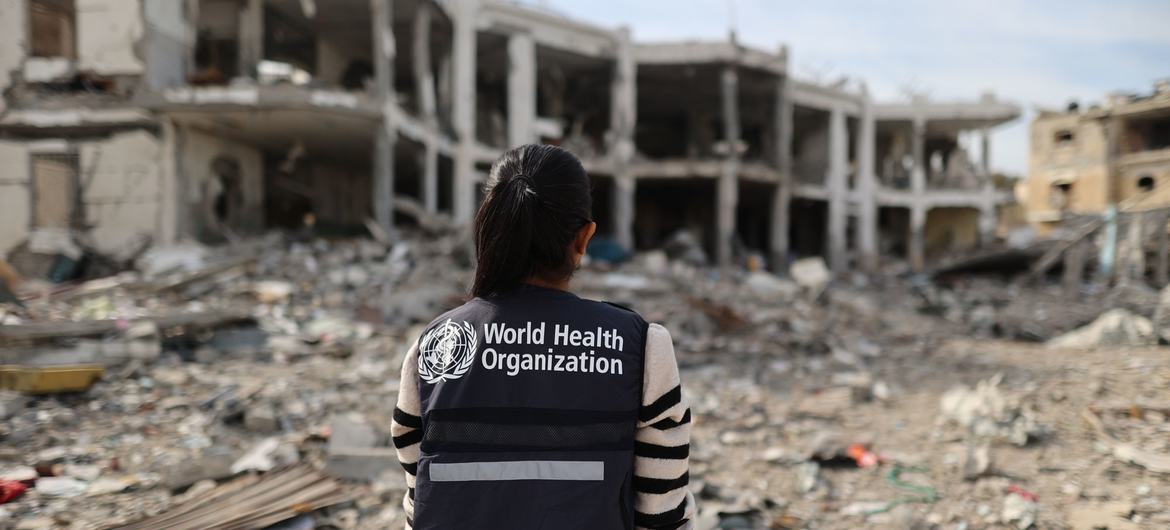
A WHO worker assesses a destroyed hospital in northern Gaza.

Tears of UN colleagues

We document the efforts of the United Nations and its various organizations.

I see staff sleeping in their cars to be closer to the crossings, and I see our UN colleagues crying as they listen to the stories of my fellow Gazans.

There is not enough aid. The crossings open and close abruptly, and some areas are deprived of supplies for days.

The western areas of Gaza City are overcrowded. Tents are spread out on every corner, on the sidewalks and among the rubble of destroyed homes, in dire conditions.

Empty markets

The value of the local currency has evaporated. Those with money in their bank accounts pay fees of up to 50 per cent to withdraw it, only to find themselves facing nearly empty markets. Whatever is available is being sold at exorbitant prices.

Vegetables are scarce, and when available, a kilogramme can cost more than $30. Fruit and meat are a distant memory.

The health system is in a state of complete collapse as 85 per cent of Gaza’s hospitals are no longer functioning and most dialysis and chemotherapy services have stopped.

Medications for chronic diseases are unavailable. I am unable to secure medicine for my parents, who suffer from diabetes and high blood pressure, and there is no hope of surgery which could save my brother’s arm, which was injured in an airstrike.

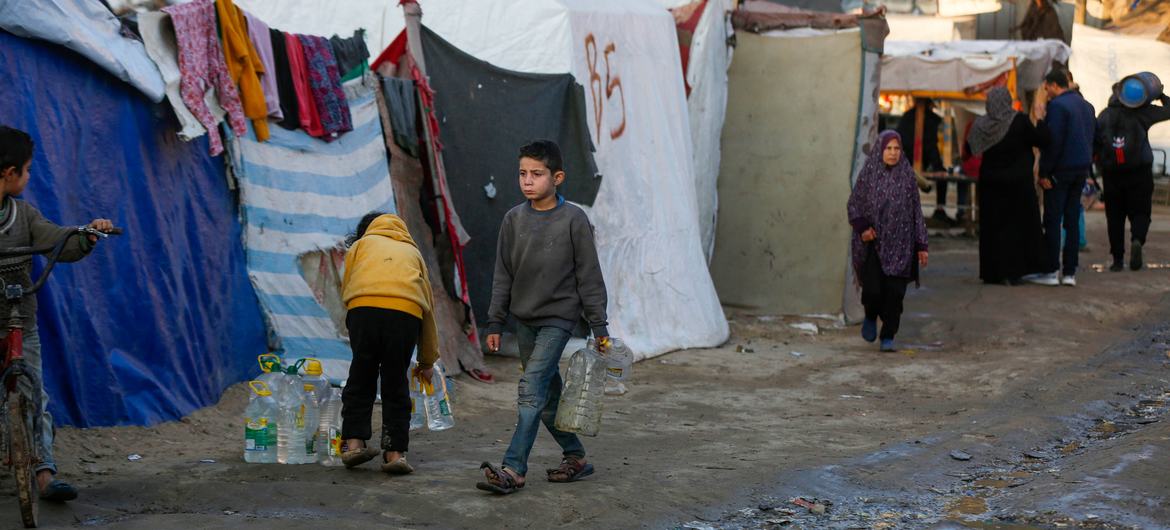
A young boy carries a water bottle through an area where people are living in tents.

Witness to everything

Sometimes, I feel caught between two identities, the journalist documenting the suffering and the human experiencing it.

But, perhaps this is where the strength of our journalistic mission from the Gaza Strip lies: to be a voice from the heart of the tragedy, to convey to the world the reality of what is happening on a daily basis.

Every day in Gaza poses a new question:

Will we survive?

Will our children return from their search for water?

Will the war end?

Will the crossings be opened so aid can be delivered?

From here, we will continue, because untold stories die and because every child, woman and man in Gaza deserves to have their voice heard.

I am a journalist.

I am a father.

I am displaced.

And I am a witness to everything.

Gaza First Person: ‘The best of humankind in a place abandoned by humanity’

Sonia Silva has been working in the embattled enclave since the beginning of November 2023, just one-month after the terror attack by Hamas and other armed groups in southern Israel that sparked the brutal conflict.

She spoke to UN News about the misery people have experienced in recent days.

“In my one year and eight months in Gaza, this past week has been by far the worst. The only comparable experience was the Rafah incursion in May 2024, when the border was closed, but this week has been significantly more intense.

I live in UNICEF accommodation in Deir Al-Balah, a city in central Gaza.

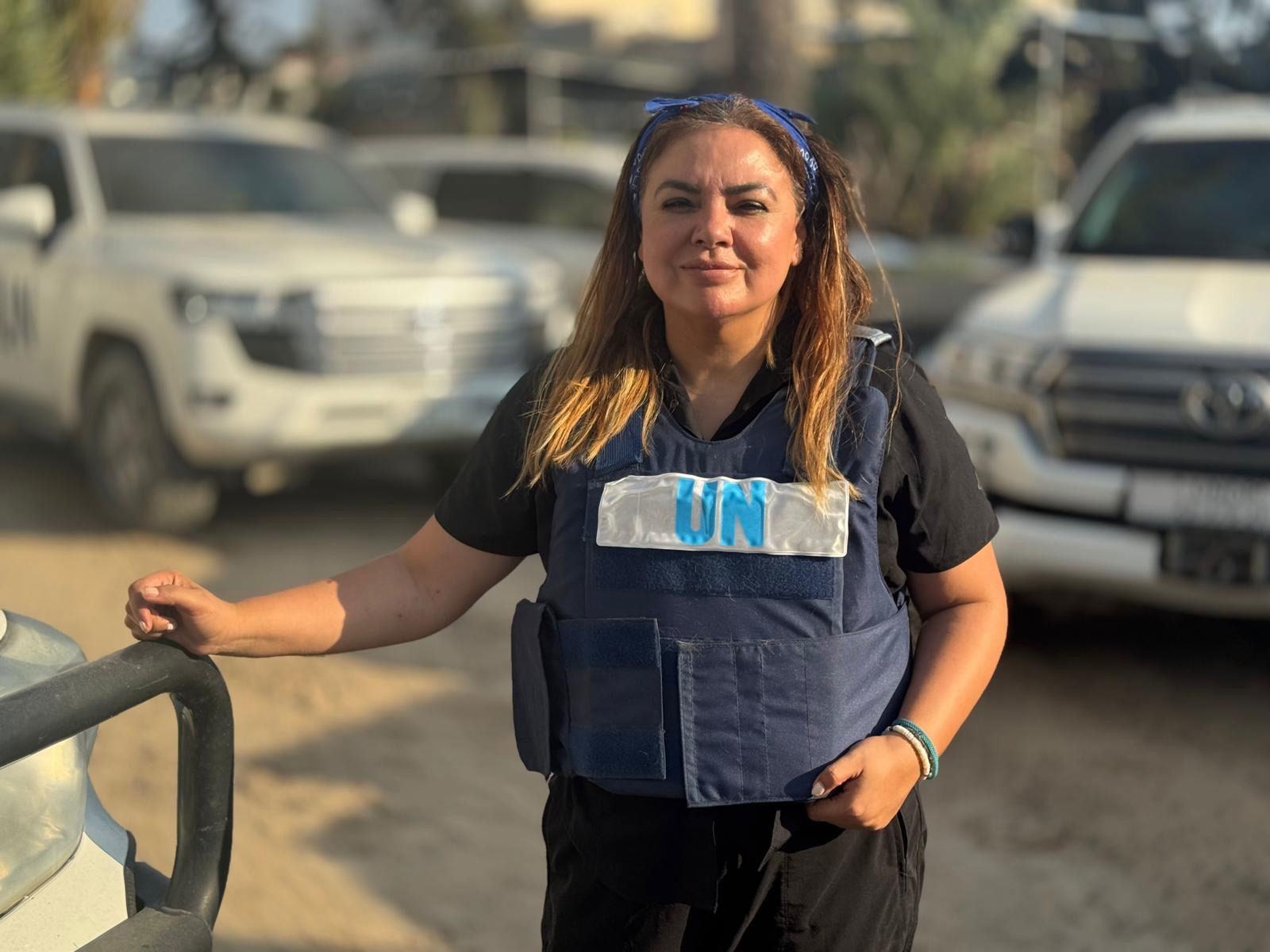
Sonia Silva, UNICEF Head of Office in Gaza.

When you drive from south to north in the Gaza Strip, it looks as if there has just been a major natural disaster. The level of destruction has reached an unprecedented scale, devastating civilian infrastructure and entire neighborhoods.

Buildings are no longer standing. People are living in destroyed houses, tents and on the streets.

Seeing humanity in this condition is scary and fills me with a sense of doom and fear.

Terrifying offensive

Deir Al-Balah is or had been different.

It’s one of the few places in the Gaza Strip where urban infrastructure remains. It has been somewhat spared, compared to other areas.

That is until last Sunday evening, when a terrifying offensive was unleashed on Deir Al-Balah.

I have yet to see the level of destruction over the last few days, but reports indicate it is significant.

A building was destroyed by a rocket blast only 100 metres from where I normally sleep.

But, for 72 hours my colleagues and I barely slept. The explosions and gunfire were incessant.

It is stronger than you.

Your body knows something is wrong and is in an upper state of alertness.

I was not scared, but I was deeply concerned about my national colleagues who were very close to the crossfire and who were trying to comfort young children.

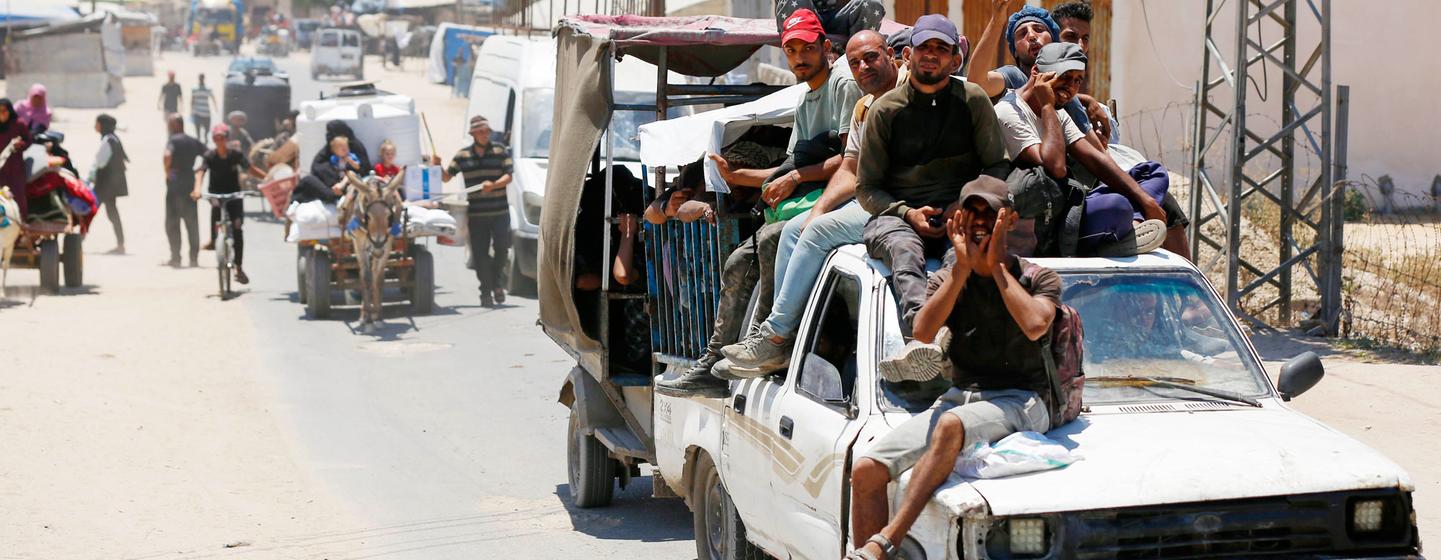
Families evacuate from Deir Al-Balah in the Gaza Strip

I am fortunate because I am an international civil servant and am entitled to a break. Every 4 to 6 weeks, I get to leave, I get to rest, I get to recharge my batteries.

But, not my Palestinian colleagues and their families, who have lived through this for more than 21 months, who have lost everything, their loved ones and belongings.

They don’t get to switch off.

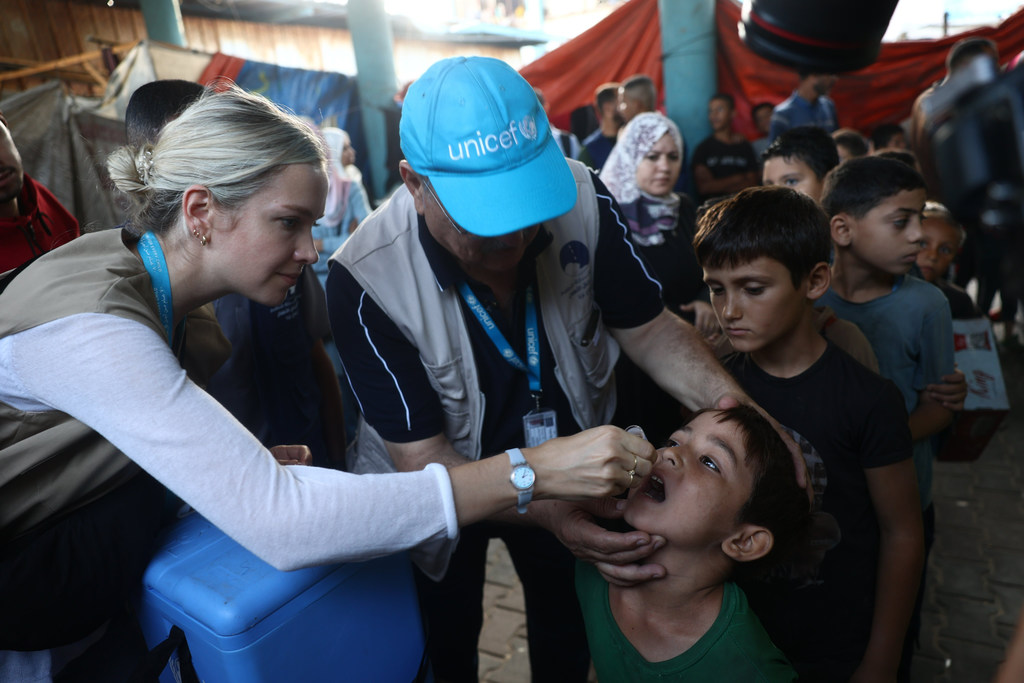
UNICEF staff vaccinate children against polio in September 2024.

The ongoing shortages of food are making things worse. It affects the entire population, including our frontline partners, our national colleagues and all the supporting staff.

What has struck me most about Gaza is that despite the hardship, colleagues keep going, colleagues keep teasing each other, colleagues who have lost everything show the utmost generosity and solidarity.

I would like to pay tribute to all of my colleagues and our partners who are hanging on to fragments of hope for a better life but still keep essential services running.

They are the best of humankind in a place abandoned by humanity.”

Source link

First Person: How many more children must die before the world acts?

Juliette Touma, the director of communications for the UN agency for Palestine refugees, UNRWA, has visited Gaza several times during and before the war and has been reflecting on the children she has met there and in other conflict zones.

“Adam has been on my mind lately, more so than usual.

I met Adam years ago in the Yemeni port city of Hudaydah, back then under siege and heavy bombardment. In the very poor hospital ward, there lay Adam, 10 years old, weighing just over 10 kilogrammes. He could not speak, he could not cry. All he could do was make a hoarse sound of breathing. A few days later, Adam died from malnutrition.

A malnourished child inside a hospital in Sana’a, Yemen.

Deadly malnutrition

A couple of years before that, my colleague Hanaa calls from Syria late at night. She was in tears and could barely say a word. Hanaa eventually told me that Ali, a 16-year-old boy had died. In yet another town under siege, caught up in a war not of his making, he had also died from malnutrition.

The following morning, my supervisor, an epidemiologist, said “for a boy of 16 to die of malnutrition, that says a lot. He’s practically a man. It means there’s no food at all in that part of Syria.”

Back in Yemen in one of the few functioning children’s hospitals in the capital Sana’a, I was walking through the children’s ward during the peak of a cholera outbreak. Boys 15 and 16 years old, struggling to stay alive.

They were so weak and emaciated, they could barely turn around in their beds.

These images and stories haunted me over the years as they have for several among us who worked in severe hunger or famine-like situations.

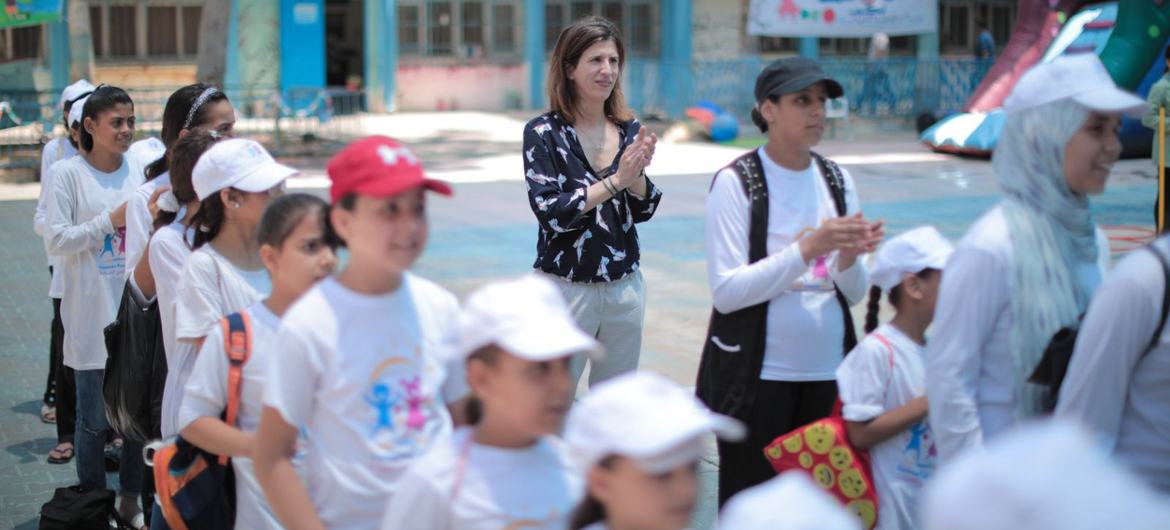
The author plays with students enjoying the “summer fun weeks” games in an UNRWA school in the Gaza Strip in 2023. (file)

Fatal hunger grows in Gaza

In 2022, when I had the great pleasure of going in and out of Gaza, I would visit children in UNRWA schools. Immaculately dressed, healthy looking, smiling, eager to learn, jumping up and down in the school playground to the sound of music.

Back then, Gaza was already under a blockade for more than 15 years. Food was, however, available on the markets through imports via Israel and locally farmed produce. UNRWA was also giving food aid to over one million people.

Images of Adam and Ali were quickly pushed to the back of my memory until a few weeks ago when they suddenly reappeared.

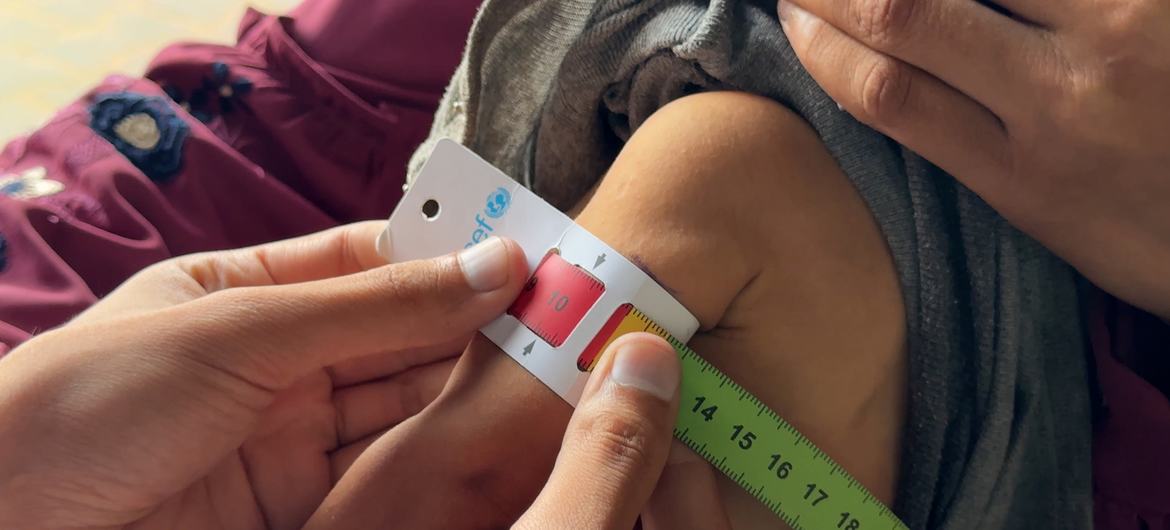
A growing number of children are being screened for malnutrition in Gaza.

Babies can survive, but will they?

Our Gaza teams started sending alarming photos of emaciated babies. The rates of malnutrition are rapidly increasing, spreading across the Gaza Strip. According to the World Health Organization (WHO), more than 50 children died of malnutrition since the siege began on 2 March.

UNRWA has meanwhile screened over 242,000 children in the agency’s clinics and medical points across the war-torn Strip, covering over half the children under age five in Gaza.  One in 10 children screened is malnourished.

Ahlam is seven months old. Her family was displaced every month since the war began, in search of non-existing safety. Shocked and her body weakened, Ahlam is severely malnourished. Like many babies in Gaza, her immune system has been damaged by trauma, constant forced displacement, lack of clean water, poor hygiene and very little food.

Ahlam can survive, but will she?

Bombs and scarce supplies

There are very little therapeutic supplies to treat children with malnutrition as basics are scarce in Gaza. The Israeli authorities have imposed a tight siege blocking the entry of food, medicines, medical and nutritional supplies and hygiene material, including soap.

While the siege is sometimes eased, UNRWA (the largest humanitarian organisation in Gaza) has not been allowed to bring in humanitarian assistance since 2 March.

Last week, Salam, another malnourished baby, died. She was a few months old. When she finally reached the UNRWA clinic, it was too late.

Meanwhile, eight children queuing for therapeutic support against malnutrition were killed when the Israeli forces hit the clinic they were in. One of my colleagues who drove past the clinic a few minutes later told me she saw mothers looking out into the abyss, weeping in silence, just like Adam did.

How many more babies must die before the world takes action?

Why should babies die of malnutrition in the 21st century, especially when it’s totally preventable?

At UNRWA, we have over 6,000 trucks of food, hygiene supplies and medicines outside Gaza waiting for the green light to go in.

The aid will mainly help little girls like Ahlam. UNRWA also has more than 1,000 health workers who can provide boys and girls with specialised nutritional services.

Amid the daily livestream of horrors we get from Gaza on our screens, one cannot help but ask how many more Ahlam’s and Salam’s have to die before taking action?

How much longer until a ceasefire is reached so that bombs stop falling on emaciated and dying children?”

First Person: Japanese UN volunteer ‘motivated by the passion of others’ to support peace

Haruki Ume spoke to UN News at the UN Pavilion at Expo 2025 currently being held in the Japanese city of Osaka.

One section of the pavilion features a rotating presentation focusing on a specific UN agency or entity and recently, attention turned to the UN Volunteers programme.

“As a 17-year-old, I travelled to the United States on an educational exchange programme and my main motivation was to play baseball and experience American culture.

I met a lot of other people from Africa and Asia as well as Europe and I was shocked and then impressed by their passion and motivation to support their villages and communities back home.

One boy from Azerbaijan told me he was selected for the exchange from over 100 applicants as the only student from his country. As a result, he said that he had a responsibility not to waste his time and represent all those other applicants and his country to the best of his ability.

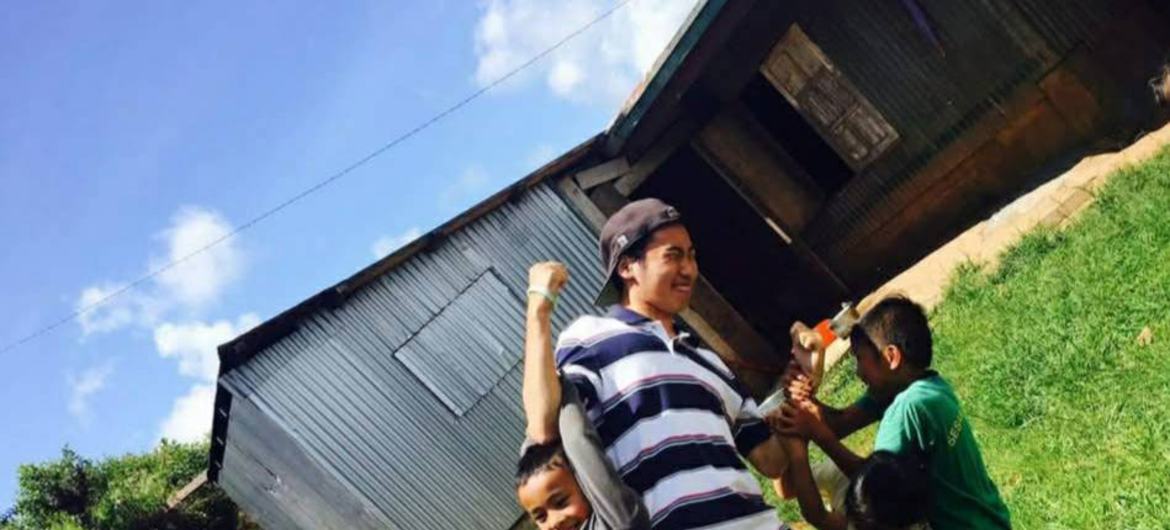
Haruki Ume plays with two boys during a visit to the Philippines in 2017.

It was at this moment that I decided that I wanted to contribute more to society and so I started studying development issues. I travelled as much as I could during my vacations, to places like Cambodia, the Philippines, India, Peru, Egypt and Uganda.

As a volunteer, I supported education and other initiatives during the field missions and was really driven by helping people who were less fortunate than I.  I also learnt a lot from these people, so I definitely valued it an exchange of experiences and knowledge.

Understanding the outside world

I was raised in a small town in rural Japan where there were no foreigners. People grow up, work and die there and many do not ever experience foreign cultures or really understand the outside world.

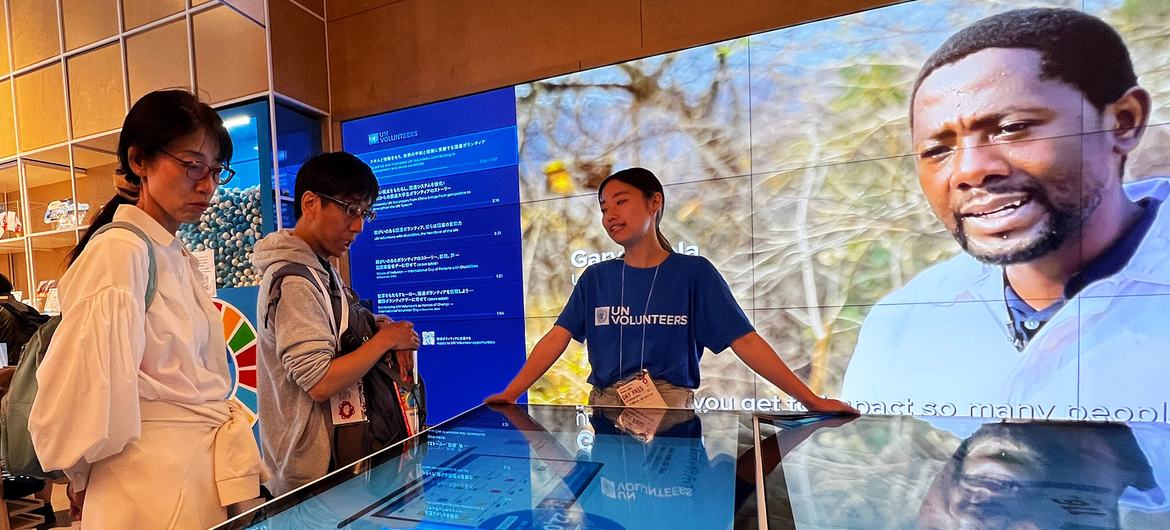
A UN Volunteers staff member explains the role of the organization to visitors at the UN Pavilion.

I remember being nervous about speaking English and eating food that I was not used to, but I was keen to break through these personal barriers and broaden my world.

Being open to new experiences has made it easier to adapt to other cultures and this understanding promotes peace and friendship and ultimately international cooperation.

I have been working at the UN Pavilion at Expo 2025 to promote the UN and the work of UN Volunteers. I’m doing this in the spirit of building cooperation and creating positive change in the world.

Expo 2025 is bringing the world to Osaka and is providing the opportunity for Japanese people to discuss how we can work together more effectively to create a fairer and more peaceful world.”

The UN and volunteering

  • Headquartered in Bonn, Germany, UNV was established 1970 and is active in around 169 countries and territories every year.
  • In 2024, UNV deployed over 14,500 volunteers to almost 60 UN entities across the world.
  • They serve in diverse roles including: community development, human rights, humanitarian assistance, peacebuilding, medical services and communications.
  • 2026 has been designated by the UN as the International Year of Volunteers
  • Become a UN Volunteer

Source link

AIDS still killing one person every minute as funding cuts stall progress

More than 30 million people are receiving lifesaving treatment worldwide however, making the UN’s AIDS response a “clear example of a multilateral success,” said Amina Mohammed, UN Under Secretary-General on Thursday, as the General Assembly reviewed progress being made to end AIDS and prevent HIV infections.

‘Series of threats’

Global commitment is fading. Funding is falling. And HIV services and systems to deliver them are being disrupted,” she said, highlighting the “series of threats” that could undo all the progress achieved in the fight against HIV in past decades.

As funding dwindles, clinics are closing and treatment supplies are diminishing, putting already vulnerable populations such as adolescent girls and young women, at greater risk of contracting the disease.

As funding from PEPFAR – the US programme leading global efforts to combat HIV in Africa – faces the risk of permanent cuts, the UN global programme on HIV/AIDS (UNAIDS) warns of devastating consequences.

Without continued support, an estimated four million additional AIDS-related deaths and more than six million new infections could occur by 2029.

‘Keep up the fight’

We cannot let short-term cuts destroy long-term progress,” said Ms. Mohammed. “We need to keep fighting.”

The funding crisis must be urgently addressed. With half of sub-Saharan African countries spending more on debt servicing than on healthcare, Ms. Mohammed stressed the need for debt relief, tax reform, and increased international support.

Low and middle-income countries need sustainable HIV financing and stronger national leadership in the fight against AIDS,” she said.

She also called for an end to attacks on human rights, warning that punitive laws, vigilante violence, and hate speech against marginalised groups worsen stigma and drive people away from lifesaving services. “Protecting health means protecting human rights,” she said.

Many community-led organizations are now being defunded and dismantled, just when their work is needed most. Ms. Mohammed urged the UN and its partners to support these groups and their vital contributions.

“The end of AIDS is not a mystery,” she said, adding that while eliminating the disease by 2030 is still achievable, “success is not guaranteed.”

First Person: Myanmar aid workers brave conflict and harsh conditions to bring aid to earthquake victims

Thein Zaw Win, Communications and Advocacy Analyst in the Yangon Office of the UN sexual and reproductive health agency (UNFPA) saw the devastating consequences of the quake during a week-long visit to the Mandalay region, one of the regions most severely affected by the disaster.

Thein Zaw Win, Communications and Advocacy Analy​st at UNFPA’s Yangon Office, speaks with​ a woman impacted by the recent earthquake in Mandalay, Myanmar.

“I was in Yangon when the earthquake struck. In the aftermath, news reports gradually began indicating that many cities had suffered significant casualties. Buildings, roads, homes, schools, and hospitals were reduced to rubble and people were trapped beneath the debris.

Communication systems were down, so I decided to travel to the affected areas and support the relief efforts.

Women and girls needed lifesaving support, including sexual and reproductive health services and maternal care, dignity kits, hygiene items, and other essential supplies as soon as possible.

Within 72 hours, the UNFPA country office had deployed a Rapid Response Team to deliver essential services to the affected population, working with partners on the ground.

The journey from Yangon to Mandalay usually takes about eight hours, but we struggled to get through, due to damaged roads and collapsed bridges. We had to find alternate routes and, at times, even navigate through the rugged fields beside the main road.

Now that the rainy season has started, the roads are even worse, and travelling has become increasingly difficult. It took us more than 10 hours to reach Mandalay.

A woman affected by earthquake receives relief items including UNFPA’s dignity kits during UN joint distribution in Sagaing, Myanmar.

In some areas of the city, debris blocked the roads. Tower blocks had collapsed and many areas had been reduced to complete rubble. Desperate families sought refuge in temporary shelters, on the streets, or in front of their damaged homes.

Tremors continued for several days. Frequent power outages during the night mean that some affected areas were plunged into darkness, making it unsafe to go anywhere. Reaching those affected and delivering aid under these conditions remains a considerable challenge.

My responsibility is to engage with communities affected by the disaster, and share their stories to a broader audience. It is also vital to raise awareness of the realities and needs on the ground so that we can secure support for emergency assistance. This is my mission.

I met a woman in Mandalay who visited our mobile clinic. She had lived in the city all her life but had never seen such devastation. Everything collapsed in a matter of seconds. She was deeply worried about the damage to healthcare facilities, as well as her ability to access medical care.

© UNOCHA/Myaa Aung Thein Kyaw

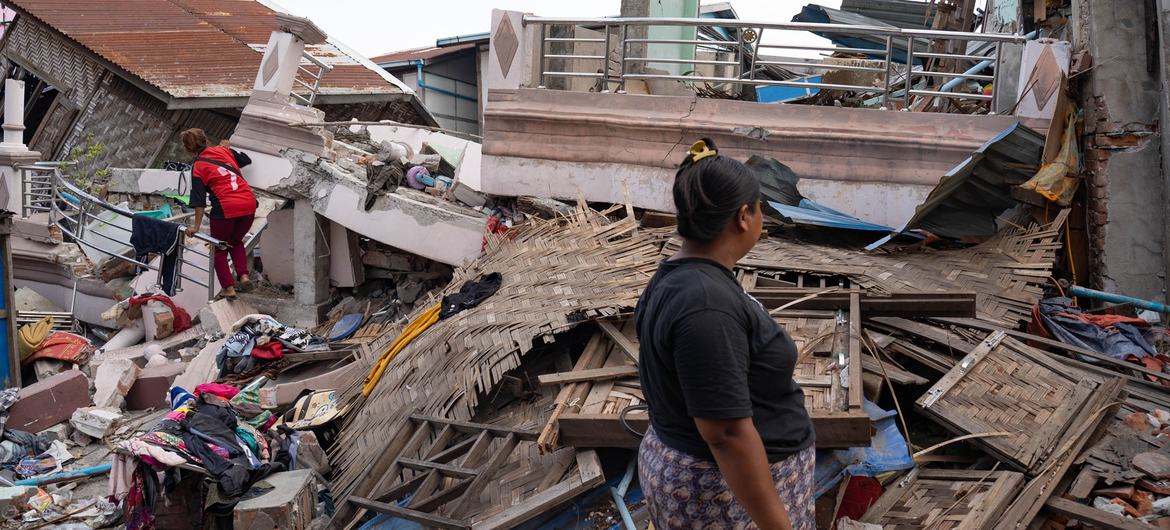
A woman in Mandalay, Myanmar, looks on at the devastation caused by the earthquake.

Amidst this crisis, the UNFPA team has provided services ranging from hygiene supplies, protection from gender-based violence, and mental health support for women and girls. They also support maternal and newborn care services. I saw for myself the unwavering resilience of humanitarian workers, and the way that UN agencies, civil society organizations, and NGOs work together.

Myanmar was already suffering from political instability and now it has been further devastated by this destructive earthquake. It is extremely difficult to deliver aid to communities in Sagaing and Mandalay, where armed conflict is ongoing.

In the present context, with monsoon conditions imminent, people are terrified of what this season may bring.

The country is also experiencing the impact of the decline in global aid funding.

UNFPA, like other UN agencies and humanitarian organizations, is dealing with constraints on resources, and we have issued an appeal for emergency assistance to support populations in critical need.

The suffering of women and children affected by the earthquake is profoundly distressing, and we need all of our strength and resilience to help them.

It is a heartbreaking experience to witness the despair in people’s eyes and to listen to their stories of loss, but we are trying to give them the dignity and hope they rightfully deserve in these difficult times.”