
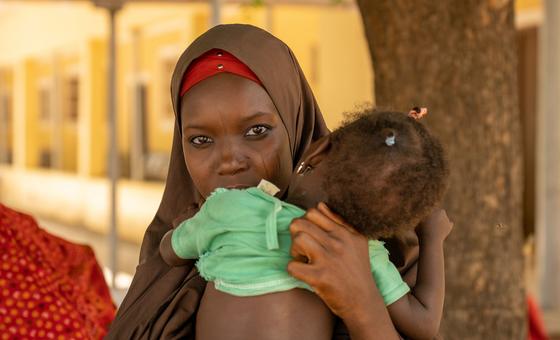
Nigeria: Amid record hunger and surging insecurity, emergency food assistance to stall entirely

While WFP has been able to hold hunger at bay across northern Nigeria in the first half of 2025, funding shortfalls are jeopardising such efforts, with life-saving programmes set to grind to a halt by the end of July.  

Without immediate funding, millions of vulnerable people will be left without food assistance as WFP’s food and nutrition stocks have been completely exhausted, with the organization’s last supplies leaving warehouses in early July.  

With life-saving assistance set to end after the current round of distributions is completed, millions of vulnerable people will face impossible choices: endure increasingly severe hunger, migrate, or even risk possible exploitation by extremist groups in the region.  

Children at risk

“Nearly 31 million people in Nigeria are now facing acute hunger, a record number,” said WFP Country Director David Stevenson, with children set to be among the worst affected if vital aid ends.  

With more than 150 WFP-supported nutrition clinics in Borno and Yobe states set to close if funding is not renewed, over 300,000 children under the age of two will lose access to potential life-saving treatment.  

“This is no longer just a humanitarian crisis,” he said. “It’s a growing threat to regional stability, as families pushed beyond their limits are left with nowhere to turn.”  

Extremist groups  

In conflict-affected areas in the north, escalating violence from extremist groups is driving mass displacement, with some 2.3 million people across the Lake Chad Basin having been forced to flee their homes.  

As mass displacement strains already limited resources and pushes communities to the brink, the lack of emergency food assistance risks increasing recruitment by these groups.

“When emergency assistance ends, many will migrate in search of food and shelter. Others will adopt negative coping mechanisms – including potentially joining insurgent groups – to survive,” said Mr. Stevenson.    

“Food assistance can often prevent these outcomes,” he added, as WFP urgently seeks $130 million to sustain food and nutrition operations through the end of the year.

Source link

AIDS still killing one person every minute as funding cuts stall progress

More than 30 million people are receiving lifesaving treatment worldwide however, making the UN’s AIDS response a “clear example of a multilateral success,” said Amina Mohammed, UN Under Secretary-General on Thursday, as the General Assembly reviewed progress being made to end AIDS and prevent HIV infections.

‘Series of threats’

Global commitment is fading. Funding is falling. And HIV services and systems to deliver them are being disrupted,” she said, highlighting the “series of threats” that could undo all the progress achieved in the fight against HIV in past decades.

As funding dwindles, clinics are closing and treatment supplies are diminishing, putting already vulnerable populations such as adolescent girls and young women, at greater risk of contracting the disease.

As funding from PEPFAR – the US programme leading global efforts to combat HIV in Africa – faces the risk of permanent cuts, the UN global programme on HIV/AIDS (UNAIDS) warns of devastating consequences.

Without continued support, an estimated four million additional AIDS-related deaths and more than six million new infections could occur by 2029.

‘Keep up the fight’

We cannot let short-term cuts destroy long-term progress,” said Ms. Mohammed. “We need to keep fighting.”

The funding crisis must be urgently addressed. With half of sub-Saharan African countries spending more on debt servicing than on healthcare, Ms. Mohammed stressed the need for debt relief, tax reform, and increased international support.

Low and middle-income countries need sustainable HIV financing and stronger national leadership in the fight against AIDS,” she said.

She also called for an end to attacks on human rights, warning that punitive laws, vigilante violence, and hate speech against marginalised groups worsen stigma and drive people away from lifesaving services. “Protecting health means protecting human rights,” she said.

Many community-led organizations are now being defunded and dismantled, just when their work is needed most. Ms. Mohammed urged the UN and its partners to support these groups and their vital contributions.

“The end of AIDS is not a mystery,” she said, adding that while eliminating the disease by 2030 is still achievable, “success is not guaranteed.”