Madagascar: ‘Overwhelming’ destruction, surging needs after back-to-back cyclones – WFP

Speaking to reporters from Madagascar’s capital Antananarivo, WFP Country Director Tania Goossens said some 400,000 people are facing acute humanitarian needs after the island was hit by back-to-back cyclones in the space of three weeks.

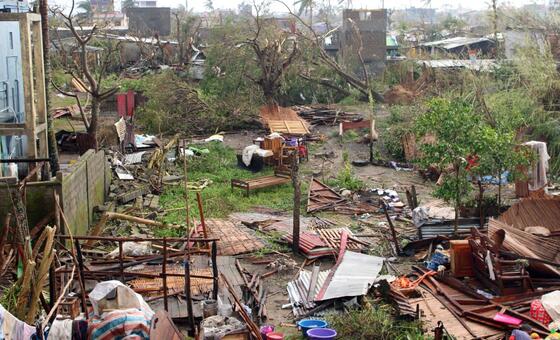
Ms. Goossens recently returned from a mission to the port city Toamasina (also known as Tamatave), the country’s second largest urban centre, where Gezani made landfall on Tuesday evening with wind gusts of up to 250 kilometres per hour.

“The scale of the destruction is really overwhelming,” Ms. Goossens insisted.

Nearly 40 deaths

She said that according to the authorities, 80 per cent of the city has suffered damage and that it is “running on roughly five per cent electricity at the moment.”

“There’s no water and one of WFP’s warehouses and our office was also completely destroyed during the cyclone,” she added.

Assessments are ongoing but to date the authorities report 38 deaths and 374 people injured.

Families left with nothing

The UN food agency official said that many families have left their homes and that there was “severe” damage to buildings, businesses, schools and the city’s hospital.

“During my visit, I saw families trying to recover the little that was left of their home,” she recounted. “Many are spending the night in homes where the roofs have been torn off.”

Uprooted trees and debris across the city are blocking streets, Ms. Goossens said, and fuel is difficult to come by.

“Families are telling us that they have lost everything,” she stressed. “Many are sheltering in damaged homes or temporary sites and uncertain about how they can access their next meal.”

Rising needs

In addition to the urgent need for food Ms. Goossens highlighted humanitarians’ concerns about water, sanitation and hygiene conditions, as a lack of clean water and damaged infrastructure raise the risk of disease outbreaks.

She also mentioned “rising protection concerns for vulnerable groups” such as women, children, the elderly and persons with disabilities.

Mobilising support

In anticipation of the shock WFP and partners have been providing cash assistance to the most vulnerable households allowing them to purchase some food and better prepare before the storm struck.

The UN food agency is now mobilising its “last food stocks,” which will be distributed in coordination with national disaster relief teams, Ms. Goossens explained.

However, the needs on the ground exceed WFP’s capacity and the agency is calling for urgent donor support.

The latest disaster “comes on top of an already very critical food security situation,” Ms. Goossens said, as already before the back-to-back cyclones 1.57 million people across the country were food insecure, including 84,000 facing emergency levels of hunger, according to the latest data from the IPC, a UN-backed global food security monitoring system.

“We’re also in the peak of the lean season here in Madagascar and funding shortfalls remain alarming… Our lean season response as well as cyclone response faces a $18 million gap over the next six months,” the WFP official warned.

“We will need… sustained support over the coming months to help people recover, to rebuild and strengthen their resilience against further shocks,” she added. “In fact, we are in at the start of the cyclone season. So, we are also concerned that this is only just the beginning.”

Source link

Nigeria: Amid record hunger and surging insecurity, emergency food assistance to stall entirely

While WFP has been able to hold hunger at bay across northern Nigeria in the first half of 2025, funding shortfalls are jeopardising such efforts, with life-saving programmes set to grind to a halt by the end of July.  

Without immediate funding, millions of vulnerable people will be left without food assistance as WFP’s food and nutrition stocks have been completely exhausted, with the organization’s last supplies leaving warehouses in early July.  

With life-saving assistance set to end after the current round of distributions is completed, millions of vulnerable people will face impossible choices: endure increasingly severe hunger, migrate, or even risk possible exploitation by extremist groups in the region.  

Children at risk

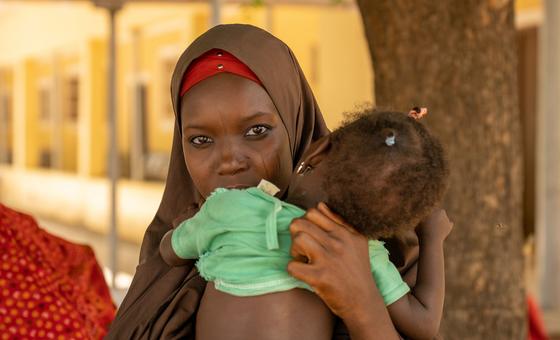
“Nearly 31 million people in Nigeria are now facing acute hunger, a record number,” said WFP Country Director David Stevenson, with children set to be among the worst affected if vital aid ends.  

With more than 150 WFP-supported nutrition clinics in Borno and Yobe states set to close if funding is not renewed, over 300,000 children under the age of two will lose access to potential life-saving treatment.  

“This is no longer just a humanitarian crisis,” he said. “It’s a growing threat to regional stability, as families pushed beyond their limits are left with nowhere to turn.”  

Extremist groups  

In conflict-affected areas in the north, escalating violence from extremist groups is driving mass displacement, with some 2.3 million people across the Lake Chad Basin having been forced to flee their homes.  

As mass displacement strains already limited resources and pushes communities to the brink, the lack of emergency food assistance risks increasing recruitment by these groups.

“When emergency assistance ends, many will migrate in search of food and shelter. Others will adopt negative coping mechanisms – including potentially joining insurgent groups – to survive,” said Mr. Stevenson.    

“Food assistance can often prevent these outcomes,” he added, as WFP urgently seeks $130 million to sustain food and nutrition operations through the end of the year.

Source link

Afghanistan: Surging returns from Iran overwhelm fragile support systems, UN agencies warn

Ninety-nine per cent of the returnees were undocumented, and 70 per cent were forcibly returned, with a steep rise in families being deported – a shift from earlier months, when most returnees were single young men, according to the UN agency.

The rise follows a March decision by the Iranian Government requiring all undocumented Afghans to leave the country.

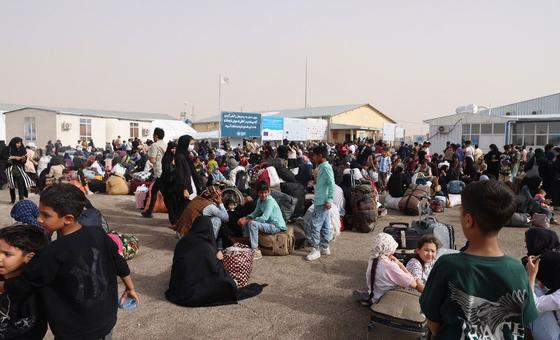
Conditions deteriorated further after the recent 12-day conflict between Iran and Israel, which caused the daily refugees crossings to skyrocket from about 5,000 to nearly 30,000, according to Arafat Jamal, the UN refugee agency (UNHCR) representative in Afghanistan.

“They are coming in buses and sometimes five buses arrive at one time with families and others and the people are let out of the bus and they are simply bewildered, disoriented, and tired and hungry as well,” he told UN News, describing the scene at a border crossing.

“This has been exacerbated by the war, but I must say it has been part of an underlying trend that we have seen of returns from Iran, some of which are voluntary, but a large portion were also deportations.” 

Strain on aid efforts

Afghanistan, already grappling with economic collapse and chronic humanitarian crisis, is unprepared to absorb such large-scale returns.

The 2025 Humanitarian Needs and Response Plan calls for $2.42 billion in funding, but only 22.2 per cent has been secured to date.

The scale of returns is deeply alarming and demands a stronger and more immediate international response,” said IOM Director General Amy Pope, “Afghanistan cannot manage this alone.”

Meanwhile, UNHCR alongside partners is working to address the urgent needs of those arriving – food, water, shelter, protection. However its programmes are also under severe strain due to limited funding. 

The agency had to drastically reduce its cash assistance to returnee families at the border from $2,000 per family to just $156.

We are not able to help enough women, and we are also hurting local communities,” added Mr. Jamal.

Some relief, but not enough

In response to growing crisis, the UN Central Emergency Response Fund (CERF) has allocated $1.7 million to the World Food Programme (WFP) to support drought-affected families in Faryab Province.

The funds will provide cash assistance to some 8,000 families in the region, where over a third of the rural population is already facing crisis or emergency levels of acute food insecurity.

“Acting ahead of predicted hazards to prevent or reduce humanitarian impacts on communities is more important than ever,” said Isabelle Moussard Carlsen, Head of OCHA Afghanistan, adding “when humanitarian action globally and in Afghanistan is underfunded…we must make the most of every dollar.” 

Source link

Civilian deaths in conflict are surging, warns UN human rights office

At least 48,384 individuals – mostly civilians – were killed in 2024, based on casualties recorded by OHCHR.

“Behind every statistic is a story. Behind every data point, a person,” said UN rights chief Volker Türk.

This alarming rise in civilian deaths exposes major failures to protect some of the most vulnerable in both peacetime and conflict situations, “painting a picture of a global human rights landscape in need of urgent action,” he said.

Human rights defenders

Just over 500 of those killed in 2024 were human rights defenders, with the number of journalists killed also rising by 10 per cent, comparing 2023 to 2024.

The level of targeting of human rights defenders and journalists remained alarmingly high: at least one human rights defender, journalist, or trade unionist was killed or forcibly disappeared every 14 days.

Detentions of rights defenders was most widespread in northern Africa, central, southern and western Asia. Killings were most prevalent in Latin America and the Caribbean.

Alarming rise in deaths of women and children

Violence against children and women in armed conflicts has been devastating over the past two years.

Between 2023 and 2024, approximately four times more children and women were killed in armed conflicts than during 2021–2022.

Women reported experiencing gender-based discrimination at more than twice the rate of men, and the poorest households were hardest hit, perpetuating cycles of poverty and inequality.

Discrimination does not exist in isolation,” said Mr Türk, as OHCHR’s findings revealed widespread and compounding discrimination, with nearly one in three persons with disabilities reporting having experienced discrimination, compared to fewer than one in five without disabilities.

Source link