Is US Military Preparing For Weeks-Long Iran Operations?

The US military is preparing contingency plans for the possibility of sustained, weeks-long operations against Iran if President Donald Trump authorises military action, according to two US officials cited by Reuters in its report. Such preparations point to a scenario that would go far beyond the limited, one-off strikes seen previously between the two countries.

The officials, who spoke on condition of anonymity due to the sensitivity of the planning, said the scope of military options under consideration underscores the high stakes surrounding ongoing diplomatic efforts between Washington and Tehran.

US envoys Steve Witkoff and Jared Kushner are scheduled to hold talks with Iranian representatives in Geneva on Tuesday, with Oman acting as a mediator. US Secretary of State Marco Rubio said over the weekend that President Trump still prefers a diplomatic solution, but acknowledged that negotiations with Tehran remain challenging.

Even as diplomacy continues, Washington has significantly bolstered its military presence in the region. US officials confirmed that the Pentagon is deploying an additional aircraft carrier to the Middle East, along with fighter aircraft, guided-missile destroyers and thousands of troops. The buildup has heightened concerns about a possible escalation into open conflict.

Trump for Regime Change

Speaking after a military event at Fort Bragg in North Carolina, Trump openly raised the prospect of political change in Iran, suggesting that a change in government “seems like that would be the best thing that could happen.” He declined to name potential successors, saying only that “there are people.”

Trump has previously expressed reluctance to deploy large numbers of ground troops to Iran, remarking last year that “the last thing you want to do is ground forces.” The assets now being positioned in the region point primarily to air and naval strike options, although Trump has shown a willingness in other theatres, including Venezuela, to rely on special operations forces.

Asked about preparations for a potentially prolonged military campaign, White House spokesperson Anna Kelly said the president has “all options on the table” when it comes to Iran. She added that Trump consults widely but ultimately decides based on US national security interests. The Pentagon declined to comment.

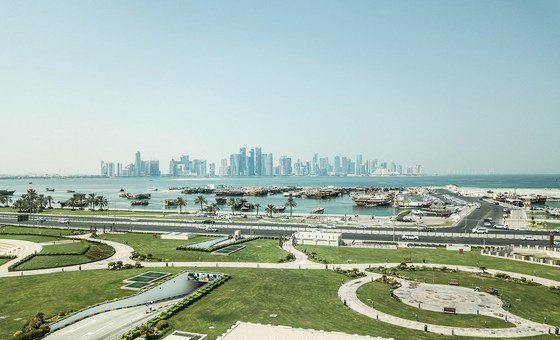
The United States has carried out strikes on Iranian targets before, including last year’s “Midnight Hammer” operation, in which stealth bombers flew directly from the US to hit Iranian nuclear facilities. That operation was limited in scope, and Iran’s response was confined to a restrained retaliatory strike on a US base in Qatar.

This time, officials said, the planning is more complex. In a sustained campaign, US forces could target Iranian state and security institutions in addition to nuclear infrastructure. While specific targets were not disclosed, analysts warn that such operations would significantly increase risks to US personnel.

Iran’s Missile Arsenal

Iran possesses a substantial missile arsenal, and US officials expect Tehran to respond forcefully to any sustained attack. One of the officials said Washington fully anticipates Iranian retaliation, potentially triggering cycles of strikes and counter-strikes over an extended period.

Iran’s Revolutionary Guard has warned that any attack on Iranian territory could prompt strikes on US military bases across the Middle East. The US maintains installations in several countries in the region, including Qatar, Bahrain, Kuwait, Saudi Arabia, the United Arab Emirates, Jordan and Turkey.

Israeli Prime Minister Benjamin Netanyahu discussed Iran with Trump during talks in Washington last week, stressing that any agreement with Tehran must address Israel’s security concerns. Iran has indicated it is willing to discuss limits on its nuclear programme in exchange for sanctions relief, but has ruled out negotiations on its missile capabilities.

Meanwhile, Iranian opposition figure Reza Pahlavi argued that US military intervention could hasten political change in Iran. In an interview with Reuters, the US-based son of Iran’s last shah said there were signs the current leadership was weakening and that an attack could accelerate its collapse.

As diplomatic efforts continue, US military preparations suggest Washington is keeping open the option of a prolonged confrontation, one that could reshape regional security dynamics and carry far-reaching consequences for the Middle East.

World News in Brief: Iran in the Human Rights Council, Myanmar election ‘fraud’, migration chief in Cyprus, Mozambique flood update

Addressing the Human Rights Council in Geneva, Mr. Türk said that although the “killing on the streets of Iran may have subsided…the brutality continues”.

He said that violent repression did not solve any of Iran’s problems but instead created conditions for further violations, instability and bloodshed.

“We have indications that the security forces made mass arrests in several cities, even pursuing injured people into hospitals, and detaining lawyers, human rights defenders, activists, and ordinary civilians,” he told diplomats.

Prosecutions ongoing

“The Tehran Prosecutor’s Office has reportedly opened criminal cases against athletes, actors, people involved in the movie industry, and the owners of cafes, on charges of supporting the protests,” Mr. Türk continued. 

Protests erupted across Iran on 28 December in response to the collapse of the national currency, soaring inflation and worsening living conditions.

Also speaking at the Council, former international prosecutor Payam Akhavan described how one protester pretended to be dead in a body-bag for three days until his parents found him. 

The civil society representative said that parents looking for their relatives usually started at hospitals, where “many of the wounded (protesters) have been abducted and killed”. 

Others have been forced to sign confessions which blame imaginary “terrorists” for the murder of their children, Mr. Akhavan maintained.

He cited a medical report circulating among Iranian doctors that 16,500 people had been killed during the demonstrations. “The number increases by the day, because the killings haven’t stopped,” he said.

Rejection of Myanmar military’s ‘fraudulent’ election must be unequivocal: UN independent expert

The international community must unequivocally reject as illegitimate the election results in Myanmar and any power arrangement that follows, said Tom Andrews, the Special Rapporteur on human rights in Myanmar on Friday.

The UN-appointed independent expert described the elections, which began in late December and are expected to be concluded this weekend, as ‘fraudulent’, urging countries not to accept the results. 

“The junta is banking on the world’s fatigue, hoping that the international community will accept military rule dressed up in civilian clothing,” he said. “Governments must not allow that to happen.”

‘Fear and coercion’

The junta’s election scheme was marked by violence, low turnout and widespread coercion, said Mr. Andrews.

Voters reported being monitored and pressured by local authorities, with threats explicit or implied. Junta officials were pushing citizens to polling stations even as military jets bombed villages throughout the country.

Mr. Andrews added that the junta banned credible opposition parties, jailed popular political figures and muzzled the press, “crushing fundamental freedoms, and using fear and coercion to drive a reluctant electorate to the polls.”

UN migration chief backs EU presidency efforts on migration

This week, the UN migration agency (IOM) Chief Amy Pope concluded a visit to Cyprus after a round of high-level talks, which focused on advancing a comprehensive migration and asylum agenda. 

“Cyprus knows what it means to be on the frontline – and that experience really matters right now,” said Ms Pope. “As the European Union (EU) moves from agreement to action, this is the moment to make sure policies really work – for migrants, for communities, and countries.

This trip marks the IOM Chief’s first visit to Cyprus in her current role, as Cyprus assumes the EU Council Presidency and the EU begins implementing the landmark Migration and Asylum Pact.

Humane returns 

With persistent instability Afghanistan, Syria, Sudan and the Sahel, Ms Pope reaffirmed IOM’s support and engagement with the EU to ensure refugee returns are humane and dignified. 

During her visit, she underscored the urgent need to address conditions along key migration routes, with IOM emphasising efforts to curb irregular migration, disrupt smuggling networks, meet humanitarian needs, and save lives.

Ms Pope also called for stronger migration data systems and evidence-based policymaking.

Nearly 600,000 people upended by Mozambique floods

Nearly 600,000 people have been affected by severe flooding across southern and central Mozambique. Weeks of heavy and sustained rainfall have caused homes to collapse and roads to wash away, displacing more than 73,000 people, according to figures from the IOM

Flooding has been reported in 10 of Mozambique’s 11 provinces, with Gaza Province “hosting significant concentrations of displaced people”. Humanitarian response partners expect reported figures to rise as access to affected communities improves.

IOM teams there have described acute shortages of shelter, constraints on food and basic services, overcrowded centres, and limited access to safe water, sanitation and hygiene – increasing the risk of waterborne diseases spreading.

Preliminary reports from the International Red Cross (IFRC) indicated between 50 and 60 deaths, a figure likely to rise as waters levels recede. 

Response ahead of cyclone season 

Following a Government request for international support on 16 January including air assets for search and rescue efforts, the IOM plans to appeal for up to $20 million to reinforce life-saving assistance and strengthen water, sanitation and hygiene. 

With this being only the start of the cyclone season and dams at near capacity, representatives from the IFRC have underscored the need for investment in early warning systems, climate‑resilient infrastructure, and locally led preparedness. 

Source link

Iran: UN urges ‘maximum restraint’ to avert more death, wider escalation

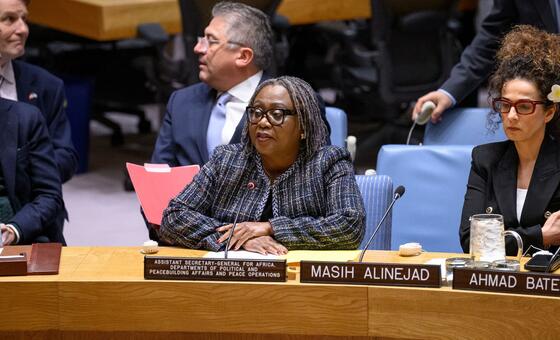
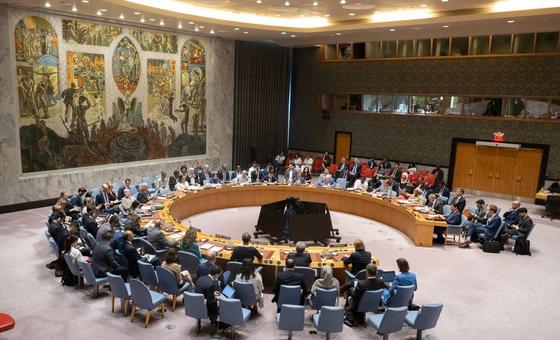
Assistant Secretary-General Martha Pobee briefed an emergency meeting of the Security Council in New York called by the United States to address the crisis.

Ms. Pobee described the situation in Iran as “fluid and deeply concerning”, noting that “protests continue, albeit reportedly at a smaller scale than last week.”

Against military strikes

She voiced alarm, however, over public statements suggesting possible military strikes on the country.

This external dimension adds volatility to an already combustible situation. All efforts must be undertaken to prevent any further deterioration,” she said.

Moreover, UN Secretary-General António Guterres “remains convinced that all concerns regarding Iran, including those related to the nuclear issue and ongoing protests, are best addressed through diplomacy and dialogue.”

He also “urges maximum restraint at this sensitive moment and calls on all actors to refrain from any actions that could lead to further loss of life or ignite a wider regional escalation.”

Largest protests in recent years

The protests erupted on 28 December after shopkeepers in the Iranian capital Tehran took to the streets to rail against the collapse of the national currency, soaring inflation and worsening living conditions.

Demonstrations quickly spread across the country, turning into mass anti-government protests – the largest since the movement sparked by the September 2022 death in custody of Kurdish woman Jina Amini who was arrested for allegedly violating hijab laws.

Authorities imposed a near-total communications blackout that is still largely in place.  Hundreds and even possibly thousands of protestors and bystanders have been killed, and more than 18,000 people are estimated to be detained, though the UN has not been able to verify these figures.

‘Terrorists’ and ‘rioters’ blamed

“The Government of Iran has stated that it was compelled to act after what it deemed ‘organized terrorists’ and ‘rioters’ infiltrated the protests and opened fire on both security forces and demonstrators, aiming to provoke foreign military intervention,” said Ms. Pobee.

“It has also blamed these elements for the killing of hundreds of civilians and members of the security forces.”

In a recent statement, the UN Secretary-General expressed deep concern over the reported excessive use of force by the authorities and upheld the rights to freedom of expression, association and peaceful assembly.

Civil society voices

Iranian journalist and political dissident Masih Alinejad was one of two civil society representatives invited to brief the Council.

“What is needed now to bring justice to those who order massacres in Iran is real and concrete action,” she said.

Iranian-American human rights activist and journalist Ahmad Batebi spoke about how he was arrested for protesting while a student and sentenced to death.

Mr. Batebi said that he was held in solitary confinement for two years, tortured, and forced to admit that he was a paid American spy.

US warns of wider repercussions

US Ambassador Mike Waltz stated that “the level of violence, the level of repression that the Iranian regime has unleashed on its own citizens…has repercussions for international peace and security.”

The Iranian people “are demanding their freedom like never before in the Islamic Republic’s brutal history,” he said, and underscored that President Donald Trump and the United States “stands by the brave people of Iran”.

He stressed that “the regime is solely responsible for the economic misery of the Iranian people and the repression of their freedom” and will be held accountable.

US ‘steering unrest’ in Iran, ambassador claims

Iran’s Deputy Permanent Representative Gholamhossein Darzi began his remarks by denouncing the two civil society briefers, saying they “represent the political agenda of the United States and Israeli regimes.”

Turning to the situation in Iran, the ambassador said that he was speaking on behalf of a “nation in mourning”.

“It is deeply regrettable that the representative of the United States regime, which requested this meeting, has today resorted to lies, distortions of facts and deliberate disinformation to conceal his country’s direct involvement in steering unrest in Iran towards violence,” he said.

Source link

Nuclear watchdog chief announces breakthrough on Iran monitoring

“Indispensable” monitoring by the International Atomic Energy Agency (IAEA) ended in June, agency chief Rafael Grossi said, when Israel and US-backed airstrikes targeted Iran’s nuclear power installations.

At the time, the Iranian authorities confirmed that the Natanz enrichment site had been “impacted” without affecting existing radiation levels, the top IAEA diplomat said.

Practical step forward

Now, “practical modalities” have been agreed to allow the resumption of inspection activities in Iran, Mr. Grossi told the agency’s board of governors in the Austrian capital. “This is an important step in the right direction,” he continued, before expressing his gratitude to Egypt for brokering the deal.

The development follows the 28 August announcement by France, Germany and the UK of their intention to reimpose UN sanctions on Iran within 30 days, under the so-called “snapback” mechanism contained in the Iranian nuclear agreement signed in July 2015 by the five permanent members of the UN Security Council, in addition to Germany, the EU and Iran.

Working in partnership

The new agreement – which was preceded by weeks of technical discussions in Tehran and Vienna over verification activities of “all facilities and installations in Iran”– came despite the decision by Iranian lawmakers on 25 June to suspend cooperation with IAEA, a move approved by the country’s President one week later.

At the time, Mr. Grossi noted that this domestic decision did not alter Iran’s international nuclear non-proliferation treaty (NPT) obligations.

Agreement remains in force

And earlier this week, he insisted that the NPT agreement remained in force as “the sole legally binding treaty governing the rights and obligations of the [IAEA] and Iran with respect to safeguards implementation in Iran”.

While acknowledging that his Iranian interlocutors had declared their willingness to remain part of the international non-proliferation movement, Mr. Grossi noted Tehran’s “concerns”.

Nonetheless, the deal – sealed by Mr. Grossi and Iranian Foreign Minister Abbas Aragchi in Cairo on Monday – “provides for a clear understanding of the procedures for inspection, notifications and their implementation”, he insisted.

The agreement also “contemplates” reporting on all facilities targeted by Israel and the US in June “including the nuclear material present” in Iran, the IAEA chief continued.

“These practical steps…need to be implemented now,” he insisted. “There may be difficulties and issues to be resolved for sure, but we now know what we have to do and the elements at our disposal for these basic understandings to be implemented.”

Source link

World News in Brief: Executions surge in Iran, nuclear test threat, Burkina Faso declares top official unwelcome

At least 841 people have been put to death by the Government of Iran since the beginning of the year, with ethnic minorities and migrants “disproportionately targeted”, said OHCHR spokesperson Ravina Shamdasani.

Some executions have been carried out publicly, she added, with seven reported this year based on available information: “The real situation might be different. It might be worse given the lack of transparency in the use of the death penalty.”

Imminent executions

Eleven people now face imminent execution; six have been charged with “armed rebellion” owing to their alleged membership of the Mojahedin-e-Khalq group.  

Five others are on death row in connection with their participation in the 2022 protests, following the death in police custody of Mahsa Amini, who was detained by Iran’s so-called morality police for not wearing her hijab correctly.  

Ms. Shamdasani reiterated calls from UN rights chief Volker Türk for Iran to impose a moratorium on the application of the capital punishment, as a step towards its abolition.

UN chief warns against ‘playing with fire’ as nuclear test threat looms

UN Secretary-General António Guterres has issued a stark warning on the International Day against Nuclear Tests, urging world leaders to halt the threat of renewed detonations.

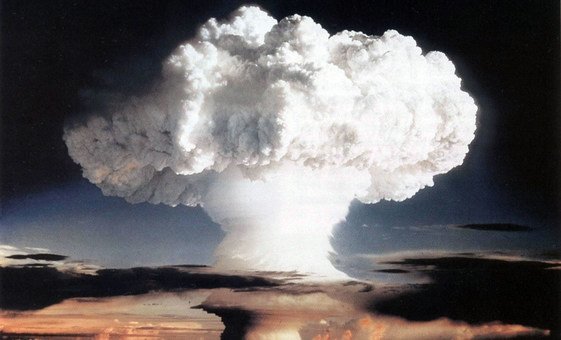
“Stop playing with fire. Now is the time to silence the bombs before they speak again,” he said in his message, which coincides with the 80th anniversary of the first nuclear test on 16 July 1945 – in the New Mexico desert under the Manhattan Project.

A deadly legacy

Since then, more than 2,000 nuclear tests have been carried out worldwide.  

Atmospheric tests in the early decades of the nuclear era spread radioactive fallout across continents, contaminating land and seas, displacing communities and leaving survivors facing health crises passed down through generations.

The international day was declared by the UN General Assembly in 2009, following Kazakhstan’s closure of the Semipalatinsk test site.

It has since become a rallying point for governments, civil society and campaigners pressing for an end to nuclear testing and progress towards full disarmament.

Mr. Guterres stressed that nuclear testing remains a grave danger amid rising geopolitical tensions. He urged States to ratify the Comprehensive Nuclear-Test-Ban Treaty (CTBT), adopted by a large majority in 1996 but still not in force nearly three decades later.

“We must never forget the horrific legacy of over 2,000 nuclear tests,” the Secretary-General said. “The world cannot accept this.”

Burkina Faso declares UN Coordinator persona non grata  

The UN chief has expressed regret of the decision by authorities in Burkina Faso to declare the UN’s Resident and Humanitarian Coordinator in the country, Carol Flore-Smereczniak, persona non grata.

In a statement on Friday, António Guterres said that the transitional authorities had announced the diplomatic sanction declaring her unwelcome, on 18 August.

The UN chief expressed “full confidence” in her “professionalism and dedication and in the broader United Nations system in Burkina Faso.”

During her tenure, Ms. Flore-Smereczniak – who has now left the country – led UN efforts working closely with the Burkinabe authorities to support development initiatives and provide humanitarian assistance.

UN will continue to support Burkinabe

The statement stresses that the UN Charter makes clear the doctrine of persona non grata does not apply to UN officials, as staff members appointed by the Secretary-General are responsible solely to the Organization, and Member States undertake to respect their exclusively international character.

In line with the Charter, the United Nations enjoys privileges and immunities, including the right of its staff to remain and carry out their mandated work.

“Only the Secretary-General, as the Chief Administrative Officer of the Organization, has the authority to decide – after careful investigation – on the withdrawal of any United Nations official.”

Mr. Guterres reaffirmed the UN’s commitment to continue supporting the people of Burkina Faso, and to keep working with the national authorities.  

Source link

World News In Brief: Iran sanctions, Yemen floods appeal, new SDG advocates

“I can tell you that the Secretary-General is aware that today, the Security Council received this joint letter from the three countries,” UN Spokesperson Stéphane Dujarric told journalists.

The three European nations were signatories to the 2015 Joint Comprehensive Plan of Action (JCPOA), an agreement that granted Iran sanctions relief in exchange for strict limits on uranium enrichment, stockpile levels and centrifuge use, alongside robust monitoring and verification by the International Atomic Energy Agency (IAEA).

Snapback clause

The agreement includes a so-called “snapback mechanism” that allows for the reinstatement of sanctions within 30 days if Iran is found to be non-compliant. 

“The Secretary-General urges the JCPOA participants and the Security Council to continue negotiations to find a diplomatic solution that ensures the peaceful nature of the Iranian nuclear programme and brings about economic benefits to the people of Iran,” Mr. Dujarric said.

He said the coming weeks offer “a window of opportunity” to deescalate tensions and pursue a peaceful resolution.

The Secretary-General also underscored the urgency of avoiding a renewed military conflict, and prioritising dialogue. 

In Yemen, IOM appeals for support amid deadly flooding

The UN migration agency, IOM, appealed on Thursday for international support for war-ravaged Yemen, after violent storms devastated communities, destroying homes and sweeping away livelihoods.

Latest assessments by the International Organization for Migration across 73 displacement sites indicate that well over 46,000 people have been affected.

Yemen has been in crisis since Houthi rebels took up arms against the internationally-recognised Government, seizing control of the capital Sanna’a in 2014.

An uneasy truce largely holds but clashes continue internally, together with Houthi attacks on Red Sea shipping and exchanges of airstrikes with Israel rooted in the Gaza conflict.

‘Another devastating blow’

“The floods in Yemen are another devastating blow for families who have already lost so much,” said Abdusattor Esoev, IOM’s Chief of Mission in Yemen.

The governorates of Ibb, Sana’a, Ma’rib, Al Hodeidah, and Ta’iz are among the worst hit, with floods damaging homes, farmland, and public infrastructure.

The latest crisis in Yemen mirrors last year’s devastating floods, which caused widespread damage and loss of life.

This year’s storms have been even more intense and demonstrate how climate change is deepening vulnerabilities across the country and pushing communities further into crisis, IOM said.

UN chief welcomes two new sustainability advocates

The UN chief welcomed two new Sustainable Development Goals (SDGs) advocates on Thursday: Masai Ujiri, Co-Founder of Giants of Africa and former Vice-Chairman and President of the Toronto Raptors; and Muniba Mazari – an award-winning advocate for disability rights, inclusion, and gender equality.

“The SDG Advocates play a vital role in inspiring global action and ambition to achieve the Sustainable Development Goals,” said Secretary-General António Guterres.

Through his non-profit Giants of Africa, Mr Ujiri uses basketball as a transformative tool to create opportunities for youth across Africa and beyond.

“Sport doesn’t just unite people – it breaks down barriers, builds hope and transforms entire communities,” he said.

Pakistan’s ‘Iron Lady’

Ms Mazari, known as the “Iron Lady of Pakistan” has inspired millions through her personal story and her commitment to championing marginalised communities after a spinal cord injury left her using a wheelchair.

“Inclusion is not a privilege; it is a right. I am proud to be an SDG Advocate and to elevate the voices of those who are often unheard,” she said.

Mr Ujiri and Ms Mazari join a global cohort of leaders committed to accelerating progress and inspiring action across all 17 SDGs.

Source link

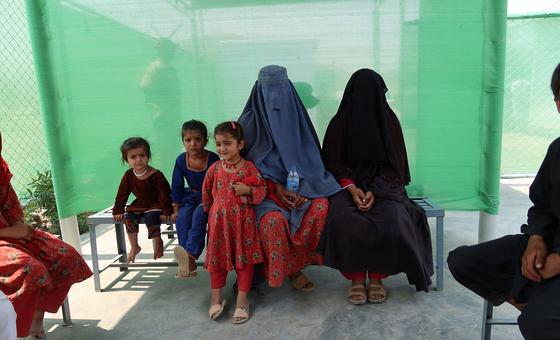
Shelter and safety elude Afghan women returnees from Iran and Pakistan

Since September 2023, more than 2.43 million undocumented Afghan migrants have returned from Iran and Pakistan.

Women and girls account for about half of the returnees from Pakistan, while their share among those returning from Iran has been steadily rising, reaching around 30 per cent in June.

The escalating pace of returns is straining Afghanistan’s overstretched humanitarian system, with women and girls bearing the brunt of the impact, reported the Gender in Humanitarian Action Working Group, a consortium of humanitarian actors led by UN Women and the UN reproductive health agency (UNFPA).

Vulnerabilities at the border

Women and girls are arriving with little protection or support.

“A tent would be my only protection. I have no appropriate clothes or hijab to wear, no food to eat, no contact number and no relatives to stay with,” one woman told UN Women at the border.

Those traveling without a mahram – a male guardian – face particular risks. Interviews and discussions conducted by Working Group revealed reports of extortion, harassment and threats of violence at border crossings.

“They took 6,000 rupees (about $21) and gave me only 2,000 back. Now, I do not know where to go with this money,” said a woman at Torkham. In Islam Qala, others reported “mistreatment and harassment…causing fear and distress.”

Heightened protection risks

Returnees face rising exposure to gender-based violence, early and forced marriage, trafficking and transactional sex – exacerbated by a lack of basic resources.

A humanitarian worker in Kandahar recounted: “A widow with four daughters was looking to see if she could sell one or two daughters to someone here to have money for survival.”

Humanitarian agencies report a critical shortage of safe spaces and Mental Health and Psychosocial Support Services (MHPSS), especially at border crossings, where many women arrive distressed and disoriented.

Shelter, livelihoods and education

Across provinces, women cite shelter, livelihoods and girls’ education as top needs.

“We need a place to stay, a chance to learn and a way to earn,” said a returnee woman in Nangarhar province.

Only 10 per cent of women-headed households live in permanent shelters, and nearly four in ten fear eviction. In Herat, 71 per cent of women reported rent disputes, and 45 per cent of women-headed households were living in inadequate housing.

“Many families lack sufficient financial resources to afford food and basic necessities,” said a woman in Herat.

Women who previously worked in trades such as tailoring or handicrafts now struggle to restart due to a lack of tools, restrictions on movement, and limited networks or documentation.

Looking ahead

With forced returns expected to continue, humanitarian agencies urge the scale-up of gender-responsive services, including safe spaces, mental health care, livelihood support and education access.

UN Women and its partners are calling for increased funding and sustained international support to meet the urgent and long-term needs of Afghan returnee women and girls.

Source link

Iran crisis: UN stays and delivers

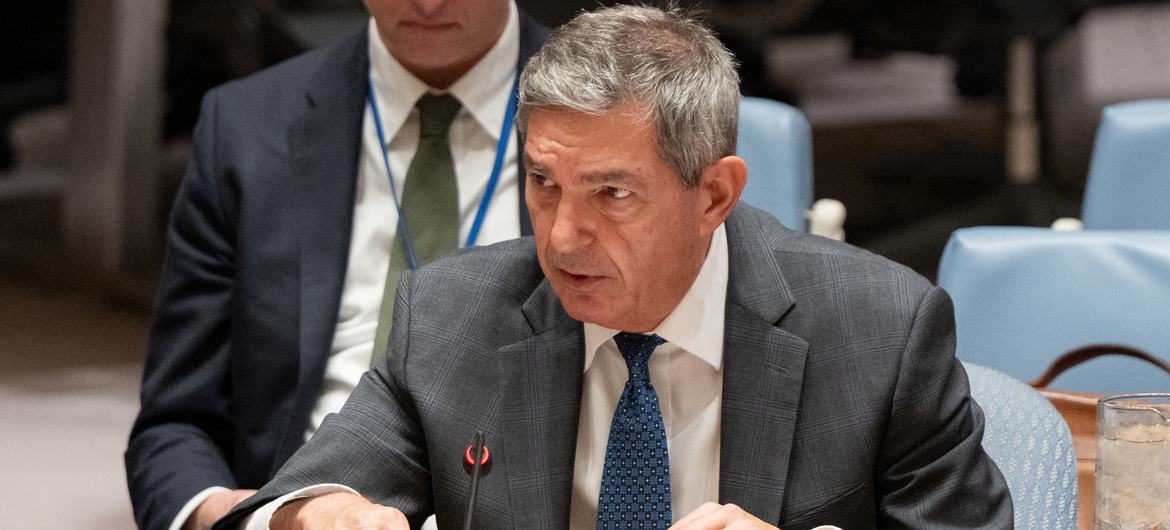
“In the early morning hours of 13 June, a number of attacks took place in Tehran, and other parts of Iran,” said Stefan Priesner, UN Resident Coordinator in Iran.

“Then over the next 12 days there were multiple attacks by either side…we know that there have been at least 627 people killed and almost 5,000 injured in Iran.

Underlining that the UN remained in Iran through the duration of the conflict, Mr. Priesner noted that discussions are ongoing with the Government on “how to adapt existing UN programmes to meet the country’s post-conflict needs”, he told journalists in Geneva via Zoom.

Tehran insight

Speaking from the Iranian capital, the UN official confirmed reports that Tehran had seen a population movement as several residents left the city seeking safety from the missile strikes. He mentioned the solidarity that Iranians had shown towards each other, with families in the north and the countryside hosting those coming from Tehran.

Looking ahead, Mr. Priesner said “we know that the health sector has very specific needs given the damage.” 

Stefan Priesner, UN Resident Coordinator in Iran.

The UN’s development and humanitarian presence in Iran spans 18 agencies with approximately 50 international staff and 500 national staff.

Last year’s budget amounted to around $75 million with two-thirds dedicated to the country’s roughly 3.5 million refugees or people in a refugee like situations.

Iran has been hosting one of the largest – and most protracted – refugee situations in the world for over four decades with inclusive policies for example in the fields of access to health and education, and UN has supported these efforts over the years.

The remainder of the budget is allocated for development projects including climate adaptation and mitigation work. Mr. Priesner said there was need for significant additional funding to support the most vulnerable groups in Iran including children, the elderly, female-headed households and persons with disabilities.

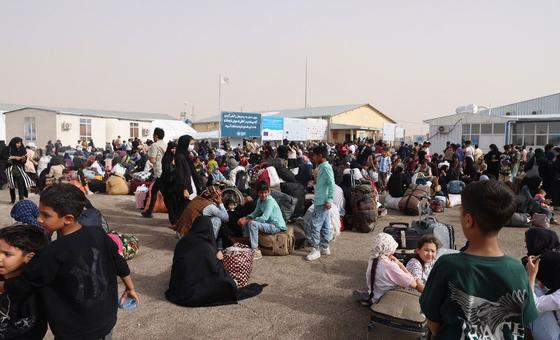
The UN official confirmed reports that increasing numbers of Afghan refugees have been heading back to their country across the Iranian border either voluntarily or through deportation.

According to the UN refugee agency, UNHCR, 36,100 Afghans returned on 26 June alone. The number of daily returns has continued to increase since 13 June, it said.

Every day, and sometimes every few hours, buses arrive and stop at the Afghanistan-Iran border, carrying exhausted and desperate Afghan refugee families with all their belongings,” said Arafat Jamal, UNHCR Representative in Afghanistan.

Afghanistan returnees’ plight

“Many are returning to a country they barely know, forced out of Iran after decades of living there. The recent Israel-Iran war accelerated their return, pushing numbers to a record high, while deep funding cuts have made humanitarian aid operations increasingly challenging.”

Having just returned from the Islam Qala border area, UNHCR Representative Arafat Jamal told UN News that the flow of people into Afghanistan has surged since the conflict, rising from around 5,000 daily crossings to a recent peak of nearly 30,000.

The UNHCR official warned that Afghan returnees are arriving in an impoverished country that is unprepared to support them. Women and girls who had access to education and jobs in Iran now return to a country where “extreme gender injustice” makes such opportunities impossible, he said.

Arafat Jamal, UNHCR Representative in Afghanistan, on returns from Iran.

Afghanistan: Surging returns from Iran overwhelm fragile support systems, UN agencies warn

Ninety-nine per cent of the returnees were undocumented, and 70 per cent were forcibly returned, with a steep rise in families being deported – a shift from earlier months, when most returnees were single young men, according to the UN agency.

The rise follows a March decision by the Iranian Government requiring all undocumented Afghans to leave the country.

Conditions deteriorated further after the recent 12-day conflict between Iran and Israel, which caused the daily refugees crossings to skyrocket from about 5,000 to nearly 30,000, according to Arafat Jamal, the UN refugee agency (UNHCR) representative in Afghanistan.

“They are coming in buses and sometimes five buses arrive at one time with families and others and the people are let out of the bus and they are simply bewildered, disoriented, and tired and hungry as well,” he told UN News, describing the scene at a border crossing.

“This has been exacerbated by the war, but I must say it has been part of an underlying trend that we have seen of returns from Iran, some of which are voluntary, but a large portion were also deportations.” 

Strain on aid efforts

Afghanistan, already grappling with economic collapse and chronic humanitarian crisis, is unprepared to absorb such large-scale returns.

The 2025 Humanitarian Needs and Response Plan calls for $2.42 billion in funding, but only 22.2 per cent has been secured to date.

The scale of returns is deeply alarming and demands a stronger and more immediate international response,” said IOM Director General Amy Pope, “Afghanistan cannot manage this alone.”

Meanwhile, UNHCR alongside partners is working to address the urgent needs of those arriving – food, water, shelter, protection. However its programmes are also under severe strain due to limited funding. 

The agency had to drastically reduce its cash assistance to returnee families at the border from $2,000 per family to just $156.

We are not able to help enough women, and we are also hurting local communities,” added Mr. Jamal.

Some relief, but not enough

In response to growing crisis, the UN Central Emergency Response Fund (CERF) has allocated $1.7 million to the World Food Programme (WFP) to support drought-affected families in Faryab Province.

The funds will provide cash assistance to some 8,000 families in the region, where over a third of the rural population is already facing crisis or emergency levels of acute food insecurity.

“Acting ahead of predicted hazards to prevent or reduce humanitarian impacts on communities is more important than ever,” said Isabelle Moussard Carlsen, Head of OCHA Afghanistan, adding “when humanitarian action globally and in Afghanistan is underfunded…we must make the most of every dollar.” 

Source link

Iran: Return to inspections top priority for UN nuclear agency

Rafael Mariano Grossi was speaking to reporters in Austria following a briefing to the Government in Vienna.

Israel began launching air and missile strikes against Iranian military and nuclear sites nearly two weeks ago, and the United States carried out surprise bombing raids on three Iranian uranium enrichment facilities this past weekend.

A ceasefire between Iran and Israel, announced on social media by US President Donald Trump on Monday night, is fragile but holding. 

However, the extent of damage to Iran’s enriched uranium stockpile remains unclear.

Iran says protective measures taken

Following the initial attacks, Iran informed the IAEA that it would take “special measures” to protect its nuclear materials and equipment.

Mr. Grossi told journalists that he has received a letter from the Iranian Foreign Minister which said protective measures have been taken.

“They did not get into details into what that meant, but clearly that was the implicit meaning of that. So, we can imagine that this material is there,” he said. To confirm this, and to evaluate the situation, “we need to return,” he added.

Inspections vital

On Wednesday, Iran’s parliament approved a bill to suspend cooperation with the IAEA, according to media reports, which has to be approved by the executive branch of the Government.

Mr. Grossi said he wrote to Foreign Minister Abbas Araghchi on Tuesday requesting that they meet “to analyze the modalities” for inspections to continue.

He stressed that the international community “cannot afford” for the inspection regime to be interrupted.

The IAEA chief was also asked about Iran’s plans to withdraw from the Non-Proliferation Treaty (NPT), a key international accord aimed at preventing the spread of nuclear weapons.

The move would be “very regrettable,” he said. “I hope this is not the case. I don’t think this would help anybody, starting with Iran. This would lead to isolation, all sorts of problems.” 

UN urges renewed diplomacy on Iran nuclear deal, hails Tehran-Tel Aviv ceasefire as ‘significant achievement’

Amid this relative calm, the United Nations has renewed its call for a diplomatic solution to the Iran nuclear issue, warning that the objectives of the Joint Comprehensive Plan of Action (JCPOA) – and the resolution that endorsed it – remain unmet.

Addressing a planned Security Council meeting on Tuesday to try and revive the deal amid the dramatic military escalation of the past 12 days, UN political affairs chief Rosemary DiCarlo said the fragile ceasefire announced by Donald Trump overnight provided “an opportunity to avoid a catastrophic escalation and achieve a peaceful resolution of the Iran nuclear issue.

The 2015 Iran nuclear deal – more formally known as the JCPOA and backed by the Security Council – offered Tehran sanctions relief in exchange for strict limits on uranium enrichment, stockpile levels and centrifuge use, alongside robust monitoring and verification by the International Atomic Energy Agency (IAEA).

But the accord has remained in limbo since the United States withdrew in 2018, followed by Iran’s rollbacks of its nuclear-related commitments.

With key provisions under resolution 2231 set to expire on 18 October – unless the Council decides otherwise – the UN’s top political official has warned that the window for reviving diplomacy is narrowing.

With less than four months before resolution’s remaining nuclear-related restrictions are set to expire on 18 October – unless extended by the Council – the UN’s top political official warned that the agreement’s key aims remain elusive.

Diplomacy kneecapped?

Ms. DiCarlo told ambassadors the recent surge in violence had significantly undermined diplomatic momentum.

The military escalation between Israel and Iran since 13 June and United States air strikes on Iran’s nuclear facilities on 21 June complicated prospects for achieving full implementation of resolution 2231,” Ms. DiCarlo said.

Iran’s strikes yesterday on a base in Qatar further exacerbated insecurity in an already tense region.

Despite five rounds of bilateral talks between Iran and the US, facilitated by Oman in recent months, Ms. DiCarlo noted that efforts “did not produce a way forward” to restore full JCPOA implementation.

A sixth round of talks was called off due to the outbreak of hostilities.

Meanwhile, the toll from the recent conflict has been sobering. According to Iranian authorities, at least 606 people were killed and more than 5,300 injured since hostilities erupted on 13 June. Israeli officials reported 28 deaths and nearly 1,500 injuries.

Time running out

While divisions persist, Ms. DiCarlo said JCPOA participants – China, France, Germany, Iran, Russia, and the United Kingdom – had all reiterated their commitment to finding a diplomatic solution.

In a joint statement shared with the Secretary-General in March, China, Iran and Russia stressed the importance of resolution 2231’s provisions and timelines. China separately proposed a “step-by-step and reciprocal approach” to settle the nuclear issue.

“Diplomacy, dialogue and verification remain the best option to ensure the exclusively peaceful nature of Iran’s nuclear programme,” Ms. DiCarlo said.

EU Ambassador Stavros Lambrinidis briefs the Security Council as the Coordinator of the Joint Commission established by the JCPOA.

Deal, not force, key to resolution: European Union

Echoing UN appeals for dialogue, the European Union stressed that “a lasting solution to the Iranian nuclear issue can only be through a negotiated deal, not military action.

Briefing the Council on behalf of EU High Representative Kaja Kallas, Ambassador Stavros Lambrinidis underscored the urgent need “to come back to a diplomatic solution.”

Ensuring that Iran does not acquire or develop a nuclear weapon remains a key security priority for the EU, he said.

He added that Iran’s accelerating nuclear activities and the absence of IAEA oversight – compounded by the economic fallout from US sanctions – have severely undermined the JCPOA, despite sustained EU efforts to preserve it through diplomacy.

Mr. Lambrinidis reaffirmed that diplomacy must prevail, with the IAEA remaining central to monitoring and verification efforts going forward.

US urges Iran to return to talks

Ambassador Dorothea Shea, Acting US Representative, said Iran’s increase in nuclear activity lacked “any credible civilian justification.”

Even after the IAEA Board of Governors found it noncompliant with nuclear safeguards, she noted, “it is regrettable that certain members of this Council have opted to turn a blind eye to, if not encourage, Iranian noncompliance.”

The US “will not turn a blind eye to Iran’s noncompliance and ongoing threat to regional stability,” she continued.

Ambassador Shea said the 21 June “precision operation effectively fulfilled our narrow objective – to degrade Iran’s capacity to produce a nuclear weapon,” after which President Trump coordinated a ceasefire between Iran and Israel.

“In this critical moment,” she concluded, “we must all urge Iran to seize this opportunity for peace and prosperity and abide by its international obligations.”

UK calls ceasefire a first step

UK Ambassador Barbara Woodward welcomed the ceasefire brokered by President Trump but warned that “the situation remains extremely fragile.”

Expressing that “now is the time for a return to diplomacy,” she urged Iran to engage in talks without delay, warning that its nuclear programme has exceeded “any credible civilian justification.”

She said all diplomatic levers will be deployed for a negotiated outcome and to “ensure Iran does not develop a nuclear weapon.”

Iran: Diplomacy can and must resolve differences

Iran’s Ambassador, Amir Saeid Iravani, said that his country “never initiated this war” and that “once the aggressors stopped their attacks, Iran stopped its lawful military response as well”.

Mr. Saeid also expressed his country’s strong commitment to diplomacy as the path through which differences can and should be resolved.

“Iran continues to believe that a diplomatic resolution to nuclear and sanction issues is possible,” Mr. Saeid said.

He called on the Security Council to condemn Israel’s and the United States’ attacks on Iran and their IAEA-protected nuclear facilities and work to ensure that they never happen again.

Ambassador Iravani added that Iran upheld Council resolution 2231 and the JCPOA, and that remedial measures were “fully consistent” with these two instruments.

Israel warns diplomacy with Iran has failed

Israeli Ambassador Danny Danon defended his country’s military operation against Iran, describing it as a necessary move to neutralise a “double existential threat” from Tehran’s nuclear and missile programmes.  

He said Israel achieved complete air superiority and removed key regime targets, acting in coordination with the US.

Ambassador Danon accused Iran of deceiving the world for years, using diplomacy as cover to advance its nuclear weapons programme.

“There is still time,” he said, “to take meaningful and decisive action to ensure that the threat of a nuclear Iran does not return stronger than before.”

“We are often told that diplomacy must be given a chance – it was given every chance, every round, every channel, every deadline – but so far it has failed, the regime in Tehran never had any intention of complying.”

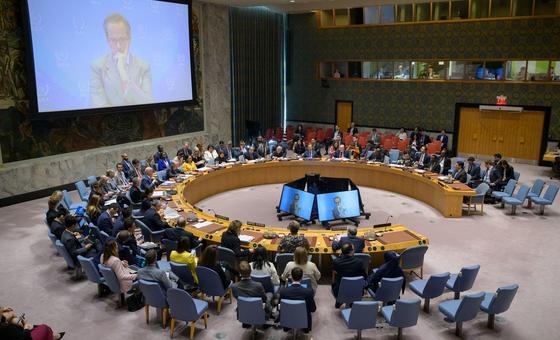
Video feed of the Security Council meeting.

Source link

Guterres condemns Iran attack on Qatar

It comes in the wake of reports that Iran launched missiles at an American military base in Qatar in retaliation for the US bombing three of its nuclear facilities this past weekend.

Iran reportedly fired seven missiles at Al Udeid Air Base, where some 10,000 troops reportedly are stationed.  All but one were intercepted by Qatar and no casualties were reported, according to international media.

End the fighting

The development marks the latest step in more than a week of missile strikes between Iran and Israel, and the situation has escalated with US involvement.

From the outset of the crisis, the Secretary-General has repeatedly condemned any military escalation in this conflict, including today’s attack by Iran on the territory of Qatar. He further reiterates his call on all parties to stop fighting,” the statement said.  

The Secretary-General urged all Member States to uphold their obligations under the UN Charter and other rules of international law. 

Source link

SECURITY COUNCIL LIVE: ‘Diplomacy must prevail’ over Iran following US military intervention, urges Guterres

The UN Secretary-General told the Security Council on Sunday that the bombing of Iran’s nuclear sites by the United States marks a “perilous turn”, warning that the region cannot endure yet another “cycle of destruction.” António Guterres said the must be an immediate ceasefire and returned to “serious, sustained negotiations.” We’ll have live updates from our Meetings Coverage team below and app users can follow here.

Source link

Monitoring Iran and promoting peaceful nuclear use – IAEA role explained

The International Atomic Energy Agency (IAEA) dates back to 1957 and was set up in response to global fears following the first use of nuclear and atomic weapons and alarm over the advent and spread of nuclear technology. An autonomous part of the United Nations system, it works on issues as varied as food safety, cancer control and sustainable development – and also on promoting peaceful uses of nuclear energy.

Another principal responsibility, perhaps less well understood, is the  agency’s framework of nuclear ‘safeguards’ agreements. These agreements are voluntarily entered into by countries and are key to preventing the spread of nuclear weapons by independently verifying whether countries are meeting their non-proliferation commitments. As of 2024, some 182 countries have safeguards  agreements with the IAEA.

IAEA Director General Rafael Mariano Grossi delivers remarks on the military action launched by Israel which includes attacks on nuclear facilities in Iran.

In a June 9 address to the agency’s board, IAEA Director General Rafael Grossi laid out troubling findings, raising fresh concerns about Iran’s compliance with global nuclear agreements.

“Iran has repeatedly either not answered” IAEA requests “or not provided technically credible answers,” Mr. Grossi told the 35-nation board on Monday. Additionally, he said, Iran has sought to “sanitise the locations,” which the agency has now concluded were part of a “structured” nuclear programme in the early 2000s.

“Unless and until Iran assists the agency in resolving the outstanding safeguards issues, the Agency will not be in a position to provide assurance that Iran’s nuclear programme is exclusively peaceful,” he said.

Mr. Grossi expressed alarm at the rapid accumulation of over 400 kilogrammes of highly enriched uranium, which has serious implications (highly enriched uranium is one of the necessary components for the creation of a nuclear bomb).

The statement to the board underlined the significant role the IAEA plays in Iran, which can be broken down into four main areas.

1. Monitoring

The agency uses safeguard agreements under the Nuclear Non-Proliferation Treaty (NPT), a key international accord designed to prevent the spread of nuclear weapons. The vast majority of safeguards agreements are those that have been concluded by the IAEA with non-nuclear-weapon States. However, safeguards are implemented in three States that are not party to the NPT – India, Pakistan and Israel – on the basis of item-specific agreements they have concluded with the IAEA.

As a non-nuclear armed signatory to the treaty, Iran is banned from acquiring nuclear weapons and is required to allow the IAEA to inspect and verify all nuclear materials and activities, including at short notice, if asked.

The agency regularly inspects Iran’s nuclear facilities, including sites like Natanz, Fordow, and Isfahan. The aim is to ensure that nuclear materials are only used for peaceful means and are not diverted for weapons use.

On 9 June, Mr. Grossi noted that man-made uranium particles had been found at three more, undeclared sites (Varamin, Marivan and Turquzabad). Iran, he said, had failed to provide “technically credible explanations” for the presence of the particles, despite years of consultations.

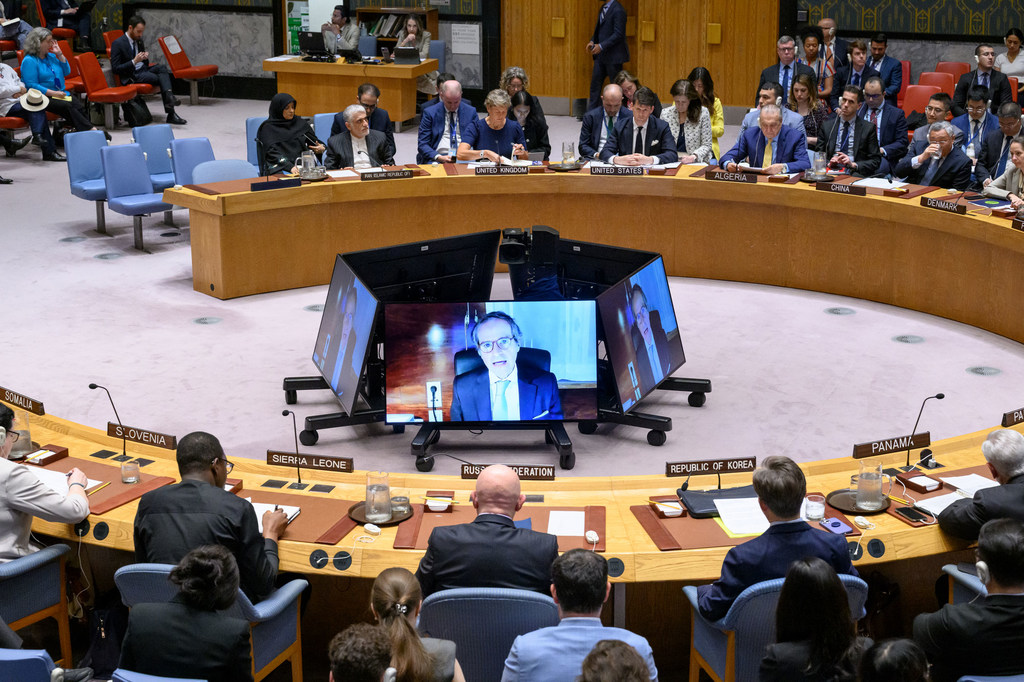
Rafael Grossi (on screen), Director General of the International Atomic Energy Agency (IAEA), briefs the UN Security Council meeting on Iran.

2. Reporting

The agency regularly reports to its Board of Governors on the nuclear activities of Iran (and other countries), using methods such as inspections, monitoring equipment, environmental sampling, and satellite imagery to gather data and prepare technical reports. In the case of countries under special scrutiny – such as Iran – these reports are typically issued every quarter.

If Iran – or any non-nuclear weapon country party to the NPT – fails to comply with the IAEA’s requirements (for example, by limiting access or not explaining the presence of uranium particles), the agency can report Iran to the UN Security Council, which may lead to diplomatic pressure, sanctions or calls for further negotiations.

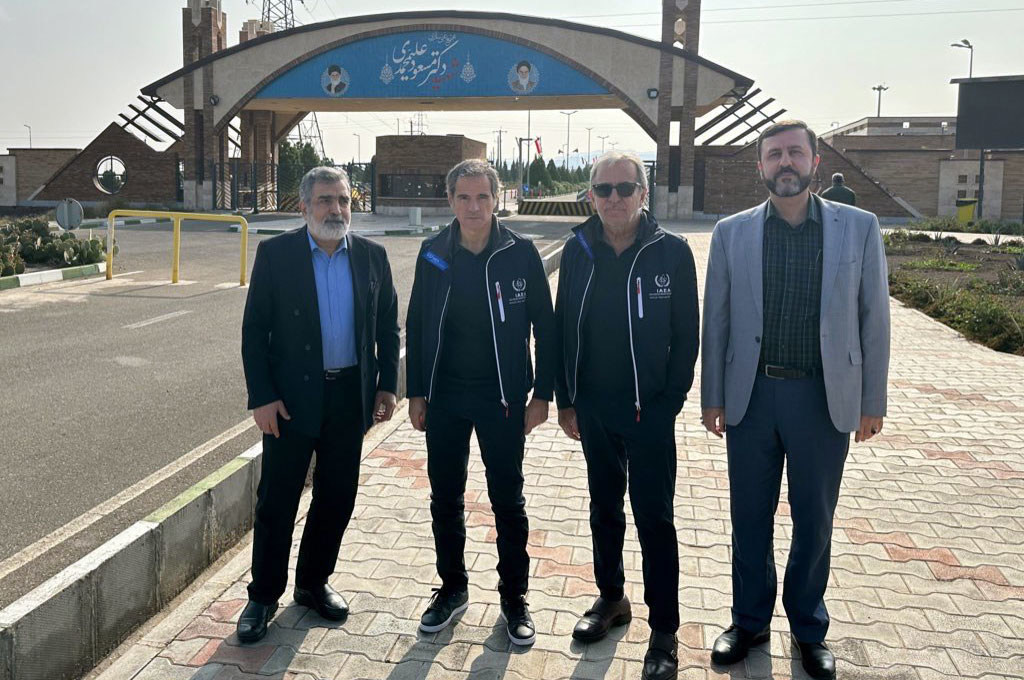
IAEA Director General Rafael Grossi (2nd left) visiting the Natanz and Fordow nuclear facilities.

3. Diplomatic engagement

The IAEA frequently calls for diplomatic solutions and emphasises the importance of dialogue to resolve concerns about Iran’s nuclear intentions. Director General Grossi has engaged directly with Iranian authorities and international stakeholders to maintain communication and transparency.

Addressing the Security Council on June 13, Mr. Grossi said that his agency was in constant contact with the Iranian Nuclear Regulatory Authority to assess the status of affected facilities and determine broader impacts on nuclear safety and security.

4. Safety and security oversight

This is a critical part of the IAEA’s broader mission to prevent nuclear accidents, ensure that nuclear energy is used for peaceful purposes, and protect people and the environment.

The IAEA works with the Iranian authorities to ensure that nuclear facilities like Natanz, Fordow, and Esfahan operate safely, by assessing the design and operation of the facilities, monitoring radiation protection measures, and evaluating emergency preparedness.

After the June 2025 Israeli strikes, the IAEA confirmed that Natanz had been impacted but reported no elevated radiation levels. However, it emphasised that any military attack on nuclear facilities is a violation of international law and poses serious risks to safety and the environment.

Human Rights Council hears alarming updates on executions in Iran and global civic space crackdown

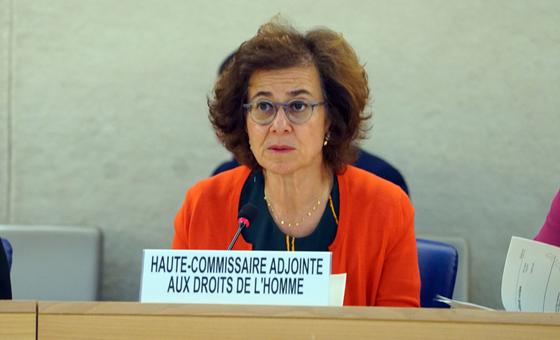
At least 975 people were executed in Iran in 2024, the highest number reported since 2015, according to a report Deputy High Commissioner for Human Rights, Nada Al-Nashif, presented to the Geneva-based Council on Wednesday. 

Of the total executions, just over half were for drug-related offenses, 43 per cent for murder, two per cent for sexual offenses, and three per cent for security-related charges. At least four executions were carried out publicly. 

“These cases are marked by serious allegations of torture and due process violations, including lack of access to a lawyer,” said Ms. Al-Nashif. 

Violence and discrimination against women

At least 31 women were reportedly executed in Iran last year, up from 22 in 2023. Of the 19 women executed for murder, nine had been convicted of killing their husbands in cases involving domestic violence or forced or child marriage, areas in which Iranian women have no legal protections.

Some executions were reportedly linked to protests that began in September 2022 under the banner “Women, Life, and Freedom.”

Beyond executions, femicide cases surged, with 179 reported in 2024 compared to 55 the year before. Many stemmed from so-called “honour” crimes or family disputes, often involving women and girls seeking divorce or rejecting marriage proposals.

Ms. Al-Nashif also warned that the suspended Chastity and Hijab Law, if enacted, would pose a serious threat to women’s rights. Penalties for violations such as improper dress could include heavy fines, travel bans, long-term imprisonment, or even the death penalty.

In addition, of the 125 journalists prosecuted in 2024, 40 were women, many reporting on human rights and women’s rights issues.

Religious and ethnic minorities

“In 2024, the death penalty continued to have a disproportionate impact on minority groups,” Ms. Al-Nashif told the Council.

At least 108 Baluchi and 84 Kurdish prisoners were executed in 2024, representing 11 and 9 per cent of the total, respectively.

The report also raised concerns over the lack of official data on the socioeconomic conditions of ethnic and ethno-religious minorities and non-citizens, which hampers efforts to assess their situation and measure the impact of targeted policies and programmes.

Looking ahead

While Iran continued engagement with the Office of the UN High Commissioner and other human rights mechanisms, it denied access to the Independent International Fact-Finding Mission on the Islamic Republic of Iran.

“Our Office remains ready to continue and build on its engagement with the Iranian authorities on the range of issues highlighted in the report of the Secretary-General for the promotion and protection of all human rights,” Ms. Al-Nashif concluded. 

Global ‘Super Election’ cycle undermined democratic participation

In the Council’s afternoon session, Gina Romero, UN Special Rapporteur on the rights to freedom of peaceful assembly and association, presented her report on how the 2023–2025 “super election” cycle has affected civic space around the world.  

In 2024, half of the world’s population elected their local, national and international representatives. While Ms. Romero’s report on this cycle does not assess the integrity of the elections, it identifies troubling global patterns of systematic repression of the exercise of peaceful assembly and association.

“The misuse of restrictive laws, smear campaigns, disinformation targeting civil society intensified globally in the super electoral cycle, undermining electoral participation and freedom of association,” she said.  

Political repression and violence

As criminal justice systems are used to repress the opposition, leaders and members of political parties faced undue restrictions and political persecution. Civil society activists and election observers have also faced harassment, arbitrary detention, torture and murder.  

“When political parties, civil society, and peaceful assemblies are suppressed, genuine political pluralism and competition cannot exist,” argued Ms. Romero. “I stress that these conditions are incompatible with free and genuine elections and risk legitimising undemocratic rule.”

Minority representation

Ms. Romero also underscored that women’s political leadership remains severely underrepresented, while LGBTIQ individuals and their organizations faced attacks during the super electoral cycle.  

Both groups experienced physical and online political violence, restricting their electoral participation and accelerating the decline of their rights after the elections.

Calls to protect freedoms  

Amid global crises and a rapid democratic decline, Ms. Romero emphasized the urgent need to protect the rights to peaceful assembly and association throughout the entire electoral cycle.  

She outlined key recommendations, including strengthening legal protections before elections, ensuring accountability afterward, regulating digital technologies and promoting non-discriminatory participation throughout.  

“Dissent is a fundamental element of democratic societies,” she concluded in Spanish. “Rather than being suppressed, it should be welcomed and permanently protected.” 

Source link

Atomic watchdog says Iran not complying with nuclear safeguards

The development follows serious warnings from the head of the International Atomic Energy Agency (IAEA) earlier this week that inspectors have been unable to determine whether Iran’s nuclear programme was “exclusively peaceful” – as per the terms of the 2015 nuclear deal from which the United States subsequently withdrew.

A fresh round of negotiations between Washington and Tehran is slated to begin on Saturday in Oman, according to news reports, amid heightened geopolitical tensions linked to rumours of an impending Israeli attack on Iran.

Following Thursday’s resolution vote by the IAEA’s board of governors – which passed by a vote of 19 for, three against and 11 abstentions – Iran’s atomic energy body reportedly announced plans to open a new uranium enrichment plant and increase production of enriched fissile material.

Growing concerns

The draft for Thursday’s resolution highlights serious and growing concerns since at least 2019 that Iran had failed to cooperate fully with the UN agency’s inspectors.

Tehran has “repeatedly” been unable to explain and demonstrate that its nuclear material was not being diverted for further enrichment for military use, the draft text maintains.

Iran has also failed to provide the UN agency with “technically credible explanations for the presence of [man-made] uranium particles” at undeclared locations in Varamin, Marivan and Turquzabad, it continues.

“Unfortunately, Iran has repeatedly either not answered, or not provided technically credible answers to, the agency’s questions,” IAEA chief Grossi said on Monday. “It has also sought to sanitize the locations, which has impeded Agency verification activities.”

According to Mr. Grossi, Tehran has stockpiled 400 kilogrammes of highly enriched uranium.

Given the potential proliferation implications, the agency cannot ignore [this],” he told the UN agency’s governing board on Monday.

Source link

Lack of cooperation from Iran hampers nuclear checks, says atomic energy watchdog

Rafael Grossi, Director-General of the International Atomic Energy Agency (IAEA), said on Monday that Iran’s growing stockpile of highly enriched uranium and unresolved questions about its programme remain serious issues.

Unless and until Iran assists the agency in resolving the outstanding safeguards issues, the Agency will not be in a position to provide assurance that Iran’s nuclear programme is exclusively peaceful,” he said.

He was addressing IAEA’s Board of Governors, which comprises 35 countries – including France, Russia, the UK and the US.

Lack of credibility

Mr. Grossi further noted that Iran had failed to provide technically credible explanations for the presence of man-made uranium particles at three undeclared sites – Varamin,  Marivan and Turquzabad – despite years of consultations.

Based on its assessments, IAEA can conclude that these three locations were part of a structured nuclear programme that operated until the early 2000s and involved undeclared nuclear material, he said.

“The agency also concludes that Iran did not declare nuclear material and nuclear-related activities at these three undeclared locations in Iran…as a consequence of this, the Agency is not in a position to determine whether the related nuclear material is still outside of safeguards.”

The situation is exacerbated by the country’s decision to stop implementing some provisions of its Safeguards Agreement, a legal requirement under international law, he added, urging Tehran to urgently restore transparency and comply with international obligations.

Highly enriched uranium

Mr. Grossi also expressed alarm at the rapid accumulation of over 400 kilogrammes of highly enriched uranium, which has serious implications.

Given the potential proliferation implications, the agency cannot ignore [this],” he said.

While commending Egypt’s recent diplomatic efforts to mediate between Iran and the United States, Mr. Grossi stressed that only a diplomatic solution, backed by IAEA verification, could restore trust.

He said the agency stands ready to verify any future agreement between the two sides.

“The effect of a stabilised situation in Iran with regards to its nuclear programme will be immediate and bring the Middle East one big step closer to peace and prosperity,” he said.

‘Clear violations’ in DPR Korea

Turning to the Democratic People’s Republic of Korea (DPRK), Mr. Grossi said the IAEA continues to monitor nuclear activity remotely, despite being denied direct access to the country.

North Korea’s five-megawatt electrical reactor at Yongbyon “likely continues” to be operating in its seventh cycle, while reprocessing of irradiated fuel has likely resumed at the Radiochemical Laboratory.

He noted ongoing construction at a new building with similarities to the Kangson enrichment site and said the light water reactor at Yongbyon remains active.

“The continuation and further development of the DPRK’s nuclear programme are clear violations of relevant UN Security Council resolutions and are deeply regrettable,” he said, adding that IAEA stands ready to play its role in verifying the DPRK’s nuclear programme.

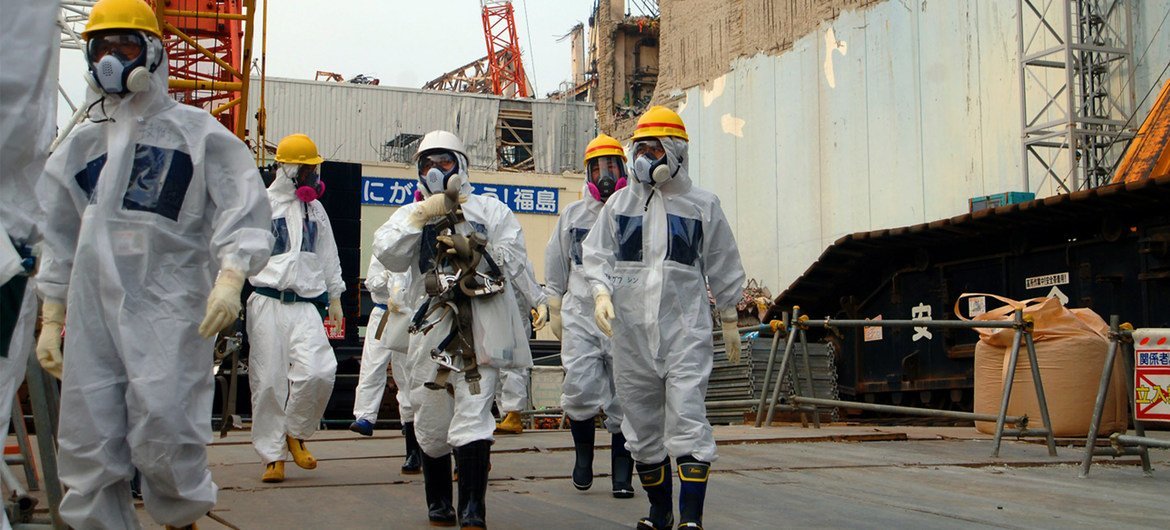
IAEA experts depart Unit 4 of Fukushima Daiichi Nuclear Power Station. (April 2013 photo).

Monitoring discharge in Japan

Mr. Grossi said the IAEA continues to monitor the controlled release of ALPS-treated water from the Fukushima Daiichi Nuclear Power Station in Japan, which suffered major damage in a 9.1 magnitude earthquake and tsunami in March 2011.

In April this year, IAEA and international experts collected and analysed diluted samples ahead of discharge.

“The IAEA has maintained its independent monitoring and analysis efforts, confirming that tritium concentrations in the discharged batches remain far below operational limits and align with the international safety standards,” Mr. Grossi said.

‘Precarious situation’ in Ukraine

Director-General Grossi also highlighted the precarious situation at Ukraine’s Zaporizhzhya Nuclear Power Plant, where all six reactors remain in cold shutdown amid continued military activity.

A full damage assessment is also underway at Chernobyl, which was the site of a drone strike and ensuing fire in February that resulted in “significant damage” to a confinement arch that is critical to maintaining long-term safety at the site.

The power plant suffered a massive nuclear accident in 1986 and has since been encased in a protective structure to contain radioactive material and prevent its release.

“As the military conflict moves further into its fourth year, Ukraine needs support, and the IAEA is providing it,” Mr. Grossi said, reaffirming the Agency’s commitment to supporting Ukraine’s nuclear infrastructure during wartime and throughout the eventual post-war reconstruction.

Source link

Tension Grips As Iran Missiles Pound Israel, Iron Dome Shelters Targets

Iran, as warned earlier, fired missiles at Israel at 10 PM (IST) in response Israel’s ground offensive in Lebanon to target Hezbollah and days after the militant outfit’s commander Hassan Nasrallah and a top official from Iran’s Islamic Revolutionary Guard were killed in airstrikes on Beirut.

The Israel Defence Forces (IDF) said at 10.08 pm IST that the missiles were fired a “short while ago”. The launch was confirmed by Iran’s official IRNA news agency, which said the country had launched “a missile attack on Tel Aviv” and confirmed by news agency Reuters quoting Israeli media as saying that as many as 100 missiles had been launched.

Videos showed debris from missiles intercepted by Israel’s famed Iron Dome and Arrow defence systems raining down on Tel Aviv. The Israeli defence forces also confirmed that blasts had been heard in “Jerusalem and elsewhere”. There have been no reports of any casualties so far.

“Iran’s attack is continuing. You are requested to remain in a protected space until further notice. The explosions you are hearing are from interceptions or fallen projectiles,” the IDF said in a statement.

However, the Israeli Defense Forces (IDF) have reaffirmed their high state of preparedness and readiness to respond to any attacks from Iran. In response to the escalating situation, Israel has launched a ground offensive in Lebanon, targeting the Iran-backed militia Hezbollah. This move is seen as a direct response to the killing of Hezbollah’s leader, Hassan Nasrallah, in an Israeli air strike last week.

US Backs Israel’s Defensive Measures

The United States and other Western allies have previously stepped in to help defend Israel against a combined Iranian missile and drone attack in April. This attack was launched by Tehran in retaliation for an Israeli strike on the Iranian consulate in Damascus. The US official added, “A direct military attack from Iran against Israel will carry severe consequences for Iran.”

Despite the escalating tensions, Iran has stated that it would not deploy soldiers to confront Israel. However, Iran’s foreign ministry spokesman, Nasser Kanani, has said that local groups possess the capability to defend themselves against aggression. Israeli Prime Minister Benjamin Netanyahu has issued a stark warning to Iran, stating, “There is nowhere in the Middle East, Israel cannot reach.” He also expressed hope for a future when Iran is finally free, predicting that this would come a lot sooner than people think.

The United States has cautiously backed Israel’s move to dismantle Hezbollah’s ability to attack northern Israel, even as President Joe Biden has called for a ceasefire. US Secretary of State Antony Blinken said that Washington was tracking events in the Middle East very closely. He said, “The United States is committed to Israel’s defense.”

US Boosts Military Presence in the Middle East

In a show of support, the US has boosted its forces in the Middle East by a few thousand troops, bringing in new units while extending others that are already there. The Pentagon has also announced the deployment of more fighter jets to the region. US Defense Secretary Lloyd Austin has offered support to his Israeli counterpart Yoav Gallant for dismantling attack infrastructure belonging to Hezbollah along the border with Lebanon.

The escalating conflict has raised fears of a wider regional conflict that the United States and other world powers have said they want to avoid in the Middle East. The situation remains complex and can change quickly depending on the political situation and recent events.

2006 Lebanon War

The current situation bears a striking resemblance to the 2006 Lebanon War, also known as the July War, which was a 34-day military conflict in Lebanon, Northern Israel, and the Golan Heights. The principal parties were Hezbollah paramilitary forces and the Israel Defense Forces (IDF).

The conflict started on 12 July 2006 and continued until a United Nations-brokered ceasefire went into effect in the morning on 14 August 2006, though it formally ended on 8 September 2006 when Israel lifted its naval blockade of Lebanon.

As the world watches with bated breath, the hope is for a swift resolution to the escalating tensions, with diplomatic efforts being made to ensure civilian safety on both sides of the border. The international community is eager to prevent a full-blown conflict that could have devastating consequences for the region and beyond in the form of a Third World War.

The unfolding events serve as a stark reminder of the fragile peace in the Middle East with potential to upset the global order.