World News in Brief: Iran in the Human Rights Council, Myanmar election ‘fraud’, migration chief in Cyprus, Mozambique flood update

Addressing the Human Rights Council in Geneva, Mr. Türk said that although the “killing on the streets of Iran may have subsided…the brutality continues”.

He said that violent repression did not solve any of Iran’s problems but instead created conditions for further violations, instability and bloodshed.

“We have indications that the security forces made mass arrests in several cities, even pursuing injured people into hospitals, and detaining lawyers, human rights defenders, activists, and ordinary civilians,” he told diplomats.

Prosecutions ongoing

“The Tehran Prosecutor’s Office has reportedly opened criminal cases against athletes, actors, people involved in the movie industry, and the owners of cafes, on charges of supporting the protests,” Mr. Türk continued. 

Protests erupted across Iran on 28 December in response to the collapse of the national currency, soaring inflation and worsening living conditions.

Also speaking at the Council, former international prosecutor Payam Akhavan described how one protester pretended to be dead in a body-bag for three days until his parents found him. 

The civil society representative said that parents looking for their relatives usually started at hospitals, where “many of the wounded (protesters) have been abducted and killed”. 

Others have been forced to sign confessions which blame imaginary “terrorists” for the murder of their children, Mr. Akhavan maintained.

He cited a medical report circulating among Iranian doctors that 16,500 people had been killed during the demonstrations. “The number increases by the day, because the killings haven’t stopped,” he said.

Rejection of Myanmar military’s ‘fraudulent’ election must be unequivocal: UN independent expert

The international community must unequivocally reject as illegitimate the election results in Myanmar and any power arrangement that follows, said Tom Andrews, the Special Rapporteur on human rights in Myanmar on Friday.

The UN-appointed independent expert described the elections, which began in late December and are expected to be concluded this weekend, as ‘fraudulent’, urging countries not to accept the results. 

“The junta is banking on the world’s fatigue, hoping that the international community will accept military rule dressed up in civilian clothing,” he said. “Governments must not allow that to happen.”

‘Fear and coercion’

The junta’s election scheme was marked by violence, low turnout and widespread coercion, said Mr. Andrews.

Voters reported being monitored and pressured by local authorities, with threats explicit or implied. Junta officials were pushing citizens to polling stations even as military jets bombed villages throughout the country.

Mr. Andrews added that the junta banned credible opposition parties, jailed popular political figures and muzzled the press, “crushing fundamental freedoms, and using fear and coercion to drive a reluctant electorate to the polls.”

UN migration chief backs EU presidency efforts on migration

This week, the UN migration agency (IOM) Chief Amy Pope concluded a visit to Cyprus after a round of high-level talks, which focused on advancing a comprehensive migration and asylum agenda. 

“Cyprus knows what it means to be on the frontline – and that experience really matters right now,” said Ms Pope. “As the European Union (EU) moves from agreement to action, this is the moment to make sure policies really work – for migrants, for communities, and countries.

This trip marks the IOM Chief’s first visit to Cyprus in her current role, as Cyprus assumes the EU Council Presidency and the EU begins implementing the landmark Migration and Asylum Pact.

Humane returns 

With persistent instability Afghanistan, Syria, Sudan and the Sahel, Ms Pope reaffirmed IOM’s support and engagement with the EU to ensure refugee returns are humane and dignified. 

During her visit, she underscored the urgent need to address conditions along key migration routes, with IOM emphasising efforts to curb irregular migration, disrupt smuggling networks, meet humanitarian needs, and save lives.

Ms Pope also called for stronger migration data systems and evidence-based policymaking.

Nearly 600,000 people upended by Mozambique floods

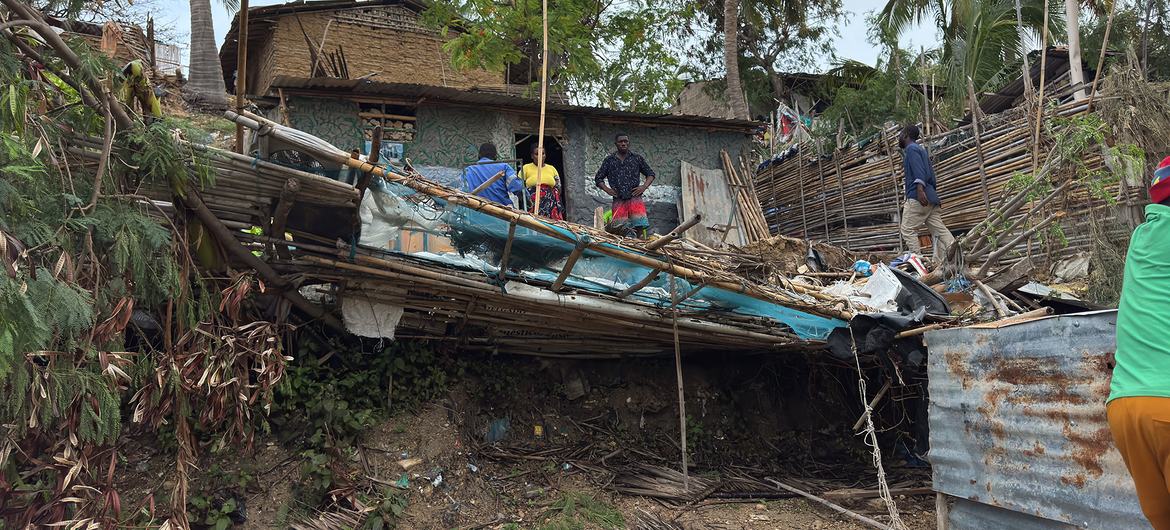
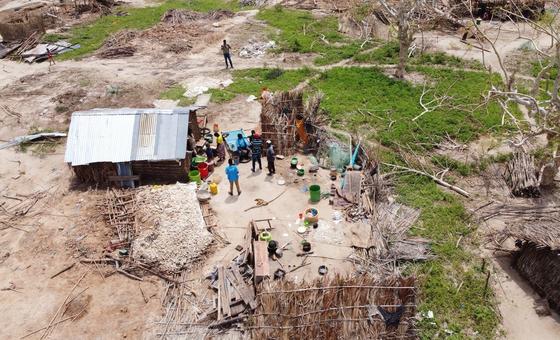
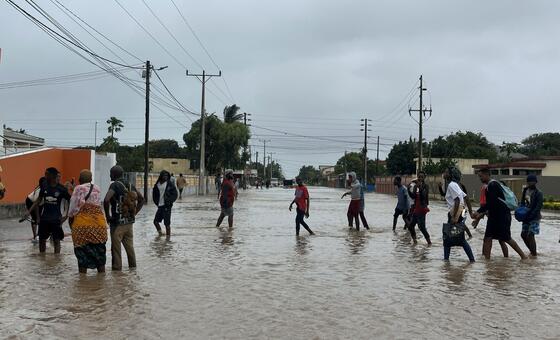
Nearly 600,000 people have been affected by severe flooding across southern and central Mozambique. Weeks of heavy and sustained rainfall have caused homes to collapse and roads to wash away, displacing more than 73,000 people, according to figures from the IOM

Flooding has been reported in 10 of Mozambique’s 11 provinces, with Gaza Province “hosting significant concentrations of displaced people”. Humanitarian response partners expect reported figures to rise as access to affected communities improves.

IOM teams there have described acute shortages of shelter, constraints on food and basic services, overcrowded centres, and limited access to safe water, sanitation and hygiene – increasing the risk of waterborne diseases spreading.

Preliminary reports from the International Red Cross (IFRC) indicated between 50 and 60 deaths, a figure likely to rise as waters levels recede. 

Response ahead of cyclone season 

Following a Government request for international support on 16 January including air assets for search and rescue efforts, the IOM plans to appeal for up to $20 million to reinforce life-saving assistance and strengthen water, sanitation and hygiene. 

With this being only the start of the cyclone season and dams at near capacity, representatives from the IFRC have underscored the need for investment in early warning systems, climate‑resilient infrastructure, and locally led preparedness. 

Source link

Mozambique floods heighten disease, malnutrition risks – UN agencies

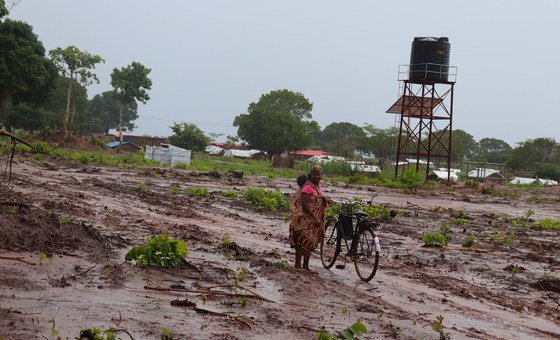
The head of aid coordination office, OCHA, in the country, Paola Emerson, told reporters in Geneva that more than half a million people have been impacted by the floods, triggered by heavy rains in the first weeks of the new year.

“The numbers keep rising as extensive flooding continues and dams keep releasing water to avoid bursting,” she said.

Mozambique’s Gaza province is most affected along with Maputo and Sofala provinces.

‘Melting’ houses

Speaking from Xai-Xai, Gaza’s capital city, Ms. Emerson stressed that 90 per cent of the country’s people live in adobe houses, which are earth-based structures “that basically melt after a few days’ rains”.

Health facilities, roads and critical infrastructure are also heavily impacted. Ms. Emerson said that some 5,000 kilometres of roads have been damaged across nine provinces, including the main road linking the capital Maputo to the rest of the country, which is currently inaccessible, resulting in major supply chain disruptions.

Meanwhile, dams continue to release water even as heavy rains subside.

“From just one dam, up to 10,000 cubic metres-worth of water were being discharged. That is approximately 25 times the amount of water that could be held in the press briefing room you are in today, every second,” Ms. Emerson told journalists, seated in a room with capacity for more than 100 people.

You cannot imagine the strength of this water and the impact it has on people and the infrastructure.

National emergency

The Government of Mozambique has declared a national emergency and has established an emergency operations centre in Gaza province. Xai-Xai, which is near the Limpopo River, has been inundated, prompting evacuations. Ms. Emerson said that authorities have issued alerts for downtown Xai-Xai, “including warnings of crocodile risks in flooded areas”.

“River levels are rising and are reaching urban areas or heavily populated areas,” she said. “The crocodiles that are in the Limpopo River…are able to get into urban or populated areas that are now submerged underwater.

Also speaking from Xai-Xai, the UN Children’s Fund (UNICEF)’s Chief of Communication in Mozambique, Guy Taylor, warned that flooding is “turning unsafe water, disease outbreaks and malnutrition into a deadly threat for children”.

Lethal combination

The combination of waterborne diseases and malnutrition “can often prove lethal,” he said, stressing that even before the floods, four out of every 10 children in Mozambique experienced chronic malnutrition.

“This renewed disruption to food supplies, to health services and to care practices threatens to push the most vulnerable children into a dangerous spiral,” he insisted.

Mr. Taylor added that Mozambique is now entering into its annual cyclone season, creating the risk of a double crisis. “We can prevent disease, deaths and irreversible losses to children, but we need to act fast,” he said.

The UNICEF spokesperson described Mozambique as “a country of children and young people”, with an average age of 17.

“When floods and cyclones strike, as they have repeatedly and with increasing frequency over recent years, it’s the youngest and children who are hit hardest,” he concluded.
Source link

Violence in northern Mozambique forces thousands to flee, straining aid efforts

The displacement is the latest consequence of a cascade of overlapping emergencies in the country – including armed violence, climate shocks, disease outbreaks and a severe funding shortfall. Since January, over 95,000 people have fled insecurity in Cabo Delgado and humanitarian access is becoming increasingly fragile.

According to the UN Office for the Coordination of Humanitarian Affairs (OCHA), attacks by armed groups between 20 and 28 July triggered the displacement of at least 46,667 people across the districts of Chiúre, Ancuabe and Muidumbe.

Chiúre was the hardest hit, with more than 42,000 people uprooted – over half of them children.

Insecurity persists, and people on the move often lack civil documentation,” OCHA said in a humanitarian bulletin on Saturday. “These challenges may impact the ability of displaced people to move freely, safely access basic services and maintain their livelihoods.

Children separated from families

Attacks in Chiúre Velho, Ocua and Mazeze have driven families to Chiúre Sede, where they are sheltering in overcrowded conditions in the neighbourhoods of Bairro Micone and Bairro Namicir. Reports indicate a high number of unaccompanied or separated children.

Food, shelter and essential non-food items are reported as the most urgent needs, according to humanitarian partners.

The security situation in Ancuabe district also deteriorated rapidly. According to the UN International Organization for Migration (IOM), the number of displaced families nearly tripled in one week, reaching 444 households (1,946 people), including over 1,200 children. The violence forced residents of Nanduli village to seek refuge in Chiote and Ancuabe Sede.

In Muidumbe, fighters reportedly torched homes in Magaia village and opened fire near Mungue. Nearly 500 families fled to nearby displacement sites, where humanitarian access remains limited.

Protection concerns, limited funding

OCHA stressed that under international law, civilians must be allowed to seek safety and freely choose their destination. But insecurity, lack of documentation and involuntary relocations are compounding protection risks.

At the same time, the aid response remains severely underfunded.

As of July, only 19 per cent of Mozambique’s 2025 Humanitarian Response Plan has been funded. Of the $352 million requested, just $66 million has been received – forcing agencies to reduce their response targets by over 70 per cent. They now aim to assist only 317,000 people, down from the target of 1.1 million at the start of the year.

Urgent and sustained funding is essential to prevent further deterioration and address the escalating humanitarian needs that remain as acute and widespread as ever,” the OCHA report warned.

Source link

World News in Brief: Aid for Syria, children under attack in Mozambique, rights-based climate action

Despite limited resources, the UN and partners are reaching some 2.5 million people each month across the country. In May alone, more than one million people received assistance, according to the Office for the Coordination of Humanitarian Affairs (OCHA).

Cross-border aid has significantly increased this year. Since January, 1,185 humanitarian trucks have crossed from Türkiye into Syria – six times the number recorded during the same period last year. The uptick reflects growing needs and intensified delivery efforts.

Syria’s health system, however, remains under severe strain. Fewer than 60 per cent of hospitals and less than half of primary health centres are fully functional. Essential medicines are in short supply, treatment costs are beyond the reach of many families and overcrowded shelters continue to heighten the risk of disease outbreaks.

Meanwhile, explosive remnants of war and unexploded ordnance pose a deadly and ongoing threat to civilians. Since 8 December, 2024, more than 1,000 casualties have been reported – over 400 of them fatal and nearly 600 resulting in injuries – children accounting for over a third of the victims.

“The humanitarian community is calling for urgent support to expand risk education, professional clearance operations and assistance for survivors,” UN Spokesperson Stéphane Dujarric told journalists at the regular news briefing in New York.

Funding shortfalls are compounding the crisis. The Syria Humanitarian Response Plan requires $2 billion by the end of June to support 8 million of the most vulnerable people. To date, it has received just $236 million – less than 12 per cent of the total needed.

Northern Mozambique has been mired in what has been described as a “triple crisis” – violence and insecurity, climate shocks, and post-electoral unrest. (file photo)

Children targeted by armed groups in northern Mozambique

Children also continue to bear the brunt of a worsening crisis in Mozambique, where over 1.3 million people have been displaced by violence, extreme weather shocks and post-electoral unrest.

These crises have also left 5.2 million in urgent need of humanitarian assistance.

The situation is particularly dire in the northern Cabo Delgado province, which has witnessed a spike in reports of abduction, forced recruitment and use of children by non-state armed groups.

According to the UN Children’s Fund (UNICEF), at least three girls aged 12, 14 and 17 were killed in an attack last month, and eight other children abducted – highlighting the grave risks facing children in the conflict.

The agency expressed deep concern over such gross violations of children’s rights, stressing that “every child has the right to live in safety, free from violence and fear.”

UNICEF is working with partner agencies to assist impacted children and their families, support the safe return and reintegration of children abducted by non-state armed groups, and provide access to vital services such as health, protection, and education.

UN rights chief calls for bold climate action grounded in human rights

The UN’s top rights official warned on Tuesday that humanity’s survival is inseparable from the health of the planet.

Speaking at Oxford University, Volker Türk highlighted the need for a new kind of politics to tackle the climate crisis and rising global inequality, urging strong leadership to push for urgent, just and rights-based solutions.

“Not only have we created a false separation from nature, we are deluded enough to believe we can make nature bend to our will,” Mr. Türk said, criticizing the continued exploitation of fragile ecosystems.

The High Commissioner linked environmental degradation with systemic injustice, stating that the world’s richest one per cent are responsible for more carbon emissions than the poorest two-thirds. He stressed that those least responsible for the climate crisis are often the ones suffering its worst impacts.

He also expressed concern over the lack of adequate climate finance and called for reforms to international financial systems, noting growing support for a proposed fossil fuel non-proliferation treaty that would aim to end the expansion of new oil, coal and gas projects.

“Our rights call for all people, now and in the future, to live in safety, security and opportunity, on a healthy planet,” he said.

Mr. Türk concluded by urging governments, institutions and individuals to join a global movement for change, grounded in human rights, to address the climate emergency and build a more sustainable and equitable future.

Source link

Thousands flee homes in Mozambique as conflict and disasters fuel worsening crisis

The latest displacement brings the total number of people uprooted by violence, cyclones and social unrest in Mozambique to nearly 1.3 million, according to the UN refugee agency, UNHCR.

The situation is particularly dire in Cabo Delgado province, where attacks by non-state armed groups continue to drive displacement, destroy infrastructure and disrupt recovery efforts.

Thousands have lost their homes, many for the second or third time and are seeking safety in already overstretched communities,” Xavier Creach, UNHCR Representative in Mozambique told journalists at a regular news briefing in Geneva on Friday.

A ‘triple crisis’

Mr. Creach warned that the southeast African country is grappling with a “triple crisis” – armed conflict and displacement, recurring extreme weather events, and months of post-electoral unrest.

At the same time, extreme weather events – most recently Cyclone Jude in March – have devastated communities already hosting large numbers of displaced families. Food prices have surged by up to 20 per cent in some areas, compounding the strain on households and deepening the economic fragility in one of the world’s poorest countries.

The risks facing displaced people, particularly women and children, are severe. Protection concerns, including gender-based violence, family separation and limited access to documentation, are rising sharply.

According to UNHCR estimates, nearly 5.2 million people across the country require some form of humanitarian assistance.

Dwindling funds

In the challenging environment, UNHCR’s response is constrained by lack of funding with less than one-third of the $42.7 million funding appeal for the year met so far.

The agency warned that unless urgent support is mobilized, vital programmes will be at risk.

The broader UN humanitarian appeal, addressing other critical sectors such as nutrition and food security, health, water and sanitation, and education also faces severe shortages, having received only about 15 per cent of the required $352 million.

A perfect storm is gathering. If we turn away now, the country will face a much larger humanitarian emergency,” Mr. Creach said.

“The crisis is unfolding now. We have a choice. We can act to prevent, support and protect – or we can sit on our hands.

Source link