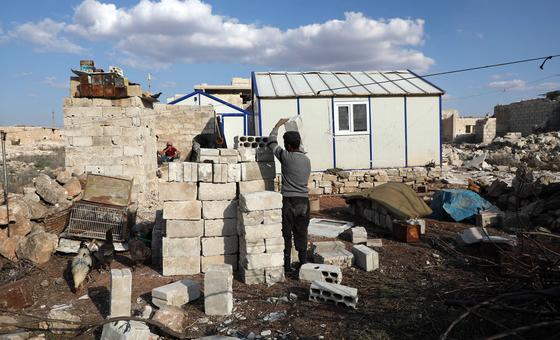
Daily malnutrition deaths continue as Israeli forces push further into Gaza City

Military activities continue in and around Gaza City, but also in the south, taking a heavy toll on civilians, including deaths, injuries and further displacement,” said UN Spokesperson Stéphane Dujarric at the daily press briefing in New York: “Our colleagues report that people continue to flee, mainly towards the coast.”

More than 76,000 people have been newly displaced since mid-August, with most occurring in the north, he said, citing the latest reports from UN agencies on the ground that are monitoring population movements. More than 23,000 people were displaced from northern Gaza.

Coastal areas are also crowded with tents, forcing many people to flee from Gaza City in the north towards central areas, according to the UN humanitarian coordination agency, OCHA.

Famine response: ‘We can do this again’

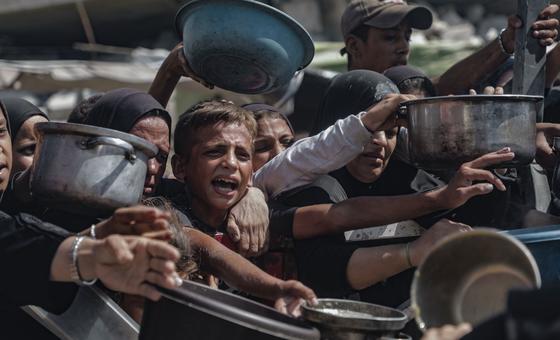
Daily reports of malnutrition deaths continue, the UN Spokesperson said. Since the start of the nearly two-year-long war, more than 300 people, including many children, have died of malnutrition in the Strip, according to local authorities.

The World Food Programme (WFP) reported that the situation “continues to deteriorate”, the UN Spokesperson added, adding that families without able-bodied members to fetch food are facing the highest risks.

As such, the UN agency resumed last week its distribution system of digital vouchers, reaching 22,000 people, including vulnerable groups, following a five-month pause.

“We and our partners are continuing to transport aid and other medical supplies to and from the crossings [into Gaza], but the current situations on the ground have not yet allowed us to resume community-based distribution,” Mr. Dujarric said. “Only a ceasefire will ensure necessary conditions for a massive response to prevent famine from spreading further.”

During the previous ceasefire from January to March, he said “we reached nearly every single person in the Gaza Strip with lifesaving aid, and we can do this again.”

Obstacles delay urgent aid deliveries

WFP said obstacles include supply shortages and violent unrest around convoys which is making distributions “nearly impossible”.

According to the UN humanitarian agency, the movement of aid teams inside Gaza remains heavily restricted. OCHA also reported that about one in three planned missions were “impeded or outright denied by Israeli authorities” between Friday and Monday, the UN Spokesperson said.

As a result, many missions could not be completed, he said, also noting that strict Israeli inspections continue to significantly delay aid clearance at Ashdod Port.

Visas for top Palestinian officials blocked

News reports indicated that the United States announced last week that it would not issue visas to senior Palestinian leaders ahead of the high-level General Assembly meetings later this month at UN Headquarters in New York.

That includes a conference on 22 September where Heads of State and Government are expected to endorse a political declaration adopted by leaders attending an international conference in late July, endorsing the two-State solution.

Responding to a reporter’s question on the matter, Mr. Dujarric said “the participation of a senior Palestinian delegation to the conference is essential.”

UNRWA chief levels charge of ‘scholasticide’

Philippe Lazzarini, Commissioner-General of the UN agency for Palestine refugees, UNRWA, raised alarms at what would have been the start to the school year for more than 600,000 children in Gaza.

Gaza is in ruins; so is its education system,” he said in a statement on Monday. “Instead of going back to school, like most children around the world, around 660,000 girls and boys in Gaza will be sifting through the rubble, desperate, hungry, traumatised and mostly bereaved.”

The longer they stay out of school with their trauma, the higher the risk they become “a lost generation, sowing the seeds for more hatred and violence”, the UNRWA chief warned.

“Ceasefire is the only way forward to reverse the famine and the ‘scholasticide’ hitting the children of Gaza,” he said.
Source link

Gaza: Aid insufficient to avert ‘widespread starvation’ as Israeli military ramp-up forces more people to flee

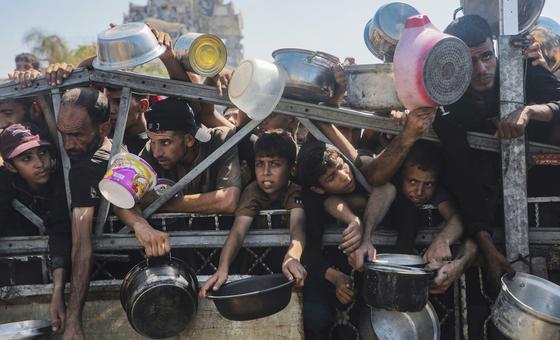
“The risk of starvation is everywhere in Gaza,” UN Human Rights Office spokesperson Thameen Al-Kheetan told reporters in Geneva.

“This is a direct result of the Israeli government’s policy of blocking humanitarian aid,” he said.

Mr. Al-Kheetan insisted that in the past few weeks, Israeli authorities have only allowed aid to enter in quantities that remain “far below what would be required to avert widespread starvation”.

The UN said on Monday that hunger-related deaths continue to be reported in the Strip, including among children.

More people displaced

As the Israeli army intensified its attacks in the north of the enclave, it has continued to issue displacement orders for Palestinians, Mr. Al-Kheetan said.

He noted that Gazans have been told to move to the Al-Mawasi area, despite continuing airstrikes and disastrous conditions there.

“Hundreds of thousands of Palestinians displaced to Al-Mawasi have little or no access to essential services and supplies, including food, water, electricity and tents,” he warned.

Deadly pursuit of aid

The OHCHR spokesperson stressed that reaching humanitarian aid “can be a deadly pursuit” with latest data indicating that 1,857 Palestinians were killed while seeking food from 27 May, when the US and Israel-backed militarized aid distribution scheme known as the Gaza Humanitarian Foundation started its operations.

Out of that number, he said that 1,021 were killed in the vicinity of the Gaza Humanitarian Foundation sites and 836 on the routes of supply trucks.

“Most of these killings appear to have been committed by the Israeli military,” Mr. Al-Kheetan said.

Asked how the situation could get even worse, Jens Laerke, the spokesperson for the UN humanitarian affairs coordination office (OCHA), said that “it has already gotten worse”, insisting on the devastating effects of the Israeli ban on the entry of shelter materials into the enclave.

While the Israeli authorities recently announced that they would lift the ban on shelter supplies, Mr. Laerke said that “the United Nations and our partners have as of last night not been able to bring in shelter materials following the Israeli announcement.”

“There’s a set of impediments that still needs to be addressed, including Israeli customs clearance,” he added.

Need for shelter

The UN said on Monday that according to partners’ estimations at least 1.35 million people in Gaza need emergency shelter.

Aid agencies have warned that tents being used in Gaza are worn out from prolonged sun exposure and frequent displacement.

Asked about the reasons given for the ban on shelter items, Mr. Laerke explained that in a conflict, some shelter items such as tentpoles can fall under the “dual-use regime” as they could be used for both civilian and military purposes.

“Shelter has been banned entry for about five months and in that period over 700,000 people have been displaced or re-displaced,” he said.

People forced to flee time and again often have to leave behind the tents that they have been provided, Mr. Laerke explained, which creates a challenge for aid workers “trying to respond to people where they are”.

The looming expansion of Israel’s military activities in Gaza City is another major concern for UN humanitarians, as it would again push thousands of people into a severely overcrowded area in the south of the Strip.

Asked about the impact of Israel’s plans to occupy Gaza City, Mr. Al-Kheetan underscored a “huge risk” for civilians.

“There are risks of mass displacement… more killings and more misery that we have already seen in the Gaza Strip,” he warned. “Among those who will be affected are the most vulnerable, people with disabilities, the injured, the children, women”, he concluded.

Response to prison video

In other developments, the human rights spokesman said that video footage showing Israeli National Security Minister Itamar Ben-Gvir berating and taunting Palestinian leader Marwan Barghouthi inside an Israeli jail was “unacceptable.”

He said the minister’s behaviour and the publication of the images constitute an attack on Mr. Barghouthi’s dignity.

He added that international law requires that all detainees be treated humanely, with dignity, and that their human rights be respected and protected.

“Such conduct by the minister responsible for the Israeli Prison Service may encourage violence against Palestinian detainees, enabling human rights violations in Israeli detention facilities,” he said

Source link

Violence in northern Mozambique forces thousands to flee, straining aid efforts

The displacement is the latest consequence of a cascade of overlapping emergencies in the country – including armed violence, climate shocks, disease outbreaks and a severe funding shortfall. Since January, over 95,000 people have fled insecurity in Cabo Delgado and humanitarian access is becoming increasingly fragile.

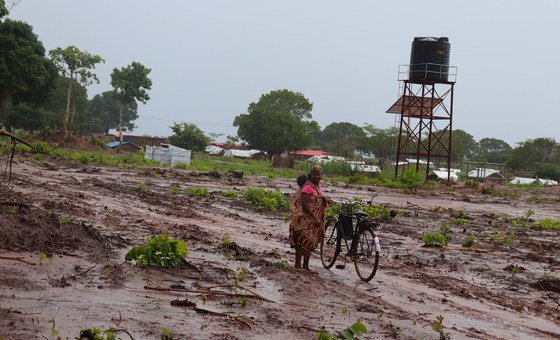
According to the UN Office for the Coordination of Humanitarian Affairs (OCHA), attacks by armed groups between 20 and 28 July triggered the displacement of at least 46,667 people across the districts of Chiúre, Ancuabe and Muidumbe.

Chiúre was the hardest hit, with more than 42,000 people uprooted – over half of them children.

Insecurity persists, and people on the move often lack civil documentation,” OCHA said in a humanitarian bulletin on Saturday. “These challenges may impact the ability of displaced people to move freely, safely access basic services and maintain their livelihoods.

Children separated from families

Attacks in Chiúre Velho, Ocua and Mazeze have driven families to Chiúre Sede, where they are sheltering in overcrowded conditions in the neighbourhoods of Bairro Micone and Bairro Namicir. Reports indicate a high number of unaccompanied or separated children.

Food, shelter and essential non-food items are reported as the most urgent needs, according to humanitarian partners.

The security situation in Ancuabe district also deteriorated rapidly. According to the UN International Organization for Migration (IOM), the number of displaced families nearly tripled in one week, reaching 444 households (1,946 people), including over 1,200 children. The violence forced residents of Nanduli village to seek refuge in Chiote and Ancuabe Sede.

In Muidumbe, fighters reportedly torched homes in Magaia village and opened fire near Mungue. Nearly 500 families fled to nearby displacement sites, where humanitarian access remains limited.

Protection concerns, limited funding

OCHA stressed that under international law, civilians must be allowed to seek safety and freely choose their destination. But insecurity, lack of documentation and involuntary relocations are compounding protection risks.

At the same time, the aid response remains severely underfunded.

As of July, only 19 per cent of Mozambique’s 2025 Humanitarian Response Plan has been funded. Of the $352 million requested, just $66 million has been received – forcing agencies to reduce their response targets by over 70 per cent. They now aim to assist only 317,000 people, down from the target of 1.1 million at the start of the year.

Urgent and sustained funding is essential to prevent further deterioration and address the escalating humanitarian needs that remain as acute and widespread as ever,” the OCHA report warned.

Source link

World News in Brief: violence spurs displacement in Syria, Israeli forces cross the Blue Line in Lebanon, mall fire kills dozens in Iraq

As of Thursday, nearly 2,000 families have been displaced from violence-affected areas in Sweida governate and are currently sheltering in a dozen collective sites. Many are unable to return home due to damage, looting or destruction of their homes.

The health systems in Sweida and neighbouring Dar’a governorate remain under critical strain, operating without power and facing severe supply shortages. Reports also suggest that at least two doctors were killed in the recent clashes, and some armed groups have occupied health facilities, putting patients and staff at risk.

Mobilisation amid constrained access

The UN and its partners are mobilising humanitarian assistance as security allows and working with authorities to facilitate access.

The World Health Organization (WHO) has dispatched 35 trauma and emergency surgery kits for 1,750 interventions, but many remain undelivered because of constrained access.  

“We urge all parties to protect people caught up in the violence, including by allowing them to move freely to seek safety and medical assistance,” said Associate Spokesperson for the Secretary-General Stephanie Tremblay at Thursday’s daily press briefing in New York.

She also stressed that security forces must respect applicable international law, norms and standards throughout their operations.

Lebanon: UN peacekeepers observe unauthorised Israeli activities  

Ms. Tremblay also reported that peacekeepers at the UN Interim Force in Lebanon (UNIFIL) continue to observe Israeli military activities in its area of operations.

On 16 July, Israeli soldiers crossed north of the Blue Line to conduct military exercises.  

UNIFIL peacekeepers have also heard several explosions, including one on 17 July near the Mission Headquarters in Naqoura.  

The “blue helmets” have additionally discovered unauthorized weapons and ammunition caches at one site, rocket launchers, rocket-propelled grenades, mortar rounds and ammunition boxes.  

Commitment to Lebanon

In response to recent observations the UN Special Coordinator for Lebanon, Jeanine Hennis-Plasschaert, and UNIFIL Head of Mission and Force Commander, Major General Diodato Abagnara, met with the Lebanese Army’s South Litani Sector Commander Brigadier General Nicolas Tabet in Tyre on 17 July.  

“Ms. Hennis-Plasschaert and General Abagnara underlined our commitment to supporting the implementation of Security Council resolution 1701, including strengthening State authority and helping restore stability in southern Lebanon,” Ms. Tremblay said.

As part of UNIFIL’s support, peacekeepers trained with Lebanese Armed Forces personnel in Tyre on 16 July, enhancing the operational competency of the Lebanese Army personnel.

Fire in Iraqi shopping mall

The United Nations has expressed condolences to the families of the victims of a tragic fire in the eastern Iraqi city of Kut on Wednesday.

According to news reports, the fire tore through the shopping centre – which opened only a week ago – leaving at least 61 people dead.  

“We express our strong solidarity with the people of Wasit Governorate in this profound loss,” Ms. Tremblay said.  

She also emphasised that the UN and its partners are ready to provide humanitarian assistance to help mitigate the tragedy’s impact.

Source link

DR Congo crisis forces refugees to swim for their lives to Burundi

We’re pushed to our limits,” said Ayaki Ito, Director for Emergencies for the UN refugee agency, UNHCR.

One mother was so desperate to reach safety she crossed the 100-metre wide Rusizi river separating DRC and Burundi with her three small children and their belongings, Mr. Ito told journalists in Geneva:

“I saw this plastic sheeting ball – it’s one mother and three small children – she put her belongings and wrapped it with a plastic sheet, to make it float…It’s a very perilous journey and I was told it’s full of crocodile and hippos.”

Overstretched resources

Since January, more than 71,000 people have crossed into Burundi, fleeing ongoing violence in eastern DRC, UNHCR data shows. Since then, more than 12,300 have been relocated to Musenyi refugee site, while others live with host communities in border areas.

Living conditions in Musenyi – five hours’ drive from the DRC border – are becoming unsustainable.

The site today houses 16,000 people although it was designed for 3,000, adding to tensions. “Food rations are already cut to half of what they’re supposed to be,” Mr. Ito explained, warning that even these rations will run out by the end of June without additional funding.

Food is far from the only concern, however, as emergency tents set up on lowland farming areas have now flooded during the onset of the rainy season.

Aid teams are already bracing themselves for diseases to spike.

People who fled violence in DR Congo to Burundi use a water point at a refugee camp in Cibitoke Province.

“Schools, clinics, basic sanitation systems are either non-existent or overwhelmed” and the UN agency has no more dignity kits, leaving nearly 11,000 women and girls with access to basic hygiene items, Mr. Ito said.

Funding crisis cutbacks

UNHCR’s funding crisis has also “severely reduced” support for family tracing, making it increasingly difficult to identify, locate, and reunite separated children with their families.

There are currently no child-friendly or women-friendly spaces where groups can gather for services and peer support in key hosting areas, Mr. Ito added.

Confronted with the catastrophic living conditions in Burundi and ongoing violent clashes in eastern DRC between Rwanda-backed M23 rebels and government forces, refugees often move back and forth between the two countries. “Nearly half of last week’s registered 700 arriving refugees have been previously registered in Burundi,” the UN official said, pointing out that Congolese refugees are among the most vulnerable in the world.

Citing reduced resources and operational challenges, the UN agency insisted that the delivery of lifesaving aid and protection services remains a priority. This includes additional support amid a 60 per cent increase in reported sexual violence cases, most involving rape in the DRC.

This balancing act is becoming increasingly impossible, with teams on the ground running a full-scale emergency response, responding to the needs of existing refugees in the country and preparing for future arrivals while also facing pressure to reduce their operations because of funding shortages,” Mr. Ito said.

Source link