
Iraq unveils historic migration plan to boost development and stability

Unveiled on Wednesday, it creates new opportunities for work, education and family reunification, while strengthening migration governance and placing migration at the heart of stability and economic development.

It is being led by Iraq’s ministry for migration and the displaced, with the support of the International Organization for Migration (IOM) and the Government of the Netherlands – translating Iraq’s global commitments into national action.

Migration minister Evan Faeq Gabro said that it represents a “vision for Iraq’s future that upholds human dignity”, serves national interests, and supports the Global Compact for Migration.

Iraq is setting an example for the region and beyond, showing how national leadership and genuine partnership can turn migration into an engine for dignity, opportunity, and development,” said Ugochi Daniels, IOM’s  Deputy Director General for Operations.

Origin and destination

Iraq is both a country of origin and destination, with some two million nationals currently living abroad, while thousands more are weighing emigration.

In the past seven years, over 58,000 people have returned to Iraq, rebuilding their lives at home.

Meanwhile, the country also hosts some 370,000 migrant workers, mainly engaged in semi-skilled sectors such as construction and domestic work.

Iraq’s five-year National Plan to Promote Safe, Orderly and Regular Migration emphasises data-driven decision-making, stronger institutional coordination and calls for closer private sector involvement.

Stability and development

“This national plan demonstrates that when policies are grounded in evidence and shaped by people’s needs, migration can benefit migrants, communities, and the country as a whole,” said Ms Daniels.

Th new policy responds to Iraq’s current migration realities, framing migration as a tool for national development and stability, says IOM.

“Today, we are here to commit ourselves to ensuring that migration is about dignity, safety, and opportunity for migrants, their families, and the communities they join,” said Claudio Cordone, UN Deputy Special Representative in Iraq.

The plan outlines a vision for a future that upholds human dignity and serves the national interest.

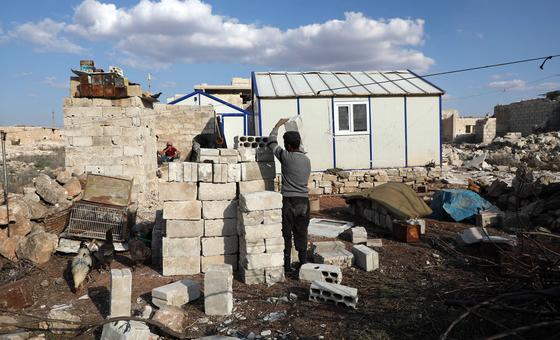
World News in Brief: violence spurs displacement in Syria, Israeli forces cross the Blue Line in Lebanon, mall fire kills dozens in Iraq

As of Thursday, nearly 2,000 families have been displaced from violence-affected areas in Sweida governate and are currently sheltering in a dozen collective sites. Many are unable to return home due to damage, looting or destruction of their homes.

The health systems in Sweida and neighbouring Dar’a governorate remain under critical strain, operating without power and facing severe supply shortages. Reports also suggest that at least two doctors were killed in the recent clashes, and some armed groups have occupied health facilities, putting patients and staff at risk.

Mobilisation amid constrained access

The UN and its partners are mobilising humanitarian assistance as security allows and working with authorities to facilitate access.

The World Health Organization (WHO) has dispatched 35 trauma and emergency surgery kits for 1,750 interventions, but many remain undelivered because of constrained access.  

“We urge all parties to protect people caught up in the violence, including by allowing them to move freely to seek safety and medical assistance,” said Associate Spokesperson for the Secretary-General Stephanie Tremblay at Thursday’s daily press briefing in New York.

She also stressed that security forces must respect applicable international law, norms and standards throughout their operations.

Lebanon: UN peacekeepers observe unauthorised Israeli activities  

Ms. Tremblay also reported that peacekeepers at the UN Interim Force in Lebanon (UNIFIL) continue to observe Israeli military activities in its area of operations.

On 16 July, Israeli soldiers crossed north of the Blue Line to conduct military exercises.  

UNIFIL peacekeepers have also heard several explosions, including one on 17 July near the Mission Headquarters in Naqoura.  

The “blue helmets” have additionally discovered unauthorized weapons and ammunition caches at one site, rocket launchers, rocket-propelled grenades, mortar rounds and ammunition boxes.  

Commitment to Lebanon

In response to recent observations the UN Special Coordinator for Lebanon, Jeanine Hennis-Plasschaert, and UNIFIL Head of Mission and Force Commander, Major General Diodato Abagnara, met with the Lebanese Army’s South Litani Sector Commander Brigadier General Nicolas Tabet in Tyre on 17 July.  

“Ms. Hennis-Plasschaert and General Abagnara underlined our commitment to supporting the implementation of Security Council resolution 1701, including strengthening State authority and helping restore stability in southern Lebanon,” Ms. Tremblay said.

As part of UNIFIL’s support, peacekeepers trained with Lebanese Armed Forces personnel in Tyre on 16 July, enhancing the operational competency of the Lebanese Army personnel.

Fire in Iraqi shopping mall

The United Nations has expressed condolences to the families of the victims of a tragic fire in the eastern Iraqi city of Kut on Wednesday.

According to news reports, the fire tore through the shopping centre – which opened only a week ago – leaving at least 61 people dead.  

“We express our strong solidarity with the people of Wasit Governorate in this profound loss,” Ms. Tremblay said.  

She also emphasised that the UN and its partners are ready to provide humanitarian assistance to help mitigate the tragedy’s impact.

Source link