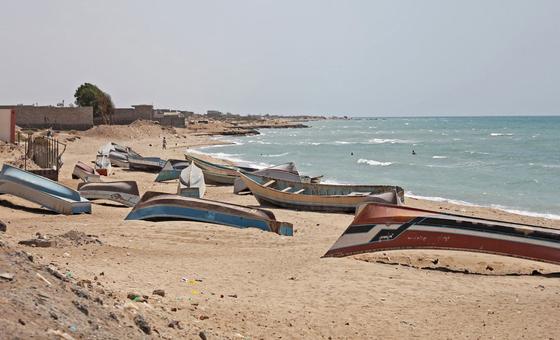
Dozens more migrants die after boat capsizes off the coast of Yemen

With many victims believed to be Ethiopian nationals, this heartbreaking incident highlights the “urgent need to address the dangers of irregular migration along the Eastern Route,” one of the busiest and riskiest migration routes in the world mainly used by people from the Horn of Africa, said the IOM in a statement on Tuesday.

Every life lost is a powerful reminder of the human toll of irregular migration,” said the agency.

Safer pathways

Since the beginning of 2025, IOM has recorded more than 350 migrant deaths and disappearances along the Eastern Route, with actual figures likely to be significantly higher.

The agency called for stronger international and regional cooperation to prevent further loss of life by expanding safe and regular migration pathways, enhancing coordinated search and rescue efforts, protecting survivors, and supporting their safe, dignified return and sustainable reintegration into their countries of origin.

Tackling root causes

Immediate lifesaving assistance and protection for vulnerable migrants must be prioritised, alongside targeted efforts to tackle the root causes of irregular migration,” said the agency.

Commending local authorities for their swift response, the IOM reiterated its commitment to supporting ongoing interagency efforts to identify and assist survivors, recover bodies, and provide support to affected families.

Working with partners to mobilise resources and deliver humanitarian assistance to people on the move, the IOM said this tragic loss of life is a reminder of the crucial need for “safe, regular pathways, strong protection systems, effective search and rescue operations, and accountability for smugglers and traffickers.” 

Source link

World News in Brief: violence spurs displacement in Syria, Israeli forces cross the Blue Line in Lebanon, mall fire kills dozens in Iraq

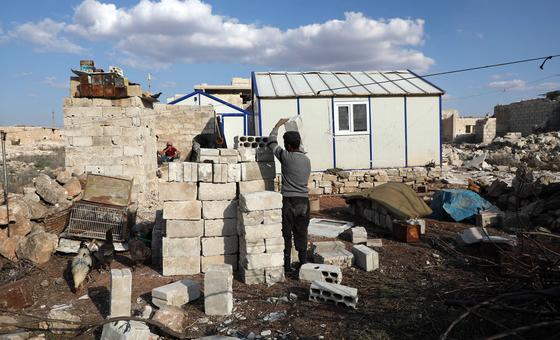
As of Thursday, nearly 2,000 families have been displaced from violence-affected areas in Sweida governate and are currently sheltering in a dozen collective sites. Many are unable to return home due to damage, looting or destruction of their homes.

The health systems in Sweida and neighbouring Dar’a governorate remain under critical strain, operating without power and facing severe supply shortages. Reports also suggest that at least two doctors were killed in the recent clashes, and some armed groups have occupied health facilities, putting patients and staff at risk.

Mobilisation amid constrained access

The UN and its partners are mobilising humanitarian assistance as security allows and working with authorities to facilitate access.

The World Health Organization (WHO) has dispatched 35 trauma and emergency surgery kits for 1,750 interventions, but many remain undelivered because of constrained access.  

“We urge all parties to protect people caught up in the violence, including by allowing them to move freely to seek safety and medical assistance,” said Associate Spokesperson for the Secretary-General Stephanie Tremblay at Thursday’s daily press briefing in New York.

She also stressed that security forces must respect applicable international law, norms and standards throughout their operations.

Lebanon: UN peacekeepers observe unauthorised Israeli activities  

Ms. Tremblay also reported that peacekeepers at the UN Interim Force in Lebanon (UNIFIL) continue to observe Israeli military activities in its area of operations.

On 16 July, Israeli soldiers crossed north of the Blue Line to conduct military exercises.  

UNIFIL peacekeepers have also heard several explosions, including one on 17 July near the Mission Headquarters in Naqoura.  

The “blue helmets” have additionally discovered unauthorized weapons and ammunition caches at one site, rocket launchers, rocket-propelled grenades, mortar rounds and ammunition boxes.  

Commitment to Lebanon

In response to recent observations the UN Special Coordinator for Lebanon, Jeanine Hennis-Plasschaert, and UNIFIL Head of Mission and Force Commander, Major General Diodato Abagnara, met with the Lebanese Army’s South Litani Sector Commander Brigadier General Nicolas Tabet in Tyre on 17 July.  

“Ms. Hennis-Plasschaert and General Abagnara underlined our commitment to supporting the implementation of Security Council resolution 1701, including strengthening State authority and helping restore stability in southern Lebanon,” Ms. Tremblay said.

As part of UNIFIL’s support, peacekeepers trained with Lebanese Armed Forces personnel in Tyre on 16 July, enhancing the operational competency of the Lebanese Army personnel.

Fire in Iraqi shopping mall

The United Nations has expressed condolences to the families of the victims of a tragic fire in the eastern Iraqi city of Kut on Wednesday.

According to news reports, the fire tore through the shopping centre – which opened only a week ago – leaving at least 61 people dead.  

“We express our strong solidarity with the people of Wasit Governorate in this profound loss,” Ms. Tremblay said.  

She also emphasised that the UN and its partners are ready to provide humanitarian assistance to help mitigate the tragedy’s impact.

Source link

UN condemns ‘heinous’ terrorist attack at Damascus church that killed dozens

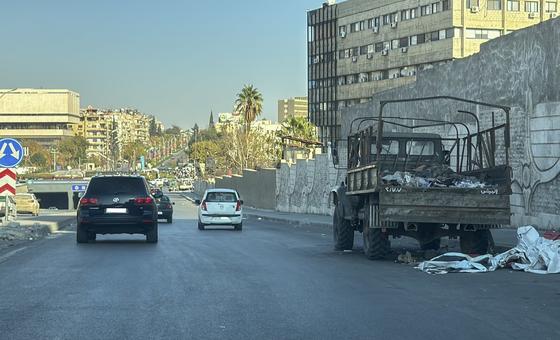
More than 60 churchgoers were also wounded in the attack, which is reported to be the first in the Syrian capital since rebel groups ousted former president Bashar al-Assad in December, ending more than a decade of civil war.

A gunman opened fire inside the Greek Orthodox St. Elias Church in the Dweila neighbourhood before detonating an explosive vest, according to media reports.  

Photos and video from inside the church showed a heavily damaged altar and pews covered in broken glass.

UN chief demands accountability

UN Secretary-General António Guterres strongly condemned the attack, expressing his deepest condolences to the families of those killed and wishing a swift recovery to the injured.

All perpetrators of terrorism must be held accountable,” Stéphane Dujarric, his spokesperson, said on Monday.

Mr. Guterres noted that the Syrian interim authorities had attributed the attack to the terrorist group, ISIL – also known as Da’esh – based on preliminary investigations, and he called for a thorough and impartial probe.

The Secretary-General reaffirms the commitment of the United Nations to supporting the Syrian people in their pursuit of peace, dignity, and justice,” Mr. Dujarric added.

Call for justice

UN Special Envoy for Syria Geir Pedersen echoed the condemnation, denouncing the bombing “in the strongest possible terms.”

He urged authorities to investigate the attack and ensure accountability.

He also called for unity in rejecting terrorism, extremism, incitement, and the targeting of any community in Syria, which has been a patchwork of different faiths throughout its history.

No place for extremism

Adam Abdelmoula, the UN Resident and Humanitarian Coordinator in Syria, described the incident as a “deliberate attack on a place of worship” and stressed that it had targeted civilians, including women and children, gathered in prayer.

There is no room for violence and extremism,” he said, urging solidarity as Syria moves toward recovery and reconciliation.

Mr. Abdelmoula reiterated the UN’s continued support for the Syrian people and called for all possible steps to be taken to protect civilians, prevent future attacks, and bring those responsible to justice.

Source link

‘Our worst held fears are being confirmed’: Dozens of bodies discovered in Libya mass graves

“Our worst held fears are being confirmed: dozens of bodies have been discovered at these sites, along with the discovery of suspected instruments of torture and abuse, and potential evidence of extrajudicial killings,” Türk said.

The sites where bodies were discovered are run by the Stabilization Support Apparatus (SSA), an armed group tasked with increasing Government security in the capital, Tripoli.  They have long been suspected by the UN Support Mission in Libya (UNSMIL) – and independent rights experts – to be sites of torture and enforced disappearance.

Mr. Türk called for these sites to be sealed for forensic investigations to support accountability.

Libya has endured turmoil since the fall of the Muammar Gaddafi regime 15 years ago and the emergence of rival administrations in 2014: the UN-recognized Government of National Unity (GNU) in Tripoli and the Government of National Stability (GNS) based in Benghazi. 

The UN has supported many ultimately unsuccessful attempts to reunite the country and transition to democratic governance.

Over 80 bodies discovered

In May, the leader of the SSA – Abdul Ghani al-Kikli – was killed, triggering clashes between armed groups and state security forces. Protests also emerged, calling for an end to violence in Tripoli. Multiple civilians were killed and infrastructure – including hospitals – damaged. 

In the wake of this violence, 10 badly charred bodies were discovered at the SSA headquarters in the Abu Salim neighbourhood. 67 more bodies were discovered at hospitals in Abu Salim and Al Khadra hospitals, all in refrigerators and in various states of decay. 

The UN human rights office OHCHR also said that a burial site was discovered at the Tripoli Zoo, which is run by the SSA. 

The identities of the bodies are not known at this stage. 

Human rights abuses, at all levels

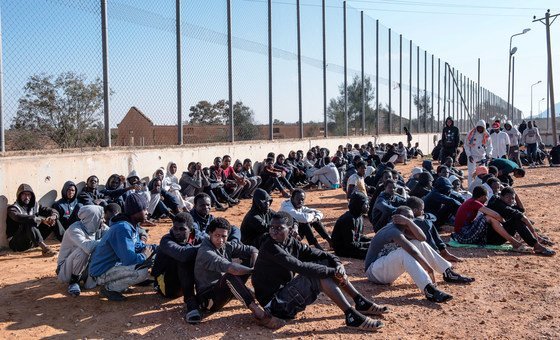
These were not the first mass graves discovered in Libya. In February, two mass graves were discovered in Jakharrah and Al-Kufra with 10 and 93 bodies respectively. Many of these bodies were migrants who are uniquely vulnerable to human trafficking, forced disappearance and killings.

The International Organization for Migration (IOM) recorded over 1,000 migrant deaths and disappearances in Libya in 2024 alone.

Mr. Türk expressed concern not only about the bodies discovered recently in Tripoli and the human rights abuses they confirm, but also about the force with which protests were met near the end of last month.

“We have received reports that these protests were themselves met with unnecessary force, raising serious concerns with respect to the guarantee of the fundamental rights of freedom of expression and assembly,” he said.

The High Commissioner for Human Rights also noted that images and videos of the bodies are circulating on social media, prompting him to call for preserving the dignity and privacy of victims.

Seal the sites, preserve the evidence

The Government of National Unity, the internationally-recognized administration based in Tripoli, announced the creation of two committees to investigate human rights abuses committed by State security forces, both in relation to the bodies and the protests.

While Türk noted this, he expressed concern that forensic authorities have not been allowed into the sites to examine and preserve related evidence.

He called on Libyan authorities to seal the recently discovered sites and promote immediate accountability efforts.

“Those responsible for these atrocious acts must be brought to justice without delay, in accordance with international standards,” he said.

Mr. Türk also urged all stakeholders to commit once more to transition attempts in order to move Libya towards an inclusive democracy once and for all, ending the “recurring cycle of transitional agreements.”

“The people of Libya have clearly expressed their demand for truth and justice, and their yearning for a peaceful and safe way of life with human rights and freedoms at the front and centre,” the High Commissioner added.  

Source link