
What US withdrawal from UN bodies could mean?

When UN Spokesperson Stéphane Dujarric briefed correspondents in New York on Thursday following the release of the White House Memorandum, he insisted that the Organization will continue to carry out its mandates from Member States “with determination.”

Wednesday’s memorandum states that the US administration is “ceasing participation in or funding to those entities to the extent permitted by law.”

Several of the bodies listed in the memo are funded principally or partially by the regular UN budget, implying that voluntary funding will be impacted, although central funding will continue.

However, the White House notes that its funding review of international organisations “remains ongoing,” and it is currently unclear what the impact of the announcement will be.

Here’s a breakdown of the 31 UN entities mentioned in the memorandum, and how they are making a positive difference to people, communities and nations, worldwide.

Development

  • UN Human Settlement Programme (UN Habitat): Promotes sustainable towns and cities and provides technical and policy advice for the improvement of living conditions and the reduction of urban poverty

Education and training

  • UN Institute for Training and Research (UNITAR): Provides training and capacity-building for individuals, organisations, and countries (especially developing nations) on areas like diplomacy, sustainable development, climate change and crisis management
  • UN System Staff College: Equips UN personnel with learning, training and advisory services to ensure a capable, adaptable and collaborative UN workforce
  • UN University: The UN’s global think tank and postgraduate teaching organisation conducts research and provides policy advice on pressing global issues
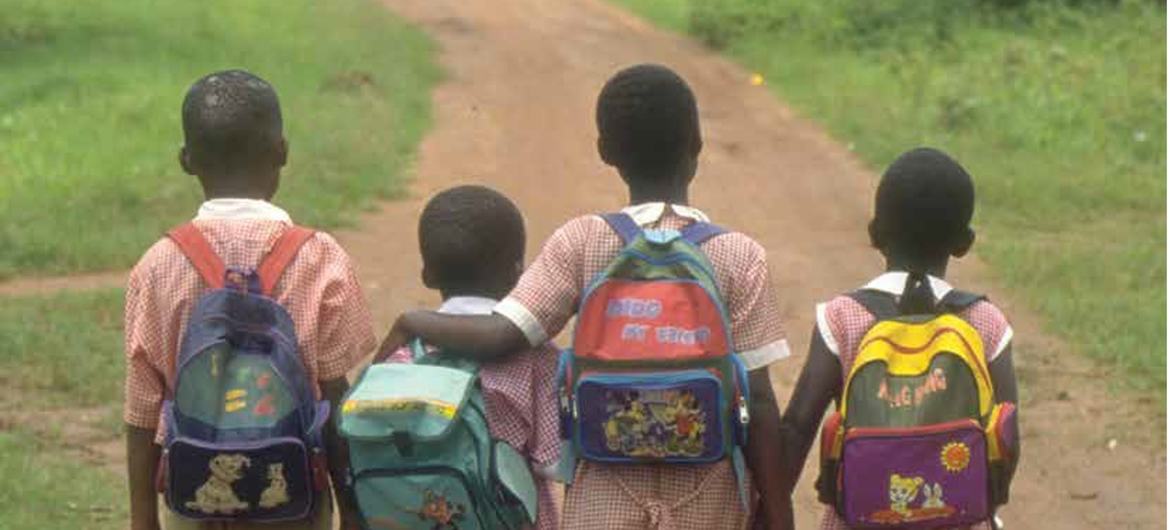
  • Education Cannot Wait: The UN global fund dedicated to education in emergencies and protracted crises, to ensure that children and youth affected by conflict, displacement, and disasters have access to safe, quality education

Gender

Health

  • UN Population Fund (UNFPA): Promotes sexual and reproductive health and rights for all, promotes gender equality and collates population data for development, helping to reduce maternal mortality and expand access to family planning

International Law

  • International Law Commission: Mandates the development and codification of international law by drafting legal instruments and clarifying principles; fostering the rule of law, and supporting peaceful relations among states
  • International Residual Mechanism for Criminal Tribunals: Carries out essential functions of the former International Criminal Tribunals for Rwanda and the former Yugoslavia, completing ongoing cases, protecting witnesses and preserving archives, ensuring accountability for serious international crimes

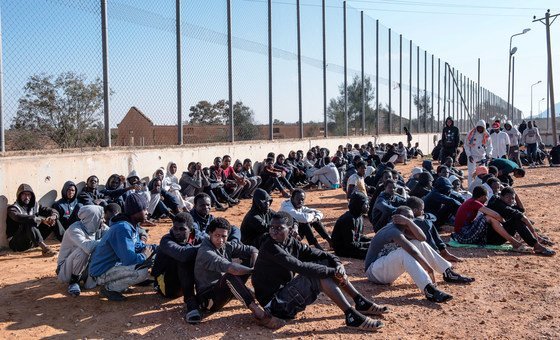
‘Our worst held fears are being confirmed’: Dozens of bodies discovered in Libya mass graves

“Our worst held fears are being confirmed: dozens of bodies have been discovered at these sites, along with the discovery of suspected instruments of torture and abuse, and potential evidence of extrajudicial killings,” Türk said.

The sites where bodies were discovered are run by the Stabilization Support Apparatus (SSA), an armed group tasked with increasing Government security in the capital, Tripoli.  They have long been suspected by the UN Support Mission in Libya (UNSMIL) – and independent rights experts – to be sites of torture and enforced disappearance.

Mr. Türk called for these sites to be sealed for forensic investigations to support accountability.

Libya has endured turmoil since the fall of the Muammar Gaddafi regime 15 years ago and the emergence of rival administrations in 2014: the UN-recognized Government of National Unity (GNU) in Tripoli and the Government of National Stability (GNS) based in Benghazi. 

The UN has supported many ultimately unsuccessful attempts to reunite the country and transition to democratic governance.

Over 80 bodies discovered

In May, the leader of the SSA – Abdul Ghani al-Kikli – was killed, triggering clashes between armed groups and state security forces. Protests also emerged, calling for an end to violence in Tripoli. Multiple civilians were killed and infrastructure – including hospitals – damaged. 

In the wake of this violence, 10 badly charred bodies were discovered at the SSA headquarters in the Abu Salim neighbourhood. 67 more bodies were discovered at hospitals in Abu Salim and Al Khadra hospitals, all in refrigerators and in various states of decay. 

The UN human rights office OHCHR also said that a burial site was discovered at the Tripoli Zoo, which is run by the SSA. 

The identities of the bodies are not known at this stage. 

Human rights abuses, at all levels

These were not the first mass graves discovered in Libya. In February, two mass graves were discovered in Jakharrah and Al-Kufra with 10 and 93 bodies respectively. Many of these bodies were migrants who are uniquely vulnerable to human trafficking, forced disappearance and killings.

The International Organization for Migration (IOM) recorded over 1,000 migrant deaths and disappearances in Libya in 2024 alone.

Mr. Türk expressed concern not only about the bodies discovered recently in Tripoli and the human rights abuses they confirm, but also about the force with which protests were met near the end of last month.

“We have received reports that these protests were themselves met with unnecessary force, raising serious concerns with respect to the guarantee of the fundamental rights of freedom of expression and assembly,” he said.

The High Commissioner for Human Rights also noted that images and videos of the bodies are circulating on social media, prompting him to call for preserving the dignity and privacy of victims.

Seal the sites, preserve the evidence

The Government of National Unity, the internationally-recognized administration based in Tripoli, announced the creation of two committees to investigate human rights abuses committed by State security forces, both in relation to the bodies and the protests.

While Türk noted this, he expressed concern that forensic authorities have not been allowed into the sites to examine and preserve related evidence.

He called on Libyan authorities to seal the recently discovered sites and promote immediate accountability efforts.

“Those responsible for these atrocious acts must be brought to justice without delay, in accordance with international standards,” he said.

Mr. Türk also urged all stakeholders to commit once more to transition attempts in order to move Libya towards an inclusive democracy once and for all, ending the “recurring cycle of transitional agreements.”

“The people of Libya have clearly expressed their demand for truth and justice, and their yearning for a peaceful and safe way of life with human rights and freedoms at the front and centre,” the High Commissioner added.  

Source link