53 migrants die in latest shipwreck tragedy off Libya coast

According to the International Organization for Migration (IOM), the boat overturned in the perishingly cold waters of the central Mediterranean Sea, north of the coastal town of Zuwara last Friday. 

It is just the latest deadly incident involving vulnerable people on the move who are frequently mistreated and trafficked by smuggling gangs that have flourished in Libya since the overthrow of President Muammar Gaddafi in 2011.

IOM said that the Libyan authorities rescued two Nigerian women from last Friday’s shipwreck; one said that her husband had drowned while the other reported that both her babies had died.

The survivors explained that the vessel had been carrying migrants and refugees from several African countries. It had set off from Zawiya at about 11pm on Thursday and began taking on water six hours later, before capsizing.

It is not yet known where the travellers were heading for, but many migrant and refugee boats leaving Libya set sail for the Italian island of Lampedusa, which is around 350 kilometres (220 miles) away from Zawiya. The open rubber dinghies they often sail in are totally unsuitable for such a journey, UN aid teams have often warned.

At least 375 people have been reported dead or missing in January alone in the central Mediterranean, according to IOM, missing migrants database. The UN agency warned that this is just the latest shipwreck to have happened amid severe winter weather, with many more tragedies feared unrecorded.

Smuggling and trafficking networks continue to profit from desperate people by sending them to sea in unseaworthy boats, IOM noted, as it renewed calls for greater international cooperation and safer, legal routes for migration.

So far this year, 781 migrants have been “intercepted and returned” to Libya, the UN agency said, with 244 taken back just last week. This compares with 27,116 last year including 1,314 reported deaths or missing persons.  

Held in detention underground

“IOM does not consider Libya to be a safe port for migrants,” IOM insisted, after highlighting the dangers migrants continue to face following the discovery of more mass graves and detention sites in the east of the country.

“Investigations indicate that the victims had been held in captivity and subjected to torture to coerce ransom payments from their families,” IOM said in a statement, following a raid by the authorities on an illegal detention site in Ajdabiya. 

In Kufra, authorities discovered an underground detention site three metres underground. A total of 221 migrants and refugees were released, including women, children and a one-month-old baby. “Initial information suggests that the migrants had been held for a prolonged period in grossly inhumane conditions,” IOM said.

To help vulnerable people on the move, IOM supports voluntary flights home for foreign nationals. This includes one last week for Pakistani nationals who had reached Tripoli. In late January the agency helped 177 Nigerian migrants return home on another voluntary humanitarian flight

And in a bid to dismantle trafficking networks and support survivors, the UN agency works with national and regional authorities to strengthen cross-border cooperation. 


Source link

World News in Brief: Food insecurity in Lebanon, Libya migrants freed, UNHCR tackles multiple emergencies – despite cuts

According to the latest UN-backed IPC Food Security Phase Classification report, around 874,000 people are facing crisis or emergency levels of acute food insecurity between November 2025 and March 2026. 

Certain districts and areas have been more severely affected, particularly parts of Baalbek and El Hermel, Akkar, Baabda, Zahle, Saida, Bint Jbeil, Marjayoun, El Nabatieh, Tyre, and refugee communities.

This is the first assessment to include people who arrived from Syria after December 2024, recognising shifting displacement patterns and new vulnerabilities. 

Assistance is essential 

Looking ahead, the situation is expected to worsen rapidly due to a combination of factors, including reduced food assistance, economic pressures, and rising living costs.

Between April and July 2026, food insecurity will rise to 961,000 people, nearly 18 per cent of the population, according to the IPC report. 

“People’s needs remain high, and predictable assistance will be essential to help people meet basic food needs and prevent further deterioration.” said Anne Valand, WFP representative and country director in Lebanon. 

Migrants freed from abusive detention sites in eastern Libya

The UN migration agency (IOM) has deployed emergency teams to eastern Libya to assist hundreds of migrants released from illegal detention sites where they were held in appalling conditions.

Libyan authorities last week closed an unlawful detention facility in Ajdabiya, leading to the release of 195 migrants and the recovery of 21 bodies from a nearby burial site. 

Initial investigations indicate the victims had been held captive and subjected to torture to extort ransom payments from their families.

Buried underground

In a separate operation in Kufra, security forces uncovered an underground detention site three metres below ground. 

A total of 221 migrants and refugees were freed, including women and children, among them a one-month-old baby. At least ten people were transferred to hospital for urgent treatment after being held for prolonged periods in grossly inhumane conditions.

“These shocking cases highlight the severe risks faced by migrants who fall prey to criminal networks operating along migration routes,” said Nicoletta Giordano, IOM’s Chief of Mission in Libya.

IOM teams are providing medical screenings, referring urgent cases to hospitals and distributing warm clothing to survivors. 

The agency welcomed efforts by Libyan authorities to rescue victims and launch investigations, while stressing the need to strengthen protection systems, dismantle trafficking networks and ensure accountability for perpetrators.

UNHCR responds to mounting crises despite funding shortfalls

Despite severe funding shortfalls, the UN refugee agency, UNHCR, responded to a surge of complex emergencies and deepening long-running crises last year, according to its newly released 2025 Impact Report: Response to New Emergencies and Protracted Crises.

Throughout 2025, agency teams provided protection and assistance in some of the world’s most volatile settings. 

They supported people fleeing renewed violence in eastern Democratic Republic of the Congo into Burundi and Uganda, assisted those escaping fresh fighting in and beyond South Sudan, and helped millions of Afghans returning or being forced back from Iran and Pakistan.

Protracted crises also worsened. Ongoing conflict in Sudan, intensified attacks on Ukraine and escalating violence in Colombia triggered repeated displacement, further eroding already fragile living conditions.

Positive response

“In 2025, displacement occurred amid protracted conflict, recurrent disasters, and new outbreaks of violence,” said Ayaki Ito, UNHCR’s Director of Emergency and Programme Support.

“In this environment, UNHCR teams continued to respond to the needs of people forced to flee, even as severe resource constraints limited our capacity.”

Emergency support included clean water for half a million people in Sudan, cash assistance for Afghan and Syrian returnees, and more than a million services for displaced people inside Ukraine and in neighbouring host countries.

UNHCR warned that humanitarian needs are set to rise further in 2026 as conflicts continue to drive displacement affecting nearly 52 million people.

You can find additional background on UNHCR’s emergency response work, here.
 

Source link

Libya: Security Council urged to back popular ‘yearning’ for national elections

Hannah Tetteh, who also heads the UN Mission in Libya (UNSMIL), briefed ambassadors in the wake of municipal council elections last week and outlined a proposed roadmap to general elections, which should have been held way back in 2021.

The Libyan people look to this esteemed Council for help, to ensure a solution to the crisis and support a political process that will result in elections and unified institutions not a succession of transitional governments,” she said.

Voting and disruptions

Nearly 15 years after the fall of former President Muammar Gaddafi, Libya remains split between two rival administrations:  the internationally recognised Government of National Unity, located in the western capital of Tripoli, and the rival Government of National Stability based in Benghazi in the east.

This past Saturday, 26 municipalities successfully held elections despite significant challenges.  Ms. Tetteh commended the electoral management body HNEC and urged all candidates to accept the results.

She regretted that not all municipalities that were expected to take part were able to do so, with the government in the east giving instructions to suspend electoral processes in 16 municipalities. Additionally, voting materials were withdrawn from centres across the region and the south.

Efforts to disrupt the vote also occurred in some municipalities in the west, where HNEC offices in three cities were set on fire or attacked, although the vote went ahead in two of them. 

‘A clear signal’

“By the end of polling day, voter turnout was 71 per cent. This is a clear signal that the Libyan people are yearning to elect their representatives. In some areas, this was the first time any elections have happened since 2014,” she said.

However, the suspension of elections in the east and south “is an equally clear sign that not all are committed to supporting Libya’s democratic development and there is an urgent need for a reset in the political process,” she added.

In February, UNSMIL established an Advisory Committee to provide recommendations for resolving outstanding issues that have prevented national elections from taking place.

A report was presented in May, and the Mission has been holding nationwide consultations on the outcomes. It has also conducted an online survey for people to share their opinions on the recommendations, with more than 22,500 responses. 

The message we clearly received was the desire to stop the cycles of repeated transitional periods; preserve and strengthen the unity of the country and its institutions; as well as to renew their legitimacy through presidential and legislative elections; and end what was frequently referenced as foreign interference,” Ms. Tetteh told the Council.

Roadmap to elections

Based on the Advisory Committee’s recommendations, the feedback from the population, and lessons learned from the failure to hold the 2021 elections, “we are convinced that the political process should focus on guaranteeing general elections and the unification of institutions through a sequenced approach,” she said.

Ms. Tetteh proposed a roadmap built around three core pillars: implementation of “a technically sound and politically viable electoral framework” towards holding the elections; unifying institutions through a new unified government, and a structured dialogue to address critical issues in order to create a conducive environment for the polls.

She estimated it would take 12 to 18 months to complete the roadmap, which will end in general elections and several “sequential steps”, including enhancing HNEC capacity as well as amending the legal and constitutional frameworks for holding full elections – legislative and presidential. 

“Following these two prior steps – which could be concluded over the next two months at most if there were the political will to do so – there should be agreement on a new unified government, capable of creating a conducive environment for credible elections while managing key governance functions effectively,” she said.

Security concerns

Ms. Tetteh reported on developments on other fronts, including the volatile security situation, with increasing militarisation of all sides.

She noted that the situation in Tripoli remains of great concern, following clashes in May.  While a fragile truce is holding, violations have occurred, though no escalations.

UNSMIL also documented 20 deaths in custody since March 2024, including political activist Abdel Munim Al-Maremi who died last month in Tripoli shortly after a release order had reportedly been issued. 

“These cases are the latest examples of a widespread and persistent pattern of grave violations perpetrated across the country with impunity, including against migrants and refugees, in some cases fueled by disinformation and hate speech,” she said.

Ms. Tetteh was also alarmed by the forced return of migrants to conflict zones, including Sudan. She noted that Sudanese refugees in Kufra exceeds the number of residents, urging donors to step up support. 

Source link

World News in Brief: Remembering Dr. David Nabarro, deadly shipwreck off Libya, verdict in peacekeeper’s killing

The British physician and champion for global public health died this past weekend at the age of 75. 

He was the World Health Organization’s (WHO) special envoy dealing with the COVID-19 crisis.

Legacy of service

“The Secretary-General pays tribute to Dr. Nabarro’s extraordinary legacy of service and reaffirms his commitment to advancing the principles he championed: solidarity, science and health for all,” UN Deputy Spokesperson Farhan Haq said on Tuesday in New York.

Dr. Nabarro was remembered as “a tireless advocate for global health, a leader who brought clarity, compassion and conviction to some of the world’s most complex health emergencies, from AIDS and malaria to avian influenza and the COVID-19 pandemic.”

He also served as the Special Representative of former Secretary-General Ban Ki-moon on food security and nutrition and headed the UN High-Level Task Force on the Global Food Security Crisis. 

Also paying tribute was WHO chief Tedros Adhanom Ghebreyesus. He called Dr. Nabarro a “great champion of global health” whose work impacted so many lives across the world.

Libya: Migration agency offers support in the wake of deadly shipwreck

At least 18 migrants died following a shipwreck off the coast of Tobruk, Libya, this past weekend, the International Organization for Migration (IOM) reported on Tuesday.

Fifty people are still missing, and 10 survivors are accounted for so far.

“This latest tragedy is a stark reminder of the deadly risks people are forced to take in search of safety and opportunity,” IOM said in a statement.

The UN agency noted that “Libya remains a major transit point for migrants and refugees, many of whom face exploitation, abuse and life-threatening journeys.”

Meanwhile, IOM teams on the ground are coordinating with local partners to provide support where possible.

“We reiterate our call for enhanced regional cooperation to expand access to safe, regular and dignified migration pathways,” the statement concluded.

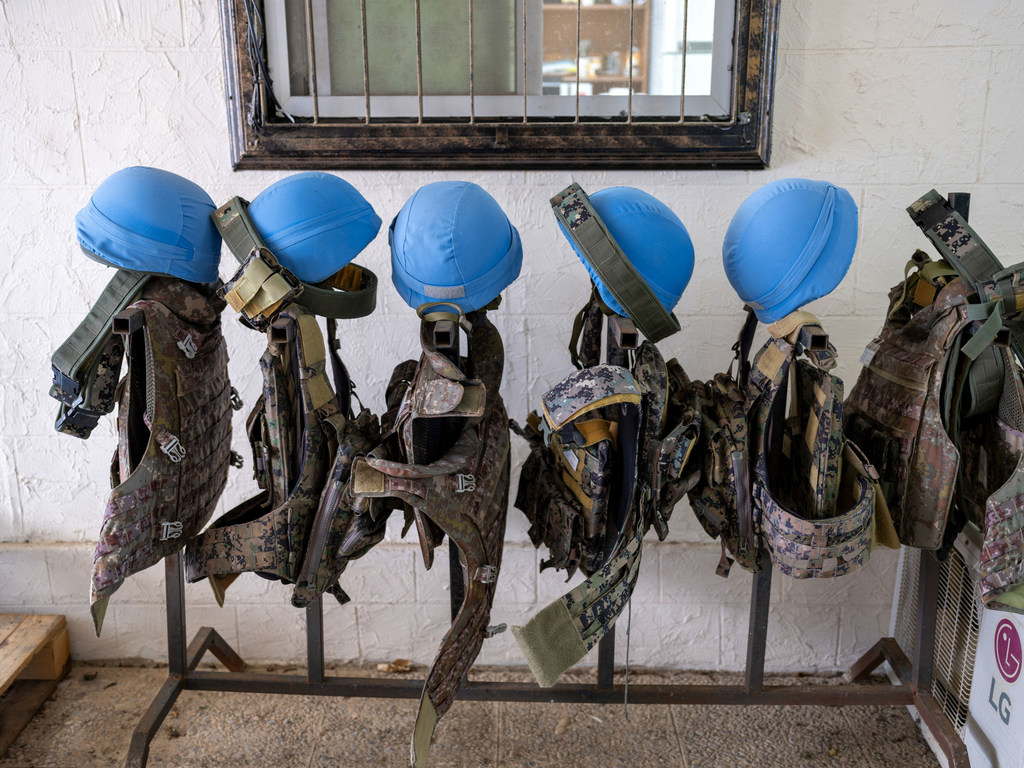
Blue helmets and bulletproof vests belonging to peacekeepers serving with United Nations Interim Force In Lebanon (UNIFIL).

Lebanon: Verdict handed down in trial into 2022 killing of Irish peacekeeper 

The UN Interim Force in Lebanon (UNIFIL) has welcomed the conclusion of the trial into the killing of Irish peacekeeper Private Seán Rooney nearly three years ago.

Lebanon’s Permanent Military Court on Monday found six of the individuals charged with the killing guilty while another was acquitted, according to a statement from the mission.

“UNIFIL welcomes the conclusion of the trial process and the Government of Lebanon’s commitment to bring the perpetrators to justice,” it said.

Private Rooney, 24, was shot and killed on 14 December 2022 in an incident in Al-Aqbieh, just outside UNIFIL’s area of operations in south Lebanon. Three other “Blue Helmets” were injured.

Since the attack, UNIFIL has extended its full support to both Lebanese and Irish authorities with their respective judicial proceedings, the statement said.

The mission once again offered deepest condolences to Private Rooney’s family, friends and colleagues as well as the Government of Ireland. 

Source link

Libya: UN urges restraint as military buildup threatens renewed violence in Tripoli

In a statement late on Wednesday (local time), the UN Support Mission in Libya (UNSMIL) expressed deep concern over continued reports of armed group mobilisation in densely populated areas, urging all parties to refrain from the use of force and inflammatory rhetoric.

The Mission strongly urges all parties to avoid any actions or political rhetoric that could trigger escalation or lead to renewed clashes,” it said.

UNSMIL stressed that protection of civilian lives and property under international law remains a binding obligation for all political and security actors.

Those responsible for attacks against civilians will be held accountable,” the Mission said.

Pursue dialogue, not violence

The Mission reiterated its support for the implementation of security arrangements developed by the Truce and Security and Military Arrangements Committees, emphasising that “forces recently deployed in Tripoli must withdraw without delay.

It also underscored that dialogue – not violence – remains the only viable path to achieving sustainable peace and stability in Tripoli and across Libya.

The appeal comes amid reports of military movements in the capital and renewed clashes between armed groups, reflecting the persistent volatility that has plagued Libya since the fall of former leader Muammar Gaddafi in 2011.

Political stalemate

The country remains divided between rival administrations in the east and west, with unity efforts repeatedly stalled.

A UN-brokered ceasefire signed in 2020 raised hopes for national elections, but progress has been hampered by political deadlock and sporadic outbreaks of violence – particularly in Tripoli.

In May, clashes erupted in several districts of the capital, reportedly triggered by the killing of a prominent militia leader. The fighting, which involved heavy weaponry in densely populated areas, forced hundreds of families to flee and further strained the city’s already fragile infrastructure.

Source link

‘Our worst held fears are being confirmed’: Dozens of bodies discovered in Libya mass graves

“Our worst held fears are being confirmed: dozens of bodies have been discovered at these sites, along with the discovery of suspected instruments of torture and abuse, and potential evidence of extrajudicial killings,” Türk said.

The sites where bodies were discovered are run by the Stabilization Support Apparatus (SSA), an armed group tasked with increasing Government security in the capital, Tripoli.  They have long been suspected by the UN Support Mission in Libya (UNSMIL) – and independent rights experts – to be sites of torture and enforced disappearance.

Mr. Türk called for these sites to be sealed for forensic investigations to support accountability.

Libya has endured turmoil since the fall of the Muammar Gaddafi regime 15 years ago and the emergence of rival administrations in 2014: the UN-recognized Government of National Unity (GNU) in Tripoli and the Government of National Stability (GNS) based in Benghazi. 

The UN has supported many ultimately unsuccessful attempts to reunite the country and transition to democratic governance.

Over 80 bodies discovered

In May, the leader of the SSA – Abdul Ghani al-Kikli – was killed, triggering clashes between armed groups and state security forces. Protests also emerged, calling for an end to violence in Tripoli. Multiple civilians were killed and infrastructure – including hospitals – damaged. 

In the wake of this violence, 10 badly charred bodies were discovered at the SSA headquarters in the Abu Salim neighbourhood. 67 more bodies were discovered at hospitals in Abu Salim and Al Khadra hospitals, all in refrigerators and in various states of decay. 

The UN human rights office OHCHR also said that a burial site was discovered at the Tripoli Zoo, which is run by the SSA. 

The identities of the bodies are not known at this stage. 

Human rights abuses, at all levels

These were not the first mass graves discovered in Libya. In February, two mass graves were discovered in Jakharrah and Al-Kufra with 10 and 93 bodies respectively. Many of these bodies were migrants who are uniquely vulnerable to human trafficking, forced disappearance and killings.

The International Organization for Migration (IOM) recorded over 1,000 migrant deaths and disappearances in Libya in 2024 alone.

Mr. Türk expressed concern not only about the bodies discovered recently in Tripoli and the human rights abuses they confirm, but also about the force with which protests were met near the end of last month.

“We have received reports that these protests were themselves met with unnecessary force, raising serious concerns with respect to the guarantee of the fundamental rights of freedom of expression and assembly,” he said.

The High Commissioner for Human Rights also noted that images and videos of the bodies are circulating on social media, prompting him to call for preserving the dignity and privacy of victims.

Seal the sites, preserve the evidence

The Government of National Unity, the internationally-recognized administration based in Tripoli, announced the creation of two committees to investigate human rights abuses committed by State security forces, both in relation to the bodies and the protests.

While Türk noted this, he expressed concern that forensic authorities have not been allowed into the sites to examine and preserve related evidence.

He called on Libyan authorities to seal the recently discovered sites and promote immediate accountability efforts.

“Those responsible for these atrocious acts must be brought to justice without delay, in accordance with international standards,” he said.

Mr. Türk also urged all stakeholders to commit once more to transition attempts in order to move Libya towards an inclusive democracy once and for all, ending the “recurring cycle of transitional agreements.”

“The people of Libya have clearly expressed their demand for truth and justice, and their yearning for a peaceful and safe way of life with human rights and freedoms at the front and centre,” the High Commissioner added.  

Source link