53 migrants die in latest shipwreck tragedy off Libya coast

According to the International Organization for Migration (IOM), the boat overturned in the perishingly cold waters of the central Mediterranean Sea, north of the coastal town of Zuwara last Friday. 

It is just the latest deadly incident involving vulnerable people on the move who are frequently mistreated and trafficked by smuggling gangs that have flourished in Libya since the overthrow of President Muammar Gaddafi in 2011.

IOM said that the Libyan authorities rescued two Nigerian women from last Friday’s shipwreck; one said that her husband had drowned while the other reported that both her babies had died.

The survivors explained that the vessel had been carrying migrants and refugees from several African countries. It had set off from Zawiya at about 11pm on Thursday and began taking on water six hours later, before capsizing.

It is not yet known where the travellers were heading for, but many migrant and refugee boats leaving Libya set sail for the Italian island of Lampedusa, which is around 350 kilometres (220 miles) away from Zawiya. The open rubber dinghies they often sail in are totally unsuitable for such a journey, UN aid teams have often warned.

At least 375 people have been reported dead or missing in January alone in the central Mediterranean, according to IOM, missing migrants database. The UN agency warned that this is just the latest shipwreck to have happened amid severe winter weather, with many more tragedies feared unrecorded.

Smuggling and trafficking networks continue to profit from desperate people by sending them to sea in unseaworthy boats, IOM noted, as it renewed calls for greater international cooperation and safer, legal routes for migration.

So far this year, 781 migrants have been “intercepted and returned” to Libya, the UN agency said, with 244 taken back just last week. This compares with 27,116 last year including 1,314 reported deaths or missing persons.  

Held in detention underground

“IOM does not consider Libya to be a safe port for migrants,” IOM insisted, after highlighting the dangers migrants continue to face following the discovery of more mass graves and detention sites in the east of the country.

“Investigations indicate that the victims had been held in captivity and subjected to torture to coerce ransom payments from their families,” IOM said in a statement, following a raid by the authorities on an illegal detention site in Ajdabiya. 

In Kufra, authorities discovered an underground detention site three metres underground. A total of 221 migrants and refugees were released, including women, children and a one-month-old baby. “Initial information suggests that the migrants had been held for a prolonged period in grossly inhumane conditions,” IOM said.

To help vulnerable people on the move, IOM supports voluntary flights home for foreign nationals. This includes one last week for Pakistani nationals who had reached Tripoli. In late January the agency helped 177 Nigerian migrants return home on another voluntary humanitarian flight

And in a bid to dismantle trafficking networks and support survivors, the UN agency works with national and regional authorities to strengthen cross-border cooperation. 


Source link

Dozens more migrants die after boat capsizes off the coast of Yemen

With many victims believed to be Ethiopian nationals, this heartbreaking incident highlights the “urgent need to address the dangers of irregular migration along the Eastern Route,” one of the busiest and riskiest migration routes in the world mainly used by people from the Horn of Africa, said the IOM in a statement on Tuesday.

Every life lost is a powerful reminder of the human toll of irregular migration,” said the agency.

Safer pathways

Since the beginning of 2025, IOM has recorded more than 350 migrant deaths and disappearances along the Eastern Route, with actual figures likely to be significantly higher.

The agency called for stronger international and regional cooperation to prevent further loss of life by expanding safe and regular migration pathways, enhancing coordinated search and rescue efforts, protecting survivors, and supporting their safe, dignified return and sustainable reintegration into their countries of origin.

Tackling root causes

Immediate lifesaving assistance and protection for vulnerable migrants must be prioritised, alongside targeted efforts to tackle the root causes of irregular migration,” said the agency.

Commending local authorities for their swift response, the IOM reiterated its commitment to supporting ongoing interagency efforts to identify and assist survivors, recover bodies, and provide support to affected families.

Working with partners to mobilise resources and deliver humanitarian assistance to people on the move, the IOM said this tragic loss of life is a reminder of the crucial need for “safe, regular pathways, strong protection systems, effective search and rescue operations, and accountability for smugglers and traffickers.” 

Source link

First Person: How many more children must die before the world acts?

Juliette Touma, the director of communications for the UN agency for Palestine refugees, UNRWA, has visited Gaza several times during and before the war and has been reflecting on the children she has met there and in other conflict zones.

“Adam has been on my mind lately, more so than usual.

I met Adam years ago in the Yemeni port city of Hudaydah, back then under siege and heavy bombardment. In the very poor hospital ward, there lay Adam, 10 years old, weighing just over 10 kilogrammes. He could not speak, he could not cry. All he could do was make a hoarse sound of breathing. A few days later, Adam died from malnutrition.

A malnourished child inside a hospital in Sana’a, Yemen.

Deadly malnutrition

A couple of years before that, my colleague Hanaa calls from Syria late at night. She was in tears and could barely say a word. Hanaa eventually told me that Ali, a 16-year-old boy had died. In yet another town under siege, caught up in a war not of his making, he had also died from malnutrition.

The following morning, my supervisor, an epidemiologist, said “for a boy of 16 to die of malnutrition, that says a lot. He’s practically a man. It means there’s no food at all in that part of Syria.”

Back in Yemen in one of the few functioning children’s hospitals in the capital Sana’a, I was walking through the children’s ward during the peak of a cholera outbreak. Boys 15 and 16 years old, struggling to stay alive.

They were so weak and emaciated, they could barely turn around in their beds.

These images and stories haunted me over the years as they have for several among us who worked in severe hunger or famine-like situations.

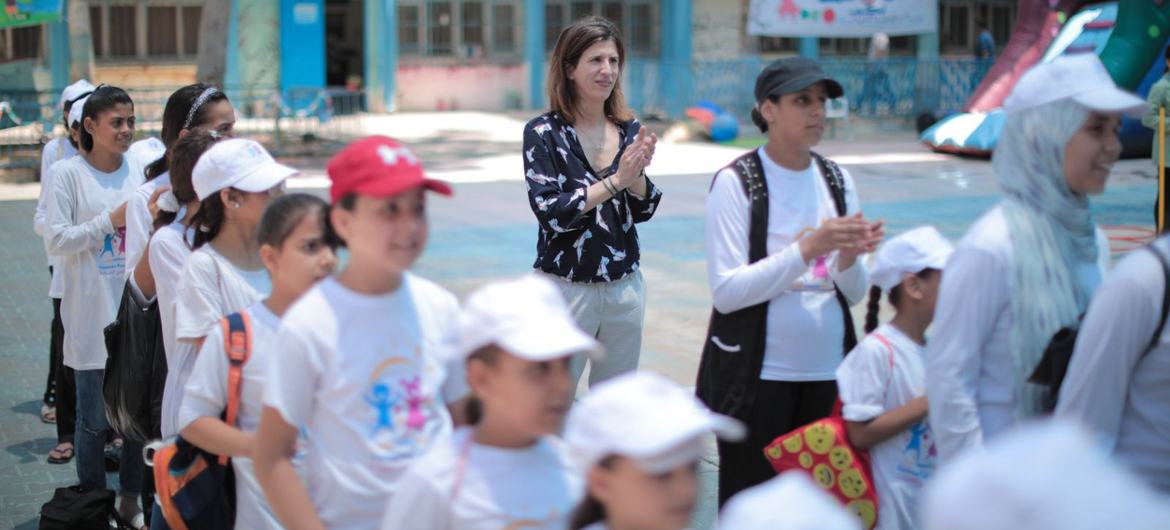
The author plays with students enjoying the “summer fun weeks” games in an UNRWA school in the Gaza Strip in 2023. (file)

Fatal hunger grows in Gaza

In 2022, when I had the great pleasure of going in and out of Gaza, I would visit children in UNRWA schools. Immaculately dressed, healthy looking, smiling, eager to learn, jumping up and down in the school playground to the sound of music.

Back then, Gaza was already under a blockade for more than 15 years. Food was, however, available on the markets through imports via Israel and locally farmed produce. UNRWA was also giving food aid to over one million people.

Images of Adam and Ali were quickly pushed to the back of my memory until a few weeks ago when they suddenly reappeared.

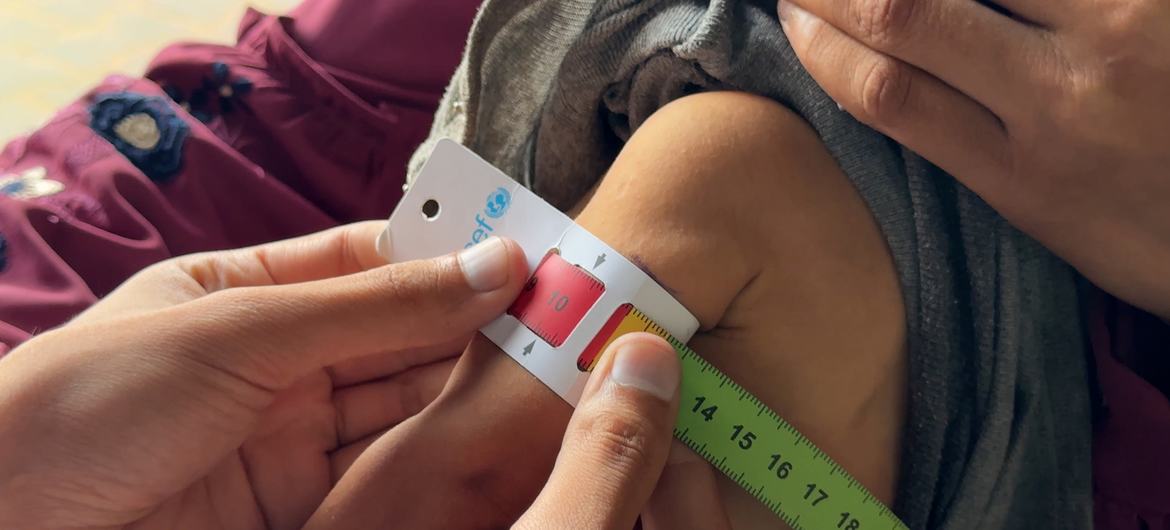
A growing number of children are being screened for malnutrition in Gaza.

Babies can survive, but will they?

Our Gaza teams started sending alarming photos of emaciated babies. The rates of malnutrition are rapidly increasing, spreading across the Gaza Strip. According to the World Health Organization (WHO), more than 50 children died of malnutrition since the siege began on 2 March.

UNRWA has meanwhile screened over 242,000 children in the agency’s clinics and medical points across the war-torn Strip, covering over half the children under age five in Gaza.  One in 10 children screened is malnourished.

Ahlam is seven months old. Her family was displaced every month since the war began, in search of non-existing safety. Shocked and her body weakened, Ahlam is severely malnourished. Like many babies in Gaza, her immune system has been damaged by trauma, constant forced displacement, lack of clean water, poor hygiene and very little food.

Ahlam can survive, but will she?

Bombs and scarce supplies

There are very little therapeutic supplies to treat children with malnutrition as basics are scarce in Gaza. The Israeli authorities have imposed a tight siege blocking the entry of food, medicines, medical and nutritional supplies and hygiene material, including soap.

While the siege is sometimes eased, UNRWA (the largest humanitarian organisation in Gaza) has not been allowed to bring in humanitarian assistance since 2 March.

Last week, Salam, another malnourished baby, died. She was a few months old. When she finally reached the UNRWA clinic, it was too late.

Meanwhile, eight children queuing for therapeutic support against malnutrition were killed when the Israeli forces hit the clinic they were in. One of my colleagues who drove past the clinic a few minutes later told me she saw mothers looking out into the abyss, weeping in silence, just like Adam did.

How many more babies must die before the world takes action?

Why should babies die of malnutrition in the 21st century, especially when it’s totally preventable?

At UNRWA, we have over 6,000 trucks of food, hygiene supplies and medicines outside Gaza waiting for the green light to go in.

The aid will mainly help little girls like Ahlam. UNRWA also has more than 1,000 health workers who can provide boys and girls with specialised nutritional services.

Amid the daily livestream of horrors we get from Gaza on our screens, one cannot help but ask how many more Ahlam’s and Salam’s have to die before taking action?

How much longer until a ceasefire is reached so that bombs stop falling on emaciated and dying children?”


Every hour, 100 people die of loneliness-related causes, UN health agency reports

 Loneliness is linked to approximately 100 deaths every hour – more than 871,000 deaths annually. By contrast, strong social connections are associated with better health and longer life, the UN health agency said on Monday.

WHO defines social connection as the ways in which people relate to and interact with one another. Loneliness is the distressing feeling that arises when there is a gap between desired and actual social relationships, while social isolation refers to the objective lack of social ties.

“In this age when the possibilities to connect are endless, more and more people are finding themselves isolated and lonely,” said Tedros Adhanom Ghebreyesus, WHO Director-General.

Disproportionate impact

While loneliness affects people across all ages, young people and people living in low- and middle-income countries are especially vulnerable.

“Even in a digitally connected world, many young people feel alone. As technology reshapes our lives, we must ensure it strengthens – not weakens – human connection,” said Chido Mpemba, co-chair of WHO Commission on Social Connection, which published the report.

The report, From loneliness to social connection: charting the path to healthier societies, highlights concerns about excessive screen time and harmful online interactions, particularly among youth and their negative effects on mental health.

Multiple factors contribute to loneliness and social isolation, including poor health, low income and education, living alone, lack of adequate community infrastructure and public policies, as well as certain aspects of digital technologies.

Serious health risks

Loneliness and social isolation increase the risk of stroke, heart disease, diabetes, cognitive decline, and early death. Lonely people are twice as likely to experience depression and may also face heightened anxiety and suicidal thoughts.

Conversely, social connection offers protective benefits throughout life—reducing inflammation, lowering the risk of serious illness, promoting mental health, and extending longevity.

Towards healthier societies

The report lays out a roadmap for global action focused on five key areas: policy, research, interventions, improved measurement and public engagement. Together, these aim to reshape social norms and build a movement for social connection.

While the costs of social isolation and loneliness are steep, the benefits of social connections are profound. WHO urged governments, communities, and individuals to make social connection a public health priority.

Millions will die from funding cuts, says UN aid chief

“Cutting funding for those in greatest need is not something to boast about…the impact of aid cuts is that millions die,” warned Emergency Relief Coordinator Tom Fletcher.

Speaking from an overcrowded hospital in Kandahar in southern Afghanistan where three or four patients have to share a bed, Mr. Fletcher warned that the financial crisis has already forced UN aid teams to close 400 primary health centres across the country so far.

His warning echoes dire announcements of drastic cost-cutting measures in response to chronic – and now acute – funding shortfalls, including an end to selected aid programmes by numerous UN relief agencies. These include the World Food Programme (WFP), the World Health Organization (WHO), the UN Children’s Fund (UNICEF), the UN aid coordination office (OCHA), the UN refugee agency (UNHCR) and UNAIDS.

Life-or-death call

Back in Afghanistan, the reality of funding cuts continues to play out in its hospitals “where you can see doctors making the most horrific decisions about which lives to save and which lives not to save”, Mr. Fletcher said at Mirwais Regional Hospital.

The lack of investment in aid relief has also affected female Afghan health workers whose salaries are being cut by up to two-thirds, Mr. Fletcher continued. The plight of women in the country is well documented and has been condemned by the international community, having deteriorated following numerous prohibitive edicts issued by the de facto authorities who overran Kabul in 2021.

As part of his official visit to Afghanistan, Mr. Fletcher met de facto provincial governor Mullah Shirin Akhund to discuss the need to address Afghanistan’s humanitarian crisis. It comes after more than four decades of conflict that have left almost half the population – some 22.9 million people – needing humanitarian assistance to survive.

Women’s key role

In earlier talks during his official visit, Mr. Fletcher stressed that development was not possible without girls’ education and their full participation in the country’s economy.

Amid soaring malnutrition, a lack of basic services and dire economic forecasts, Afghanistan has few resources to cope with the arrival of a growing number of Afghan refugees sent back by neighbouring countries including Pakistan and Iran.

The scale of the pushbacks is enormous, with more than 250,000 Afghans returned in April alone, including 96,000 who were forcibly deported. On Tuesday, the UN refugee agency, UNHCR, voiced particular alarm over the fate of women and girls, who face increasing repression under Taliban rule.

While in Kandahar, Mr. Fletcher also visited a reception centre where the UN and humanitarian partners provide support, including health check-ups and cash. He said that the closure of hundreds of health facilities in the region had denied more than three million people access to primary care.