UN Condemns ‘Deadly Escalation’ of Fight in Gaza City

The situation “is having an appalling impact on civilians enduring suffering and starvation,” he told journalists in New York.

“The United Nations condemns the deadly escalation of the Israeli military offensive which took place over the weekend across Gaza City, with scores of people reportedly killed or injured,” he said.

“We reiterate our call for the protection of civilians and humanitarian personnel and full respect for international law.” 

70,000 more uprooted

In a post on X on Sunday, the head of the UN agency for Palestine refugees, UNRWA, said that 10 of its buildings in Gaza City had been hit in the past four days alone, including seven schools and two clinics which were being used as shelters.

Almost 70,000 displaced people have headed south in the past few days, while UN partners counted 150,000 movements from north to south this past month.

Partners further reported that one third of malnutrition treatment facilities in Gaza City have shut down due to forced displacement orders, while the Ministry of Health today reported 425 deaths overall due to malnutrition and starvation in Gaza, about a third of which were children.

A call for ‘unimpeded humanitarian access’

Over the past few days, UN partners have managed to distribute 40,000 additional meals each day. As of Saturday, 558,000 daily meals were prepared and distributed by 20 UN partners to 116 kitchens.

“However, health services continue to be heavily constrained, since clinics have suspended their services due to insecurity and displacement orders,” warned Mr. Dujarric, adding that in Deir Al-Balah, only a few ambulances remain in order and are able to serve the thousands of people in need.

Additionally, 77 per cent of the road networks in Gaza have been damaged and according to UN aid coordination office OCHA, humanitarian aid continues to be obstructed.

On Sunday, only four of the 17 missions that the UN coordinated with the Israeli authorities were facilitated. Seven missions were denied, one of which was meant to deliver water tanks to the north, while another four were impeded in the field, and two were cancelled by the organisers.

Nevertheless, three humanitarian missions were accomplished, including the collection of fuel and food cargo from the Kerem Shalom/Karem Abu Salem crossing.

“Our humanitarian colleagues continue to call for unimpeded humanitarian access,” stressed Mr. Dujarric. “Aid should flow at scale through multiple crossings into and within Gaza, including the north.”

Source link

Gaza City: Daily bombardment, more displacement amid escalating military offensive

UN Spokesperson Stéphane Dujarric said people are once again on the move after Israel placed the entire city under displacement orders. Aid partners recorded more than 25,000 displacements between Sunday through Wednesday.

Some critical services have already been suspended while some humanitarian facilities have suffered severe damage, disrupting operations and the delivery of essential services.

Aid partners suspend activities

“Our partners working on health, report that some of them have had to suspend activities at primary healthcare centres, while partners working on nutrition say that 12 out of 49 outpatient therapeutic sites have halted services amid the ongoing airstrikes in Gaza City,” he said,

At least two community kitchens have also suspended operations, and three others have had to relocate within the city.

Furthermore, UN partners working on education are concerned that 95 temporary learning sites in northern Gaza serving about 25,000 children may be at imminent risk of closure due to displacement orders and ongoing insecurity.

Child malnutrition worsens

UN child rights agency UNICEF has also warned that child malnutrition in the Gaza Strip continues to worsen at an alarming rate. 

The percentage of children identified as acutely malnourished increased to 13.5 per cent in August, from 8.3 per cent in July – or 12,800 boys and girls.

Mr. Dujarric said UNICEF has been working to scale up the entry of essential nutrition supplies and distribute them, alongside nutrition partners, at about 140 sites across the Gaza Strip.

“While stocks of ready-to-use therapeutic food have recently increased, the current quantities of other critical nutrition supplies for infants and pregnant and breastfeeding women are wholly insufficient,” he said.

Meanwhile, almost half of all functioning hospitals are located in Gaza City, including half of all intensive care unit beds for the entire Gaza Strip, according to the World Health Organization (WHO).

With the Israeli offensive already underway, the Gaza Strip cannot afford to lose any of these remaining facilities, the UN agency said.

Impediments to aid delivery continue

These developments are happening as delays and impediments to humanitarian movements inside Gaza continue.

Missions still take long hours to complete, even when they are approved in advance by the Israeli authorities, meaning that teams have no choice but to wait on roads that are often dangerous or congested.

Additionally, the UN Office for the Coordination of Humanitarian Affairs (OCHA) has recently observed an increase in denials of the participation of Palestinian staff in missions, including both drivers and personnel.

Mr. Dujarric noted that denials are often communicated at the last minute, resulting in operational delays as alternatives must be quickly identified.

“What we need is full facilitation of the work and movement of humanitarian actors into and throughout the Gaza Strip. This must include unimpeded access to the north and to the south alike,” he said, adding that “every delay can cost lives.” 

The ‘unthinkable’ is underway in Gaza City, UNICEF warns

Tess Ingram, Communication Manager for UNICEF’s Middle East and North Africa Regional Office, recently spent nine days there, describing it as “a city of fear, flight and funerals.”   

“The last refuge for families in the northern Gaza Strip is fast becoming a place where childhood cannot survive,” she said, speaking from the enclave to journalists in New York.

Children ‘fighting for survival’

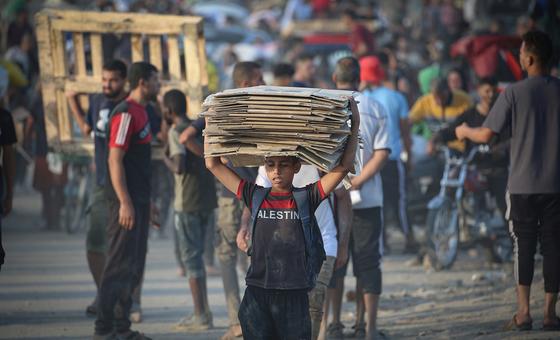
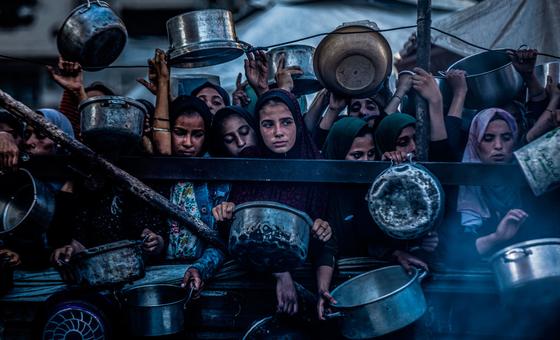
Nearly a million people remain in Gaza City, where the collapse of essential services is leaving its youngest and most vulnerable residents “fighting for survival” as famine spreads and aid barely trickles in.

Only 44 out of 92 UNICEF-supported outpatient nutrition treatment centres are still functional, which means thousands of malnourished children lack access to these critical lifelines.

Meanwhile, hospitals “are on their knees”.  Only 11 are still partly functioning and only five have neonatal intensive care units, or NICUs.

“The 40 incubators between them are running at up to 200 per cent capacity, meaning there are as many as 80 babies fighting for life in overcrowded machines, utterly dependent on generators and medical supplies that may run dry at any moment,” she said.

‘Small bodies shredded by shrapnel’

In Gaza City, Ms. Ingram met displaced families on the run once again, children who have been separated from their parents, and mothers whose children either died from starvation or who fear their offspring will be next.

“I’ve spoken to kids in hospital beds, their small bodies shredded by shrapnel,” she said.  “The unthinkable is not looming. It is already here. The escalation is underway.”

Famine is ‘everywhere’ in Gaza City

Famine was “everywhere I looked in Gaza City”, she said. “Just an hour in a nutrition clinic is enough to erase any questions about whether there is a famine,” she added.

At these clinics, waiting rooms are filled with tearful parents, “children fighting the double punch of disease and malnutrition”, mothers unable to breastfeed, and “babies losing their vision, their hair and their strength to walk.”

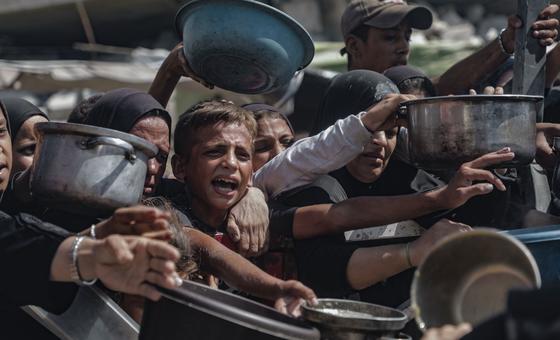
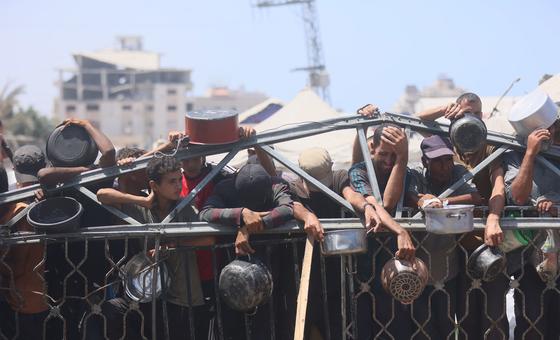
Like elsewhere in the enclave, whole families are surviving on one bowl of lentils or rice a day from community kitchens.  Parents often go without so that their children can have something to eat.

A sad reunion

Last week, Ms. Ingram visited a stabilisation centre that treats malnourished children and was shocked to find a woman there called Nesma and her daughter, Jana.  

UNICEF had evacuated the girl for treatment in southern Gaza more than a year ago and she recovered. Jana and her mother then returned to northern Gaza during the ceasefire earlier this year to reunite with the rest of their family 

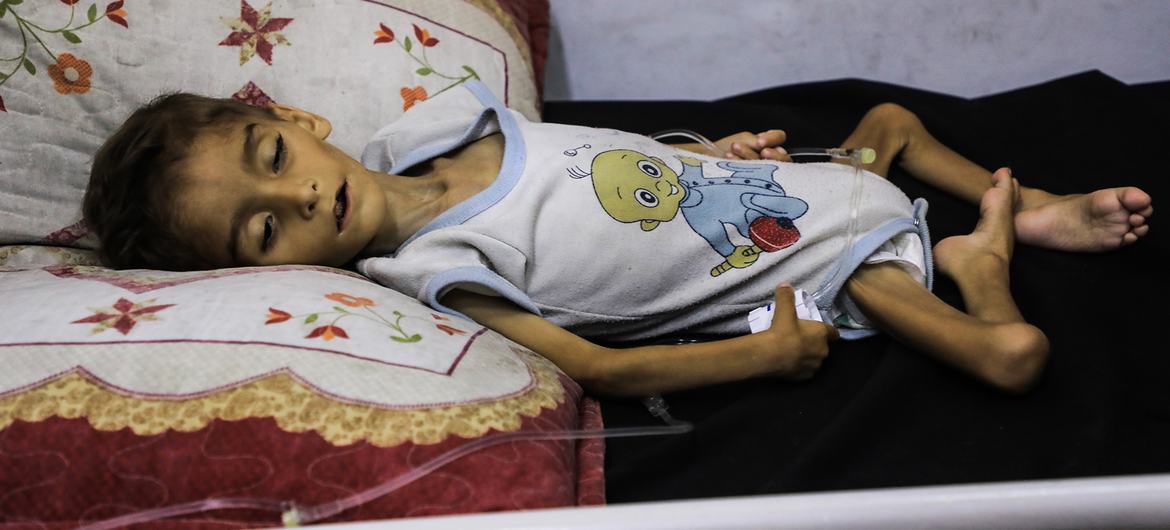
“Then the blockade on aid, hunger returned, and this time both of Nesma’s children deteriorated.” Her two-year-old daughter Jouri died from malnutrition last month and Jana “is barely hanging on”.

© UNICEF/Mohammed Nateel

A child suffering from malnutrition lies on a bed in the Patient Society Hospital in Gaza City .

‘More children will starve’

Ms. Ingram said children like Jana “are returning to emergency wards or relapsing just weeks after finishing treatment for malnutrition because of the ongoing lack of food, safe water and other essential supplies” in the Gaza Strip.

She affirmed that “without immediate and increased access to food and nutrition treatments, this recurring nightmare will deepen and more children will starve – a fate that is entirely preventable.”

UNICEF continues to respond to the crisis and in the past two weeks provided partners on the ground with enough ready-to-use therapeutic food to support more than 3,000 acutely malnourished children over the six-week course of treatment.

The agency also provided complimentary food to support more than 1,400 infants as well as high energy biscuits for more than 4,600 pregnant and breastfeeding women, among other assistance such as safe drinking water and construction of temporary learning centres.

“Our team is doing everything in their power to help children, but we could do far more, reach every child here, if our operations on the ground were enabled at scale and we were well funded,” she said.

Malnutrition numbers rising

UNICEF is seeking $716 million this year for its response in Gaza, where needs are immense and childhood malnutrition continues to rise. In February, just over 2,000 youngsters were admitted for treatment.  In July, the number climbed to 13,000 and by mid-August had already reached 7,200.

The agency continues to call on Israel to review its rules of engagement to ensure that children are protected, and for Hamas and other armed groups to release all remaining hostages, Ms. Ingram said.

She underlined the need for Israel to allow sufficient aid to enter, while humanitarians must be able to safely reach families where they are.

Her final plea was for the international community, especially States and stakeholders with influence, to use their leverage to end the war now: “because the cost of inaction will be measured in the lives of children buried in the rubble, wasted by hunger and silenced before they even had a chance to speak.” 

Source link

UN rights office worried over escalation in Gaza City, annexation plans for West Bank

Ajith Sunghay, Head of OHCHR’s Office in the Occupied Palestinian Territory (OPT), told UN News that the escalation has caused extensive destruction to residential buildings in southern parts of North Gaza governorate and in northeastern areas of Gaza City.

This has led to further civilian casualties and forced displacement.  Local health authorities reported that 816 Palestinians were killed between 26 August and 1 September – nearly double the number of fatalities compared to the previous week.

Nowhere to go

Roughly one million Palestinians reportedly remain in northern Gaza, and he said they are being pushed into increasingly smaller areas in the west of the enclave.

Many are unable to relocate – there are no safe areas and movement is dangerous. Others are still trapped in eastern Gaza City, with humanitarian workers unable to reach them,” he said.

Meanwhile, Israeli military attacks on people seeking aid continued across the Gaza Strip, where humanitarians are still struggling to bring in desperately needed supplies.  

OHCHR has recorded over 2,146 deaths in the vicinity of sites run by the US and Israel-backed Gaza Humanitarian Foundation (GHF), which began operations in late May, and along convoy routes.

West Bank warning

Mr. Sunghay also pointed to increasing reports of Israeli Government plans to “extend sovereignty” over the occupied West Bank or effectively annex parts of it.

He recalled that last July, the International Court of Justice (ICJ) “very clearly stated” that Israel has already incorporated large parts of the OPT – particularly East Jerusalem and Area C, where most settlements are located – into its territory, concluding that this amounts to annexation.

Israel “has done so, and continues doing so, with the unabated building of settlements and outposts and related infrastructure and with the forcible transfer of thousands of Palestinians from large swathes of the West Bank now controlled by the Israel forces and settlers,” he said.

“It has done so also by reshaping the West Bank with an extensive network of checkpoints, and gates which ensure freedom of action to settlers while segregating Palestinian towns and villages.”

Further expulsion threat

He warned that “any declaration of extension of sovereignty over the West Bank will have further catastrophic consequences on Palestinians” – not only on their right to self-determination but also on daily life. 

It would facilitate a further, massive expansion of settlements and legalization of existing outposts, and allow Israel to take full control of natural resources there without any restrictions.

“Further, Israel’s objectives to formally annex ‘as much as land possible with the least Palestinians in it’ as declared by some of its leaders, would clearly place Palestinians in the annexed areas at imminent risk of expulsion through increased settler violence, deprivation of political rights, expropriation of land and mass home demolitions,” he said.  

Source link

Daily malnutrition deaths continue as Israeli forces push further into Gaza City

Military activities continue in and around Gaza City, but also in the south, taking a heavy toll on civilians, including deaths, injuries and further displacement,” said UN Spokesperson Stéphane Dujarric at the daily press briefing in New York: “Our colleagues report that people continue to flee, mainly towards the coast.”

More than 76,000 people have been newly displaced since mid-August, with most occurring in the north, he said, citing the latest reports from UN agencies on the ground that are monitoring population movements. More than 23,000 people were displaced from northern Gaza.

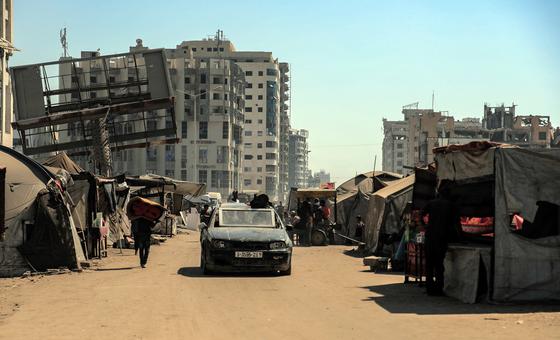
Coastal areas are also crowded with tents, forcing many people to flee from Gaza City in the north towards central areas, according to the UN humanitarian coordination agency, OCHA.

Famine response: ‘We can do this again’

Daily reports of malnutrition deaths continue, the UN Spokesperson said. Since the start of the nearly two-year-long war, more than 300 people, including many children, have died of malnutrition in the Strip, according to local authorities.

The World Food Programme (WFP) reported that the situation “continues to deteriorate”, the UN Spokesperson added, adding that families without able-bodied members to fetch food are facing the highest risks.

As such, the UN agency resumed last week its distribution system of digital vouchers, reaching 22,000 people, including vulnerable groups, following a five-month pause.

“We and our partners are continuing to transport aid and other medical supplies to and from the crossings [into Gaza], but the current situations on the ground have not yet allowed us to resume community-based distribution,” Mr. Dujarric said. “Only a ceasefire will ensure necessary conditions for a massive response to prevent famine from spreading further.”

During the previous ceasefire from January to March, he said “we reached nearly every single person in the Gaza Strip with lifesaving aid, and we can do this again.”

Obstacles delay urgent aid deliveries

WFP said obstacles include supply shortages and violent unrest around convoys which is making distributions “nearly impossible”.

According to the UN humanitarian agency, the movement of aid teams inside Gaza remains heavily restricted. OCHA also reported that about one in three planned missions were “impeded or outright denied by Israeli authorities” between Friday and Monday, the UN Spokesperson said.

As a result, many missions could not be completed, he said, also noting that strict Israeli inspections continue to significantly delay aid clearance at Ashdod Port.

Visas for top Palestinian officials blocked

News reports indicated that the United States announced last week that it would not issue visas to senior Palestinian leaders ahead of the high-level General Assembly meetings later this month at UN Headquarters in New York.

That includes a conference on 22 September where Heads of State and Government are expected to endorse a political declaration adopted by leaders attending an international conference in late July, endorsing the two-State solution.

Responding to a reporter’s question on the matter, Mr. Dujarric said “the participation of a senior Palestinian delegation to the conference is essential.”

UNRWA chief levels charge of ‘scholasticide’

Philippe Lazzarini, Commissioner-General of the UN agency for Palestine refugees, UNRWA, raised alarms at what would have been the start to the school year for more than 600,000 children in Gaza.

Gaza is in ruins; so is its education system,” he said in a statement on Monday. “Instead of going back to school, like most children around the world, around 660,000 girls and boys in Gaza will be sifting through the rubble, desperate, hungry, traumatised and mostly bereaved.”

The longer they stay out of school with their trauma, the higher the risk they become “a lost generation, sowing the seeds for more hatred and violence”, the UNRWA chief warned.

“Ceasefire is the only way forward to reverse the famine and the ‘scholasticide’ hitting the children of Gaza,” he said.

Source link

Israel’s plan to take over Gaza City marks ‘new and dangerous phase’: Guterres

“Israel’s initial steps to militarily take over Gaza City signals a new and dangerous phase,” he told journalists in New York.

“Expanded military operations in Gaza City will have devastating consequences. Hundreds of thousands of civilians – already exhausted and traumatized – would be forced to flee yet again, plunging families into even deeper peril. This must stop.”

‘Endless catalogue of horrors’

Mr. Guterres was speaking ahead of a Security Council meeting on the situation in Haiti but stopped to brief reporters on the “unfolding tragedy that is Gaza”, where “yet more unconscionable Israeli strikes” have occurred.

Incidents include the two airstrikes on Nasser Hospital in Khan Younis earlier this week which killed civilians, including medical personnel and journalists, “all with the world watching”.

The Secretary-General said “these attacks are part of an endless catalogue of horrors” and called for accountability.  

“Gaza is piled with rubble, piled with bodies, and piled with examples of what may be serious violations of international law,” he said.

“Hostages taken by Hamas and other groups must be released and the atrocious treatment they have been forced to endure must stop. Civilians must be protected.”

© UNICEF/Mohammed Nateel

A displaced family sit outside their tent in Gaza.

Unparalleled destruction and famine

Mr. Guterres stressed that “the levels of death and destruction in Gaza are without parallel in recent times”.

He said that “famine is no longer a looming possibility – it is a present-day catastrophe.”

People are dying from hunger, yet Gaza’s food, water and healthcare systems have been systematically dismantled.

Israel’s obligations

“These are the facts on the ground. And they are the result of deliberate decisions that defy basic humanity,” he said. “Israel, as the occupying Power, has clear obligations.”

He said Israel must ensure the provision of food, water, medicine, and other essentials.  This is in addition to agreeing to and facilitating far greater humanitarian access to Gaza, and protecting civilians and civilian infrastructure.

Mr. Guterres said the International Court of Justice (ICJ) has given binding provisional measures which must be implemented in full and immediately.

They include the obligation to take all steps to ensure unfettered humanitarian and medical assistance to Palestinians throughout the Gaza Strip “without delay and in full cooperation with the United Nations.” 

UN staff killed, aid efforts blocked

Meanwhile, the UN and partners are doing all they can, he said.  This is often at great personal risk, as tragically 366 UN personnel have been killed. 

“Day after day, our efforts are being blocked, delayed, and denied,” he said. “This is unacceptable.”

Settlement expansion in the West Bank

Mr. Guterres also addressed the situation in the West Bank, describing it as “profoundly alarming”.

He said Israeli military operations, settler violence, demolitions, and discriminatory policies are driving displacement and deepening vulnerability. 

Furthermore, the relentless expansion of settlements is fracturing communities and cutting off access to vital resources.

The Israeli authorities recently approved of a plan for the construction of thousands of settlements in the E1 area. He said this would effectively separate the northern and southern West Bank, representing “an existential threat to the two-state solution” between Israelis and Palestinians. 

“I repeat: the Israeli settlements in the occupied West Bank including East Jerusalem have been established – and are being maintained — in violation of international law,” he stressed.   

“Israel must cease such actions and comply with its obligations.”

‘No more excuses’

The Secretary-General concluded his remarks by emphasizing that there is no military solution to the conflict.

“I appeal once again for an immediate and permanent ceasefire, unfettered humanitarian access across Gaza, and the immediate and unconditional release of all hostages,” he said.

“Starvation of the civilian population must never be used as a method of warfare. Civilians must be protected. Humanitarian access must be unimpeded,” he added, ending with a plea for “No more excuses.  No more obstacles.  No more lies.” 

Amid massive destruction of Gaza City, UN chief renews ceasefire call

“It is vital to reach immediately a ceasefire in Gaza,” the Secretary-General told reporters on the sidelines of the Ninth Tokyo International Conference on African Development (TICAD9), “and the unconditional release of all hostages and to avoid the massive death and destruction that a military operation against Gaza City would inevitably cause.

Around one million people still live in the city – Gaza’s largest – in the north of the war-torn enclave. The Israeli army has reportedly described it as a stronghold of Hamas, the terror group whose deadly attacks in Israel and hostage-taking sparked the war on 7 October 2023.

The UN chief also condemned the Israeli Government’s decision to approve a long-shelved settlement expansion project in the occupied West Bank.

The decision by the Israeli authorities to expand illegal settlement construction, which would divide the West Bank, must be reversed. All settlement construction is a violation of international law,” he insisted.

The settlement is believed to have permission for well over 3,000 houses, schools and a clinic, cutting off East Jerusalem from the occupied West Bank, which Israel captured during the 1967 Six-Day war after defeating Egypt, Jordan and Syria.

Urban destruction

Meanwhile in Gaza City, whole urban areas are being “totally destroyed”, the UN understands, with further destruction now underway in the south and southeast, as military manoeuvres continue.

Recent attacks have been particularly devastating in the Az Zaytoun neighbourhood of the city, the UN human rights office (OHCHRreported on Wednesday.

Highlighting more than 50 attacks on residential buildings and entire blocks in Gaza City since 8 August, OHCHR warned that its “systematic destruction” had begun.

Acute malnutrition soaring

Meanwhile, UN aid teams highlighted the catastrophic impact of the accelerating Israeli military operation, with acute malnourishment soaring among children in Gaza City to 28.5 per cent, or more than one in four youngsters.

“Children continue to die from man-made starvation,” UNRWA said in a statement, noting that it has screened more than 95,000 children aged six months to five years for malnutrition across the Gaza Strip since March 2025, after the ceasefire collapsed.

While the ceasefire still held in early March and relief supplies were allowed into Gaza in far greater quantities than today, malnutrition rates were six times lower in Gaza City, at 4.5 per cent, according to the UN agency for Palestinians, UNRWA. 

Across Gaza, acute malnutrition rose to nearly 16 per cent in mid-August, more than three times higher than the 5.2 per cent level recorded by the UN agency in March, it said.

Vital services in danger

Today, services provided by UNRWA in Gaza City are at “severe risk”, the agency warned, pointing to the tens of thousands of people who still live in its shelters and the “many more” who remain in surrounding areas.

There is particular concern for UNRWA’s Gaza Field Office compound – its largest logistics hub in northern Gaza – as the UN agency’s operations in the south have been “crippled” by displacement orders and bombardment.

As an indication of UNRWA’s key role in aid and relief provision across Gaza, it noted that last month alone, it provided more than 100,000 medical consultations and screened 3,500 children for malnutrition in Gaza City.

UNRWA also delivered drinking water to 220,000 people, domestic water to 250,000 and cleared hundreds of tons of waste.

Education and protection specialists from the UN agency reached thousands more in temporary learning spaces or by offering counselling, recreational activities and risk awareness training about the dangers of lethal unexploded weapons.

“While our colleagues, like the rest of the UN, are determined to stay and deliver, all of these services are now at risk as the military operations intensify,” UNRWA said.

Source link

Amid ongoing Israeli attacks, ‘the systematic destruction of Gaza City is already underway’: UN rights office

Recent attacks have been particularly devastating in the Az Zaytoun neighbourhood, where airstrikes, artillery shelling and gunfire are continuous and intense, causing a high number of civilian casualties and the large-scale destruction of residential buildings and public facilities, the UN human rights office, OHCHR, in the Occupied Palestinian Territory said in a statement.

Since 8 August, the office has recorded 54 attacks on residential buildings and entire blocks in Gaza City, killing 87 Palestinians, including at least 25 children and entire families.

It also recorded attacks on shelters for internally displaced people, including tents and schools, killing at least 14.

These casualty figures “indicate that the systematic destruction of Gaza City is already underway,” the statement said.

However, OHCHR stressed that these devastating figures are only a portion of the actual toll due to underreporting in such dire circumstances.

Impact of attacks

As a result of recent attacks, hundreds of families have been forced to flee, with nowhere safe to go amid dire humanitarian conditions across the Gaza Strip.

However, those who remain trapped are completely cut off from food, water and medical supplies.

OHCHR emphasised that “Israel’s reported decision to take full control of Gaza City and to forcibly displace its population will lead to mass killings of civilians and destruction of infrastructure vital to the survival of the population.”

The office is seeing the Israeli military repeat means of warfare that caused mass killings, serious injuries, forced displacement, arbitrary detention, starvation and extensive destruction in previous operations in North Gaza and Rafah.

To reportedly prepare for the offensive, the Israeli military has repeatedly called on Palestinians to move to Al Mawasi, west of Khan Younis.

However, Israel has repeatedly struck tents of the displaced in Al Mawasi, where people are struggling to survive with barely any access to food, water and other necessities.

Violations of international law

Under international law, Israel must not destroy civilian property unless it is rendered necessary by military operations. Yet, the widespread destruction of residential buildings in Gaza City is not seen as an imperative military necessity.

Additionally, by forcing the entire population of Gaza City and those remaining in North Gaza into displacement – with no shelter, food or medical provisions and no indication for allowing them to return to their homes in the future – OHCHR is concerned that these are grave breaches of the Fourth Geneva Convention.

Thus, the office is urging States party to the Geneva Conventions to follow their obligation “to exert maximum pressure on Israel to immediately halt this offensive, which risks triggering an unprecedented, life-threatening humanitarian crisis and permanently extinguishing the Palestinian presence in Gaza’s largest urban area.”

Worst-case famine

Meanwhile, the World Food Programme (WFP) welcomed Japan’s life-saving contribution of 500 million yen ($3.3 million) to provide emergency food and nutrition assistance to Palestinians as they face severe food insecurity.

Adding to the assistance, on 4 August, limited commercial truck entries resumed, containing mainly dry food items and a small amount of fresh produce, according to the UN aid coordination office, OCHA.

However, the risk of spoilage and infestation of food supplies has drastically increased due to being stranded for months, heat and impending expiration dates.

Furthermore, cooking gas has not entered Gaza for over five months, and firewood has become increasingly unaffordable, forcing many to use waste and scrap wood as alternative cooking sources, exacerbating health and environmental risks.

Due to such limited aid, WFP underscored that the latest Integrated Food Security Phase Classification report finds that the worst-case scenario of famine is currently occurring in the Gaza Strip.

“I meet families who have lost everything and don’t know where their next meal will come from.” said Antoine Renard, WFP Representative and Country Director in Palestine.

But thanks to this support from Japan, he continued, “WFP can continue procuring life-saving food assistance, but we urgently need a ceasefire and sustained access to reach those most at risk and prevent a full-scale famine.” 

First Person: Echoes of war as aid arrives in Syria’s historical city

Eleonora Servino was on the first UN aid convoy to Suweida, which saw a recent escalation of violence that left many dead and thousands displaced.

As the International Organization for Migration (IOM) chief of mission to Syria, Ms. Servino said the difference on the road to Bosra is stark.

“You know that feeling when you visit somewhere as a tourist, how the memories embed themselves in your mind? Happy, peaceful places filled with stunning sights, delicious food, warm smiles and a relaxed mood. That’s how I remember Bosra, Syria, 20 years ago.

©UNESCO/Véronique Dauge

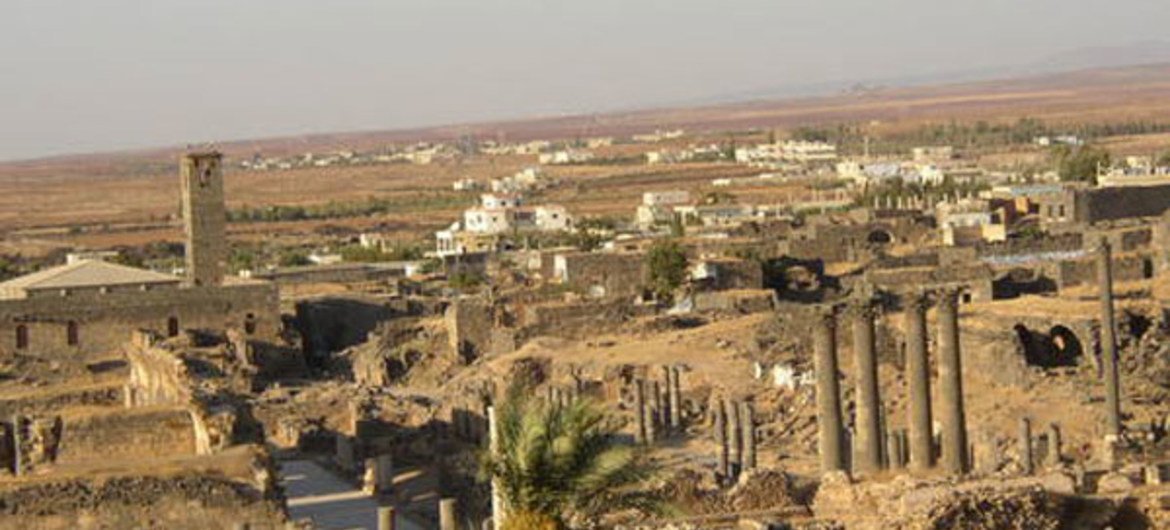
The ancient city of Bosra, Syria, a UNESCO World Heritage site, in 2015. (file)

Rivals ancient Italian relics

I went to see its ancient Roman theatre, a [UN Educational, Scientific and Cultural Organization] UNESCO World Heritage site. I recall the perfectly preserved brickwork in the tunnels leading to the stage, the intricate carvings.

Everything rivalled, even surpassed, the monuments in my native Italy. I felt at home, with a shared history. 

Recently, I returned for very different reasons.

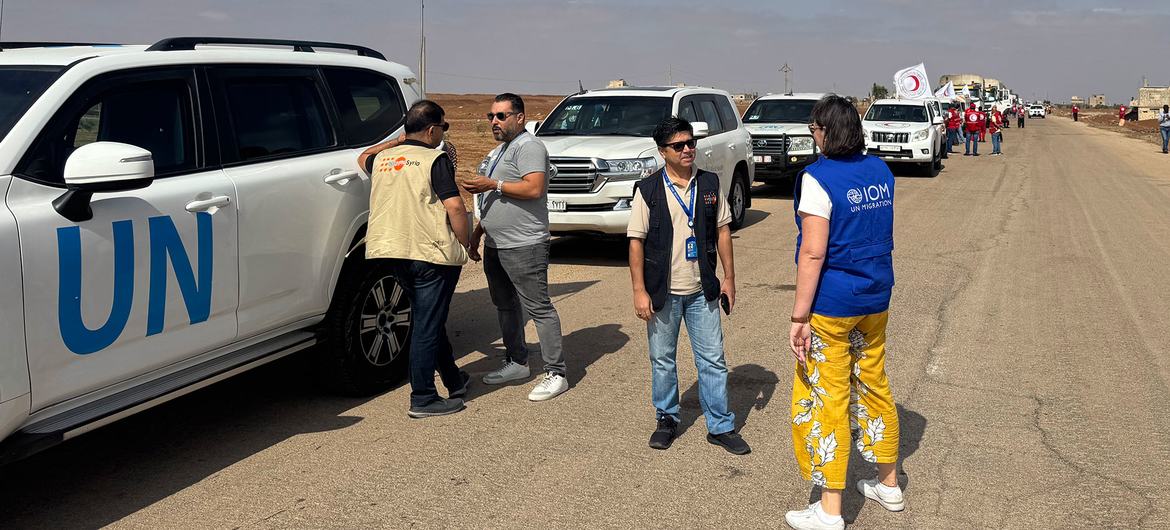
IOM chief of mission to Syria Eleonora Servino (right) on the first UN aid convoy to the city of Sweida.

Tourists long gone

Syria has endured 14 years of brutal civil war, displacing millions. The tourists are long gone. But now, with the war over and stability slowly returning, people are coming back. My organisation, IOM, has just been officially allowed to resume operations. One of my first acts as chief of mission ad interim was to take the road back to Bosra.

It’s the only route to As-Sweida governorate, which recently experienced weeks of violence, leaving many dead and over 168,000 displaced.

I was part of the first UN assessment mission. With support from OCHA [UN humanitarian agency] and the Syrian Arab Red Crescent, the convoy delivered 40 truckloads of aid from various agencies and organizations.

© UNOCHA/Ali Haj Suleiman

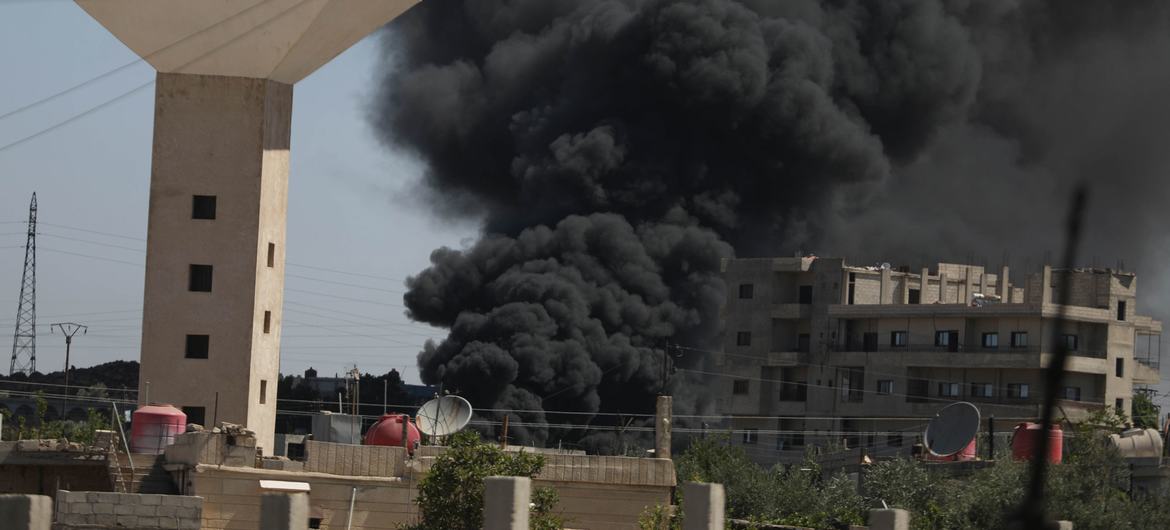
Hostilities erupt in Sweida in July 2025. (file)

‘Signs of violence everywhere’

Signs of violence were everywhere. The streets were eerily quiet in Sweida. No traffic. None of the hustle and bustle you’d expect in a city that once had a population of over 70,000.

Burnt out buildings, wrecked cars and a pervading sense of tension dominated the landscape. 

We visited three areas where internally displaced people have found shelter, either within host communities or in communal centres. People have opened their homes to those forced to flee. But, the lack of electricity, water, and the blocked main road are straining resources, making everything more difficult despite the goodwill and humanitarian spirit of ordinary citizens.

‘People are still in shock’

The need for humanitarian assistance is clear, from what we saw and what we heard. People are still in shock. We spoke to individuals who have lost so much: homes, families, possessions, livelihoods.

Our DTM (displacement tracking matrix) teams are on the ground conducting regular surveys. The needs are basic yet essential: food, cash, hygiene items, clothing, cooking sets, fuel and shelter materials.

We are a vital part of humanitarian community, advocating for and supporting those displaced by the conflict. We will continue working to keep access open and improve it, ensuring people get what they need.”

Source link

Israel’s military takeover of Gaza City would mark ‘a dangerous escalation’: Guterres

The announcement following an Israeli cabinet meeting “marks a dangerous escalation and risks deepening the already catastrophic consequences for millions of Palestinians, and could further endanger more lives, including of the remaining hostages,” it said.

The statement noted that Palestinians in Gaza continue to endure a humanitarian catastrophe of horrific proportions. 

More displacement, death and destruction

The UN chief warned that this further escalation will result in additional forced displacement, killings and massive destruction, compounding the unimaginable suffering of the population.

He reiterated his urgentappeal for a permanent ceasefire, unimpeded humanitarian access across Gaza, and the immediate and unconditional release of all hostages.

 “The Secretary-General once again strongly urges the Government of Israel to abide by its obligations under international law,” the statement continued.

End the occupation

Mr. Guterres recalled that in an Advisory Opinion last July, the International Court of Justice (ICJ) declared that Israel is under an obligation to cease immediately all new settlement activities, to evacuate all settlers from the Occupied Palestinian Territory, and to bring to an end its unlawful presence there as rapidly as possible.

 “There will be no sustainable solution to this conflict without an end to this unlawful occupation and the achievement of a viable two-State solution,” the statement concluded, stressing that “Gaza is and must remain an integral part of a Palestinian State.”

Security Council meeting

In the wake of the development, the Permanent Observer of the Observer State of Palestine, Riyad Mansour, held consultations with the president of the UN Security Council in New York.

“This escalation by the Israeli Government is going in total contradiction to the will of the international community, international law and common sense – and, I even dare to say, against the wish of the majority of people inside Israel as we read opinion polls,” he told journalists at UN Headquarters.

The Security Council is due to meet on Saturday at 3 PM in emergency session to discuss the crisis. 

Insufficient aid still a problem

Meanwhile, civilians continue to be killed and wounded in Gaza, where even basic tasks such as finding food and water have become impossible, the UN Office for the Coordination of Humanitarian Affairs (OCHA) said in an update.

Furthermore, aid entering the Strip continues to be far below the minimum required to meet the immense needs, OCHA added.

Scarcity and ‘exorbitant prices’ 

“Since the entry of some commercial trucks into Gaza in the past few days, partners reported a minor reduction in commodities prices as of yesterday. Most food items remain scarce in the market and sold at exorbitant prices,” OCHA said.

At the same time, airdrops in different parts of Gaza continue to reportedly kill and injure people, with one child reportedly losing their life in Khan Younis on Thursday.

While welcoming all efforts to provide desperately needed aid, OCHA reiterated that the most efficient way to bring supplies into Gaza is by road. 

It is imperative that aid is allowed to enter through all crossings and via all available corridors so that the UN and its partners can deliver it at scale in a safe and dignified manner through their community-based mechanisms, reaching the most vulnerable,” the agency said.

Severe heatwave

OCHA added that the region has been hit by a severe heatwave as people continue to struggle with access to water.

On Thursday, aid partners reported that the South Gaza Desalination Plant’s electricity line was damaged for the third time in the past seven days and the plant is operating at less than 14 per cent of its capacity. 


Source link

Yemen: Security Council extends UN mission in crucial port city amid escalating Red Sea strife

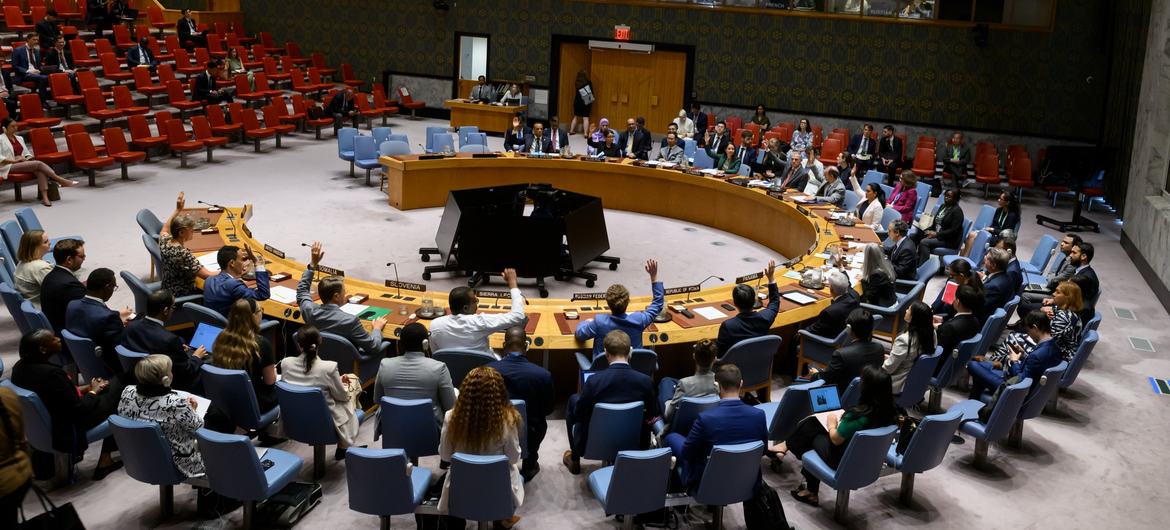
Adopted unanimously, the resolution extending the UN Mission to support the Hudaydah Agreement (UNMHA) until 28 January 2026, underscores the Mission’s critical role in maintaining fragile stability amid signs of renewed military escalation and deepening humanitarian need.

The resolution – 2786 (2025) – reaffirms the Council’s support for the 2018 Stockholm Agreement, including the ceasefire in the Houthi-controlled port city – and demilitarisation of its docks, where the majority of Yemen’s imports and vital aid shipments pass through.

The mission’s future

It also signals a growing debate over the mission’s future, requesting the Secretary-General to submit a review by November to enhance coordination and coherence of UN operations, “bearing in mind challenges” that have directly impeded UNMHA’s capacity to deliver.

The Security Council…expresses its intention to review the full range of options for UNMHA’s mandate, including assessing the future viability and sunsetting of the Mission, and make any necessary adjustments to gain efficiencies and reduce costs or otherwise, as may be required to UN operations in Hudaydah by developments on the ground, including inter alia a durable nationwide ceasefire,” the resolution noted.

UNMHA was established in 2019 to support implementation of the Stockholm Agreement between the Government of Yemen and Ansar Allah (as the Houthis are formally known), which sought to prevent major conflict over the region.

The mission monitors the ceasefire, facilitates redeployments and supports de-escalation through liaison mechanisms between the parties.

Tensions mounting

While the military situation on the ground remains tenuously stable, tensions are mounting on multiple fronts.

According to a letter from the Secretary-General to the 15-member Council in June, a growing number of ceasefire violations – averaging over 100 per day between June 2024 and May 2025 – highlight the fragile state of the region.  

Government-aligned forces fortified positions in anticipation of a possible offensive on the city, while Houthi units increased infiltration attempts and public mobilisation, including military-style youth camps in areas they control.

Security Council unanimously adopts Resolution 2786 (2025) extending until 28 January 2026 the mandate of the UN Mission to support the Hudaydah Agreement (UNMHA).

Deadly Red Sea passage

Compounding this, Houthi attacks on international shipping in the Red Sea have intensified. On 8 July, the commercial vessel Eternity C was sunk, killing several crew members and leaving others missing. This followed the sinking of the Magic Seas vessel two days earlier.

In a statement, UN Special Envoy Hans Grundberg condemned the attacks, calling them violations of international maritime law and warning they risked serious environmental and geopolitical fallout.

He called on Ansar Allah to cease attacks that risk escalating tensions in and around Yemen.

“[He urges them] to build on the cessation of hostilities with the United States in the Red Sea and to provide durable guarantees to the region and the wider international community, ensuring the safety of all those using this critical waterway,” the statement noted.

Significant operational constraints

Within Hudaydah itself, UNMHA faces significant constraints.  

The June letter by the Secretary-General details restrictions by Houthi authorities on UN patrols to the critical Red Sea ports – Hudaydah, Salif and Ras Issa.

Damage from repeated airstrikes, including by the US and Israel in response to Houthi attacks, has left key port infrastructure partially inoperable, disrupting fuel, food and medical imports.

With Hudaydah responsible for 70 per cent of Yemen’s commercial imports and 80 per cent of humanitarian deliveries, the stakes are high.

© UNICEF/Mahmoud Alfilastini

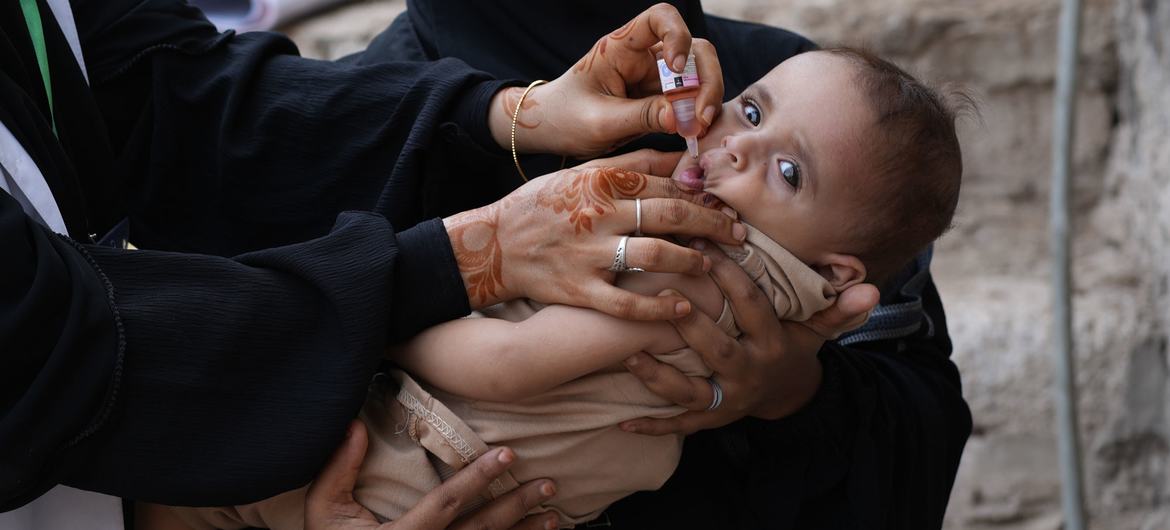
A child receives a polio vaccination in Yemen.

Polio vaccination drive

Meanwhile, a new round of polio vaccinations is underway in Government-controlled areas of southern Yemen, amid mounting concerns over the continued spread of the virus.  

From 12 to 14 July, health workers deployed across 12 governorates, aimed at curbing the outbreak of variant type 2 poliovirus.

The campaign, led by Yemen’s Ministry of Public Health with support from UN Children’s Fund (UNICEF) and World Health Organization (WHO), came as 282 cases have been reported since 2021, with environmental surveillance confirming ongoing transmission.

The campaign is essential to interrupt transmission and protect every child from the debilitating effects of polio,” said Ferima Coulibaly-Zerbo, acting WHO Representative in Yemen.

UNICEF’s Peter Hawkins echoed the urgency, warning of the “imminent threat” to unvaccinated children if immunisation gaps persist.

“But, through vaccination, we can keep our children safe,” he said.

Source link