New national climate plans unveiled at high-level summit ahead of COP30 conference

The game-changing summit was convened by Secretary-General António Guterres alongside President Luiz Inácio Lula Da Silva of Brazil, host of the COP30 conference which kicks off in November in the Amazonian city of Belém.

At the outset, leading climate scientists Johan Rockström and Katharine Hayhoe provided a stark assessment of global efforts so far to honour the Paris Agreement, the landmark 2015 treaty that seeks to limit global temperature rise to 1.5 degrees Celsius above pre-industrial levels.

‘A deep concern’

Ten years on, greenhouse gas emissions that cause global warming continue to rise, and annual global temperature change exceeded 1.5 degrees for the first time last year.

“This is a deep concern,” said Professor Rockström, chief scientist at Conservation International. “An even deeper concern is that warming appears to be accelerating, outpacing emissions.”

Yet it is still possible to meet the1.5-degree goal and the two experts highlighted solutions, including transitioning from fossil fuels to clean energy sources and transforming food systems to eliminate waste. 

We cannot prevent this catastrophe alone. But together, we can. By setting stronger targets, moving on faster timelines, and making deeper commitments,” said Professor Hayhoe, a winner of the 2019 UN Champions of the Earth Prize.

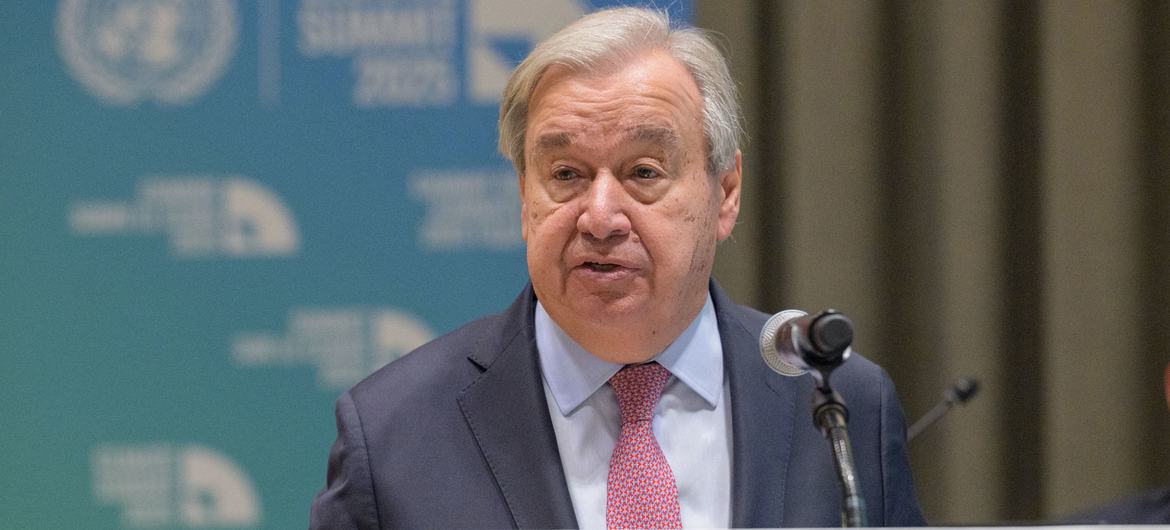
Secretary-General António Guterres addresses the Climate Summit 2025, a high-Level special event on Climate Action.

More action needed: Guterres

Under the Paris Agreement, governments are required to submit climate plans called Nationally Determined Contributions (NDCs) laying out bold action for the next decade.

The treaty has made a difference, the Secretary-General said, as projected global temperature rise dropped from four degrees to less than three over the past 10 years, if current plans are fully implemented.

“Now, we need new plans for 2035 that go much further, and much faster,” he said. “Delivering dramatic emissions cuts aligned with 1.5 degrees; covering all emissions and sectors; and accelerating a just energy transition globally.”

He stressed that COP30 “must conclude with a credible global response plan to get us on track” and outlined five crucial areas for action: accelerating the transition to clean energy, drastically cutting methane gas emissions, forest conservation, cutting emissions from heavy industry, and ensuring climate justice for developing nations.
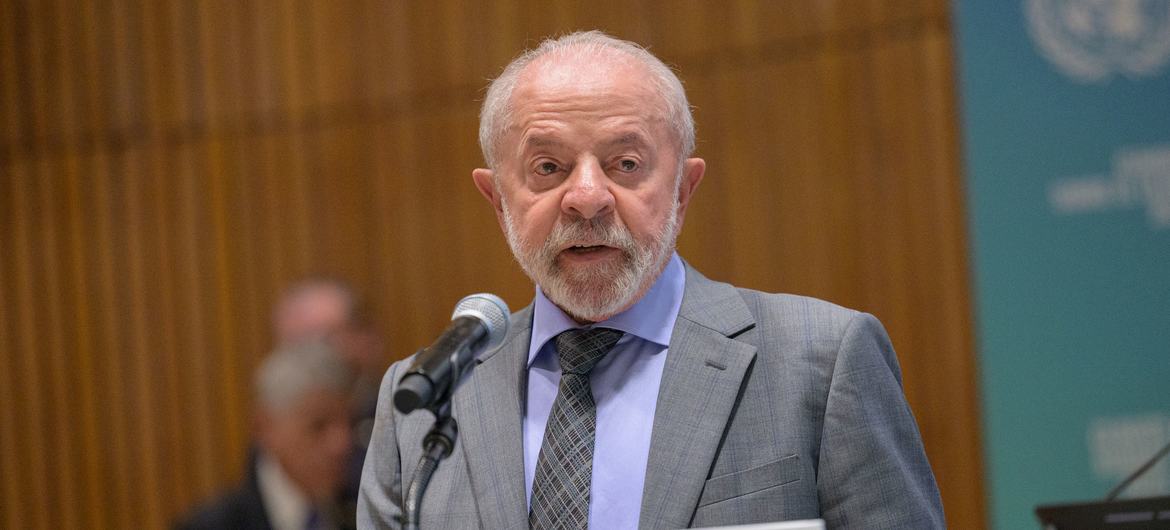
President Luiz Inácio Lula da Silva of Brazil addresses the Climate Summit 2025, a high-Level special event on Climate Action.

Do your ‘homework’, urges Lula

With just a few weeks until COP30, President Lula wondered “whether the world will arrive in Belém with its homework done.”

He said that “the energy transition opens the door to a productive and technological transformation comparable to the Industrial Revolution” and NDCs “are the road map that will guide each country through this change.”

For its part, Brazil has committed to reducing all greenhouse gas emissions between 59 per cent and 67 per cent, covering all sectors of the economy, he said, and continues efforts to end deforestation by 2030.

Commitment from China and Europe

At the meeting, President Xi Jinping of China announced that by 2035, the country will reduce economy-wide net greenhouse gas emissions by seven to 10 per cent from peak levels.  

The country will also increase the share of non-fossil fuels in total energy consumption to over 30 per cent, expand wind and solar power capacity sixfold compared to 2020 levels, and make “new energy vehicles” the mainstream in new vehicle sales, he said in a video message.

Meanwhile, “the clean transition is moving on” in the European Union, where emissions are down nearly 40 per cent since 1990, said European Commission President Ursula von der Leyen. 

European countries are also “doubling down on global partnerships” and will remain the world’s largest providers of climate finance, she said, while also mobilizing up to 300 billion Euros to support the clean energy transition worldwide.

Vulnerable nations ‘between hope and hardship’

For Belize, the 1.5-degree goal “is not an aspiration” but “a threshold between hope and hardship, between flourishing communities and forced displacement, between shared prosperity and irreversible loss,” said Prime Minister Johnny Briceño.

Its new NDC covers concrete actions, such as expanding renewable electricity generation to cover 80 per cent of domestic needs by 2035, restoring some 25,000 hectares of degraded forest, and planting a million trees over the next three years. 

“But let me be clear, ambition can only succeed if matched by support for small climate vulnerable nations like Belize. 

“This means scaled up, predictable finance; accessible technology and genuine partnerships,” he said, noting that “success depends on all of us acting with unprecedented urgency, solidarity and climate justice.” 


UN rights office worried over escalation in Gaza City, annexation plans for West Bank

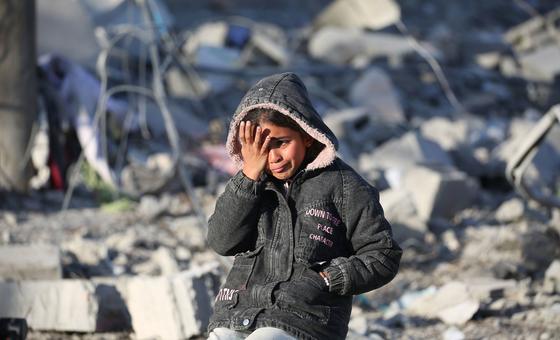
Ajith Sunghay, Head of OHCHR’s Office in the Occupied Palestinian Territory (OPT), told UN News that the escalation has caused extensive destruction to residential buildings in southern parts of North Gaza governorate and in northeastern areas of Gaza City.

This has led to further civilian casualties and forced displacement.  Local health authorities reported that 816 Palestinians were killed between 26 August and 1 September – nearly double the number of fatalities compared to the previous week.

Nowhere to go

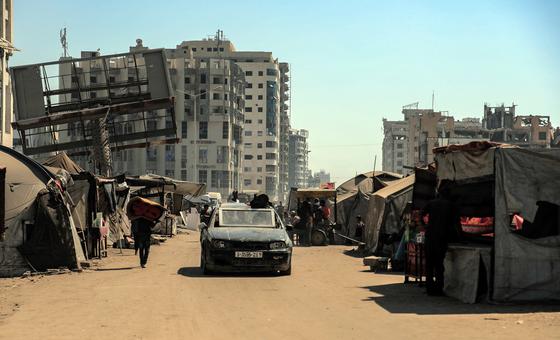
Roughly one million Palestinians reportedly remain in northern Gaza, and he said they are being pushed into increasingly smaller areas in the west of the enclave.

Many are unable to relocate – there are no safe areas and movement is dangerous. Others are still trapped in eastern Gaza City, with humanitarian workers unable to reach them,” he said.

Meanwhile, Israeli military attacks on people seeking aid continued across the Gaza Strip, where humanitarians are still struggling to bring in desperately needed supplies.  

OHCHR has recorded over 2,146 deaths in the vicinity of sites run by the US and Israel-backed Gaza Humanitarian Foundation (GHF), which began operations in late May, and along convoy routes.

West Bank warning

Mr. Sunghay also pointed to increasing reports of Israeli Government plans to “extend sovereignty” over the occupied West Bank or effectively annex parts of it.

He recalled that last July, the International Court of Justice (ICJ) “very clearly stated” that Israel has already incorporated large parts of the OPT – particularly East Jerusalem and Area C, where most settlements are located – into its territory, concluding that this amounts to annexation.

Israel “has done so, and continues doing so, with the unabated building of settlements and outposts and related infrastructure and with the forcible transfer of thousands of Palestinians from large swathes of the West Bank now controlled by the Israel forces and settlers,” he said.

“It has done so also by reshaping the West Bank with an extensive network of checkpoints, and gates which ensure freedom of action to settlers while segregating Palestinian towns and villages.”

Further expulsion threat

He warned that “any declaration of extension of sovereignty over the West Bank will have further catastrophic consequences on Palestinians” – not only on their right to self-determination but also on daily life. 

It would facilitate a further, massive expansion of settlements and legalization of existing outposts, and allow Israel to take full control of natural resources there without any restrictions.

“Further, Israel’s objectives to formally annex ‘as much as land possible with the least Palestinians in it’ as declared by some of its leaders, would clearly place Palestinians in the annexed areas at imminent risk of expulsion through increased settler violence, deprivation of political rights, expropriation of land and mass home demolitions,” he said.  

Source link

UN’s Guterres declares fossil fuel era fading; presses nations for new climate plans before COP30 summit

In a special address at UN Headquarters in New York, Mr. Guterres cited surging clean energy investment and plunging solar and wind costs that now outcompete fossil fuels.

The energy transition is unstoppable, but the transition is not yet fast enough or fair enough,” he said.

The speech, A Moment of Opportunity: Supercharging the Clean Energy Age – a follow‑up to last year’s Moment of Truth – was delivered alongside a new UN technical report drawing on global energy and finance bodies.

“Just follow the money,” Mr. Guterres said, noting that $2 trillion flowed into clean energy last year, $800 billion more than fossil fuels and up almost 70 per cent in a decade.

Key points from the address

  • Point of no return – The world has irreversibly shifted towards renewables, with fossil fuels entering their decline
  • Clean energy surge – $2 trillion invested in clean energy last year, $800 billion more than fossil fuels
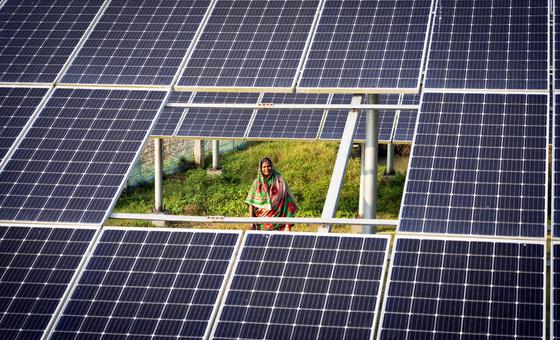
  • Cost revolution – Solar now 41 per cent cheaper and offshore wind 53 per cent cheaper than fossil fuel alternatives.
  • Global challenge – Calls on G20 nations to align new national climate plans with the 1.5°C target of the Paris Agreement
  • Energy security – Renewables ensure “real energy sovereignty”
  • Six opportunity areas – Climate plan ambition, modern grids, sustainable demand, just transition, trade reform, and finance for emerging markets.

A shift in possibility

He noted new data from the International Renewable Energy Agency (IRENA) showing solar, once four times costlier, is now 41 per cent cheaper than fossil fuels.

Similarly, offshore wind is 53 per cent cheaper, with more than 90 per cent of new renewables worldwide beating the cheapest new fossil alternative.

This is not just a shift in power. It is a shift in possibility,” he said.

Renewables nearly match fossil fuels in global installed power capacity, and “almost all the new power capacity built” last year came from renewables, he said, noting that every continent added more clean power than fossil fuels.

Clean energy is unstoppable

Mr. Guterres underscored that a clean energy future “is no longer a promise, it is a fact”. No government, no industry and no special interest can stop it.

Of course, the fossil fuel lobby will try, and we know the lengths to which they will go. But, I have never been more confident that they will fail because we have passed the point of no return.

He urged countries to lock ambition into the next round of national climate plans, or NDCs, due within months. Mr. Guterres called on the G20 countries, which are responsible for 80 per cent of emissions, to submit new plans aligned with the 1.5°C limit and present them at a high‑level event in September.

Targets, he added, must “double energy efficiency and triple renewables capacity by 2030” while accelerating “the transition away from fossil fuels”.

Real energy sovereignty

The Secretary-General also highlighted the geopolitical risks of fossil fuel dependence.

“The greatest threat to energy security today is fossil fuels,” he said, citing price shocks after Russia’s invasion of Ukraine.

There are no price spikes for sunlight, no embargoes on wind. Renewables mean real energy security, real energy sovereignty and real freedom from fossil-fuel volatility.

Six opportunity areas

Mr. Guterres mapped six “opportunity areas” to speed the transition: ambitious NDCs, modern grids and storage, meeting soaring demand sustainably, a just transition for workers and communities, trade reforms to broaden clean‑tech supply chains, and mobilising finance to emerging markets.

Financing, however, is the choke point. Africa, home to 60 per cent of the world’s best solar resources, received just 2 per cent of global clean energy investment last year, he said.

Only one in five clean energy dollars over the past decade went to emerging and developing economies outside China. Flows must rise more than five-fold by 2030 to keep the 1.5-degree limit alive and deliver universal access.

Mr. Guterres urged reform of global finance, stronger multilateral development banks and debt relief, including debt‑for‑climate swaps.

The fossil fuel age is flailing and failing. We are in the dawn of a new energy era,” he said in closing.

That world is within reach, but it won’t happen on its own. Not fast enough. Not fair enough. It is up to us. This is our moment of opportunity.

Source link

Guterres alarmed by Israeli plans to expand Gaza ground offensive

 “This will inevitably lead to countless more civilians killed and the further destruction of Gaza,” said UN Deputy Spokesperson Farhan Haq, responding to a journalist’s question during the regular media briefing in New York.

“What’s imperative now is an end to the violence, not more civilian deaths and destruction. Gaza is, and must remain, an integral part of a future Palestinian State.” 

The alert comes as the UN humanitarian team and other NGOs in the Occupied Palestinian Territory on Sunday condemned Israeli efforts to replace the aid delivery system with one where supplies would reportedly be funnelled through military hubs in the south.

This proposal would leave “large parts of Gaza…less mobile and (the) most vulnerable” without lifesaving supplies, aid chiefs insisted.

The Secretary-General continues to call for an immediate permanent ceasefire and the immediate and unconditional release of hostages in Gaza, said Mr. Haq.

Deadly attacks and looting

Meanwhile, airstrikes and other attacks continue across the Strip, where Israel has blocked the entry of aid and commercial supplies for more than two months.

Reports indicate that scores of people were killed and hundreds injured over the weekend, including children, the UN aid coordination office OCHA said on Monday.

OCHA noted that robbery and looting have become a daily reality in the Strip, especially in and around Gaza City, which is occurring in parallel with the depletion of supplies.

Businesses are being targeted, and there have also been attempts against UN warehouses.  In most cases the looters were stopped by guards, or the warehouses were already empty.

Water woes

Last week, OCHA reported that water pumping and sanitation systems in Beit Lahiya had gone down because fuel had run out. Services are still not back due to continuing shortages.

Furthermore, a major water line from Israel was damaged on Friday, cutting water supply to northern Gaza – including Gaza City – by half. Teams were only able to fix the problem on Sunday as the repair work required coordination with the Israeli authorities.

Also on Sunday, a UN team managed to retrieve some fuel from a station in Gaza City after the Israeli authorities facilitated their efforts to reach it. However, many reserves remain out of reach due to denial of access.

OCHA noted that in Rafah in southern Gaza, not a single attempt to retrieve fuel has been facilitated since 18 April.

The agency also reported that since Saturday, 19 out of 27 planned humanitarian movements within Gaza were denied outright.  Other attempts were initially given the go-ahead – but then impeded by forces on the ground. 

Source link