Can workers compete with machines and stay relevant in the AI era?

Whether you are a “doomer” or a “boomer” on the subject, it’s impossible to ignore AI, which is seeping into every corner of our personal and professional lives.

The UN has been banging the drum for a “people-first” approach to the subject for years now.

UN Secretary-General António Guterres warned the Security Council back in 2024 that the fate of humanity “must never be left to the ‘black box’ of an algorithm,” and that people must always retain oversight and control over AI decision-making to ensure that human rights are upheld.

Since then, the UN System has been consolidating work on the ethical global governance of AI, building on the guidelines and recommendations contained in the landmark Global Digital Compact.

Here is a selection of the key ideas.

1. Education is key

The UN consistently highlights education as central to ensuring people remain relevant in an AI-enabled future. This is not just about plugging AI tools into the education system but making sure that students and educators are “AI-literate.”

“The global education system will need 44 million teachers by 2030,” says Shafika Isaacs, head of technology and AI in education at UNESCO (the UN agency for education, science and culture). “We believe that it is a mistake to argue that we need to invest more in AI technologies rather than investing in teachers. AI can manage data transfer, but it cannot manage human development, Education is fundamentally a social, human and cultural experience and not a technical download.

2. Embrace the change

Many people across the world are concerned about losing their jobs in the AI era. The World Economic Forum NGO estimated in 2025 that some 41 per cent of employers were planning on cutting their workforce due to AI.

At the same time, new roles matching human strengths with machine capabilities are likely to emerge, because although machines are great at recognizing patterns and repetitive tasks – creativity, judgment, ethical reasoning, and complex interpersonal interactions require a human touch.

Working with global research partners, the International Labour Organization (ILO) has predicted that while one in four jobs is likely to be transformed by AI, this doesn’t necessarily mean net job losses

However, the way that work is performed is likely to significantly change, putting the onus on workers to be highly adaptable, and open to the idea of constantly learning new skills and training throughout their working lives.

© Unsplash/Aidin Geranrekab

Artificial Intelligence is currently revolutionising the smartphone industry.

3. Make AI available for all

A handful of tech giants are driving research into AI and dominating the creation of new tools. The UN is concerned that, unless access to the technology is widened, inequality between countries and within societies will grow.

Strategies developed by the UN emphasise that educational, economic, and governance policies should ensure that AI benefits are broadly shared, not confined to the privileged or technologically advanced.

4. Put human rights first

The UN has repeatedly stressed that AI development must respect human rights, dignity and inclusiveness, and warned that unchecked automation will have far reaching social consequences. 

In 2021, after extensive consultations with global experts, UNESCO released Recommendation on the Ethics of Artificial Intelligence, which argues that human rights can’t be optional – they have to be the binding baseline of sustainable AI systems. 

The document argues that tools that threaten dignity, equality or freedom should be restricted or banned, and that governments must actively regulate and enforce these standards. 

5. The whole world needs to agree on the way forward

This is not an issue that an individual government, private sector, or civil society can navigate alone, and the UN is calling for far greater international cooperation to manage the risks and opportunities of AI.

This could take the form of dialogues on governance and ethics, UN-supported platforms for coordination, and partnerships between the public and private sectors to fund education and workforce development.

Source link

World enters era of ‘global water bankruptcy’

For decades, scientists, policymakers and the media warned of a “global water crisis,” implying temporary shock – followed by recovery. 

What is now emerging in many regions, however, is a persistent shortage whereby water systems can no longer realistically return to their historical baselines.

For much of the world, ‘normal’ is gone,” said Kaveh Madani, Director of the UN University Institute for Water, Environment and Health.

 “This is not to kill hope but to encourage action and an honest admission of failure today to protect and enable tomorrow,” he told a press briefing in New York on Tuesday.

Unequal burdens

Mr. Madani emphasised that the findings do not suggest worldwide failure – but there are enough bankrupt or near-bankrupt systems, interconnected through trade, migration and geopolitical dependencies, that the global risk landscape has been fundamentally altered.

The burdens fall disproportionately on smallholder farmers, Indigenous Peoples, low-income urban residents and women and youth, while the benefits of overuse often accrued to more powerful actors.

From crisis to recovery? 

The report introduces water bankruptcy as a condition defined by both insolvency and irreversibility.

Insolvency refers to withdrawing and polluting water beyond renewable inflows and safe depletion limits.

Irreversibility refers to the damage to key parts of water-related natural capital, such as wetlands and lakes, that makes restoration of the system to its initial conditions infeasible.

But all is not lost: comparing water action to finance, Mr. Madani said that bankruptcy is not the end of action. 

It is the start of a structured recovery plan: you stop the bleeding, protect essential services, restructure unsustainable claims, and invest in rebuilding,” he noted.

Costly tab

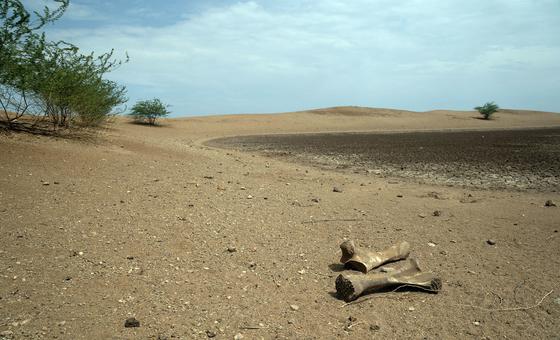
The world is rapidly depleting its natural “water savings accounts”, according to the study: more than half the world’s large lakes have declined since the early 1990’s, while around 35 per cent of natural wetlands have been lost since 1970, Mr. Madani said.

The human toll is already significant. Nearly three-quarters of the world’s population live in countries classified as water-insecure or critically water-insecure.

Around four billion people experience severe water scarcity for at least one month each year, while drought impacts cost an estimated $307 billion annually.

“If we continue to manage these failures as temporary ‘crises’ with short-term fixes, we will only deepen the ecological damage and fuel social conflict,” Mr. Madani warned.

Course corrections

The report calls for a transition from crisis response to bankruptcy management, grounded in honesty about the irreversibly of losses, protection of remaining water resources – and policies that match hydrological reality rather than past norms.

Source link

UN’s Guterres declares fossil fuel era fading; presses nations for new climate plans before COP30 summit

In a special address at UN Headquarters in New York, Mr. Guterres cited surging clean energy investment and plunging solar and wind costs that now outcompete fossil fuels.

The energy transition is unstoppable, but the transition is not yet fast enough or fair enough,” he said.

The speech, A Moment of Opportunity: Supercharging the Clean Energy Age – a follow‑up to last year’s Moment of Truth – was delivered alongside a new UN technical report drawing on global energy and finance bodies.

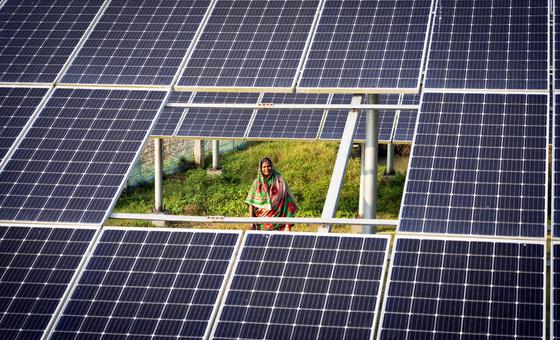
“Just follow the money,” Mr. Guterres said, noting that $2 trillion flowed into clean energy last year, $800 billion more than fossil fuels and up almost 70 per cent in a decade.

Key points from the address

  • Point of no return – The world has irreversibly shifted towards renewables, with fossil fuels entering their decline
  • Clean energy surge – $2 trillion invested in clean energy last year, $800 billion more than fossil fuels
  • Cost revolution – Solar now 41 per cent cheaper and offshore wind 53 per cent cheaper than fossil fuel alternatives.
  • Global challenge – Calls on G20 nations to align new national climate plans with the 1.5°C target of the Paris Agreement
  • Energy security – Renewables ensure “real energy sovereignty”
  • Six opportunity areas – Climate plan ambition, modern grids, sustainable demand, just transition, trade reform, and finance for emerging markets.

A shift in possibility

He noted new data from the International Renewable Energy Agency (IRENA) showing solar, once four times costlier, is now 41 per cent cheaper than fossil fuels.

Similarly, offshore wind is 53 per cent cheaper, with more than 90 per cent of new renewables worldwide beating the cheapest new fossil alternative.

This is not just a shift in power. It is a shift in possibility,” he said.

Renewables nearly match fossil fuels in global installed power capacity, and “almost all the new power capacity built” last year came from renewables, he said, noting that every continent added more clean power than fossil fuels.

Clean energy is unstoppable

Mr. Guterres underscored that a clean energy future “is no longer a promise, it is a fact”. No government, no industry and no special interest can stop it.

Of course, the fossil fuel lobby will try, and we know the lengths to which they will go. But, I have never been more confident that they will fail because we have passed the point of no return.

He urged countries to lock ambition into the next round of national climate plans, or NDCs, due within months. Mr. Guterres called on the G20 countries, which are responsible for 80 per cent of emissions, to submit new plans aligned with the 1.5°C limit and present them at a high‑level event in September.

Targets, he added, must “double energy efficiency and triple renewables capacity by 2030” while accelerating “the transition away from fossil fuels”.

Real energy sovereignty

The Secretary-General also highlighted the geopolitical risks of fossil fuel dependence.

“The greatest threat to energy security today is fossil fuels,” he said, citing price shocks after Russia’s invasion of Ukraine.

There are no price spikes for sunlight, no embargoes on wind. Renewables mean real energy security, real energy sovereignty and real freedom from fossil-fuel volatility.

Six opportunity areas

Mr. Guterres mapped six “opportunity areas” to speed the transition: ambitious NDCs, modern grids and storage, meeting soaring demand sustainably, a just transition for workers and communities, trade reforms to broaden clean‑tech supply chains, and mobilising finance to emerging markets.

Financing, however, is the choke point. Africa, home to 60 per cent of the world’s best solar resources, received just 2 per cent of global clean energy investment last year, he said.

Only one in five clean energy dollars over the past decade went to emerging and developing economies outside China. Flows must rise more than five-fold by 2030 to keep the 1.5-degree limit alive and deliver universal access.

Mr. Guterres urged reform of global finance, stronger multilateral development banks and debt relief, including debt‑for‑climate swaps.

The fossil fuel age is flailing and failing. We are in the dawn of a new energy era,” he said in closing.

That world is within reach, but it won’t happen on its own. Not fast enough. Not fair enough. It is up to us. This is our moment of opportunity.

Source link