
Potential turning point for Gaza as peace plan enters second phase: UN envoy

Ramiz Alakbarov warned that risks of violence escalating again remain high, while the situation in the occupied West Bank continues to deteriorate.

The Deputy Special Coordinator for the Middle East Peace Process said he was addressing ambassadors “at a moment of both profound opportunity and considerable risk,” pointing to cautious diplomatic progress on Gaza alongside deepening instability elsewhere.

“In front of us we see a potential turning point for Gaza, a genuine chance for a better future,” Mr. Alakbarov said. “But many uncertainties remain.”

He heralded the second phase of President Donald Trump’s 20-point Comprehensive Plan as “a critical step in consolidating the ceasefire in Gaza,” alongside the establishment of new transitional bodies, including the National Committee for the Administration of Gaza and the Office of the High Representative for Gaza.

Deputy Special Coordinator Alakbarov briefs the Security Council members via video link.

Monumental task ahead

Mr. Alakbarov said he had just returned from Cairo, where he met members of the National Committee to discuss how the UN could support efforts to restore essential public services, facilitate humanitarian aid and begin planning for reconstruction, in line with Security Council resolution 2803.

He cautioned that the task ahead is “monumental” and will require close coordination among all stakeholders, considering existing systems and capacities.

The UN envoy welcomed the recovery of the remains of the last hostage held in Gaza, expressing condolences to the family of Ran Gvili and said he hoped that with all hostages returned, “the process of healing for the families and all those affected may begin.”

He also said Israel’s announcement that the Rafah crossing would open for pedestrian movement in both directions was encouraging, while stressing that demilitarisation of the Gaza Strip and effective security arrangements remain essential for the next phase to succeed.

Mr. Gvili was among more than 250 Israeli and foreign nationals abducted by Hamas and other Palestinian armed groups during their 7 October 2023 attack on southern Israel, in which more than 1,250 people were also killed.

The ensuing Israeli military offensive in Gaza resulted in widespread devastation and a massive loss of Palestinian life, with tens of thousands reported killed and countless others wounded, many suffering life-long injuries.

Gazans want a better, stable future

Despite continued hardship, Mr. Alakbarov said his recent visit to Gaza underscored the determination of its people.

The people in Gaza are ready and eager to lead the way to a better, more stable future,” he told the Council, describing students taking exams under extreme conditions, farmers finding ways to plant despite shortages, and small business owners adapting to a devastated market.

At the same time, he emphasised that humanitarian needs remain severe. Nearly the entire population of Gaza still requires assistance, with more than 1.5 million displaced people exposed to winter rains and cold temperatures.

Mr. Alakbarov warned that humanitarian operations are still unable to function at scale, citing insecurity, access restrictions and delays at crossings.

Occupied West Bank unravelling

Turning to the occupied West Bank, the senior UN official said the situation is “unravelling,” marked by ongoing violence, settlement expansion, demolitions and displacement.

These trends, he warned, are undermining prospects for peace and could jeopardise progress on implementing the second phase of the ceasefire plan.

The implementation of the second phase of the Gaza ceasefire plan is critical,” Mr. Alakbarov said, urging the Council to act collectively.

He reaffirmed the UN’s commitment to supporting Palestinians and Israelis in advancing toward a two-State solution, in line with international law and UN resolutions.

Click here for in-depth coverage of this meeting, including national and regional positions.

Source link

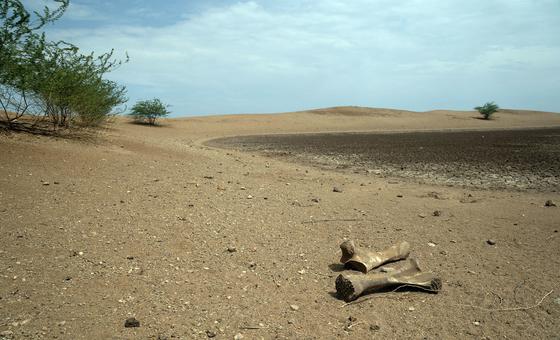
World enters era of ‘global water bankruptcy’

For decades, scientists, policymakers and the media warned of a “global water crisis,” implying temporary shock – followed by recovery. 

What is now emerging in many regions, however, is a persistent shortage whereby water systems can no longer realistically return to their historical baselines.

For much of the world, ‘normal’ is gone,” said Kaveh Madani, Director of the UN University Institute for Water, Environment and Health.

 “This is not to kill hope but to encourage action and an honest admission of failure today to protect and enable tomorrow,” he told a press briefing in New York on Tuesday.

Unequal burdens

Mr. Madani emphasised that the findings do not suggest worldwide failure – but there are enough bankrupt or near-bankrupt systems, interconnected through trade, migration and geopolitical dependencies, that the global risk landscape has been fundamentally altered.

The burdens fall disproportionately on smallholder farmers, Indigenous Peoples, low-income urban residents and women and youth, while the benefits of overuse often accrued to more powerful actors.

From crisis to recovery? 

The report introduces water bankruptcy as a condition defined by both insolvency and irreversibility.

Insolvency refers to withdrawing and polluting water beyond renewable inflows and safe depletion limits.

Irreversibility refers to the damage to key parts of water-related natural capital, such as wetlands and lakes, that makes restoration of the system to its initial conditions infeasible.

But all is not lost: comparing water action to finance, Mr. Madani said that bankruptcy is not the end of action. 

It is the start of a structured recovery plan: you stop the bleeding, protect essential services, restructure unsustainable claims, and invest in rebuilding,” he noted.

Costly tab

The world is rapidly depleting its natural “water savings accounts”, according to the study: more than half the world’s large lakes have declined since the early 1990’s, while around 35 per cent of natural wetlands have been lost since 1970, Mr. Madani said.

The human toll is already significant. Nearly three-quarters of the world’s population live in countries classified as water-insecure or critically water-insecure.

Around four billion people experience severe water scarcity for at least one month each year, while drought impacts cost an estimated $307 billion annually.

“If we continue to manage these failures as temporary ‘crises’ with short-term fixes, we will only deepen the ecological damage and fuel social conflict,” Mr. Madani warned.

Course corrections

The report calls for a transition from crisis response to bankruptcy management, grounded in honesty about the irreversibly of losses, protection of remaining water resources – and policies that match hydrological reality rather than past norms.

Source link

COP30 enters its final stretch: urgency, ambition, and voices from the streets

UN climate chief Simon Stiell set the tone on Monday:

“There is a deep awareness of what’s at stake, and the need to show climate cooperation standing firm in a fractured world.”

His warning was blunt: “There is no time to lose with delays and obstruction.”

For the next two days, ministers will lay out their positions in what is often the most charged phase of the summit. Mr. Stiell urged delegations to tackle the hardest issues now – not in a last-minute scramble.

“There is no time to waste with tactical delays or stonewalling,” he said, and added: “The time for performative diplomacy has now passed.”

© UNFCCC/Diego Herculano

Simon Stiell, Executive Secretary of UN Climate Change, speaks during the Opening Plenary of the High-Level Segment.

The President of the UN General Assembly echoed that urgency, reminding negotiators that despite “headwinds” and the many “ebbs and flows” of climate talks, they “do not have the luxury of wallowing when people are counting on them.”

Annalena Baerbock struck a note of optimism, pointing to unstoppable momentum in renewables and innovation: “The money exists but needs to be redirected.”

She highlighted a stark figure: developing countries paid $1.4 trillion last year in external debt service – funds that could transform climate action if channeled into clean energy and resilience.

Speaking to reporters, Ms. Baerbock recalled that on Sunday she had taken a 30-minute boat ride from Belém to visit Combu Island

There, on the edge of the Amazon rainforest, she met with local Indigenous communities “who are showing how sustainable development, economic growth, and protection of the forest can go hand-in-hand.”

This, she said, “underlines again that climate action is not a ‘nice to have’. It’s not a charity. Climate action is in all of our security and economic interests.”

The 30th edition of the annual UN climate summit opened last Monday on 10 November and is set to wrap up this coming Friday.

From words to action: Brazil calls for a new era

Brazil’s Vice-President Geraldo Alckmin declared that COP30 must mark a turning point. “The world must stop debating goals and start fulfilling them,” he declared, adding that this means moving from negotiation to implementation.  

Mr. Alckmin spotlighted the Belém Commitment, an initiative to quadruple the use of sustainable fuels by 2035, already backed by 25 nations. He called for creativity in areas like bioeconomy and decarbonization, reaffirming Brazil’s pledge to “clean energy, innovation, and inclusion.”

Brazilian officials confirmed two major decision packages are now on the table: one tied to frameworks and topics mandated by previous COPs​, and the other covering additional issues under negotiation, such as a gender action plan​. 

A draft of the first package is expected midweek, but COP30 President André Corrêa do Lago warned the schedule will be tight, with night sessions likely.

Beyond the official halls: People’s Summit delivers its verdict

While ministers debated inside, the streets of Belém pulsed with energy. The People’s Summit, held from 12–16 November, drew more than 25,000 participants – the largest ever – and culminated in a climate justice march of 70,000 people, the biggest demonstration of its kind.

On Sunday, civil society handed over a package of proposals to Mr.do Lago, along with COP30 CEO Ana Toni and key ministers including Marina Silva and Sônia Guajajara.

Maureen Santos, from the Summit’s political committee, told us:

“I think this COP is serving as an example of democracy not only for the United Nations, but also for the world. And this is what multilateralism is: when parties truly engage beyond States, and you see greater visibility for those suffering the impacts of the crisis, who also bring forward the alternatives to confront it.”

Social movements are pressing hard on climate finance, warning of potential “ecological debts,” and demanding a broader vision of just transition – one that includes jobs, food sovereignty, and territorial rights, not just renewable energy.

Agência Brasil/Tânia Rêgo

The president of COP30, Ambassador André Corrêa do Lago, gives a speech during the closing of the People’s Summit.

Solidarity in action: 300,000 meals served

The People’s Summit wasn’t just about speeches. It was about solidarity. Groups like the Landless Workers Movement (MTST) organized a vast “solidarity kitchen,” drawing on experience from last year’s flood response in Rio Grande do Sul.  

Over 300,000 free meals were served, featuring Amazonian staples like jambu, açaí, and pirarucu.

Rudi Rafael, who helped lead the operation, described the scale:

“We had 21 pots of 500 liters each, with a production line preparing meal boxes in just 26 seconds.”

For many, the kitchen symbolized hope, especially for those defending indigenous lands, traditions and cultures. It is a reminder that climate justice is as much about dignity and community as it is about policy.

UN News is reporting from Belém, bringing you front-row coverage of everything unfolding at COP30.

South Sudan’s longest cholera outbreak enters critical stage

The outbreak – which started in September 2024 and was confirmed a month later – comes amidst a protracted humanitarian crisis exacerbated by rising intercommunal violence, climate shocks such as flooding and catastrophic hunger.  

“Now, more than ever, collective action is needed to reduce tensions, resolve political differences and make tangible progress in implementing peace,” said Anita Kiki Gbeho, UN Resident and Humanitarian Coordinator in South Sudan.  

Alarming escalation

Since the cholera outbreak was declared in October 2024, UN agencies and partners have documented over 80,000 cholera cases and 1,400 deaths.  

This is in addition to regional outbreaks of mpox, hepatitis and measles among other communicable diseases.

South Sudanese authorities, civil society and UN agencies held an inter-ministerial meeting on Monday to discuss what they called an “alarming escalation” in the spread of the outbreak. 

“This is not merely a public health crisis, but a multi-sectoral emergency exacerbated by flooding, displacement, and limited access to basic services,” the ministers wrote in a communiqué released.  

The group resolved to facilitate unimpeded humanitarian access to areas which already have outbreaks and to other areas at risk for outbreaks. The Government of South Sudan will coordinate these efforts.

Partners will also work to preposition materials, improve water and sanitation infrastructure and coordinate proactive and reactive vaccination campaigns.  

Time is running out

With the peak of the rainy season on the horizon, the next eight weeks are critical in containing and mitigating the outbreak before severe flooding begins.  

“Time is of the essence to prevent a further escalation of the outbreak,” the officials wrote.  

Floods more than double the frequency of cholera outbreaks by imperiling access to clean water and impeding humanitarian access to affected areas. And with rising global temperatures making floods more severe, millions of South Sudanese who were not previously in regions of concern may now be at risk for cholera outbreaks.

A preventable disease  

Cholera is an acute diarrhoeal infection caused by consuming contaminated water or food. Although highly communicable, it is preventable through proper hygiene, regular handwashing, safe food preparation and storage, improved sanitation infrastructure, and vaccination.

Symptoms typically include watery diarrhoea. Most cases are mild to moderate and can be treated effectively with oral rehydration salts (ORS) mixed with clean, boiled water.

However, in severe cases, cholera can be fatal—sometimes within hours—if not treated promptly.

Infected individuals can also transmit the disease through their faeces for up to ten days, even if they show no symptoms.

Need for additional funds

In South Sudan, the already inadequate water and sanitation infrastructure and overstretched public health system has further deteriorated as a result of displacement and conflict. This has ripened the conditions for the spread of cholera.

The UN and its partners are working quickly to preposition emergency supplies, especially in these previously low-risk areas, but they are hampered by funding shortfalls. Agencies estimate that they will need $1.69 billion – of which they have only received $368 million – to address the many intersecting humanitarian needs in the country.  

Nevertheless, the group of ministers insisted that this outbreak is and must remain a priority for all involved.

“Cholera response and flood preparedness must be treated as urgent national priorities,” they said in the communiqué. 

Source link