Gaza radio station re-opens, bringing voices from the rubble

While 23 local radio stations were operating in Gaza before the conflict erupted, they were all destroyed and ceased broadcasting, he told UN News.

“Today, we are the only radio station broadcasting on FM from within Gaza after this widespread destruction,” he said. “We hope that other local radio stations will resume broadcasting, thus allowing competition in providing media services to the people of the Gaza Strip.”

Ahead of World Radio Day, observed on 13 February, the resumption of broadcasting comes at a time when Gaza’s media infrastructure still faces significant challenges amid local and international calls to support journalism as part of broader recovery and reconstruction efforts in the sector.

A journalist works in the damaged office of Zaman 90.60 FM radio station in Gaza City.

Digging through the rubble

After a hiatus of nearly two years due to the war, some local radio stations in the Gaza Strip are transmitting again, in a move showing gradual efforts to revive the media landscape in the war-ravaged Strip – much of which has suffered widespread destruction of infrastructure and civilian institutions from Israeli attacks.

Zaman FM operates in the Tel al-Hawa neighbourhood of Gaza City, where Israeli attacks triggered a famine and left mountains of debris in the streets.

The cracked walls of the station’s building tell a story of immense destruction and the scene inside is unlike any other radio studio in the world. 

Employees dig through the rubble to keep the station broadcasting, working with minimal technical resources while behind them, awareness posters warn people of the dangers of dilapidated buildings.

On-air messages of hope

Local radio remains vital in Gaza as humanitarian crises persist, power outages continue and access to other media remains limited. This makes radio one of the most effective ways of getting key messages out to the public, along with health guidance and information about other services.

Gaza is in dire need of professional local radio stations capable of broadcasting awareness messages and guidance bulletins in light of the spread of diseases, the deterioration of the education system and the disruption of many basic services, said Mr. Al-Sharafi, director of the radio station and host of the morning programme, An Hour of Time.

“We need to deliver information to the population and guide them to the services that have stopped and are gradually being resumed,” he said, “especially in light of the difficult health conditions and the spread of epidemics.”

Amid the destruction all around, Mr. Al-Sharafi sits behind his dust-covered microphone and does just that. 

He sends morning greetings to Gaza residents and provides them with important information and updates, bringing some much-needed hope to the airwaves across a devastated landscape that has only just begun to recover.

Source link

From Haiti to Ethiopia: voices of climate displacement at COP30

At COP30 in Belém, Brazil, the UN International Organization for Migration (IOM) is pressing negotiators to make climate mobility a core part of adaptation plans.

“People and communities who choose to stay must be safe, and those who decide to move must have the option to do so with dignity,” Ugochi Daniels, IOM’s Deputy Director General said on Thursday.

Across 80 countries, IOM runs projects that put local communities in charge of solutions. Ms. Daniels hopes COP30 will be “a turning point to place human mobility as a key area of climate action,” especially in national adaptation plans and financing for loss and damage.

‘Ten seconds that changed my life forever’

For Robert Montinard from Haiti, this debate is personal. The 2010 earthquake lasted just 10 seconds, but shattered lives for generations. Seeking safety, he fled to Brazil as a refugee. Today, he leads the Mawon Association, helping others rebuild far from home.

At COP30, Robert insists on one thing: refugee voices must be heard.

“We want to be part of the solution. We want migrants and refugees to be heard. Those affected by the consequences of climate change – refugees, Indigenous Peoples, Black communities, women – have the solutions,” he said.

This week, Robert handed a proposal to Brazil’s First Lady, Rosângela Janja da Silva, and Environment Minister Marina Silva. It calls for municipal climate councils, action against environmental racism, and community brigades to respond to disasters.

He calls Haiti’s plight “climate injustice.” The same hurricanes that strike Florida, he said, leave destruction behind in his homeland – but while the US rebuilds swiftly, buildings ruined in Haiti’s 2010 quake still lie in rubble.

A crisis feeding conflict in Ethiopia

From another corner of the Global South, Makebib Tadesse sees the same pattern in Ethiopia, where climate pressures are intensifying conflicts over land and resources.

He described a “continuous cycle of violence and displacement” as food and water grow scarce. In northern Ethiopia, where he was born, the impact of climate change now rivals – or even surpasses – the devastation of the civil war from 1974 to 1991.

“Climate change is pushing people out of Ethiopia in ways we’ve never,” he said.

Both Robert and Makebib are part of the UN refugee agency (UNHCR) delegation at COP30, alongside Venezuelan Indigenous leader Gardenia Warao.

‘Brazil’s openness to refugees should be celebrated’

Giving voice to their message is Alfonso Herrera, Mexican actor and Latin America Goodwill Ambassador for UNHCR, formally known as the Office of the UN High Commissioner for Refugees.

“The voices of refugees have been silenced — and they must be heard,” he told UN News.

Mr. Herrera has traveled across the region – from Mexico to Venezuela, Honduras and El Salvador -witnessing the human cost of climate displacement and the UN’s efforts to restore hope through education and legal support.

He believes Brazil’s openness to welcome refugees deserves recognition, especially “when so many other countries take the completely opposite attitude.”

As COP30 debates how to adapt to a changing planet, displaced people remind the world that climate action is not just about saving ecosystems – it’s about protecting lives, preserving dignity, and ensuring no one is left behind by the rising tide.

UN News is reporting from Belém, bringing you front-row coverage of everything unfolding at COP30.
COP30 enters its final stretch: urgency, ambition, and voices from the streets

UN climate chief Simon Stiell set the tone on Monday:

“There is a deep awareness of what’s at stake, and the need to show climate cooperation standing firm in a fractured world.”

His warning was blunt: “There is no time to lose with delays and obstruction.”

For the next two days, ministers will lay out their positions in what is often the most charged phase of the summit. Mr. Stiell urged delegations to tackle the hardest issues now – not in a last-minute scramble.

“There is no time to waste with tactical delays or stonewalling,” he said, and added: “The time for performative diplomacy has now passed.”

© UNFCCC/Diego Herculano

Simon Stiell, Executive Secretary of UN Climate Change, speaks during the Opening Plenary of the High-Level Segment.

The President of the UN General Assembly echoed that urgency, reminding negotiators that despite “headwinds” and the many “ebbs and flows” of climate talks, they “do not have the luxury of wallowing when people are counting on them.”

Annalena Baerbock struck a note of optimism, pointing to unstoppable momentum in renewables and innovation: “The money exists but needs to be redirected.”

She highlighted a stark figure: developing countries paid $1.4 trillion last year in external debt service – funds that could transform climate action if channeled into clean energy and resilience.

Speaking to reporters, Ms. Baerbock recalled that on Sunday she had taken a 30-minute boat ride from Belém to visit Combu Island

There, on the edge of the Amazon rainforest, she met with local Indigenous communities “who are showing how sustainable development, economic growth, and protection of the forest can go hand-in-hand.”

This, she said, “underlines again that climate action is not a ‘nice to have’. It’s not a charity. Climate action is in all of our security and economic interests.”

The 30th edition of the annual UN climate summit opened last Monday on 10 November and is set to wrap up this coming Friday.

From words to action: Brazil calls for a new era

Brazil’s Vice-President Geraldo Alckmin declared that COP30 must mark a turning point. “The world must stop debating goals and start fulfilling them,” he declared, adding that this means moving from negotiation to implementation.  

Mr. Alckmin spotlighted the Belém Commitment, an initiative to quadruple the use of sustainable fuels by 2035, already backed by 25 nations. He called for creativity in areas like bioeconomy and decarbonization, reaffirming Brazil’s pledge to “clean energy, innovation, and inclusion.”

Brazilian officials confirmed two major decision packages are now on the table: one tied to frameworks and topics mandated by previous COPs​, and the other covering additional issues under negotiation, such as a gender action plan​. 

A draft of the first package is expected midweek, but COP30 President André Corrêa do Lago warned the schedule will be tight, with night sessions likely.

Beyond the official halls: People’s Summit delivers its verdict

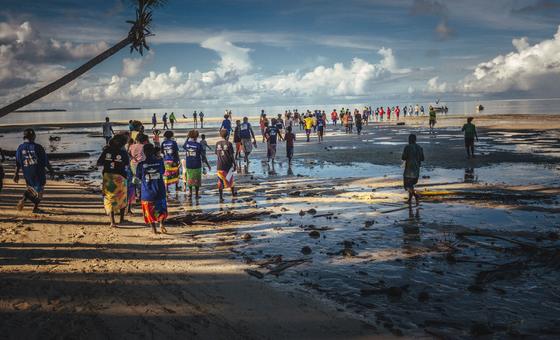
While ministers debated inside, the streets of Belém pulsed with energy. The People’s Summit, held from 12–16 November, drew more than 25,000 participants – the largest ever – and culminated in a climate justice march of 70,000 people, the biggest demonstration of its kind.

On Sunday, civil society handed over a package of proposals to Mr.do Lago, along with COP30 CEO Ana Toni and key ministers including Marina Silva and Sônia Guajajara.

Maureen Santos, from the Summit’s political committee, told us:

“I think this COP is serving as an example of democracy not only for the United Nations, but also for the world. And this is what multilateralism is: when parties truly engage beyond States, and you see greater visibility for those suffering the impacts of the crisis, who also bring forward the alternatives to confront it.”

Social movements are pressing hard on climate finance, warning of potential “ecological debts,” and demanding a broader vision of just transition – one that includes jobs, food sovereignty, and territorial rights, not just renewable energy.

Agência Brasil/Tânia Rêgo

The president of COP30, Ambassador André Corrêa do Lago, gives a speech during the closing of the People’s Summit.

Solidarity in action: 300,000 meals served

The People’s Summit wasn’t just about speeches. It was about solidarity. Groups like the Landless Workers Movement (MTST) organized a vast “solidarity kitchen,” drawing on experience from last year’s flood response in Rio Grande do Sul.  

Over 300,000 free meals were served, featuring Amazonian staples like jambu, açaí, and pirarucu.

Rudi Rafael, who helped lead the operation, described the scale:

“We had 21 pots of 500 liters each, with a production line preparing meal boxes in just 26 seconds.”

For many, the kitchen symbolized hope, especially for those defending indigenous lands, traditions and cultures. It is a reminder that climate justice is as much about dignity and community as it is about policy.

UN News is reporting from Belém, bringing you front-row coverage of everything unfolding at COP30.
Survivors’ voices ‘integral’ to preventing terrorism

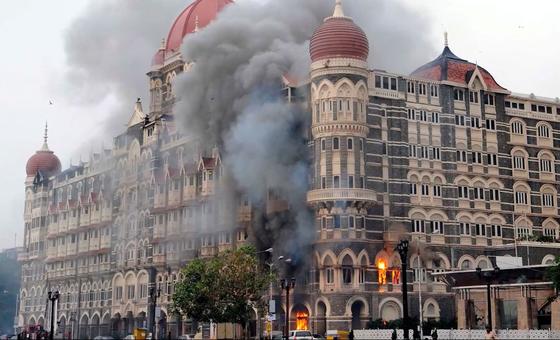
This year marks the eighth commemoration of the International Day of Remembrance of and Tribute to the Victims of Terrorism. It serves to honour victims and survivors, elevate their voices, raise awareness, and highlight global solidarity.

“This International Day is not only one of remembrance; it’s a reaffirmation of our collective commitment to uphold the rights, dignity and voices of victims everywhere,” said Vladimir Voronkov, head of the UN Office of Counter-Terrorism (UNOCT) during remarks to the high level commemoration.

Remember and pay tribute

“We pay tribute to those whose lives were stolen by terrorism, and we stand in solidarity with those who continue to live with the pain, loss, and trauma,” he added.

The event featured testimonies from survivors and relatives of those killed: “Support should not be a privilege; it’s a right. And international solidarity must be matched by action,” he said.

United by hope

“I could no longer keep hiding my pain, I chose to transform it into purpose,” said Khalifah Mwarangi, whose father was killed in a terrorist attack in Kenya in November 2014.

This past April, UNOCT launched the Victims of Terrorism Associations Network (VoTAN), a global initiative that reflects a powerful truth: victims of terrorism should not be seen as passive subjects of compassion and support.

Survivors’ voices “are integral to shaping policy and driving change to prevent similar attacks,” said Mr. Voronkov.

“While terror tries to break us apart, coming together as victims build strength”, said Nanda Daniel, a survivor of the 2004 attack on Australia’s embassy in Jakarta, Indonesia. 

Source link

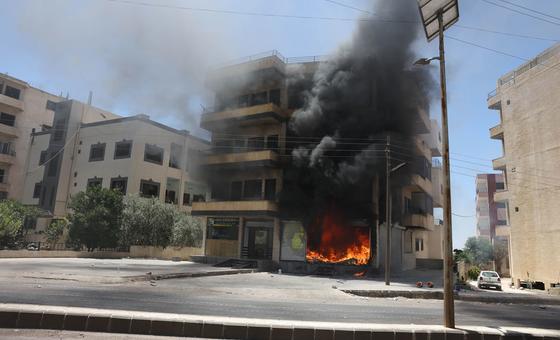
Security Council voices deep concern over deadly escalation in Syria’s Sweida region

Unrest began on 12 July when mutual kidnappings escalated into armed conflict between Druze groups and Bedouin tribes, drawing in Syrian security forces.

The violence spiralled, with reports of extrajudicial executions, desecration of corpses and looting. Footage circulated widely on social media fanned sectarian tensions and disinformation.

Nearly 200,000 displaced

In a presidential statement adopted on Sunday, ambassadors said they were “deeply concerned” by the recent fighting, which has included “mass killings” and led to the internal displacement of some 192,000 people.

The Council “strongly condemns the violence perpetrated against civilians…and calls on all parties to adhere to the ceasefire arrangement and to ensure the protection of the civilian population.”

The 15-member body reminded all sides of their obligations under human rights and international humanitarian law, stressing in particular the duty to “respect and protect” all medical and humanitarian personnel.

Council members urged all parties to allow “full, safe, rapid and unhindered humanitarian access” to affected communities in the heavily-Druze Sweida area and across Syria, in line with the principles of humanity, neutrality, impartiality and independence.

They also underscored the need to ensure the humane treatment of all combatants, including those who have surrendered, are wounded, detained, or have laid down their arms.

Protection for all

The statement called on the Syrian interim authorities to protect all Syrians “regardless of ethnicity or religion” and warned that “there can be no meaningful recovery in Syria without genuine safety and protection for all Syrians.”

The Council welcomed the interim authorities’ condemnation of the violence and their commitment to investigate those responsible, but urged them to ensure “credible, swift, transparent, impartial, and comprehensive investigations… in line with international standards.”

Reaffirming resolutions including 2254 (2015), the Council reiterated its “strong commitment to the sovereignty, independence, unity, and territorial integrity of the Syrian Arab Republic” and called on all States to avoid “negative or destructive interference” that could further destabilise the country.

The statement also recalled the 1974 Disengagement Agreement and the mandate of the UN Disengagement Observer Force (UNDOF) tmonitoring and patrolling the contested Golan on the Syria-Israel border, urging all parties to abide by its terms to maintain calm.

On the threat of terrorism, the Council cited the latest report of its Analytical Support and Sanctions Monitoring Team, voicing “grave concern over the acute threat posed by foreign terrorist fighters” in Syria. It urged the country to take decisive measures against ISIL (Da’esh) and Al-Qaida, in line with relevant resolutions.

Looking ahead, the Council repeated its call for “an inclusive, Syrian-led and Syrian-owned political process” based on resolution 2254, to safeguard the rights of all Syrians and enable them to “peacefully, independently and democratically determine their futures.”

Source link

UN voices concern over Greece’s suspension of asylum applications

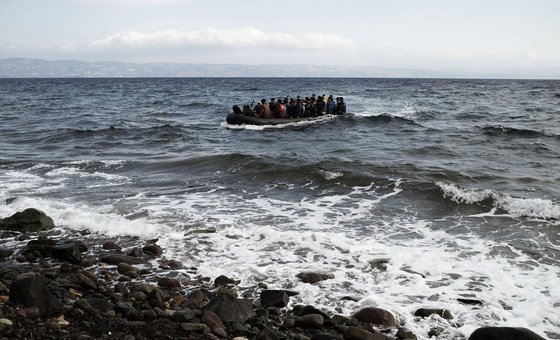
The move, currently being debated in the Greek Parliament, would halt asylum registration for three months and allow for the return of new arrivals without assessing their claims. It follows a recent rise in landings on the southern islands of Gavdos and Crete.

While acknowledging the strain of managing new arrivals, UNHCR said such measures must remain within the boundaries of international and European law.

“States have the right to manage borders and address irregular migration,” the agency said in a statement. “Controlling a State’s borders, however, must be in line with international and European law.”

A fundamental right

The right to seek asylum, UNHCR underscored, is “a fundamental human right enshrined in international, European and national law – and applies to everyone regardless of how or where they arrive in a country.”

“Even at times of migratory pressure,” the statement continued, “States must ensure that people seeking asylum have access to asylum procedures.”

The proposed Greek legislation would deny asylum seekers the ability to lodge applications and instead provide for their return, prompting fears of so-called refoulement – the forced return of individuals to countries where they may face threats to life or freedom.

Source link

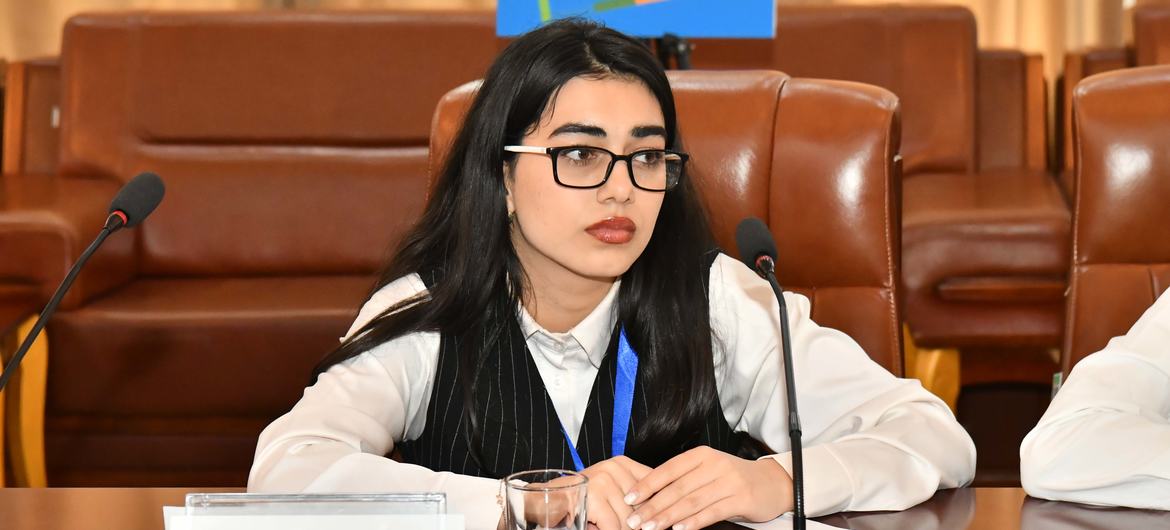
‘We are the present’: Tajik climate activist urges leaders to include youth voices in dialogue

At the end of April, Fariza Dzhobirova attended a Model United Nations Conference on Glaciers’ Preservation in Tajikistan’s capital, Dushanbe, where she represented Switzerland.

For Ms. Dzhobirova, it was a rehearsal of sorts for the actual High-level Conference on Glaciers’ Preservation which began on Thursday in Dushanbe. There, she will serve as a panel member representing her own country.

“The [Model UN] conference gave me a platform to raise my voice, collaborate with like-minded peers from across the region and develop policy recommendations that we hope will influence real-world decisions,” she said.

The High-level Conference on Glaciers’ Preservation, hosted by the Government of Tajikistan and supported by variety of United Nations agencies, will work to underline the extreme urgency of melting glaciers, elevating it as a global climate and development challenge. 

Will glaciers survive the 21st century? 

Glaciers, alongside ice sheets, account for over 70 per cent of the world’s freshwater resources and are integral to many local economies, providing water, sustaining agriculture and generating energy. 

However, due to the increasing temperature of the planet, glaciers are melting at unprecedented rates – scientists predict that if the current rate of melting continues, many glaciers will not survive the 21st century.

In Tajikistan alone, 30 per cent of glaciers have disappeared over the last century, disrupting local and national water supplies and agricultural patterns. And Slovenia and Venezuela have lost all their glaciers.

Just yesterday, one day before the conference was set to begin, a partial glacier collapse in Switzerland buried most of a small village, according to news reports.

“The death of a glacier is more than just the loss of ice,” said World Meteorological Organization (WMO) Secretary-General Celeste Saulo.

Youth voices are the present and the future

Before the conference, Parviz Boboev from the UN ountry team in Tajikistan sat down with Ms. Dzhobirova to discuss what motivates her climate activism. 

Fariza Dzhobirova, a young climate activist from Tajikistan, represents Switzerland at a Model United Nations conference on glacier preservation.

Parviz Boboev: What inspired you to get involved in the climate movement?

Fariza Dzhobirova: Growing up in Tajikistan, where more than 90% of our freshwater comes from glaciers, I’ve seen how climate change is already impacting people’s lives. Rivers are shrinking, water is becoming less accessible, and natural disasters like landslides and floods are affecting more and more communities.

I’ve met a family who lost their home because of mudflow. I saw a teenage girl from that family of the same age as me that had totally different problems because of this climate-related disaster. I was thinking about my classes. She was thinking about how to survive.

My message is that young people are not just the future — we are the present, and we are ready to contribute today

And I know there are many examples similar to this – farmers whose land can no longer be irrigated and children whose futures are at risk. Seeing this pain and injustice made it impossible for me to stay silent or uninvolved.

Participating in the upcoming Glaciers’ Preservation conference means a lot to me. It’s about raising the voices of people who are often left out of global discussions. For me, it’s a chance to speak on behalf of my generation and my country, and to show that young people are ready to be part of the solution.

Parviz Boboev: What message do you hope to share at the conference about the impact of climate change on your community and generation?

Fariza Dzhobirova: Being invited to speak is a great responsibility for me. It’s a chance to represent not only Tajikistan, but the voice of a generation.

My message is that young people are not just the future — we are the present, and we are ready to contribute today. Climate change is not only about the environment — it’s about how we live, how we work, how we learn. It affects our opportunities, our mental health, our ability to plan for the future. And yet, many young people are still excluded from decision-making processes.

At the conference, I want to encourage leaders and policymakers to truly listen not just to the facts and data, but to the experiences and hopes of young people. When you give youth a platform, you don’t just invest in their potential — you strengthen the resilience and sustainability of entire communities.

Parviz Boboev: Youth voices are becoming increasingly important in global climate conversations. How do you see the role of young people in shaping solutions?

Fariza Dzhobirova: I truly believe that young people have a unique role to play in shaping more just, inclusive and forward-looking climate solutions. We bring fresh ideas, the courage to question outdated systems and a strong sense of responsibility for the future.

In countries like Tajikistan, where glaciers are directly connected to people’s livelihoods, youth are already stepping up. What we need now is more trust and investment in young people. We don’t expect to solve everything alone, but we do hope to be included — in dialogue, in decision-making, and in designing real solutions.

Protecting glaciers and water resources is not just a technical challenge; it’s a human one. By working together — across generations and borders — we can make our region stronger, more resilient, and more united in the face of climate change.

Source link