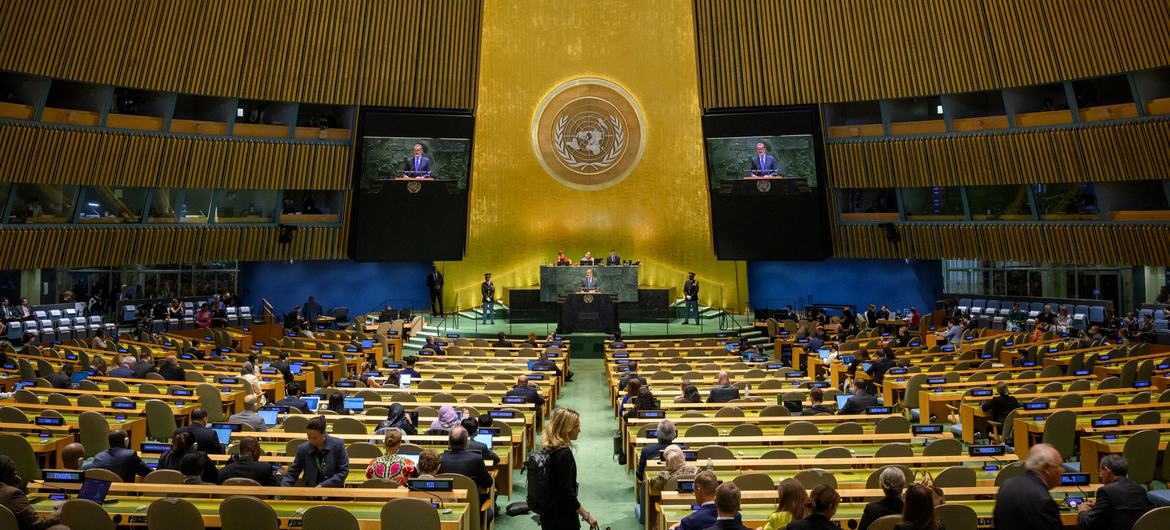
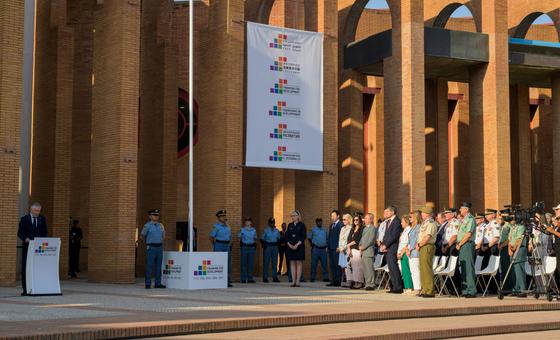
‘The extraordinary power of ordinary people’: World leaders spotlight youth as agents of progress

Annalena Baerbock, President of the General Assembly and one of the youngest persons to ever hold the office, stressed that youth are “the designers of their future” but should not have to build it alone.

Drawing on conversations with young leaders from Ethiopia to Afghanistan, she highlighted the challenges today’s youth face – from conflict and crisis to cyberbullying and unemployment – as well as the transformative change they are driving, such as digital innovation and climate advocacy.

The recent landmark International Court of Justice (ICJ) advisory opinion on climate obligations, prompted by youth activists, underscores how determined young people can reshape global policy. Their commitment can spark hope and intergenerational solidarity.

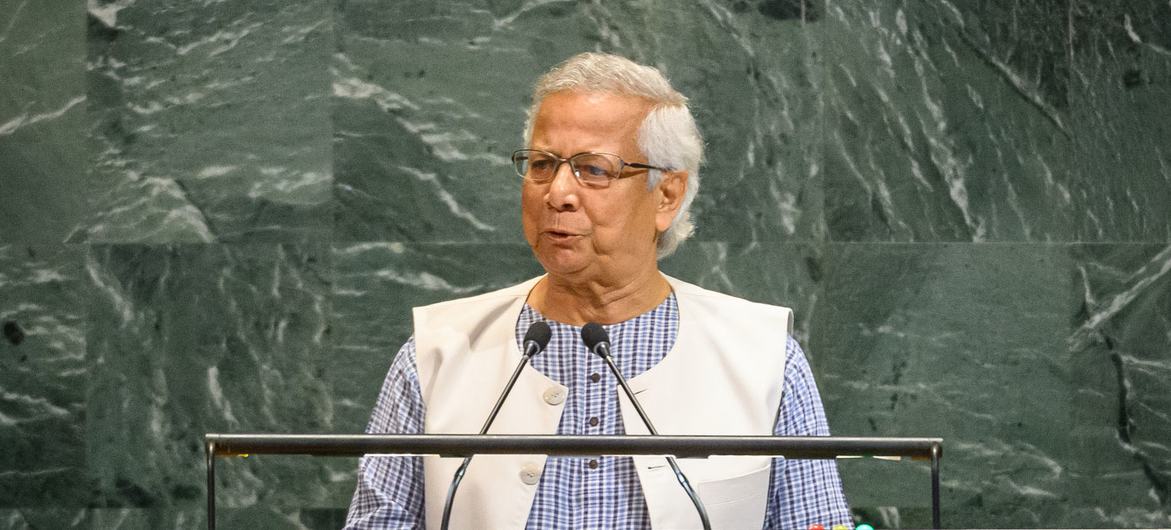
Bangladesh: Youth driving democratic renewal

Muhammad Yunus, Chief Adviser of the interim Government of Bangladesh, addresses the general debate of the General Assembly’s eightieth session.

The transformative potential of youth was starkly evident in Bangladesh, one year after the ‘July Revolution’ ended decades of authoritarian rule.

At the Assembly’s general debate fourth day, Chief Adviser Muhammad Yunus described the uprising as “a reminder of the extraordinary power of ordinary people,” crediting the country’s young majority with defeating tyranny and opening the path toward a more just and equal society.

Stemming from the demands of the movement, 11 independent commissions – addressing themes that ran from governance to women’s rights – have now been established and over 30 political parties signed a ‘July Declaration’ pledging to uphold democratic reforms.

Looking ahead, he stressed the importance of empowering Bangladesh’s young majority and women, noting that the country aims “to shape every young person, not only as a job seeker, but also as a job creator,” while advancing protections against harassment and expanding women’s public roles.

▶ Watch the address.

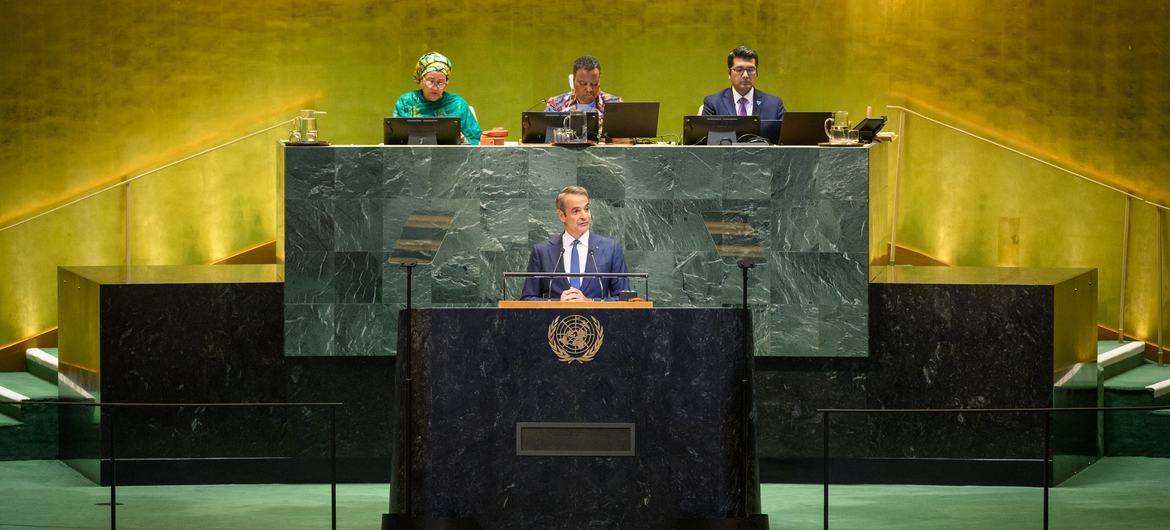
Greece: Safeguards in the digital age

Prime Minister Kyriakos Mitsotakis of Greece addresses the general debate of the General Assembly’s 80th session.

Prime Minister Kyriakos Mitsotakis of Greece emphasized the mental health and safety of children in an era dominated by digital technology and artificial intelligence.

Warning that “we are running a massive unsupervised experiment with the brains of our children and teenagers,” he highlighted the dangers of cyberbullying, addictive content and harmful material online.

Greece has banned phones in schools and launched Kids Wallet, a government-backed app enabling parents with simple, effective tools to manage their children’s smartphone use.

Mr. Mitsotakis also proposed a pan-European “digital age of majority” to ensure age-appropriate access to online platforms, framing these measures as part of a broader effort to protect young minds while supporting safe engagement with technology.

“Just as society once set firm rules for smoking, drinking or wearing a seatbelt, we must now confront today’s challenge with equal clarity: big platforms can no longer profit at the expense of our children’s mental health,” he said.

▶ Watch the address.

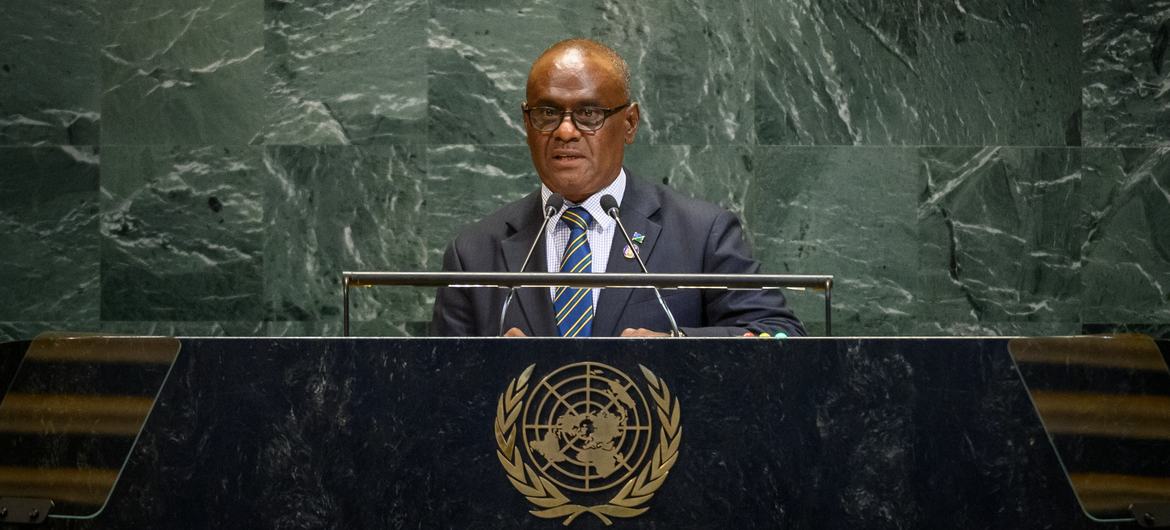
Solomon Islands: Youth leading climate action

Prime Minister Jeremiah Manele of Solomon Islands addresses the general debate of the General Assembly’s 80th session.

The pivotal role of youth in global challenges was further highlighted by Prime Minister Jeremiah Manele of the Solomon Islands.

He noted that the youth in the Pacific “have stood at the forefront of this initiative, reminding us that the strength of the Pacific lies in our unity,” referencing the youth-led campaign that prompted the International Court of Justice (ICJ)’s landmark advisory opinion on climate obligations.

Mr. Manele emphasized that the ruling, which affirmed States’ responsibilities to protect the climate for present and future generations, is more than a legal finding – it is “a call to the international community that only together can we honour the 1.5°C commitment, protect the most vulnerable, and secure a just and sustainable future for all nations and peoples.”

Youth-led advocacy, he said, has brought the urgency of small island communities’ climate plight to the global stage, demonstrating how collective action can protect the most vulnerable and safeguard the planet for future generations.

▶ Watch the address.

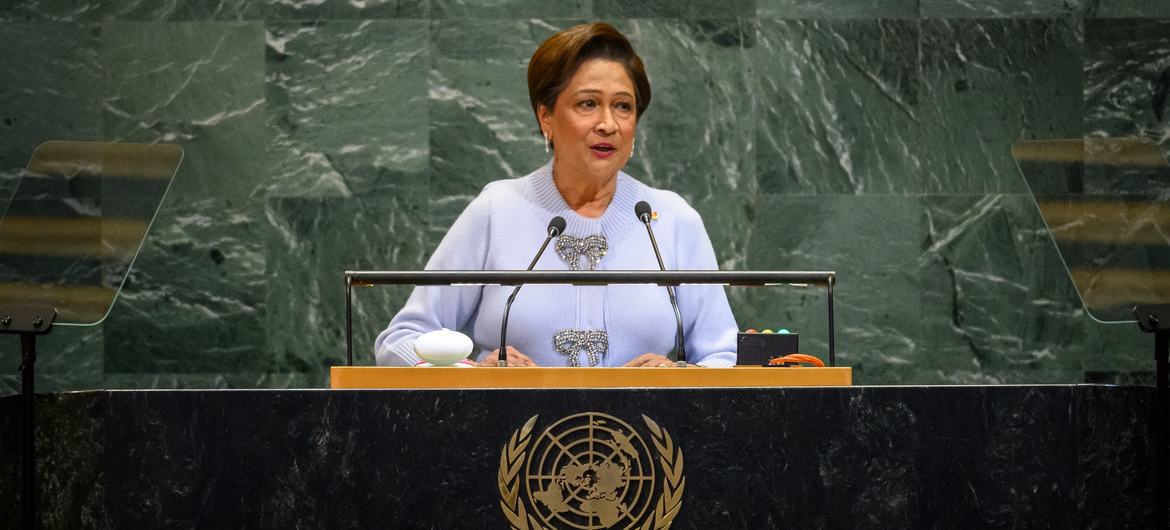
Trinidad and Tobago: Small nations, global impact

Prime Minister Kamla Persad-Bissessar of Trinidad and Tobago addresses the general debate of the General Assembly’s 80th session.

Prime Minister Kamla Persad-Bissessar of Trinidad and Tobago illustrated how even smaller nations can wield global influence when youth and children’s welfare are prioritized.

She highlighted domestic initiatives such as the Children’s Authority and Children’s Life Fund, expanded early childhood education and alignments with the global development agenda – all efforts aimed at ensuring the next generation thrives.

The Prime Minster also stressed that gender equality is inseparable from sustainable peace and development, noting that “women and girls must be equal partners in peace and sustainability.”

▶ Watch the address.

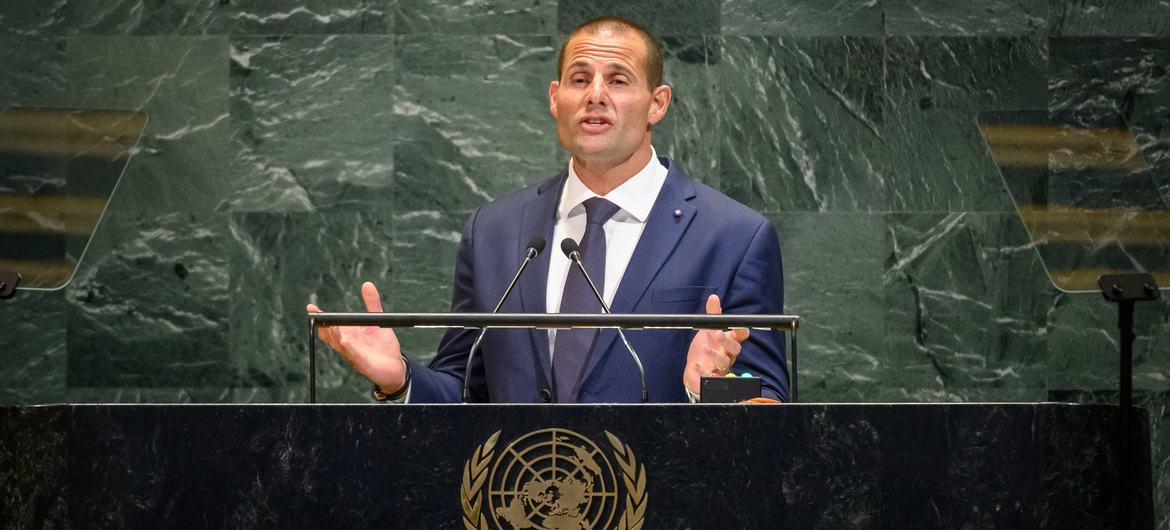
Malta: Real benefits of multilateralism

Prime Minister Robert Abela of Malta addresses the general debate of the General Assembly’s 80th session.

Prime Minister Robert Abela of Malta offered a reminder that words alone cannot end conflict, hunger, or child malnutrition – but collective action can.  

He said the life expectancy of children born in 1945, which hovered in the mid-forties, with those born in 2025, who can now expect to live into their mid-seventies.  

“That didn’t happen by luck or accident,” Mr. Abela said. “It happened by will and resolve. It happened by effort. And it happened also because of the positive work conducted by the agencies of this United Nations.”  

Reflecting on these gains, he emphasized that multilateralism remains critical:  

“We won’t keep our peoples safe, our planet protected or our prosperity preserved unless we work together, listen to each other and act in concert.”

▶ Watch the address.

Sinking islands, vanishing forests: World leaders call for urgent climate action

Their appeals, sharpened by rising seas, failed harvests and disappearing ecosystems, echoed Secretary-General António Guterres’s warning at a climate summit that the world is already in the “dawn of a new energy era” – one where clean energy must replace fossil fuels, and where finance and justice remain at the heart of the global response.

“The bottom-line: clean is competitive and climate action is imperative,” he declared, calling for “dramatic emissions cuts” aligned with 1.5°C goal of the landmark Paris Agreement on climate change, agreed by all nations in 2015.

“We know it can be done … COP30 in Brazil must conclude with a credible global response plan to get us on track,” he added, referring to the 30th UN climate change conference in November, which aims to accelerate global efforts to limit temperature rise and advance commitments on emissions, adaptation and climate finance.

The UN chief’s urgency provided the backdrop as world leaders presented compelling accounts of climate peril and promise on the second day of the Assembly’s annual general debate.

Spain – Accelerate energy transition

King Felipe VI of Spain addresses the general debate of the General Assembly’s eightieth session.

The “triple planetary crisis” – climate change, pollution and biodiversity loss – featured prominently in the address by King Felipe VI of Spain, who underscored that governments must accelerate a just energy transition.

He pressed for tripling renewable capacity, doubling efficiency and advancing decarbonisation in time for COP30, where Spain hopes to see consensus and ambition.

“These objectives are as ambitious as they are necessary,” he said, cautioning that hesitation can no longer be part of the global equation.

▶ Watch the address.

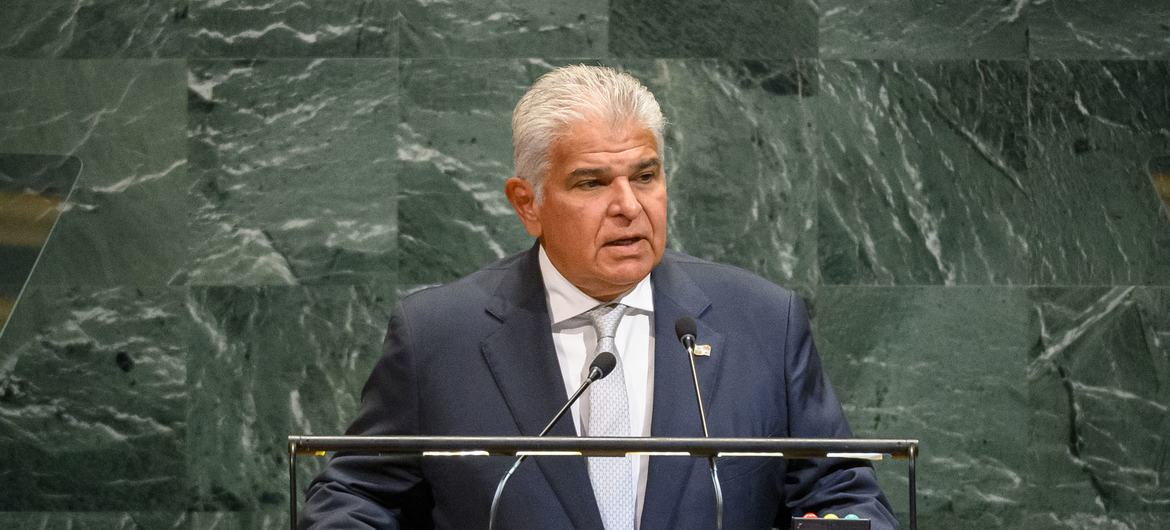
Panama – Nature, the first line of defense

President José Raúl Mulino Quintero of Panama addresses the general debate of the General Assembly’s eightieth session.

For Panama, which has long championed conservation despite contributing little to global emissions, the call was for integrated action.

President José Raúl Mulino Quintero unveiled the country’s ‘Nature Pledge,’ a single framework, uniting commitments on climate, biodiversity and land.

He stressed that as a carbon-negative country, Panama will go even further by restoring 100,000 hectares of priority ecosystems, from mangroves to watersheds.

“Nature is our first line of defense against climate change,” he said, linking national resilience to global solidarity.

▶ Watch the address.

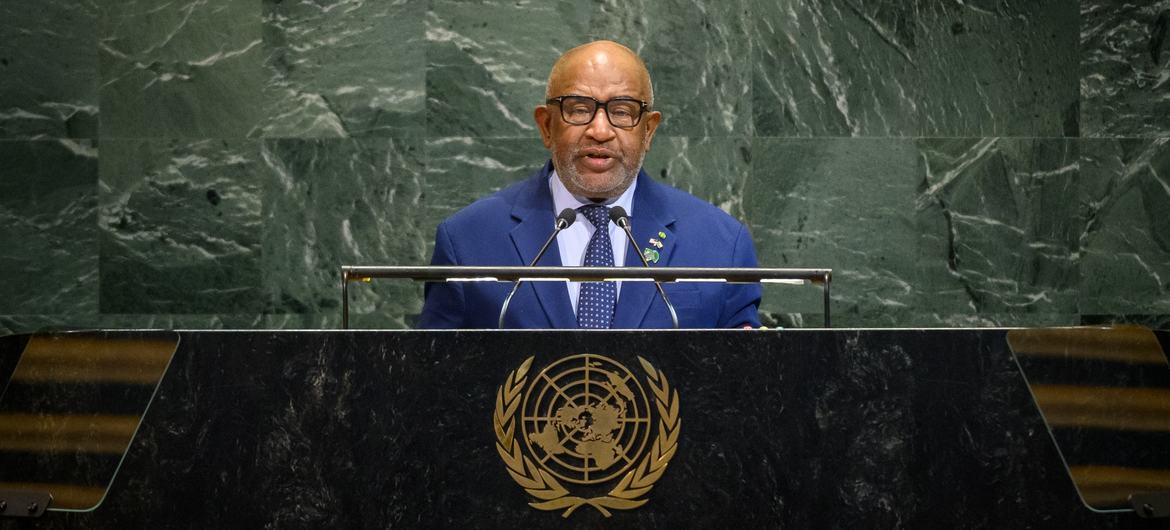
Comoros – Small island, big stakes

President Azali Assoumani of Comoros addresses the general debate of the General Assembly’s eightieth session.

In the Indian Ocean, the Comoros faces a different frontline.

President Azali Assoumani spoke of rising seas, coastal erosion and intensifying cyclones that threaten the archipelago’s villages and ecosystems.

He urged equitable, simplified access to climate finance, insisting that small island states cannot wait on cumbersome mechanisms while their homes wash away.

At the same time, he highlighted his country’s ‘Emerging Comoros Plan,’ built on renewable potential, blue economy resources and digital transition.

But without international support, he warned, such plans risk being hampered by debt and global inaction.

▶ Watch the address.

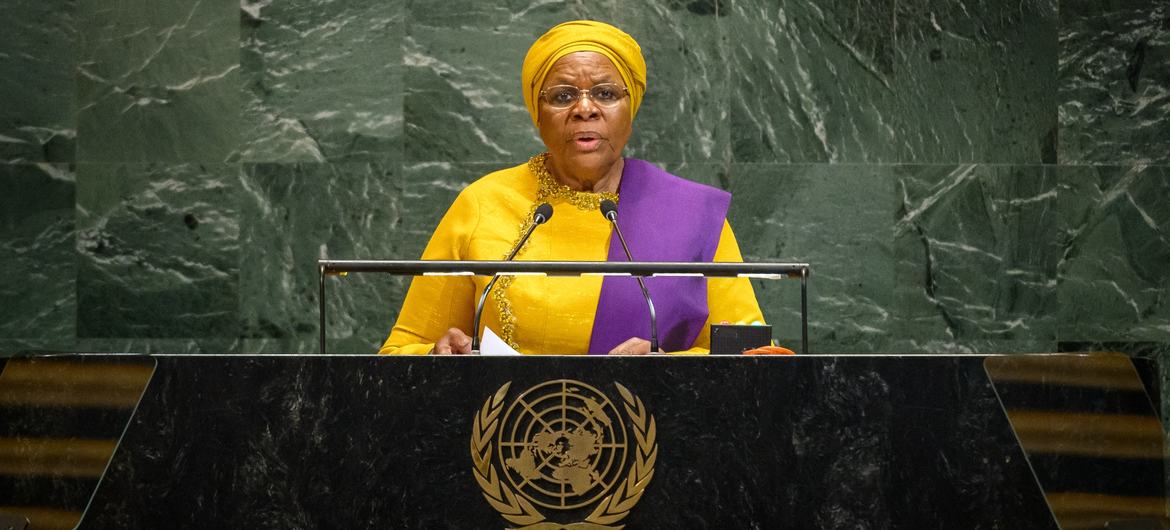
Namibia – Linking climate action to desertification

President Netumbo Nandi-Ndaitwah of Namibia addresses the general debate of the General Assembly’s eightieth session.

Namibia’s President Netumbo Nandi-Ndaitwah tied climate impacts directly to her country’s daily struggles, citing prolonged droughts and floods that have dried rivers and disrupted lives.

She announced Namibia’s bid to host the Africa regional hub of the Green Climate Fund, positioning the country as a bridge for climate finance on the continent.

And she reinforced the need to implement the ‘Namib Declaration’ to combat land degradation, linking climate action with the fight against desertification.

▶ Watch the address.

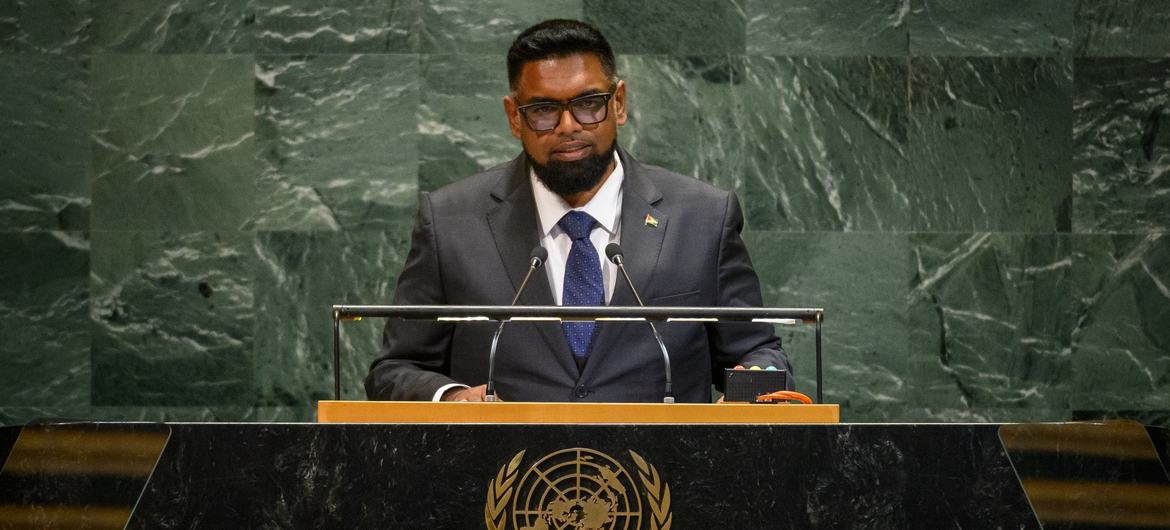
Guyana – Nature’s tangible value

President Mohamed Irfaan Ali of Guyana addresses the general debate of the General Assembly’s eightieth session.

In South America, Guyana’s President Mohamed Irfaan Ali emphasised that climate and development cannot be separated.

He described how his country is protecting forests, strengthening sea defenses and advancing a low carbon development strategy to prove that economic growth can go hand-in-hand with environmental stewardship.

Guyana, he noted, has become a seller of carbon credits under international standards, showing that “nature has tangible value.”

▶ Watch the address.

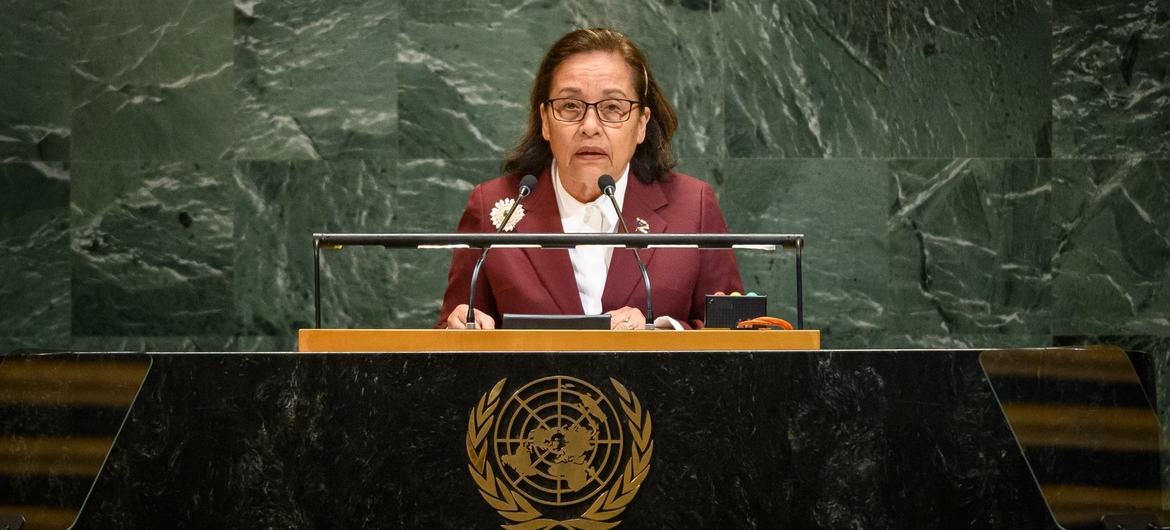
Marshall Islands – Promises won’t save sinking atolls

President Hilda Heine of Marshall Islands addresses the general debate of the General Assembly’s eightieth session.

For the Marshall Islands, a Pacific nation of more than 1,200 islands and 29 coral atolls climate change is a question of survival.

President Hilda Heine delivered one of the day’s most urgent interventions, warning that promises alone cannot save sinking atolls.

“We’ve heard the promises – but promises don’t reclaim land in atolls. They don’t develop mangrove defenses, shore up our hospitals and schools against rising seas or preserve cultural stability tied to land that is slipping under waves,” she said.

“Those things require money.”

Ms. Heine pressed the international community to close the trillion-dollar climate finance gap, particularly for adaptation and loss and damage.

As COP30 approaches, she said nations must not only honor their pledges but also deliver stronger plans that show a clear pathway to phasing out fossil fuels and halving global emissions within this decade.

▶ Watch the address.

‘Warring world crying out for peace’ says UN chief as leaders gather in New York

UN Secretary-General António Guterres has called for a renewed global push to end wars and divisions, stressing that “peace cannot wait” as the world observes the International Day of Peace.

“Lives are being ripped apart, childhoods extinguished, and basic human dignity discarded, amidst the cruelty and degradations of war,” Mr. Guterres said in his message for the Day. “All they want is peace.”

He noted that modern conflict is no longer confined to battlefields, with its consequences spilling across borders, driving displacement, poverty, and instability. “We must silence the guns. End the suffering. Build bridges. And create stability and prosperity,” he urged.

Theme Calls for Collective Action

The International Day of Peace was first established by the UN General Assembly in 1981 as a day devoted to non-violence and ceasefire. This year’s theme, Act Now for a Peaceful World, emphasizes the need for urgent action to prevent conflicts, counter hate and disinformation, and strengthen peacebuilding efforts, particularly through the involvement of women and young people.

Mr. Guterres underscored the close relationship between peace and sustainable development, pointing out that nine of the ten countries lagging most in development are also plagued by conflict. He warned against racism and dehumanisation, advocating instead for “the language of respect” and dialogue.

The observance comes on the eve of the UN General Assembly’s annual high-level week, where leaders from across the world gather in New York to debate pressing global challenges, from ongoing wars and climate disruption to gender equality and the risks and opportunities posed by artificial intelligence.

“The timing underlines the need for a concerted international push for peace, as divisions widen and instability grows,” the Secretary-General said. Concluding his message, he reminded nations and communities alike: “Where we have peace, we have hope. Peace cannot wait — our work starts now.”

UNDP: Peace and Development Intertwined

In a statement issued the same day, UNDP’s Acting Administrator Haoliang Xu stressed that peace is the foundation of development. Xu highlighted that in 2024, governments spent approximately US$2.7 trillion on military budgets, while only a small fraction—about US$47.2 billion, was allocated to peacebuilding and prevention efforts.

UNDP further argued that development actors are crucial partners in stabilisation: by investing in justice, governance, and inclusive institutions, and by supporting women and youth roles in conflict-affected regions, peace becomes more durable.

Civil Society Voices

Labour unions, non-governmental organisations, and other civil society actors underscored that peace is not simply the absence of war but requires fairness and equality.

For example, Unifor, a large Canadian trade union, released a statement affirming that peace must rest on dignity, justice, and human rights. The union observed that civilians—in particular workers, health care personnel, families, children—bear disproportionate burden during conflicts. Unifor called for ceasefires, de-escalation of violence, and increased support for humanitarian and development agencies.

These actors also spoke out against trends of rising militarisation at the expense of essential services—health, education, housing—and warned that neglect in these areas undermines long-term peace and stability.

Beyond the UN Secretariat and civil society, organisations that represent countries or regions emphasised that peace must go hand in hand with democracy, human rights, and inclusion.

The Community of Democracies (CoD) reaffirmed its commitment to the UN’s Sustainable Development Goals (SDGs), particularly SDG 16 (peace, justice, and strong institutions). Its Secretary-General Thomas E. Garrett stressed that sustainable peace requires the meaningful participation of women, youth, and marginalized groups, and that democratic governance bolsters efforts toward reconciliation and enduring peace.

Several member states (implicitly through these organisations and joint statements) echoed that investing in peace-building, prevention, and inclusive development is not merely moral but pragmatic: peace is foundational to stability, prosperity, and human wellbeing.

Also Read: London’s Far-Right Rally Sends Shockwaves Through South Asian Communities

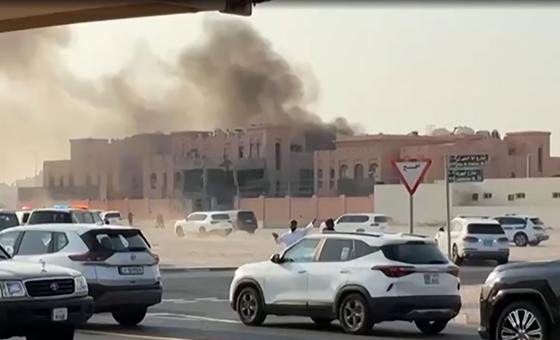
MIDDLE EAST LIVE: Israeli attack on Hamas leaders in Doha ‘potentially opens a new and perilous chapter’

The UN Secretary-General has condemned an Israeli strike targeting Hamas leaders in Doha, the capital of Qatar, on Tuesday, while highlighting the “very positive role” played by the country in achieving a ceasefire in Gaza and securing the release of hostages.

Source link

Guterres condemns Israeli strike on Hamas leaders in Qatar as ‘flagrant violation’

In a statement, António Guterres spoke out against what he called a “flagrant violation” of Qatari sovereignty and territorial integrity.

He insisted that all parties must focus on achieving a permanent ceasefire in Gaza, “not (on) destroying it”.

No senior leaders killed, claims Hamas

Hamas reported that six people had been killed, including the son of one of its exiled leaders from the Gaza Strip – but added that its senior negotiators and top officials had all survived.

Prime Minister Benjamin Netanyahu said that the attack had been Israel’s sole responsibility, although the White House Spokesperson said that the President of the United States had been informed in advance and directed his officials to alert Doha – but the message was conveyed too late to stop the attack.

President Donald Trump said in a social media post that bombing Qatar, a “sovereign nation and close ally” of the US, does not advance the goals of either Israel or the US.

‘Blatant violation’: Qatar

The Qatari Government condemned the attack as a “blatant violation of international law” and the Qatari Prime Minister said at a press conference that “there must be a response from the entire region to such barbaric actions.”

Qatar – alongside the US and Egypt – had brokered extensive efforts to end the Gaza war which began on 7 October 2023 when Hamas and other militants attacked settlements in southern Israel.

Source link

World News in Brief: Casualties in Ukraine, Burkina Faso aid helicopter blast, Uganda urged to release opposition leaders

The monthly total also marked a three-year high, topping June’s figure, with HRMMU verifying civilian deaths and injuries in 18 of Ukraine’s 24 regions.  

“For the second month in a row, the number of civilian casualties in Ukraine hits a new three-year high,” said Danielle Bell, Head of HRMMU.

“Only the first three months after the Russian Federation launched its full-scale invasion of Ukraine saw more killed and injured than in this past month,” she added.  

Rising toll 

Numbers for the first seven months of 2025 were 48 per cent higher than in the same period last year.

Long-range weapons, including missiles and suicide drones, accounted for nearly 40 per cent of casualties. On 31 July, Kyiv saw its deadliest attack since the start of the full-scale invasion, with 31 people killed, including five children, when a missile struck a residential building.

Short-range drones alone caused 24 per cent of casualties, reflecting a sharp rise since mid-2024, as documented in a bulletin published by HRMMU in June 2025.  

The steepest monthly increase came from aerial bombs, which killed 67 and injured 209 in July, compared with 114 casualties in June. Strikes hit a penal colony in Zaporizhzhia and an apartment building in Donetsk, killing at least 21 people in total.

“Whether you are in a hospital or a prison, at home or at work, close to or far away from the frontline, if you are in Ukraine today, you are at risk of getting killed or injured by the war,” Ms. Bell said. 

Burkina Faso: Blast hits near UN aid helicopter in Solle

A UN chartered helicopter delivering food aid to the town of Solle in northwest Burkina Faso was caught in an explosion shortly after landing on Tuesday, injuring two people.

The aircraft, chartered by the World Food Programme (WFP), had just unloaded humanitarian supplies when the blast occurred nearby. One crew member and a Government partner were hurt and are now receiving medical treatment.

The helicopter sustained only minor damage and was moved to safety, WFP said. Flights to Solle have been temporarily halted while authorities investigate the incident.

Critical operation

In conflict-affected areas of Burkina Faso, WFP’s humanitarian air operations are critical for delivering life-saving assistance to hard-to-reach communities most in need.  

WFP aims to assist 315,000 of the most vulnerable people during the lean season from June to August, when families have exhausted their food stocks.

In a statement, WFP reaffirmed the agency’s “unwavering commitment to support populations in need and to reach the most remote communities with humanitarian assistance.”

Rights office urges Uganda to release opposition leaders on bail

The UN human rights office (OHCHR) on Wednesday expressed serious concern at repeated denials of bail in Uganda for opposition leader Kizza Besigye and his associate Obeid Lutale.

Both individuals have been denied bail three times since they were abducted in neighbouring Kenya and returned to Uganda last November. 

In dismissing their latest request, the High Court found them ineligible for mandatory bail merely because they had been detained in civil prison for less than the 180 days required to qualify for release, a duration that did not account for their prior deprivation of liberty following their abduction and forced return.

“We urge the authorities to reconsider the decision and grant them bail, and to ensure that any legal proceedings against them are fully in line with international human rights law,” said OHCHR spokesperson Liz Throssell.

Human rights concerns  

The UN human rights office in Uganda closed its operations there in 2023 after the Government decided to end cooperation with OHCHR.  

At the time, High Commission Volker Türk expressed concern about the run-up to the 2026 elections, amid an increasingly hostile environment impacting human rights defenders, civil society actors and journalists.

Other UN human rights mechanisms also condemned laws criminalizing same sex relations and the call for the use of the death penalty for convicted offenders. 

Source link

Once-in-a-decade push for the ‘locked out’: Global leaders set for landmark UN conference in Turkmenistan

Backed by the new Awaza Programme of Action, the Third UN Conference on Landlocked Developing Countries or LLDC3 will push for freer transit, smarter trade corridors, stronger economic resilience and fresh financing to lift development prospects for the 570 million people living in those countries.

For landlocked nations, geography has long dictated destiny.  

Trade costs are up to 74 per cent higher than the global average and it can take twice as long to move goods across borders compared to coastal countries. As a result, landlocked nations are left with just 1.2 per cent of world trade.

UN Video | What to expect from LLDC3 in Awaza, Turkmenistan

And amid global economic shifts, these countries face the huge risk of being left behind.

LLDC3 is a pivotal opportunity to reverse this trajectory,” said Rabab Fatima, UN High Representative for Landlocked Developing Countries.

At its heart, this conference is about people – it is about the millions of children who lack internet or digital tools, the farmers who cannot get their goods to market because of poor roads, and the entrepreneurs whose dreams are held back by border delays and limited access to funding.

Broad engagement

The four-day event, from 5 to 8, August will feature plenary sessions, five high-level roundtables, and a Private Sector Forum focused on building partnerships and boosting investment.  

Dedicated forums with parliamentarians, women leaders, civil society and youth will bring voices from across society into the heart of the discussions.

UN Secretary-General António Guterres is expected to attend, underlining the urgency of the agenda.

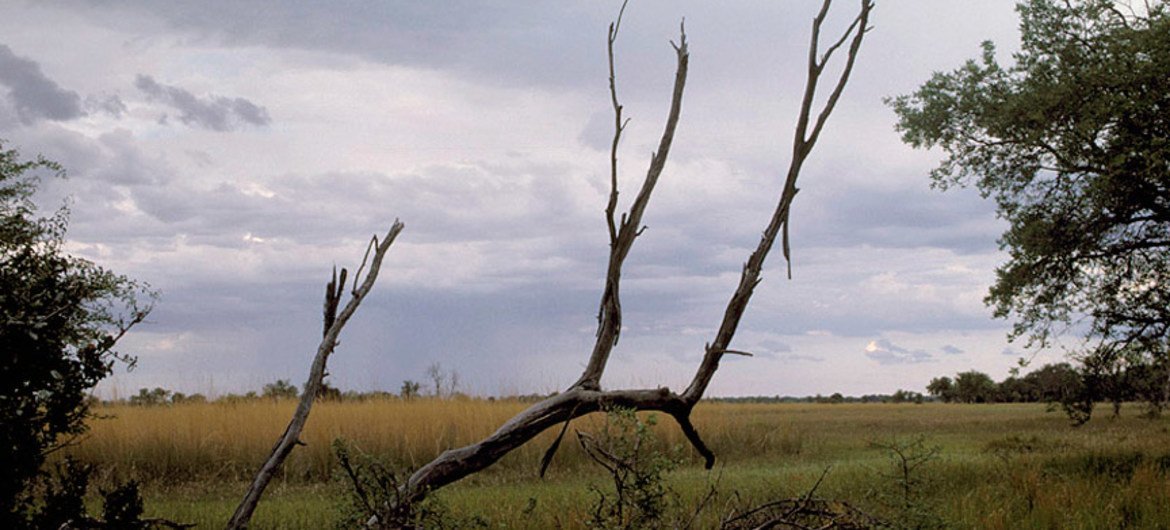
World Bank/Curt Carnemark

Many landlocked countries, such as Botswana (pictured) are also on the frontlines of the impact of climate change, highlighting their vulnerability.

The Awaza Programme of Action

Central to the conference is the Awaza Programme of Action for 2024-2034, adopted by the UN General Assembly in December.  

It lays out five priority areas – structural transformation, infrastructure and connectivity, trade facilitation, regional integration, and resilience building – supported by five flagship initiatives.  

These include:

  • A global infrastructure investment facility to close financing gaps.
  • Regional agricultural research hubs to boost food security.
  • A high-level UN panel on freedom of transit, ensuring smoother cross-border flows.
  • Digital connectivity initiatives to bridge the digital divide.
  • A dedicated landlocked developing countries trade work programme at the WTO.

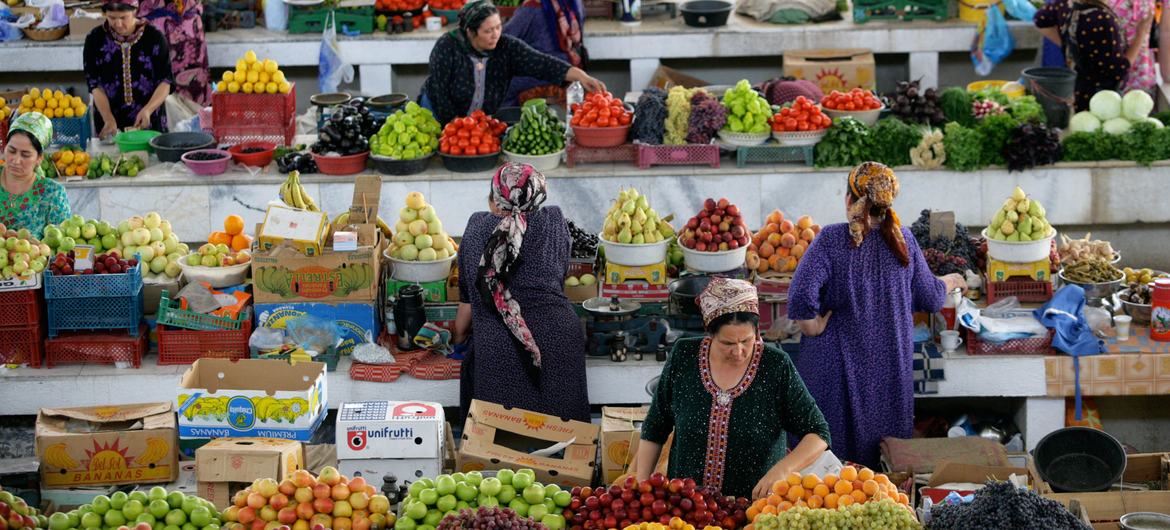
© UNICEF/Giacomo Pirozzi

Women shop at a vegetable market in Ashgabat, the capital of Turkmenistan. Boosting food security is one of the priority areas of the Awaza Programme of Action.

Turkmenistan

For Turkmenistan, hosting LLDC3 is both a diplomatic milestone and a statement of intent.

We are proud to host it on the Caspian Sea coast in Turkmenistan,” said Aksoltan Ataeva, Ambassador and Permanent Representative to the UN.

We look forward to welcoming [everyone] to Awaza for a transformative, action-oriented conference that puts landlocked countries at the heart of global partnerships.

Organizers promise state-of-the-art facilities, cultural showcases and networking spaces designed to spur collaboration. Delegates will also experience Turkmen heritage firsthand, from local art to Caspian cuisine.

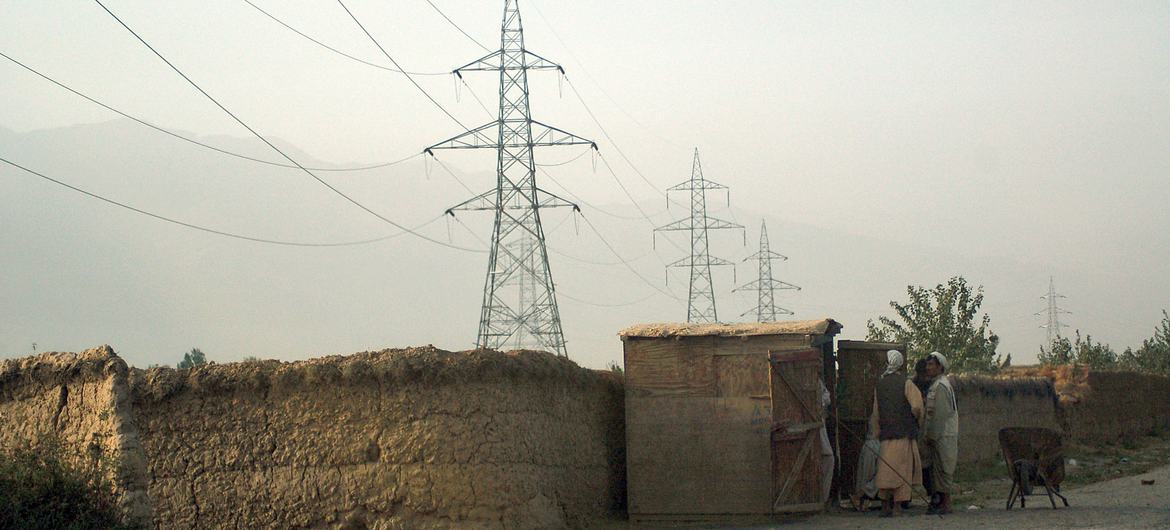
Cross-border infrastructure, such as these power lines, are crucial connections linking LLDCs with the regional and global electric grids.

The bigger picture

For the landlocked developing countries, the stakes are existential.  

These countries are among the most climate-vulnerable, least connected and furthest from global value chains. Without bold action, progress on the 2030 Agenda for Sustainable Development will remain out of reach.

The destiny of humanity is inseparably linked to the destiny of these countries,” said Diego Pacheco, Ambassador of Bolivia, who currently chairs the LLDC Group at the UN.

Together, we can unlock the potential of landlocked developing countries – not just for the benefit of our nations, but for the shared future of all humanity and the Mother Earth.

As the countdown to Awaza begins, expectations are high – not about whether geography matters (it does), but whether global solidarity can transcend its limits.

LLDC3 aims to prove that it can.

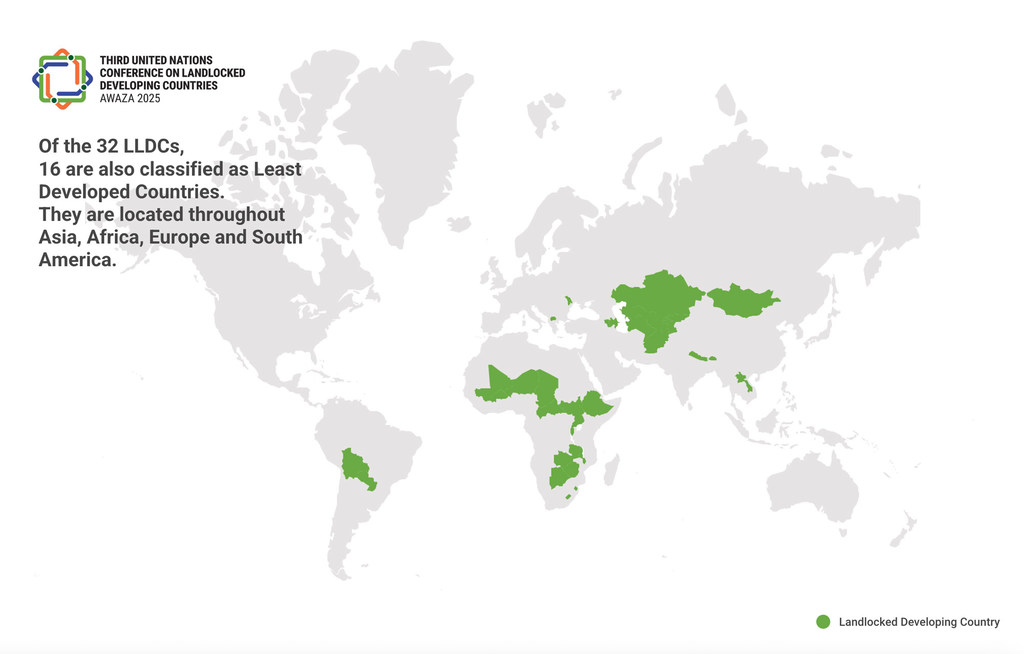
There are 32 landlocked developing countries, of which 16 are also least developed.

Source link

Two ex-militia leaders in Central African Republic sentenced for war crimes, crimes against humanity

Alfred Yekatom and Patrice-Edouard Ngaïssona received prison sentences of 15 and 12 years for their roles in brutal attacks against civilians – primarily from the country’s mainly Muslim Seleka population – during the 2013-14 civil war.

They were found guilty “beyond any reasonable doubt” of leading and facilitating attacks on civilians in the capital, Bangui, and the country’s west.

Thousands of people were killed in the violence that swept CAR following a 2012 coup led by the mainly Muslim rebel coalition, Séléka. The fighting took on a deeply sectarian tenor as Anti-Balaka militia started a brutal campaign of reprisal attacks.

Long list of crimes

The ICC’s Trial Chamber V found Mr. Yekatom responsible for a number of crimes he committed in the context of the attack on Bangui (the capital of CAR), the events at Yamwara (a school where he had established a base), and during the advance of his group on the PK9-Mbaïki axis.

These included murder, torture, forcible transfer and deportation, directing an attack against a building dedicated to religion and persecution.

Mr. Ngaïssona was convicted for aiding and abetting many of the same crimes, including persecution, forcible displacement and cruel treatment.

Both men were also found to have targeted Muslims based on the Anti-Balaka’s perception of collective guilt for Seleka abuses.

The judges sentenced Mr. Yekatom to 15 years and Mr. Ngaïssona to 12 years, with time already served to be deducted.

Charges of war crimes of pillaging and directing an attack against a religious building during the attack on Bossangoa were not upheld against Mr. Ngaïssona, and those of conscription, enlistment and use of children were not upheld against Mr. Yekatom.

‘Instrumentalization of religion’

The Chamber noted that while religion was instrumentalised by armed groups during the conflict, the violence was not initially religious in nature.

Many witnesses testified that Muslims and Christians had lived peacefully together prior to the conflict.

The convictions mark the conclusion of a trial that began in February 2021. Over the course of proceedings, the Prosecution called 114 witnesses, while the Defense teams called 56. A total of 1,965 victims participated in the trial through legal representatives.

Source link

It’s time to finance our future and ‘change course’, Guterres tells world leaders in Sevilla

António Guterres issued his clarion call noting that sustainable development powered by international cooperation, is now facing “massive headwinds.”

Addressing the opening session of the 4th Financing for Development Conference (FFD4) in baking hot Sevilla, Spain – basking in record high June temperatures – the Secretary-General noted multilateralism itself is also feeling the heat, while trust between nations and institutions fray.

The world is on fire, shaken by inequalities, climate chaos and raging conflicts: “Financing is the engine of development and right now, this engine is sputtering,” he told the conference, attended by more than 50 world leaders, over 150 nations and around 15,000 delegates.

“As we meet, the 2030 Agenda for Sustainable Development – our global promise to transform our world for a better, fairer future – is in danger.”

Some two-thirds of the ambitious Sustainable Development Goals (SDGs) targets agreed in 2015 are significantly off track – hence the staggering $4 trillion investment needed to turn it around.

“We are here in Sevilla to change course. To repair and rev up the engine of development to accelerate investment at the scale and speed required,” said Mr. Guterres.

He described the outcome known as the Sevilla Commitment adopted on Monday – without the United States which pulled out of the process earlier this month – as a “global promise” to low-income nations to lift them up the development ladder.

The UN chief outlined three key action areas:

  • First, get resources flowing fast at home to spur sustainable growth, and for richer countries to honour their pledge under the accord to double aid to poorer countries to boost development. This includes tripling the lending capacity of Multilateral Development Banks and innovative solutions to unlock private cash.
  • Second, fix the “unsustainable, unfair and unaffordable” global debt system. Right now, poorer countries are spending around $1.4 trillion just servicing their vast debts in the form of interest payments. Among the innovations, a new borrowers’ forum will ensure fairer debt resolution and action.
  • Third, reform the global financial architecture, with major shareholders playing their part, so that it empowers every country. “We need a fairer global tax system shaped by all, not just a few.”

The current crisis of affordability and stalled development is “a crisis of people,” he continued, which leaves families hungry, children unvaccinated, and girls left out of education.

“This conference is not about charity. It’s about restoring justice and to facilitate the ability of all people to live in dignity,” said Mr. Guterres.

This conference is not about money – it’s about investments in the future we wish to build together.”

A tangible and actionable’ roadmap

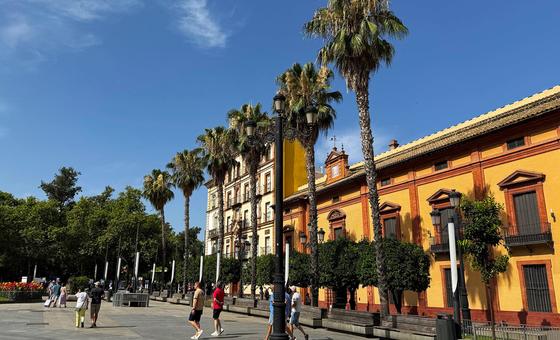
King Felipe of Spain spoke just ahead of the official opening, telling delegates the multicultural city of Sevilla welcomes the world “with open arms”.

He said a new roadmap would emerge that is based on what is “concrete and tangible and actionable”.

The conference must be a success, because cooperation is one of our fundamental pillars of the multilateral world and “the ultimate embodiment of the values that sustain it – especially at this particular point in history where many certainties are melting away and many fears and uncertainties are taking shape.”

‘Our time is now’

Spain’s President Pedro Sánchez told delegates “our time is now and our place is here.” Millions of lives will depend on the choices made in Sevilla and going forward.

We must choose “ambition over paralysis, solidarity over indifference and courage over convenience,” he continued, adding that the eyes of world are on this hall, to see what we are ready to do together and in the face of this historic challenge we must prove our worth.”

Sevilla was “the New York of the 16th century” in diplomatic terms he told delegates – and a cradle of globalism – we must all do that legacy justice today.

‘Sevilla is not an end point’

Secretary-General of the conference, Li Junhua – who’s in charge of the Department of Economic and Social Affairs (DESA) – said the week in Sevilla is key moment to mobilise the resources necessary to build a just, inclusive and sustainable future.

The UN effort to finance development has been anchored in multilateralism and solidarity – but today, the whole framework is under “profound stress.”

He said never has sustainable development been so tested but the pact made in Sevilla puts people back at the centre.

Sevilla is not an end point, it is a launch pad for a new era of implementation, accountability and solidarity.” UNDESA is ready to support all nations to translate the commitment into international action, he underscored.

President of the UN General Assembly Philémon Yang told delegates above all, “we need leadership to guide the world forward into a brighter more prosperous future for everyone, everywhere.”

He said the Sevilla framework will renew global partnership for the decade ahead and provide a focus on a debt burden which is crippling the developing world.

President of the UN Economic and Social Council Bob Rae said trust between countries had to be strengthened, because its absence “creates chaos.”

“Most of all I want to congratulate states for bringing forward the ambition, deepening engagement between financial institutions.”

The week represents a real commitment to action, he said.

Ajay Banga, President of the World Bank Group, told delegates ending poverty remains his key mission and the surge in population underway in developing countries requires resources “at an unprecedented scale and pace.”

He said everyone knew that governments, philanthropies and institutions are unable to meet every projection or promise – which is why the private sector is essential to the Sevilla Agreement so that capital can flow.

Mr. Banga added that the bank’s reforms of recent years are about being a better partner to the private sector and government clients.

Improving response time, boosting capital and systems of growth are key – but much more is needed to deliver for the next generation.

Exempt least-developed from punishing tariffs: WTO

Ngozi Okonjo-Iweala, Director-General of World Trade Organization said the conference was gathering at a time of unprecedented difficulty.

After decades of positive contributions, the global trading system has now been “severely disrupted” leaving exports so hampered by unilateral tariff measures and policy uncertainty that the WTO has sharply downgraded growth forecasts.

Further tariff barriers on 9 July – the deadline set by the US administration – will only make the contraction in global trade worse.

She reminded that the WTO has argued for the least developed nations and Africa overall to be exempted from the tariffs, “so we can better integrate them into the world trading system, not further exclude them.”

She said the Sevilla Agreement rightly recognises international trade as an engine of development.

“We therefore need to bolster stability and predictability in global trade,” through action at many levels that can grow national resources through exports, she told delegates.

IMF calls for broader tax base

Nigel Clarke, Deputy Managing Director of the International Monetary Fund (IMF), called for broadening the tax base, building strong financial management systems, coordinating support and addressing debt more sustainably.

“Many countries continue to struggle with high interest costs,” he said, calling on the international community to improve debt restructuring processes.  

Through its capacity development, the Fund is equipping members to chart their own paths and is also providing financial support when they need it most, he added.

Source link

LIVE: World leaders in Sevilla launch ambitious push to finance the future

From rising debt and shrinking investment, to the aid funding crisis and struggles to meet ambitious development goals, the global financial system is failing the people it’s supposed to serve: that’s the challenge facing world leaders gathered in Spain’s sweltering southern jewel of Sevilla this week, as the  UN’s 4th International Conference on Financing for Development gets underway. Follow our live Meetings Coverage below; app users can catch all the action from the opening day here and you’ll find all related stories on our special dedicated page right here.

Source link

Millions remain invisible – but Asia-Pacific leaders pledge change by 2030

Now, governments have committed to close that gap by 2030.

At the conclusion of the Third Ministerial Conference on Civil Registration and Vital Statistics in Asia and the Pacific, leaders adopted a renewed declaration to strengthen national civil registration systems – the foundational mechanisms that register births, deaths and other vital events.

The move extends the regional “CRVS Decade” initiative, first launched in 2014, into a new phase aligned with the Sustainable Development Goals (SDGs), especially target 16.9 on ensuring legal identity for all.

These numbers are more than statistics, they represent lives without legal recognition and families left without support,” said Armida Salsiah Alisjahbana, the Executive Secretary of the UN Economic and Social Commission for Asia and the Pacific (ESCAP), which convened the forum.

“This week has been a powerful call to action. We have seen inspiring examples of countries reaching the most marginalized, embracing digital innovation and strengthening legal and institutional frameworks.”

More than statistics

Civil registration and vital statistics (CRVS) systems are essential to establishing legal identity, accessing services, and ensuring inclusion in public policy.

A birth certificate can mean access to healthcare, education and social protection.

A death certificate enables families to claim inheritance, pensions and other rights.

Without these critical documents, individuals – especially women, children and rural populations – risk exclusion, vulnerability, and injustice.

Uneven progress

According to a recent ESCAP report, the region has made remarkable gains since 2012 – the number of unregistered children under five has fallen by over 60 per cent, from 135 million to 51 million.

As of 2024, 29 countries now register more than 90 per cent of births within a year, and 30 do the same for deaths. The number of countries publishing civil registration-based vital statistics nearly doubled in that period.

However, progress remains uneven – about 14 million children in the region reach their first birthday without having their birth registered. And 6.9 million deaths go unrecorded annually, particularly those that occur outside health facilities or in remote areas.

Many countries still face gaps in certifying and coding causes of death, hampering disease surveillance and public health responses, as seen during the COVID-19 pandemic.

ESCAP Photo/Panumas Sanguanwong

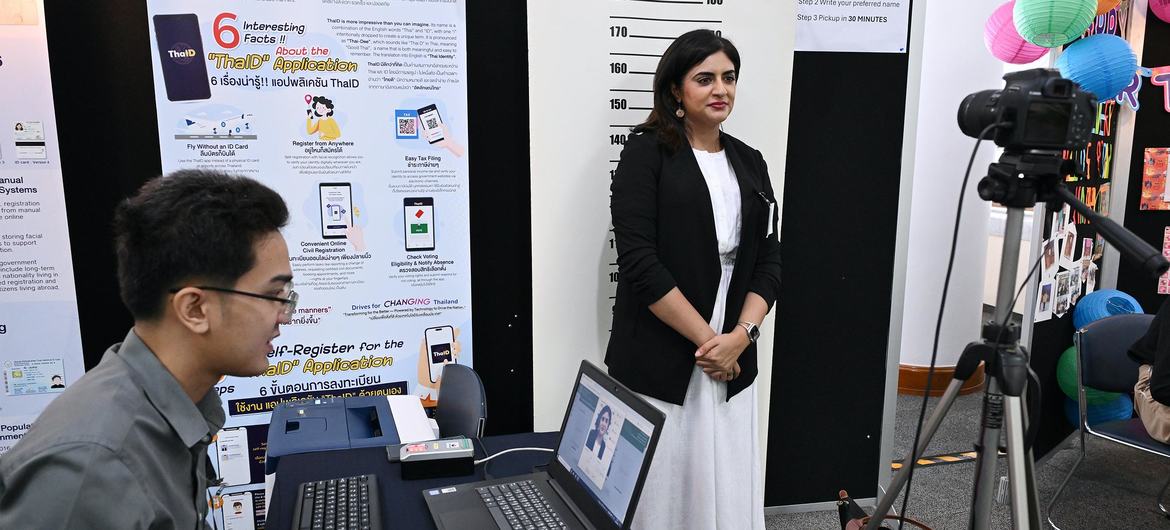
A participant at the Ministerial Conference on Civil Registration and Vital Statistics (CRVS) in Bangkok takes part in a demonstration at the Thai digital ID and verification exhibition booth.

Get everyone in the picture

The new Ministerial Declaration calls for universal and responsive CRVS systems that are inclusive, digitally enabled and resilient.

It emphasizes gender equity in registration, legal protections for personal data, and continuity of services during emergencies.

Governments also pledged to increase training, expand community outreach and improve cause-of-death reporting – including through verbal autopsies and improving certification systems.

Everyone counts. Data saves lives,” Ms. Alisjahbana said, “legal identity is a right, not a privilege. No one should be left behind – simply because they were never counted in the first place.”

Let us finish what we started. Let us get everyone in the picture and ensure every life truly counts.

Source link

‘Jerusalem is not for sale’ Palestinian President Abbas tells world leaders at UN Assembly

President Abbas underscored his commitment to peace and the two-state solution, as well as the path of negotiation to achieve them, reiterating that peace in the Middle East cannot be realized without an independent Palestinian state, with East Jerusalem as its capital.

“We have always fully and positively engaged with the various initiatives of the international community aimed at achieving a peaceful solution between us and the Israelis, including the Arab Peace Initiative,” he told world leaders gathered for the Assembly’s annual debate, noting that he also engaged with United States President Donald Trump and his administration from the start of his tenure.

However, the US administration’s decision to close office of the Palestine Liberation Organization (PLO) in Washington D.C., the proclamation of Jerusalem as the capital of Israel, and transferring of the US embassy from Tel Aviv to Jerusalem, not only violate UN resolutions, they have also undermined the two-state solution, added President Abbas.

Those decisions, have also caused the US administration to lose its eligibility as the mediator in the Middle East peace process, he said.

“The path to peace is enshrined in your [the UN] resolutions, including resolution 67/19 of 29 November 2012, which was adopted by an overwhelming majority and refers to the State of Palestine on the basis of the 1967 borders,” he stressed.

Mr. Abbas also highlighted what he called “racist” laws enacted recently in Israel, which not only discriminate against the Palestinian-Arab citizens, but, will also lead to the “inevitable” nullification of the two-state solution.

Palestinian people and the territory of the state of Palestine are in urgent need of international protection, he said, and while he welcomed economic and humanitarian support in the West Bank and the Gaza Strip but added that such support cannot be a substitute to a political solution to bring an end to the Israeli occupation.

President Abbas also highlighted the importance of the work of the UN Relief and Works Agency for Palestine Refugees in the Near East (UNRWA) and urged all countries as well as the General Assembly to support the agency.

Full statement available here.


UN chief urges world leaders to keep two-State solution ‘alive’

It is absolutely essential to keep alive the two-State solution perspective with all the terrible things we are witnessing in Gaza and the West Bank,” Mr. Guterres told reporters at UN Headquarters in New York.

He was responding to a question about his message to leaders gathering at a high-level international conference later this month on a comprehensive and lasting peace in the region.

“And for those that doubt about the two-State solution, I ask: What is the alternative? Is it a one-state solution in which either the Palestinians are expelled or forced to live in their land without rights?

Mandated by the UN General Assembly, the high-level event is aimed at charting an “action-oriented” path toward a comprehensive and lasting peace based on the two-State formula.

The meeting will include thematic roundtables on key issues such as security, humanitarian reconstruction, and the economic viability of a Palestinian state.

Disappointed over failed resolution

Mr. Guterres also expressed deep disappointment following the Security Council’s failure on Wednesday to adopt a resolution demanding an immediate and permanent ceasefire in Gaza, and the release of all hostages.

The text, endorsed by all ten elected members of the Council, received support from the other four permanent members, but was vetoed by the United States.

“We are always disappointed when ceasefires do not materialise, releases of hostages [do not happen] and humanitarian aid is not distributed or is distributed in a way that puts at risk the lives of so many Palestinians,” he said, responding to another correspondent.

The Secretary-General reiterated that only a permanent ceasefire, the unconditional release of all hostages, and unimpeded humanitarian access would allow the UN to deliver meaningful relief to civilians in Gaza.

He emphasised that during previous temporary ceasefires, the UN was able to mobilise large-scale assistance.

Source link

UN chief urges world leaders to keep two-State solution ‘alive’

It is absolutely essential to keep alive the two-State solution perspective with all the terrible things we are witnessing in Gaza and the West Bank,” Mr. Guterres told reporters at UN Headquarters in New York.

He was responding to a question about his message to leaders gathering at a high-level international conference later this month on a comprehensive and lasting peace in the region.

“And for those that doubt about the two-State solution, I ask: What is the alternative? Is it a one-state solution in which either the Palestinians are expelled or forced to live in their land without rights?

Mandated by the UN General Assembly, the high-level event is aimed at charting an “action-oriented” path toward a comprehensive and lasting peace based on the two-State formula.

The meeting will include thematic roundtables on key issues such as security, humanitarian reconstruction, and the economic viability of a Palestinian state.

Disappointed over failed resolution

Mr. Guterres also expressed deep disappointment following the Security Council’s failure on Wednesday to adopt a resolution demanding an immediate and permanent ceasefire in Gaza, and the release of all hostages.

The text, endorsed by all ten elected members of the Council, received support from the other four permanent members, but was vetoed by the United States.

“We are always disappointed when ceasefires do not materialise, releases of hostages [do not happen] and humanitarian aid is not distributed or is distributed in a way that puts at risk the lives of so many Palestinians,” he said, responding to another correspondent.

The Secretary-General reiterated that only a permanent ceasefire, the unconditional release of all hostages, and unimpeded humanitarian access would allow the UN to deliver meaningful relief to civilians in Gaza.

He emphasised that during previous temporary ceasefires, the UN was able to mobilise large-scale assistance.

Source link

‘We are the present’: Tajik climate activist urges leaders to include youth voices in dialogue

At the end of April, Fariza Dzhobirova attended a Model United Nations Conference on Glaciers’ Preservation in Tajikistan’s capital, Dushanbe, where she represented Switzerland.

For Ms. Dzhobirova, it was a rehearsal of sorts for the actual High-level Conference on Glaciers’ Preservation which began on Thursday in Dushanbe. There, she will serve as a panel member representing her own country.

“The [Model UN] conference gave me a platform to raise my voice, collaborate with like-minded peers from across the region and develop policy recommendations that we hope will influence real-world decisions,” she said.

The High-level Conference on Glaciers’ Preservation, hosted by the Government of Tajikistan and supported by variety of United Nations agencies, will work to underline the extreme urgency of melting glaciers, elevating it as a global climate and development challenge. 

Will glaciers survive the 21st century? 

Glaciers, alongside ice sheets, account for over 70 per cent of the world’s freshwater resources and are integral to many local economies, providing water, sustaining agriculture and generating energy. 

However, due to the increasing temperature of the planet, glaciers are melting at unprecedented rates – scientists predict that if the current rate of melting continues, many glaciers will not survive the 21st century.

In Tajikistan alone, 30 per cent of glaciers have disappeared over the last century, disrupting local and national water supplies and agricultural patterns. And Slovenia and Venezuela have lost all their glaciers.

Just yesterday, one day before the conference was set to begin, a partial glacier collapse in Switzerland buried most of a small village, according to news reports.

“The death of a glacier is more than just the loss of ice,” said World Meteorological Organization (WMO) Secretary-General Celeste Saulo.

Youth voices are the present and the future

Before the conference, Parviz Boboev from the UN ountry team in Tajikistan sat down with Ms. Dzhobirova to discuss what motivates her climate activism. 

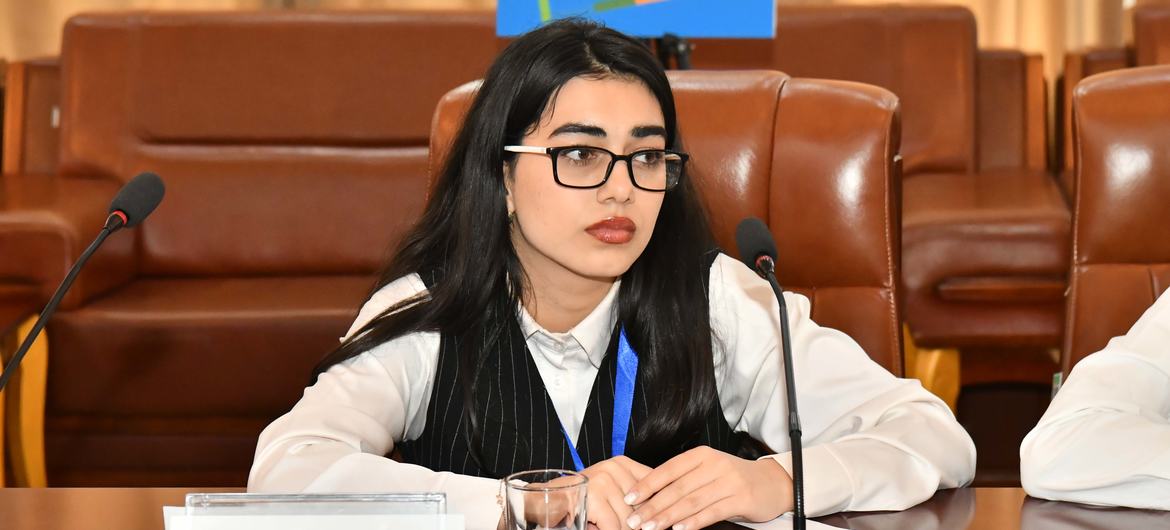
Fariza Dzhobirova, a young climate activist from Tajikistan, represents Switzerland at a Model United Nations conference on glacier preservation.

Parviz Boboev: What inspired you to get involved in the climate movement?

Fariza Dzhobirova: Growing up in Tajikistan, where more than 90% of our freshwater comes from glaciers, I’ve seen how climate change is already impacting people’s lives. Rivers are shrinking, water is becoming less accessible, and natural disasters like landslides and floods are affecting more and more communities.

I’ve met a family who lost their home because of mudflow. I saw a teenage girl from that family of the same age as me that had totally different problems because of this climate-related disaster. I was thinking about my classes. She was thinking about how to survive.

My message is that young people are not just the future — we are the present, and we are ready to contribute today

And I know there are many examples similar to this – farmers whose land can no longer be irrigated and children whose futures are at risk. Seeing this pain and injustice made it impossible for me to stay silent or uninvolved.

Participating in the upcoming Glaciers’ Preservation conference means a lot to me. It’s about raising the voices of people who are often left out of global discussions. For me, it’s a chance to speak on behalf of my generation and my country, and to show that young people are ready to be part of the solution.

Parviz Boboev: What message do you hope to share at the conference about the impact of climate change on your community and generation?

Fariza Dzhobirova: Being invited to speak is a great responsibility for me. It’s a chance to represent not only Tajikistan, but the voice of a generation.

My message is that young people are not just the future — we are the present, and we are ready to contribute today. Climate change is not only about the environment — it’s about how we live, how we work, how we learn. It affects our opportunities, our mental health, our ability to plan for the future. And yet, many young people are still excluded from decision-making processes.

At the conference, I want to encourage leaders and policymakers to truly listen not just to the facts and data, but to the experiences and hopes of young people. When you give youth a platform, you don’t just invest in their potential — you strengthen the resilience and sustainability of entire communities.

Parviz Boboev: Youth voices are becoming increasingly important in global climate conversations. How do you see the role of young people in shaping solutions?

Fariza Dzhobirova: I truly believe that young people have a unique role to play in shaping more just, inclusive and forward-looking climate solutions. We bring fresh ideas, the courage to question outdated systems and a strong sense of responsibility for the future.

In countries like Tajikistan, where glaciers are directly connected to people’s livelihoods, youth are already stepping up. What we need now is more trust and investment in young people. We don’t expect to solve everything alone, but we do hope to be included — in dialogue, in decision-making, and in designing real solutions.

Protecting glaciers and water resources is not just a technical challenge; it’s a human one. By working together — across generations and borders — we can make our region stronger, more resilient, and more united in the face of climate change.

Source link

Pandemic heroes stepped up in 2020 – now they’re asking world leaders to do the same

A defining moment for global health is about to unfold in Geneva.

The World Health Assembly is meeting next week to negotiate the Pandemic Preparedness Treaty, a document born from the catastrophic failures and fragile victories of the COVID-19 pandemic.

The text of the treaty promises shared information, equitable access to vaccines and therapeutics, and stronger healthcare systems – all of which resonates deeply with the people who lived through the worst.

In 2020, at the height of the global pandemic, UN News spoke with many of the unsung heroes who faced impossible challenges with courage and resolve, including doctors, community workers, a journalist, a youth volunteer and an Indigenous leader.

They were exhausted, scared, hopeful and determined. Today, five years later, they carry scars and wisdom from that fight.

We went back to them – and their reflections remind us of what is at stake.

Margarita Castrillón, Paediatrician, Buenos Aires, Argentina

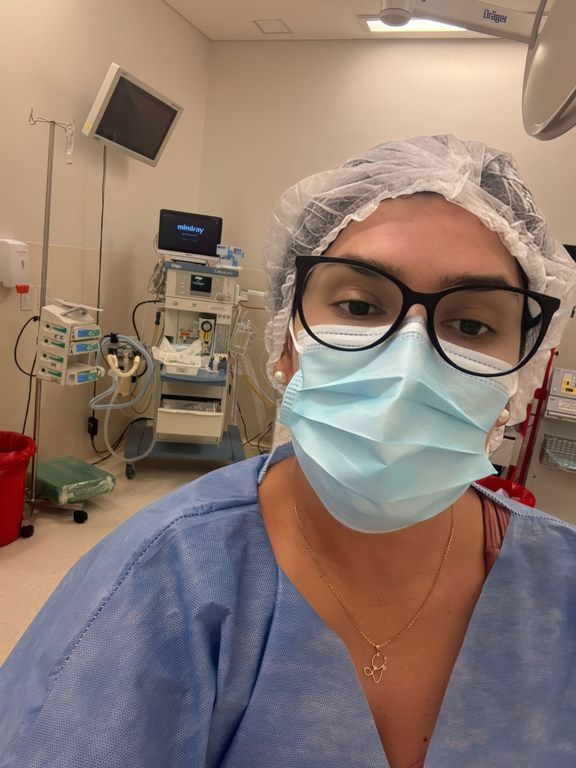
As a paediatrician on the frontlines, Dr Castrillon says future pandemic plans must start with empathy, solidarity, and real support for health workers.

“We were heroes without capes and without fair pay.”

In 2020, Dr Margarita Castrillón, a Colombian paediatrician living in Buenos Aires, found herself taking on far more than her usual clinic work.

As COVID-19 swept Argentina, she volunteered to also serve in emergency medical transport, riding in ambulances to transfer patients, many suspected of having the virus, to hospitals across the city.

After one of those long, exhausting shifts, she noticed a handwritten sign taped to the elevator in her apartment building.

It said “I’m Victoria from the 7th floor. If you need any groceries or help, ring my doorbell,” she recalls. “That gesture filled my soul after such a hard day at work. It marked me. I thought: the good people outnumber the bad. Empathy was winning.”

Dr Castrillón was working across multiple roles – clinic, ambulance, teaching at the university – all while raising her young daughter. “It was brutal. I look back and I want to cry. I’m not sure I’d be as brave if it happened again. Every day I left home terrified.”

The memory of Buenos Aires’ summer heat under full protective suits stays with her. “We were heroes without capes and without fair pay. We worked 24 hours, covering for sick colleagues, unable to eat or speak together.”

But the experience gave her one unexpected gift. “I taught my daughter to read, write and do maths at home. It made me a better mum. I valued family and true friendship more than ever.”

Her medical routine also changed permanently. “I now wear a mask with every patient. It protects both of us. And hand sanitiser stations in hospitals are permanent now.”

On the upcoming global pact, she is firm: “We need collaboration and love for people at the government level. We lived through hell. Some colleagues still suffer panic attacks. Recognition and fair pay are essential to keep health systems strong.”

Evgeny Pinelis, Intensive Care doctor, Brooklyn, New York

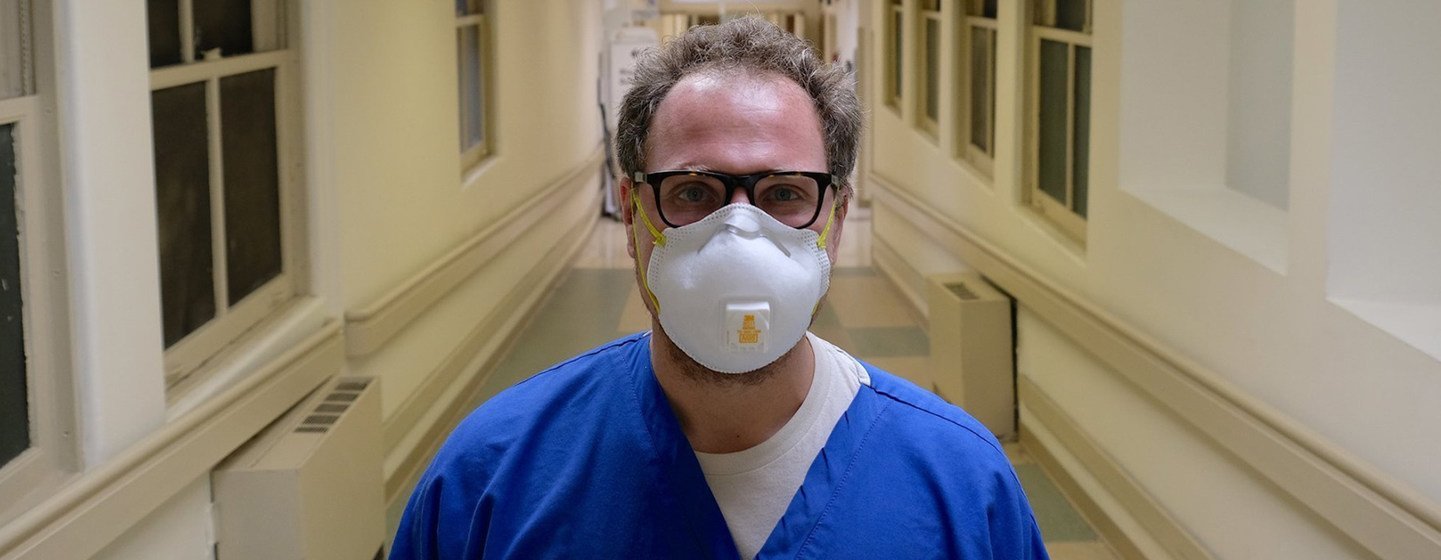
In an overwhelmed New York ICU, Dr Pinelis worked beyond limits and now warns the world may still be unprepared for what comes next.

When we first spoke to Dr Evgeny Pinelis in the spring of 2020, he was deep in New York City’s overwhelming first COVID wave.

“Our first severe patient came on 7 March. By the end of the month, we had over forty ICU beds full,” he recalled. ICU nurses were pushed beyond safe limits, caring for up to five critical patients at a time.

“I do hope there won’t be a next time, because I’m not confident we’re truly ready.”

Protective equipment ran so scarce that he bought supplies with his own money, while volunteers scrambled to donate gear, some uncertified, but “better than nothing.”

Throughout the crisis, Dr Pinelis shared dispatches on social media, chronicling the chaos with honesty and caution. “I woke up one morning to thousands of new followers,” he said.

Five years later, his reflection is sobering. “I can only speak about this from the perspective of a regular intensive care doctor. And if I had to sum it up, I’d say I realised I’m ready, if necessary, to work far beyond the norm and do everything possible when faced with a poorly understood disease that we didn’t quite know how to treat.”

The public’s reaction, he says, was a mixed bag. “On the one hand, there were volunteers, support, and solidarity.

“But on the other, there were conspiracy theories, complaints about things as trivial as closed theatres, and at times even hostility toward medical professionals and scientists.”

In the earliest days of the pandemic, positivity seemed to win out. “But within a month or so, the negativity began to dominate,” he says. “We were lucky that the disease turned out not to be highly lethal.”

As for preparedness today, Dr Pinelis remains cautious: “Being less prepared than we were in New York is hard to imagine – so yes, we can and should be better prepared. But it seems the lessons learned weren’t quite the ones we hoped for. And I do hope there won’t be a next time, because I’m not confident we’re truly ready.”

Chen Jingyu, lung transplant surgeon, Wuxi, China

© Wuxi People’s Hospital

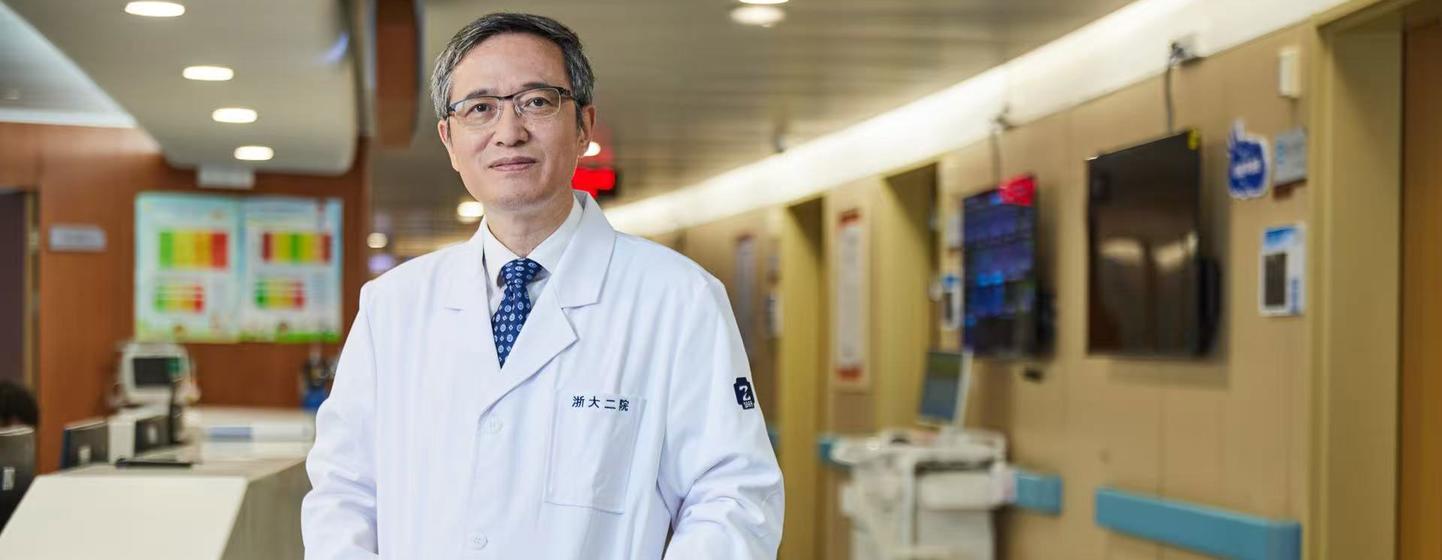
Dr Chen performed emergency lung transplants on critically ill COVID patients and now advocates for global cooperation and fair access to care.

In 2020, Dr Chen Jingyu, vice president of Wuxi People’s Hospital and one of China’s leading lung transplant surgeons, performed two of the world’s first lung transplants on critically ill COVID-19 patients.

His team worked under extraordinary conditions, moving their operating theatre into an infectious disease hospital and taking extreme precautions to avoid infection.

“We didn’t know if there was any virus in their airways during the process of cutting off the diseased lung. So, we did the surgery with very strict precautions,” Dr Chen said at the time. “We had a very scientific discussion about how we could save lives, protect our health care workers, and achieve zero infection.”

“The Pandemic Treaty is a turning point in global health.”

Today, Dr Chen says the Pandemic Treaty represents a critical milestone. “The Pandemic Treaty is a turning point in global health governance,” he says. “First, in terms of prevention and early response, the treaty will help build a global coordinated prevention system, strengthen pathogen monitoring and information sharing, and implement the One Global Village, One Health approach.”

“Second, the treaty provides legal guarantees for equitable access to medical resources, avoids national monopolies, and improves global standardisation of care capabilities to patients in severe conditions.”

Dr Chen believes the lessons of the pandemic must be used to build a fairer system. “Access to and training of high-end medical technologies will enhance the ability of developing countries to respond to severe diseases such as respiratory failure and reduce mortality,” he says.

“Only through international cooperation and scientific consensus can we truly have the courage and confidence to fight against pandemics.”

Marcos Terena, Indigenous leader, Brazil

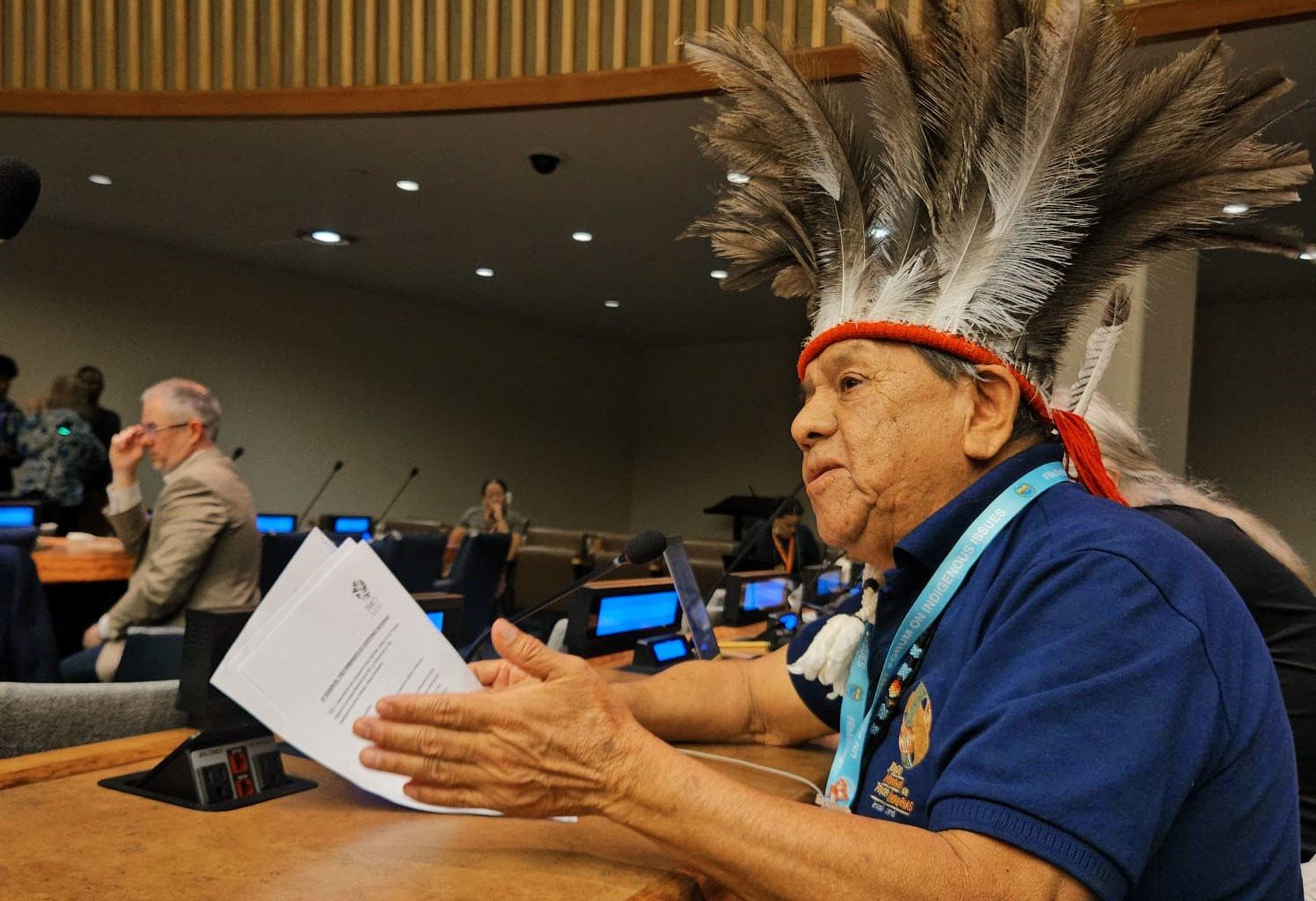
Marcos Terena lost family to COVID and calls for a global pact rooted in dignity, life, and respect for the Earth.

The pandemic devastated Brazil’s Indigenous communities, including Terena’s own Xané people. “I still can remember that morning, in our Indigenous community, when we heard that a cousin of ours had passed away suddenly.

“He started coughing and ended up dying. That scared all of us in our community,” he recalls.

“About two hours after his death, we learned that his wife, who had gone to the hospital to retrieve his body, had also died, from the same symptoms. We started panicking and looking for help, as this was a disease that even our leaders did not know how to handle, how to cure. They did not know much about this disease which was brought to us by the wind.”

The loss became personal when his brother, the creator of the Indigenous Olympic Games, also died of COVID-19. “It brought us emotion, tears. He went to hospital and never came back.”

“The UN must make a pact for life”

Looking back, Mr Terena believes the World Health Organization played a crucial role. “When the WHO became the focal point and the mediator for the pandemic response, this gave the United Nations a very responsible role to play among governments across the globe,” he says.

Today, his message remains urgent and clear. “We are not talking about money or currencies. We are talking about well-being. We the Indigenous people fight for the Earth. The Earth is our Mother, and our source of life; it gives us our cosmovision, our food security and our dignity as peoples.”

As world leaders meet again, he leaves them with a final plea: “The UN should make a pact for life, a pact for dignity and a pact where life is crucial to all.”

Nikhil Gupta, United Nations youth volunteer, Varanasi, India

© UNDPIndia/Srishti Bhardwaj

UNV’s Nikhil Gupta created grassroots health and education tools during lockdowns, turning remote villages into hubs of volunteer-powered resilience.

As COVID-19 overwhelmed Varanasi, India’s spiritual heart, Nikhil Gupta – a United Nations Volunteer from Uttar Pradesh – stepped in to serve the most isolated communities.

“The pandemic changed everything,” he says. “In Varanasi, COVID-19 infected over 80,000 people, and thousands of families in remote villages were left without access to healthcare, education, or even accurate information. But the crisis revealed not just gaps but grit.”

Mr Gupta and his team launched creative grassroots solutions. “Guided by the UN principle of ‘Leave no one behind,’ we created an animated volunteer guide named Ganga – a friendly character with a warm voice and simple wisdom. Ganga became a beacon of hope, educating villagers about hygiene, safety, and vaccination through videos watched on shared mobile screens under neem trees.”

“When the world paused, we stepped forward. When fear spread, we spread hope.”

They also opened Vidya ki Jhopdi – The Hut of Education. “It was a community classroom built from scrap but powered by purpose. There I met Raju, an 11-year-old from a nearby slum who had lost access to school. He would sit on a worn-out mat every afternoon, eyes wide with wonder, scribbling letters in chalk. Today, he reads and writes fluently, and dreams of becoming a teacher.”

The human moments left the deepest impression. “There was Amma Shanti Devi, a 90-year-old widow in a remote village. Left alone after the lockdown, she hadn’t stepped out in months. Through our volunteers, she received regular wellness check-ins, medicine deliveries, and simply someone to talk to.”

Looking ahead to the Pandemic Treaty, Mr Gupta says is shouldn’t be only technical or top-down. “It should echo the voices of people like Amma and Raju. It must include local wisdom, volunteer networks, and ensure grassroots equity. My message to world leaders? ‘Laws can guide, but love must lead. Invest in hearts that serve, not just in speed.’”

He adds: “Support young changemakers. Recognise the power of community-driven action. Make health systems inclusive. And build a world where, when the next storm hits, the light doesn’t dim. Because in every village, there’s a Nikhil. And in every Nikhil, a youth waiting to be led.”

Alejandra Crail, Journalist, Mexico City

Alejandra Crail exposed rising child abuse during lockdown and says future pandemic plans must protect mental and emotional health, too.

“Health is more than vaccines. It’s also mental health, emotional health.”

When the pandemic hit Mexico, Alejandra Crail was not just reporting the crisis, she was sounding an alarm. Her investigation, To Kill a Son, revealed that every two days in Mexico, a child under 15 is killed – often at home, and often by someone in their own family.

“Let me remember something,” she says. “At the beginning of the Coronavirus, I started to talk to different experts on childhood rights and domestic violence…We were worried because we were about to lose our eyes in schools, sports, and community centres. Children were more vulnerable than ever during the COVID era.”

For many, home wasn’t a safe haven. “Their houses were the most dangerous places for them, and their nearest family members are usually their attackers.”

Now, five years later, the violence hasn’t eased. “The number of domestic violence cases has increased after the pandemic,” Ms Crail says.

She shares one case she can’t forget. Joselina Zavala, a grandmother who reported the sexual abuse of her disabled grandson. “She went to the police…despite the testimony of the child and the proof, his father was absolved.

“When people go to the authorities to achieve some kind of justice… the authorities usually don’t investigate enough, and the crimes are unsolved.”

The pandemic also reshaped her personal convictions. “Health is the most important thing to make sure that we have,” she says. “When we live in a country like Mexico, where we don’t have a good public health system, a pandemic or any other illness can be very, very hard to survive.”

She adds, “Work isn’t the most important thing in the world. Family – your loved ones – are the real treasure. We need to spend more time with them, because we don’t know how much time we can share.”

Looking ahead to the World Health Assembly and the Pandemic Treaty, she warns that global responses must go beyond access to vaccines and medicine. “Health is more than vaccines. It’s also mental health, emotional health,” she says.

Her final message to world leaders is as personal as it is political: “We need to open paths that benefit all countries that make up the world. These issues must be on the table because in a pandemic, they can be the difference between a family surviving adversity, or not.”


Source link