Security Council voices deep concern over deadly escalation in Syria’s Sweida region

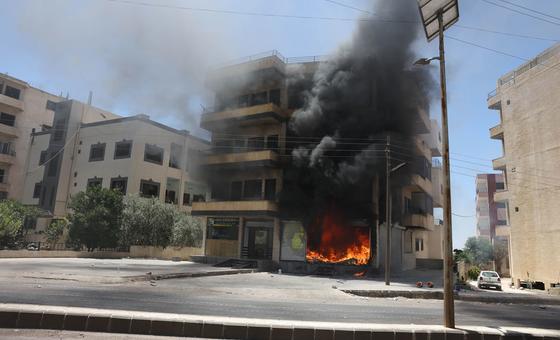
Unrest began on 12 July when mutual kidnappings escalated into armed conflict between Druze groups and Bedouin tribes, drawing in Syrian security forces.

The violence spiralled, with reports of extrajudicial executions, desecration of corpses and looting. Footage circulated widely on social media fanned sectarian tensions and disinformation.

Nearly 200,000 displaced

In a presidential statement adopted on Sunday, ambassadors said they were “deeply concerned” by the recent fighting, which has included “mass killings” and led to the internal displacement of some 192,000 people.

The Council “strongly condemns the violence perpetrated against civilians…and calls on all parties to adhere to the ceasefire arrangement and to ensure the protection of the civilian population.”

The 15-member body reminded all sides of their obligations under human rights and international humanitarian law, stressing in particular the duty to “respect and protect” all medical and humanitarian personnel.

Council members urged all parties to allow “full, safe, rapid and unhindered humanitarian access” to affected communities in the heavily-Druze Sweida area and across Syria, in line with the principles of humanity, neutrality, impartiality and independence.

They also underscored the need to ensure the humane treatment of all combatants, including those who have surrendered, are wounded, detained, or have laid down their arms.

Protection for all

The statement called on the Syrian interim authorities to protect all Syrians “regardless of ethnicity or religion” and warned that “there can be no meaningful recovery in Syria without genuine safety and protection for all Syrians.”

The Council welcomed the interim authorities’ condemnation of the violence and their commitment to investigate those responsible, but urged them to ensure “credible, swift, transparent, impartial, and comprehensive investigations… in line with international standards.”

Reaffirming resolutions including 2254 (2015), the Council reiterated its “strong commitment to the sovereignty, independence, unity, and territorial integrity of the Syrian Arab Republic” and called on all States to avoid “negative or destructive interference” that could further destabilise the country.

The statement also recalled the 1974 Disengagement Agreement and the mandate of the UN Disengagement Observer Force (UNDOF) tmonitoring and patrolling the contested Golan on the Syria-Israel border, urging all parties to abide by its terms to maintain calm.

On the threat of terrorism, the Council cited the latest report of its Analytical Support and Sanctions Monitoring Team, voicing “grave concern over the acute threat posed by foreign terrorist fighters” in Syria. It urged the country to take decisive measures against ISIL (Da’esh) and Al-Qaida, in line with relevant resolutions.

Looking ahead, the Council repeated its call for “an inclusive, Syrian-led and Syrian-owned political process” based on resolution 2254, to safeguard the rights of all Syrians and enable them to “peacefully, independently and democratically determine their futures.”

Source link

Deep dive into the International Seabed Authority: Why it matters now

At a time when the international community seeks to regulate the rich tapestry of the planet’s ocean floors while countries and corporations speed towards deep-sea mining opportunities, here’s what you need to know about ISA and why it matters now:

What does it do?

ISA manages the mineral resources of the seabed beyond national jurisdiction, which covers 54 per cent of the world’s oceans, for “the shared benefit of all humankind”.

Created by the UN Convention on the Law of the Sea in 1994, ISA is aims to ensure that all economic activities in the deep seabed, including mining, are regulated and responsibly managed.

Mandated to ensure the effective protection of the marine environment from harmful effects that may arise from deep-seabed-related activities, its work also contributes to the 2030 Agenda for Sustainable Development.

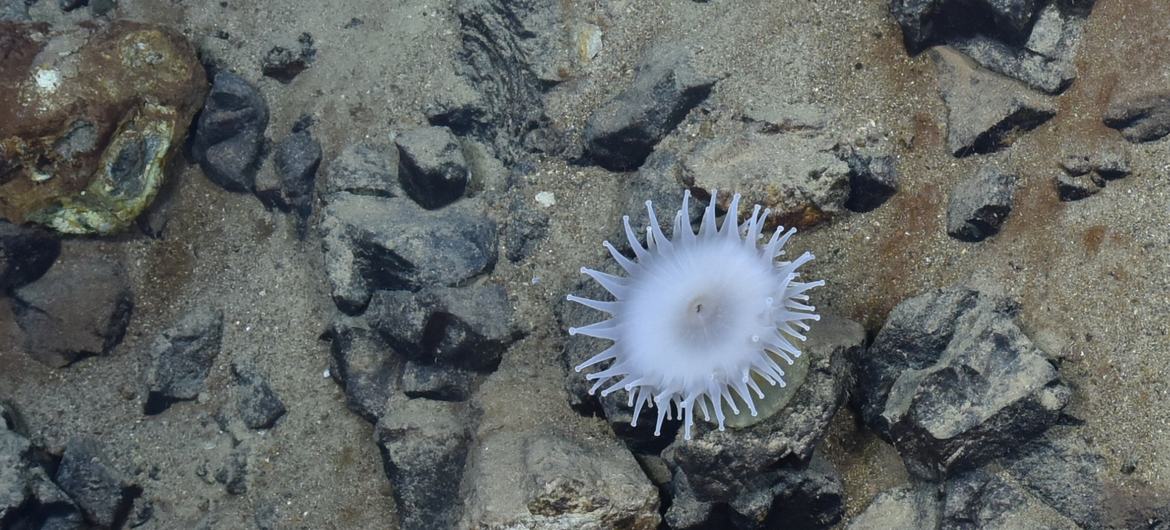
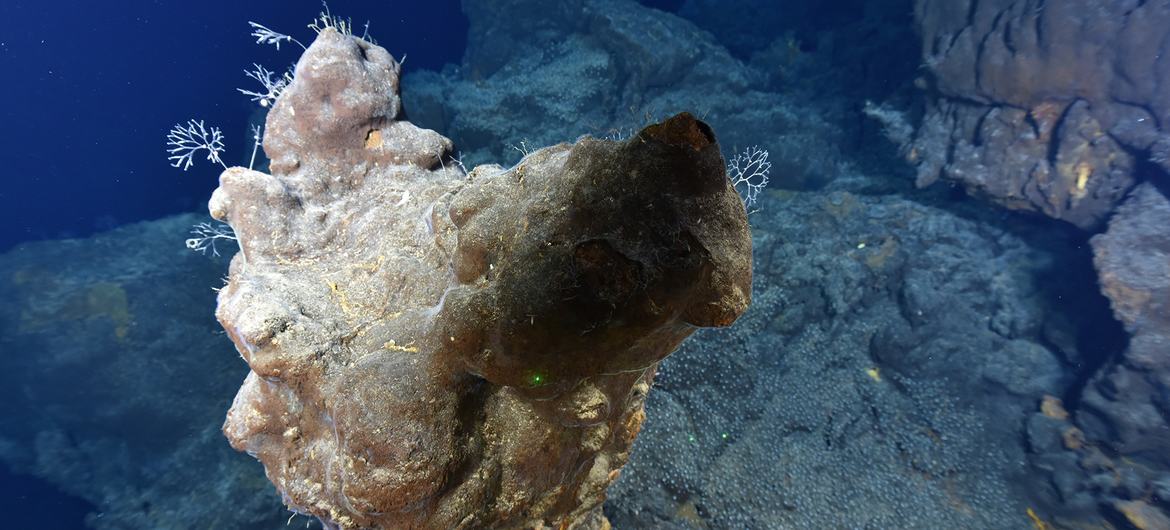
Seabeds contain rich fauna and an array of rare earth minerals.

Why it matters now?

As the world’s only international body that focuses on the deep-sea area beyond national borders, ISA aims to address pressing concerns, from plastic waste littering oceans to the race to secure rare earth minerals to quench the world’s insatiable thirst for lithium batteries and a range of tech items.

What kind of rare earth minerals are on the ocean floor? Copper, cobalt, gold, lanthanum, neodymium, nickel, silver, yttrium and zinc to name a few.

Right now, countries can pursue deep-sea mining within their own territorial waters or “exclusive economic zones”. But, under international law, the deep seabed belongs to no single country or corporation, ISA Secretary-General Leticia Carvalho wrote in a recent op-ed.

“It is our common heritage,” she said.

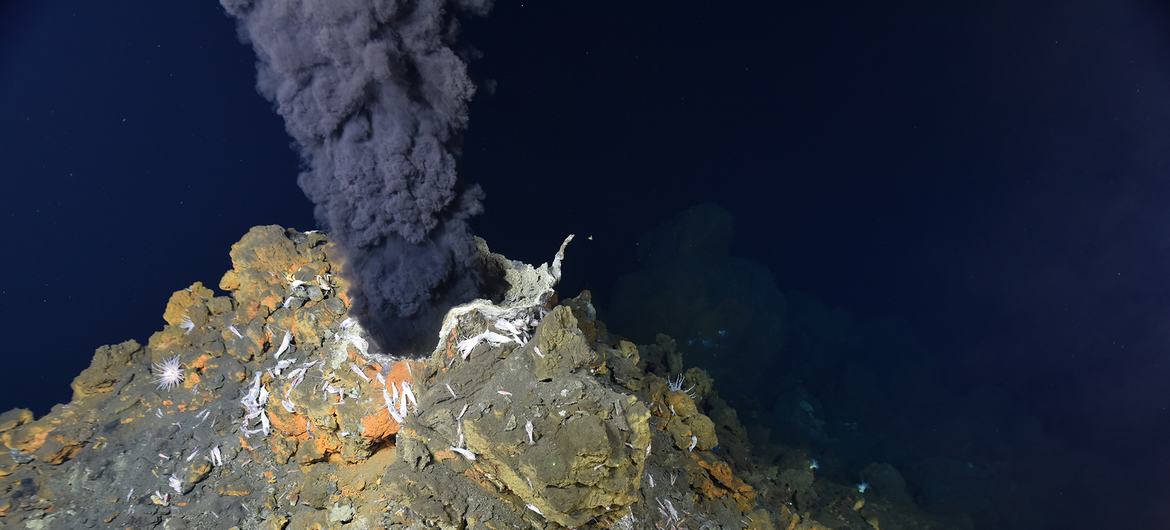
An active volcano on the ocean floor.

What’s the draft mining code?

Right now, nations are looking for ever more sources of rare earth minerals to meet demand for renewable energy technologies and such items as mobile phones and computers. The deep-sea contains a plethora of supplies. That’s where the draft mining code comes in.

During its 30th session, ISA members are working on a draft code that would protect the marine environment and build a foundation for ensuring that any activities in the deep-sea area are conducted responsibly and in line with environmental sustainability principles as well as benefitting all of humanity.

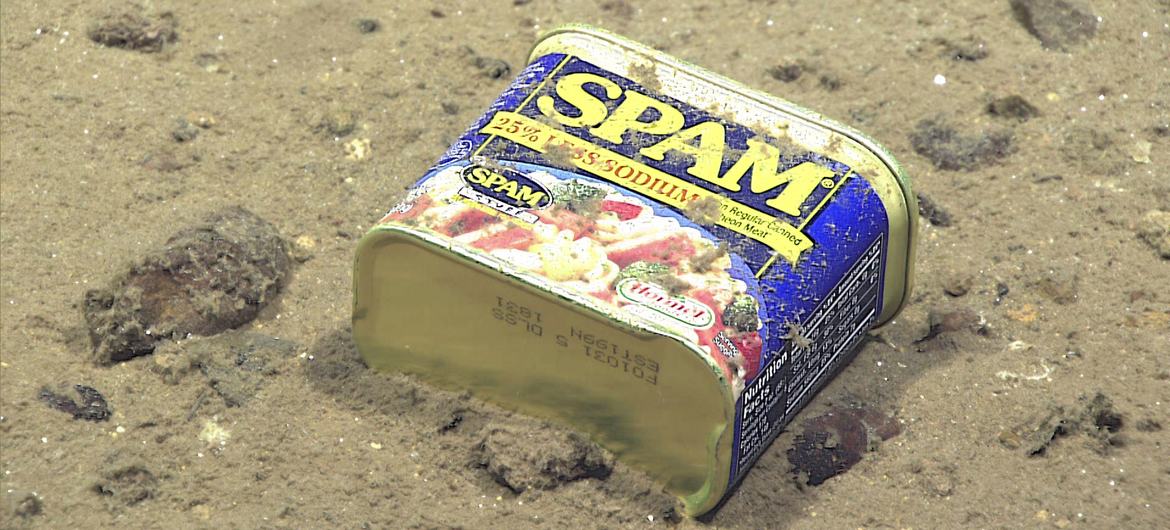
A food container seen resting at 4,947m on the slopes of an underwater canyon near the North Marianas Islands in the Pacific Ocean.

Tackling the ‘missing plastics paradox’

Plastic pollution is another part of the problem. To address this and other pressing issues, ISA members adopted a global research agenda in July 2020, serving as an action plan for marine scientific research with six strategic priorities that include advancing knowledge of deep-sea ecosystems, promoting data sharing and providing insights into the scientific landscape of plastics in the deep-sea.

This latter growing global challenge has potential consequences for the sustainable use of oceans. In 2019, the plastics industry produced over 450 million tonnes of plastic, a figure expected to rise in the coming decades and is likely to increase pressure on marine environments and species. Yet, a portion of plastics entering the oceans remains unaccounted for, a phenomenon known as the “missing plastics paradox”.

Some researchers suggest that the deep sea may act as a sink for plastic debris, where their prolonged persistence could pose risks to these environments.

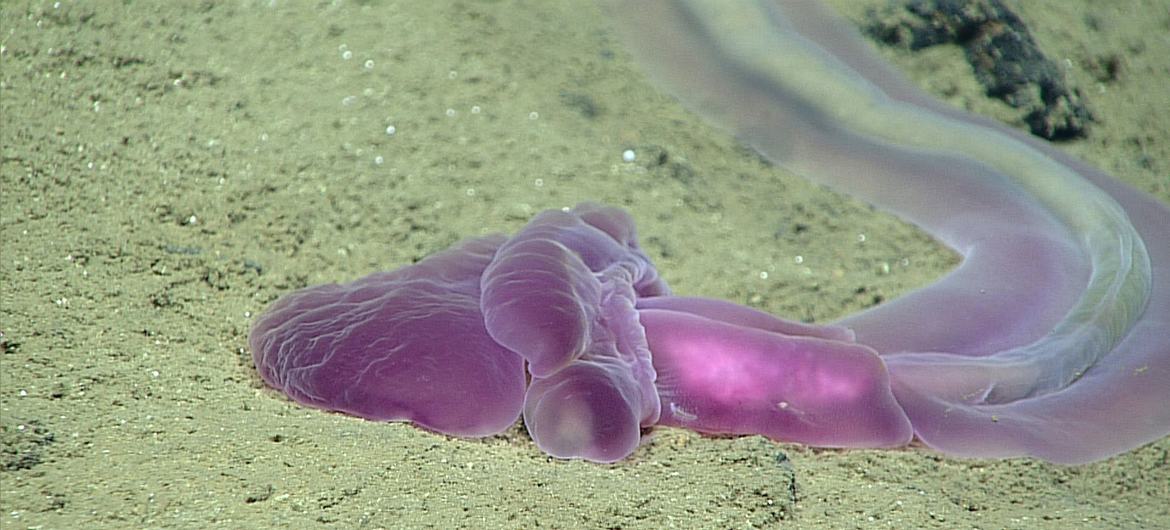
Acorn worms were one of the many types of fauna observed in the deep-sea around the North Marianas Islands in the Pacific Ocean.

The world’s new deep-sea biobank

ISA has also just begun filling its new biobank, launched in June on the margins of the UN Ocean Conference in Nice, France. The Deep-Sea Biobank Initiative (DBI) aims to enhance access to deep-sea biological samples and genetic data collected from the international seabed area.

Designed to promote deep-sea research and inclusive scientific collaboration, particularly for developing States, the initiative will establish a global repository of biological samples and develop standard operating procedures to enhance data quality, sharing and use by stakeholders.

“The DBI is ISA’s response to a growing need to advance research, share data, build capacity and facilitate access to deep-sea knowledge, particularly for developing States,” said the authority’s chief Carvalho. “We aim to create standardised and equitable pathways for scientific collaboration, empowering countries and institutions to explore, understand and protect the ocean’s most remote ecosystems.”

The International Seabed Authority has emerged as a central institution of global ocean architecture, charting a course towards responsible and sustainable use.

‘DeepData’ diving

The wealth of data and information ISA has collected has been critical to shaping environmental management plans. Every data byte collected through deep-sea exploration adds critical new information about life in the ocean and assists with decision making.

In launching the DeepData database in 2019, ISA made publicly available for the first time the biggest and most complete global repository of environmental data and information on the deep-sea area.

Exactly how much data has been collected? As of May 2023, DeepData contained over 10 terabytes, roughly equivalent to 6.9 million Instagram uploads. Widely used around the world, it had about 2.4 million hits from visitors in 2022 alone and more than 160 citations in scientific publications.

Learn more about ISA here.

  • The International Seabed Authority (ISA) has 170 members
  • ISA is an autonomous intergovernmental organization established by the UN
  • Members meet annually to address pressing issues
  • The 30th session concludes with the ISA assembly meeting from 21 to 25 July in Kingston, Jamaica

UNHCR forced to make deep cuts, despite rising needs worldwide

This will entail cutting just under half of all senior positions at the agency’s Geneva headquarters and regional bureaux. 

Around 3,500 permanent staff posts have been discontinued, hundreds of temporary staff positions have been terminated, and some offices have been downsized or closed worldwide.

According to the report, decisions on where to cut costs were guided by the priority to maintain operations in regions with the most urgent refugee needs.

Financial realities

The announcement follows a warning in March from UNHCR that severe funding cuts were putting millions of refugee lives at risk, with immediate and devastating consequences.

The agency anticipates it will end the year with available funding at roughly the same level as a decade ago – despite the number of refugees forced to flee having nearly doubled in that time to over 122 million.

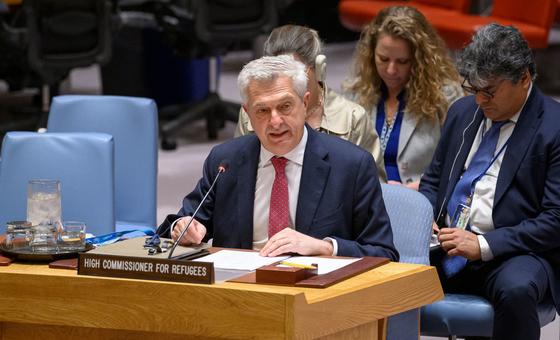
“In light of difficult financial realities, UNHCR is compelled to reduce the overall scale of its operations,” said Filippo Grandi, the United Nations High Commissioner for Refugees. “We will focus our efforts on activities that have the greatest impact for refugees, supported by streamlined headquarters and regional bureau structures.” 

‘Unshakeable’ commitment to refugees

Despite the prioritisation of refugee needs, key programmes – including financial assistance to vulnerable families, health, education, and water and sanitation – have been significantly impacted. 

In response, UNHCR is coordinating with UN partners, aid groups and host countries to mitigate the impact on those who rely on its support by streamlining operations, exploring new models and utilising technology to enhance efficiency.

“Even as we face painful cuts and lose so many dedicated colleagues, our commitment to refugees remains unshakeable,” said Mr. Grandi. 

“Although resources are scarcer and our capacity to deliver is reduced, we will continue to work hard to respond to emergencies, protect the rights of refugees and pursue solutions.”  

Source link