South Sudan: UN forced to suspend food aid after ‘unacceptable’ attacks on convoy

As fighting intensifies there between opposition forces and national troops, there are reports of airstrikes and daily civilian casualties.

UN agencies warn that worsening insecurity is blocking lifesaving aid, while hunger projections deteriorate and cholera treatment centres struggle to cope with an influx of newly displaced people.

The renewed violence comes as South Sudan’s 2018 Revitalised Peace Agreement continue to fall apart amid stalled reforms, rising political tensions ahead of planned elections in 2026, and mounting pressure from more than one million refugees fleeing the brutal war in neighbouring Sudan.

Click here to read a summary of threats to South Sudan’s peace process and the converging political, security and humanitarian crises, and their impact on civilians.

Humanitarian statistics for South Sudan as of December 2025.

WFP convoy attacked, activities suspended

The UN World Food Programme (WFP) on Wednesday suspended all activities in Baliet County, Upper Nile state, following repeated attacks on a convoy carrying humanitarian assistance down river.

Between last Friday and Sunday, a 12-boat convoy transporting more than 1,500 metric tonnes of food and other relief items was attacked several times by armed youth.

The cargo was later looted in multiple locations, despite receiving prior security assurances for the safe passage of aid.

WFP said the suspension would remain in place until the safety of its staff, partners and contractors is assured and authorities take immediate steps to recover the stolen supplies.

Attacks on humanitarians are never acceptable,” WFP said, urging all parties to respect humanitarian workers and safeguard the facilities and resources essential for delivering aid.

Aid access under threat

The convoy attack reflects a broader collapse in humanitarian access, particularly in Jonglei state, where renewed fighting since late December has intensified clashes between the South Sudan People’s Defense Forces and the South Sudan People’s Liberation Army-in-Opposition across multiple counties.

According to the UN relief coordination office, OCHA, fighting and airstrikes have displaced around 280,000 people since late December, including more than 235,000 across Jonglei alone. Many have fled to areas with minimal water, sanitation and health services, sharply increasing the risk of disease outbreaks.

Humanitarian partners report that at least seven aid facilities have been looted or damaged in Jonglei, with assets confiscated and aid workers intimidated, forcing the suspension of operations in several locations.

South Sudan: Humanitarian snapshot (December 2025).

Hospitals hit, services halted

The medical charity Médecins Sans Frontières (MSF) reported that Government forces bombarded its hospital in Lankien, Jonglei State, overnight on 3 February, destroying the main warehouse and most critical medical supplies. One MSF staff member suffered minor injuries.

In a separate incident the same day, MSF’s health facility in Pieri was looted by unknown assailants, forcing staff to flee. The NGO said the violence had left around 250,000 people without healthcare, as the organization had been the only provider in the area.

Hunger and disease risks rising

UN agencies warn that escalating conflict is expected to significantly worsen food insecurity, particularly in northern Jonglei and Upper Nile states.

Projections indicate that the number of counties facing emergency-level hunger (IPC Phase 4) between February and May will more than double, with some households at risk of slipping into catastrophic conditions (IPC Phase 5).

Insecurity has already forced WFP to pause plans to pre-position 12,000 metric tons of food ahead of the rainy season in Jonglei, raising concerns that access will further deteriorate once roads become impassable.

Since September 2024, South Sudan has recorded nearly 98,000 cholera cases and more than 1,600 deaths, with Jonglei among the worst affected, overwhelming treatment centres.

Source link

UN urges renewed solidarity eight years after forced exodus of Rohingya

More than 700,000 of them fled to neighbouring Bangladesh after armed attacks by a militant group against Myanmar security forces sparked a brutal military crackdown that began on 25 August 2017.

They joined thousands of others who had escaped earlier waves of violence and discrimination now living in refugee camps just across the border in the Cox’s Bazar district.

Violence and funding cuts

In a statement to mark the anniversary, UN Spokesman Stéphane Dujarric noted that the Rohingya people both in and outside Myanmar are facing a further deterioration of their already dire circumstances.

“In Rakhine State, Rohingya and other civilians are caught in the crossfire between the Myanmar military and the Arakan Army and subjected to forced recruitment, human rights violations and other abuse,” he said.

The ongoing violence has forced more Rohingya to flee, including to Bangladesh which is already hosting more than one million refugees from Myanmar. 

A military coup forced Myanmar’s democratically elected Government from power in 2021, fuelling armed insurgencies throughout Myanmar following a brutal military crackdown on protests.

Mr. Dujarric said reports of pushbacks, removals and deportations across the region raise serious concerns over potential violations of the principle of non-refoulement and shrinking asylum space.

This is happening amid funding cuts which are severely curtailing education, food assistance, healthcare, livelihood opportunities and protection services.

Protect all civilians

The Spokesman said UN Secretary-General António Guterres has repeated his call for the protection of all civilians in accordance with applicable obligations under international law. 

The Secretary-General also recalled his visit to Cox’s Bazar, Bangladesh, where he witnessed the resilience of Rohingya communities.

He stressed the urgent need for strengthened international solidarity and increased support, in parallel to efforts toward a comprehensive political solution that meaningfully includes the Rohingya and addresses their displacement and the root causes of the protracted crisis.

Hopes for upcoming conference

“The Secretary-General is hopeful that the 30 September High–level Conference on Rohingya and other minorities in New York, as mandated by the United Nations General Assembly, will draw renewed international attention to the urgency of finding durable solutions,” said Mr. Dujarric.

He added that the Special Envoy of the Secretary-General on Myanmar continues to engage all stakeholders towards ending the brutal civil conflict and supporting a viable Myanmar-led political process.

This should also lead to the voluntary, safe, dignified, and sustainable return of the Rohingya to Myanmar. 

Source link

UNHCR urges Pakistan to stop forced returns of Afghan refugees

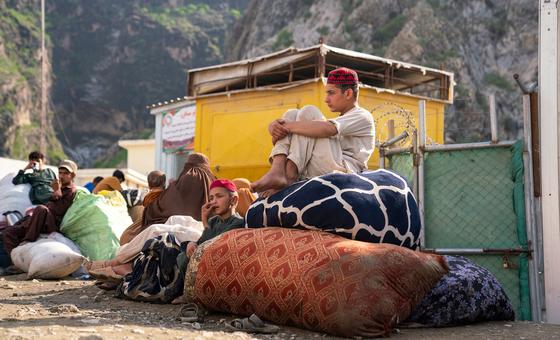
He expressed particular concern over the plight of women and girls sent back to Afghanistan, which has been under Taliban rule for four years.

On 31 July, Pakistan confirmed that Afghan refugees would be deported under an ongoing ‘Illegal Foreigners Repatriation Plan’. 

UNHCR has received reports of arrests and detention of Afghans across the country, including PoR cardholders.

Violation of non-return principle

“We acknowledge and appreciate Pakistan’s generosity in hosting refugees for over 40 years amid its own challenges,” said Mr. Baloch.

“However, given that those holding PoR cards have been recognized as refugees for decades, their forced return is contrary to Pakistan’s long-standing humanitarian approach to this group and would constitute a violation of the principle of non-refoulement.”

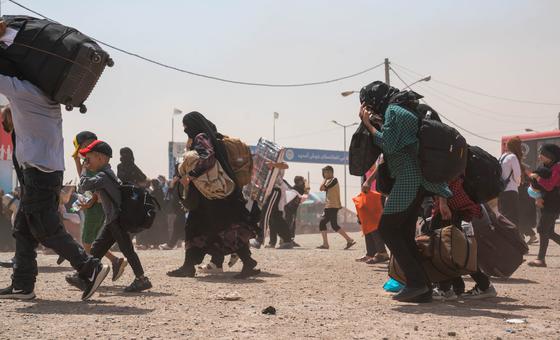
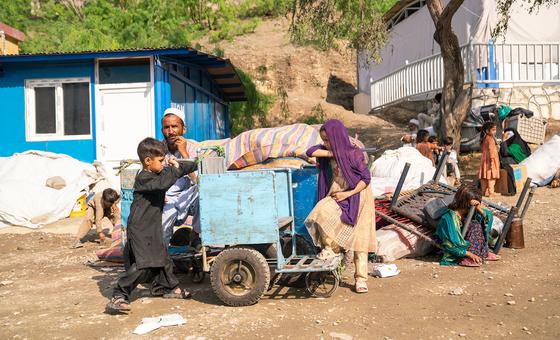
The situation is unfolding amid a mass return of Afghans from neighbouring countries, including Iran.  

This year, over 2.1 million have already returned or been forced to return to Afghanistan, including 352,000 from Pakistan. 

Listen to our interview with Arafat Jamal, UNHCR Representative in Afghanistan, on returnees coming from Iran.

Concern for women and girls 

UNHCR remains particularly concerned about women and girls forced to return to a country where their human rights are at risk, as well as other groups who might be endangered,” said Mr. Baloch. 

He urged the authorities to ensure that any returns are voluntary, safe and dignified.  

Moreover, UNHCR has continued to seek an extension of the validity of PoR cards, which expired at the end of June, and welcomed the additional one-month “grace period” granted by Pakistan. 

UNHCR strongly urges the Government of Pakistan to apply measures to exempt Afghans with continued international protection needs from involuntary return,” he said.

“We also appeal to Pakistan’s established goodwill to allow legal stay for Afghans with medical needs, those currently pursuing higher education, or in mixed marriages.”

Far-reaching impact

He said the large-scale return of Afghans from neighbouring countries has put immense pressure on basic services, housing and livelihoods, as well as host communities.  

The general policy is worsening an already dire humanitarian crisis in Afghanistan. According to UN aid coordination office OCHA, almost half the population – nearly 23 million people – will require humanitarian assistance this year to survive.

Mr. Baloch warned that “mass and hasty returns significantly heighten protection needs, and risk instability in Afghanistan and the region, including onward movement.” 

Source link

Gaza: ‘No one should ever be forced to risk their life to find food,’ says UN humanitarian agency

The months-long deprivation of most life-sustaining basic goods has led to a deepening of the crisis.  More than 100 people were killed, and hundreds of others injured, along food convoy routes and near Israeli-militarised distribution hubs in the past two days alone.  

As one in three people currently going days without food, OCHA reiterated that no one should ever be forced to risk their life to get something to eat.  

Ted Chaiban, Deputy Director of UN children’s agency UNICEF, who is fresh from a visit to Gaza, noted that “the marks of deep suffering and hunger were visible on the face of families and children.”

He was briefing journalists in New York about his five-day visit in Gaza, the West Bank and Israel. 

Grave risk of famine

“Gaza now faces a grave risk of famine,” he said, briefing journalists in New York about his five-day mission to the enclave, the West Bank and Israel.

“This is something that has been building up, but we now have two indicators that have exceeded the famine threshold.”  

The crisis can only be addressed through unrestricted flow of aid into Gaza, with commercial supplies also allowed to enter to help address people’s needs.  

Nearly a week since the Israeli announcement to allow the scale up of aid and tactical pauses to allow safe passage of UN convoys, OCHA reported that the aid that has entered Gaza so far remains insufficient, while UN convoys continue to face impediments and danger along the routes provided by the Israeli authorities.  

“Civilians must always be protected and community-level aid delivery at scale must be facilitated, not obstructed,” said OCHA.  

Starved, bombed and displaced  

“The children I met are not victims of a natural disaster. They are being starved, bombed, and displaced,” Mr. Chaiban said.  He noted that more than 18,000 boys and girls have been killed since the beginning of the war, “an average of 28 children a day, the size of a classroom, gone.”  

While in Gaza, Mr. Chaiban met with the families of the 10 children killed and 19 injured by an Israeli airstrike as they were queuing for food with their mothers and fathers at a UNICEF-supported nutrition clinic in Deir Al-Balah.  

Discussion with Israeli authorities

Engaging with Israeli authorities in Jerusalem and Tel Aviv, UNICEF “pressed for a review of [Israel’s] military rules of engagement to protect civilians and children,” Mr. Chaiban said.

Simultaneously, UNICEF also called for more humanitarian aid and commercial traffic to come in to stabilise the situation and reduce the desperation of the population.

“Children should not be getting killed waiting in line at a nutrition centre or collecting water, and people should not be so desperate as to have to rush a convoy,” he said.  

“What is happening on the ground is inhumane.” Mr. Chaiban said, hoping for a sustained ceasefire and a political way forward.  


Source link

On brink of famine, Gazans forced to scour dirt for food

Without fuel, many basic facilities cannot function, from water treatment plants to medical infrastructure.

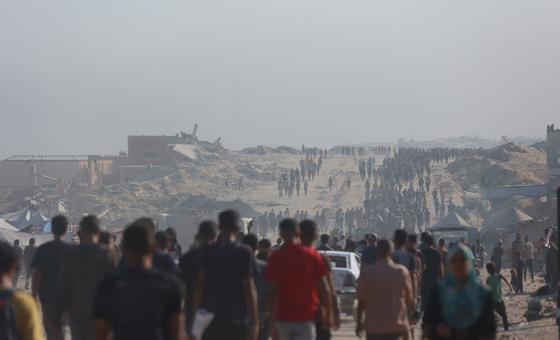
Meanwhile, Gazans now on the brink of famine have been reduced to taking desperate measures in their search for food, scouring the roads taken by aid convoys, UN aid worker Olga Cherevko told UN News.

“While we were driving, I saw an elderly man on the side of the road completely alone, kneeling down, and he was picking up handfuls of lentils that had spilled on the ground from one of the previous convoys that had been passing,” she said.

“He was picking them up with his hands and just putting them into his t-shirt as this is obviously the only option he has right now to find food because this is how desperate the situation has become.”

Desperate actions

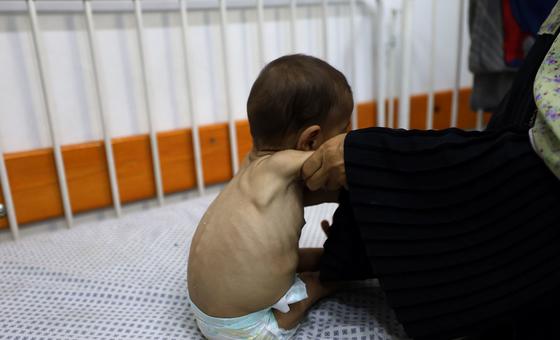
The latest reports from Gaza indicate that mothers who are unable to breastfeed because they are not eating enough now feed their babies ground chickpeas, bread and rice, which are not suitable for infants.

In a social media post, the UN Children’s Fund (UNICEF) stressed that “this is a condition that we can prevent,” calling for increased humanitarian access. 

Separately, the UN World Health Organization (WHOemphasised that “the health needs in Gaza are immense. A continuous flow of medical supplies is critical.”

Meanwhile, health workers on Wednesday reported that at least 50 Gazans were killed and 400 others injured while waiting for food near Zikim crossing in the north.

Ms. Cherevko, who works with the UN aid coordination office, OCHA, explained that her mission to Kerem Shalom on Thursday morning had been delayed at a “holding point” for two hours before being allowed to proceed to the crossing point separating Gaza from Israel.

‘Tactical pauses’ are not enough

Although the fuel supplies are welcome, they are far from enough, she insisted.

“We need hundreds of thousands of litres of fuel to be entering every day so that we can power even the most basic of our facilities to power, water, sanitation, healthcare, emergency telecommunications and other critical facilities effectively,” she said.

The announcement of daytime military pauses by Israel last weekend appears to have slightly reduced the amount of time aid convoys now wait for permission to proceed, the OCHA worker noted.

There has also been a “slight reduction” in security incidents involving Gazans taking food from UN trucks, she said.

In its latest update on the emergency, OCHA said that four days since the start of tactical pauses declared by Israel, “we are still seeing casualties among those seeking aid and more deaths due to hunger and malnutrition…Unilateral tactical pauses alone do not allow for the continuous flow of supplies required to meet immense needs levels in Gaza.”  

Source link

Torture, threats and arbitrary arrests: UN warns of ‘serious abuses’ against Afghans forced to return

These abuses include threats, cases of torture, mistreatment and arbitrary arrest and detention, according to the UN Assistance Mission in Afghanistan (UNAMA) and the Office of the UN High Commissioner for Human Rights (OHCHR).

The report said these violations were committed against Afghans “based on their profile” and targeted women, media workers and civil society members as well as individuals affiliated with the former government that fell in 2021 and its security forces, despite the Taliban’s claims that such individuals benefit from an amnesty.

No one should be returned to a country where they are at risk of being persecuted because of their identity or personal history,” said Volker Türk, the UN High Commissioner for Human Rights.

“In Afghanistan, this situation is even more pronounced for women and girls, who are subjected to a series of measures that amount to persecution solely on the basis of their gender.”

Since 2023 and the start of large-scale deportation campaigns launched by Iran and Pakistan, millions of Afghans have returned to their country. In 2025 alone, more than 1.8 million people have returned to Afghanistan, 1.5 million of them from Iran.

Women under house arrest

The UN refugee agency, UNHCR, recently estimated that the total could reach three million by the end of the year, returning to a country facing a severe humanitarian crisis.

The situation of women forcibly returned is particularly dire. A former television journalist, who left the country after the Taliban’s takeover in August 2021, described how, after being involuntarily returned to Afghanistan, she saw her prospects vanish.

“I am very worried for my personal safety and feel immense frustration with the current situation imposed on women in [my province]. I can unequivocally say that I am effectively under house arrest. There are no job opportunities, no freedom of movement and no access to education – whether to learn or to teach – for women and girls,” she testified.

Many people are also forced to live in hiding since returning to Afghanistan due to real or feared threats from the de facto authorities. This is the case for individuals affiliated with the former government and its security forces, who have had to go into hiding for fear of reprisals, despite the public amnesty announced by the de facto authorities.

Living in hiding

A former official described how, after returning in 2023, he was detained for two nights in a house where he was severely tortured, beaten with sticks, cables and wood, subjected to water torture and faced a mock execution.

Other refugees returned from Iran must frequently change locations to avoid being identified, such as one former judge.

I try to stay hidden because I know that the prisoners who were detained because of my decisions are now senior government officials and are still looking for me. If they find me, I’m sure they’ll kill me. They already threatened me when I was a judge,” they said.

Faced with these serious abuses, the UN is urging States not to return anyone to Afghanistan who faces a real risk of serious human rights violations.

Member States should expand resettlement opportunities for at-risk Afghans and ensure their protection, giving priority to those most likely to suffer human rights violations if returned to Afghanistan, including women and girls, individuals affiliated with the former government and security forces, media professionals, civil society activists and human rights defenders,” the report said.

Source link

UN rights office sounds the alarm over forced displacement in the West Bank

Israeli authorities have stepped up measures to transfer large numbers of people from long-standing Palestinian towns and communities, according to OHCHR’s office in the Occupied Palestinian Territory.

On 18 June, the High Planning Council in the Israeli Civil Administration issued a directive to reject all building and planning permits submitted by Palestinians in Masafer Yatta, South Hebron Hills, in the area referred by the Israeli authorities as Firing Zone 918.

The decision was based on the grounds that the Israeli army needs the area for “military training,” the rights office said.

Demolitions on the rise

In recent months, Israel has dramatically ramped up home demolitions, as well as the arbitrary arrest and ill-treatment of Palestinians and human rights defenders. This is happening alongside intensifying movement restrictions in and around Masafer Yatta, to force Palestinians out, the office noted.

At the same time, Israeli settlers from nearby outposts have carried out daily attacks and harassment of Palestinians, including older people, women and children, to force them to leave.

“The recent directive by the Israeli Civil Administration effectively paves the way for the Israeli army to demolish existing structures in the area and expel the approximately 1,200 Palestinians, who have been living there for decades,” OHCHR said.

“This would amount to forcible transfer, which is a war crime. It could also amount to a crime against humanity if committed as part of a widespread or systematic attack directed against any civilian population, with knowledge of the attack.”

Some 6,463 Palestinians have been forcibly displaced following the demolition of their homes by Israel between 7 October 2023 and 31 May 2025, according to the UN humanitarian affairs office, OCHA,

This figure does not include the approximately 40,000 Palestinians displaced from three refugee camps in Jenin and Tulkarem as a result of intensive Israeli operations in the northern West Bank since January.

During the same period, over 2,200 Palestinians were forcibly displaced by settler attacks and access restrictions.

More communities at risk

OHCHR added that countless other Palestinian communities face the same fate of forced displacement. It said that on 10 June, the Jerusalem municipality reportedly issued demolition notices for the entire village of An Nu’man, home to 150 people. 

The village, which is located near Bethlehem, was cut off from the rest of the West Bank by the construction of the separation wall and incorporated into Israel’s unilaterally declared boundaries of the Jerusalem municipality. Most Palestinians were not provided with Jerusalem identification cards, effectively rendering them unable to access services in either East Jerusalem or the rest of the West Bank. 

“These demolition notices appear to be another step by Israel to compound the coercive environment and forcibly transfer Palestinians from the village and consolidate the annexation of this land,” the office said.

Evictions in East Jerusalem

Meanwhile, Palestinians in occupied East Jerusalem also face the ongoing threat of forced eviction from their homes and lands. 

OHCHR said that on 16 and 22 June, the Israeli Supreme Court endorsed the eviction of five Palestinian families, 37 people, from their homes in the Batn El Hawa neighbourhood of Silwan based on discriminatory laws that permit Jewish individuals to reclaim property lost in the 1948 war, while denying Palestinians the same rights. 

Additionally, the Israel Land Authority issued eviction notices on 11 June for residencies in Umm Tuba.  The 150 Palestinians affected were informed that the land was registered to the Jewish National Fund under the “settlement of land title”. 

“These evictions form part of a concerted campaign by the Israeli State and settler organisations, which target Palestinian neighbourhoods to seize Palestinian homes and expand Jewish settlements,” OHCHR said.

The office stressed that these acts violate international law, which prohibits the confiscation of private property in occupied territory, as highlighted by the advisory opinion of the International Court of Justice (ICJ) last July. 

Source link

UNHCR forced to make deep cuts, despite rising needs worldwide

This will entail cutting just under half of all senior positions at the agency’s Geneva headquarters and regional bureaux. 

Around 3,500 permanent staff posts have been discontinued, hundreds of temporary staff positions have been terminated, and some offices have been downsized or closed worldwide.

According to the report, decisions on where to cut costs were guided by the priority to maintain operations in regions with the most urgent refugee needs.

Financial realities

The announcement follows a warning in March from UNHCR that severe funding cuts were putting millions of refugee lives at risk, with immediate and devastating consequences.

The agency anticipates it will end the year with available funding at roughly the same level as a decade ago – despite the number of refugees forced to flee having nearly doubled in that time to over 122 million.

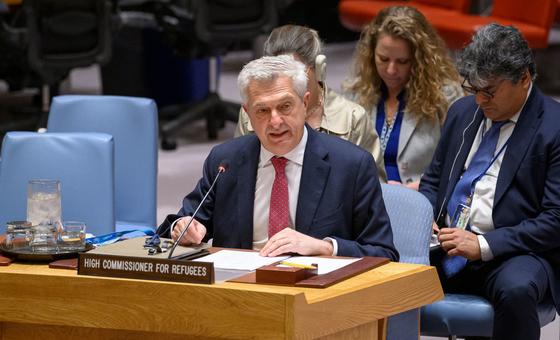
“In light of difficult financial realities, UNHCR is compelled to reduce the overall scale of its operations,” said Filippo Grandi, the United Nations High Commissioner for Refugees. “We will focus our efforts on activities that have the greatest impact for refugees, supported by streamlined headquarters and regional bureau structures.” 

‘Unshakeable’ commitment to refugees

Despite the prioritisation of refugee needs, key programmes – including financial assistance to vulnerable families, health, education, and water and sanitation – have been significantly impacted. 

In response, UNHCR is coordinating with UN partners, aid groups and host countries to mitigate the impact on those who rely on its support by streamlining operations, exploring new models and utilising technology to enhance efficiency.

“Even as we face painful cuts and lose so many dedicated colleagues, our commitment to refugees remains unshakeable,” said Mr. Grandi. 

“Although resources are scarcer and our capacity to deliver is reduced, we will continue to work hard to respond to emergencies, protect the rights of refugees and pursue solutions.”  

Source link

Hundreds of thousands of Afghans forced back into danger, says UNHCR

According to the UN refugee agency (UNHCR), over 250,000 Afghans returned in April alone – among them, 96,000 who were forcibly deported. The agency voiced particular alarm over the fate of women and girls, who face increasing repression under Taliban rule.

The large-scale returns are putting even greater pressure on already stretched humanitarian resources and worsening the plight of millions struggling to survive.

“They face increasing restrictions in terms of access to employment, education and freedom of movement,” said agency spokesperson Babar Baloch.

We keep telling the governments of Iran and Pakistan that returns to Afghanistan must be voluntary, safe and dignified,” he continued.

Aside from women and girls, forcibly returned human rights activists and journalists as well as ethnic or religious minority groups are among those who face the biggest dangers back in Afghanistan.

Massive needs

These risks are further compounded by rising needs, where half the population relies on humanitarian assistance. Since 2023, more than 3.5 million people have returned to the country.

Such high numbers of returnees only increase the risk of further internal displacement and attempts to reach Europe, Mr. Baloch noted.

UNHCR is seeking $75 billion to assist returnees and help stabilize the region. Afghans represented the largest group of irregular arrivals from Asia Pacific to Europe in 2024, at more than four in 10.

Additional funds will allow UNHCR in Afghanistan to provide returnees with urgent assistance including access to services, livelihoods, reintegration services, travel and financial assistance – “with emphasis on reaching women and girls,” Mr. Baloch explained.

The agency also plans to address immediate protection needs and enhance reception capacity.

Source link