Despite Taliban ban, over 90 per cent of Afghans support girls’ right to learn

Four years after the Taliban takeover in August 2021, the scale and severity of the women’s rights crisis continues to intensify. Afghanistan is the only country in the world where girls are prohibited to attend secondary school.

Yet, in a nationwide door-to-door survey of over 2,000 Afghans, more than nine in 10 supported girls’ right to learn.

It is clear: Despite the existing bans, the Afghan people want their daughters to exercise their right to education,” said Sofia Calltorp, UN Women’s Chief of Humanitarian Action, at a press conference in Geneva on Friday.

‘Education is the difference’

A protracted humanitarian crisis continues in Afghanistan coupled with systemic and institutionalised restrictions on women and girls’ rights.

Ms. Calltorp insisted that it is more important than ever to continue investing in Afghan women’s community organizations, which offer healthcare, mental health support and a chance to connect.

In a country where half the population lives in poverty, education is the difference between despair and possibility,” she said, voicing their yearning to be back in a school environment.

This is almost always the first thing girls tell us – they are desperate to learn and just want the chance to gain an education,” said UN Women’s Special Representative in Afghanistan, Susan Ferguson.

A year after the introduction of a stricter so-called morality law codified a sweeping set of restrictions, the new alert highlights the deepening normalisation of the women’s rights crisis.

NGO work ban

The Taliban’s ban on women working for NGOs – announced nearly three years ago – continues to have a devastating impact, said UN Women.

More than half of NGOs in Afghanistan report that it has affected their ability to reach women and girls with vital services.

A UN Women survey conducted in July and August found that 97 per cent of Afghan women said it had negatively impacted them.

Source link

World News in Brief: Cholera strikes Sudan and beyond, humanitarian needs grown for returning Afghans, rising insecurity in DR Congo

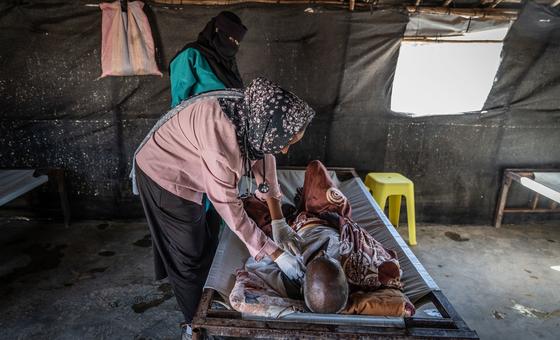
So far this year, cholera has killed more than 4,300 people across 31 countries. These figures are underestimates and there is particular concern for those impacted by war in Sudan, Chad, the Democratic Republic of the Congo, South Sudan and Yemen.  

In Sudan, the disease has already claimed over 1,000 lives since 1 January. It has reached every state in the country, one year after the outbreak started, according to WHO.

Cases rise in war-torn Darfur

With the sub-Saharan rainy season now underway, the UN agency is worried about a spike in the waterborne disease, linked to the huge numbers of people fleeing ongoing violence.

“While cases have plateaued or decreased in some areas, including Khartoum, they are rising in the Darfur region and neighboring Chad. In Tawila, North Darfur,” said WHO’s Kathryn Alberti.

Refugees have quadrupled the population from close to 200,000 to over 800,000, causing immense strain on water and sanitation systems, she added.

“People have as little as three litres of water daily and this is for cooking, washing, cleaning and drinking.”  

To respond to the problem, WHO and partners have set up task forces, deployed rapid response teams for surveillance and stockpiled essential cholera supplies in Darfur – although “large parts” of Darfur and Kordofan remain unreachable.

Humanitarian needs keep growing in Afghanistan

Four years after the de-facto Taliban regime took over Afghanistan, more than half of the population needs vital aid, according to the UN humanitarian office (OCHA).

Women and girls are particularly vulnerable due to the increasingly restrictive policies that Taliban authorities have imposed, excluding them from education, the workforce and public life.

“Humanitarian aid is a lifeline for women and girls who are otherwise unable to access essential services and assistance,” said UN Spokesperson Stéphane Dujarric, at Friday’s daily briefing in New York.  

1.7 million returnees 

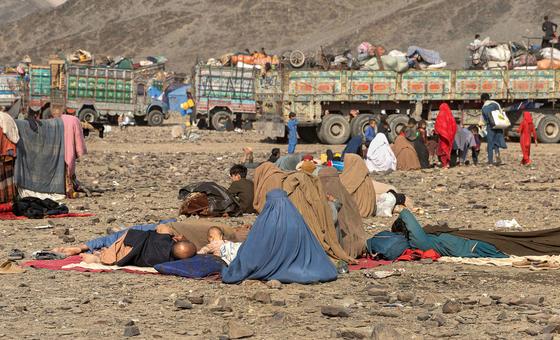
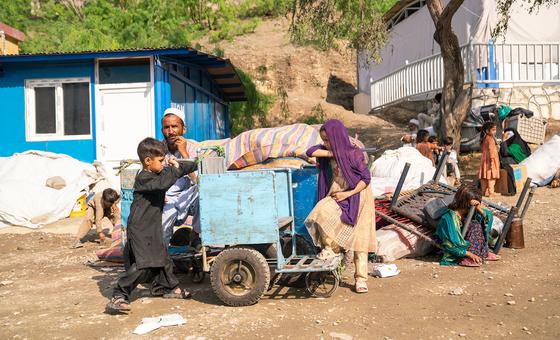
OCHA also warned that the return of 1.7 million Afghan citizens from Iran and Pakistan this year has further increased humanitarian needs, as most have limited community ties and are struggling to find shelter and ways of making a living.

To support the response of the under-resourced host communities, the UN Central Emergency Response Fund (CERF) recently released $10 million, and additional funding is in the pipeline from the Afghanistan Humanitarian Fund.

But more resources are urgently needed. This year’s Humanitarian Needs and Response Plan in Afghanistan is just 25 per cent funded, with $624 million received of the $2.4 billion that are needed, and another influx of refugees is expected ahead of Pakistan’s 1 September deadline for Afghan Proof of Registration cardholders to exit.

Insecurity also rising in DR Congo’s restive east

In the war-torn eastern parts Democratic Republic of the Congo, OCHA says insecurity is on the rise in Djigu territory, in Ituri province.

Clashes between multiple armed groups and the Congolese armed forces in several areas has resulted in nearly 50 civilian deaths and more than 30 injuries in the past month alone there.

In the same period, violence and insecurity have led to the displacement of more than 80,000 people in Djugu.

In the attacks, homes were looted or burned, and those who fled are now sheltering in schools, churches and other public buildings.

Targeted killings

There have been three targeted attacks on sites hosting internally displaced people.

These clashes have severely limited humanitarian access, depriving around 250,000 people of essential services. In the Nizi health district in the Ituri territory, nine out of 12 health facilities are now out of service.

The UN and its humanitarian partners are ready to respond, but they need unimpeded, safe access to do so.

“All parties must take urgent measures to protect civilians and facilitate humanitarian access. Civilians must be protected at all times, in line with international law,” stressed Mr. Dujarric on Friday. 

Source link

Torture, threats and arbitrary arrests: UN warns of ‘serious abuses’ against Afghans forced to return

These abuses include threats, cases of torture, mistreatment and arbitrary arrest and detention, according to the UN Assistance Mission in Afghanistan (UNAMA) and the Office of the UN High Commissioner for Human Rights (OHCHR).

The report said these violations were committed against Afghans “based on their profile” and targeted women, media workers and civil society members as well as individuals affiliated with the former government that fell in 2021 and its security forces, despite the Taliban’s claims that such individuals benefit from an amnesty.

No one should be returned to a country where they are at risk of being persecuted because of their identity or personal history,” said Volker Türk, the UN High Commissioner for Human Rights.

“In Afghanistan, this situation is even more pronounced for women and girls, who are subjected to a series of measures that amount to persecution solely on the basis of their gender.”

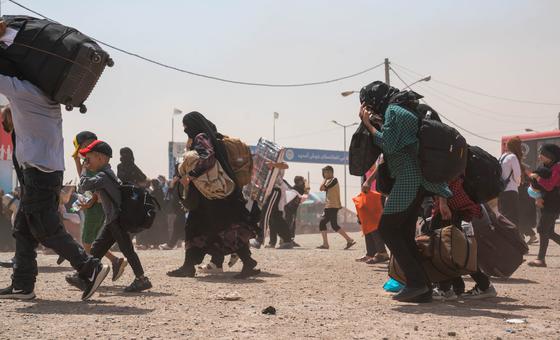
Since 2023 and the start of large-scale deportation campaigns launched by Iran and Pakistan, millions of Afghans have returned to their country. In 2025 alone, more than 1.8 million people have returned to Afghanistan, 1.5 million of them from Iran.

Women under house arrest

The UN refugee agency, UNHCR, recently estimated that the total could reach three million by the end of the year, returning to a country facing a severe humanitarian crisis.

The situation of women forcibly returned is particularly dire. A former television journalist, who left the country after the Taliban’s takeover in August 2021, described how, after being involuntarily returned to Afghanistan, she saw her prospects vanish.

“I am very worried for my personal safety and feel immense frustration with the current situation imposed on women in [my province]. I can unequivocally say that I am effectively under house arrest. There are no job opportunities, no freedom of movement and no access to education – whether to learn or to teach – for women and girls,” she testified.

Many people are also forced to live in hiding since returning to Afghanistan due to real or feared threats from the de facto authorities. This is the case for individuals affiliated with the former government and its security forces, who have had to go into hiding for fear of reprisals, despite the public amnesty announced by the de facto authorities.

Living in hiding

A former official described how, after returning in 2023, he was detained for two nights in a house where he was severely tortured, beaten with sticks, cables and wood, subjected to water torture and faced a mock execution.

Other refugees returned from Iran must frequently change locations to avoid being identified, such as one former judge.

I try to stay hidden because I know that the prisoners who were detained because of my decisions are now senior government officials and are still looking for me. If they find me, I’m sure they’ll kill me. They already threatened me when I was a judge,” they said.

Faced with these serious abuses, the UN is urging States not to return anyone to Afghanistan who faces a real risk of serious human rights violations.

Member States should expand resettlement opportunities for at-risk Afghans and ensure their protection, giving priority to those most likely to suffer human rights violations if returned to Afghanistan, including women and girls, individuals affiliated with the former government and security forces, media professionals, civil society activists and human rights defenders,” the report said.

Source link

Hundreds of thousands of Afghans forced back into danger, says UNHCR

According to the UN refugee agency (UNHCR), over 250,000 Afghans returned in April alone – among them, 96,000 who were forcibly deported. The agency voiced particular alarm over the fate of women and girls, who face increasing repression under Taliban rule.

The large-scale returns are putting even greater pressure on already stretched humanitarian resources and worsening the plight of millions struggling to survive.

“They face increasing restrictions in terms of access to employment, education and freedom of movement,” said agency spokesperson Babar Baloch.

We keep telling the governments of Iran and Pakistan that returns to Afghanistan must be voluntary, safe and dignified,” he continued.

Aside from women and girls, forcibly returned human rights activists and journalists as well as ethnic or religious minority groups are among those who face the biggest dangers back in Afghanistan.

Massive needs

These risks are further compounded by rising needs, where half the population relies on humanitarian assistance. Since 2023, more than 3.5 million people have returned to the country.

Such high numbers of returnees only increase the risk of further internal displacement and attempts to reach Europe, Mr. Baloch noted.

UNHCR is seeking $75 billion to assist returnees and help stabilize the region. Afghans represented the largest group of irregular arrivals from Asia Pacific to Europe in 2024, at more than four in 10.

Additional funds will allow UNHCR in Afghanistan to provide returnees with urgent assistance including access to services, livelihoods, reintegration services, travel and financial assistance – “with emphasis on reaching women and girls,” Mr. Baloch explained.

The agency also plans to address immediate protection needs and enhance reception capacity.

Source link