Afghanistan: Lifesaving services cut as Taliban bars women aid workers

“All of us at the United Nations are suffering from a reinforcement of the ban on females working with us…We are simply unable to operate without females,” said Arafat Jamal, UN refugee agency (UNHCR) Representative to Afghanistan, a day after agencies warned that the de facto authorities’ measures have impacted life-saving assistance for hundreds of thousands of people.

Last Sunday, de facto Afghan security forces prevented national female staff members and contractors of the UN from entering the global body’s compounds in Kabul, the UN Mission in the country, UNAMA, said in a statement on Thursday.

Centres closed

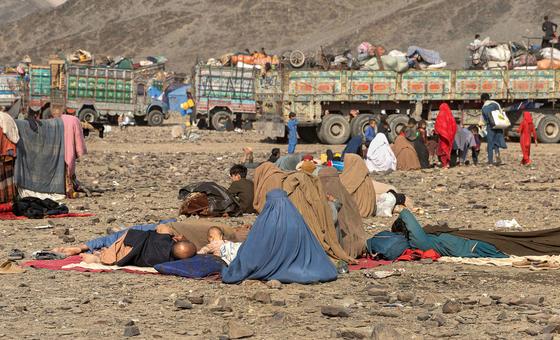
And in light of the restrictions, on Tuesday, UNHCR temporarily closed its cash and support centres for vulnerable Afghans, both at the border and in areas where so many people have been returning from Iran, Pakistan and elsewhere since the start of the year.

The registration process involves providing biometric data, along with screening and interviews – work that would be “entirely impossible without Afghan female workers”, the UNHCR official stressed, noting that more than one in two returnees are women.

This was an operational decision,” Mr. Jamal continued. It is not a decision taken to punish anyone or to make a statement, but simply it demonstrates that we cannot work without female workers in certain circumstances.”

Since the start of the year, some 2.6 million Afghans have returned from neighbouring countries – “many not by choice”, UNHCR said.

Mr. Jamal noted that the pace of returns continues to surge, with nearly 100,000 people crossing back from Pakistan in the first week of September alone, “stretching our capacities and the capacities of this country to the limit”.

Aftershocks reverberate

Echoing those concerns, the UN Children’s Fund (UNICEF) warned that Afghanistan is still reeling from the 6.0 magnitude earthquake that struck Kunar and Nangarhar provinces on 31 August, followed by multiple severe aftershocks.

At least 1,172 children have died, more than half the entire death toll, said UNICEF Country Representative in Afghanistan, Dr. Tajudeen Oyewale.

Briefing journalists in Geneva via videolink, Dr Oyewale described meeting young victims of the disaster in Machkandol in Nangahar, three girls and a young boy rescued from the emergency.

“For the girls it was even more sobering; they were lost; they have lost their families, their homes have been destroyed,” he said. “The family livestock have died. And for these young girls and this young boy, the future is completely bleak.”

The provinces impacted by the earthquake are mountainous and extremely remote, the UNICEF official continued.

Jammed dirt roads

“It is filled with steep terrain, difficult navigation…it took us about three and a half hours’ drive, 40 minutes of which was on paved road and the rest was through rough mountain dirt roads, a lot of turns with jammed with oncoming vehicles and especially with falling rocks on the road.”

Humanitarians warn that the earthquake has compounded Afghanistan’s existing acute problems.

In total, the crisis has claimed more than 2,164 lives, at least 3,428 people have been injured and at least 6,700 homes have either been destroyed or badly damaged.

“Behind these numbers are children left standing alone in the rubble and families torn apart in the blink of an eye… UNICEF is literally going the extra mile and doing whatever it takes to reach these children and families with the support they need,” Dr Oyewale insisted.
Despite Taliban ban, over 90 per cent of Afghans support girls’ right to learn

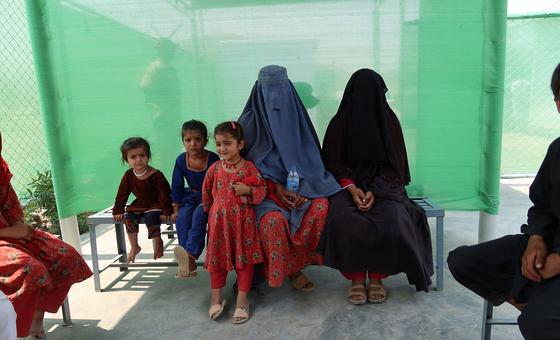
Four years after the Taliban takeover in August 2021, the scale and severity of the women’s rights crisis continues to intensify. Afghanistan is the only country in the world where girls are prohibited to attend secondary school.

Yet, in a nationwide door-to-door survey of over 2,000 Afghans, more than nine in 10 supported girls’ right to learn.

It is clear: Despite the existing bans, the Afghan people want their daughters to exercise their right to education,” said Sofia Calltorp, UN Women’s Chief of Humanitarian Action, at a press conference in Geneva on Friday.

‘Education is the difference’

A protracted humanitarian crisis continues in Afghanistan coupled with systemic and institutionalised restrictions on women and girls’ rights.

Ms. Calltorp insisted that it is more important than ever to continue investing in Afghan women’s community organizations, which offer healthcare, mental health support and a chance to connect.

In a country where half the population lives in poverty, education is the difference between despair and possibility,” she said, voicing their yearning to be back in a school environment.

This is almost always the first thing girls tell us – they are desperate to learn and just want the chance to gain an education,” said UN Women’s Special Representative in Afghanistan, Susan Ferguson.

A year after the introduction of a stricter so-called morality law codified a sweeping set of restrictions, the new alert highlights the deepening normalisation of the women’s rights crisis.

NGO work ban

The Taliban’s ban on women working for NGOs – announced nearly three years ago – continues to have a devastating impact, said UN Women.

More than half of NGOs in Afghanistan report that it has affected their ability to reach women and girls with vital services.

A UN Women survey conducted in July and August found that 97 per cent of Afghan women said it had negatively impacted them.

Source link

World News in Brief: Shipwreck off Italy kills at least 27, anniversary of Taliban takeover, Peru amnesty law

UNHCR is supporting at least 60 survivors who have been brought ashore, but the Italian coast guard warned more bodies could still be recovered.  

According to local news reports, the passengers were travelling from Libya in the hopes of reaching Italy.

Migrants and refugees heading to Italy from the African coast often use leaky or overcrowded boats organized by human traffickers and travel via the often-deadly Mediterranean route, aiming to reach Lampedusa.

In a social media statement on Thursday, the High Commissioner for Refugees, Filippo Grandi, reported that over 700 refugees and migrants have died in the Central Mediterranean in 2025.

“All responses – rescue at sea, safe pathways, helping transit countries and addressing root causes – must be strengthened,” he said.  

UN Women marks four years since Taliban takeover

UN Women Afghanistan Special Representative Susan Ferguson addressed the widescale erosion of human rights of women in the country in a briefing to reporters in New York on Thursday, just ahead of the fourth anniversary of the Taliban takeover.

Since the takeover, dozens of permanent decrees have curtailed women’s and girls’ rights and dignity.  

The most severe women’s rights crisis in the world is being normalised,” she told correspondents at the daily noon briefing from Kabul.  

For example, last year’s “morality law” crystallised the systematic erasure of women from public life, codifying long-standing social norms.

Banned from schools and most jobs, women “continue to feel – and often are – unsafe in public places, in their communities or families, and are unable to reap the benefits of an increase in the overall security situation since the takeover,” Ms. Ferguson stressed.

Migration and women-run organizations

This year, 1.7 million Afghans have returned, but women among them cannot interact with male aid workers to access education, healthcare or economic support.  

Women-run organizations are therefore essential, providing healthcare, psychosocial services and protection from violence.

However, this March, it was reported across civil society organizations that funding cuts have meant layoffs for 50 per cent of women staffers, and over one-third of these organizations warned they may have to scale back or close.

These organizations are trying to keep going – but they urgently need more financial assistance.

“We must keep investing in their NGOs, their businesses and their voice in international dialogues,” Ms. Ferguson concluded.

Türk: Peru amnesty law is an ‘affront’ to victims of country’s war

The UN’s top human rights official Volker Türk on Thursday described Peru’s amnesty law as an “affront” to victims of the country’s armed conflict.

The development comes after the President of Peru signed into law legislation a day earlier granting amnesty to the armed forces, the national police and self-defence committees, for crimes committed between 1980 and 2000.  

An estimated 70,000 people were killed during the conflict and at least 20,000 were disappeared, according to the National Commission on Truth and Reconciliation. 

‘Backwards step’

Mr. Türk said that hundreds of cases, both concluded and ongoing, will be affected by the new law. And he described it as a “backwards step” in the search for justice for gross human rights violations committed.

“It is an affront to the thousands of victims who deserve truth, justice, reparations, and guarantees of non-recurrence, not impunity,” Mr. Türk said.

International law, to which Peru is bound, clearly prohibits amnesties and statutes of limitations for gross violations of human rights and serious violations of humanitarian law.

OHCHR called for its immediate reversal. 

Source link

UN calls on Taliban to end repressive policies

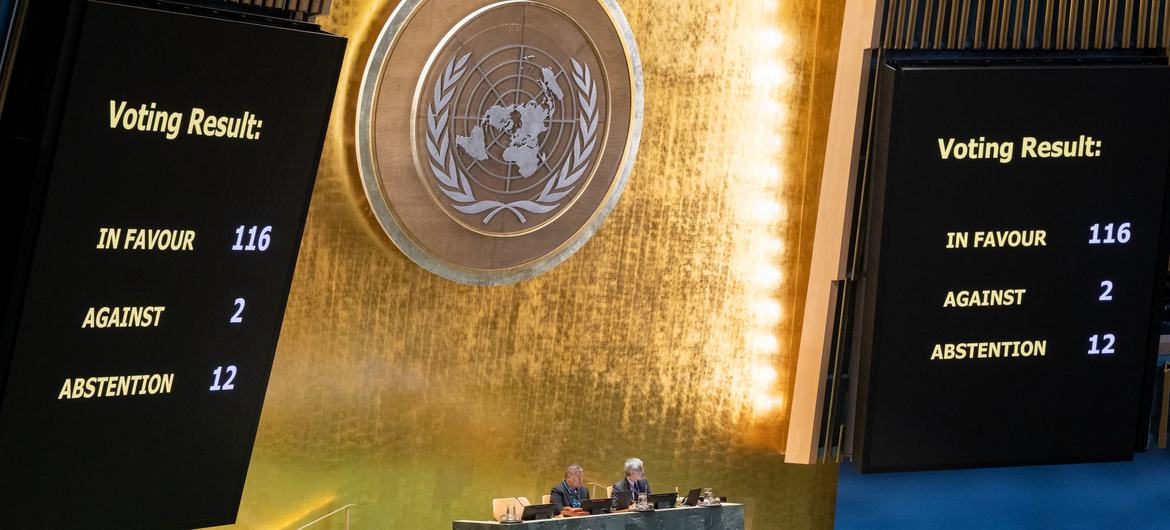
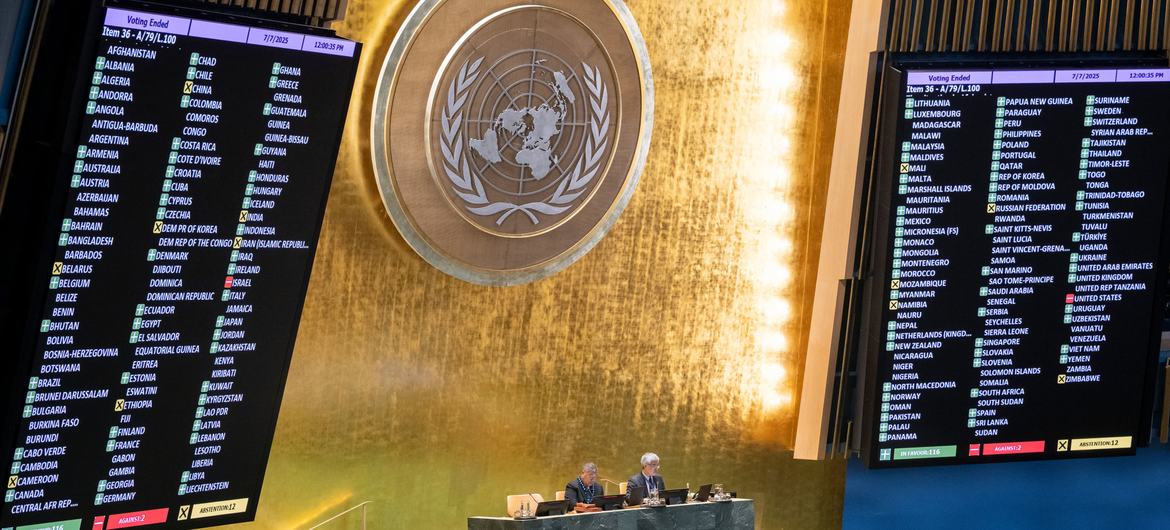
Adopted with 116 votes in favour, 12 abstentions and 2 against (Israel and United States), the resolution highlighted the multifaceted crises confronting Afghanistan nearly four years after the Taliban’s return to power, calling for greater international support for the Afghan people and a renewed push for human rights, peace and stability.

It emphasised the need for a coherent approach among humanitarian, political and development actors, and raised alarm over the “grave, worsening, widespread and systematic oppression” of all women and girls in Afghanistan, calling on the Taliban to swiftly reverse policies that exclude them from education, employment and public life.

The text further called for adherence to Afghanistan’s obligations under international law, including human rights and humanitarian principles.

Security and economic concerns

The 193-member General Assembly reiterated its “serious concern” over continuing violence and the presence of terrorist groups such as Al-Qaida, Islamic State in Iraq and the Levant (ISIL/Da’esh) and their affiliates ISIL-Khorasan and Tehrik-e-Taliban Pakistan, and “demanded” that Afghanistan not be used as a safe haven for terrorist activity.

Beyond security, the resolution stressed Afghanistan’s severe economic collapse, widespread poverty and spiralling humanitarian crisis, urging Member States and donors to scale up principled, sustained assistance.

It also highlighted the growing threat of natural disasters such as floods and droughts, which worsen food insecurity and economic fragility.

Sustainable and lasting peace can be achieved only through long-term social, economic and political stability, which requires full respect for civil, political, social, economic and cultural rights as well as commitment to inclusive and representative governance,” the resolution stated.

Result of the UN General Assembly vote on the draft resolution on Afghanistan.

Needs surge amid refugee returns

The resolution comes at a time of intensified strain on Afghanistan’s overstretched humanitarian system.

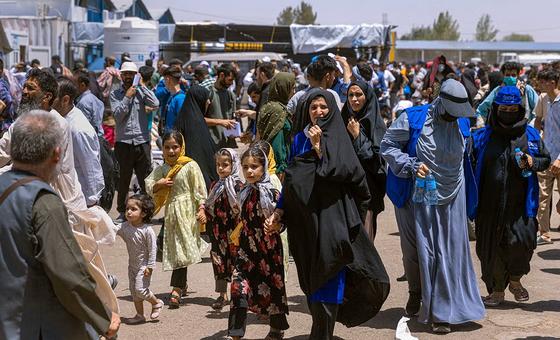
According to UN agencies, waves of returns from Pakistan and Iran – including both refugees and those in refugee-like situations – have increased pressure on services, especially in border provinces ill-equipped to absorb new arrivals.

These returns, many of them involuntary or under duress, have heightened protection risks and left thousands of families in urgent need of food, shelter and basic services.

The 2025 Humanitarian Needs and Response Plan for Afghanistan – which seeks $2.4 billion to assist nearly 17 million people – is only 22 per cent funded as of early July, raising concerns among aid officials about maintaining life-saving programs in the months ahead.

The resolution called on all donors and stakeholders to “reconsider any decisions that may lead to reductions in such assistance, taking into account the potential adverse humanitarian consequences for the most vulnerable populations.”

Governance and accountability

The Assembly also reiterated concern over the lack of political inclusion since the Taliban takeover in August 2021.

It raised alarm over extrajudicial punishments, such as reprisals and summary executions, enforced disappearances and arbitrary detentions, including those targeting former members of the security personnel.

While the Assembly acknowledged the Taliban’s limited steps to reduce opium cultivation, it stressed the need for comprehensive counter-narcotics measures and efforts to combat organized crime and illicit arms trafficking.

UN General Assembly votes on the draft resolution on Afghanistan.

A call for collective responsibility

The resolution expressed appreciation to major refugee-hosting countries – particularly Pakistan and Iran – and called for more equitable burden-sharing and international cooperation to support displaced Afghans and the communities that host them.

It underlined the importance of creating conditions for the safe, dignified and voluntary return of refugees and internally displaced persons, as well as their sustainable reintegration.

Source link

Afghanistan: Taliban restrictions on women’s rights intensify

The mission continued to receive reports that Afghan women are being denied the opportunity to join the workforce, are unable to access services without a male relative while girls are still deprived of their right to education.

Since the Taliban took over the country from the democratically-elected Government in August 2021, women and girls have been systemically excluded from equal participation in society, the report confirms.

UNAMA, whose mandate includes monitoring human rights, also reported public floggings, shrinking civic space, and brutal attacks on former government officials.

Beauty salons shuttered

Officials have reportedly shut down beauty salons run by women in their homes and women’s radio stations in various provinces, UNAMA said.

In the province of Kandahar, de facto inspectors asked shopkeepers in a market to report women unaccompanied by a guardian (mahram) and deny them entry into their shops.

At one hospital, authorities ordered staff not to provide care to unaccompanied female patients.

Forced conversions

Taliban authorities have also increased enforcement of repressive restrictions on media outlets, ramped up corporal punishment, and the clampdown on religious freedom and re-education.

Between 17 January and 3 February, in Badakhshan province in northeastern Afghanistan, at least 50 Ismaili men were taken from their homes at night and forced to convert to Sunni Islam under the threat of violence, the report details.

More than 180 people, including women and girls, have been flogged for the offences of adultery and practicing homosexuality during the reporting period, in public venues attended by Taliban officials.

Taliban claim support for women’s rights

Despite documented evidence from the report that de facto authorities are continuing to violate international norms and rights protections, Taliban officials disagree.

“Ensuring the dignity, honor, and Sharia-based entitlements of women remains a paramount priority for the Islamic Emirate,” Taliban spokesperson Zabihullah Mujahid said in a social media post on March 8, International Women’s Day.

“All fundamental rights afforded to Afghan women have been safeguarded in strict accordance with Islamic Sharia law, as well as the cultural and traditional frameworks of Afghan society,” he added.

International legal action

UNAMA has called for action to restore women’s and girls’ rights at the international level.

In January, the International Criminal Court (ICC) issued arrest warrants for Taliban Leader Haibatullah Akhundzada and Chief Justice Abdul Hakim Haqqan over persecution on gender grounds, a crime against humanity under the Rome Statute.

The Taliban rejected the ruling, citing national sovereignty and religious traditions.

Source link