World News in Brief: Shipwreck off Italy kills at least 27, anniversary of Taliban takeover, Peru amnesty law

UNHCR is supporting at least 60 survivors who have been brought ashore, but the Italian coast guard warned more bodies could still be recovered.  

According to local news reports, the passengers were travelling from Libya in the hopes of reaching Italy.

Migrants and refugees heading to Italy from the African coast often use leaky or overcrowded boats organized by human traffickers and travel via the often-deadly Mediterranean route, aiming to reach Lampedusa.

In a social media statement on Thursday, the High Commissioner for Refugees, Filippo Grandi, reported that over 700 refugees and migrants have died in the Central Mediterranean in 2025.

“All responses – rescue at sea, safe pathways, helping transit countries and addressing root causes – must be strengthened,” he said.  

UN Women marks four years since Taliban takeover

UN Women Afghanistan Special Representative Susan Ferguson addressed the widescale erosion of human rights of women in the country in a briefing to reporters in New York on Thursday, just ahead of the fourth anniversary of the Taliban takeover.

Since the takeover, dozens of permanent decrees have curtailed women’s and girls’ rights and dignity.  

The most severe women’s rights crisis in the world is being normalised,” she told correspondents at the daily noon briefing from Kabul.  

For example, last year’s “morality law” crystallised the systematic erasure of women from public life, codifying long-standing social norms.

Banned from schools and most jobs, women “continue to feel – and often are – unsafe in public places, in their communities or families, and are unable to reap the benefits of an increase in the overall security situation since the takeover,” Ms. Ferguson stressed.

Migration and women-run organizations

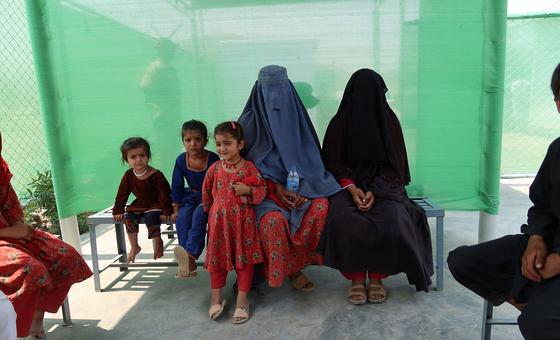
This year, 1.7 million Afghans have returned, but women among them cannot interact with male aid workers to access education, healthcare or economic support.  

Women-run organizations are therefore essential, providing healthcare, psychosocial services and protection from violence.

However, this March, it was reported across civil society organizations that funding cuts have meant layoffs for 50 per cent of women staffers, and over one-third of these organizations warned they may have to scale back or close.

These organizations are trying to keep going – but they urgently need more financial assistance.

“We must keep investing in their NGOs, their businesses and their voice in international dialogues,” Ms. Ferguson concluded.

Türk: Peru amnesty law is an ‘affront’ to victims of country’s war

The UN’s top human rights official Volker Türk on Thursday described Peru’s amnesty law as an “affront” to victims of the country’s armed conflict.

The development comes after the President of Peru signed into law legislation a day earlier granting amnesty to the armed forces, the national police and self-defence committees, for crimes committed between 1980 and 2000.  

An estimated 70,000 people were killed during the conflict and at least 20,000 were disappeared, according to the National Commission on Truth and Reconciliation. 

‘Backwards step’

Mr. Türk said that hundreds of cases, both concluded and ongoing, will be affected by the new law. And he described it as a “backwards step” in the search for justice for gross human rights violations committed.

“It is an affront to the thousands of victims who deserve truth, justice, reparations, and guarantees of non-recurrence, not impunity,” Mr. Türk said.

International law, to which Peru is bound, clearly prohibits amnesties and statutes of limitations for gross violations of human rights and serious violations of humanitarian law.

OHCHR called for its immediate reversal. 

Source link

Seeding gender empowerment: Women farmers in Peru contend with climate change

Ácora, located in the southeast corner of Peru almost 3,800 kilometres above sea level, is one of the Peruvian regions which has been most impacted by climate change – endangering crop production and biodiversity in addition to worsening food insecurity.

“It was not like this before, the climate has changed a lot,” said Pascuala Pari, head of the Sumaq Chuyma Association in Ácora.

Around the world, women farmers like Ms. Pari, who already face a series of intersectional challenges, are working tirelessly to secure their livelihoods despite an increasingly untenable climate situation.

Women in particular shoulder the burden of food insecurity as traditional caregivers which is intensified during climate crises,” said Bochola Sara Arero, a youth representative from the World Food Forum, at a side event during the ongoing UN High Level Political Forum on Sustainable Development on Monday.

Intersecting goals

The forum in New York has been convened to discuss the Sustainable Development Goals, adopted in 2015 to promote global development for current and future generations.

[The forum] is going to be a major way to assess how we’re doing with respect to the critical issues of sustainability and achieving greater prosperity globally,” said Bob Rae, President of the Economic and Social Council (ECOSOC), at a press conference for correspondents in New York on Tuesday. 

With only 18 per cent of these internationally agreed upon goals on track to being met by 2030, the Secretary-General António Guterres has called for urgent action and sustained multilateralism to address this gap.

Mr. Guterres has also said that this forum is a unique opportunity to discuss the intersection between various goals, including the intersection between gender equality and climate change.

A bipolar climate

Last year in Ácora, dealing with a climate that oscillated between drought and torrential rains was next to impossible for the women who relied on the land.

Crops would not grow and agrobiodiversity was under threat. In a country where 17.6 million people already experience food insecurity, this dual threat had the potential to wreak havoc on livelihoods.

In response, Ms Pari and other women in Ácora formed seed banks. Not only do organizations like seed banks preserve indigenous agrobiodiversity, they also help sustain the livelihoods of women in the region.

“Our crops were in danger of extinction, but now people are harvesting again and we are changing that,” said Fanny Ninaraqui, leader of the Ayrumas Carumas Association.

Seeds that are not planted can be traded or bartered with other seed bank owners. Over 125 varieties of native crops have now been preserved across the region.

“I am happy with my little seed bank … Now I have all kinds of quinoa: black, red, white. This supports me economically because I preserve and sell my products at local markets,” Ms. Pari said.

© UNDP/MINAM/PPD/Nuria Angeles

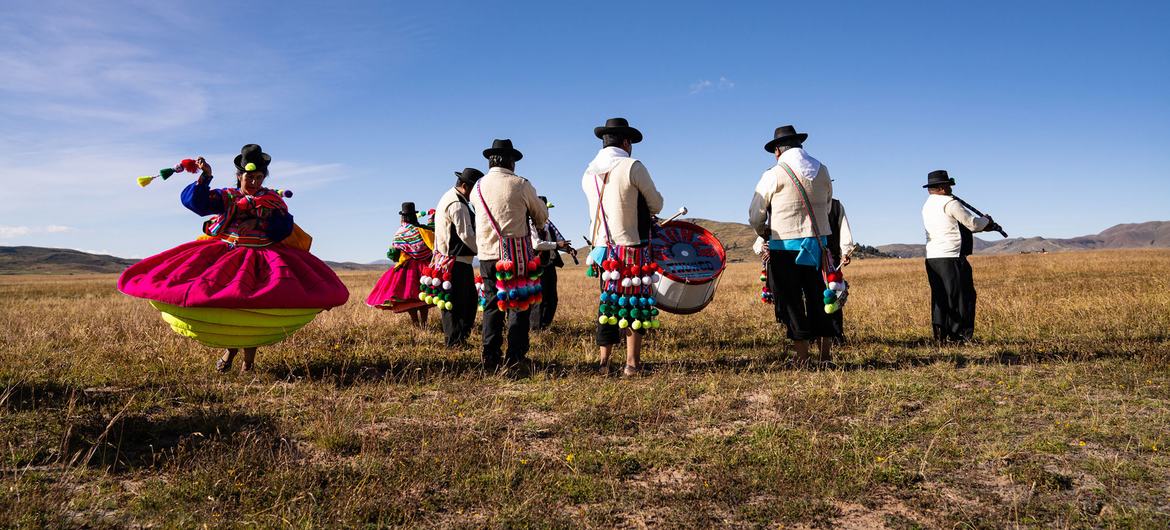
Aymara communities in Ácora are working to recover and conserve their agrobiodiversity.

Once shut, doors open for women farmers

In addition to climate challenges, women farmers also face a lack of legal rights. Specifically, they often do not have titles to their land.

According to the Secretary-General’s Sustainable Development Report, released Monday, 58 per cent of the countries with available data lacked sufficient protection for women’s land rights.

“Women’s land rights are fundamental for women’s voice and agency, livelihoods and well-being and resilience as well as for broader development outcomes,” said Seemin Qayum, policy advisor at UN Women.

The in-depth report also noted that less than half of women had secure rights to land, with men being twice as likely to have land deeds and other protected property rights. [1]

Experts say that insufficient legal protections not only negatively impact economic outcomes for women, they also sideline women’s needs and voices in policymaking. Therefore, it is essential to institute legal protections which formally recognize women as farmers.

“When you are recognized as a farmer, a world of possibilities, a world of resources – opportunities for representation and rights – become available to you. Doors open,” said Carol Boudreaux, Senior Director of Land Programs at Landesa.

© UNDP/MINAM/PPD/Nuria Angeles

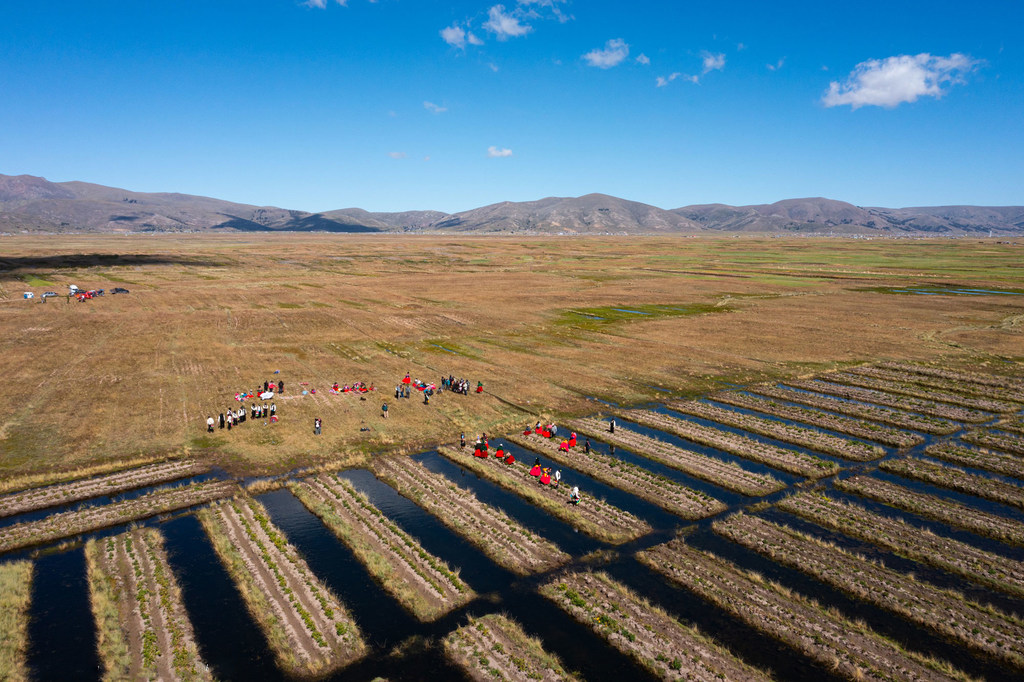
Another method implemented is the rehabiWaru warus in Thunco: an ancient farming technique with canals and raised beds to manage droughts and floods.

Beyond legal protections

While legal land rights are essential, they are not in and of themselves enough to empower rural women.

“Initiatives that aim to change discriminatory social norms and institutions are also needed,” said Clara Park, senior gender officer at the Food and Agriculture Organization (FAO).

Women in Ácora recognize that it is not just climate change which is negatively impacting their livelihoods – they are also grappling with unequal social norms.

“When you are young and a woman, someone always tries to limit your progress,” Ms. Ninaraqui said.

In Ácora, international and civil society organizations, including the UN Development Programme (UNDP), have worked to help women establish their seed banks and ensure that these women have the capacity to manage them long-term.

“I can lead, I can teach what I have learned, now I feel I have this capacity,” Ms Pari said.

Intergenerational knowledge

Women like Ms. Pari and Ms. Ninaraqui are part of the Aymara indigenous community in Ácora. For them, the seed banks are a form of innovation which allows them to build upon indigenous knowledge regarding agrobiodiversity.

“We are recovering the seeds from our grandparents’ time,” said Ms. Pari.

And as they save these seeds, Ms. Pari said they are also thinking of the future.

“Today, I would tell more women to keep going, to not be discouraged by what others think, and to take initiative like I did,” said Ms. Pari.

Source link