Erasure or empowerment? In Africa’s Sahel, women confront a stark choice

Risks to women and girls across this vast region are severe and systemic, as political instability, environmental collapse and a declining international presence take their toll.

From abductions and child marriage to exclusion from schools and public life, their lives and opportunities are being steadily stripped away, Sima Bahous, Executive Director of UN Women, told ambassadors in the Security Council on Thursday.

In the Sahel, where the world’s gravest concerns converge, women and girls bear the brunt,” she said.

She added that crises due to increasing terrorism, poverty, hunger, a crumbling aid system and shrinking civic space are “converging – violently and disproportionately – on their bodies and their futures.

UN Women Executive Director Bahous briefs the Security Council.

Life is being erased

In countries like Burkina Faso, Mali, Niger and Chad, life for women under extremist control “is one of erasure from public space,” Ms. Bahous said.

Their movement, visibility and even clothing are heavily restricted. Schools have been burned or shut down, leaving more than one million girls without access to education.

Abduction is not a by-product of terrorism in the Sahel – it is a tactic,” Ms. Bahous said, noting that in Burkina Faso alone, the number of women and girls abducted has more than doubled over the past 18 months.

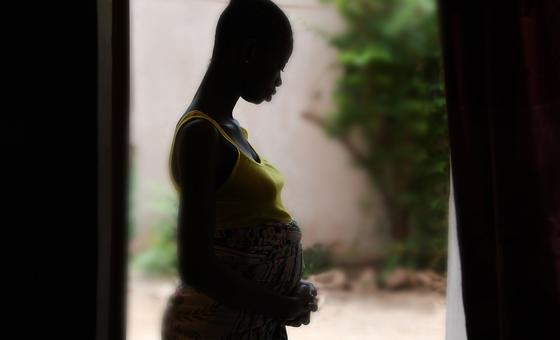
In Mali, 90 percent of women are affected by female genital mutilation. Rates of child marriage in parts of the region are among the highest in the world. Maternal mortality – driven by early pregnancy and poverty – is among the world’s worst.

Dwindling resilience and attention

“The distances women and girls travel for water or firewood are growing longer, while their safety is shrinking,” Ms. Bahous said.

Two-thirds of women surveyed report feeling unsafe during these journeys. Climate change only deepens the hardship, with extreme heat and drought increasing both mortality and food insecurity across the region.

Yet despite mounting needs, international support is waning.

Only eight per cent of this year’s humanitarian appeal for the region had been met by May.  

Development assistance has fallen nearly 20 per cent over the past two years. As a result, women’s protection and empowerment programmes have been suspended, while government ministries focused on gender equality are being defunded, merged or closed.

SRSG Simão briefs the Security Council (via video).

Political space closing

At the same time, democratic and civic space is narrowing.

In Niger, only 14 percent of participants in recent institutional reforms were women. In Mali, just two out of 36 members drafting the new national charter were women.

Leonardo Santos Simão, head of the UN Office for West Africa and the Sahel (UNOWAS), also warned that a deteriorating security environment – marked by waves of jihadist attacks and political turbulence – is undermining progress and fuelling displacement.

He added that shrinking space for media, civil society and women’s organizations is threatening hard-won gains and that a broader crisis is undermining governance and peacebuilding efforts.  

“The region’s economy remains highly vulnerable to external shocks. Although macroeconomic indicators show improvement, rising debt levels continue to constrain governments’ capacity to provide essential services,” he said.

Fragile gains

Still, progress is possible – and in some instances, visible.

In Chad, women now hold 34 percent of parliamentary seats. In conflict-prone border zones in Mali and Niger, women’s participation in local peacebuilding rose from five percent to 25 percent, helping resolve over 100 disputes related to scarce natural resources.

Across the region, joint UN programming has increased adolescent girls’ return to school by 23 percent, while doubling women’s participation in local governance across 34 conflict-affected communities. In addition, a UN-World Bank initiative has reached over three million adolescent girls with health care, safe spaces and life-skills training.

Stand with Sahel’s women

Yet, these gains remain fragile.

We cannot abandon the Sahel – whatever the politics, whatever the funding landscapes, whatever the geopolitical headwinds,” Ms. Bahous said in conclusion.

Let us stand with the women of the Sahel – not out of charity, but in recognition of their power to shape a better future.

Source link

Seeding gender empowerment: Women farmers in Peru contend with climate change

Ácora, located in the southeast corner of Peru almost 3,800 kilometres above sea level, is one of the Peruvian regions which has been most impacted by climate change – endangering crop production and biodiversity in addition to worsening food insecurity.

“It was not like this before, the climate has changed a lot,” said Pascuala Pari, head of the Sumaq Chuyma Association in Ácora.

Around the world, women farmers like Ms. Pari, who already face a series of intersectional challenges, are working tirelessly to secure their livelihoods despite an increasingly untenable climate situation.

Women in particular shoulder the burden of food insecurity as traditional caregivers which is intensified during climate crises,” said Bochola Sara Arero, a youth representative from the World Food Forum, at a side event during the ongoing UN High Level Political Forum on Sustainable Development on Monday.

Intersecting goals

The forum in New York has been convened to discuss the Sustainable Development Goals, adopted in 2015 to promote global development for current and future generations.

[The forum] is going to be a major way to assess how we’re doing with respect to the critical issues of sustainability and achieving greater prosperity globally,” said Bob Rae, President of the Economic and Social Council (ECOSOC), at a press conference for correspondents in New York on Tuesday. 

With only 18 per cent of these internationally agreed upon goals on track to being met by 2030, the Secretary-General António Guterres has called for urgent action and sustained multilateralism to address this gap.

Mr. Guterres has also said that this forum is a unique opportunity to discuss the intersection between various goals, including the intersection between gender equality and climate change.

A bipolar climate

Last year in Ácora, dealing with a climate that oscillated between drought and torrential rains was next to impossible for the women who relied on the land.

Crops would not grow and agrobiodiversity was under threat. In a country where 17.6 million people already experience food insecurity, this dual threat had the potential to wreak havoc on livelihoods.

In response, Ms Pari and other women in Ácora formed seed banks. Not only do organizations like seed banks preserve indigenous agrobiodiversity, they also help sustain the livelihoods of women in the region.

“Our crops were in danger of extinction, but now people are harvesting again and we are changing that,” said Fanny Ninaraqui, leader of the Ayrumas Carumas Association.

Seeds that are not planted can be traded or bartered with other seed bank owners. Over 125 varieties of native crops have now been preserved across the region.

“I am happy with my little seed bank … Now I have all kinds of quinoa: black, red, white. This supports me economically because I preserve and sell my products at local markets,” Ms. Pari said.

© UNDP/MINAM/PPD/Nuria Angeles

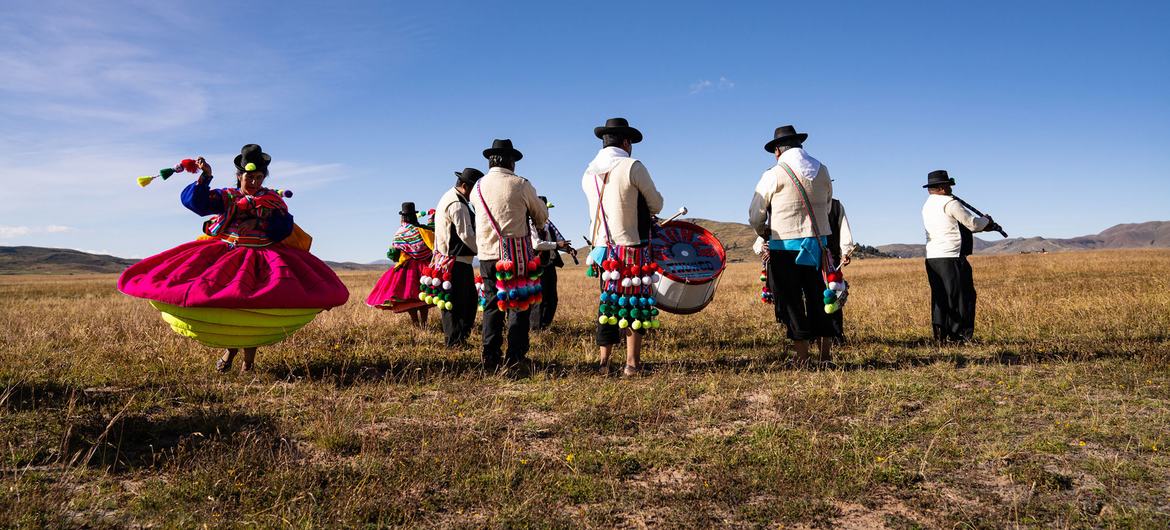
Aymara communities in Ácora are working to recover and conserve their agrobiodiversity.

Once shut, doors open for women farmers

In addition to climate challenges, women farmers also face a lack of legal rights. Specifically, they often do not have titles to their land.

According to the Secretary-General’s Sustainable Development Report, released Monday, 58 per cent of the countries with available data lacked sufficient protection for women’s land rights.

“Women’s land rights are fundamental for women’s voice and agency, livelihoods and well-being and resilience as well as for broader development outcomes,” said Seemin Qayum, policy advisor at UN Women.

The in-depth report also noted that less than half of women had secure rights to land, with men being twice as likely to have land deeds and other protected property rights. [1]

Experts say that insufficient legal protections not only negatively impact economic outcomes for women, they also sideline women’s needs and voices in policymaking. Therefore, it is essential to institute legal protections which formally recognize women as farmers.

“When you are recognized as a farmer, a world of possibilities, a world of resources – opportunities for representation and rights – become available to you. Doors open,” said Carol Boudreaux, Senior Director of Land Programs at Landesa.

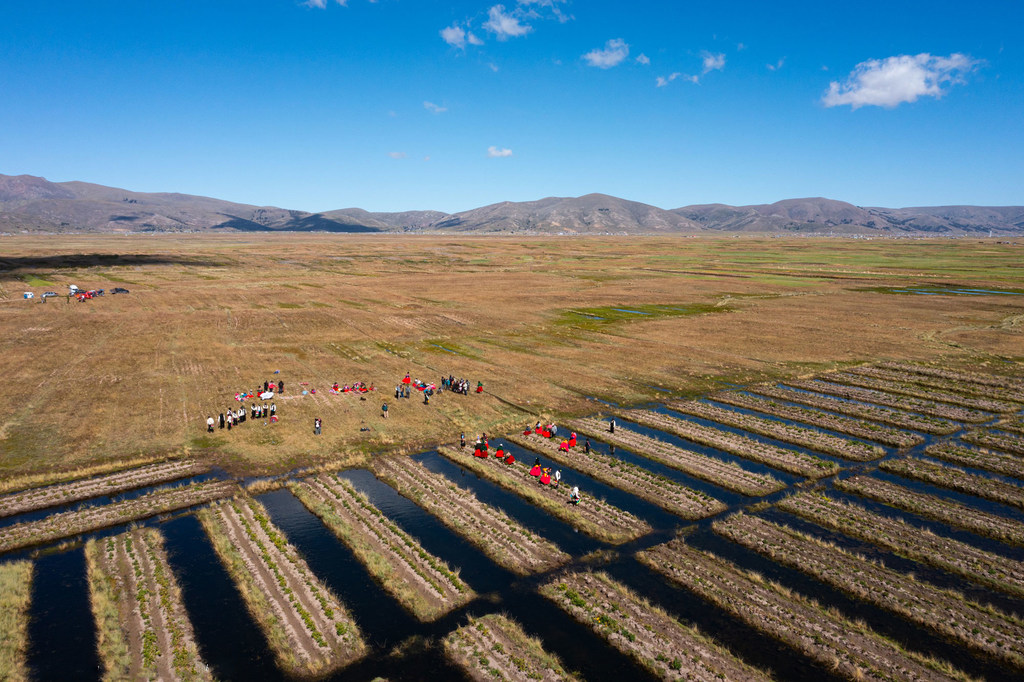
© UNDP/MINAM/PPD/Nuria Angeles

Another method implemented is the rehabiWaru warus in Thunco: an ancient farming technique with canals and raised beds to manage droughts and floods.

Beyond legal protections

While legal land rights are essential, they are not in and of themselves enough to empower rural women.

“Initiatives that aim to change discriminatory social norms and institutions are also needed,” said Clara Park, senior gender officer at the Food and Agriculture Organization (FAO).

Women in Ácora recognize that it is not just climate change which is negatively impacting their livelihoods – they are also grappling with unequal social norms.

“When you are young and a woman, someone always tries to limit your progress,” Ms. Ninaraqui said.

In Ácora, international and civil society organizations, including the UN Development Programme (UNDP), have worked to help women establish their seed banks and ensure that these women have the capacity to manage them long-term.

“I can lead, I can teach what I have learned, now I feel I have this capacity,” Ms Pari said.

Intergenerational knowledge

Women like Ms. Pari and Ms. Ninaraqui are part of the Aymara indigenous community in Ácora. For them, the seed banks are a form of innovation which allows them to build upon indigenous knowledge regarding agrobiodiversity.

“We are recovering the seeds from our grandparents’ time,” said Ms. Pari.

And as they save these seeds, Ms. Pari said they are also thinking of the future.

“Today, I would tell more women to keep going, to not be discouraged by what others think, and to take initiative like I did,” said Ms. Pari.

Source link

‘We are women like you’: UN honours peacekeepers for work in gender empowerment

There, alongside civilian gender units, Ms. Syme met a group of local community members – both men and women. Partway through, she realised something was different.

“The women were not talking,” she told UN News. “They were very quiet.”

Then she remembered that local cultural norms dictated women do not speak in public.

“We are women like you. We want to be able to help, but we don’t know how we can help you,” she told them in a separate meeting. “Can you please tell us what your problem is so we can see how we can help?”

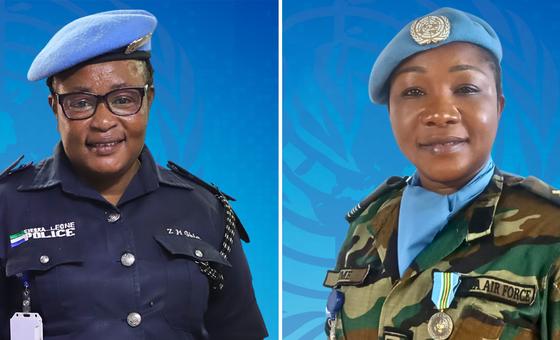
It is for this sort of work founded in community trust building and a relentless belief in the importance of gender perspectives and empowerment in peacekeeping, that the UN will honour two exceptional women peacekeepers on Thursday as part of International Peacekeepers’ Day.

Ms. Syme is this year’s winner of the UN Military Gender Advocate of 2024 Award.

“[Ms. Syme’s] dedication has not only improved the effectiveness of UNISFA’s operations but also ensured that the mission is more reflective of and responsive to the communities it serves,” said Under-Secretary-General for Peace Operations Jean-Pierre Lacroix.

The other honouree is Chief Superintendent Zainab Mbalu Gbla of Sierra Leone who has been named Woman Police Officer of the year for her work with UNISFA.

“Chief Superintendent Gbla embodies the work of the United Nations to improve lives and shape futures,” said Mr. Lacroix.

Gender and peacekeeping

The UN Woman Police Officer of the Year Award was established in 2011 and the UN Military Gender Advocate of the Year Award was first presented five years later.

Both awards recognize peacekeepers whose work has substantially advanced the integration of gender perspectives and empowerment into peacekeeping.

In 2000, the Security Council passed a resolution which affirmed the essential role women play in peacebuilding, peacekeeping and humanitarian responses. Since then, the United Nations has worked to fully integrate gender perspectives into peacekeeping.

According to Ms. Syme, applying gender perspectives should be a “daily task” for all peacekeepers.

“We need to understand the gender dynamics within our area of operation, otherwise, we might not be able to have the right intervention, we might not be able to carry out the right activities,” she said.

Intergenerational legacy

Ms. Gbla experienced the impact of peacekeeping herself as a civilian in Sierra Leone in the wake of a war that ravaged her country.

“I saw people coming from different parts of the world just to bring peace to my country… That’s why I told myself that one day I’d love to be a peacekeeper – to help other people, to return the favour,” Ms. Gbla told UN News.

As a UNISFA gender officer, not only did she create a school programme and female mentorship network where none had existed before, she also worked diligently to ensure that learning was fun, incorporating performing arts and visual aids.

“[The women of Abyei] are ready to work, they are ready to do things for themselves if peace allows them. The children are ready to go to school, if peace allows them,” she said.

A health campaign in Abyei

Ms. Syme’s meeting with the women of Sector North was the beginning of an enormously successful health campaign in the region which discussed harmful practices such as child marriage and female genital mutilation, the two issues which the community women had identified.

The campaign engaged both men and women, and Ms. Syme said that she was deeply impressed and moved by the response of the male leaders who, through the campaign, realized the harm that practices of child marriage and female genital mutilation had caused.

“[The leaders] promised that they are going to revise these cultural practices so that going forward, they will not do it again,” Ms. Syme said.

This campaign happened in June 2024 and has driven Ms. Syme’s work since then, work which includes training over 1,500 UNISFA officials in gender-responsive peacekeeping.

“It has motivated me,” Ms. Syme said. “It has motivated me a lot.”

The future of peacekeeping through gender

Both Ms. Syme and Ms. Gbla will receive their awards on International Peacekeeping Day. This year, Member States and UN officials will be asked to consider the future of peacekeeping.

For both Ms. Syme and Ms. Gbla, the future of peacekeeping and security cannot be disentangled from gender perspectives and empowerment.

“If you don’t know the gender dynamics of the area, if you don’t know who is in charge, if you don’t know what will benefit who…you may think you are providing security, but you are not really providing security,” Ms. Syme said.

Ms. Gbla, in discussing her award, paid homage to all the women who wear a UN uniform, underlining their tireless work in the pursuit of peace.

“Each of us [women] faces unique challenges in our respective missions, yet our collective goal remains the same – to foster peace and protect the vulnerable.”

Source link