Chad: Africa’s refugee haven struggles with its own stark challenges

Here’s what you need to know:

Fighting and dire humanitarian conditions triggered by the conflict that erupted among rival militaries in Sudan in April 2023 have so far displaced 14 million people, spilling over to the country’s seven bordering neighbour nations, according to the UN.

Few places are feeling the effects of the ongoing war as acutely as Chad, which is now Africa’s largest refugee host per capita, according to the UN refugee agency, UNHCR.

“Chad’s generous welcome of refugees is a powerful act of solidarity,” said UN High Commissioner for Refugees Barham Salih

But, as landlocked Chad has welcomed more than 900,000 Sudanese refugees across its eastern border since the start of the conflict, 40 per cent of its own population already needs humanitarian assistance.

Why it matters  

Often called the “Babel Tower of the world”, reflecting its more than 200 ethnic groups and 100 languages, Chad’s challenges are multifaceted.

With over 42 per cent of the population living below poverty, the country is among the poorest in the world. 

Now hosting over 1.5 million refugees, Chad continues to keep its borders with Sudan open while also battling climate and security shocks.

Floods and food insecurity 

The word Chad translates in a local language as “large body of water,” and reflects the cultural importance of Lake Chad, which gives the country its name. 

As the lake continues to shrink due to climate change and other issues, the country has endured large floods that have devasted its food security. 

In 2024 alone, floods destroyed more than 432,000 hectares of crops, equivalent to over 600,000 football fields, affected nearly two million people and exposed gaps in water and sanitation infrastructure, with cholera outbreaks reported in July last year. 

With a rapidly growing population, Chad far exceeds its resource capacity at a time when malnutrition rates are alarmingly high.

An estimated two million Chadian children aged six to 59 months are suffering or expected to suffer acute malnutrition between October 2025 and September 2026, including nearly 484,000 children expected to suffer severe acute malnutrition, according to the global hunger monitor – the Integrated Food Security Phase Classification.

Security pressures

The security landscape is equally concerning. 

Violent extremist groups, including Boko Haram and its affiliates, have continued to drive insecurity in the Lake Chad Basin, displacing over 250,000 people

Security forces patrol in Adré in Chad.

In the north, trafficking networks and illegal coal mining overlap with gender-based violence and exploitative child labour.

With 87 per cent of the total refugee population in Chad being women and children, these concerns continue to increase. 

What the UN is doing

Since April 2023, Chad’s Government and UNHCR assisted 67 per cent of those fleeing war-torn Sudan to relocate to extended and newly established settlements, where refugees and host communities benefit from the services delivered by humanitarian teams.

UN agencies and partners continue to respond to provide humanitarian assistance, including in Chad and war-torn Sudan.

On 19 February, the UN Security Council will convene to discuss the ongoing crisis in Sudan, focusing on the need to end the fighting and alleviate suffering, particularly concerning the widespread violence against women and girls in the country.

As for needs, the UN emergency relief agency, OCHA, released its Humanitarian Action Plan 2026, which shows that the number of people in need in Chad decreased by 42 per cent, but continues to remain high.

The Action Plan calls for $986 million and aims to help 3.4 million people, including $540million dedicated to refugees alone. The UN Spokesperson, Stéphane Dujarric said on Wednesday, “We and our partners will focus our efforts on the most impacted regions including in the east, the Lake Province and parts of the south.” 

Radwa Abdelkarim, a 37-year-old mother of six, fled to Chad in June 2023 after “the war took everything.” 

“We lost our money, our relatives and neighbours,” she said. “Some were killed, others disappeared and are still missing.” 

Safely out of Sudan, Ms. Abdelkarim combined her entrepreneurial skills with cash assistance from UNHCR to start baking and selling bread from her home in Farchana refugee settlement, and has since opened two grocery stores, a restaurant, and employs 12 other refugees.

“I support [refugee women] so that we can grow together and no one is left behind,” she said. “It is important to stand with our brothers and sisters, to help them heal.”

Source link

Africa’s ‘land-linked’ economies poised to drive continent’s prosperity

“We stand at a pivotal moment, one that marks a profound shift from viewing these nations as isolated and constrained by geography to recognizing them as dynamic land-linked economies at the heart of Africa’s socio-economic resurgence,” said Samuel Doe, Resident Representative of the United Nations Development Programme (UNDP) in Ethiopia.

A new UNDP position paper – Africa’s Land-Linked Economies: Pathways to Prosperity and Development – explores the new narrative for African LLDCs, “rewriting the story from one of geographic limitation to strategic advantage”.

Mr. Doe, speaking on behalf of UNDP in Africa, presented the paper at a news conference on the margins of the Third UN Conference on LLDCs (LLDC3), which has been under way since Tuesday in Awaza, Turkmenistan.

“For decades, Africa’s LLDCs have been defined by their lack of direct access to the sea, often perceived as a disadvantage that limits trade, growth and development,” he said.

“Today, Africa’s LLDCs are leveraging their strategic centrality and regional connectivity to become vital hubs of economic activity, trade and innovation.”

He cited, among others, Rwanda’s 130,000-hectare Kigali Logistics Platform – a bustling regional hub, connecting Uganda, the Democratic Republic of Congo and Burundi with the coastal economies of Kenya and Tanzania.

In addition, Ethiopia facilitates crucial trade routes from South Sudan to Djibouti – including shortening freight transit by rail from 72 hours to 12 hours – and leverages its national airline, emerging as a vital global air transport connector that bridges Africa with international markets.

Meanwhile, Botswana, Malawi, Zambia and Zimbabwe anchor the pivotal North-South corridor, linking southern Africa to broader continental markets.

Globally, LLDCs account for seven per cent of the world’s population but contribute to only about 1.1 per cent of world trade.

UNDP notes that although African LLDCs’ contribution to global trade may be minimal, they supply regional and continental markets with strategic goods and services, including diamonds, copper, gold, coffee, sugar, as well as textiles and apparel.

‘Land-linked shifts the narrative’

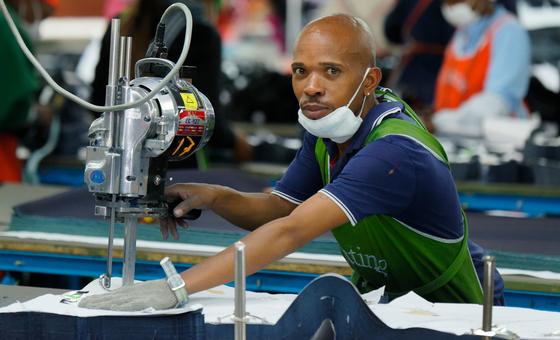
A critical element of the shift taking place on the continent is the African Continental Free Trade Area (AfCFTA), which came into effect in January 2021 and represents the world’s largest free-trade area with a market of 1.2 billion people.

Most African LLDCs are members of the AfCFTA, which is already reducing trade barriers, unlocking vast opportunities for LLDCs to actively participate in and benefit from intra-African and global trade, according to UNDP.

“Land-linked flips the narrative: inland countries become bridges, not barriers. With AfCFTA, LLDCs can turn geography into a competitive edge – moving goods, services, and data faster and more affordably across Africa and beyond,” said Mr. Doe.

The shift also requires coordinated policy reforms, as well as leveraging innovation, inclusive governance, resilience and financing to drive sustainable and inclusive growth.

The paper also cites digital connectivity as a “transformative pathway” for African LLDCs to transcend geographic constraints and establish direct linkages with regional and global markets.

According to the 2024 International Telecommunication Union (ITU) Facts and Figures, 39 per cent of the population in LLDCs is online, with internet access in African LLDCs reaching up to 20 per cent.

The current digital landscape, though challenging, demonstrates that African LLDCs are positioned to leverage innovative connectivity solutions that bypass traditional dependencies on coastal neighbouring countries, according to the UNDP paper. These notwithstanding, LLDCs continue to rely on neighbouring coastal countries for undersea cable access.

“We are also concerned that landlocked developing countries do not have easy access to submarine cables” Cosmas Luckyson Zavazava, Director of the ITU Telecommunication Development Bureau, told reporters in Awaza.

“And for those that are doubly landlocked, it is a bigger challenge because you must have good relations with your neighbours for you to be able to communicate.”

Find all our coverage on LLDC3 here.
Source link

Erasure or empowerment? In Africa’s Sahel, women confront a stark choice

Risks to women and girls across this vast region are severe and systemic, as political instability, environmental collapse and a declining international presence take their toll.

From abductions and child marriage to exclusion from schools and public life, their lives and opportunities are being steadily stripped away, Sima Bahous, Executive Director of UN Women, told ambassadors in the Security Council on Thursday.

In the Sahel, where the world’s gravest concerns converge, women and girls bear the brunt,” she said.

She added that crises due to increasing terrorism, poverty, hunger, a crumbling aid system and shrinking civic space are “converging – violently and disproportionately – on their bodies and their futures.

UN Women Executive Director Bahous briefs the Security Council.

Life is being erased

In countries like Burkina Faso, Mali, Niger and Chad, life for women under extremist control “is one of erasure from public space,” Ms. Bahous said.

Their movement, visibility and even clothing are heavily restricted. Schools have been burned or shut down, leaving more than one million girls without access to education.

Abduction is not a by-product of terrorism in the Sahel – it is a tactic,” Ms. Bahous said, noting that in Burkina Faso alone, the number of women and girls abducted has more than doubled over the past 18 months.

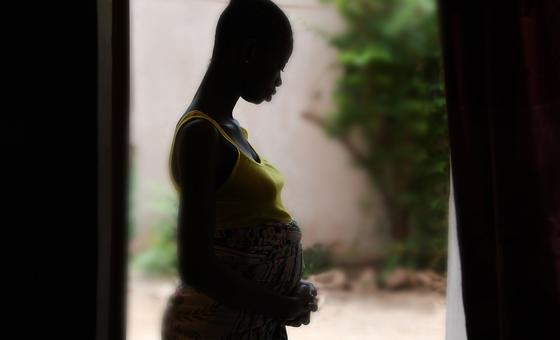
In Mali, 90 percent of women are affected by female genital mutilation. Rates of child marriage in parts of the region are among the highest in the world. Maternal mortality – driven by early pregnancy and poverty – is among the world’s worst.

Dwindling resilience and attention

“The distances women and girls travel for water or firewood are growing longer, while their safety is shrinking,” Ms. Bahous said.

Two-thirds of women surveyed report feeling unsafe during these journeys. Climate change only deepens the hardship, with extreme heat and drought increasing both mortality and food insecurity across the region.

Yet despite mounting needs, international support is waning.

Only eight per cent of this year’s humanitarian appeal for the region had been met by May.  

Development assistance has fallen nearly 20 per cent over the past two years. As a result, women’s protection and empowerment programmes have been suspended, while government ministries focused on gender equality are being defunded, merged or closed.

SRSG Simão briefs the Security Council (via video).

Political space closing

At the same time, democratic and civic space is narrowing.

In Niger, only 14 percent of participants in recent institutional reforms were women. In Mali, just two out of 36 members drafting the new national charter were women.

Leonardo Santos Simão, head of the UN Office for West Africa and the Sahel (UNOWAS), also warned that a deteriorating security environment – marked by waves of jihadist attacks and political turbulence – is undermining progress and fuelling displacement.

He added that shrinking space for media, civil society and women’s organizations is threatening hard-won gains and that a broader crisis is undermining governance and peacebuilding efforts.  

“The region’s economy remains highly vulnerable to external shocks. Although macroeconomic indicators show improvement, rising debt levels continue to constrain governments’ capacity to provide essential services,” he said.

Fragile gains

Still, progress is possible – and in some instances, visible.

In Chad, women now hold 34 percent of parliamentary seats. In conflict-prone border zones in Mali and Niger, women’s participation in local peacebuilding rose from five percent to 25 percent, helping resolve over 100 disputes related to scarce natural resources.

Across the region, joint UN programming has increased adolescent girls’ return to school by 23 percent, while doubling women’s participation in local governance across 34 conflict-affected communities. In addition, a UN-World Bank initiative has reached over three million adolescent girls with health care, safe spaces and life-skills training.

Stand with Sahel’s women

Yet, these gains remain fragile.

We cannot abandon the Sahel – whatever the politics, whatever the funding landscapes, whatever the geopolitical headwinds,” Ms. Bahous said in conclusion.

Let us stand with the women of the Sahel – not out of charity, but in recognition of their power to shape a better future.

Source link

Africa’s push for HIV independence advances with first procurement of locally made medicines

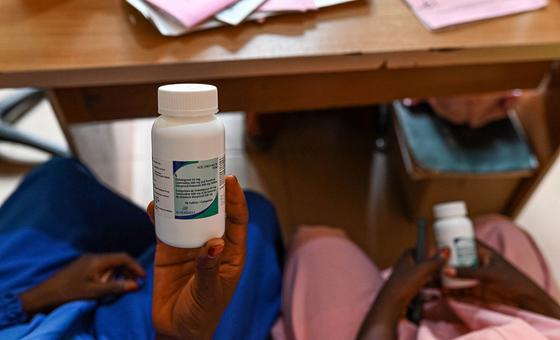
The development marks a milestone for a region that bears nearly 65 per cent of the global HIV burden and has long depended on imports of lifesaving antiretroviral medicines and testing kits. But that may be starting to change.

The human immunodeficiency virus (HIV) weakens the body’s immune system, reducing its ability to fight infections and certain cancers. Without timely intervention, it can progress to acquired immunodeficiency syndrome (AIDS), the most advanced stage of infection.

In 2023, Kenya-based pharmaceutical company Universal Corporation Ltd became the first African manufacturer to receive World Health Organization (WHO) prequalification to produce tenofovir disoproxil fumarate, lamivudine and dolutegravir (TLD) – a first-line antiretroviral therapy for HIV.

Now, in a major step forward, the Global Fund – a worldwide partnership financing HIV, tuberculosis and malaria responses – is procuring this locally produced HIV treatment for Mozambique, making it the first time African-manufactured TLD has been deployed through this channel.

The procurement of the African-manufactured first-line HIV treatment by the Global Fund for Mozambique is a great milestone towards strengthening supply chain systems in Africa,said Meg Doherty, Director of WHO’s Global HIV Programmes.

This will contribute to better health outcomes for people living with HIV who need uninterrupted medicine supplies.

Building regional capacity

WHO says the achievement is part of a broader push to bolster local production capacity and improve access to essential health technologies across Africa.

The UN agency has been partnering with countries, manufacturers and global health organizations – including the Global Fund and Unitaid – to expand quality-assured African manufacturing.

“Local production of quality-assured health products is an urgent priority,” said Rogerio Gaspar, WHO Director for Regulation and Prequalification.

With every African manufacturer that meets WHO prequalification standards, we move closer to a more self-reliant, resilient and equitable health system.

Progress, but structural gaps remain

Despite the milestone, WHO cautioned that production alone is not enough. To ensure long-term sustainability, the agency is calling for advanced market commitments, fair procurement policies and ongoing technical support.

WHO also points to diagnostics as a critical gap. With shifting donor funding, many countries are under pressure to maintain HIV testing programmes, which are the frontline of prevention and treatment.

In a related effort, Codix Bio, a Nigerian diagnostics company, recently received a sublicense to manufacture rapid diagnostic tests for HIV.

Locally produced HIV rapid tests will help increase affordability, and address supply chain vulnerabilities and delays
– WHO Director Meg Doherty

Having locally produced HIV rapid tests will help increase affordability, and more broadly address supply chain vulnerabilities and delays in access to diagnostics,” said Dr. Doherty.

Sustaining impact amid funding strain

As part of its guidance, the UN health agency is also encouraging countries to adopt low-cost, WHO-prequalified rapid HIV tests, especially as the first test in national algorithms, which can significantly cut costs while maintaining service delivery.

While the latest update marks tangible progress, more action is needed.

“Locally manufactured TLD is a major step towards that goal,” WHO said, “but more action is needed.”

Source link

‘Bet on youth’ to realise Africa’s digital potential, UN deputy chief says

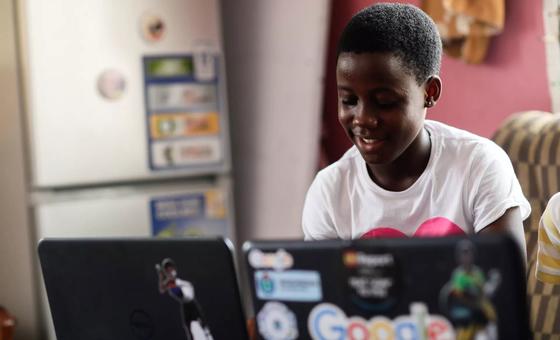
In 2024, only 34 per cent of women and 45 per cent of men on the continent used the internet, compared to global averages of 65 and 70 per cent. Meanwhile, 98 per cent of Africans under the age of 18 do not complete school with even basic STEM (science, technology, engineering and mathematics) skills, reflecting long-term underinvestment in education.  

This slow progress in digital integration and STEM education is impeding Africa’s ability to reach the Sustainable Development Goals (SDGs) by 2030, the report noted. The “digital divide” hits marginalised groups hardest, including women and rural communities.  

“Africa is a vast and populous continent, rich in natural endowments and talents. Yet much of that potential remains underutilised,” said Philémon Yang, the President of the General Assembly in a message to the meeting.  

The potential of youth

Deputy Secretary-General Amina Mohammed, told delegates that Africa must “bet on youth.”

By 2050, there will be over 850 million young people in Africa.   

“This is an incredible opportunity. Realising this potential means investing in STEM education now. It means building digital infrastructure that connects talent to opportunity,” Ms. Mohammed said.

But current systems do not sufficiently support young innovators – three-fourths of young Africans have insecure employment, lacking basic protections.

This lack of social protection is part of a wider labour rights gap, the report noted. In 2023, only 19 per cent of people in Africa had access to at least one form of social protection –such as social security or health insurance – compared to 53 per cent globally.

“Strong social protection is not just about safety nets. It is about creating the stability that allows societies to take risks, innovate and grow,” Ms. Mohammed said. 

People-cantered approaches

The report calls on governments and partners to adopt a people-cantered approach that promotes digital and technological innovation while also decent work, rights and intellectual property.  

“Resilience cannot be achieved without governance that places people at the centre of policy design and implementation,” the report said.

Speakers also stressed that African expertise must guide solutions.

“We reaffirm our collective determination to ensure that Africa’s development is led by its own people, grounded in knowledge, innovation and social justice,” said Ahmadou Lamin Samateh, Minister of Health of the Gambia, speaking for the African Group.

Power of partnerships

In his message, Mr. Yang said no single African country can achieve full digital integration alone; regional cooperation and multilateral support are essential.

“[Digital tools] can offer a way into the future… [but] no country can close these gaps alone…multilateral cooperation with the United Nations at its centre has secured eight decades of unprecedented human progress,” he said.

Ms. Mohammed emphasised the possibilities “when we get this right.”

“The choice is ours — we can continue business-as-usual and watch the 2030 Agenda slip away or we can support systemic transformation.” 

Source link