
Africa’s push for HIV independence advances with first procurement of locally made medicines

The development marks a milestone for a region that bears nearly 65 per cent of the global HIV burden and has long depended on imports of lifesaving antiretroviral medicines and testing kits. But that may be starting to change.

The human immunodeficiency virus (HIV) weakens the body’s immune system, reducing its ability to fight infections and certain cancers. Without timely intervention, it can progress to acquired immunodeficiency syndrome (AIDS), the most advanced stage of infection.

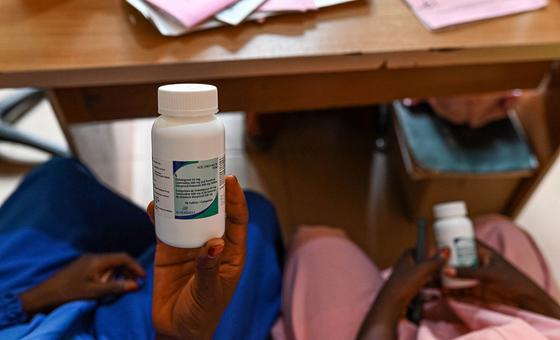
In 2023, Kenya-based pharmaceutical company Universal Corporation Ltd became the first African manufacturer to receive World Health Organization (WHO) prequalification to produce tenofovir disoproxil fumarate, lamivudine and dolutegravir (TLD) – a first-line antiretroviral therapy for HIV.

Now, in a major step forward, the Global Fund – a worldwide partnership financing HIV, tuberculosis and malaria responses – is procuring this locally produced HIV treatment for Mozambique, making it the first time African-manufactured TLD has been deployed through this channel.

The procurement of the African-manufactured first-line HIV treatment by the Global Fund for Mozambique is a great milestone towards strengthening supply chain systems in Africa,said Meg Doherty, Director of WHO’s Global HIV Programmes.

This will contribute to better health outcomes for people living with HIV who need uninterrupted medicine supplies.

Building regional capacity

WHO says the achievement is part of a broader push to bolster local production capacity and improve access to essential health technologies across Africa.

The UN agency has been partnering with countries, manufacturers and global health organizations – including the Global Fund and Unitaid – to expand quality-assured African manufacturing.

“Local production of quality-assured health products is an urgent priority,” said Rogerio Gaspar, WHO Director for Regulation and Prequalification.

With every African manufacturer that meets WHO prequalification standards, we move closer to a more self-reliant, resilient and equitable health system.

Progress, but structural gaps remain

Despite the milestone, WHO cautioned that production alone is not enough. To ensure long-term sustainability, the agency is calling for advanced market commitments, fair procurement policies and ongoing technical support.

WHO also points to diagnostics as a critical gap. With shifting donor funding, many countries are under pressure to maintain HIV testing programmes, which are the frontline of prevention and treatment.

In a related effort, Codix Bio, a Nigerian diagnostics company, recently received a sublicense to manufacture rapid diagnostic tests for HIV.

Locally produced HIV rapid tests will help increase affordability, and address supply chain vulnerabilities and delays
– WHO Director Meg Doherty

Having locally produced HIV rapid tests will help increase affordability, and more broadly address supply chain vulnerabilities and delays in access to diagnostics,” said Dr. Doherty.

Sustaining impact amid funding strain

As part of its guidance, the UN health agency is also encouraging countries to adopt low-cost, WHO-prequalified rapid HIV tests, especially as the first test in national algorithms, which can significantly cut costs while maintaining service delivery.

While the latest update marks tangible progress, more action is needed.

“Locally manufactured TLD is a major step towards that goal,” WHO said, “but more action is needed.”
Source link

WHO urges roll-out of first long-acting HIV prevention jab

Injectable lenacapavir – LEN, for short – is a highly effective, long-acting antiretroviral alternative to daily oral pills and other shorter-acting options, according to the World Health Organization (WHO).

“While an HIV vaccine remains elusive, lenacapavir is the next best thing: a long-acting antiretroviral shown in trials to prevent almost all HIV infections among those at risk,” said Tedros Adhanom Ghebreyesus, WHO Director-General.

Test kit advantage

WHO’s support for the injectable drug is significant because HIV prevention efforts are stagnating around the world.

To make it easier for people to receive the injection close to home, the UN agency also recommends the use of rapid testing kits for the disease, as opposed to “complex, costly procedures”.

According to the agency, 1.3 million people contracted HIV in 2024; people most impacted were sex workers, men who have sex with men, transgender people, people who inject drugs, people in prisons, and children and teens.

“WHO is committed to working with countries and partners to ensure this innovation reaches communities as quickly and safely as possible,” insisted Tedros, in comments during the 13th International AIDS Society Conference (IAS 2025) on HIV Science, in Kigali, Rwanda.

The recommendation for LEN is also in line with the US health authorities which approved it in June.

Call for implementation

Although access to the LEN injection remains limited outside clinical trials today, WHO urged governments, donors and partners to incorporate LEN “immediately” within national combination HIV-prevention programmes.

Other WHO-supported HIV-prevention options include daily oral tablets, injectable cabotegravir – which is injected once every two months – and the dapivirine vaginal ring, as part of a growing number of tools to end the HIV epidemic.

Funding dilemma

Amid massive funding cuts to the global effort to end HIV-AIDS – including the leading US Government programme launched in 2003, PEPFAR, focusing on combating the disease in Africa – WHO also issued new operational guidance on how to sustain priority HIV services.

“We have the tools and the knowledge to end AIDS…what we need now is bold implementation of these recommendations, grounded in equity and powered by communities,” said Dr Meg Doherty, Director of WHO’s Department of Global HIV, Hepatitis and STI Programmes and incoming Director of Science, Research, Evidence and Quality for Health.

HIV remains a major global public health issue.

By the end of 2024, an estimated 40.8 million people were living with HIV with an estimated 65 per cent in Africa. Approximately 630,000 people died from HIV-related causes globally, and an estimated 1.3 million people acquired HIV, including 120,000 children.

More positively, access to HIV drugs continues to expand, with 31.6 million people receiving treatment in 2024, up from 30.3 million a year earlier. Without anti-retroviral medication, the HIV virus attacks the body’s immune system, leading ultimately to the onset of AIDS.

Source link

DR Congo: New initiative to eliminate HIV in children ‘a beacon of hope’

“Our country can no longer tolerate children being born and growing up with HIV, when tools exist to prevent, detect and effectively treat this infection,” President Félix Tshisekedi declared at a recent government conference in the south-eastern Lualaba province, as he launched the five-year initiative.

Backed by an initial commitment of $18 million in national funds, the Presidential Initiative to End Pediatric AIDS will focus on political leadership, systems strengthening and inclusive healthcare access particularly for children, adolescents, and pregnant women.

It also aligns well with DRC’s global commitments under the Sustainable Development Goal 3 (SDG 3) to ensure healthy lives and promote well-being for all.

Children lagging behind

The initiative marks a renewed commitment by the DRC to address children’s extremely limited access to HIV prevention and treatment services.

While the DRC has made notable strides in adult HIV response – 91 per cent of adults living with HIV now have access to antiretroviral treatment – children continue to lag far behind. 

Only 44 per cent of children living with HIV in the country currently receive lifesaving treatment, a figure that has remained unchanged for over a decade.

Every year, thousands of Congolese children are still infected, often due to a lack of screening among pregnant women, depriving the health system of a crucial opportunity to prevent mother-to-child transmission as well as saving the mother’s live.

“The eradication of paediatric AIDS is a moral imperative, an imperative of social justice and an indicator of dignity,” Mr. Tshisekedi said.

Four core priorities

The Presidential Initiative targets four core areas:

  • Improving early detection and treatment of HIV for children, adolescents and pregnant women
  • Preventing new infections in children, adolescents and mothers
  • Guarantee systematic and immediate treatment for those diagnosed
  • Remove structural barriers hindering young people’s access to health services 

A breath of fresh air

The UN Joint Programme on HIV/AIDS (UNAIDS) praised the initiative as an example of the national leadership needed to close critical gaps in global HIV response.

Susan Kasedde, UNAIDS Country Director in the DRC, commended the initiative as “a breath of fresh air” at a time when global development financing is under strain.

“At a time when development financing is experiencing turbulence and risk jeopardizing the systems that support the most vulnerable, President Tshisekedi’s leadership initiative is a beacon of hope,” she said.

According to UNAIDS, recent funding cuts are threatening critical HIV services, with stock of medication and condoms feared to run out within months. Key areas like antenatal testing, paediatric treatment and data quality monitoring have also been impacted. 

Clinical Trials of Antibiotics on Children

Central Licensing Authority i.e. Drugs Controller General (India) has given approval for conduct of various clinical trials of Antibiotics on children under one year of age. During the last three years, such clinical trials approved were mainly related to trials in Multi Drug Resistant Tuberculosis (MDRTB) and Tuberculosis Meningitis in children. The details of the clinical trials are registered in Clinical Trial Registry of India (CTRI), which is publicly available (www.ctri.nic.in).

Antibiotic use is a major driver of resistance. Neonates are more prone to infections and vulnerable to ineffective treatment. Sepsis remains a leading cause of mortality and morbidity, especially during the first five days of life and in low and middle-income countries (LMIC).

Antibiotics are included in Schedule H and H1 to the Drugs & Cosmetics Rules, 1945, and, therefore, cannot be sold in retail except on and in accordance with the prescription of a Registered Medical Practitioner.

Indian Council of Medical Research (ICMR) has launched a programme on Antimicrobial Stewardship, Prevention of Infection and Control (ASPIC) in 2012. Functional infection control programmes not only cut down the rates of nosocomial infections, but also reduce the volume of antibiotic consumption and are a critical part of any comprehensive strategy to contain antimicrobial resistance (AMR). Further, a red line campaign has been launched to regulate over the counter sale of Schedule H antibiotics. The campaign is aimed at discouraging unnecessary prescription and over-the-counter sale of antibiotics causing drug resistance for several critical diseases including TB, malaria, urinary tract infection and even HIV.

The Ministry of Health & Family Welfare has also launched a programme named ‘National Programme on Containment of Antimicrobial Resistance’ to address the problem of growing AMR.

The Minister of State (Health and Family Welfare), Sh Faggan Singh Kulaste stated this in a written reply in the Rajya Sabha here today.