

On a sandy riverbank, a modest school crowned with a solar-paneled roof tells a different story – one of resilience, ingenuity, and hope for the next generation.
A school built for the future
For three years, the Maria Naura Gouvêa Municipal School has been living out one of COP30’s central themes: adaptation.
Its flood- and erosion-resistant walls, insulated roofing, solar-powered energy systems, and satellite internet make it a rare safe haven. A 150-meter well ensures clean water – a luxury in many parts of the region.
During our visit, Kamal Kishore, head of the UN Office for Disaster Risk Reduction (UNDRR), called the school “a guiding light,” adding: “I would like to see at least 100,000 schools like this one across the globe.”
Droughts, erosion and rising seas
Barcarena’s mayor, Renato Ogawa, explained that climate impacts here are subtle, but disruptive:
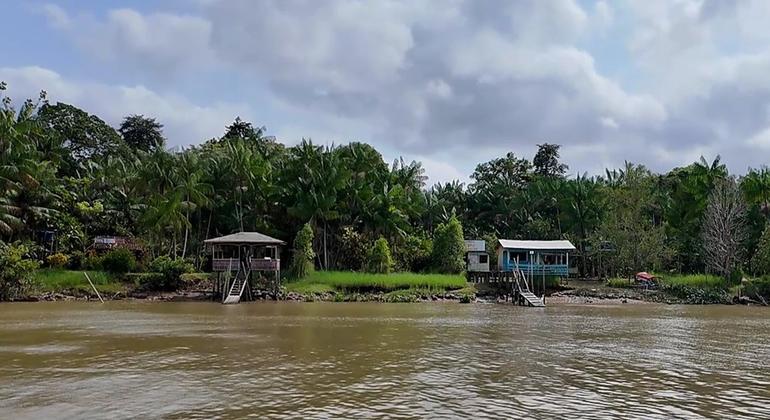
“The main event is the drought of rivers and streams. One week, students manage to arrive by boat; the next, because of tidal variations, they cannot reach school on time and must walk along slopes and freshwater beaches that, due to sea-level rise, have started to flood, causing erosion.”
Containment walls now line the riverbanks, but Mr. Ogawa warned: “If nothing is done, over the years we will need to raise and expand that wall.”
Sea-level rise is also altering fish movements, threatening local diets as river water grows saltier.
These challenges have pushed Barcarena to the forefront of climate adaptation, earning it global recognition.

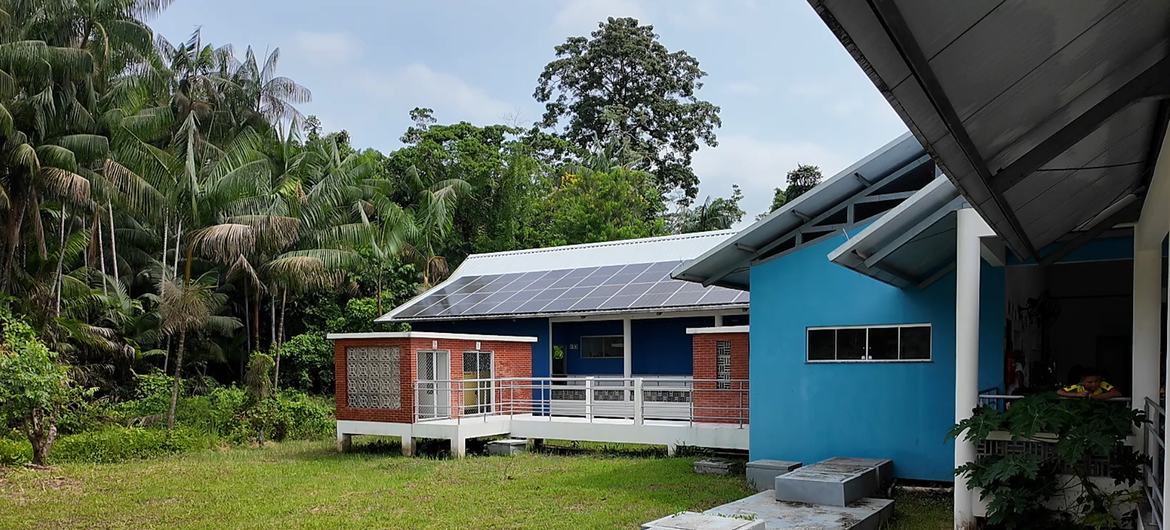
For the past three years, the Maria Naura Gouvêa Municipal School, in Pará, Brazil, has been putting into practice one of the themes debated at the COP30: adapting to a world full of dangerous climate events.
Local leadership on the global stage
In 2023, Barcarena became the world’s 25th Resilience Hub – and the first in the Amazon. These UNDRR-identified hubs are cities recognized for their strong track record in disaster risk reduction and climate adaptation, and they commit to mentoring other municipalities by sharing practical solutions and expertise.
UN-Habitat Executive Director Anaclaudia Rossbach stressed why COP30 must amplify voices like Mr. Ogawa’s: “We must protect people to protect the planet. And another key point is the importance of local governments, local action and local leadership.”
Recognition, she added, is not enough: “It must be accompanied by solid and robust mechanisms for implementation.”

‘An exception in the Amazon’
Brazil’s Minister of Cities, Jader Filho, praised Barcarena’s progress but noted: “The school is an exception and does not reflect the educational reality of the wider Amazon. But it shows what is possible when financing and political will align.”
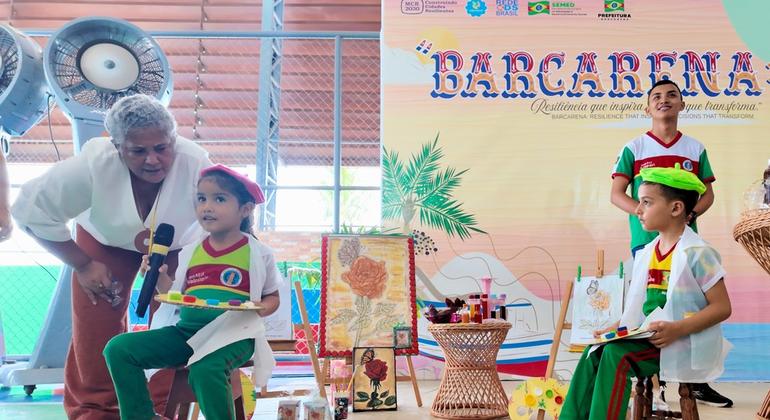
Students showcased projects turning cooking oil into soap, creating natural dyes from vegetables, and planting trees to combat heat.
Lyndisse Wandra Santos summed up their spirit: “Each tree planted is a gesture of love and hope; to adapt is to keep moving forward despite difficulties.”
Kamal Kishore said he was inspired by their vision: “Brazil is a success story,” he noted, citing more than 2,000 cities worldwide in the Making Cities Resilient campaign, many of them Brazilian.
COP30’s legacy in Barcarena
Mayor Ogawa revealed that COP30 has already accelerated investments: “By the end of the year, we will achieve 90 per cent sewage treatment coverage and potable water for 95 per cent of the municipality. These goals would otherwise take 10 to 15 years.”
Next on his agenda: transitioning public transport boats to clean energy.
UN-Habitat chief Ms. Rossbach warned that similar investments are urgently needed elsewhere, especially in housing, as millions live in precarious conditions under growing climate threats.
From ‘Forest COP’ to ‘Cities COP’
She pointed to Rio’s Maré slum, where temperatures can routinely soar 6°C above the city average, based on data collected by residents themselves.
Her hope is that “this Forest COP [as COP30 is billed because it is being held in Belém, Brazil, near the Amazon rainforest] must also strengthen the urban agenda, prioritizing protection for the most vulnerable.”
As COP30 unfolds in Belém, Barcarena’s story offers a powerful lesson: climate resilience begins at the local level. From solar-powered classrooms to student-led projects, this Amazon municipality shows that adaptation is not just possible – it’s already happening. And in a world facing rising seas and shifting tides, these lessons matter more than ever.
UN News is reporting from Belém, bringing you front-row coverage of everything unfolding at COP30.