UN rights chief bears witness to trauma and resilience in Sudan

Volker Türk briefed journalists in the Kenyan capital following a five-day mission to Sudan, where “a chronicle of cruelty is unfolding before our very eyes”.

He called on “all those who have any influence, including regional actors and notably those who supply the arms and benefit economically from this war” to act urgently to bring it to an end.

Mr. Türk last visited Sudan in November 2022.  Back then, he was deeply inspired by civil society—particularly the young people and women who spearheaded the 2018 revolution.

Salute to the people’s struggle for peace 

While the war between the Sudanese Armed Forces (SAF) and the Rapid Support Forces (RSF) “has plunged the country into an abyss of unfathomable proportions” – affecting the entire nation and all its people – “the spirit of the struggle for peace, justice and freedom…is not broken,” he affirmed.

“I bore witness in Sudan to the trauma of the unspeakable brutality that people have suffered – but also to the resilience and defiance of the human spirit.”

Mr. Türk met with various sectors of society, including young people who organise and deliver aid to their communities “often in the face of massive bureaucratic hurdles, risking detention and violence.”

As one volunteer told him, “The price of war is being paid by young people. Sudanese young people are at the frontlines of this war, serving those who are in need of humanitarian aid.”

End ‘intolerable attacks’ on infrastructure

The rights chief highlighted attacks on critical civilian infrastructure, such as the Merowe dam and hydroelectric power station which once supplied 70 per cent of electricity needs nationwide.  

It has been repeatedly hit by drones launched by the RSF, including in recent weeks. Such attacks are serious violations and can amount to war crimes.

He called for both warring parties to “cease intolerable attacks against civilian objects that are indispensable to the civilian population, including markets, health facilities, schools and shelters.”

Mr. Türk also met people displaced from the besieged city of El Fasher in North Darfur who are now living in the Al Afad camp some 1,200 kilometres away. Among them was a four-year-old who lost his hearing due to bombardment and a three-year-old who wouldn’t smile.

“One woman saw her husband and only son killed,” he said. “She is still bedridden from grief, trauma, and the bullet she took in her shoulder while trying – in vain – to shield her son.”

Women’s bodies ‘weaponized’

He shared the testimony of Aisha*, 20, who was fleeing El Fasher on a donkey cart in October when armed men on camels ordered the women to come down. Her brother tried to intervene but was shot, while her mother begged the men to take her instead of the children.

“They hit her, took me and told me to keep quiet or they will kill my mother. Then what happened…happened. My period has not come since then,” she told Mr. Türk.

In Sudan, “women and girls’ bodies have been weaponized,” he said. Sexual violence is being used as a weapon of war – also a war crime – and it is widespread and systematic.

The UN rights chief also heard accounts of widespread summary executions. He underlined that all parties to the conflict “have perpetrated gross violations and abuses of international human rights law and serious violations of international humanitarian law, notably when the fighting intensifies to control new areas.”

Concern for the Kordofan region

He expressed deep concern that atrocity crimes committed inf El Fasher are at risk of being repeated in the Kordofan region, where fighting has intensified since late October. This is happening amid famine conditions in the city of Kadugli and risk of famine elsewhere, including Dilling, he said in a stark warning.

He deplored the proliferation of advanced military equipment across Sudan, particularly drones, saying “it is despicable that large sums of money are being spent on procuring increasingly advanced weaponry – funds that should be used to alleviate the suffering of the population.”

Another concern is the increasing militarization of society by all parties to the conflict, including through the arming of civilians and recruitment and use of children. Civil society and journalists are also facing restrictions or being targeted through smear campaigns.

Focus on the Sudanese people

The UN rights chief concluded his remarks by calling on the warring parties to protect civilians and civilian infrastructure, guarantee safe passage for people to leave conflict areas, and ensure unimpeded access for the delivery of humanitarian aid.

“Measures, such as humane treatment of detainees, accounting for and establishing the fate of missing persons, and releasing civilians detained for alleged ‘collaboration’ with the opposing party are also priority areas,” he added.

Mr. Türk repeated the plea that he made when he last visited Sudan.

I urge all those involved to set aside entrenched positions, power games, and personal interests, and to focus on the common interests of the Sudanese people,” he said.

“Again, I leave with a plea that human rights be central to building confidence and bringing this war to an end, to resuming the difficult task of building a sustainable peace.”

This is difficult, he acknowledged, “but certainly not impossible, with the resilience and power of the Sudanese people.”

*Name changed for protection purposes.

Source link

In the Amazon, a school becomes a beacon of climate resilience

On a sandy riverbank, a modest school crowned with a solar-paneled roof tells a different story – one of resilience, ingenuity, and hope for the next generation.

A school built for the future

For three years, the Maria Naura Gouvêa Municipal School has been living out one of COP30’s central themes: adaptation.

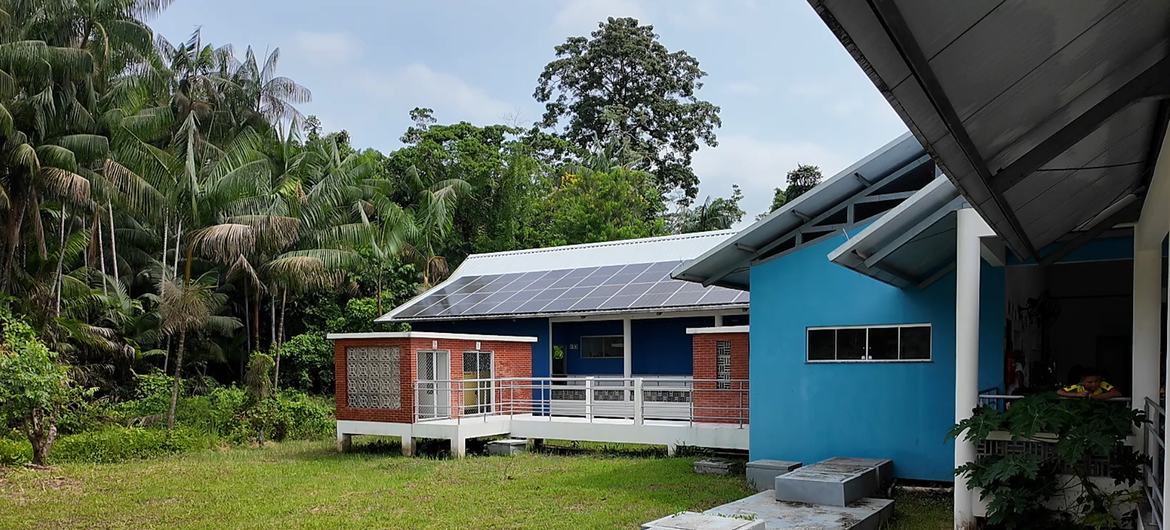
Its flood- and erosion-resistant walls, insulated roofing, solar-powered energy systems, and satellite internet make it a rare safe haven. A 150-meter well ensures clean water – a luxury in many parts of the region.

During our visit, Kamal Kishore, head of the UN Office for Disaster Risk Reduction (UNDRR), called the school “a guiding light,” adding: “I would like to see at least 100,000 schools like this one across the globe.”

Droughts, erosion and rising seas

Barcarena’s mayor, Renato Ogawa, explained that climate impacts here are subtle, but disruptive:

“The main event is the drought of rivers and streams. One week, students manage to arrive by boat; the next, because of tidal variations, they cannot reach school on time and must walk along slopes and freshwater beaches that, due to sea-level rise, have started to flood, causing erosion.”

Containment walls now line the riverbanks, but Mr. Ogawa warned: “If nothing is done, over the years we will need to raise and expand that wall.”

Sea-level rise is also altering fish movements, threatening local diets as river water grows saltier.

These challenges have pushed Barcarena to the forefront of climate adaptation, earning it global recognition.

UN News/Felipe de Carvalho

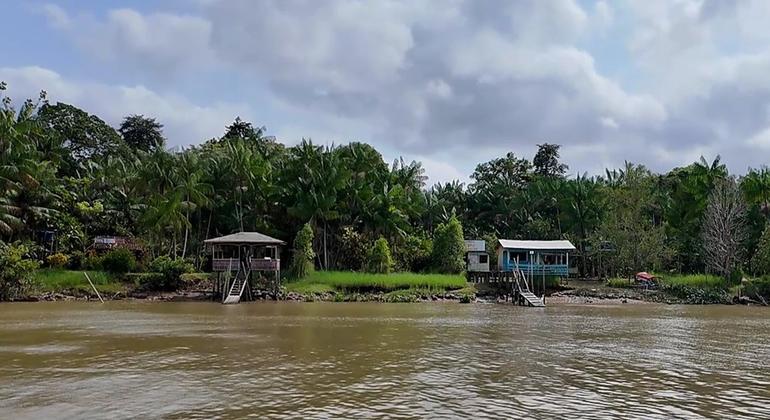
For the past three years, the Maria Naura Gouvêa Municipal School, in Pará, Brazil, has been putting into practice one of the themes debated at the COP30: adapting to a world full of dangerous climate events.

Local leadership on the global stage

In 2023, Barcarena became the world’s 25th Resilience Hub – and the first in the Amazon. These UNDRR-identified hubs are cities recognized for their strong track record in disaster risk reduction and climate adaptation, and they commit to mentoring other municipalities by sharing practical solutions and expertise.

UN-Habitat Executive Director Anaclaudia Rossbach stressed why COP30 must amplify voices like Mr. Ogawa’s: “We must protect people to protect the planet. And another key point is the importance of local governments, local action and local leadership.”

Recognition, she added, is not enough: “It must be accompanied by solid and robust mechanisms for implementation.”


UN News/Felipe de Carvalho

‘An exception in the Amazon’

Brazil’s Minister of Cities, Jader Filho, praised Barcarena’s progress but noted: “The school is an exception and does not reflect the educational reality of the wider Amazon. But it shows what is possible when financing and political will align.”

Students showcased projects turning cooking oil into soap, creating natural dyes from vegetables, and planting trees to combat heat.

Lyndisse Wandra Santos summed up their spirit: “Each tree planted is a gesture of love and hope; to adapt is to keep moving forward despite difficulties.”

Kamal Kishore said he was inspired by their vision: “Brazil is a success story,” he noted, citing more than 2,000 cities worldwide in the Making Cities Resilient campaign, many of them Brazilian.

COP30’s legacy in Barcarena

Mayor Ogawa revealed that COP30 has already accelerated investments: “By the end of the year, we will achieve 90 per cent sewage treatment coverage and potable water for 95 per cent of the municipality. These goals would otherwise take 10 to 15 years.”

Next on his agenda: transitioning public transport boats to clean energy.

UN-Habitat chief Ms. Rossbach warned that similar investments are urgently needed elsewhere, especially in housing, as millions live in precarious conditions under growing climate threats.
UN News/Felipe de Carvalho

From ‘Forest COP’ to ‘Cities COP’

She pointed to Rio’s Maré slum, where temperatures can routinely soar 6°C above the city average, based on data collected by residents themselves.

Her hope is that “this Forest COP [as COP30 is billed because it is being held in Belém, Brazil, near the Amazon rainforest] must also strengthen the urban agenda, prioritizing protection for the most vulnerable.”

As COP30 unfolds in Belém, Barcarena’s story offers a powerful lesson: climate resilience begins at the local level. From solar-powered classrooms to student-led projects, this Amazon municipality shows that adaptation is not just possible – it’s already happening. And in a world facing rising seas and shifting tides, these lessons matter more than ever.

UN News is reporting from Belém, bringing you front-row coverage of everything unfolding at COP30.
From crisis to cultivation: Haiti’s farmers build resilience one seed at a time

Instead of having seeds which sprout reliably, farmers contend with batches which may grow only 40 or 50 per cent of the time. This not only diminishes their yield and profit but also decreases their ability to sustain their livelihoods.  

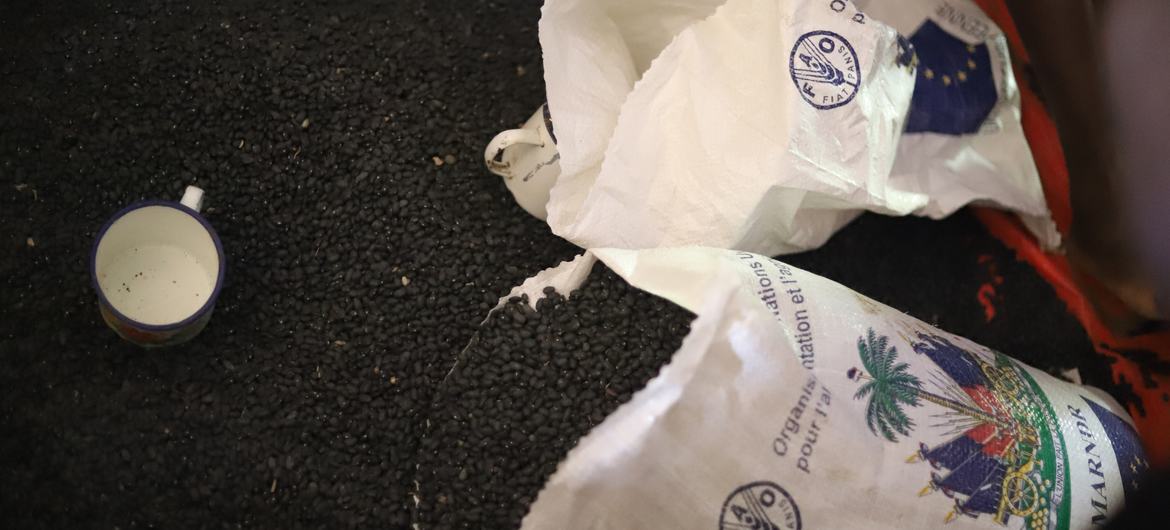
The Food and Agriculture Organization (FAO) is working with the Ministry of Agriculture in Haiti to change this by localising the seed economy and training members of organized seed banks known as Groupements de Production Artisanale de Semences (GPAS).   

“We realised that most of the seeds were of doubtful quality, that is to say they were not adapted to certain climate conditions… and as long as they are not well-adapted and are not good quality, we will have weak production,” PierreFrantz Jacques, a former farmer and one of FAO’s seed bank project managers, told UN News. 

UN Haiti/Daniel Dickinson

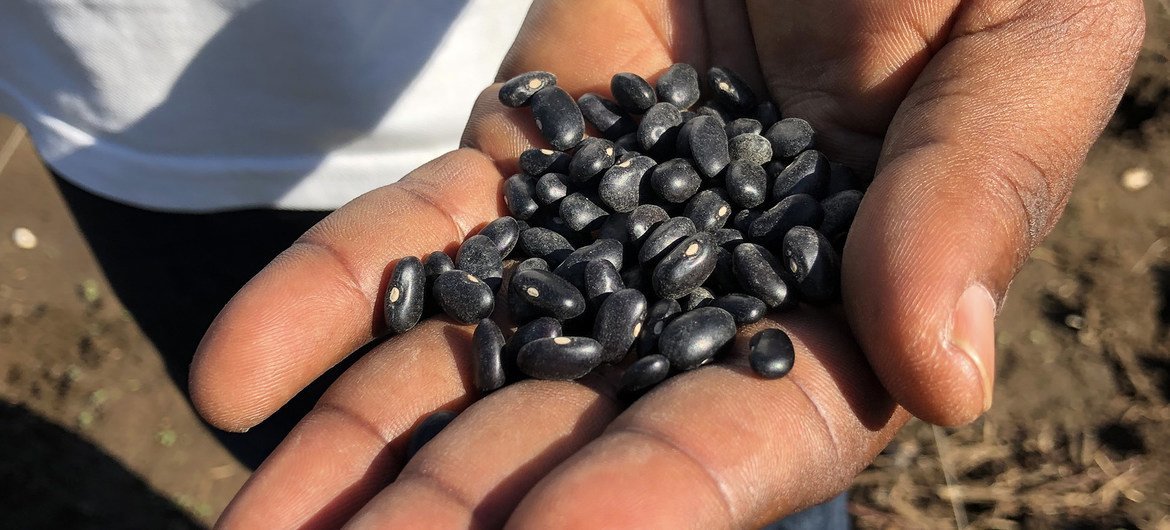
Seed banks in Haiti work to provide farmers with high quality seeds.

There are now over 200 GPAS located throughout Haiti, which cultivate high-quality seeds to distribute to other farmers with the goal of increasing farmers’ yields and reducing dependency on foreign seed and food imports.  

Especially today, these groups play an important role with more than half of the country facing emergency food insecurity and with agricultural production threatened by armed violence due to increased gang activity.  

“GPAS, in providing seeds of quality, contributes to the improvement of agricultural productivity and food security in communities,” Mr. Jacques said.  

A beginning amidst catastrophe

Around two-thirds of Haiti’s population relies on agriculture for their livelihoods, most of them are small farmers. However, because of recent globalizing forces, these farmers only produce 40 per cent of Haiti’s food, creating an untenable food situation through which Haiti has become dependent on exports.  

Throughout the past decades, various FAO programmes in Haiti have worked to support seed production as one approach to reducing the trade deficit. The GPAS programme in particular was revitalized in 2010 following the catastrophic 7.0 earthquake which devastated Haiti and its agricultural sector.  

FAO works to distribute high quality seeds in Haiti to stabilize crop production.

During this humanitarian crisis and while helping with the provision of emergency assistance, FAO looked beyond the immediacy of the crisis and began considering what it would mean to rebuild the agricultural sector.  

“Immediately, we need to have resources from humanitarian assistance dedicated to resilience activities. You have to prepare for later from the beginning,” said Pierre Vauthier, FAO’s Representative in Haiti.  

In 2010, this meant recognising that seed systems in Haiti were insufficient, with many farmers dependent on external sources and varieties of low-quality permeating the formal and informal market.  

From emergency to resilience

This is where GPAS came in, giving them high-quality, first-generation seeds (semences de base) with which to jumpstart their enterprises. The groups were also trained in best practices for cultivation, harvesting and financial management.  

While this training does rely on scientific research and technological advances, it also seeks to deploy local knowledge of ecosystems.  

In this vein, ultimately, it is the GPAS farmers who pick the seed varieties they want to cultivate, with many choosing local species which are already well-adapted to the environment and already a part of local agricultural traditions.

“The farmers and locals know their environment, all the particularities. They know the type of soil, the type of climate. And this knowledge is passed down from generation to generation,” Mr. Jacques said.  

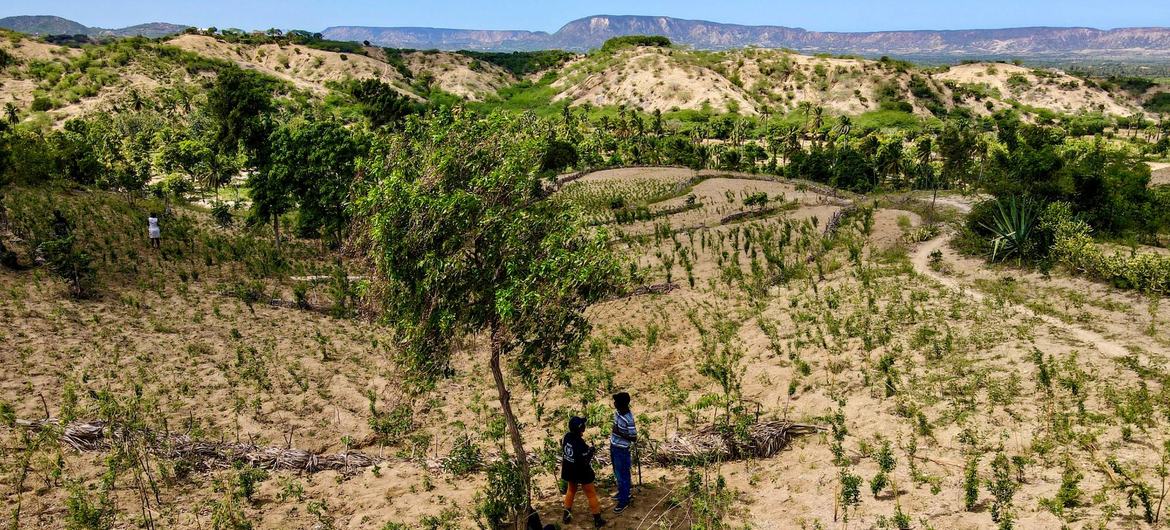
Climate shocks have plagued Haiti’s agricultural sector.

Additionally, FAO works to provide seed banks with silos and other tools to practice proper storage. This is particularly important during climate shocks, enabling farmers to better protect stocks despite extreme weather events.  

“We can consider the seeds as an adaptation tool which allows farmers to continue to cultivate crops even during extreme conditions,” Mr. Jacques said.  

Ultimately, a program like GPAS is at the heart of what FAO does, Mr. Vauthier said — yes, FAO facilitates humanitarian assistance, but their real expertise lies in what comes after, in creating self-sustaining communities.  

“Resilience can give communities back dignity. It can make your brain think in a very different way, not as assisted but as someone taking control of his own life,” Mr. Vauthier said.  

One seed matters

Haiti is facing a protracted crisis — 1.3 million people displaced, almost six million facing emergency food insecurity, impending climate shocks for which the country is ill-prepared and armed violence which is brutalising communities.  

In this context, perhaps it is hard to believe that one seed matters. But for FAO, sometimes change needs to be small, to be locally sustainable before it is exported to the entire country. These changes may not be revolutionary, Mr. Vauthier said, but they do work and they do last.  

Seed banks are much the same, according to Mr. Jacques.  

“What happens is that farmers are less dependent on other human beings. They are capable of producing their own seeds… they will contribute to reinforcing autonomy and food security,” he said.  

Source link

World News in Brief: Uganda’s refugee funding crisis, academic freedom tested in Serbia, rural resilience in Afghanistan

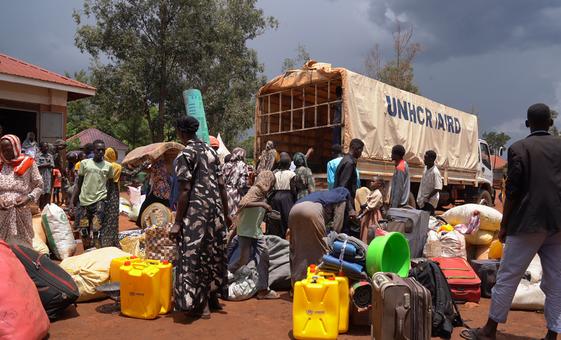
Uganda has a progressive refugee policy which enables refugees to work and access public services. This coupled with its geographic proximity to crises has made it the continent’s largest refugee-hosting country.

“Emergency funding runs out in September. More children will die of malnutrition, more girls will fall victim to sexual violence, and families will be left without shelter or protection unless the world steps up,” said Dominique Hyde, UNHCR’s director for external relations.

UNHCR estimates that it costs $16 per refugee per month to provide essential services, but at this point, the agency will only be able to deliver $5 worth of aid each month.  

Funding missing

Most refugees are entering Uganda from war-torn Sudan, South Sudan and the Democratic Republic of the Congo – all countries which have been ravaged by protracted armed conflicts and acute food insecurity.  

These refugees are seeking shelter and life-saving aid, and many of them are children.  

In a recent visit to some of the refugee camps, Ms. Hyde met one 16-year-old girl who fled violence in South Sudan after losing her parents. She is now caring for her four younger siblings alone.  

“She dreams of going back to school, but survival is all she can think about,” Ms. Hyde said.  

Children like her depend on the aid which UNHCR and the Uganda government provide. But with only 25 per cent of the funding required, the aid is quickly disappearing.

“Uganda has opened its doors, its schools, and its health centers. This model can succeed, but it can’t do it alone,” Ms. Hyde said.  

A test of democratic resilience in Serbia as crackdown on protests continues

Independent human rights experts warned Monday that Serbia’s intensifying crackdown on protests and protestors — especially students, professors and civil society — violates international human rights and undermines democracy.  

The protests, which began in late 2024 in response to an infrastructural collapse which killed 16 people, have become a nationwide call for accountability, transparency and justice.

“What we are witnessing in Serbia is a systematic attempt to silence critical voices and dismantle the independence of academic institutions. This is not just a student protest — it is a test of human rights accountability and democratic resilience,” the experts said.  

Independent experts are appointed by the Human Rights Council in Geneva to monitor and report on special human rights matters. They are independent of the UN system and any government.  

Renewed commitment  

Since the end of June, the experts said that they have observed increasingly violent repression of protests, including unlawful arrests, prolonged detention and smear and surveillance campaigns against individuals. Some protesters have reportedly been seriously injured.  

Educational institutions in particular have come under pressure with some universities slashing faculty salaries and some high school teachers have been threatened with disciplinary action for supporting the protesters.  

“Instead of listening to young people’s voices, the Government has chosen to punish them. This approach not only violates international human rights standards, but also, by its very nature, undermines the very foundation of a democratic society,” the experts said.

The experts called on the Serbian government to renew its commitment to human rights and justice, stressing that academic freedom and access to justice are pillars of democracy.

New programme in Afghanistan seeks to rebuild farmer resilience

The Food and Agriculture Organization (FAO), in concert with the United Kingdom, is launching a new agricultural resiliency programme in Afghanistan in the hopes of improving production and nutrition throughout the country.  

Resilient Agriculture Livelihoods (ReAL) hopes to reach over 150,000 people in all eight regions of the country by the end of next May. It will specifically target small-scale farmers, landless labourers, livestock keepers and women and girls.  

“Afghanistan’s farmers are extraordinarily resilient, but repeated climate and economic shocks are eroding this strength. This project lays down important pathways to help farmers rebuild that resilience,” said Richard Trenchard, the FAO representative in Afghanistan.

Agricultural cornerstone

The ReAL program will work to expand market access for farmers in addition to managing climate risks in a way that will promote sustainable land use and enable communities to not rely on humanitarian assistance long-term.  

Between 2022 and 2024, FAO reached over 30.3 million people in Afghanistan with emergency food relief and long-term resilience projects, work which helped to decrease the food insecurity crisis by half.  

“In a country where agriculture sustains most lives, this is a short-term investment with long-term impact,” said Mr. Trenchard. 

Source link