
From rural margins to media trailblazers: India’s women journalists are rewriting the news

Khabar Lahariya, literally “news waves”, is an all-women media organisation run since 2002 by rural reporters, many of them Dalit, Adivasi and Muslim, dispatching fresh stories from some of the most marginalised regions.

“We faced challenges at every level,” founder Kavita Devi told UN News. “People would say women can’t be journalists, but we went to villages, persisted and proved that women can not only report but tell stories that others cannot.”

Long before global conversations about diversity entered newsrooms, these women were building their own.

From illiterate to multimedia producer

Villagers initially doubted women could be journalists and educational barriers made recruiting reporters a daunting challenge, Ms. Devi said, recalling the scepticism they encountered.

At the time, female reporters were virtually absent from newsrooms in Uttar Pradesh and Bihar. Many of the women who joined Khabar Lahariya had little formal education.

One such journalist, Shyamkali, transformed from being illiterate to becoming a senior reporter.

Khabar Lahariya reports in local languages, including Bundeli, Awadhi and Bhojpuri, rejecting the idea that legitimacy requires elite, urban Hindi or English.

Reporting from the margins

“I didn’t know how to write a resume or handle a camera, but with training and guidance, I was able to learn everything, from interviewing to mobile journalism, and now I report stories that mainstream media ignore,” Shyamkali told UN News.

Khabar Lahariya’s reporting also goes beyond mere representation. Shyamkali recounted a story about a woman who, driven to desperation, acted violently against her abusive husband. 

Mainstream media reported the incident without context, focusing only on the shocking act, she said. But, Shyamkali’s reporting brought the woman’s perspective and underlying social realities to light, demonstrating how women journalists can add nuance, empathy and depth to stories often ignored or misrepresented.

Women ‘see their own image in the news’

Language plays a critical role in Khabar Lahariya’s mission. Publishing in local dialects like Bundeli, Awadhi and Bhojpuri, ensures that news is accessible, relatable and empowering for rural communities. 

“When we explain issues in their language, people understand better,” Ms. Devi said.

“They see their own image in the news, especially women.”

Game changing digital media

Transitioning from print to digital platforms has been a game changer for Khabar Lahariya, with its staff embracing mobile journalism, learning to anchor, produce and share news on social media platforms like Facebook, YouTube and Instagram.

Technology has empowered us to amplify voices from communities that were always ignored.

“Technology has empowered us to amplify voices from communities that were always ignored,” Shyamkali said, recalling the initial fear and excitement of tackling digital media.

“I never imagined handling a camera or sending live reports from a phone, but now I can.”

This digital expansion not only increases visibility, but enhances women’s agency, confidence and economic independence, proving that technology and training can transform social realities at the grassroots level.

Founded in 2002, Khabar Lahariya is an all-women media organisation run by rural reporters, many of them Dalit, Adivasi and Muslim.

Telling the whole story

Women remain just one in four people seen, heard or read about in the media, according to the 2025 Global Media Monitoring Project (GMMP) report.

When women’s voices are missing, the public is denied half the story.

Kalliopi Mingeirou, chief of UN Women’s section to end violence against women and girls, told UN News “this is not because women lack expertise or leadership” but because media continues to rely on the same narrow set of voices, too often defaulting to men as experts and decision makers.

Indeed, democracy depends on informed debate and inclusive decision making, she said.

“When women’s voices are missing, the public is denied half the story,” she said. “This distorts reality, weakens accountability and narrows the democratic space. In today’s context of backlash against gender equality, the exclusion of women in news is not only a gender issue, it is a democratic deficit.”

‘Radical rethink’ required

Progress on gender representation in media has not only stalled, it is under threat, according to the new report.

“These findings are both a wake-up call and a call to action,” said Kirsi Madi, Deputy Executive Director of UN Women. “When women are missing, democracy is incomplete.”

Despite making up half of the world’s population, women today account for just 26 per cent of news subjects and sources globally, a figure that has barely shifted in the last 15 years, the report found.

“A radical rethink is needed so that media can play its role in advancing equality,” Ms. Madi said. “Without women’s voices, there is no full story, no fair democracy, no lasting security and no shared future.”

Source link

World News in Brief: Uganda’s refugee funding crisis, academic freedom tested in Serbia, rural resilience in Afghanistan

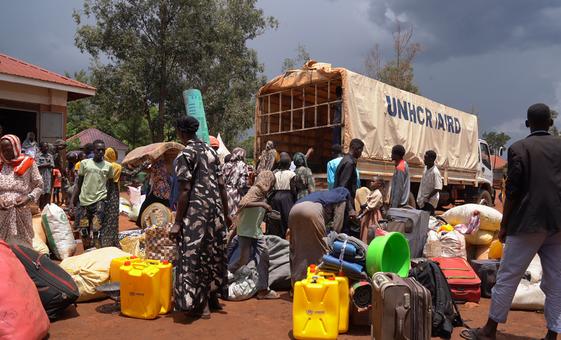
Uganda has a progressive refugee policy which enables refugees to work and access public services. This coupled with its geographic proximity to crises has made it the continent’s largest refugee-hosting country.

“Emergency funding runs out in September. More children will die of malnutrition, more girls will fall victim to sexual violence, and families will be left without shelter or protection unless the world steps up,” said Dominique Hyde, UNHCR’s director for external relations.

UNHCR estimates that it costs $16 per refugee per month to provide essential services, but at this point, the agency will only be able to deliver $5 worth of aid each month.  

Funding missing

Most refugees are entering Uganda from war-torn Sudan, South Sudan and the Democratic Republic of the Congo – all countries which have been ravaged by protracted armed conflicts and acute food insecurity.  

These refugees are seeking shelter and life-saving aid, and many of them are children.  

In a recent visit to some of the refugee camps, Ms. Hyde met one 16-year-old girl who fled violence in South Sudan after losing her parents. She is now caring for her four younger siblings alone.  

“She dreams of going back to school, but survival is all she can think about,” Ms. Hyde said.  

Children like her depend on the aid which UNHCR and the Uganda government provide. But with only 25 per cent of the funding required, the aid is quickly disappearing.

“Uganda has opened its doors, its schools, and its health centers. This model can succeed, but it can’t do it alone,” Ms. Hyde said.  

A test of democratic resilience in Serbia as crackdown on protests continues

Independent human rights experts warned Monday that Serbia’s intensifying crackdown on protests and protestors — especially students, professors and civil society — violates international human rights and undermines democracy.  

The protests, which began in late 2024 in response to an infrastructural collapse which killed 16 people, have become a nationwide call for accountability, transparency and justice.

“What we are witnessing in Serbia is a systematic attempt to silence critical voices and dismantle the independence of academic institutions. This is not just a student protest — it is a test of human rights accountability and democratic resilience,” the experts said.  

Independent experts are appointed by the Human Rights Council in Geneva to monitor and report on special human rights matters. They are independent of the UN system and any government.  

Renewed commitment  

Since the end of June, the experts said that they have observed increasingly violent repression of protests, including unlawful arrests, prolonged detention and smear and surveillance campaigns against individuals. Some protesters have reportedly been seriously injured.  

Educational institutions in particular have come under pressure with some universities slashing faculty salaries and some high school teachers have been threatened with disciplinary action for supporting the protesters.  

“Instead of listening to young people’s voices, the Government has chosen to punish them. This approach not only violates international human rights standards, but also, by its very nature, undermines the very foundation of a democratic society,” the experts said.

The experts called on the Serbian government to renew its commitment to human rights and justice, stressing that academic freedom and access to justice are pillars of democracy.

New programme in Afghanistan seeks to rebuild farmer resilience

The Food and Agriculture Organization (FAO), in concert with the United Kingdom, is launching a new agricultural resiliency programme in Afghanistan in the hopes of improving production and nutrition throughout the country.  

Resilient Agriculture Livelihoods (ReAL) hopes to reach over 150,000 people in all eight regions of the country by the end of next May. It will specifically target small-scale farmers, landless labourers, livestock keepers and women and girls.  

“Afghanistan’s farmers are extraordinarily resilient, but repeated climate and economic shocks are eroding this strength. This project lays down important pathways to help farmers rebuild that resilience,” said Richard Trenchard, the FAO representative in Afghanistan.

Agricultural cornerstone

The ReAL program will work to expand market access for farmers in addition to managing climate risks in a way that will promote sustainable land use and enable communities to not rely on humanitarian assistance long-term.  

Between 2022 and 2024, FAO reached over 30.3 million people in Afghanistan with emergency food relief and long-term resilience projects, work which helped to decrease the food insecurity crisis by half.  

“In a country where agriculture sustains most lives, this is a short-term investment with long-term impact,” said Mr. Trenchard. 

Source link