From rural margins to media trailblazers: India’s women journalists are rewriting the news

Khabar Lahariya, literally “news waves”, is an all-women media organisation run since 2002 by rural reporters, many of them Dalit, Adivasi and Muslim, dispatching fresh stories from some of the most marginalised regions.

“We faced challenges at every level,” founder Kavita Devi told UN News. “People would say women can’t be journalists, but we went to villages, persisted and proved that women can not only report but tell stories that others cannot.”

Long before global conversations about diversity entered newsrooms, these women were building their own.

From illiterate to multimedia producer

Villagers initially doubted women could be journalists and educational barriers made recruiting reporters a daunting challenge, Ms. Devi said, recalling the scepticism they encountered.

At the time, female reporters were virtually absent from newsrooms in Uttar Pradesh and Bihar. Many of the women who joined Khabar Lahariya had little formal education.

One such journalist, Shyamkali, transformed from being illiterate to becoming a senior reporter.

Khabar Lahariya reports in local languages, including Bundeli, Awadhi and Bhojpuri, rejecting the idea that legitimacy requires elite, urban Hindi or English.

Reporting from the margins

“I didn’t know how to write a resume or handle a camera, but with training and guidance, I was able to learn everything, from interviewing to mobile journalism, and now I report stories that mainstream media ignore,” Shyamkali told UN News.

Khabar Lahariya’s reporting also goes beyond mere representation. Shyamkali recounted a story about a woman who, driven to desperation, acted violently against her abusive husband. 

Mainstream media reported the incident without context, focusing only on the shocking act, she said. But, Shyamkali’s reporting brought the woman’s perspective and underlying social realities to light, demonstrating how women journalists can add nuance, empathy and depth to stories often ignored or misrepresented.

Women ‘see their own image in the news’

Language plays a critical role in Khabar Lahariya’s mission. Publishing in local dialects like Bundeli, Awadhi and Bhojpuri, ensures that news is accessible, relatable and empowering for rural communities. 

“When we explain issues in their language, people understand better,” Ms. Devi said.

“They see their own image in the news, especially women.”

Game changing digital media

Transitioning from print to digital platforms has been a game changer for Khabar Lahariya, with its staff embracing mobile journalism, learning to anchor, produce and share news on social media platforms like Facebook, YouTube and Instagram.

Technology has empowered us to amplify voices from communities that were always ignored.

“Technology has empowered us to amplify voices from communities that were always ignored,” Shyamkali said, recalling the initial fear and excitement of tackling digital media.

“I never imagined handling a camera or sending live reports from a phone, but now I can.”

This digital expansion not only increases visibility, but enhances women’s agency, confidence and economic independence, proving that technology and training can transform social realities at the grassroots level.

Founded in 2002, Khabar Lahariya is an all-women media organisation run by rural reporters, many of them Dalit, Adivasi and Muslim.

Telling the whole story

Women remain just one in four people seen, heard or read about in the media, according to the 2025 Global Media Monitoring Project (GMMP) report.

When women’s voices are missing, the public is denied half the story.

Kalliopi Mingeirou, chief of UN Women’s section to end violence against women and girls, told UN News “this is not because women lack expertise or leadership” but because media continues to rely on the same narrow set of voices, too often defaulting to men as experts and decision makers.

Indeed, democracy depends on informed debate and inclusive decision making, she said.

“When women’s voices are missing, the public is denied half the story,” she said. “This distorts reality, weakens accountability and narrows the democratic space. In today’s context of backlash against gender equality, the exclusion of women in news is not only a gender issue, it is a democratic deficit.”

‘Radical rethink’ required

Progress on gender representation in media has not only stalled, it is under threat, according to the new report.

“These findings are both a wake-up call and a call to action,” said Kirsi Madi, Deputy Executive Director of UN Women. “When women are missing, democracy is incomplete.”

Despite making up half of the world’s population, women today account for just 26 per cent of news subjects and sources globally, a figure that has barely shifted in the last 15 years, the report found.

“A radical rethink is needed so that media can play its role in advancing equality,” Ms. Madi said. “Without women’s voices, there is no full story, no fair democracy, no lasting security and no shared future.”

Source link

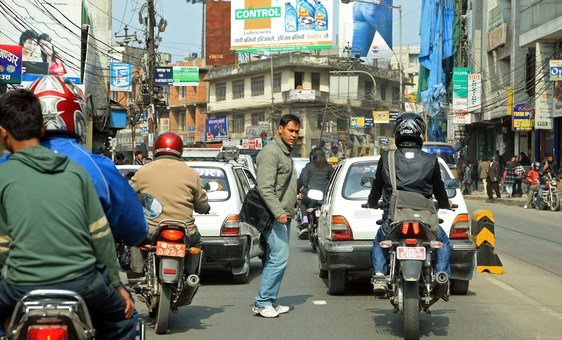
UN ready to assist Nepal following deadly protests over social media ban

Police used tear gas and opened fire on protesters attempting to storm the parliament complex in the capital, Kathmandu, according to media reports. 

Curfews have been imposed in parts of the city and in Rupandehi, with restrictions on movement effective in Pokhara.

‘So unlike Nepal’

UN Resident Coordinator Hanaa Fikry Ahmed Singer described the situation as “so unlike Nepal” and feared that casualty numbers will rise. 

“Lots of my staff here are crying,” she told UN News in an interview.  “They haven’t seen violence in their lifetime.”

The protests came just days after the Nepalese Government blocked more than 20 social media platforms such as WhatsApp, X and Facebook, as well as websites such as YouTube, for failing to register with the authorities.

The Government wanted them to align to the internal laws as well because they have been concerned about misinformation, hate speech and social harmony, and to ensure oversight and monitoring,” she said.

“However, the decision was widely criticised as being too broad and has been perceived by many, particularly young people who are very global, like all parts of the world now, they consider this as a restriction on freedom of expression and access to digital spaces.”

Concern for civilians

Ms. Ahmed Singer voiced deep concern for the safety of civilians and underscored the urgent need to ensure unrestricted medical access to the injured. 

“The immediate priority now is the protection of civilians, particularly young people who are at the forefront of the protests,” she said.

Social media came back online shortly before the interview.  The senior humanitarian official said she posted a message on X calling upon all parties to exercise maximum restraint, adhere to basic principles on use of force and firearms, and ensure that people can safely and peacefully exercise their democratic rights.

“The most important now is unrestricted access to medical care as well for those that are injured, if needed,” she said.

Supportive role

Meanwhile, UN agencies in the country – such as the World Health Organization (WHO), the UN Children’s Fund (UNICEF), and the UN human rights office, OHCHR – are monitoring developments closely.

They are preparing health and other forms support if needed and stand ready to facilitate dialogue. 

“Our role really is to remind everybody to ensure the protection of civilians, safeguard fundamental freedoms, and support Nepal in its commitment to international human rights norms and standards,” she said. 

Source link

The missing half: The urgent need for more women’s representation in the media

“When women are missing, democracy is incomplete,” said Kirsi Madi, Assistant Secretary-General and Deputy Executive Director with the UN gender equality agency, UN Women, responding to the latest analysis.

Ms. Madi emphasised that the underrepresentation and misrepresentation of women in the media needs to be recognised as a key issue, so that democratic standards are not eroded for future generations.

Seeing ourselves

UN assessments show that, despite severe restrictions on their rights in many countries, women continue to lead community initiatives, support education, and advocate for social and economic resilience under the most challenging conditions.

In Afghanistan’s Kunduz Province, *Mehrgan leads a women’s organization that once trained hundreds of women and supported local NGOs but lost much of its funding and staff in 2022.

With support from UN Women, it has since rebuilt its capacity and is now helping other women’s groups do the same.

When the media focuses only on women’s victimhood, it erases their leadership and obscures the full reality of their contributions to peace, stability, and social progress, the report highlights. Sharing stories like Mehrgan’s ensures that the public and policymakers recognize not only the challenges, but also the solutions women are driving on the ground, UN Women said.

Barriers to gender equality

Equally important is the lack of news coverage relating to gender-based violence (GBV).

Instead of challenging stereotypes, news media continue to reinforce skewed narratives such as victim-blaming typecasts, portraying GBV as isolated incidents, silencing survivor voices, and using gendered language and tropes in reports.

“Fewer than two in 100 stories cover the abuse that far too many women experience”, underscored UN Women.

Not only does severe underreporting on GBV distort reality, it also shapes public perception. Nearly four in five news stories focus on politics, the economy, or crime, leaving issues like gender-based violence underreported.

Representation is even bleaker for minority women. While individuals from racial, ethnic, religious, and other minority groups represent just six per cent of the people featured in news coverage, only 38 per cent of them are women.

The likelihood that a woman in the news is likely to be from a minority group is less than one in 10.

The way forward

Although the path to greater representation remains challenging, digital news offers a clear pathway to increased inclusion.

During the pandemic, the proportion of female online reporters increased from 25 per cent in 2015 to 42 per cent in 2020. Campaigns like the UN’s HeForShe Campaign continue to be effective vectors for promoting women’s coverage in the media and challenging stereotypes.

As the UN’s 80th General Assembly approaches, the need to reinforce gender parity and gender representation becomes even more pressing, especially considering that over the last 30 years, little to no progress has been made, said UN Women. 

For more information and details, see the summary of key findings from the GMMP report here.

*Her name has been changed to protect her identity

Source link