Nepal PM resigns after deadly crackdown on youth protests; UN urges calm

The unrest, which began Monday as a self-styled “Gen Z protest” against rampant corruption, nepotism and curbs on social media, quickly escalated after security forces responded with force.

Most of the dead and wounded were young demonstrators shot by police. Many remain hospitalised in a critical condition.

By Tuesday, demonstrations had spread across the country, with Government buildings, political party offices, and even the Parliament in Kathmandu set ablaze.

Some political leaders’ homes were attacked, police stations overrun, and the international airport has been closed.

The Prime Minister was reportedly evacuated by helicopter from his official residence and his resignation was announced shortly afterward.

Several ministers at both the federal and provincial level – as well as members of parliament – have also stepped down in protest at the handling of the demonstrations, deepening the political fallout.

Violence is not the answer

Expressing deep concern over the deaths and rapid deterioration, UN human rights chief Volker Türk warned that “violence is not the answer” and called on authorities and demonstrators alike to de-escalate the spiralling crisis.

In a statement from Geneva, Mr. Türk said he was “appalled by the escalating violence” and the “unnecessary and disproportionate use of force” against largely young demonstrators.

Dialogue is the best and only way to address the concerns of the Nepalese people. It is important that the voices of young people are heard,” he stressed, urging both security forces to show restraint and protesters to refrain from destructive acts.

While condemning the crackdown, he also voiced concern about violence by some demonstrators.

“I am disturbed by reports of public buildings, businesses and private residences being attacked and, in some instances, set ablaze. Equally, I am concerned by reports of physical attacks on senior government officials.”

UN chief echoes call for restraint

The Secretary-General’s Spokesperson said at Tuesday’s daily briefing for journalists in New York that the UN chief is “closely following the situation.”

Stéphane Dujarric said António Guterres was “very saddened by the loss of life” and reiterated his call for restraint to prevent further escalation.

The authorities must comply with international human rights law, and protests must take place in a peaceful manner that respects life and property,” Mr. Dujarric said, noting the dramatic images emerging from Nepal.

Call for prompt investigations

The UN Country Team in Nepal echoed those calls, extending condolences to the families of the dead and urging authorities to ensure that law enforcement responses remain “proportionate and in line with international human rights standards.”

Freedom of expression, access to information and peaceful assembly are fundamental rights protected under Nepali and international law,” the UN team said.

“All allegations of excessive use of force should be investigated promptly in an independent, transparent and impartial manner,” it added.

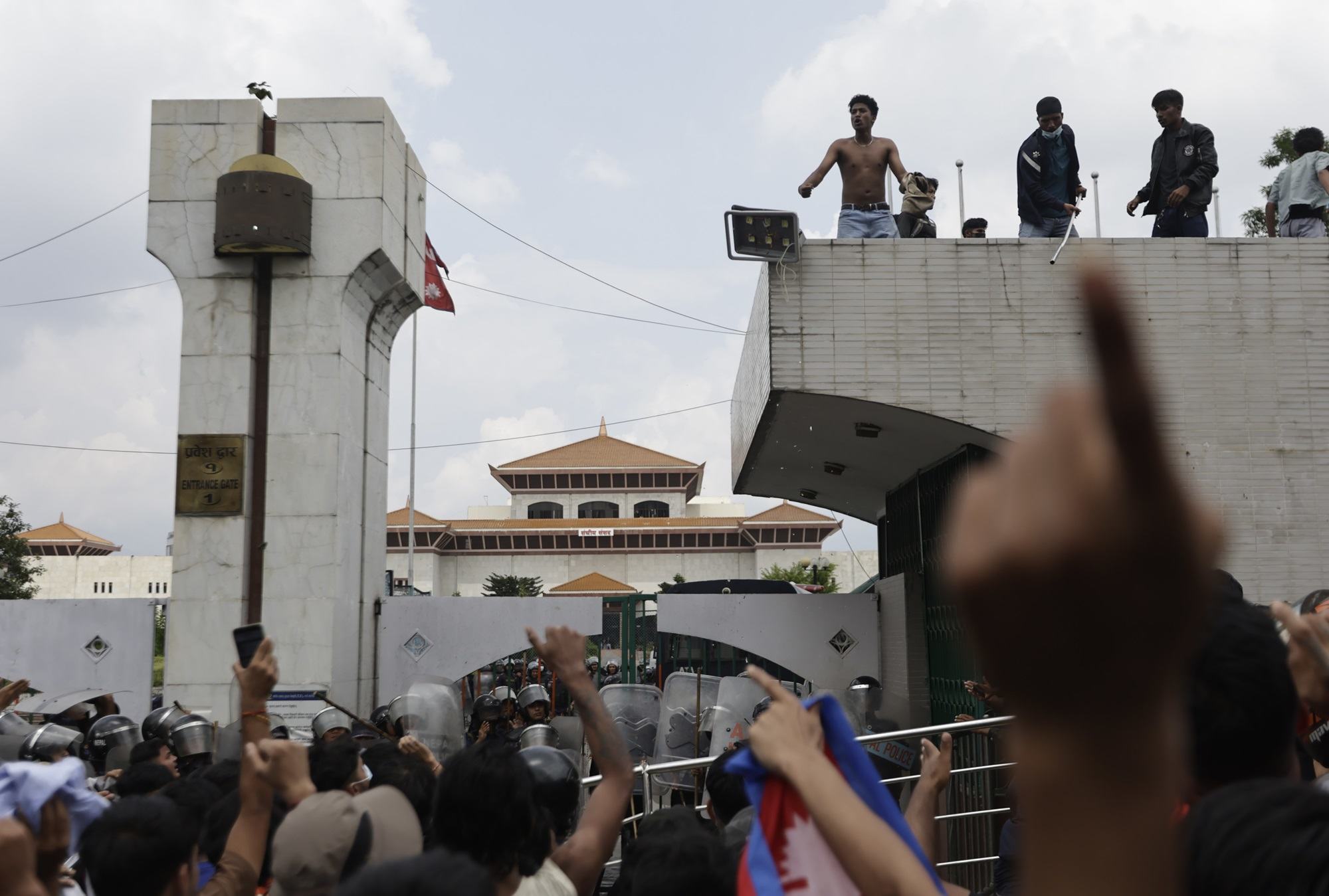
Some protesters climb atop the gates of Nepal’s Parliament in Kathmandu on Monday, in youth-led demonstrations against corruption.

Youth-led mobilisation

The protests mark the latest and most intense in a series of youth-led mobilizations in Nepal in recent years. Students and young professionals have repeatedly taken to the streets to demand accountability from the political class.

Monday’s demonstrations saw thousands marching in the capital, Kathmandu, and other cities carrying placards calling for an end to graft and nepotism.

But protests turned violent as security forces moved to disperse crowds, leaving at least 19 dead and hundreds injured, according to media reports.

The deaths fuelled widespread anger and communities of the diaspora staged solidarity rallies abroad.

By Tuesday afternoon, demonstrators had stormed Parliament, the Supreme Court and Singh Durbar, the central administrative complex in Kathmandu, setting fire to parts of it.

Reports indicate that protesters also targeted the residences of the president, former prime ministers and ministers, and that some prison inmates escaped after police abandoned their posts.

UN ready with support

High Commissioner Türk appealed to all sides to avoid further escalation, recalling Nepal’s history of emerging from conflict to forge peaceful democratic institutions.

The world has admired Nepal’s emergence from conflict to become a peaceful democracy,” he said.

“Together with the United Nations system, my Office stands ready to support dialogue and trust-building measures that can help de-escalate tensions and restore confidence.”

The UN Country Team in Nepal reinforced that message, emphasising that “the voices of young Nepalis have been heard loud and clear” and warning that lasting stability will depend on concrete steps to address the root causes of their grievances.

Source link

UN ready to assist Nepal following deadly protests over social media ban

Police used tear gas and opened fire on protesters attempting to storm the parliament complex in the capital, Kathmandu, according to media reports. 

Curfews have been imposed in parts of the city and in Rupandehi, with restrictions on movement effective in Pokhara.

‘So unlike Nepal’

UN Resident Coordinator Hanaa Fikry Ahmed Singer described the situation as “so unlike Nepal” and feared that casualty numbers will rise. 

“Lots of my staff here are crying,” she told UN News in an interview.  “They haven’t seen violence in their lifetime.”

The protests came just days after the Nepalese Government blocked more than 20 social media platforms such as WhatsApp, X and Facebook, as well as websites such as YouTube, for failing to register with the authorities.

The Government wanted them to align to the internal laws as well because they have been concerned about misinformation, hate speech and social harmony, and to ensure oversight and monitoring,” she said.

“However, the decision was widely criticised as being too broad and has been perceived by many, particularly young people who are very global, like all parts of the world now, they consider this as a restriction on freedom of expression and access to digital spaces.”

Concern for civilians

Ms. Ahmed Singer voiced deep concern for the safety of civilians and underscored the urgent need to ensure unrestricted medical access to the injured. 

“The immediate priority now is the protection of civilians, particularly young people who are at the forefront of the protests,” she said.

Social media came back online shortly before the interview.  The senior humanitarian official said she posted a message on X calling upon all parties to exercise maximum restraint, adhere to basic principles on use of force and firearms, and ensure that people can safely and peacefully exercise their democratic rights.

“The most important now is unrestricted access to medical care as well for those that are injured, if needed,” she said.

Supportive role

Meanwhile, UN agencies in the country – such as the World Health Organization (WHO), the UN Children’s Fund (UNICEF), and the UN human rights office, OHCHR – are monitoring developments closely.

They are preparing health and other forms support if needed and stand ready to facilitate dialogue. 

“Our role really is to remind everybody to ensure the protection of civilians, safeguard fundamental freedoms, and support Nepal in its commitment to international human rights norms and standards,” she said. 

Source link

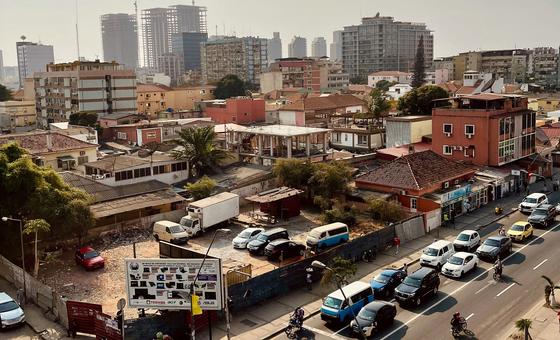
Angola protests: UN urges restraint, investigations into deaths

The Office of the UN High Commissioner for Human Rights (OHCHR) on Thursday urged Angolan authorities to conduct prompt, thorough and independent investigations into the deaths as well as the reported use of excessive force during the demonstrations.

Unverified footage suggests that security forces used live ammunition and tear gas to disperse protesters, which points to an unnecessary and disproportionate use of force,” OHCHR spokesperson Thameen Al-Kheetan said.

He added that while some demonstrators resorted to violence and looting, any force used by authorities must comply with international human rights standards.

Any individuals who may have been arbitrarily detained must be immediately released.

Rapid escalation in situation

The protests began on Monday as a strike by minibus taxi drivers over a one-third rise in diesel prices, part of a government effort to reduce fuel subsidies. According to media reports, the demonstrations quickly spread, becoming one of Angola’s most disruptive protest waves in recent years.

Government officials reported that at least one police officer was among those killed. Nearly 200 people are said to have been injured and shops and vehicles reportedly vandalised, mostly in the capital, Luanda.

Sporadic gunfire was also reported in parts of the city earlier in the week, and emergency services were overwhelmed. Many businesses remained shuttered Thursday, and hospitals reportedly struggled to cope with the number of casualties.

Ensure rights protection

OHCHR emphasised that while authorities have a responsibility to maintain public order, they must do so in a way that protects human rights.

All protesters taking to the streets to express their opinions should do so peacefully,” said Mr. Al-Kheetan. “All human rights violations must be investigated and those responsible held accountable.

The UN rights office also reiterated the importance of safeguarding fundamental freedoms, including the rights to life, expression and peaceful assembly, in any law enforcement response.

Source link

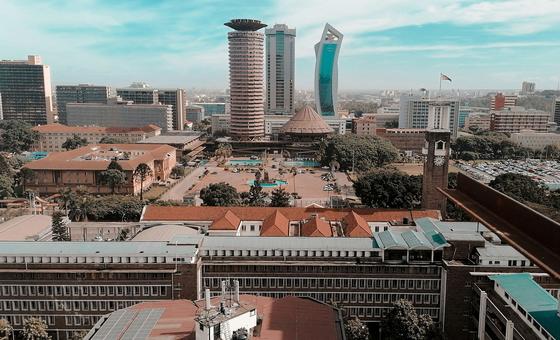
UN rights office urges restraint in Kenya as fresh protests turn deadly

Office spokesperson Ravina Shamdasani cited Kenyan police reports of at least 11 deaths, 52 injured police officers, and 567 arrests. The Kenya National Commission on Human Rights reported slightly different figures: at least 10 fatalities, 29 injuries, 37 arrests, and two abductions.

Protests erupted in 16 counties, with police reportedly using live ammunition, rubber bullets, tear gas and water cannons.

Ms. Shamdasani also noted reports of looting and destruction of public and private property in several locations.

Crisis escalation

This week’s violence follows the deaths of 15 protesters and hundreds of injuries during demonstrations on 25 June in Nairobi and elsewhere.

Those protests were initially triggered by the anniversary of last year’s anti-tax demonstrations, which left at least 60 deaths and dozens allegedly abducted by the police.

The protests on Monday marked the 35th anniversary of the 1990 Saba Saba protests, which paved the way to multi-party democracy in Kenya.

Call for accountability

Ms. Shamdasani said that UN High Commissioner for Human Rights Volker Türk, “repeats his call for all reported killings and other alleged violations and abuses of international human rights law, including with respect to use of force, to be promptly, thoroughly, independently and transparently investigated.

She noted that Kenyan police announcement of an investigation into the 25 June incidents and added that the UN human rights office stands ready to support national authorities in their efforts, including on the investigations.

She stressed that under international law, law enforcement may only use lethal force when strictly necessary to protect life from an imminent threat.

High Commissioner Türk also renewed his call for calm, restraint, and full respect for the rights to freedom of expression, association, and peaceful assembly.

It is essential that legitimate grievances at the root of these protests are addressed,” Ms. Shamdasani said.

Source link

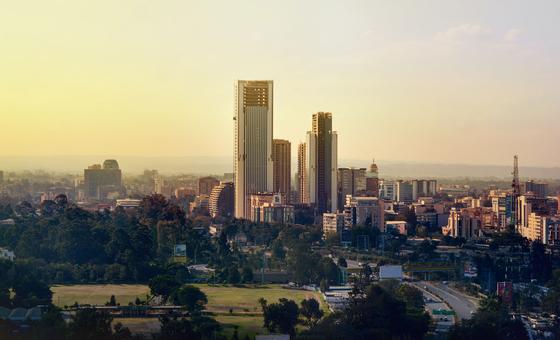
UN calls for restraint after deadly Kenya protests

At least 400 people were injured, including police officers, according to media reports. The official death toll has not been confirmed, with estimates ranging from eight to 16. 

The demonstrations marked the anniversary of last year’s anti-tax protests, when 60 people were reportedly killed and dozens abducted by police.

This year, anger intensified following the death of blogger Albert Ojwan, 31, who died in police custody earlier this month.

The demonstrators reportedly targeted government and police offices, chanted for the occupation of the presidential residence and attacked, looted and burned shops and businesses in Nairobi.

At a press conference, Kenyan Interior Minister Kipchumba Murkomen accused protestors of attempting to unconstitutionally enact “regime change.”

He also said nine police stations were attacked, dozens of vehicles destroyed, and five guns were stolen. 

UN Human Rights response

On Thursday, as smoke still rose from torched buildings in Nairobi, the UN human rights office, OHCHR, released a statement expressing concern.

Alarmed by reports that protesters had been wounded or killed by gunfire, OHCHR stressed that under international human rights law, law enforcement should only use lethal force when strictly necessary to protect life or prevent serious injury from an imminent threat.

The office welcomed the announcement that Kenya’s Independent Policing Oversight Authority will investigate the incidents and underlined the need for “prompt, thorough, independent and transparent investigations to bring those responsible to justice” and prevent recurrence. 

OHCHR also called for calm and restraint.

UN Spokesperson Stéphane Dujarric echoed these concerns at the daily press briefing in New York, saying: “We are obviously concerned about the violence we have seen in Kenya. We are closely monitoring the situation. We are very saddened by the loss of life.”

He also reiterated concerns over the reported gunshot wounds and welcomed plans for oversight investigations.

Source link

Japanese protesters oppose expensive state funeral to Shinzo Abe

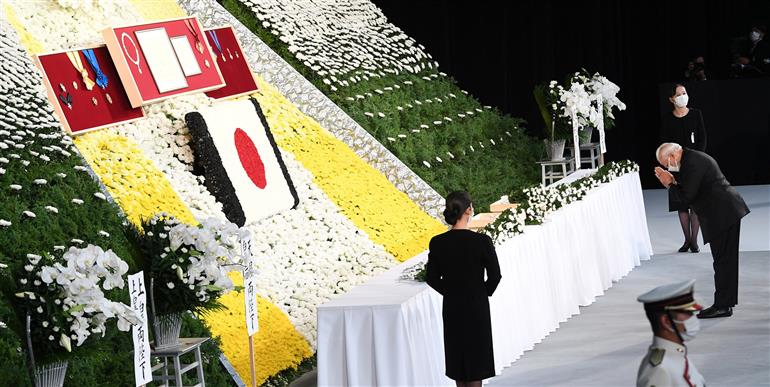
For a pacifist nation like Japan, the assassination of Shinzo Abe would have been painful but the public outrage during the funeral is astounding in view of the state funeral at a cost of 1.7 billion yen ($12 million) at a time when the government is heavily indebted.

Former Japanese Prime Minister Shinzo Abe was assassinated during the campaign trail in July and the government’s plans to a state funeral have been opposed by many since then owing to the country’s fragile economy.

Japan’s prime minister Fumio Kishida has been unable to assuage public concerns as the controversy undermines his proposed record defense spending, which began with Shinzo Abe, whose legacy is left behind with the revision of the country’s post-war Pacifist Constitution and sending Japanese armed forces abroad.

PM Modi paying homage at the State Funeral Ceremony of the Former Prime Minister of Japan, Late Mr. Shinzo Abe, in Tokyo, Japan on September 27, 2022 / PIB

PM Kishida’s approval ratings have reached the lowest level since he became the country’s Prime Minister in October. Last week, a man has allegedly set himself on fire near the office of Japanese Prime Minister protesting against the expensive state funeral.

The funeral on Tuesday kept the capital under maximum security due to protests which began just before the funeral. About 4,300 attendees gathered in Tokyo to pay their respects at the funeral.

U.S. Vice President Kamala Harris, Australian Prime Minister Anthony Albanese, Indian Prime Minister Narendra Modi and South Korean Prime Minister Han Duck-soo were among 700 foreign dignitaries from 218 countries, regions and international organizations who attended the funeral.


Sri Lanka former President Gotabaya Rajapaksa to return home on Aug 24

It’s back to normal in Sri Lanka as former President Gotabaya Rajapaksa, who fled the country following protests against economic crisis in July is all set to return on August 24. Sri Lanka is still facing unprecedented economic crisis.

This was confirmed by former Ambassador to Sri Lanka and Rajapaksa’s cousin Udayanga Weeratunga, who said that the former President would return to the country.

“Gotabaya should return to the country and people will welcome him but he would not continue in politics as he is not suitable,” Weeratunga, who was critical of the role of Gotabaya as a President, told media.

After protesters stormed President’s house on July 9, Gotabaya left the palace and later fled to the Maldives and then to the Singapore. He later entered Thailand last week. However, no country was ready to provide asylum, nor any request thereof was made, according to local reports.

The Thailand government is the latest to deny reports that Rajapaksa had sought asylum there. The Thailand Foreign Ministry said it received a request from Rajapaksa to visit the country but no request for asylum was made.

“Thailand saw no problem with Rajapaksa entering on a diplomatic passport, which would allow him to stay 90 days,” Thailand Foreign Ministry had stated.

CBSE to hold re-exam on April 25 for Class 12 Economics, Class X Undecided


Battered CBSE has announced a re-test for Class 12 Economics paper on April 25 throughout the country. It has further clarified that the Class 10 Maths paper re-test will be held, if required, in July, that too in Delhi, Haryana and NCR region and not all over the country, giving relief to many Class 10 students elsewhere in the country.

The ambiguity over Class X mathematics paper is due to the fact that the leak was confined to Delhi and Punjab, and once the enquiry is completed, the board will decide whether to hold the exam or not, said Anil Swarup, Secretary, School Education, in the Union Human Resource Development Ministry.

“The leak was restricted to Delhi and Haryana. If at all a re-exam will happen, it will happen only in these states in July. A decision will be taken on this in the next 15 days,” Swarup told reporters.

Referring to the Class 12 economics paper, the re-test will be held on April 25 not not outside the country as the leak confined to India only, said the HRD official. He further clarified that there will be no delay in the publication of results in May as per the schedule.

Replying to protests and demands that the CBSE chief should be removed, he said only after the enquiry, the responsibility on people who are behind the paper leak. “Action will be taken against whoever is responsible. But you cannot pre-empt the inquiry. Without inquiry action will not be possible,” he said and added that there will be two levels of inquiry, one is the police inquiry and the other is a departmental inquiry.

It may be recalled that in 2014, Class 12 physics paper was leaked in one of the northeastern sates and the CBSE pleaded in the apex court that a re-test was not required since the leak was limited to a region and the online access was not visibly seen in other places.