Nepal PM resigns after deadly crackdown on youth protests; UN urges calm

The unrest, which began Monday as a self-styled “Gen Z protest” against rampant corruption, nepotism and curbs on social media, quickly escalated after security forces responded with force.

Most of the dead and wounded were young demonstrators shot by police. Many remain hospitalised in a critical condition.

By Tuesday, demonstrations had spread across the country, with Government buildings, political party offices, and even the Parliament in Kathmandu set ablaze.

Some political leaders’ homes were attacked, police stations overrun, and the international airport has been closed.

The Prime Minister was reportedly evacuated by helicopter from his official residence and his resignation was announced shortly afterward.

Several ministers at both the federal and provincial level – as well as members of parliament – have also stepped down in protest at the handling of the demonstrations, deepening the political fallout.

Violence is not the answer

Expressing deep concern over the deaths and rapid deterioration, UN human rights chief Volker Türk warned that “violence is not the answer” and called on authorities and demonstrators alike to de-escalate the spiralling crisis.

In a statement from Geneva, Mr. Türk said he was “appalled by the escalating violence” and the “unnecessary and disproportionate use of force” against largely young demonstrators.

Dialogue is the best and only way to address the concerns of the Nepalese people. It is important that the voices of young people are heard,” he stressed, urging both security forces to show restraint and protesters to refrain from destructive acts.

While condemning the crackdown, he also voiced concern about violence by some demonstrators.

“I am disturbed by reports of public buildings, businesses and private residences being attacked and, in some instances, set ablaze. Equally, I am concerned by reports of physical attacks on senior government officials.”

UN chief echoes call for restraint

The Secretary-General’s Spokesperson said at Tuesday’s daily briefing for journalists in New York that the UN chief is “closely following the situation.”

Stéphane Dujarric said António Guterres was “very saddened by the loss of life” and reiterated his call for restraint to prevent further escalation.

The authorities must comply with international human rights law, and protests must take place in a peaceful manner that respects life and property,” Mr. Dujarric said, noting the dramatic images emerging from Nepal.

Call for prompt investigations

The UN Country Team in Nepal echoed those calls, extending condolences to the families of the dead and urging authorities to ensure that law enforcement responses remain “proportionate and in line with international human rights standards.”

Freedom of expression, access to information and peaceful assembly are fundamental rights protected under Nepali and international law,” the UN team said.

“All allegations of excessive use of force should be investigated promptly in an independent, transparent and impartial manner,” it added.

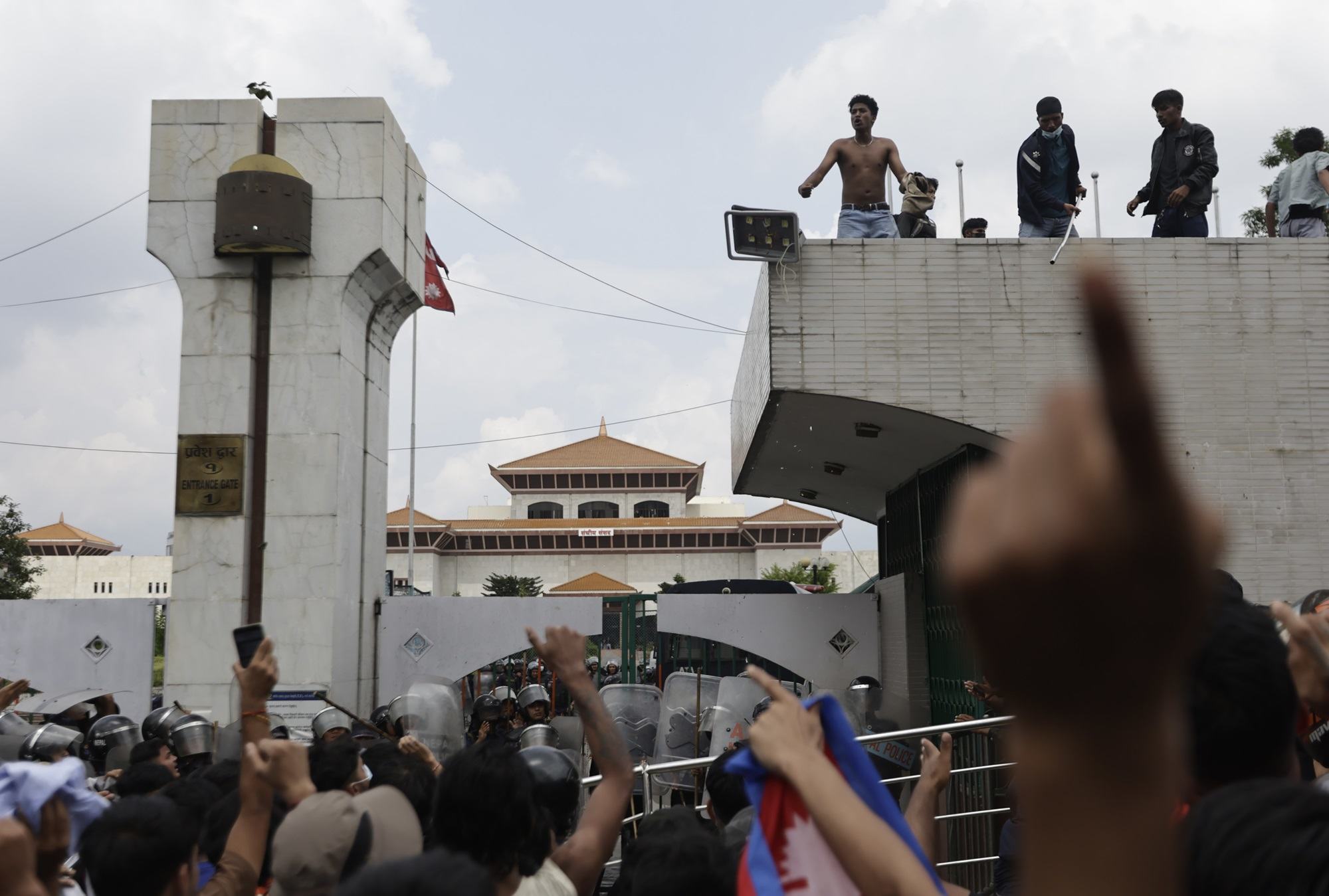
Some protesters climb atop the gates of Nepal’s Parliament in Kathmandu on Monday, in youth-led demonstrations against corruption.

Youth-led mobilisation

The protests mark the latest and most intense in a series of youth-led mobilizations in Nepal in recent years. Students and young professionals have repeatedly taken to the streets to demand accountability from the political class.

Monday’s demonstrations saw thousands marching in the capital, Kathmandu, and other cities carrying placards calling for an end to graft and nepotism.

But protests turned violent as security forces moved to disperse crowds, leaving at least 19 dead and hundreds injured, according to media reports.

The deaths fuelled widespread anger and communities of the diaspora staged solidarity rallies abroad.

By Tuesday afternoon, demonstrators had stormed Parliament, the Supreme Court and Singh Durbar, the central administrative complex in Kathmandu, setting fire to parts of it.

Reports indicate that protesters also targeted the residences of the president, former prime ministers and ministers, and that some prison inmates escaped after police abandoned their posts.

UN ready with support

High Commissioner Türk appealed to all sides to avoid further escalation, recalling Nepal’s history of emerging from conflict to forge peaceful democratic institutions.

The world has admired Nepal’s emergence from conflict to become a peaceful democracy,” he said.

“Together with the United Nations system, my Office stands ready to support dialogue and trust-building measures that can help de-escalate tensions and restore confidence.”

The UN Country Team in Nepal reinforced that message, emphasising that “the voices of young Nepalis have been heard loud and clear” and warning that lasting stability will depend on concrete steps to address the root causes of their grievances.

Source link

Human Rights Council hears alarming updates on executions in Iran and global civic space crackdown

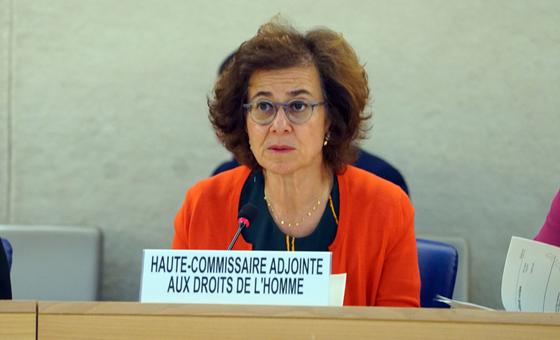
At least 975 people were executed in Iran in 2024, the highest number reported since 2015, according to a report Deputy High Commissioner for Human Rights, Nada Al-Nashif, presented to the Geneva-based Council on Wednesday. 

Of the total executions, just over half were for drug-related offenses, 43 per cent for murder, two per cent for sexual offenses, and three per cent for security-related charges. At least four executions were carried out publicly. 

“These cases are marked by serious allegations of torture and due process violations, including lack of access to a lawyer,” said Ms. Al-Nashif. 

Violence and discrimination against women

At least 31 women were reportedly executed in Iran last year, up from 22 in 2023. Of the 19 women executed for murder, nine had been convicted of killing their husbands in cases involving domestic violence or forced or child marriage, areas in which Iranian women have no legal protections.

Some executions were reportedly linked to protests that began in September 2022 under the banner “Women, Life, and Freedom.”

Beyond executions, femicide cases surged, with 179 reported in 2024 compared to 55 the year before. Many stemmed from so-called “honour” crimes or family disputes, often involving women and girls seeking divorce or rejecting marriage proposals.

Ms. Al-Nashif also warned that the suspended Chastity and Hijab Law, if enacted, would pose a serious threat to women’s rights. Penalties for violations such as improper dress could include heavy fines, travel bans, long-term imprisonment, or even the death penalty.

In addition, of the 125 journalists prosecuted in 2024, 40 were women, many reporting on human rights and women’s rights issues.

Religious and ethnic minorities

“In 2024, the death penalty continued to have a disproportionate impact on minority groups,” Ms. Al-Nashif told the Council.

At least 108 Baluchi and 84 Kurdish prisoners were executed in 2024, representing 11 and 9 per cent of the total, respectively.

The report also raised concerns over the lack of official data on the socioeconomic conditions of ethnic and ethno-religious minorities and non-citizens, which hampers efforts to assess their situation and measure the impact of targeted policies and programmes.

Looking ahead

While Iran continued engagement with the Office of the UN High Commissioner and other human rights mechanisms, it denied access to the Independent International Fact-Finding Mission on the Islamic Republic of Iran.

“Our Office remains ready to continue and build on its engagement with the Iranian authorities on the range of issues highlighted in the report of the Secretary-General for the promotion and protection of all human rights,” Ms. Al-Nashif concluded. 

Global ‘Super Election’ cycle undermined democratic participation

In the Council’s afternoon session, Gina Romero, UN Special Rapporteur on the rights to freedom of peaceful assembly and association, presented her report on how the 2023–2025 “super election” cycle has affected civic space around the world.  

In 2024, half of the world’s population elected their local, national and international representatives. While Ms. Romero’s report on this cycle does not assess the integrity of the elections, it identifies troubling global patterns of systematic repression of the exercise of peaceful assembly and association.

“The misuse of restrictive laws, smear campaigns, disinformation targeting civil society intensified globally in the super electoral cycle, undermining electoral participation and freedom of association,” she said.  

Political repression and violence

As criminal justice systems are used to repress the opposition, leaders and members of political parties faced undue restrictions and political persecution. Civil society activists and election observers have also faced harassment, arbitrary detention, torture and murder.  

“When political parties, civil society, and peaceful assemblies are suppressed, genuine political pluralism and competition cannot exist,” argued Ms. Romero. “I stress that these conditions are incompatible with free and genuine elections and risk legitimising undemocratic rule.”

Minority representation

Ms. Romero also underscored that women’s political leadership remains severely underrepresented, while LGBTIQ individuals and their organizations faced attacks during the super electoral cycle.  

Both groups experienced physical and online political violence, restricting their electoral participation and accelerating the decline of their rights after the elections.

Calls to protect freedoms  

Amid global crises and a rapid democratic decline, Ms. Romero emphasized the urgent need to protect the rights to peaceful assembly and association throughout the entire electoral cycle.  

She outlined key recommendations, including strengthening legal protections before elections, ensuring accountability afterward, regulating digital technologies and promoting non-discriminatory participation throughout.  

“Dissent is a fundamental element of democratic societies,” she concluded in Spanish. “Rather than being suppressed, it should be welcomed and permanently protected.” 

Source link

Afghanistan’s socioeconomic crisis deepens amid crackdown on women’s rights

As the Afghan economy faces stalled local production and weak job creation, Afghanistan continues to heavily rely on imports and international assistance.

UNDP’s current analysis and new data indicate the continuation of a deeply troubling trajectory for the Afghan people, who have been grappling with extreme vulnerability over the past decade,” said Kanni Wignaraja, UN Assistant Secretary-General and head of UNDP for the Asia-Pacific region.

Systemic challenges

In the past year, political uncertainty, an ongoing economic crisis, shrinking international aid and climate disruptions have compounded existing vulnerabilities, limiting the economy’s ability to regain momentum.

As Afghanistan heavily relies on foreign assistance, the current reduction in international aid is likely to have a significant impact on humanitarian operations and the delivery of basic services.

“UNDP stresses the need for targeted interventions to address these challenges, recognising that humanitarian assistance alone is not enough, and sustainable longer-term economic and social solutions are needed,” said Stephane Rodriques, UNDP Resident Representative in Afghanistan.

Restriction on women’s rights

As repressive laws continue to erode women’s rights, safety and access to basic services such as education and employment, Afghanistan’s socioeconomic crisis has seen the gender gap widen further, pushing women deeper into social exclusion and poverty.

With only seven per cent of Afghan women working outside of the household in 2024, restrictions on women and girls are projected to cost the Afghan economy nearly $920 million between 2024 and 2026, according to UNDP.

UNDP called for Afghanistan to lift restrictions on women and girls and for comprehensive support to women-led businesses to be provided.

Returnees

In 2024, Afghanistan also faced a major influx of returnees from Pakistan and Iran, as these neighbouring countries hardened their stance on Afghan refugees and migrants.

The UN expects the rate of returnees to increase in 2025, with an estimated 600,000 to 1.5 million people expected to return to Afghanistan.

“With the anticipated arrival of hundreds of thousands of returnees this year and a marked reduction in international support, Afghan communities will have to navigate substantial challenges that will increase pressure on an already highly tenuous daily subsistence,” said Ms. Wignaraja.

Source link