World News in Brief: UN condemns attack on civilians in Nigeria, updates from Gaza and West Bank, relief flights to resume in Yemen

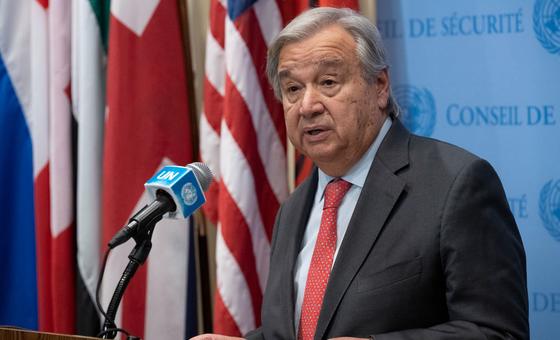
In a statement issued by his spokesperson, António Guterres conveyed his “heartfelt condolences to the families of the victims and to the people and Government of Nigeria,” and wished a speedy recovery to those injured.

“The Secretary-General reiterates the solidarity of the United Nations with the Government and people of Nigeria in their efforts to fight terrorism and violent extremism and stresses the importance of bringing the perpetrators to justice,” the statement said.

Death toll may rise

According to media reports, armed groups attacked two rural villages in Kwara state on 3 February, with the death toll expected to rise as bodies continue to be discovered.

Many victims were reportedly shot at close range, while homes and shops were set ablaze, forcing residents to flee into nearby bushland.

The attack was the deadliest recorded in the area in recent months, amid a sharp rise in violence across Nigeria’s northwest and north-central regions, where armed groups have increasingly targeted civilians.

The worsening security situation has also contributed to a deepening humanitarian crisis, with large-scale displacement and growing hunger and malnutrition across affected areas.

Civilians deaths and injuries continue due to Gaza attacks

Despite the shaky ceasefire, dozens of civilian deaths and injuries continued to be reported in Gaza over the past 24 hours, as well as ongoing displacement in the West Bank, according to UN agencies.

Many people remained inaccessible to emergency teams, UN Spokesperson Stéphane Dujarric told journalists, citing reports from the UN aid coordination office OCHA.

He reiterated that all parties must comply with international humanitarian law, including the obligation to protect civilians and civilian infrastructure.

Mr. Dujarric said UN teams overnight received 25 additional returnees crossing through Rafah, who were transported by the UN Development Programme (UNDP) to Nasser Hospital in Khan Younis.

There, UN partners continue operating a reception area providing medical, psychological and protection support.

He added that the World Health Organization (WHO) and partners supported the medical evacuation of 15 patients and 31 companions from Gaza to Egypt over the past two days.

Record spike in West Bank attacks

Attacks by Israeli settlers against Palestinians in the occupied West Bank have seen a massive spike since 2021, with more than 50 Israeli settler attacks recorded between 20 January and 2 February.

The attacks resulted in casualties, property damage or both.

According to OCHA, since the beginning of 2026, more than 900 Palestinians have been forced out of their homes or communities, mostly due to settler violence and access restrictions, followed by demolitions.

OCHA said it is carrying out preliminary assessments of damage and needs following these incidents, to inform the humanitarian response.

Yemen: Aid flights set to resume to Houthi-controlled capital

The UN has confirmed that its aid flights to Yemen’s opposition-held capital will resume, after being blocked for more than a month.

UN Humanitarian Air Service flights are a vital provider of relief amid overwhelming needs across Houthi-held areas, including the capital city, Sana’a, and other locations across Yemen, which has been at war since 2014.

Boost to aid delivery

Julien Harneis, the UN Resident and Humanitarian Coordinator for Yemen, said in a statement that the agreement reached earlier this week will allow NGOs to enter and exit Sana’a, which is a prerequisite to providing assistance for millions of people in need in Houthi-controlled areas.

Years of conflict between separatists and the internationally recognised government have left more than 19.5 million people needing humanitarian assistance and more than 4.8 ‎million internally displaced.

Funding is only available to meet around 25 per cent of needs, meaning that millions ‎are not getting lifesaving assistance, including health care, shelter, water, sanitation ‎and hygiene.

Source link

UN Human Rights Council hears grim updates on Ukraine, Gaza and global racism

Escalating conflict in Ukraine

In an oral update, Ilze Brands Kehris, UN Assistant Secretary-General for Human Rights, reported a sharp escalation in hostilities in Ukraine.

Civilian casualties have surged, with April to June seeing nearly 50 per cent more deaths and injuries compared to the same period in 2024.

“More than 90 per cent of these casualties occurred in territory controlled by Ukraine,” she said, attributing the spike in part to intensified Russian drone and missile attacks.

Attacks using airburst warheads and repeated strikes on hospitals have instilled “terror and anxiety” among urban populations, she added. A June 16-17 nighttime attack in Kyiv killed more civilians than any other assault in the past year.

While ceasefire negotiations have produced some humanitarian gains – such as the exchange of prisoners of war and the return of deceased soldiers – Ms. Kehris underscored harrowing conditions in detention.

Over 117 former Ukrainian POWs interviewed by the UN rights office, OHCHR, reported torture, including sexual violence, in Russian captivity. Though less widespread, similar abuses have also been documented in unofficial Ukrainian detention facilities, prompting calls for transparent investigations.

The report also noted ongoing human rights violations in territories occupied by Russia, including restrictions on civic space and the exercise of freedom of expression.

“Peace is more imperative than ever,” Ms. Kehris said, reiterating calls for an immediate cessation of hostilities in line with international law.

Structural racism and intersectionality

Ashwini K.P., Special Rapporteur on contemporary forms of racism, delivered a thematic report focused on intersectionality as a tool for racial justice.

Drawing from experiences of Black feminists and expanded by studies focusing on Dalit, Indigenous, Muslim and Roma community members, the concept of intersectionality was presented as essential to dismantling systemic discrimination.

“Women of African descent, caste-oppressed communities, Roma, Arab and Muslim women, and other marginalized groups are disproportionately impacted due to overlapping forms of discrimination,” Ms. Ashwini said.

Her report detailed how states can integrate an intersectional approach, emphasising data disaggregation, participatory policymaking, legal recognition of multiple discrimination and historical accountability.

Ms. Ashwini highlighted the importance of reparatory justice for communities affected by colonialism and slavery and called on states – particularly those historically complicit – to implement bold reforms.

People search through the rubble of a destroyed building in the central Gaza Strip.

Deepening crisis in Gaza

Francesca Albanese, Special Rapporteur on the situation of human rights in the Palestinian territories occupied since 1967, also reported to the Council, with grim update on Gaza.

She described conditions as “apocalyptic” and reported over 200,000 people killed or injured since 7 October 2023, when Hamas and other Palestinian armed groups attacked Israeli communities – killing at least 1,200 people and taking more than 250 as hostages.

“In Gaza, Palestinians continue to endure suffering beyond imagination,” Ms. Albanese said, describing the Israeli-backed Gaza Humanitarian Foundation as a “death trap – engineered to kill or force the flight of a starved, bombarded, emaciated population marked for elimination.”

She also accused Israel of using the conflict as an opportunity to test new weapons and technology against the population of the enclave “without restraint”.

“The forever-occupation has provided an optimal testing ground for arms manufacturers and big tech with little oversight and zero accountability – while investors, and private and public institutions have profited handsomely,” she said.

“We must reverse the tide,” Ms. Albanese urged, calling on Member States to impose a full arms embargo on Israel, suspend all trade agreements and investment relation and enforce accountability, “ensuring that corporate entities face legal consequences for their involvement in serious violations of international law.”

Independent rights experts

Special Rapporteurs are independent human rights experts appointed and mandated by the Human Rights Council – the UN’s highest intergovernmental forum on human rights.

Forming a part of its Special Procedures, Special Rapporteurs and other independent experts are mandated to monitor and assess the rights situation in certain thematic or country situations.

They work in their individual capacity, are not UN staff and do not receive a salary. 

Source link

MIDDLE EAST CRISIS: Live updates for 20 June


One week since the Israel-Iran conflict erupted, diplomatic efforts to end the war are ramping up in Geneva today as foreign ministers from France, Germany, the UK and the European Union prepare to meet their Iranian counterpart. In New York, meanwhile, the UN Security Council is also set to discuss this latest worrying escalation, against the backdrop of the ongoing emergency in Gaza. We’ll be covering these developments and more across the UN system today. UN News app users can follow here.

Source link

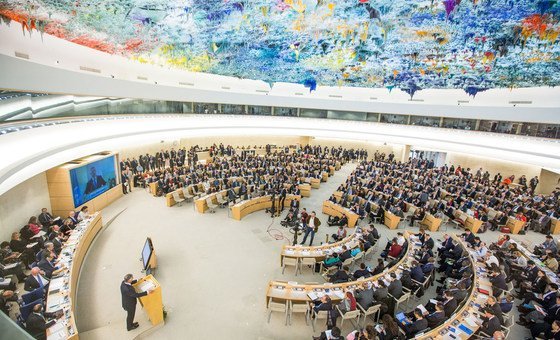
Human Rights Council hears alarming updates on executions in Iran and global civic space crackdown

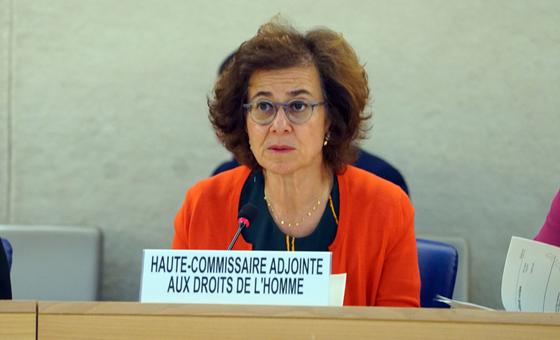
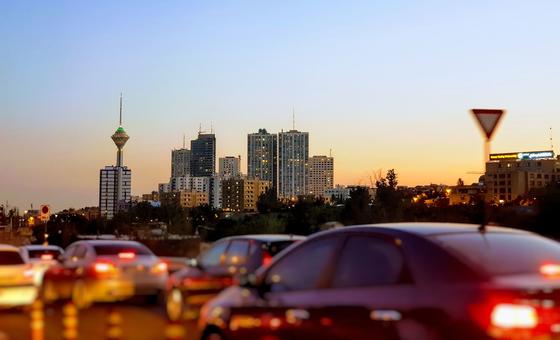
At least 975 people were executed in Iran in 2024, the highest number reported since 2015, according to a report Deputy High Commissioner for Human Rights, Nada Al-Nashif, presented to the Geneva-based Council on Wednesday. 

Of the total executions, just over half were for drug-related offenses, 43 per cent for murder, two per cent for sexual offenses, and three per cent for security-related charges. At least four executions were carried out publicly. 

“These cases are marked by serious allegations of torture and due process violations, including lack of access to a lawyer,” said Ms. Al-Nashif. 

Violence and discrimination against women

At least 31 women were reportedly executed in Iran last year, up from 22 in 2023. Of the 19 women executed for murder, nine had been convicted of killing their husbands in cases involving domestic violence or forced or child marriage, areas in which Iranian women have no legal protections.

Some executions were reportedly linked to protests that began in September 2022 under the banner “Women, Life, and Freedom.”

Beyond executions, femicide cases surged, with 179 reported in 2024 compared to 55 the year before. Many stemmed from so-called “honour” crimes or family disputes, often involving women and girls seeking divorce or rejecting marriage proposals.

Ms. Al-Nashif also warned that the suspended Chastity and Hijab Law, if enacted, would pose a serious threat to women’s rights. Penalties for violations such as improper dress could include heavy fines, travel bans, long-term imprisonment, or even the death penalty.

In addition, of the 125 journalists prosecuted in 2024, 40 were women, many reporting on human rights and women’s rights issues.

Religious and ethnic minorities

“In 2024, the death penalty continued to have a disproportionate impact on minority groups,” Ms. Al-Nashif told the Council.

At least 108 Baluchi and 84 Kurdish prisoners were executed in 2024, representing 11 and 9 per cent of the total, respectively.

The report also raised concerns over the lack of official data on the socioeconomic conditions of ethnic and ethno-religious minorities and non-citizens, which hampers efforts to assess their situation and measure the impact of targeted policies and programmes.

Looking ahead

While Iran continued engagement with the Office of the UN High Commissioner and other human rights mechanisms, it denied access to the Independent International Fact-Finding Mission on the Islamic Republic of Iran.

“Our Office remains ready to continue and build on its engagement with the Iranian authorities on the range of issues highlighted in the report of the Secretary-General for the promotion and protection of all human rights,” Ms. Al-Nashif concluded. 

Global ‘Super Election’ cycle undermined democratic participation

In the Council’s afternoon session, Gina Romero, UN Special Rapporteur on the rights to freedom of peaceful assembly and association, presented her report on how the 2023–2025 “super election” cycle has affected civic space around the world.  

In 2024, half of the world’s population elected their local, national and international representatives. While Ms. Romero’s report on this cycle does not assess the integrity of the elections, it identifies troubling global patterns of systematic repression of the exercise of peaceful assembly and association.

“The misuse of restrictive laws, smear campaigns, disinformation targeting civil society intensified globally in the super electoral cycle, undermining electoral participation and freedom of association,” she said.  

Political repression and violence

As criminal justice systems are used to repress the opposition, leaders and members of political parties faced undue restrictions and political persecution. Civil society activists and election observers have also faced harassment, arbitrary detention, torture and murder.  

“When political parties, civil society, and peaceful assemblies are suppressed, genuine political pluralism and competition cannot exist,” argued Ms. Romero. “I stress that these conditions are incompatible with free and genuine elections and risk legitimising undemocratic rule.”

Minority representation

Ms. Romero also underscored that women’s political leadership remains severely underrepresented, while LGBTIQ individuals and their organizations faced attacks during the super electoral cycle.  

Both groups experienced physical and online political violence, restricting their electoral participation and accelerating the decline of their rights after the elections.

Calls to protect freedoms  

Amid global crises and a rapid democratic decline, Ms. Romero emphasized the urgent need to protect the rights to peaceful assembly and association throughout the entire electoral cycle.  

She outlined key recommendations, including strengthening legal protections before elections, ensuring accountability afterward, regulating digital technologies and promoting non-discriminatory participation throughout.  

“Dissent is a fundamental element of democratic societies,” she concluded in Spanish. “Rather than being suppressed, it should be welcomed and permanently protected.” 

Source link

Middle East crisis: Live updates for 16 June

After a weekend of massive strikes and counter-strikes between Tel Aviv and Tehran, the UN’s human rights chief, Volker Türk on Monday condemned the violence and echoed wider calls for a negotiated end to the attacks. Meanwhile in Gaza, aid workers report that mobile communications networks continue to be cut in the shattered enclave. We’ll be covering these developments and more across the UN system and beyond today, thanks for joining us. UN News app users can follow our live coverage here.

Source link

World News in Brief: Guterres condemns antisemitic attacks, ILO to debate pros and cons of working online, Sudan, Ukraine updates

A man was arrested in Boulder after reportedly using a flamethrower and Molotov cocktails to set people on fire at an event in support of Israeli hostages in Gaza on Sunday.

The suspect reportedly yelled “Free Palestine” during the attack and now faces federal hate crime charges along with multiple felonies.

The attack injured at least eight people, ranging in age from 52 to 88. The injuries have been described by local police as ranging from minor to “very serious”.

Holocaust memorial targeted

In a further antisemitic act in Paris, vandals targeted the Shoah Memorial, three synagogues and the Jewish restaurant Chez Marianne on Saturday morning, according to news reports.

Photos show green paint splashed on the Le Mur Des Justes wall, which lists names of French men and women who helped Jews during the World War II.

No suspects have been arrested so far and no group has claimed responsibility, news reports noted.

UN Spokesperson Stéphane Dujarric told correspondents at the Noon Briefing in New York that “The Secretary-General condemns these acts.”

“The United Nations firmly stands against all forms of antisemitism, as well as all other manifestations of extremism and any incitement to religious hatred and violence, and he calls for swift action to hold those responsible accountable,” 
Mr. Dujarric said.

UN labour agency sheds light on potential risks of online work

Governments, employers, and workers from the 187 UN ILO Member States are currently meeting in Geneva for the International Labour Organization’s annual conference.

The potential pitfalls of online platforms will be one key area for debate, as countries mull reforms to protect workers and promote development.

Digital platforms have grown rapidly in recent decades in line with the gig economy, boosting online education, tourism and transport, for example.

Lack of protections

But although businesses that use digital platforms offer flexibility for workers, there’s concern that they don’t offer enough social protection or decent conditions.

According to senior ILO official Angelika Muller many online workers lack protections as part of the informal economy.

As such, many face poor working conditions while many employers turn to  algorithms to evaluate worker performance.

Member States are also expected to agree on new ways to help countries transition from the informal to the formal economy and address the issue of health dangers from exposure to biological hazards at work.

Attacks on Sudanese civilians continue

On May 29, the World Food Programme’s facility in Al Fasher was repeatedly shelled, resulting in extensive damage, according to a report on Monday from UN aid coordination office, OCHA.

The next day, Eldaman International Hospital in Al Obeid was struck by a drone attack, killing at least six health workers and injuring more than 15 others.

Both attacks were reportedly carried out by the Rapid Support Forces (RSF) militia which has been fighting the Sudanese Armed Forces (SAF) for control of the country since April 2023.

Acting Resident and Humanitarian Coordinator for Sudan, Kristine Hambrouck, released a statement on Sunday calling the attacks a “blatant violation of international humanitarian law,” calling on all sides to protect civilian lives.

UN relief chief Tom Fletcher, also expressed concern over these attacks in a social media post Monday: “These attacks must stop.”

Continued cholera threats

Meanwhile, in Khartoum state, strikes on electricity infrastructure have aggravated water shortages, forcing many residents to rely on unsafe water sources and endangering over one million children with waterborne diseases, as cholera continues to spread across Sudan.

Thanks to the efforts of health workers and community volunteers, daily cholera cases in the capital region have fallen compared to previous weeks.

There have been more than 16,500 cases and over 340 reported deaths in Khartoum since the outbreak began.

Dozens of cases are also emerging in the South Darfur state, prompting officials to declare a health emergency and appeal for urgent support to contain the outbreak.

With UN support, local health authorities have established treatment centers and initiated surveillance and community health efforts. 

is urging the international community to act now to ensure that aid reaches those most in need, to halt the spread of cholera, and to protect the millions of civilians at risk.

Recent attacks on Ukrainian civilians 

The UN on Monday reported that attacks in Ukraine over the weekend and Monday left more than 20 civilians dead, including one child, and injured over 100 others.

Civilian infrastructure – including homes, medical and educational facilities and power and gas lines – was also affected.

Notably, the attacks occurred just hours before Ukrainian and Russian delegations met for a second round of preliminary peace talks in Türkiye on Monday.

Humanitarian response

Humanitarian organizations are providing critical support to affected families, including emergency repair materials, legal and psychological assistance, and evacuations from areas where heavy fighting is continuing.

On 30 May, an inter-agency convoy delivered essential aid – including solar lamps, charging stations, kitchen sets, diapers, food, hygiene items and first aid kits – to over 700 residents in the frontline Mylivska community of Kherson.

Source link

World News in Brief: South Sudan urged to avoid slide to war, Türk calls on EU not to weaken landmark law, Ukraine and Mali updates

The Quartet is calling on the country’s leaders to end hostilities and return to dialogue to fully implement the 2018 peace agreement known as the Revitalized Agreement on the Resolution of the Conflict in the Republic of South Sudan (R-ARCSS).

South Sudan, the world’s youngest nation, gained independence in 2011 but soon descended into a brutal civil war. A 2018 peace agreement has held together but now threatens to fully unwind between the president and his vice presidential rival.

Regional pressure

In recent weeks, the Quartet has observed air and ground attacks that have led to loss of life, the destruction of homes, and the displacement of civilians. Humanitarian facilities have also been targeted, while hate speech and ethnic tensions are on the rise.

The Quartet welcomed a recent joint visit by the African Union and IGAD to South Sudan as a sign of regional support for peace. It also called on all sides to cooperate with ceasefire monitors investigating recent violence.

South Sudan’s leaders must commit to inclusive dialogue, the release of political detainees, and renewed efforts to carry out the peace deal, the Quartet stressed.

A return to war would betray the people’s hope for peace and stability, they warned. Only a political solution can ensure free and fair elections at the end of the current transitional period.

UN rights chief urges EU not to weaken landmark corporate responsibility law

UN human rights chief Volker Türk has called on the European Union to protect a key law that holds large companies accountable for human rights and environmental harm.

The EU’s Corporate Sustainability Due Diligence Directive (CSDDD), adopted last year, requires businesses to identify and address any negative impact their activities may have on people or the planet.

But changes now being discussed in Brussels as part of a broader reform package could weaken the law, Mr. Türk warned on Wednesday.

“The CSDDD, by far the most ambitious business and human rights regulatory initiative anywhere in the world, has rightly been welcomed by companies, policy makers, civil society, and national human rights institutions alike,” he said.

“A large number of businesses have already taken steps to ensure they comply with it.”

Detailed review

UN human rights office, OHCHR, has published a detailed review of the EU proposal, pointing to ways it could undermine this groundbreaking directive.

Mr. Türk urged lawmakers to keep the law in line with global standards, such as the UN Guiding Principles on Business and Human Rights.

“While some streamlining… could be advantageous, it would be counterproductive to water down its alignment with international standards,” he said.

April deadliest month for civilians in Ukraine since September

April was the deadliest month for civilians in Ukraine since September 2024, with at least 209 people killed and 1,146 injured, the UN Human Rights Monitoring Mission in Ukraine (HRMMU) reported on Wednesday.

In its monthly update, the Mission said that 97 per cent of casualties occurred in areas controlled by Ukraine, with nearly half caused by missile and loitering munitions attacks by Russian forces.

“Kryvyi Rih, Sumy, Dnipro, Zaporizhzhia, Kyiv, and Kharkiv all endured devastating attacks,” said Danielle Bell, Head of HRMMU. “The sharp rise in casualties was mainly due to the intensified use of ballistic missiles in major cities.”

Among the deadliest incidents:

  • On 4 April, a missile strike on Kryvyi Rih killed 20 civilians and injured 63.
  • On Palm Sunday (13 April), two missiles hit Sumy, killing at least 31 and injuring 105.
  • A 24 April attack on Kyiv killed 11 and injured 81.

Children were especially affected. At least 19 were killed and 78 injured in April – the highest monthly total since June 2022.

The wave of attacks continued into May, with cities including Kharkiv, Odesa and Kyiv again coming under fire.

UN experts raise alarm over Mali’s suspension of political parties

Independent UN human rights experts have strongly criticised Mali’s military authorities for suspending all political parties and activities, calling the move a clear violation of basic rights.

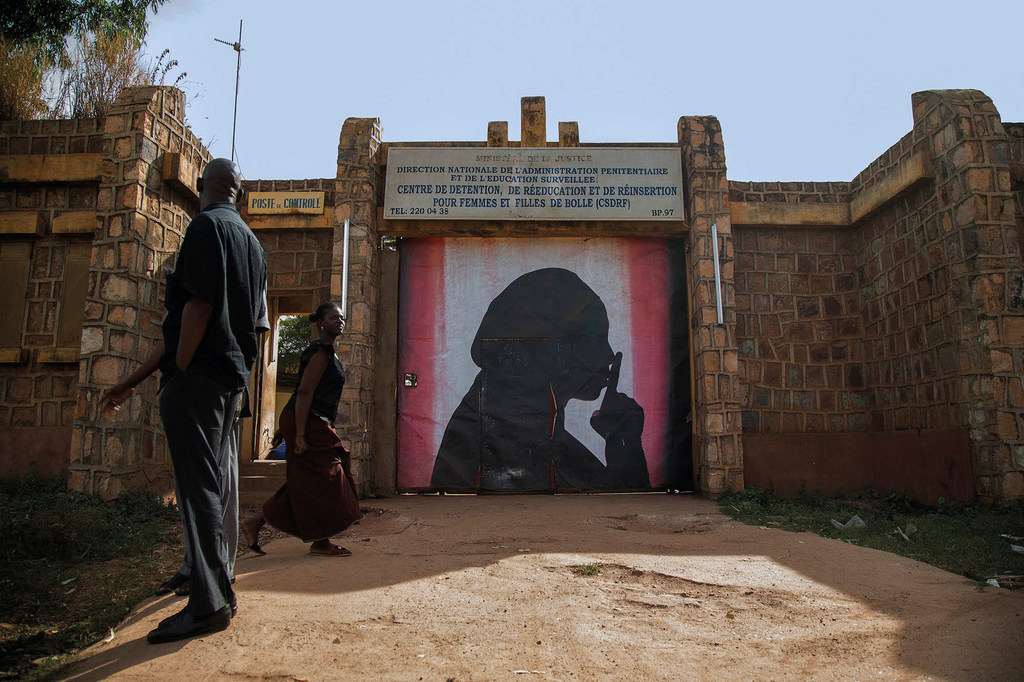
© MINUSMA/Harandane Dicko

A detention centre in Bamako, Mali. (file)

The decision, announced on 7 May via state television, halts political activity “until further notice.” The junta, which took power following coups in 2020 and 2021, said the suspension was necessary to maintain public order.

The three UN Human Rights Council-appointed experts described it as a direct violation of human rights and called for the order’s immediate repeal.

They also called on the National Transitional Council to strike down a bill introduced on 30 April, which repealed legislation governing how political parties operate.

“If passed into law, the 30 April bill will place Mali in contravention of its human rights obligations, notably on freedoms of association and expression,” the experts stressed.”

Protests

In response to the 30 April bill, opposition parties organised a pro-democracy rally in the capital Bamako on 3 May which drew hundreds of demonstrators. The parties reportedly demanded a timeline to end military rule and a return to constitutional order.

Another protest is planned for Friday to oppose the decree against political parties.

The experts said Malian authorities must work to counteract “the current climate of suppression of the civic space”.

“The right to peacefully assembly is essential to the health of a vibrant political community,” the experts said. “The Malian Transitional authorities must scrupulously respect it and abstain from acts of intimidation and repression that risk the physical integrity and the rights of demonstrators.”

Special Rapporteurs and Independent Experts are appointed by the Geneva-based Human Rights Council. They serve in their individual capacity, independent of the UN system and national governments. They are not UN staff and draw no salary

Source link