
From Cape Town to London, Deo Kato runs to challenge racism and reclaim the migration narrative

The 8,262-mile journey took him through 21 countries, transforming an extraordinary physical feat into a powerful act of activism, aimed at confronting racism and reshaping how migration is understood.

Born in Uganda and raised in the United Kingdom, Deo first took up running to manage his health. Over time, that personal discipline grew into a journey of purpose, connecting endurance with identity, protest and hope.

Turning point

In 2020, a moment of global reckoning around racial injustice – the murder of George Floyd in Minneapolis – became a turning point for Deo. He realised his running could serve a purpose beyond endurance.

 “I thought, ‘I have to do something about this. Whether it’s small or big, I want to use my running to create change and speak out against racial injustice,’” he explained. 

That conviction led him to run ten kilometres every day for 381 days, marking each day of the Montgomery Bus Boycott, a pivotal moment in the United States civil rights movement. 

He told himself, “I’m going to keep doing this for as long as I can because this is how change happens.”

Day after day, Deo pushed forward, turning physical endurance into a form of activism aimed at confronting racism and amplifying conversations around migration and justice.

Retracing migration routes 

From this commitment, Deo set out to run from Cape Town to London, symbolically retracing humanity’s earliest migration routes from Africa.

The road ahead was long and arduous. Scaling mountains, crossing deserts, and running through wildlife reserves, Deo moved through landscapes that constantly shifted around him. 

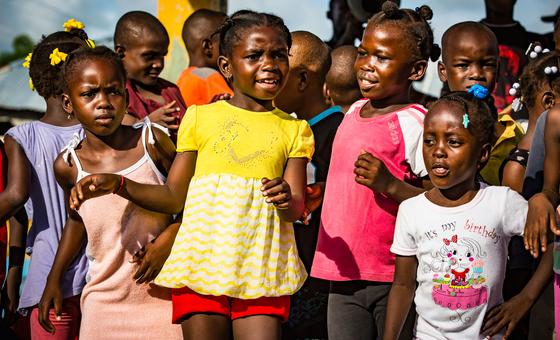
“It feels incredible just to be moving. Then, suddenly, I see elephants and children start running beside me,” he shared. 

Barriers and restrictions

Along the way, Deo witnessed how complex and restrictive migration can be, particularly for people displaced by climate impacts, economic pressure, or conflict. 

He saw how limited regular pathways and movement restrictions leave many people effectively unable to move within their own regions, trapping them in unsafe or uncertain situations and cutting off routes to safety.

“Some people end up detained simply for trying to flee conflict or because they are seen as outsiders. Even when they have the correct paperwork, they can still be held.”

The further I travelled along the migration route, the more I was viewed as an irregular migrant.

Deo himself faced similar barriers. At one point, he was detained despite having the correct documents. In other areas, he was forced to reroute his journey because of conflict or restricted access. 

As he travelled north towards Europe, the scrutiny intensified. 

“The further I travelled along the migration route, the more I was viewed as an irregular migrant. People would call the police simply because they saw someone they thought didn’t belong passing through their area,” he explained. 

Crossing some of the world’s most spectacular and unforgiving terrain, Deo experienced Africa on foot, where nature and movement shaped every mile of his journey.

Community support 

Despite the challenges, Deo’s journey was sustained by community support. Along the way, local runners, strangers, and online supporters joined him. Those moments of shared effort and solidarity kept him going. 

“Without that community support, I would not have succeeded on this journey. It’s what truly gave it meaning,” he said. 

His journey was never about endurance alone. It was about reclaiming the story of migration – a story rooted in resilience, human progress, and development. 

“People move for so many reasons, and each journey tells a human story,” Deo emphasised. 

Looking ahead, he plans to keep using his platform as a form of activism, continuing to speak about migration, belonging, and shared humanity. As he puts it, “Don’t limit yourself. Believe in your power to create change.”

Source link

‘Reparatory justice’ key to ending racism against Africans and their descendants

Doing so is key to dismantling systemic racism that is rooted in legacies of slavery and colonialism, it said.

Actions include formal apologies, truth-seeking, memorialisation and education measures, medical and psychosocial support, as well as compensation.

Past and present linked

For the most part, the report found that that amid some rollback of commitments to racial justice, measures taken by States, businesses, religious groups, universities, museums and others remain limited. 

To deliver reparatory justice, States and other actors must implement a comprehensive approach that includes reparations in various forms,” said UN High Commissioner for Human Rights Chief Volker Türk. 

“To be truly effective, this approach must squarely consider the web of links between the past and the present – at the individual and societal levels, in all areas of life – in order to dismantle unjust structures and systems designed and shaped by the past.”

Consider local contexts

Mr. Türk cautioned against a “one-size-fits-all approach” as reparatory justice should respond to the demands of affected communities.  

Initiatives and processes should be grounded in history and local context, respond to evolving demands of communities, and centre the specific experiences of women of African descent in particular,” he said.

The report recommends that Africans and people of African descent must guide the design and implementation of these measures through meaningful, inclusive and safe participation. 

Reviews, restitution and research

It also highlights initiatives already underway. For example, some countries have reviewed public spaces to identify, remove or contextualise statues and place names linked to persons who were involved in the transatlantic slave trade.

Museums in several European countries are also taking steps to address their collections’ links with the past.  

The restitution of cultural heritage is continuing, such as the return of so-called “Benin bronzes” – centuries’ old sculptures, plaques and other items looted from what is now Edo state in Nigeria. 

Additionally, some academic institutions have carried out or funded external research into their own history, issued apologies, advanced educational opportunities for communities and created memorials. Some business enterprises also have taken clear steps to acknowledge their links with the past. 

“Claims for compensation have been lodged before courts in multiple jurisdictions, and associated legal arguments have bolstered wider public movements and fostered political pressure for change,” the UN rights office added. 

The report calls for further research and policy proposals on broader structural and systemic issues, including in the areas of climate and environmental justice, as well as reforms to address the shortcomings of development aid and international financial and governance architecture.  

Source link

UN Human Rights Council hears grim updates on Ukraine, Gaza and global racism

Escalating conflict in Ukraine

In an oral update, Ilze Brands Kehris, UN Assistant Secretary-General for Human Rights, reported a sharp escalation in hostilities in Ukraine.

Civilian casualties have surged, with April to June seeing nearly 50 per cent more deaths and injuries compared to the same period in 2024.

“More than 90 per cent of these casualties occurred in territory controlled by Ukraine,” she said, attributing the spike in part to intensified Russian drone and missile attacks.

Attacks using airburst warheads and repeated strikes on hospitals have instilled “terror and anxiety” among urban populations, she added. A June 16-17 nighttime attack in Kyiv killed more civilians than any other assault in the past year.

While ceasefire negotiations have produced some humanitarian gains – such as the exchange of prisoners of war and the return of deceased soldiers – Ms. Kehris underscored harrowing conditions in detention.

Over 117 former Ukrainian POWs interviewed by the UN rights office, OHCHR, reported torture, including sexual violence, in Russian captivity. Though less widespread, similar abuses have also been documented in unofficial Ukrainian detention facilities, prompting calls for transparent investigations.

The report also noted ongoing human rights violations in territories occupied by Russia, including restrictions on civic space and the exercise of freedom of expression.

“Peace is more imperative than ever,” Ms. Kehris said, reiterating calls for an immediate cessation of hostilities in line with international law.

Structural racism and intersectionality

Ashwini K.P., Special Rapporteur on contemporary forms of racism, delivered a thematic report focused on intersectionality as a tool for racial justice.

Drawing from experiences of Black feminists and expanded by studies focusing on Dalit, Indigenous, Muslim and Roma community members, the concept of intersectionality was presented as essential to dismantling systemic discrimination.

“Women of African descent, caste-oppressed communities, Roma, Arab and Muslim women, and other marginalized groups are disproportionately impacted due to overlapping forms of discrimination,” Ms. Ashwini said.

Her report detailed how states can integrate an intersectional approach, emphasising data disaggregation, participatory policymaking, legal recognition of multiple discrimination and historical accountability.

Ms. Ashwini highlighted the importance of reparatory justice for communities affected by colonialism and slavery and called on states – particularly those historically complicit – to implement bold reforms.

People search through the rubble of a destroyed building in the central Gaza Strip.

Deepening crisis in Gaza

Francesca Albanese, Special Rapporteur on the situation of human rights in the Palestinian territories occupied since 1967, also reported to the Council, with grim update on Gaza.

She described conditions as “apocalyptic” and reported over 200,000 people killed or injured since 7 October 2023, when Hamas and other Palestinian armed groups attacked Israeli communities – killing at least 1,200 people and taking more than 250 as hostages.

“In Gaza, Palestinians continue to endure suffering beyond imagination,” Ms. Albanese said, describing the Israeli-backed Gaza Humanitarian Foundation as a “death trap – engineered to kill or force the flight of a starved, bombarded, emaciated population marked for elimination.”

She also accused Israel of using the conflict as an opportunity to test new weapons and technology against the population of the enclave “without restraint”.

“The forever-occupation has provided an optimal testing ground for arms manufacturers and big tech with little oversight and zero accountability – while investors, and private and public institutions have profited handsomely,” she said.

“We must reverse the tide,” Ms. Albanese urged, calling on Member States to impose a full arms embargo on Israel, suspend all trade agreements and investment relation and enforce accountability, “ensuring that corporate entities face legal consequences for their involvement in serious violations of international law.”

Independent rights experts

Special Rapporteurs are independent human rights experts appointed and mandated by the Human Rights Council – the UN’s highest intergovernmental forum on human rights.

Forming a part of its Special Procedures, Special Rapporteurs and other independent experts are mandated to monitor and assess the rights situation in certain thematic or country situations.

They work in their individual capacity, are not UN staff and do not receive a salary. 

Source link