
From Cape Town to London, Deo Kato runs to challenge racism and reclaim the migration narrative

The 8,262-mile journey took him through 21 countries, transforming an extraordinary physical feat into a powerful act of activism, aimed at confronting racism and reshaping how migration is understood.

Born in Uganda and raised in the United Kingdom, Deo first took up running to manage his health. Over time, that personal discipline grew into a journey of purpose, connecting endurance with identity, protest and hope.

Turning point

In 2020, a moment of global reckoning around racial injustice – the murder of George Floyd in Minneapolis – became a turning point for Deo. He realised his running could serve a purpose beyond endurance.

 “I thought, ‘I have to do something about this. Whether it’s small or big, I want to use my running to create change and speak out against racial injustice,’” he explained. 

That conviction led him to run ten kilometres every day for 381 days, marking each day of the Montgomery Bus Boycott, a pivotal moment in the United States civil rights movement. 

He told himself, “I’m going to keep doing this for as long as I can because this is how change happens.”


Day after day, Deo pushed forward, turning physical endurance into a form of activism aimed at confronting racism and amplifying conversations around migration and justice.

Retracing migration routes 

From this commitment, Deo set out to run from Cape Town to London, symbolically retracing humanity’s earliest migration routes from Africa.

The road ahead was long and arduous. Scaling mountains, crossing deserts, and running through wildlife reserves, Deo moved through landscapes that constantly shifted around him. 

“It feels incredible just to be moving. Then, suddenly, I see elephants and children start running beside me,” he shared. 

Barriers and restrictions

Along the way, Deo witnessed how complex and restrictive migration can be, particularly for people displaced by climate impacts, economic pressure, or conflict. 

He saw how limited regular pathways and movement restrictions leave many people effectively unable to move within their own regions, trapping them in unsafe or uncertain situations and cutting off routes to safety.

“Some people end up detained simply for trying to flee conflict or because they are seen as outsiders. Even when they have the correct paperwork, they can still be held.”

The further I travelled along the migration route, the more I was viewed as an irregular migrant.

Deo himself faced similar barriers. At one point, he was detained despite having the correct documents. In other areas, he was forced to reroute his journey because of conflict or restricted access. 

As he travelled north towards Europe, the scrutiny intensified. 

“The further I travelled along the migration route, the more I was viewed as an irregular migrant. People would call the police simply because they saw someone they thought didn’t belong passing through their area,” he explained. 
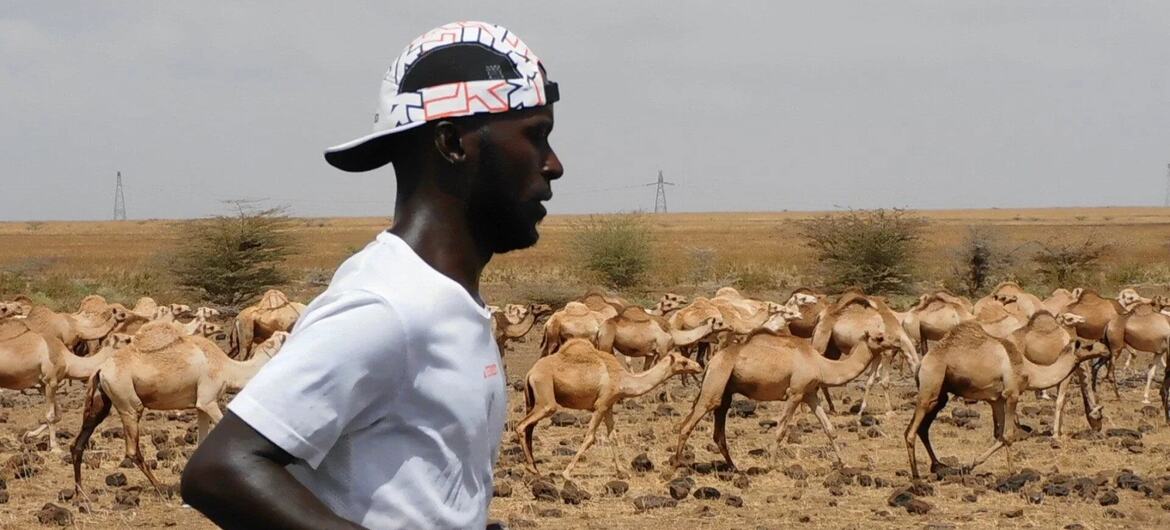
Crossing some of the world’s most spectacular and unforgiving terrain, Deo experienced Africa on foot, where nature and movement shaped every mile of his journey.

Community support 

Despite the challenges, Deo’s journey was sustained by community support. Along the way, local runners, strangers, and online supporters joined him. Those moments of shared effort and solidarity kept him going. 

“Without that community support, I would not have succeeded on this journey. It’s what truly gave it meaning,” he said. 

His journey was never about endurance alone. It was about reclaiming the story of migration – a story rooted in resilience, human progress, and development. 

“People move for so many reasons, and each journey tells a human story,” Deo emphasised. 

Looking ahead, he plans to keep using his platform as a form of activism, continuing to speak about migration, belonging, and shared humanity. As he puts it, “Don’t limit yourself. Believe in your power to create change.”
Source link

Sudan: Atrocities ‘repeated town by town’, ICC prosecutor tells UN Security Council

Briefing ambassadors, ICC Deputy Prosecutor Nazhat Shameem Khan said the situation in Darfur had “darkened even further,” with civilians subjected to what she described as collective torture amid a widening war between Sudan’s rival military forces.

The picture that is emerging is appalling: organised, widespread, mass criminality including mass executions,” Ms. Khan said. “Atrocities are used as a tool to assert control.

Epicentre of ‘profound suffering’

Sudan has been engulfed in conflict since April 2023, when fighting erupted between former allies the Sudanese Armed Forces (SAF) and Rapid Support Forces militia (RSF).

What began as a power struggle metastasised into conflicts across the country, most devastating in the Darfur region, which also saw longstanding ethnic tensions – which prompted allegations of genocide in the early 2000s – being reignited.

She said the fall of North Darfur’s regional capital El Fasher to the RSF had been followed by a “calculated campaign of the most profound suffering,” particularly targeting non-Arab communities.

The crimes, she said, include rape, arbitrary detention, executions and the creation of mass graves, often filmed and celebrated by perpetrators.

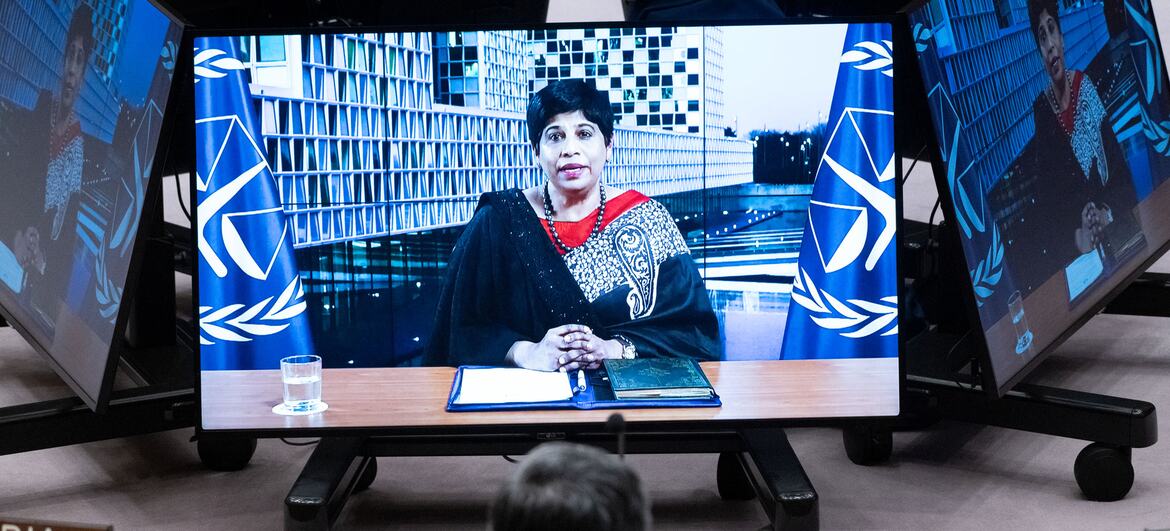
Nazhat Shameem Khan (on screen), Deputy Prosecutor of the International Criminal Court (ICC), briefs the Security Council.

Fighters ‘celebrating executions’

Based on video, audio and satellite evidence collected, the ICC Prosecutor has concluded that war crimes and crimes against humanity were committed in El Fasher, particularly in late October, following a prolonged RSF siege of the city. 

Ms. Khan said video footage showed patterns similar to those documented in earlier atrocities in Darfur, including the detention, mistreatment and killing of civilians from non-Arab tribes.

Members of the RSF are seen celebrating direct executions and subsequently desecrating corpses,” she said.

El Geneina investigations

The Office of the Prosecutor is also advancing investigations into crimes committed in El Geneina, where witnesses have provided accounts of attacks on displacement camps, looting, gender-based violence and crimes against children.

In 2023, El Geneina witnessed some of the worst violence of the war as RSF fighters and allied militias carried out massacres against the Massalit community, forcing hundreds of thousands to flee into neighbouring Chad.

UN officials and human rights investigators described the violence as ethnically motivated and warned of possible crimes against humanity.

Evidence now indicates that the patterns of atrocities seen in El Geneina have since been replicated in El Fasher, Ms. Khan said.

This criminality is being repeated in town after town in Darfur,” she warned. “It will continue until this conflict, and the sense of impunity that fuels it, are stopped.

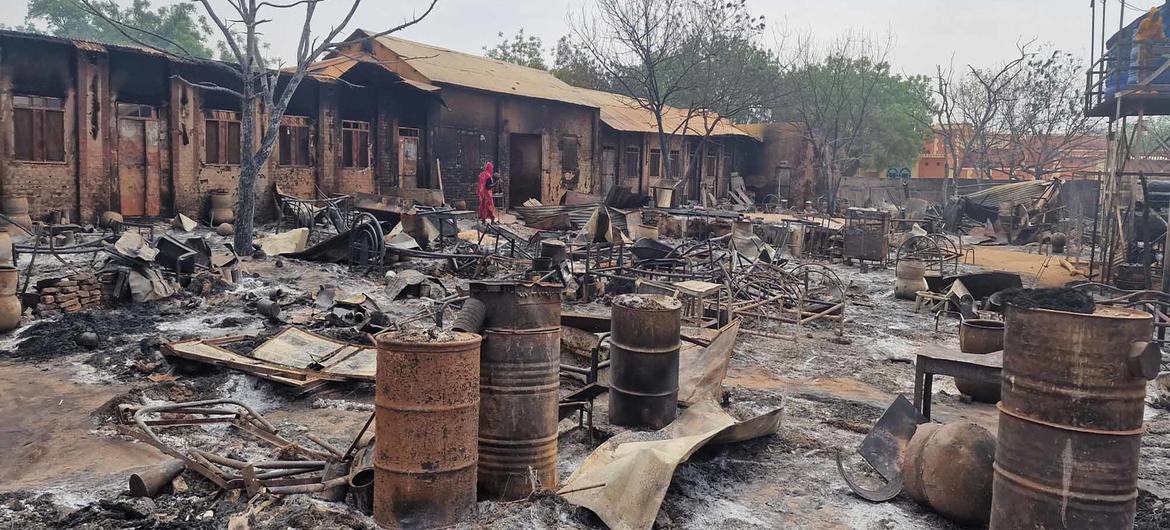
A school in El Geneina in West Darfur State, which had been serving as a displaced persons shelter, is burned to the ground. (file)

Rape as a weapon of war

Sexual violence, including rape, is being used as a weapon of war, Ms. Khan said, adding that gender-based crimes remain a priority for ICC investigations. She acknowledged cultural and security barriers that prevent survivors from reporting abuse, stressing the need for gender-sensitive and survivor-centred investigations.

While much of the briefing focused on RSF abuses, the Deputy Prosecutor said the ICC was also documenting allegations of crimes committed by the Sudanese Armed Forces (SAF), underscoring that all parties to the conflict are bound by international law to protect civilians.

Impunity overshadows progress

Ms. Khan cited the conviction last October of Ali Muhammad Ali Abd-Al-Rahman, known as Ali Kushayb – a former Janjaweed militia leader – as a landmark step toward accountability, but cautioned that the scale of ongoing atrocities far outweighed any sense of progress.

She closed with a pointed call on Sudanese authorities to act against senior suspects long sought by the Court, including former president Omar al-Bashir, former interior minister Ahmad Harun and former defence minister Abdel Raheem Muhammad Hussein.

“Action must now be taken,” she said, warning that justice for Darfur’s victims would remain hollow without arrests at the highest level.

Source link