‘We children saw things that no one should ever have to see’ Holocaust survivor tells the UN

Speaking in the General Assembly Hall alongside one of her great grandchildren, Mrs Lazan described her family’s journey from a ‘comfortable’ life in Hoya, northwest Germany, to a detention camp in the Netherlands – and in January 1944, internment in Bergen Belsen concentration camp.

Mrs Lazan’s indomitable spirit in the face of the most inhumane and extreme conditions, echoed the words of Viktor Frankl, author and Holocaust survivor, who famously said “everything can be taken away from people but one thing: the last of the human freedoms – to choose one’s attitude in any given circumstances, to choose one’s own way.” 

Addressing the world today, Mrs. Lazan said “how we treat, behave, and reach out to one another – that is entirely up to us.” 

Marion Blumenthal Lazan (4th right) with Secretary-General António Guterres (centre) and other attendees at the UN Observance of International Day of Commemoration in Memory of Victims of Holocaust.

Here’s her moving address in full:

In the early 1930’s my grandparents, parents, brother and I lived comfortably in Hoya, a small town in northwest Germany.

In 1935, when I was one year old, the Nuremberg laws were formulated, drastically restricting the rights of Jews. Our lives changed dramatically, and my parents decided to leave the country.

On 9 November, 1938, Kristallnacht took place. Our apartment was ransacked, but worst of all, my father was forcibly taken to the concentration camp Buchenwald in Germany. My father was released after three weeks, only because our papers were in order for our emigration to America.

Trapped in the Netherlands

In January of 1939, we left for Holland from where we were to sail to the US. In December, we were deported to the Dutch detention camp of Westerbork to await our departure to America. Under Dutch control, Camp Westerbork was tolerable. 

However, in May of 1940, the Germans invaded Holland, and we were trapped.

The Nazi SS took over the command of Westerbork, we were surrounded by the ever-present, terrifying 12 ft-high, barbed wire. Then, in 1942, the dreadful transports to the concentration and extermination camps in eastern Europe began. 

Every Monday night, lists of those to be deported were posted, causing incredible anxiety, anguish and fear. Then on Tuesday mornings, every Tuesday morning, men, women and little ones were marched to the nearby railroad platform from where they were transported. This area became known as Boulevard. de misère.

Of the total of 120,000 men, women and children that departed Westerbork, 102,000 were doomed, never to return.

In January of 1944, it was our turn to be shipped out. I remember that it was a bitter cold, pitch black, rainy night when we arrived at our destination, Concentration Camp Bergen-Belsen in Germany. 

A lifetime of fear

We were dragged out of the cattle cars and greeted by the German guards, who were shouting at us and threatening us with their weapons and with the most vicious attack dogs by their sides. I was a very frightened nine-year-old, and to this day, I still feel a certain sense of fear whenever I see a German Shepard.

Six hundred of our people were crammed into each of the crude, wooden, heatless barracks, meant for 100 when originally built. There were triple decker bunk-beds with two people sharing each bunk. German winters were bitter cold and very long. We were given only one thin blanket per bunk, and a straw-filled mattress, and this bunk was our only living quarters and that for two people.

I remember seeing a wagon filled with what I thought was firewood, I soon realised that what was in the wagon were dead, naked bodies thrown one on top of the other.

Toilets consisted of long wooden benches with holes cut into them, one next to the other. There was no privacy, there was no toilet paper, there was no soap and hardly any water with which to wash. And in the almost year and a half that we were in Bergen-Belsen, never once were we able to brush our teeth.

Every morning, we were ordered to line up on a huge field, it was called an appellplatz, five in a row as we were counted. We would have to stand there until each and everyone one of us was accounted for, often from early morning to late at night without food, without water.

Urine for warmth

No matter what the weather, without protective clothing. Frostbite was common. We would treat our affected toes and fingers with the warmth of our own urine.

Our diet consisted of a slice of bread a day and some hot watery soup. The bread was later cut back and given to us just once a week and only if our quarters were neat and in order. 

Once a month we were marched to an area to shower, and there, under the watchful eyes of the guards, we were ordered to undress. I was so frightened, not knowing what would come out of the faucets – water or gas. Yes, we were always hungry, we were thirsty, and we were in pain, but for me, fear was the worst emotion to deal with.

The dark, crowded quarters often caused us to trip over the dead; bodies could not be taken away fast enough! We as children saw things that no one, no matter what the age, should ever have to see.

Indescribable horror

You have read books, you’ve seen movies, true documentaries, but the constant foul odour, the filth, continuous horror, and fear, surrounded by death is indescribable. There is no way this can be put accurately into words and pictures.

Our bodies, hair and clothes were infested with lice, we learnt there was a distinct difference between head lice and clothes lice, squashing them between my thumb nails became my primary pastime.

Much of my time was taken up with make-believe games. One game, a game based on superstition, became very important to me: I decided that if I were to find four pebbles of about the same size and shape, that would mean that the four members of my family would all survive. It was a very difficult game to play, but I was sure that I would always find my four pebbles. I made it my business to find those four pebbles.

Maternal strength

My mother was a remarkable, extraordinary lady with tremendous inner strength and fortitude. Mum passed away six weeks short of 105, and when she was still with us, we were five generations of women, and I refer to that as survival and continuity. 

I have no doubt that it was because of my mother that I survived. I am fortunate, very fortunate, that i was never separated from my mother during those difficult years.

One day, my mother was able to smuggle some salt and potatoes from the kitchen where she worked, and somehow managed to cook the soup in secret. This was done on our bunk. I was on the bunk with her trying to hide and shield what she was doing. The soup was simmering, just about finished when the German guards entered our barrack for a surprise inspection. In our rush to hide the set-up, the boiling soup spilled on my leg. We had been taught self-discipline and self-control the hard way: for I knew for sure had I cried out, it would have cost us our lives. This happened in the spring of 1945. I was just 10 years old.

Soon thereafter, we were transported to the extermination camps in East Europe. And after 14 days on the train without food, without water, without medical supplies, without sanitary facilities, the Russian army liberated our train near Troibitz, a small village in eastern Germany.

Five hundred of the 2,500 people on board the train died enroute or shortly thereafter. Many inhabitants in Troibitz fled and we took over their homes. Kitchens were stocked with ample food, it was rich and good – actually much too good for our starved bodies. We could not tolerate that unfamiliar nourishment. At that time, at the age of ten and a half, I weighed 16 kilos, the equivalent to 35 pounds. We were all ill with typhus, but my father had to die from it six weeks after our liberation, and this after six and half years of mental torment and physical abuse.

A new life in New Jersey

In 1948, when I was 13 years old, our family of three emigrated to the United States. We arrived in Hoboken, New Jersey April 23rd, 1948, by coincidence exactly three years to the day of our liberation. The Hebrew Immigration Aid Society found a home for us in Peoria, Illinois, where we once again started our lives anew.

Because of my inability to speak English, I, at the age of 13, was placed in a fourth grade with nine-year-olds. Both my brother and I worked long hours after school to help our mum pay bills. 

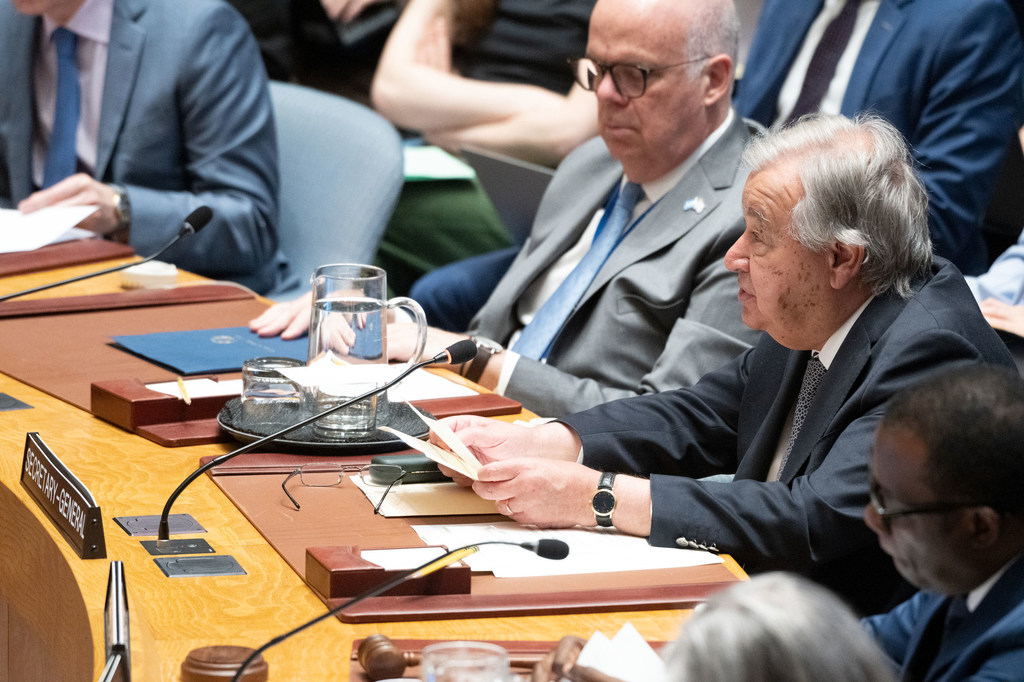
Secretary-General António Guterres (on screen) addresses the UN Observance of International Day of Commemoration in memory of the victims of the Holocaust.

By taking extra courses during the year, attending summer school, and by working very hard in my studies, I graduated from Peoria Central High School five years later, at age 18 ranking eigth in a class of 267 students.

It was two months after high school graduation that I married Nathaniel Lazan. I am grateful that I survived healthy in body, mind and spirit, and that we were able to perpetuate our heritage with a wonderful family. 

We have three grown children, all three are happily married, have given us nine beautiful grandchildren and 15 extraordinary great-grandchildren. Survival and continuity for sure!

Pushing back on hatred

This is the very yellow star that I was forced to wear. It was just another way to denigrate us, to isolate us, and to set us apart from the rest of society. Each and every one of us must do everything in our power to prevent such hatred, such destruction and such terror from recurring.

We can begin by having love, respect and compassion towards one another, regardless of their religious belief, colour of skin or national origin. Let us all, each and every one of us, have this compassion and respect. It is such a simple message and yet so difficult to achieve. 

There is very little we can do against the negativity in our world, but how we treat, behave, and reach out to one another – that is entirely up to us. And with that, I wish each and every one of you, your children, grandchildren, and all succeeding generations, a healthy, happy, productive future in a world of love and peace.

Listen to an interview with Natalia Tomenko, a youth advocate and expert on Romani history, and Deputy Director of Ukraine’s Youth Agency for the Advocacy of Roma Culture:

Source link

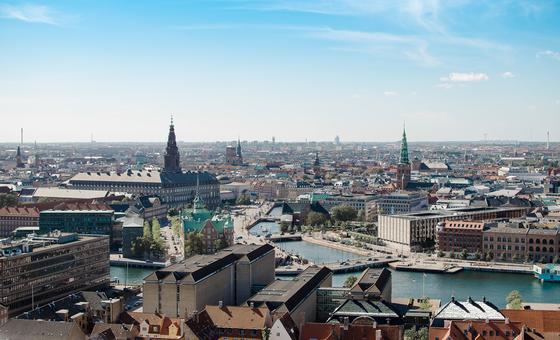
‘Dangerous nostalgia’ is a threat to multilateralism, UN deputy chief tells Danish MPs

The UN’s founding document “is our moral compass,” she said, calling for renewed commitment to multilateralism rooted in solidarity, international law, and human dignity. 

She stressed the need to invest in peace – which the Security Council and General Assembly have both affirmed through resolutions on Ukraine’s sovereignty and territorial integrity, and in support of the two-State solution between Israelis and Palestinians. 

These are examples of how the Charter’s values “have been brought to life”, however “the very foundation those resolutions rest on is being attacked.”  

Yesterday, Venezuela – tomorrow Greenland? 

Ms. Mohammed said that “dangerous nostalgia is what’s threatening international cooperation now, that the rule of law can be interpreted by the whims and caprices of a strong arm.” 

She noted that Secretary-General António Guterres recently reminded that the Charter is not an à la carte menu and all countries have an obligation to uphold it. 

Today, it is smaller countries who are “holding the line on the Charter” because they understand that “if the rules don’t protect the vulnerable, they offer protection to no one,” she said. 

You either stand up for a rules-based order, or you pay the price of ignoring it. Yesterday, the price was Venezuela, tomorrow it may be Greenland,” she warned. 

Fund sustainable development 

The international community must also work to accelerate sustainable development. 

Geopolitical tensions are threatening gains made in slashing poverty, reducing child and maternal mortality, and increasing girls’ access to education, she said. 

Furthermore, “trade wars are closing off markets that have lifted millions out of poverty. And we’re watching a global rollback of the hard-won rights of women and girls.” 

Last year, military spending reached a record high of $2.7 trillion, yet funding for basic development needs faces a $4.2 trillion annual shortfall, which must change. 

Davos echo chamber 

“Davos this week will see the rich getting richer – profits going into the hands of very few. Last year, the wealth of billionaires grew by $2 trillion dollars while the poorest half of humanity owns just two percent of global wealth,” she added. 

Ms. Mohammed pointed to the UN conference on financing for development, held last year in Spain, which “showed us how to create fiscal space for sustainable development, address the debt crisis, and reform the international financial architecture that keep so many outside.” 

Support UN reform 

The Deputy Secretary-General underscored the need to “reset the UN to preserve multilateralism”. 

In this regard, the UN80 Initiative on system-wide reform aims to build a global body “that delivers more effectively, with greater impact, amid the reality of fewer resources and greater needs on the ground in countries.”  

She asked all countries, including Denmark, to “lead the charge and commit to a reformed UN that delivers on the promise of the Charter and the realities of today.” 

Source link

Rising hunger and displacement pose growing economic risk, UN tells Davos

The UN World Food Programme (WFP) has reported that an estimated 318 million people worldwide now face crisis levels of hunger or worse, with hundreds of thousands already experiencing famine-like conditions.

It cautioned that deep funding shortfalls are forcing it to cut rations and scale back assistance at a time of surging needs.

Current forecasts put WFP’s funding at just under half of its required $13 billion budget for 2026, leaving the agency able to reach about 110 million people – a third of those in need.

Combatting hunger yields dividends

“Hunger drives displacement, conflict, and instability and these not only threaten lives, but disrupt the very markets that businesses depend on,” said Rania Dagash-Kamara, WFP Assistant Executive Director for Partnerships and Innovation.

“The world cannot build stable markets on a foundation of 318 million hungry people.”

Ms. Dagash-Kamara, who is attending the forum, said the private sector has a direct stake in addressing food insecurity, calling on companies to invest in supply chains, technology and innovation that can help stabilize fragile markets and protect workforces.

WFP is urging business leaders in Davos to keep hunger and food security among their top priorities, invest in supply chain systems that strengthen fragile markets, and support food-related technologies that improve efficiency and resilience.

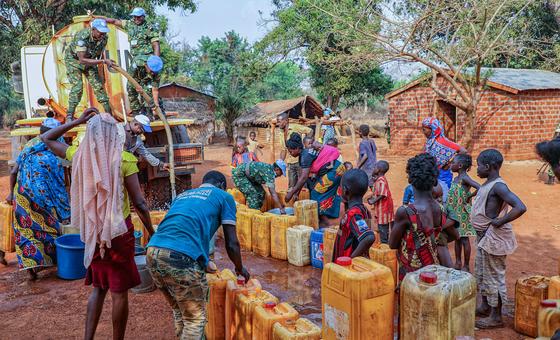
Displaced families in South Kivu, Democratic Republic of the Congo, receive food aid. (file photo)

Migration powers growth and development

The UN International Organization for Migration (IOM) is also taking its case to the annual forum in Switzerland, calling on political and business leaders to rethink migration as a driver of growth rather than a burden.

Migration is one of the most powerful drivers of development when managed responsibly,said IOM Director General Amy Pope.

“Mobility can unlock economic potential, help communities thrive independently, and provide lasting solutions to displacement, while respecting national sovereignty and human rights.”

Partnerships and innovation

IOM said partnerships with private companies and foundations are already helping realise that approach.  

This includes using artificial intelligence to improve health screening and labour market policies, and programmes that support vocational training, entrepreneurship and durable solutions for displaced people.

At Davos, the agency is also highlighting the role of diaspora communities as investors and innovators.

“By using remittances and diaspora capital to support business creation and digital financial access, IOM aims to open new markets and create jobs, while helping communities become more self-reliant,” the agency said.

Other senior UN officials attending the forum include President of the General Assembly Annalena Baerbock; WHO chief Tedros Adhanom Ghebreyesus; Alexander De Croo, Administrator of the UN Development Programme; UN High Commissioner for Refugees Barham Salih; and Rafael Mariano Grossi, Director-General of the International Atomic Energy Agency.

Source link

Sudan: Atrocities ‘repeated town by town’, ICC prosecutor tells UN Security Council

Briefing ambassadors, ICC Deputy Prosecutor Nazhat Shameem Khan said the situation in Darfur had “darkened even further,” with civilians subjected to what she described as collective torture amid a widening war between Sudan’s rival military forces.

The picture that is emerging is appalling: organised, widespread, mass criminality including mass executions,” Ms. Khan said. “Atrocities are used as a tool to assert control.

Epicentre of ‘profound suffering’

Sudan has been engulfed in conflict since April 2023, when fighting erupted between former allies the Sudanese Armed Forces (SAF) and Rapid Support Forces militia (RSF).

What began as a power struggle metastasised into conflicts across the country, most devastating in the Darfur region, which also saw longstanding ethnic tensions – which prompted allegations of genocide in the early 2000s – being reignited.

She said the fall of North Darfur’s regional capital El Fasher to the RSF had been followed by a “calculated campaign of the most profound suffering,” particularly targeting non-Arab communities.

The crimes, she said, include rape, arbitrary detention, executions and the creation of mass graves, often filmed and celebrated by perpetrators.

Nazhat Shameem Khan (on screen), Deputy Prosecutor of the International Criminal Court (ICC), briefs the Security Council.

Fighters ‘celebrating executions’

Based on video, audio and satellite evidence collected, the ICC Prosecutor has concluded that war crimes and crimes against humanity were committed in El Fasher, particularly in late October, following a prolonged RSF siege of the city. 

Ms. Khan said video footage showed patterns similar to those documented in earlier atrocities in Darfur, including the detention, mistreatment and killing of civilians from non-Arab tribes.

Members of the RSF are seen celebrating direct executions and subsequently desecrating corpses,” she said.

El Geneina investigations

The Office of the Prosecutor is also advancing investigations into crimes committed in El Geneina, where witnesses have provided accounts of attacks on displacement camps, looting, gender-based violence and crimes against children.

In 2023, El Geneina witnessed some of the worst violence of the war as RSF fighters and allied militias carried out massacres against the Massalit community, forcing hundreds of thousands to flee into neighbouring Chad.

UN officials and human rights investigators described the violence as ethnically motivated and warned of possible crimes against humanity.

Evidence now indicates that the patterns of atrocities seen in El Geneina have since been replicated in El Fasher, Ms. Khan said.

This criminality is being repeated in town after town in Darfur,” she warned. “It will continue until this conflict, and the sense of impunity that fuels it, are stopped.

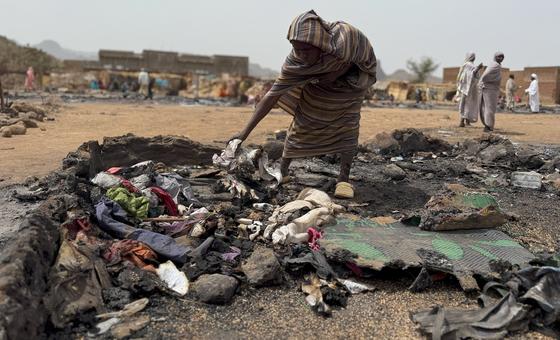
A school in El Geneina in West Darfur State, which had been serving as a displaced persons shelter, is burned to the ground. (file)

Rape as a weapon of war

Sexual violence, including rape, is being used as a weapon of war, Ms. Khan said, adding that gender-based crimes remain a priority for ICC investigations. She acknowledged cultural and security barriers that prevent survivors from reporting abuse, stressing the need for gender-sensitive and survivor-centred investigations.

While much of the briefing focused on RSF abuses, the Deputy Prosecutor said the ICC was also documenting allegations of crimes committed by the Sudanese Armed Forces (SAF), underscoring that all parties to the conflict are bound by international law to protect civilians.

Impunity overshadows progress

Ms. Khan cited the conviction last October of Ali Muhammad Ali Abd-Al-Rahman, known as Ali Kushayb – a former Janjaweed militia leader – as a landmark step toward accountability, but cautioned that the scale of ongoing atrocities far outweighed any sense of progress.

She closed with a pointed call on Sudanese authorities to act against senior suspects long sought by the Court, including former president Omar al-Bashir, former interior minister Ahmad Harun and former defence minister Abdel Raheem Muhammad Hussein.

“Action must now be taken,” she said, warning that justice for Darfur’s victims would remain hollow without arrests at the highest level.

Source link

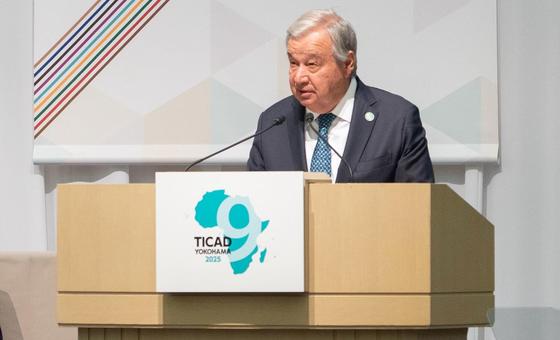
‘Africa is poised for progress’ Guterres tells development conference in Japan

“With the world’s youngest population, abundant natural resources, and a vibrant entrepreneurial spirit, Africa is poised for progress,” he told the 9th Tokyo International Conference on African Development (TICAD) in Yokohama.

He said the meeting’s theme – Co-Create Innovative Solutions with Africa – was a reminder that these same strengths can help shape a more peaceful, prosperous, and sustainable world in Africa and beyond.

Progress and reform

In this regard, he emphasised the need to accelerate progress to achieve the Sustainable Development Goals (SDGs) through investment, reform and partnerships.

Mr. Guterres highlighted five areas for cooperation, starting with his longstanding push to reform institutions of global governance so that they reflect today’s realities.

Africa must have a stronger voice in shaping the decisions that affect its future,” he said.

That includes long-overdue reform of the Security Council, where incredibly, Africa has no permanent member, and other regions remain underrepresented.”

He also called for overhauling the international financial architecture, describing the current system as “unjust and unfair”, as well as bold action on debt relief.

Value chains and renewable energy

The Secretary-General next put the spotlight on investment in sustainable global value chains and regional integration.

“Africa’s path for prosperity must focus on adding value to its raw materials, creating decent jobs, and building resilience, taking profit of the African Continental Free Trade Area,” he said.

He also stressed the need to address “Africa’s energy paradox”, noting that although the continent has enormous potential to produce renewable energy, it receives just two per cent of global investment in the sector.  Meanwhile, some 600 million African lack access to electricity.

“Africa is also home to the critical minerals required to power renewable technologies,” he continued.  “But the countries hosting them must be the ones to benefit first and most, while adding value to local and global value chains.”

Invest in technology, youth and peace 

Turning next to technology, Mr. Guterres called for harnessing digital innovation, including artificial intelligence (AI), for development.

He said Japan’s technological leadership can help close the digital divide, “and ensure that technology helps African countries catch up, with adequate digital public infrastructure, rather than being left behind.”

As “young people are the builders of Africa’s future”, the Secretary-General’s fourth point underscored the need to invest in their skills and education, particularly in STEM (Science, Technology, Engineering and Maths).

Let us invest in women’s full participation across economies, societies and political systems,” he added.

Mr. Guterres concluded by acknowledging the link between peace and prosperity.

“Sustainable development requires sustainable peace,” he said.

“By silencing the guns as the African Union clearly points out. And by ending violence in all its forms and strengthening the social cohesion and stability that can attract investment and business to Africa.”

About TICAD

The Tokyo International Conference on African Development (TICAD) is co-hosted by Japan and the UN, the UN Development Programme (UNDP), the World Bank and the African Union Commission (AUC).

It has been held since 1993 with the aim of promoting Africa’s development, peace and security, through the strengthening of relations in multilateral cooperation and partnership.

“For more than three decades, TICAD has embodied the spirit of multilateralism — grounded in mutual respect, shared responsibility, and a deep belief in Africa’s potential,” the Secretary-General said.

The conference runs from 20-23 August. 

Source link

South Sudanese ‘are counting on us’, top UN official tells Security Council

Referencing the recent quarterly report from the Secretary-General on challenges facing the world’s youngest nation, Ms. Pobee underscored that since March, previous gains in the peace process have been largely eroded.

Military offensives, primarily involving South Sudan’s rival militia which answers to the First Vice President and Government troops loyal to the President, have continued, and trust in the 2018 Revitalized Peace Agreement between the two has been undermined.

Murithi Mutiga, another briefer from the International Crisis Group, explained that the 2018 agreement required President Salva Kiir to work in concord with his rival, First Vice President Riek Machar; thus, the agreement was effectively terminated when President Kiir placed the former Vice President under house arrest on 26 March.

Humanitarian crisis

Ms. Pobee highlighted that recent military offensives have resulted in deaths, displacement and the destruction of civilian infrastructure.

Furthermore, the displacement crisis is a two-way street, Mr. Murtiga explained: the devastating civil war in neighbouring Sudan has driven 1.2 million refugees into South Sudan, straining already-limited resources.

The conflict in Sudan has also disrupted oil flows to the military Government-controlled Port Sudan and the broader market, causing South Sudan to lose most of its valuable oil revenues.

Mr. Murtiga also underscored that this is one of South Sudan’s worst humanitarian crises since independence in 2011, with 9.3 million in need of dire assistance and 7.7 million suffering food insecurity, including 83,000 at risk of catastrophic conditions, all while brutal sexual violence is on the rise.

And funding cuts are leaving millions without lifesaving assistance, Ms. Pobee emphasised. Halfway through 2025, the Humanitarian Needs and Response Plan is only 28.5 per cent funded.

Additionally, challenges to humanitarian access are growing with increased instances of aid workers being attacked, as poor infrastructure and administrative obstacles impede relief efforts.

Call to act

The UN, African Union, regional intergovernmental development body, IGAD, and many others in the international community, have repeatedly called for a cessation of hostilities and a return to dialogue without any concrete response from the warring parties.

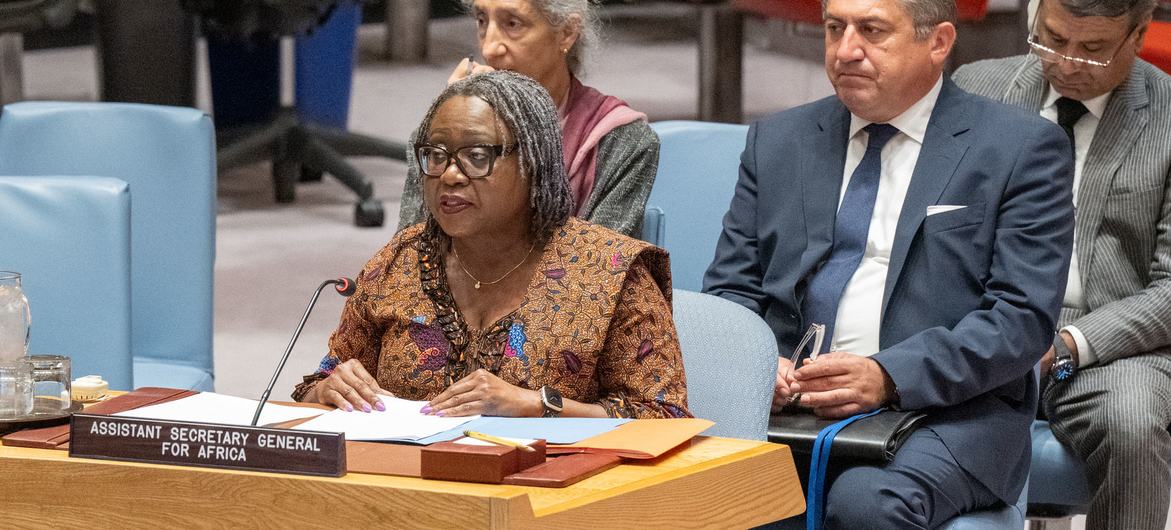
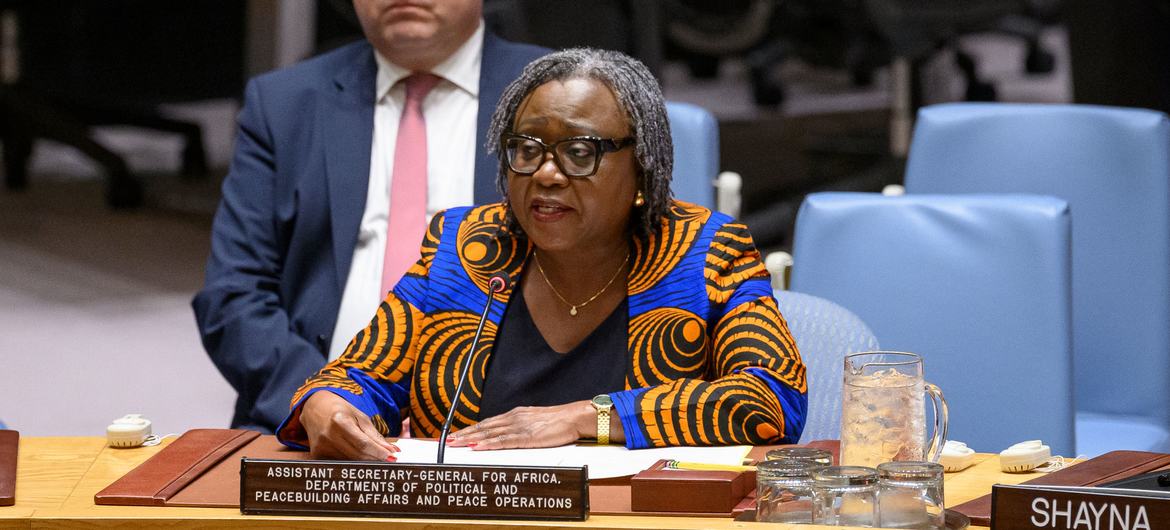
Martha Ama Akyaa Pobee, Assistant Secretary-General for Africa in the Departments of Political and Peacebuilding Affairs and Peace Operations, addresses the Security Council meeting on Sudan and South Sudan.

While government officials have publicly expressed their commitment to elections by December 2026, the Parties must take steps to return to dialogue and make the necessary decisions to move the country forward. Declarations of commitment are not enough,” Ms. Pobee stressed.

She urged the Security Council to call on all actors and stakeholders to uphold the peace agreement. If they fail to lay the groundwork for peaceful, credible elections in December 2026, the risk of a relapse into violence will rise significantly amid growing regional instability.

It is the shared responsibility of the international community to work with the South Sudanese parties to avoid such a failure, she stressed. “The people of South Sudan are counting on us.”

Source link

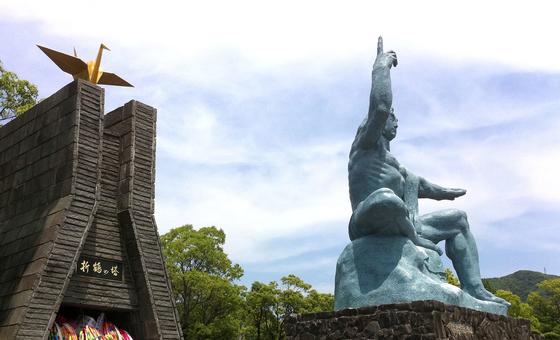
‘Nuclear weapons have no place in our world,’ UN chief tells mayors in Nagasaki

Inspired by the hibakusha, survivors of the atomic bombings at the end of World War Two who turned their suffering into a powerful appeal for peace, António Guterres renewed his call for a world free of nuclear weapons in a video message to the 11th General Conference of Mayors for Peace in Nagasaki.

United against nuclear weapons, the conference is an opportunity for mayors from around the world to discuss and adopt key priorities in support of global denuclearisation.

‘No place in our world’

“Nuclear weapons have no place in our world,” said Mr. Guterres in his video-message, as they only offer the “illusion of safety and the certainty of devastation,” he said.

Calling for the total elimination of nuclear weapons, the Secretary-General urged all participants at the conference to “keep mobilising communities, inspiring young people, and building peace from the ground up.”

“I urge all States to recommit to nuclear disarmament,” he said.

A better world

I commend Mayors for Peace for your unwavering commitment to a better world,” said Secretary-General, as the organization aims at creating real momentum for the realisation of a peaceful world without nuclear weapons.

In honour of the hibakusha, and in the memory of the victims of Hiroshima and Nagasaki, Mr. Guterres made an impassioned call for action to end the nuclear threat once and for all.

Read more about the work of the hibakusha here in previous UN News coverage, and listen to this extraordinary story of survival in our Lid is On podcast:

Source link

Gaza: ‘Unbearable’ suffering continues, UN official tells Security Council

Briefing ambassadors in the Security Council, Assistant Secretary-General for the Middle East Khaled Khiari said more than 1,000 Palestinians had been killed since mid-June alone, many of them while seeking aid.

Citing figures from the Gazan health authorities, he reported that the total number of Palestinian fatalities since 7 October 2023 had surpassed 56,500.

The level of suffering and brutality in Gaza is unbearable,” Mr. Khiari said. “The continued collective punishment of the Palestinian people is unjustifiable.

Killed trying to access aid

Mr. Khiari cited multiple incidents involving the Israel Defense Forces (IDF) opening fire near food distribution points.

On 17 June, at least 50 people were killed and 200 injured in Khan Younis when an IDF tank opened fire on a crowd waiting for UN World Food Programme (WFP) aid trucks.

Once again a week later, IDF troops reportedly opened fire near Gaza Humanitarian Foundation sites, this time killing 49 Palestinians and injuring 197 others.

“We strongly condemn the loss of lives and injuries of Palestinians seeking aid in Gaza,” Mr. Khiari said. “We call for an immediate and independent investigation into these events and for perpetrators to be held accountable.”

He emphasised that the UN “will not participate in any aid delivery modality that does not comply with the fundamental humanitarian principles of humanity, impartiality, independence, and neutrality,” a sentiment which other UN officials have repeatedly said as well.

Strong condemnation

Mr. Khiari reiterated the UN’s strong condemnation of Hamas and other Palestinian armed groups for their attacks in Israel, which killed over 1,200 people and led to more than 250 being taken hostage. Fifty hostages, including one woman, remain in captivity.

Nothing can justify these acts of terror. We remain appalled that hostages may be subjected to ongoing ill-treatment and that the bodies of hostages continue to be withheld,” he said.

At the same time, he also condemned “the widespread killing and injury of civilians in Gaza, including children and women, and the destruction of homes, schools, hospitals and mosques.”

Rising violence in the West Bank

In the occupied West Bank, Israeli raids and settler violence have escalated.  

Mr. Khiari reported that a 15-year-old boy and an elderly woman were killed in separate incidents on 25 June. Armed settlers also killed several Palestinians during attacks in Surif and Kafr Malik.

The escalating violence in the occupied West Bank is alarming,” Khiari said, warning that military operations and settler expansion are leading to fatalities, displacement and destruction.

Iran-Israel ceasefire brings hope to the region

Mr. Khiari concluded his briefing with comments on the wider Middle East region, particularly the recent flare-up between Israel and Iran.

He welcomed the 24 June ceasefire agreement between the two countries, announced by US President Donald Trump, and credited US and Qatari mediation.

We hope that this ceasefire can be replicated in the other conflicts in the region – nowhere is this more needed than in Gaza,” he said.

It’s time to finance our future and ‘change course’, Guterres tells world leaders in Sevilla

António Guterres issued his clarion call noting that sustainable development powered by international cooperation, is now facing “massive headwinds.”

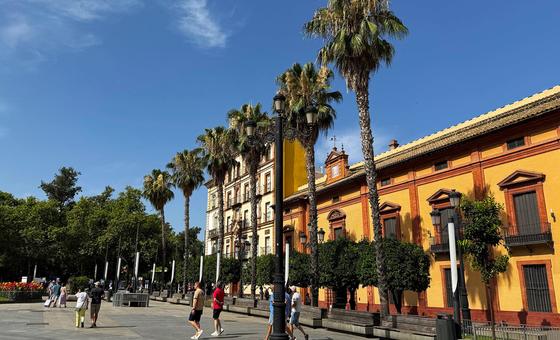
Addressing the opening session of the 4th Financing for Development Conference (FFD4) in baking hot Sevilla, Spain – basking in record high June temperatures – the Secretary-General noted multilateralism itself is also feeling the heat, while trust between nations and institutions fray.

The world is on fire, shaken by inequalities, climate chaos and raging conflicts: “Financing is the engine of development and right now, this engine is sputtering,” he told the conference, attended by more than 50 world leaders, over 150 nations and around 15,000 delegates.

“As we meet, the 2030 Agenda for Sustainable Development – our global promise to transform our world for a better, fairer future – is in danger.”

Some two-thirds of the ambitious Sustainable Development Goals (SDGs) targets agreed in 2015 are significantly off track – hence the staggering $4 trillion investment needed to turn it around.

“We are here in Sevilla to change course. To repair and rev up the engine of development to accelerate investment at the scale and speed required,” said Mr. Guterres.

He described the outcome known as the Sevilla Commitment adopted on Monday – without the United States which pulled out of the process earlier this month – as a “global promise” to low-income nations to lift them up the development ladder.

The UN chief outlined three key action areas:

  • First, get resources flowing fast at home to spur sustainable growth, and for richer countries to honour their pledge under the accord to double aid to poorer countries to boost development. This includes tripling the lending capacity of Multilateral Development Banks and innovative solutions to unlock private cash.
  • Second, fix the “unsustainable, unfair and unaffordable” global debt system. Right now, poorer countries are spending around $1.4 trillion just servicing their vast debts in the form of interest payments. Among the innovations, a new borrowers’ forum will ensure fairer debt resolution and action.
  • Third, reform the global financial architecture, with major shareholders playing their part, so that it empowers every country. “We need a fairer global tax system shaped by all, not just a few.”

The current crisis of affordability and stalled development is “a crisis of people,” he continued, which leaves families hungry, children unvaccinated, and girls left out of education.

“This conference is not about charity. It’s about restoring justice and to facilitate the ability of all people to live in dignity,” said Mr. Guterres.

This conference is not about money – it’s about investments in the future we wish to build together.”

A tangible and actionable’ roadmap

King Felipe of Spain spoke just ahead of the official opening, telling delegates the multicultural city of Sevilla welcomes the world “with open arms”.

He said a new roadmap would emerge that is based on what is “concrete and tangible and actionable”.

The conference must be a success, because cooperation is one of our fundamental pillars of the multilateral world and “the ultimate embodiment of the values that sustain it – especially at this particular point in history where many certainties are melting away and many fears and uncertainties are taking shape.”

‘Our time is now’

Spain’s President Pedro Sánchez told delegates “our time is now and our place is here.” Millions of lives will depend on the choices made in Sevilla and going forward.

We must choose “ambition over paralysis, solidarity over indifference and courage over convenience,” he continued, adding that the eyes of world are on this hall, to see what we are ready to do together and in the face of this historic challenge we must prove our worth.”

Sevilla was “the New York of the 16th century” in diplomatic terms he told delegates – and a cradle of globalism – we must all do that legacy justice today.

‘Sevilla is not an end point’

Secretary-General of the conference, Li Junhua – who’s in charge of the Department of Economic and Social Affairs (DESA) – said the week in Sevilla is key moment to mobilise the resources necessary to build a just, inclusive and sustainable future.

The UN effort to finance development has been anchored in multilateralism and solidarity – but today, the whole framework is under “profound stress.”

He said never has sustainable development been so tested but the pact made in Sevilla puts people back at the centre.

Sevilla is not an end point, it is a launch pad for a new era of implementation, accountability and solidarity.” UNDESA is ready to support all nations to translate the commitment into international action, he underscored.

President of the UN General Assembly Philémon Yang told delegates above all, “we need leadership to guide the world forward into a brighter more prosperous future for everyone, everywhere.”

He said the Sevilla framework will renew global partnership for the decade ahead and provide a focus on a debt burden which is crippling the developing world.

President of the UN Economic and Social Council Bob Rae said trust between countries had to be strengthened, because its absence “creates chaos.”

“Most of all I want to congratulate states for bringing forward the ambition, deepening engagement between financial institutions.”

The week represents a real commitment to action, he said.

Ajay Banga, President of the World Bank Group, told delegates ending poverty remains his key mission and the surge in population underway in developing countries requires resources “at an unprecedented scale and pace.”

He said everyone knew that governments, philanthropies and institutions are unable to meet every projection or promise – which is why the private sector is essential to the Sevilla Agreement so that capital can flow.

Mr. Banga added that the bank’s reforms of recent years are about being a better partner to the private sector and government clients.

Improving response time, boosting capital and systems of growth are key – but much more is needed to deliver for the next generation.

Exempt least-developed from punishing tariffs: WTO

Ngozi Okonjo-Iweala, Director-General of World Trade Organization said the conference was gathering at a time of unprecedented difficulty.

After decades of positive contributions, the global trading system has now been “severely disrupted” leaving exports so hampered by unilateral tariff measures and policy uncertainty that the WTO has sharply downgraded growth forecasts.

Further tariff barriers on 9 July – the deadline set by the US administration – will only make the contraction in global trade worse.

She reminded that the WTO has argued for the least developed nations and Africa overall to be exempted from the tariffs, “so we can better integrate them into the world trading system, not further exclude them.”

She said the Sevilla Agreement rightly recognises international trade as an engine of development.

“We therefore need to bolster stability and predictability in global trade,” through action at many levels that can grow national resources through exports, she told delegates.

IMF calls for broader tax base

Nigel Clarke, Deputy Managing Director of the International Monetary Fund (IMF), called for broadening the tax base, building strong financial management systems, coordinating support and addressing debt more sustainably.

“Many countries continue to struggle with high interest costs,” he said, calling on the international community to improve debt restructuring processes.  

Through its capacity development, the Fund is equipping members to chart their own paths and is also providing financial support when they need it most, he added.

Source link

Sudan: ‘Fighting shows no signs of abating,’ senior UN official tells Security Council

On Friday, the UN Security Council heard sobering briefings from Martha Ama Akyaa Pobee, UN Assistant Secretary-General for Africa, and Shayna Lewis, Sudan Specialist and Senior Advisor with Preventing and Ending Mass Atrocities (PAEMA), a US-based organization.

Ms. Pobee stressed that front lines continue to shift as the RSF and SAF press on with their military objectives, warning, “the warring parties appear unrelenting in their resolve to pursue military objectives.”

She noted the growing use of advanced weaponry, including long-range drones, which have expanded the violence into previously stable areas.

Martha Ama Akyaa Pobee, Assistant Secretary-General for Africa in the UN Department of Political and Peacebuilding Affairs and Peace Operations, briefs the Security Council meeting on the situation in Sudan.

Ms. Pobee further warned of the conflict spilling further into the region, citing recent reports of violent clashes in the tri-border area between Sudan, Libya and Egypt, involving the SAF, RSF and forces affiliated with the Libyan National Army.

Human rights violations

Ms. Pobee also referenced UN human rights reports documenting a tripling of arbitrary civilian killings between February and April this year.

“Entrenched impunity is fuelling these and other gross human rights violations and abuses. All parties to the conflict must be held accountable,” she stressed.

Ms. Lewis’s briefing focused on the worsening humanitarian situation, highlighting the over 15 million children now in need of assistance due to ongoing attacks on civilians.

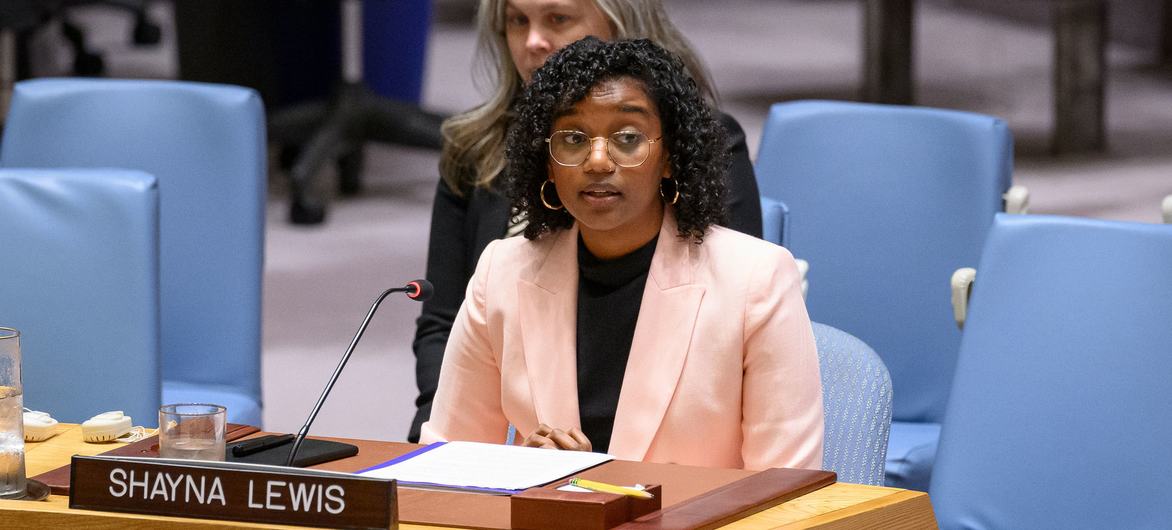
Shayna Lewis, Senior Advisor and Sudan Specialist at Preventing and Ending Mass Atrocities (PAEMA), addresses the Security Council meeting on the situation in Sudan.

Returning from a recent visit to Sudan, she shared accounts of severely injured children in hospitals and stressed that up to 80 per cent of health facilities in conflict areas are no longer functioning.

She also cited examples of indiscriminate attacks on hospitals by both the SAF and RSF, including a suspected SAF drone strike on 21 June that hit a hospital in West Kordofan, killing over 40 people and destroying critical lifesaving equipment.

Both Ms. Lewis and Ms. Pobee raised alarm over the warring parties’ widespread use of sexual and gender-based violence against women and girls across Sudan.

Government of Hope

Despite the ongoing violence and human rights abuses, Ms. Pobee underscored the significance of the new “Government of Hope.”

On 31 May, a new interim Prime Minister was inaugurated, announcing reform plans and immediately appointing a cabinet of professional technocrats.

Ms. Pobee also acknowledged the efforts of the Personal Envoy of the UN Secretary-General for Sudan, Ramtane Lamamra, who has been engaging with the Prime Minister, civilian groups and the warring parties.

Through this crucial communication, the Personal Envoy is helping these stakeholders work toward an inclusive political resolution.

“I urge this Council – once again – to unite in lending full support to Personal Envoy Lamamra’s efforts, and to use its influence with the parties and their external backers to press for a genuine commitment to dialogue and de-escalation,” Ms. Pobee said.

Ambassadors also heard a briefing from the Chair of the Sudan Sanctions Committee, established by the Council pursuant to Resolution 1591 (2005), on the work of the Committee. Following the open briefing, the Council held closed consultations during which Personal Envoy Lamamra also briefed members.

Source link

Upcoming elections ‘crucial opportunity’ for Central African Republic, UN top official tells Security Council

December’s local, legislative and presidential elections “represent a crucial opportunity” to strengthen democratic governance, promote reconciliation and consolidate stability, Jean-Pierre Lacroix, Under-Secretary-General for Peace Operations told ambassadors in the Security Council.

The timely holding of presidential and legislative elections is a constitutional requirement, and the Government has consistently demonstrated its commitment to holding local elections, he added.

Although the final electoral roll is currently delayed due to technical difficulties, national authorities, supported by the UN peacekeeping mission, MINUSCA, have made significant efforts to advance the revision of the electoral register through nationwide registration.

“This process took place without major security incidents, reflecting effective collaboration between the Central African national defence forces and MINUSCA, as well as public interest in engaging with the political process,” said Mr. Lacroix.

Challenges remain

Although the 19 April agreement between the government and leaders of various opposition armed groups aimed to end hostilities in the country, violence – primarily perpetrated by armed groups and militias – continues to undermine stability.

“The security situation remains fragile in border regions,” said Mr. Lacroix, noting the spillover effects of the conflict in neighbouring Sudan.

Last week, a Zambian peacekeeper was killed when suspected Sudanese armed elements opened fire on a MINUSCA patrol responding to reports of an attack against civilians in the north-east of the country.

Mr. Lacroix also informed the Security Council of human rights and humanitarian concerns.

Though progress has been made in advancing judicial accountability, notably by the Special Criminal Court, a lack of funding is expected to jeopardise the Court’s operations by September.

In addition, as urgent needs continue to outpace available resources, “the humanitarian situation remains dire,” said Mr. Lacroix, calling for strong support for lifesaving humanitarian assistance.

Source link

Development is ‘the first line of defense against conflict,’ Guterres tells Security Council

Ambassadors met to debate how poverty, inequality, and underdevelopment are fuelling conflict and instability, at a time when hostilities are increasing and demand for humanitarian aid is rising as resources dwindle.  

Every dollar spent on prevention could save up to $103 in conflict-related costs, according to the International Monetary Fund (IMF). 

Sustainable development critical

Conflicts are proliferating and lasting longer, said Mr. Guterres. At the same time the global economy is slowing and trade tensions are rising, as aid budgets are being slashed while military spending soars. 

He warned that if current trends continue, two thirds of the world’s poor will live in conflict-affected or fragile countries by the end of this decade. 

“The message is clear,” he said.  “The farther a country is from sustainable and inclusive development, the closer it is to instability, and even conflict.”

Secretary-General António Guterres briefs the Security Council meeting on Poverty, Underdevelopment, and Conflict.

Give peace a (fighting) chance

The Secretary-General highlighted how the UN has worked to advance the three pillars of peace, development and human rights.  

These efforts began with its establishment 80 years ago and continue today, “guided by the simple principle that prevention is the best cure for instability and conflict, and there is no better preventive measure than investing in development,” he said.

“Development gives peace a fighting chance. It’s the first line of defence against conflict. But right now, we’re losing ground,” he said, noting that “the engine of development is sputtering.”

World falling short

Currently, two-thirds of the targets under the Sustainable Development Goals (SDGs) are lagging 10 years after adoption. 

“The world is falling short by over $4 trillion annually in the resources developing countries need to deliver on these promises by 2030,” he added.

Furthermore, “developing countries are being battered and bruised by limited fiscal space, crushing debt burdens and skyrocketing prices.”

Fix the ‘engine’

The Secretary-General pointed to the fourth Conference on Financing for Development, which begins next week in Spain, as an important moment “to fix and strengthen this essential engine.”

He called for renewed commitments towards securing public and private finance for the areas of greatest need, providing urgent relief for debt-laden countries, and reforming the outdated global financial architecture.

The Council debate “could not be more prescient,” said Kanni Wignaraja, the UN Development Programme’s (UNDP) Assistant Secretary-General and Regional Director for Asia and the Pacific.

Break the cycle

Global human development has stalled just as violent conflicts have surged to levels not seen in eight decades, she said, before presenting three priorities for investment to help break the cycle, including protecting household economies.

“In fragile settings, where peace and security have been shattered, development that goes directly to the local level becomes the first line of peoples’ defence and survival. And their hope for recovery,” she said.

“From these local economies – where livelihoods are restored, water and electricity can flow again, women’s businesses in particular reopen, farmers can trade food, and there is basic finance to allow markets to stay afloat – from this, comes the resources to build back broken capabilities and resilience.”

Address systemic imbalances

The Chairperson of the African Union (AU) Commission, Mahmoud Youssouf Ali, recalled how the continent loses billions of dollars annually to conflict, which could be channelled into schools, hospitals, infrastructure and innovation.

He said the international community must also acknowledge that poverty and underdevelopment “are not confined within national borders” but are global challenges that require global response.

“If we are to uphold international peace and security, we must address the systemic imbalances – economic, political, and institutional – that continue to fuel deprivation, exclusion, and instability across regions,” he said.

In this regard, the AU called for enhanced support to African-led peace operations, particularly those deployed in regions where poverty and underdevelopment are deeply entrenched. 

Critical juncture requires collective action

The debate was convened by Guyana, which holds the rotating Council presidency this month.

The country’s Foreign Minister, Hugh Todd, remarked that with the world “at a critical juncture where the interlinkages between peace, security and development have never been more pronounced,” collective and decisive action is required.

He cautioned against “prioritizing only political solutions in conflicts where poverty and underdevelopment feature prominently,” as creating conditions for socio-economic stability and well-being are also critical for peace.

Mr. Todd urged countries to address issues such as lack of access to education, unemployment, exclusion, and greater participation of women and youth.

“Currently, the global youth population is the highest in history, with most young people concentrated in developing countries,” he said.

“For us to harness their full potential, they must be given adequate economic opportunities and be involved in decision making on peace and security.” 

Source link

‘Behind each crisis, people are suffering,’ Türk tells Human Rights Council

We are on an indefensible path of escalating conflict and open disregard for international human rights and humanitarian law,” said Volker Türk, addressing the UN Human Rights Council in Geneva.

Offering a global overview, he painted a stark picture of a world in crisis – with surging armed conflict, deepening climate disruption, emerging technological threats, and a worrying rise in authoritarianism.

Spiralling conflicts

Conflicts around the world are spiralling, as civilians are deliberately attacked and starvation and rape is used as weapons of war by parties. Yet, “accountability is often absent,” said Mr. Türk, who heads the office of human rights, OHCHR.  

From Ukraine to Myanmar, conflicts are plunging countries deeper into chaos and lawlessness.  

In Sudan, the number of arbitrary killings of civilians as rival militaries battle for control, tripled between February and April, OHCHR reports.  

In Gaza, “Israel has weaponised food and blocked lifesaving aid,” Mr. Türk continued, calling for an “immediate ceasefire leading to a two-State solution, with Gaza as an integral part of a Palestinian State.”  

Describing the military escalation between Israel and Iran as “deeply worrying,”  Mr. Türk appealed “for de-escalation and urgent diplomatic negotiations to end these attacks and find a way forward.”  

“This violence must end,” he said.  

Civil society under attack

Around the world, at least 625 human rights defenders and media workers were killed or disappeared in 2024, OHCHR has reported.  

That is one every 14 hours,” the human rights chief said.  

In many places around the world, civil society and the media are being vilified, harassed and silenced; yet it is civil society and the media who play a vital role holding power to account.  

As investigating and reporting human rights abuses and violations are necessary tools to mitigate conflict and build peace, Mr. Türk said he was “deeply disturbed” by attacks on the international institutions, including the International Criminal Court (ICJ).  

“Sanctioning judges and prosecutors at national, regional or international levels, for doing their jobs, is an assault on the rule of law and corrodes justice,” he said.  

Persecuted minorities

From anti-immigrant rhetoric to hate speech targeting the LGBTIQ+ community, one in five people across 119 countries reported experiencing discrimination in the past year, OHCHR said.  

Discrimination is neither rare nor random, it is widespread,” said Mr. Türk.  

For instance, data gathered by the UN shows that women face discrimination at more than double the level experienced by men.  

Highlighting the war on women and girls in Afghanistan, the de facto authorities continue to enforce a systematic policy of erasing women and girls from public life, he continued.  

In these troubled times, “we need governments and societies to stand up for human rights, in word and deed,” concluded Mr. Türk.  

Source link

‘Jerusalem is not for sale’ Palestinian President Abbas tells world leaders at UN Assembly

President Abbas underscored his commitment to peace and the two-state solution, as well as the path of negotiation to achieve them, reiterating that peace in the Middle East cannot be realized without an independent Palestinian state, with East Jerusalem as its capital.

“We have always fully and positively engaged with the various initiatives of the international community aimed at achieving a peaceful solution between us and the Israelis, including the Arab Peace Initiative,” he told world leaders gathered for the Assembly’s annual debate, noting that he also engaged with United States President Donald Trump and his administration from the start of his tenure.

However, the US administration’s decision to close office of the Palestine Liberation Organization (PLO) in Washington D.C., the proclamation of Jerusalem as the capital of Israel, and transferring of the US embassy from Tel Aviv to Jerusalem, not only violate UN resolutions, they have also undermined the two-state solution, added President Abbas.

Those decisions, have also caused the US administration to lose its eligibility as the mediator in the Middle East peace process, he said.

“The path to peace is enshrined in your [the UN] resolutions, including resolution 67/19 of 29 November 2012, which was adopted by an overwhelming majority and refers to the State of Palestine on the basis of the 1967 borders,” he stressed.

Mr. Abbas also highlighted what he called “racist” laws enacted recently in Israel, which not only discriminate against the Palestinian-Arab citizens, but, will also lead to the “inevitable” nullification of the two-state solution.

Palestinian people and the territory of the state of Palestine are in urgent need of international protection, he said, and while he welcomed economic and humanitarian support in the West Bank and the Gaza Strip but added that such support cannot be a substitute to a political solution to bring an end to the Israeli occupation.

President Abbas also highlighted the importance of the work of the UN Relief and Works Agency for Palestine Refugees in the Near East (UNRWA) and urged all countries as well as the General Assembly to support the agency.

Full statement available here.