Jamaica: International support ‘crucial’ to hurricane recovery says Guterres

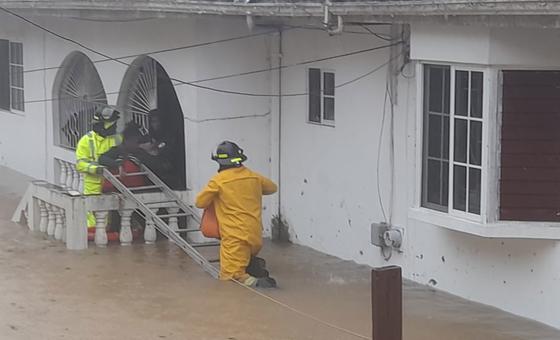
António Guterres spoke by phone to Jamaica’s Prime Minister Andrew Holness earlier in the day emphasising afterwards in a statement that “international support is crucial” as the country deals with the effects of the category 5 storm which brought rain, storm surges and catastrophic flooding.

He calls for the mobilisation of massive resources to deal with the loss and damage from the hurricane,” said the Deputy UN Spokesperson.

UN provides $4m aid injection

The UN Emergency Relief Coordinator, Tom Fletcher, has allocated $4 million from the Central Emergency Response Fund (CERF) so agencies and their partners can rapidly scale up humanitarian operations in Jamaica.

Five days after the most powerful storm in the island’s history made landfall in the west, many residents are still waiting for aid to arrive, according to local news reports, with many roads still inaccessible and communities without power and running water.   

The Government reported on Saturday that the death toll has risen to at least 28. The top UN official on the island, Dennis Zulu, told UN News on Friday that around 13 UN agencies were working as quickly as possible alongside authorities to clear roads and make essential repairs.

“My team here remains committed…to ensure that Jamaica gets back on its feet,” he said.

Support for vulnerable children

UN children’s agency, UNICEF, said on Saturday more than 700,000 children across the Caribbean had been impacted by the hurricane, which also made landfall in Cuba and caused chaos across western Haiti.

UNICEF is supporting the Jamaican Government to reach more than 284,000 children to address urgent nutrition needs, access to safe water, sanitation and hygiene including mental health support.

In Haiti, UNICEF is deploying hygiene and emergency health kits, cash to households at risk and engaging communities.

UN aid coordination office, OCHA, accompanied UNICEF at José Martí airport in Cuba on Saturday to unload supplies for over 90,000 people affected by Melissa – alongside national authorities – working as a single team, driving emergency response.

International solidarity ‘a lifeline’

UN relief chief Tom Fletcher, said on Friday: “In times like this, international solidarity isn’t just a principle – it’s a lifeline.”

An OCHA team has been deployed to Jamaica to strengthen coordination and information management.

UN agencies and NGOs are helping restore access, deliver emergency health and water services, and assist communities whose homes, schools and hospitals have been hit hard.

Well-prepared in Cuba

A $4 million allocation from the OCHA-managed CERF for Cuba, allowed UN agencies to position life-saving support before the storm hit.

  • The World Food Programme (WFP) provided food for 180,000 people;
  • UNICEF deployed mobile water-treatment units and hygiene kits for thousands;
  • the Pan-American Health Organization (PAHO) airlifted medical supplies and generators;
  • the Food and Agriculture Organization (FAO) and UN Development Programme (UNDP) moved seeds and tarpaulins to protect livelihoods and homes;
  • and reproductive health agency, UNFPA, distributed health and dignity kits.

The Cuban Red Cross assisted with preventive evacuations, early-warning messages and psychosocial support, in coordination with the International Federation of Red Cross (IFRC).

Early-warnings across Haiti

In Haiti, a country reeling from a massive humanitarian crisis and deadly armed violence, humanitarian teams are working alongside national authorities to respond to the urgent needs. Several days before the hurricane struck a $4 million CERF allocation allowed aid to be pre-positioned.

In addition, over 3.5 million alerts were sent out to vulnerable populations, saving lives. UN agencies and partners are now supporting temporary shelters and providing food, shelter, non-food items and cash assistance.

“Local leadership, global solidarity, and early action are saving lives across the region,” Mr. Fletcher said. “This is the humanitarian reset at work – acting together with greater impact.”

Leadership of women crucial to UN’s reinvention at 80, says former Assembly President

On Tuesday, Germany’s Annalena Baerbock will become the first European woman to hold the post and only the fifth female President in the Assembly’s history.

On the eve of Baerbock’s inauguration, UN News spoke with one of her predecessors. María Fernanda Espinosa, a former Minister of Defence and Foreign Affairs of Ecuador, led the Assembly from 2018 to 2019 as the first woman from Latin America and the Caribbean to do so.

Hard work and skilled diplomacy

Espinosa described the General Assembly as “the laboratory of international law,” noting that the role of President demands “hard work, good diplomacy, and the ability to conduct fair negotiations.”

The last woman to preside over the Assembly said she sees in Annalena Baerbock all the qualities needed for a “brilliant performance” as the next President. She stressed that the German leader takes office at a time of “profound structural change within the institution, linked in part to financial challenges.”

Espinosa believes Baerbock will play an “absolutely central” role in implementing reforms under the UN80 process, as well as advancing commitments related to the Pact for the Future, adopted in 2024.

For Espinosa, the UN’s own history proves that it is “an irreplaceable organization, one humanity cannot do without – but which nonetheless must be reinvented.”

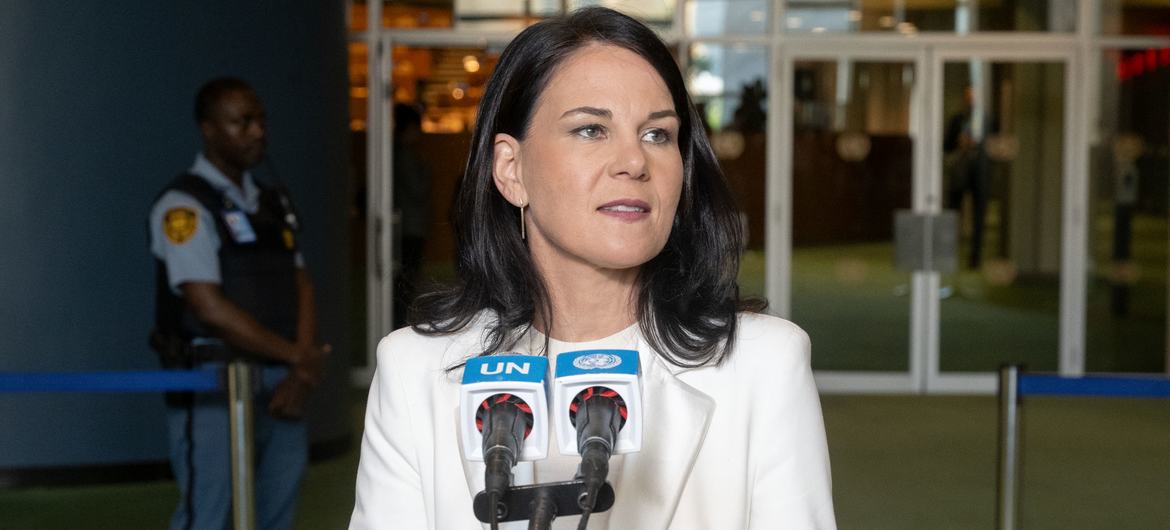
Annalena Baerbock, President-elect of the eightieth session of the UN General Assembly, addresses the reporters following her election.

‘Why not a woman as Secretary-General?’

While welcoming the election of the Assembly’s fifth female President in New York, Espinosa said this restructuring also provides an opportunity to rethink leadership styles and to finally consider a woman for the post of Secretary-General. The next appointment is expected in 2026.

“The real question is: why not?” she asked, stressing that a woman could bring qualities such as “strong management and bridge-building.” She added that a female Secretary-General would also represent an act of “historic justice,” after 80 years of male leadership at the UN’s helm.

The former Ecuadorian diplomat acknowledged one of the UN’s biggest challenges: the gap between resolutions adopted in the General Assembly and their translation into national policies and regulations. This, she said, prevents multilateral decisions from producing tangible improvements in people’s lives.

To address this, she called for a “more inclusive and networked multilateralism,” in which citizens are informed about, engaged with, and able to monitor the international decisions being made.

Building consensus behind the scenes

Espinosa emphasized that “most of the work of the Presidency takes place behind the scenes,” dealing with divisions and forging consensus.

She noted that the incoming President will increasingly face responsibilities linked to peace and security, as well as sustainable development.

Espinosa recalled that the very first resolution adopted by the General Assembly concerned the discovery of atomic energy, underscoring the need to adapt to a new force that could be harnessed for peaceful purposes but also cause “terrible effects.”

She highlighted defining moments during her own presidency, including the difficult negotiations that led to the adoption of the first Global Compact for Migration in 2018.

The diplomat also expressed pride in internal advances, such as the decision to phase out single-use plastics at the UN, recognizing the harm they cause to human health and ecosystems. 

Source link

Yemen: Security Council extends UN mission in crucial port city amid escalating Red Sea strife

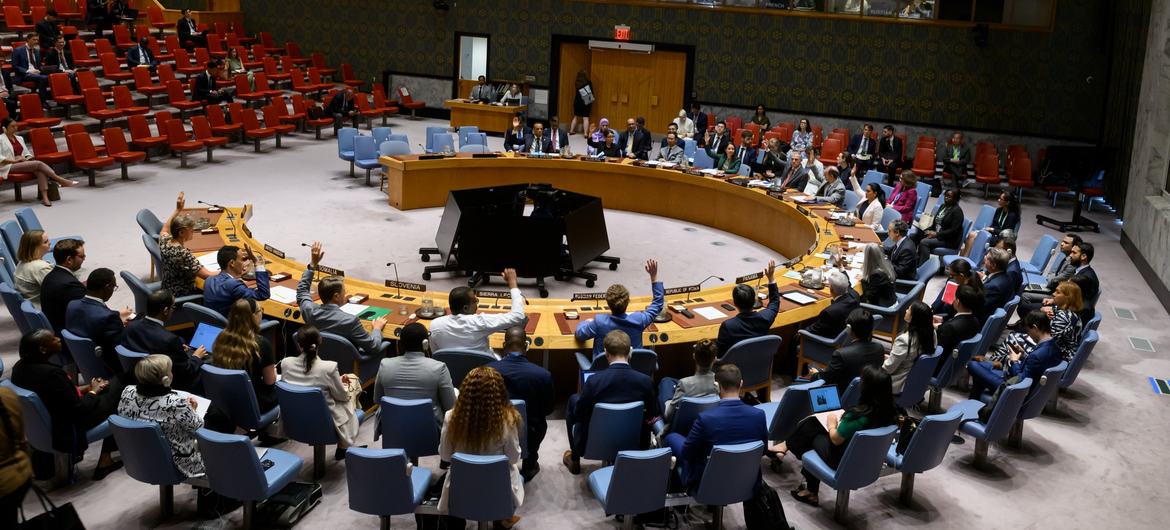
Adopted unanimously, the resolution extending the UN Mission to support the Hudaydah Agreement (UNMHA) until 28 January 2026, underscores the Mission’s critical role in maintaining fragile stability amid signs of renewed military escalation and deepening humanitarian need.

The resolution – 2786 (2025) – reaffirms the Council’s support for the 2018 Stockholm Agreement, including the ceasefire in the Houthi-controlled port city – and demilitarisation of its docks, where the majority of Yemen’s imports and vital aid shipments pass through.

The mission’s future

It also signals a growing debate over the mission’s future, requesting the Secretary-General to submit a review by November to enhance coordination and coherence of UN operations, “bearing in mind challenges” that have directly impeded UNMHA’s capacity to deliver.

The Security Council…expresses its intention to review the full range of options for UNMHA’s mandate, including assessing the future viability and sunsetting of the Mission, and make any necessary adjustments to gain efficiencies and reduce costs or otherwise, as may be required to UN operations in Hudaydah by developments on the ground, including inter alia a durable nationwide ceasefire,” the resolution noted.

UNMHA was established in 2019 to support implementation of the Stockholm Agreement between the Government of Yemen and Ansar Allah (as the Houthis are formally known), which sought to prevent major conflict over the region.

The mission monitors the ceasefire, facilitates redeployments and supports de-escalation through liaison mechanisms between the parties.

Tensions mounting

While the military situation on the ground remains tenuously stable, tensions are mounting on multiple fronts.

According to a letter from the Secretary-General to the 15-member Council in June, a growing number of ceasefire violations – averaging over 100 per day between June 2024 and May 2025 – highlight the fragile state of the region.  

Government-aligned forces fortified positions in anticipation of a possible offensive on the city, while Houthi units increased infiltration attempts and public mobilisation, including military-style youth camps in areas they control.

Security Council unanimously adopts Resolution 2786 (2025) extending until 28 January 2026 the mandate of the UN Mission to support the Hudaydah Agreement (UNMHA).

Deadly Red Sea passage

Compounding this, Houthi attacks on international shipping in the Red Sea have intensified. On 8 July, the commercial vessel Eternity C was sunk, killing several crew members and leaving others missing. This followed the sinking of the Magic Seas vessel two days earlier.

In a statement, UN Special Envoy Hans Grundberg condemned the attacks, calling them violations of international maritime law and warning they risked serious environmental and geopolitical fallout.

He called on Ansar Allah to cease attacks that risk escalating tensions in and around Yemen.

“[He urges them] to build on the cessation of hostilities with the United States in the Red Sea and to provide durable guarantees to the region and the wider international community, ensuring the safety of all those using this critical waterway,” the statement noted.

Significant operational constraints

Within Hudaydah itself, UNMHA faces significant constraints.  

The June letter by the Secretary-General details restrictions by Houthi authorities on UN patrols to the critical Red Sea ports – Hudaydah, Salif and Ras Issa.

Damage from repeated airstrikes, including by the US and Israel in response to Houthi attacks, has left key port infrastructure partially inoperable, disrupting fuel, food and medical imports.

With Hudaydah responsible for 70 per cent of Yemen’s commercial imports and 80 per cent of humanitarian deliveries, the stakes are high.

© UNICEF/Mahmoud Alfilastini

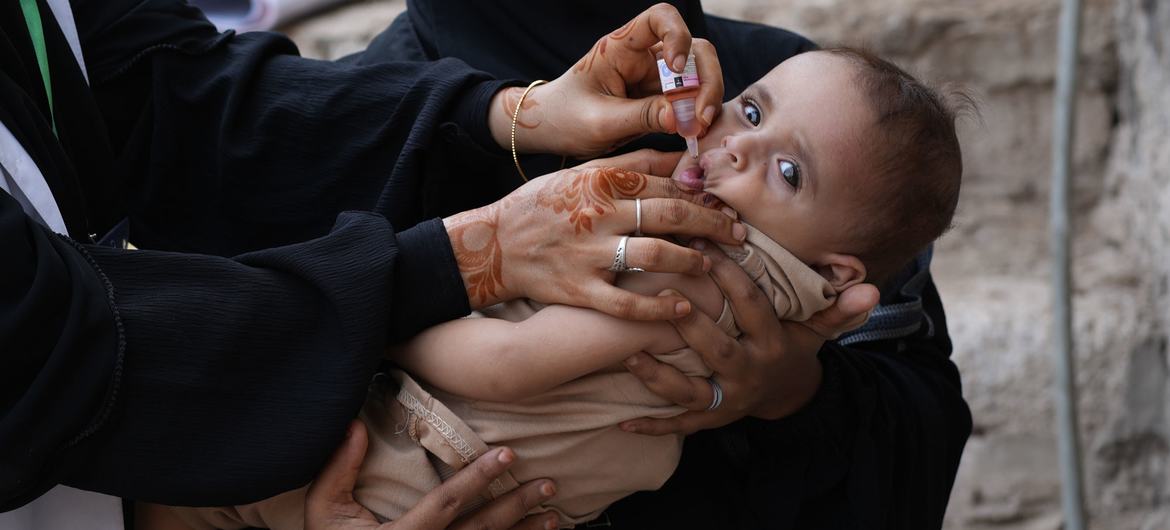
A child receives a polio vaccination in Yemen.

Polio vaccination drive

Meanwhile, a new round of polio vaccinations is underway in Government-controlled areas of southern Yemen, amid mounting concerns over the continued spread of the virus.  

From 12 to 14 July, health workers deployed across 12 governorates, aimed at curbing the outbreak of variant type 2 poliovirus.

The campaign, led by Yemen’s Ministry of Public Health with support from UN Children’s Fund (UNICEF) and World Health Organization (WHO), came as 282 cases have been reported since 2021, with environmental surveillance confirming ongoing transmission.

The campaign is essential to interrupt transmission and protect every child from the debilitating effects of polio,” said Ferima Coulibaly-Zerbo, acting WHO Representative in Yemen.

UNICEF’s Peter Hawkins echoed the urgency, warning of the “imminent threat” to unvaccinated children if immunisation gaps persist.

“But, through vaccination, we can keep our children safe,” he said.

Source link

Upcoming elections ‘crucial opportunity’ for Central African Republic, UN top official tells Security Council

December’s local, legislative and presidential elections “represent a crucial opportunity” to strengthen democratic governance, promote reconciliation and consolidate stability, Jean-Pierre Lacroix, Under-Secretary-General for Peace Operations told ambassadors in the Security Council.

The timely holding of presidential and legislative elections is a constitutional requirement, and the Government has consistently demonstrated its commitment to holding local elections, he added.

Although the final electoral roll is currently delayed due to technical difficulties, national authorities, supported by the UN peacekeeping mission, MINUSCA, have made significant efforts to advance the revision of the electoral register through nationwide registration.

“This process took place without major security incidents, reflecting effective collaboration between the Central African national defence forces and MINUSCA, as well as public interest in engaging with the political process,” said Mr. Lacroix.

Challenges remain

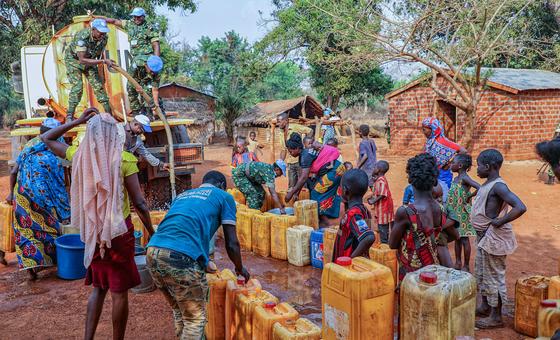
Although the 19 April agreement between the government and leaders of various opposition armed groups aimed to end hostilities in the country, violence – primarily perpetrated by armed groups and militias – continues to undermine stability.

“The security situation remains fragile in border regions,” said Mr. Lacroix, noting the spillover effects of the conflict in neighbouring Sudan.

Last week, a Zambian peacekeeper was killed when suspected Sudanese armed elements opened fire on a MINUSCA patrol responding to reports of an attack against civilians in the north-east of the country.

Mr. Lacroix also informed the Security Council of human rights and humanitarian concerns.

Though progress has been made in advancing judicial accountability, notably by the Special Criminal Court, a lack of funding is expected to jeopardise the Court’s operations by September.

In addition, as urgent needs continue to outpace available resources, “the humanitarian situation remains dire,” said Mr. Lacroix, calling for strong support for lifesaving humanitarian assistance.

Source link