Fresh report warns fish fraud extends to one fifth of global catch

While there is no official estimate of how prevalent fraud is in the $195 billion global fisheries and aquaculture sector, empirical studies suggest that 20 per cent of the trade may be subject to some type of fraud, according to FAO.

Menu of misinformation

Some studies suggest that up to 30 per cent of seafood products may be mislabelled in restaurants, with the report citing cases from around the world, from ceviche stands in Latin America and seafood eateries in China to canned tuna products in the European Union.

While as much as one third of aquatic products sold in the United States may not conform to package descriptions, less than one per cent of imports are tested, the report warned.

What drives fish fraud?

Economic incentives are the most widespread driver of fish fraud.

Selling Atlantic salmon, almost all of which is farmed, as Pacific salmon, most of which is wild caught, delivers a nearly $10 benefit per kilogramme.

Some fraud occurs to mask the geographic provenance of a product or to suppress evidence of above-quota landings, which may pose risks to the sustainability of fishery stocks.

Finding fraud

Fish fraud is defined in the report as “a deliberate practice intended to deceive others” and can pose risks to biodiversity, human health or economic systems, according to Food fraud in the fisheries and aquaculture sector, produced by FAO through cooperation between its Fisheries and Aquaculture Division and the Joint FAO/IAEA Centre of Nuclear Techniques in Food and Agriculture.

The main categories of fish fraud are:

  • adding water to unprocessed fishery products to bolster weight and price
  • adulteration (adding colouring to make tuna look fresher)
  • counterfeiting (imitation shrimp made from starch-based compounds)
  • simulation (packaging surimi to seem like crab meat)
  • diversion (distributing legitimate products outside of their intended markets)
  • misbranding (such as incorrect claims about sustainability)
  • overrun (involving overfishing)
  • species substitution (selling tilapia as red snapper)
  • tampering and mislabelling (involving origins and even expiry dates)
  • plain theft

Meanwhile, the human welfare risks of some seafood fraud are evident as some fish pose risks when eaten raw, while re-freezing seafood increases the risk of bacterial growth.

Catching fishy business

The global scale of fish consumption – targeting over 12,000 seafood species – the diversity of fraud type and the lack of standardised regulatory or legal definitions, make global estimates difficult to assess, but there are novel ways to tackle the scourge.

Advanced laboratory tests can be effective in identifying substances, but access to these methods is limited.

Meanwhile, the report shows that portable X-ray fluorescence and machine-learning models are innovations that could help cut fraud and make regulations more enforceable.

To quash fish fraud, the new report advocates for:

  • harmonised labelling requirements
  • mandatory inclusion of scientific names where possible
  • better traceability systems

Adding science to the tacklebox

Given its complexity, identifying the crime is not straightforward, but the report goes into considerable detail about how advances in science can contribute to tackling fraud, including:

  • A standard method to determine whether and how many times a seafood product has been frozen has so far proven elusive, but differences in the fatty-acid composition of wild and farmed fish may be used to detect fraud
  • Carbon and nitrogen ratios to determine the geographical origin of major commercial fish species

Netting offenders

Prevention and enforcement are critical to reduce and eventually eliminate fish and all food fraud, according to the report, which reviewed concerted efforts to tackle cases in Argentina, Italy and the United States.

An investigation using DNA-barcoding to assess the scale of mislabelling in Los Angeles, California, found that while it is quite low in processing plants, it is moderate among grocers and particularly prevalent in sushi restaurants.

A local initiative by local academia, industry, government stakeholders – together with an education campaign coupled with ongoing blind tests, reduced seafood mislabelling in the focus area by two thirds over 10 years.

What the UN’s doing

Part of UN ongoing efforts include:

  • FAO and the Codex Alimentarius Commission – the international food standards body – are working on toughening international standards to combat food fraud
  • through the Joint FAO/IAEA Centre, FAO offers technical support to members that need to bolster their testing capacities.

Find out more about what FAO is doing here.

Source link

Violence roiling Nigeria extends beyond religious lines, amid a deepening humanitarian crisis

The strikes thrust Nigeria’s long-running sectarian bloodshed into the global spotlight – and revived claims that a “Christian genocide” is unfolding in Africa’s most populous country.

But in an interview, the UN’s top humanitarian official in the country has told UN News that the current crisis extends far beyond any single community or conflict. Violence, he cautioned, has spread across much of the country, leaving millions displaced and fuelling what aid agencies describe as one of Africa’s largest – and most overlooked – humanitarian emergencies.

“Security remains one of Nigeria’s major challenges,” said Mohamed Malik Fall, the UN resident and humanitarian coordinator. “You can no longer associate it with a single region. It is almost everywhere.”

A conflict that spread

The crisis began in the northeast in 2009, with an insurgency led by the jihadist group Boko Haram, later joined by splinter factions, including the Islamic State-West Africa (ISIS-WA). 

Nearly two decades in, the violence has reshaped large parts of the country.

More than two million people remain displaced in the northeast alone, many of them for years. “An entire generation has grown up in displacement camps, knowing nothing else,” Mr. Fall said.

The human toll is extensive: more than 40,000 people killed since the start of the insurgency, thousands of schools and health centres destroyed, and vast agricultural areas rendered inaccessible. But Mr. Fall said the deeper damage has been economic and social.

“People have been cut off from all economic activity,” he said. “They are deprived of the ability to live from their work and preserve their dignity.”

Children walk through the mud in a displaced persons camp in Maiduguri in northeast Nigeria.

Untargeted violence

What was once a localized insurgency has morphed into something broader and more diffuse.

In Nigeria’s northwest – in states such as Zamfara, Katsina and Sokoto – armed criminal groups have seized control of rural areas, carrying out mass kidnappings and extortion, a phenomenon authorities describe as banditry. 

Entire villages have been abandoned, and around one million people are now displaced in the region, according to United Nations estimates.

In the country’s central belt, clashes between farmers and herders over land, intensified by climate pressure and environmental degradation, have triggered further displacement. 

Elsewhere, separatist movements and attacks linked to oil production continue to destabilize communities.

The cumulative result is a country with roughly 3.5 million internally displaced people – nearly 10 percent of all displacement across Africa.

A loaded claim

Recent attacks against churches and Christian schools have revived international attention. In January, more than 160 worshippers were abducted during Sunday services in Kaduna State. 

Days earlier, villages in the northwest were attacked, killing dozens, while students near a Catholic school in Papiri were again targeted.

The violence revived memories of the 2014 abduction of 276 schoolgirls from Chibok, most of them Christian, by Boko Haram – a moment that once galvanized global outrage.

Citing the need to protect Christians from Islamist militants, the US administration ordered airstrikes on Christmas Day against jihadist positions in northern Nigeria. In Washington, some officials have since argued that a “Christian genocide” is underway.

The UN is refraining from that characterisation.

“Attributing this violence to the targeted persecution of a religious group – I would not take that step,” Mr. Fall said. “The vast majority of the more than 40,000 people killed in the insurgency are Muslims. They were attacked and killed in mosques.”

He pointed to an attack in Maiduguri, the historic centre of the insurgency, carried out on Christmas Eve in an area “between a mosque and a market,” which killed Muslim worshippers as they left prayers.

“Insecurity affects everyone, without distinction of religion or ethnicity,” he said, warning that oversimplified narratives risk deepening social fractures rather than addressing their causes.

© WFP/Arete/Siegfried Modola

Internally displaced mothers with their children attend a WFP famine assessment exercise in Borno State, northeastern Nigeria.

A crisis measured in millions

Behind the violence lies a humanitarian emergency of enormous scale. In the northeastern states alone, 7.2 million people need assistance – nearly six million of them in severe or critical condition, according to U.N. figures.

Food insecurity has become the defining threat. Aid agencies project that up to 36 million Nigerians could face varying levels of food insecurity in the coming months. Among children under five, more than 3.5 million are at risk of acute malnutrition.

“The consequences are not only immediate,” Mr. Fall said. “Malnutrition affects cognitive development, education, and continues to shape lives well into adulthood.”

Climate shocks – including droughts and floods – have compounded the crisis, alongside recurring cholera and meningitis outbreaks and a fragile health system.

Aid shrinks as needs grow

Despite the scale of the emergency, funding has collapsed.

“A few years ago, Nigeria’s humanitarian response plan raised close to $1 billion annually,” Mr. Fall said. “In 2024, it was $585 million. Last year, barely $262 million. This year, we are not even certain we will reach $200 million.”

The decline comes as donor attention has shifted to higher-profile crises elsewhere, including Ukraine and Sudan.

A test for Africa’s largest economy

Nigeria’s predicament exposes a stark paradox: one of Africa’s largest economies confronting a humanitarian crisis more often associated with far poorer states.

“Nigeria is not Sudan. It is not Somalia. It is not South Sudan,” Mr. Fall said. “This is a country with resources. The primary responsibility for responding to humanitarian needs lies with the government.”

The UN is now urging Nigerian federal and state authorities to take greater ownership of the response, even as it presses donors not to turn away.

“No one wants to live on aid,” Mr. Fall said. “People would rather be helped to access economic opportunities than remain dependent. Giving a fish is good. Teaching how to fish is better.”

Source link

Yemen: Security Council extends UN mission in crucial port city amid escalating Red Sea strife

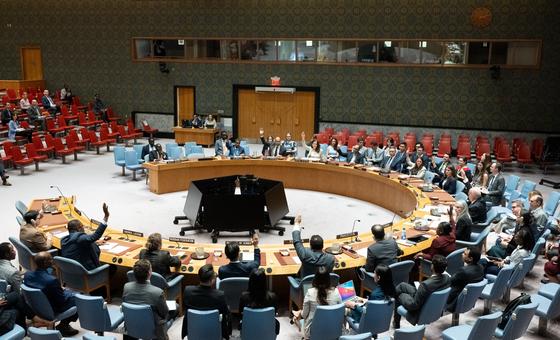
Adopted unanimously, the resolution extending the UN Mission to support the Hudaydah Agreement (UNMHA) until 28 January 2026, underscores the Mission’s critical role in maintaining fragile stability amid signs of renewed military escalation and deepening humanitarian need.

The resolution – 2786 (2025) – reaffirms the Council’s support for the 2018 Stockholm Agreement, including the ceasefire in the Houthi-controlled port city – and demilitarisation of its docks, where the majority of Yemen’s imports and vital aid shipments pass through.

The mission’s future

It also signals a growing debate over the mission’s future, requesting the Secretary-General to submit a review by November to enhance coordination and coherence of UN operations, “bearing in mind challenges” that have directly impeded UNMHA’s capacity to deliver.

The Security Council…expresses its intention to review the full range of options for UNMHA’s mandate, including assessing the future viability and sunsetting of the Mission, and make any necessary adjustments to gain efficiencies and reduce costs or otherwise, as may be required to UN operations in Hudaydah by developments on the ground, including inter alia a durable nationwide ceasefire,” the resolution noted.

UNMHA was established in 2019 to support implementation of the Stockholm Agreement between the Government of Yemen and Ansar Allah (as the Houthis are formally known), which sought to prevent major conflict over the region.

The mission monitors the ceasefire, facilitates redeployments and supports de-escalation through liaison mechanisms between the parties.

Tensions mounting

While the military situation on the ground remains tenuously stable, tensions are mounting on multiple fronts.

According to a letter from the Secretary-General to the 15-member Council in June, a growing number of ceasefire violations – averaging over 100 per day between June 2024 and May 2025 – highlight the fragile state of the region.  

Government-aligned forces fortified positions in anticipation of a possible offensive on the city, while Houthi units increased infiltration attempts and public mobilisation, including military-style youth camps in areas they control.

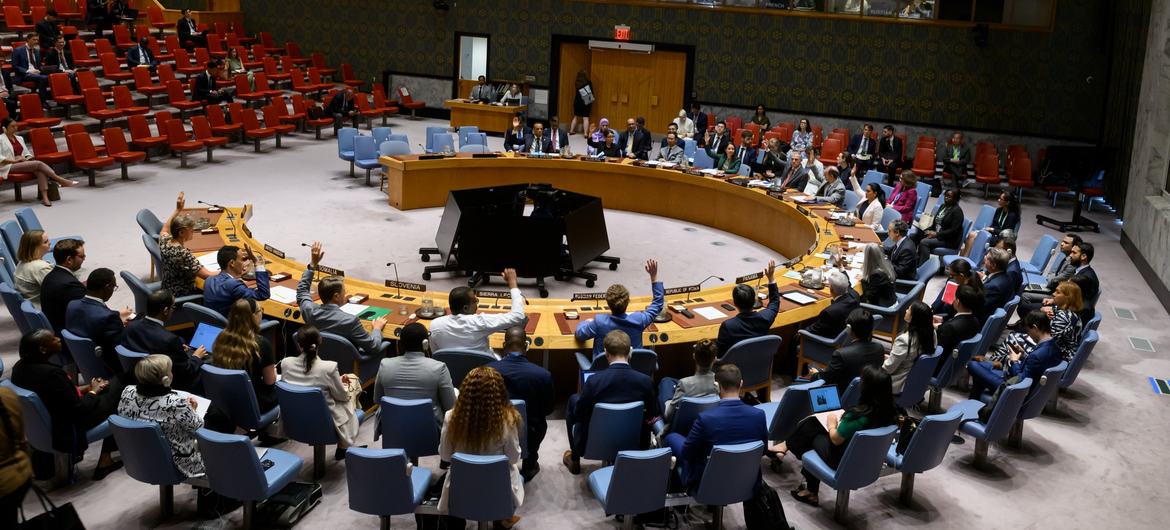
Security Council unanimously adopts Resolution 2786 (2025) extending until 28 January 2026 the mandate of the UN Mission to support the Hudaydah Agreement (UNMHA).

Deadly Red Sea passage

Compounding this, Houthi attacks on international shipping in the Red Sea have intensified. On 8 July, the commercial vessel Eternity C was sunk, killing several crew members and leaving others missing. This followed the sinking of the Magic Seas vessel two days earlier.

In a statement, UN Special Envoy Hans Grundberg condemned the attacks, calling them violations of international maritime law and warning they risked serious environmental and geopolitical fallout.

He called on Ansar Allah to cease attacks that risk escalating tensions in and around Yemen.

“[He urges them] to build on the cessation of hostilities with the United States in the Red Sea and to provide durable guarantees to the region and the wider international community, ensuring the safety of all those using this critical waterway,” the statement noted.

Significant operational constraints

Within Hudaydah itself, UNMHA faces significant constraints.  

The June letter by the Secretary-General details restrictions by Houthi authorities on UN patrols to the critical Red Sea ports – Hudaydah, Salif and Ras Issa.

Damage from repeated airstrikes, including by the US and Israel in response to Houthi attacks, has left key port infrastructure partially inoperable, disrupting fuel, food and medical imports.

With Hudaydah responsible for 70 per cent of Yemen’s commercial imports and 80 per cent of humanitarian deliveries, the stakes are high.
© UNICEF/Mahmoud Alfilastini

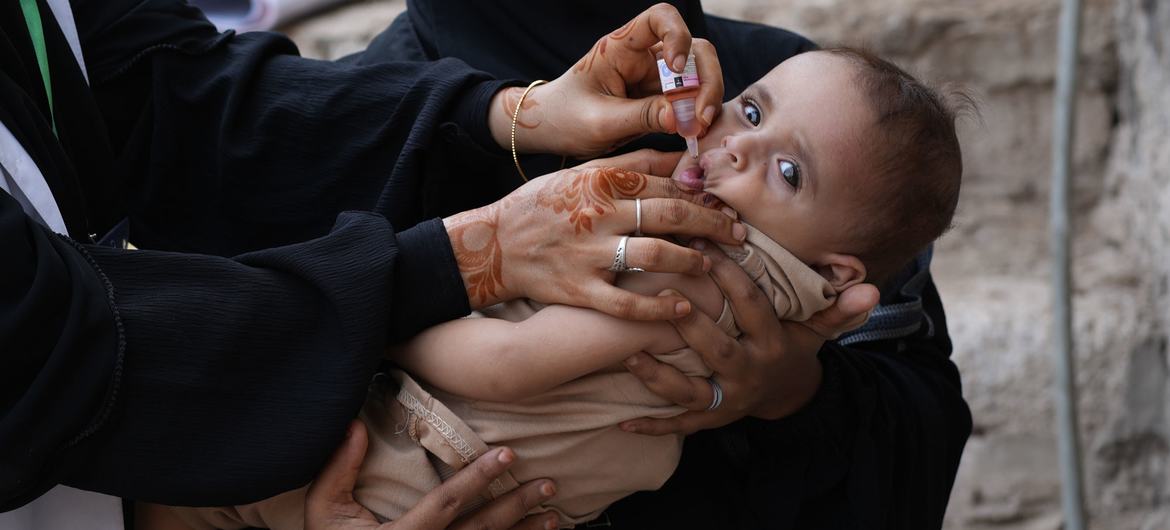
A child receives a polio vaccination in Yemen.

Polio vaccination drive

Meanwhile, a new round of polio vaccinations is underway in Government-controlled areas of southern Yemen, amid mounting concerns over the continued spread of the virus.  

From 12 to 14 July, health workers deployed across 12 governorates, aimed at curbing the outbreak of variant type 2 poliovirus.

The campaign, led by Yemen’s Ministry of Public Health with support from UN Children’s Fund (UNICEF) and World Health Organization (WHO), came as 282 cases have been reported since 2021, with environmental surveillance confirming ongoing transmission.

The campaign is essential to interrupt transmission and protect every child from the debilitating effects of polio,” said Ferima Coulibaly-Zerbo, acting WHO Representative in Yemen.

UNICEF’s Peter Hawkins echoed the urgency, warning of the “imminent threat” to unvaccinated children if immunisation gaps persist.

“But, through vaccination, we can keep our children safe,” he said.

Source link

UN Security Council extends South Sudan mission amid rising instability

Introduced by the United States and supported by 11 other Council members, the resolution extended the mandate of UNMISS until 30 April next year.

This action follows a short nine-day “technical rollover” approved by the Council on 30 April to allow more time for negotiations.

Through the text – adopted on Thursday – the Security Council authorized the peacekeeping mission to “use all necessary means” to implement its mandate – including the protection of civilians, assisting aid delivery, supporting implementation of the 2018 peace agreement, and investigating violations of international law.

Three nations – China, Pakistan, and Russia – abstained.

Volatile situation on the ground

The renewal comes amid an increasingly volatile political and security situation in South Sudan.

Head of UNMISS Nicholas Haysom warned ambassadors in April that the fragile 2018 Revitalized Peace Agreement – signed by historic rivals President Salva Kiir and former First Vice President Riek Machar – is unravelling.

The political standoff, including the arrest of Mr. Machar, has reportedly escalated into open military confrontation, while misinformation and hate speech are fuelling ethnic divisions and instability.

“This situation is darkly reminiscent of the conflicts of 2013 and 2016, which cost over 400,000 lives,” Mr. Haysom said.

UNMISS mandate

The resolution maintains the mission’s overall force ceilings at 17,000 troops and 2,101 police, including 88 justice and corrections advisors.

The Council also expressed its readiness to consider adjusting force levels and capacity-building based on future conditions.

The resolution expressed “deep concern” over delays in implementing the 2018 agreement, urging South Sudan’s leaders to urgently show political will and build mutual trust. It urged the parties to engage in open and constructive dialogue.

It also stressed that the “organization and funding of free and fair elections is the responsibility of the South Sudanese authorities”, calling on the transitional government to adopt an appropriate legislative framework to fund national elections.

The resolution also condemned the use of sexual violence, recruitment of child soldiers and interference in any humanitarian operations.

UNMISS was initially established by the Security Council in 2011, following South Sudan’s independence from Sudan, to help maintain peace and stability at the time when the young nation faced significant internal conflicts and humanitarian challenges.

Broadcast of the Security Council meeting.

Ditch ‘ideological goals’: US

Speaking before the adoption, US Acting Representative Dorothy Shea called on the international community to bring South Sudan “back from the brink.”

She cited deteriorating conditions on the ground, including recent attacks against civilians and infrastructure. She also noted ongoing challenges facing UNMISS – including being asked to vacate its Tomping base – which undermine the mission’s ability to carry out its mandate.

“In short, as I hope we can all agree, the goal of UNMISS should be to render itself unnecessary by ushering in a lasting peace. The day that a peacekeeping operation is no longer required in South Sudan will be a bright one,” Ambassador Shea said.

She added that UN peacekeeping mandates, including UNMISS, “should not pursue ideological goals that are difficult to define and even more challenging to implement on the ground, but rather focus on core Chapter VII functions,” referring to the Chapter of the UN Charter stressing action to further international peace and security.

Unnecessarily politicised: Pakistan

Pakistan, which abstained from the resolution alongside China and Russia, explained its position.

Deputy Permanent Representative Muhammad Usman Iqbal Jadoon said UN Peacekeeping Missons should enjoy “complete and unified support” of the Security Council.

“However, this task is complicated when mandate resolutions are unnecessarily politicised,” he said, stating that mission mandates “must be tailored to the needs on the ground, not the political priorities of Council members.”

The resolution contained issues “which have no direct link” with UNMISS, preventing consensus among the 15 Council member States, he added.

That said, Mr. Jadoon reiterated his country’s full support for UNMISS and its leadership.

“UNMISS remains a force of stability in South Sudan. We greatly appreciate the dedication of its personnel and peacekeepers, who are performing their duties under difficult conditions.”

Source link