
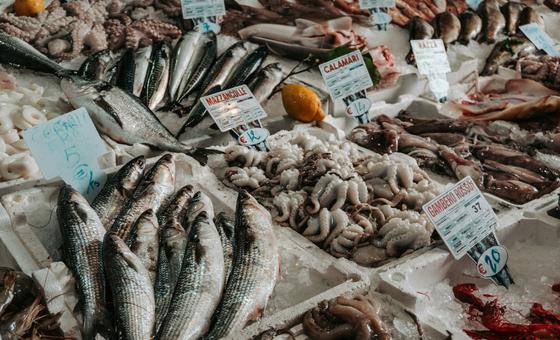
Fresh report warns fish fraud extends to one fifth of global catch

While there is no official estimate of how prevalent fraud is in the $195 billion global fisheries and aquaculture sector, empirical studies suggest that 20 per cent of the trade may be subject to some type of fraud, according to FAO.

Menu of misinformation

Some studies suggest that up to 30 per cent of seafood products may be mislabelled in restaurants, with the report citing cases from around the world, from ceviche stands in Latin America and seafood eateries in China to canned tuna products in the European Union.

While as much as one third of aquatic products sold in the United States may not conform to package descriptions, less than one per cent of imports are tested, the report warned.

What drives fish fraud?

Economic incentives are the most widespread driver of fish fraud.

Selling Atlantic salmon, almost all of which is farmed, as Pacific salmon, most of which is wild caught, delivers a nearly $10 benefit per kilogramme.

Some fraud occurs to mask the geographic provenance of a product or to suppress evidence of above-quota landings, which may pose risks to the sustainability of fishery stocks.

Finding fraud

Fish fraud is defined in the report as “a deliberate practice intended to deceive others” and can pose risks to biodiversity, human health or economic systems, according to Food fraud in the fisheries and aquaculture sector, produced by FAO through cooperation between its Fisheries and Aquaculture Division and the Joint FAO/IAEA Centre of Nuclear Techniques in Food and Agriculture.

The main categories of fish fraud are:

  • adding water to unprocessed fishery products to bolster weight and price
  • adulteration (adding colouring to make tuna look fresher)
  • counterfeiting (imitation shrimp made from starch-based compounds)
  • simulation (packaging surimi to seem like crab meat)
  • diversion (distributing legitimate products outside of their intended markets)
  • misbranding (such as incorrect claims about sustainability)
  • overrun (involving overfishing)
  • species substitution (selling tilapia as red snapper)
  • tampering and mislabelling (involving origins and even expiry dates)
  • plain theft

Meanwhile, the human welfare risks of some seafood fraud are evident as some fish pose risks when eaten raw, while re-freezing seafood increases the risk of bacterial growth.

Catching fishy business

The global scale of fish consumption – targeting over 12,000 seafood species – the diversity of fraud type and the lack of standardised regulatory or legal definitions, make global estimates difficult to assess, but there are novel ways to tackle the scourge.

Advanced laboratory tests can be effective in identifying substances, but access to these methods is limited.

Meanwhile, the report shows that portable X-ray fluorescence and machine-learning models are innovations that could help cut fraud and make regulations more enforceable.

To quash fish fraud, the new report advocates for:

  • harmonised labelling requirements
  • mandatory inclusion of scientific names where possible
  • better traceability systems

Adding science to the tacklebox

Given its complexity, identifying the crime is not straightforward, but the report goes into considerable detail about how advances in science can contribute to tackling fraud, including:

  • A standard method to determine whether and how many times a seafood product has been frozen has so far proven elusive, but differences in the fatty-acid composition of wild and farmed fish may be used to detect fraud
  • Carbon and nitrogen ratios to determine the geographical origin of major commercial fish species

Netting offenders

Prevention and enforcement are critical to reduce and eventually eliminate fish and all food fraud, according to the report, which reviewed concerted efforts to tackle cases in Argentina, Italy and the United States.

An investigation using DNA-barcoding to assess the scale of mislabelling in Los Angeles, California, found that while it is quite low in processing plants, it is moderate among grocers and particularly prevalent in sushi restaurants.

A local initiative by local academia, industry, government stakeholders – together with an education campaign coupled with ongoing blind tests, reduced seafood mislabelling in the focus area by two thirds over 10 years.

What the UN’s doing

Part of UN ongoing efforts include:

  • FAO and the Codex Alimentarius Commission – the international food standards body – are working on toughening international standards to combat food fraud
  • through the Joint FAO/IAEA Centre, FAO offers technical support to members that need to bolster their testing capacities.

Find out more about what FAO is doing here.

Source link

World News in Brief: Iran in the Human Rights Council, Myanmar election ‘fraud’, migration chief in Cyprus, Mozambique flood update

Addressing the Human Rights Council in Geneva, Mr. Türk said that although the “killing on the streets of Iran may have subsided…the brutality continues”.

He said that violent repression did not solve any of Iran’s problems but instead created conditions for further violations, instability and bloodshed.

“We have indications that the security forces made mass arrests in several cities, even pursuing injured people into hospitals, and detaining lawyers, human rights defenders, activists, and ordinary civilians,” he told diplomats.

Prosecutions ongoing

“The Tehran Prosecutor’s Office has reportedly opened criminal cases against athletes, actors, people involved in the movie industry, and the owners of cafes, on charges of supporting the protests,” Mr. Türk continued. 

Protests erupted across Iran on 28 December in response to the collapse of the national currency, soaring inflation and worsening living conditions.

Also speaking at the Council, former international prosecutor Payam Akhavan described how one protester pretended to be dead in a body-bag for three days until his parents found him. 

The civil society representative said that parents looking for their relatives usually started at hospitals, where “many of the wounded (protesters) have been abducted and killed”. 

Others have been forced to sign confessions which blame imaginary “terrorists” for the murder of their children, Mr. Akhavan maintained.

He cited a medical report circulating among Iranian doctors that 16,500 people had been killed during the demonstrations. “The number increases by the day, because the killings haven’t stopped,” he said.

Rejection of Myanmar military’s ‘fraudulent’ election must be unequivocal: UN independent expert

The international community must unequivocally reject as illegitimate the election results in Myanmar and any power arrangement that follows, said Tom Andrews, the Special Rapporteur on human rights in Myanmar on Friday.

The UN-appointed independent expert described the elections, which began in late December and are expected to be concluded this weekend, as ‘fraudulent’, urging countries not to accept the results. 

“The junta is banking on the world’s fatigue, hoping that the international community will accept military rule dressed up in civilian clothing,” he said. “Governments must not allow that to happen.”

‘Fear and coercion’

The junta’s election scheme was marked by violence, low turnout and widespread coercion, said Mr. Andrews.

Voters reported being monitored and pressured by local authorities, with threats explicit or implied. Junta officials were pushing citizens to polling stations even as military jets bombed villages throughout the country.

Mr. Andrews added that the junta banned credible opposition parties, jailed popular political figures and muzzled the press, “crushing fundamental freedoms, and using fear and coercion to drive a reluctant electorate to the polls.”

UN migration chief backs EU presidency efforts on migration

This week, the UN migration agency (IOM) Chief Amy Pope concluded a visit to Cyprus after a round of high-level talks, which focused on advancing a comprehensive migration and asylum agenda. 

“Cyprus knows what it means to be on the frontline – and that experience really matters right now,” said Ms Pope. “As the European Union (EU) moves from agreement to action, this is the moment to make sure policies really work – for migrants, for communities, and countries.

This trip marks the IOM Chief’s first visit to Cyprus in her current role, as Cyprus assumes the EU Council Presidency and the EU begins implementing the landmark Migration and Asylum Pact.

Humane returns 

With persistent instability Afghanistan, Syria, Sudan and the Sahel, Ms Pope reaffirmed IOM’s support and engagement with the EU to ensure refugee returns are humane and dignified. 

During her visit, she underscored the urgent need to address conditions along key migration routes, with IOM emphasising efforts to curb irregular migration, disrupt smuggling networks, meet humanitarian needs, and save lives.

Ms Pope also called for stronger migration data systems and evidence-based policymaking.

Nearly 600,000 people upended by Mozambique floods

Nearly 600,000 people have been affected by severe flooding across southern and central Mozambique. Weeks of heavy and sustained rainfall have caused homes to collapse and roads to wash away, displacing more than 73,000 people, according to figures from the IOM

Flooding has been reported in 10 of Mozambique’s 11 provinces, with Gaza Province “hosting significant concentrations of displaced people”. Humanitarian response partners expect reported figures to rise as access to affected communities improves.

IOM teams there have described acute shortages of shelter, constraints on food and basic services, overcrowded centres, and limited access to safe water, sanitation and hygiene – increasing the risk of waterborne diseases spreading.

Preliminary reports from the International Red Cross (IFRC) indicated between 50 and 60 deaths, a figure likely to rise as waters levels recede. 

Response ahead of cyclone season 

Following a Government request for international support on 16 January including air assets for search and rescue efforts, the IOM plans to appeal for up to $20 million to reinforce life-saving assistance and strengthen water, sanitation and hygiene. 

With this being only the start of the cyclone season and dams at near capacity, representatives from the IFRC have underscored the need for investment in early warning systems, climate‑resilient infrastructure, and locally led preparedness. 

Source link

How nuclear technology can help fight seafood fraud

From mislabeled fish to hidden additives, deceptive practices are threatening livelihoods, food safety, and trust in what ends up on our plates.

Now, a new international initiative backed by the United Nations is using cutting-edge nuclear science to protect people and ensure the seafood they rely on is safe, authentic, and traceable.

Fishy business

Seafood consumption per capita has doubled since the 1960s and is projected to double again by 2050, with seafood fraud becoming a rising global concern.

While FAO estimates that the fisheries and aquaculture sector employs 62 million people in primary fish production, about 600 million livelihoods rely on fisheries and aquaculture. 

Seafood fraud ranges from substituting high-value species with cheaper alternatives to using unauthorised or undeclared additives. It can occur at any stage of the supply chain, especially as monitoring and traceability become more difficult due to supply chains growing increasingly complex.

To make sure seafood fraud does not slip through the net, national and international food control systems need robust and fit-for-purpose analytical methods

Nuclear technology

A joint project between the Food and Agriculture Organization (FAO) and the International Atomic Energy Agency (IAEA) is set to use nuclear technology to counter seafood fraud.  

Through its Joint FAO/IAEA Centre of Nuclear Techniques in Food and Agriculture, the IAEA is launching a five-year coordinated research project to help countries strengthen food control systems to detect and prevent seafood fraud.

The IAEA will use nuclear and related techniques to build scientific capacity, ensure product authenticity, and enhance resilience and transparency in seafood supply chains.

“This IAEA project provides Member States with a valuable opportunity to collaborate in combating fraud and de-risking the seafood supply chain using robust nuclear science-based tools,” said Debashish Mazumder from the Australian Nuclear Science and Technology Organization, a key partner of the IAEA on sustainable development issues.

Reeling in truth with atoms

The IAEA’s Food Safety and Control Laboratory supports countries in applying nuclear and related analytical techniques to facilitate trade in safe and authentic seafood, offering powerful tools for fraud detection.

One of the most effective methods to counter seafood fraud is stable isotope ratio analysis of light elements such as oxygen, which allows scientists to identify the geographical origin of the fish and verify whether it was wild-caught by reflecting environmental and ecological conditions in the fish’s biological tissues.

Used to authenticate seafood, nuclear technology serves as a powerful tool to combat seafood fraud, enhancing consumer protection, increasing trust in food control systems, and supporting fisherfolk to engage in sustainable aquatic resource management.  

Source link

Measures to check cyber crimes in Banking System

As per data reported by the Reserve Bank of India (RBI), the number of cyber crime pertaining to credit card, ATM, debit card and Internet banking shows a marginal increase of 4.4% from 13,083 in 2014-15, to 13,653 in 2016-17.

RBI has issued Cyber Security Framework in Banks, mandating banks to put in place a Board-approved cyber-security policy, which covers the risks from cyber threats and the measures to address/ mitigate these risks.

RBI has issued instructions to banks for reversal of erroneous debits arising from fraudulent or other transactions, and for Board-approved bank policy to cover customer protection, the mechanism of compensating the customer for the unauthorised electronic banking transactions, and display of the same on the bank’s website, along with the details of grievance-handling / escalation procedure. Under the Banking Ombudsman Scheme, if a customer does not receive any reply within a period of one month after receipt of representation by the bank or is not satisfied with the reply given, he can file a complaint before the Ombudsman, who can ask the bank to pay compensation of up to Rs. 20 lakh to the customer for loss, suffered by the customer due to an act of omission of the bank, and also compensation of up to Rs. 1 lakh for mental agony and harassment.

This was stated by Shri Santosh Kumar Gangwar, Minister of State for Finance in written reply to a question in Rajya Sabha today.