‘Decisive battle’: Guterres calls for youth power in fight to phase out fossil fuels

On Tuesday in Belém, ministers from Colombia, Germany, Kenya, the Marshall Islands, Sierra Leone, the United Kingdom and several other countries, voiced strong support for Brazil’s proposal to elevate the issue in this year’s round of UN climate negotiations.

The coalition called on negotiators to reinforce language around the fossil fuel transition in the draft text, slated for approval on Wednesday. Their aim: to accelerate action and keep global warming within 1.5°C.

Then a hush fell. The ministers listened as COP30 Youth Champion Marcele Oliveira stepped forward, carrying the urgency of an entire generation.

“Fossil fuels are destroying dreams,” she warned, calling the shift away from them “the most important climate justice mobilization of this generation.”

COP30 Youth Climate Champion, Marcele Oliveira, speaks at the UN Climate Change Conference taking place in Belém, Brazil.

Protecting the future

Speaking with UN News, Ms. Oliveira stressed that children and young people must be at the heart of every COP30 discussion.

“We had a decision from the International Court of Justice stating that countries’ inaction on climate change constitutes an environmental crime. Therefore, we need to pressure countries to make better climate decisions, and this is also a priority,” she told us.

“Of course, we need to move away from fossil fuels, invest in forest protection, and protect those who protect them. And of course, for young people, recognition of collective action at the local level, led by young people, is very important.”

Participants during UN Secretary-General António Guterres’s Youth Roundtable at COP30 in Belém, Brazil.

Guterres: A ‘decisive battle’

Later in the day, UN Secretary-General António Guterres met with youth delegates and offered an apology – one heavy with recognition. Past generations, he said, failed to contain the climate crisis. Scientific projections confirm temperatures will surpass the 1.5°C threshold.

Now, he urged young people to stand with him in what he called the “decisive battle” to ensure that this overshoot is as short as possible.

The transition from fossil fuels to renewables, he emphasized, is essential, and requires confronting powerful lobby groups that “put profits above the well-being of the international community and the planet.” Youth pressure, he said, is indispensable at COP30.

‘We just want to be children!’

Sixteen-year-old João Victor da Silva, from Brazil, told the UN chief: “We don’t want to be activists, we just want to be children and adolescents, but unfortunately adults are not making the right decisions.”

From Aruba, Nigel Maduro shared a painful truth: the beaches where he learned to swim are disappearing. Negotiations, he warned, move slowly – perhaps too slowly for his island nation, which faces soaring temperatures and rising seas.

Youth from several countries echoed the same plea: act now to secure a habitable future.

The Secretary-General agreed that greater youth participation – especially from Indigenous communities – would lead to better outcomes. He acknowledged calls for more direct, less bureaucratic financing for Indigenous peoples and pledged to improve conditions to make that possible.

Children make their voices heard at the UN Climate conference in Belém, Brazil.

‘Protests are a defining feature of COP30’

Indigenous leader Txai Suruí described the youth meeting as one of the most hopeful moments of COP30. But she warned that the Amazon is dangerously close to a tipping point that could push the forest toward desertification.

“The protests are a distinguishing feature of this COP, because [though] some countries may not like them, but Brazil is a democratic country, and the protests also serve to ensure that these leaders actually make decisions in favor of life.”

Ms. Txai noted that corporate lobbying remains larger than all delegations combined – and certainly larger than Indigenous representation – creating an imbalance of voices. Yet she sees growing recognition of Indigenous communities as guardians of nature.  

A ‘just transition’

Meanwhile, for Ms. Oliveira, the transition away from fossil fuels must be just—an approach that “listens to, welcomes, and hears the territories.” Measures such as demarcating Indigenous lands, she said, are essential to ensure this shift does not further harm populations already affected.

UN News is reporting from Belém, bringing you front-row coverage of everything unfolding at COP30. 

Putting water management at the centre of the climate change fight

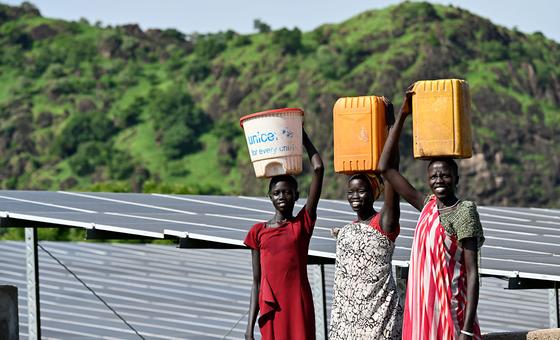
Currently underway in Stockholm from 24 to 28 August, the 35th World Water Week meeting highlights the crucial link between water and global warming, under the theme, Water For Climate Action.

At the core of sustainable development and basic human survival, safe drinking water is critical for socio-economic development, energy and food production – and healthy ecosystems.

Meanwhile, reliable water supply is also at the heart of adaptation efforts in an increasingly warming world.

Landlocked countries

Improved access to water is creating new opportunities for people in some of the world’s most remote communities, particularly in landlocked developing countries (LLDCs). 

On Wednesday, UN-Water – which coordinates the UN’s work on water and sanitation – will bring together LLDCs that have demonstrated substantial progress towards ensuring the availability and sustainable management of water and sanitation for all, in line with the UN Sustainable Development Goals (SGDs).

This session will provide an opportunity for other LLDCs to draw lessons from the progress made by Bhutan, Rwanda, and Saudi Arabia in ensuring safe drinking water and effective water management.

Innovative financing

The lack of safely managed water, sanitation and hygiene services, severely impacts human well-being, dignity and opportunities – especially for women and girls.

Indeed, contaminated water, inadequate sanitation, and poor hygiene practices are still undermining efforts to end extreme poverty and control disease outbreaks in the world’s poorest countries.

On Thursday, UN-Water and partners will galvanise donors and other key collaborators to address financing gaps in water and sanitation provision.

Discussions will focus on different models and building alliances to unlock innovative funding mechanisms for safer universal access.

How nuclear technology can help fight seafood fraud

From mislabeled fish to hidden additives, deceptive practices are threatening livelihoods, food safety, and trust in what ends up on our plates.

Now, a new international initiative backed by the United Nations is using cutting-edge nuclear science to protect people and ensure the seafood they rely on is safe, authentic, and traceable.

Fishy business

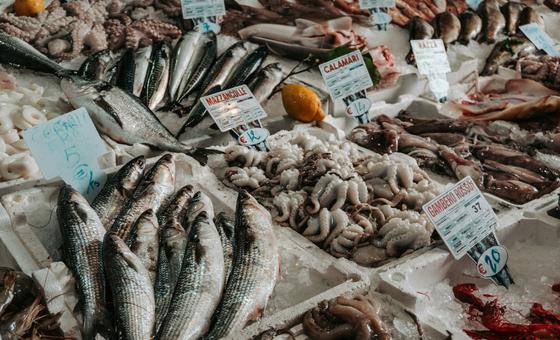
Seafood consumption per capita has doubled since the 1960s and is projected to double again by 2050, with seafood fraud becoming a rising global concern.

While FAO estimates that the fisheries and aquaculture sector employs 62 million people in primary fish production, about 600 million livelihoods rely on fisheries and aquaculture. 

Seafood fraud ranges from substituting high-value species with cheaper alternatives to using unauthorised or undeclared additives. It can occur at any stage of the supply chain, especially as monitoring and traceability become more difficult due to supply chains growing increasingly complex.

To make sure seafood fraud does not slip through the net, national and international food control systems need robust and fit-for-purpose analytical methods

Nuclear technology

A joint project between the Food and Agriculture Organization (FAO) and the International Atomic Energy Agency (IAEA) is set to use nuclear technology to counter seafood fraud.  

Through its Joint FAO/IAEA Centre of Nuclear Techniques in Food and Agriculture, the IAEA is launching a five-year coordinated research project to help countries strengthen food control systems to detect and prevent seafood fraud.

The IAEA will use nuclear and related techniques to build scientific capacity, ensure product authenticity, and enhance resilience and transparency in seafood supply chains.

“This IAEA project provides Member States with a valuable opportunity to collaborate in combating fraud and de-risking the seafood supply chain using robust nuclear science-based tools,” said Debashish Mazumder from the Australian Nuclear Science and Technology Organization, a key partner of the IAEA on sustainable development issues.

Reeling in truth with atoms

The IAEA’s Food Safety and Control Laboratory supports countries in applying nuclear and related analytical techniques to facilitate trade in safe and authentic seafood, offering powerful tools for fraud detection.

One of the most effective methods to counter seafood fraud is stable isotope ratio analysis of light elements such as oxygen, which allows scientists to identify the geographical origin of the fish and verify whether it was wild-caught by reflecting environmental and ecological conditions in the fish’s biological tissues.

Used to authenticate seafood, nuclear technology serves as a powerful tool to combat seafood fraud, enhancing consumer protection, increasing trust in food control systems, and supporting fisherfolk to engage in sustainable aquatic resource management.  

Source link

Fight to end AIDS: ‘This is not just a funding gap – it’s a ticking time bomb’

The 2025 Global AIDS Update released on Thursday by UNAIDS – the global body’s agency fighting AIDS and HIV infection – warns that a historic funding crisis now threatens to unravel decades of hard-won gains unless countries radically rethink how they fund and deliver HIV services.

Yet even amid these challenges, many of the most-affected countries are stepping up. Of the 60 low and middle-income nations surveyed in the report, 25 have signaled plans to increase domestic HIV budgets in 2026 – a clear sign of growing national leadership and commitment to the response.

Although promising, such efforts are not sufficient to replace the scale of international funding in countries that are heavily reliant on global donors.  

Global emergency   

Despite marked progress in the HIV response in 2024, this year has seen many disruptions to HIV prevention programmes and treatment services, due to abrupt funding shortfalls in Washington and other major donor capitals.  

Even before the large-scale service disruptions, reported data for 2024 showed that 9.2 million people living with HIV still did not have access to life-saving treatments, contributing to 75,000 AIDS-related deaths among children in 2024.  

“This is not just a funding gap – it’s a ticking time bomb,” said Winnie Byanyima, UNAIDS Executive Director, as many AIDS-relief programmes are being defunded, pushing people out of critically needed care.  

If US-supported HIV treatment and prevention services collapse entirely, UNAIDS estimated that an additional six million new HIV infections, and four million additional AIDS-related deaths could occur between 2025 and 2029. 

Call for solidarity

Despite the grim landscape, “there is still time to transform this crisis into an opportunity,” said Ms. Byanyima, as countries and communities are stepping up to protect treatment gains.  

As of December 2024, seven countries in sub-Saharan Africa had achieved the 95-95-95 targets: 95 per cent of people living with HIV know their status, 95 per cent of those are on treatment, and 95 per cent of those on treatment are virally suppressed.  

While such successes must be maintained and further scaled up, the global HIV response cannot rely on domestic resources alone.  

In a time of crisis, the world must choose transformation over retreat,” said Ms. Byanyima.  

Together, we can still end AIDS as a public health threat by 2030 – if we act with urgency, unity and unwavering commitment,” she added.   

From Himalayan melt to drowning shores, children lead the climate fight

For young people living on the frontlines, climate change disrupts education, health and safety, casting a pall of uncertainty over the future.

As countries race to meet climate goals, the UN Children’s Fund (UNICEF) is stepping in to ensure that children’s voices are not just heard, but central to shaping solutions.

UN News spoke with the heads of UNICEF in Nepal and the Maldives to explore how the agency is empowering youth, embedding climate resilience in schools and driving child-inclusive climate action.

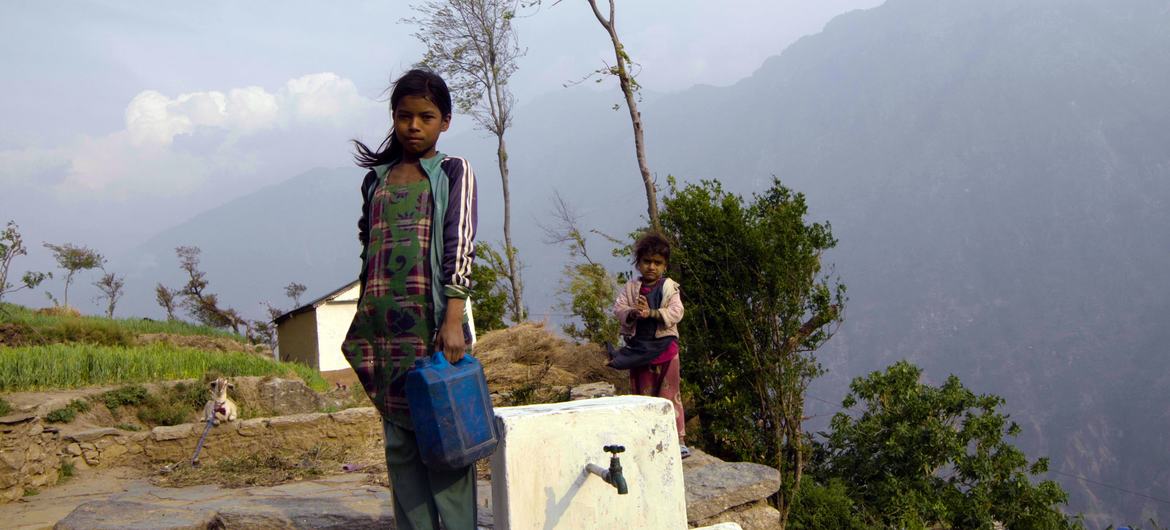
A young girl stands next to a tap with a small jerry can in a mountain village in Nepal. Many houses lack piped water, so children often fetch water on their way home from school.

A daily reality

In a remote village in western Nepal, 11-year-old Sabu and her friends face danger daily on their way to school. Intensifying and unpredictable rains trigger landslides that wash away roads, and floods that submerge homes and farmland.

Children live with anxiety and uncertainty. When it rains and there are floods, they have to trek, bridges are overrun, roads are muddy – and this is what they have to walk through day after day.”

It becomes a huge burden for children to carry,” says Alice Akunga, UNICEF Representative in Nepal.

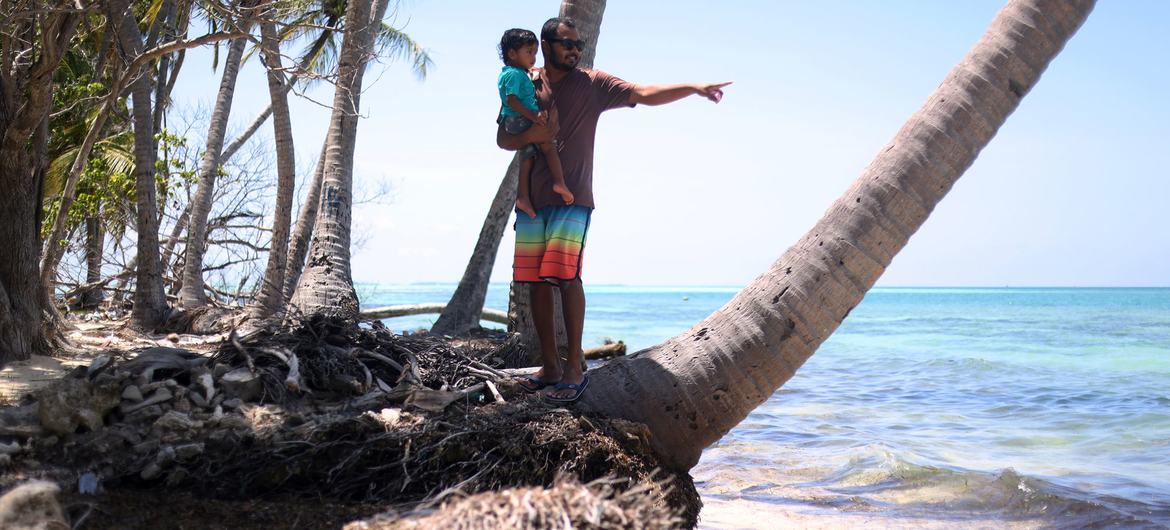
Thousands of kilometers away, in the low-lying Maldives, the threat takes a different but equally devastating form. Sea surges erode coastlines, flood homes and wash away infrastructure.

Erosion is a daily reality for children here…young people see their trees falling, homes at risk and they grow up with the constant fear of losing their islands,” explains Edward Addai, UNICEF Representative in the Maldives.

Climate change is not something far-off – it is part of their lives.

A father and his daughter on a stretch of severely eroded beach in Dhiffushi island, in the Maldives.

Kids at the heart of climate action

UNICEF’s work in both countries is guided by a simple principle: children must be at the heart of climate solutions. This means not only shielding them from impacts but also empowering them to be agents of change.

In Nepal, with the support of UN agencies, the government has integrated climate change education into the national curriculum. Classes go beyond theory, with teacher training, green school initiatives and practical actions like rainwater harvesting and waste management.

“We are supporting updating school safety frameworks…making them more resilient and absorb climate shocks such as heavy rains or floods,” Ms. Akunga said.

At the recently concluded Sagarmatha Sambaad – the Everest climate talks – UNICEF supported a national youth-led dialogue that brought together over 100 children and young people from across Nepal to engage with policymakers and submit a Children and Youth Declaration to the Prime Minister.

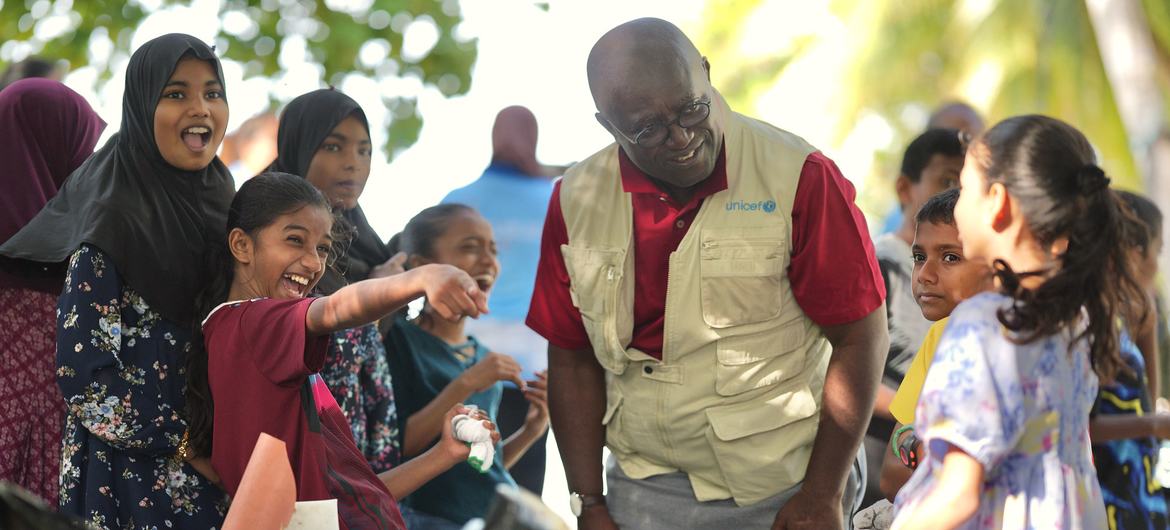
UNICEF Representative to Maldives Edward Addai speaks with a group of girls participating in a plastic clean up drive.

Youth leadership beyond classrooms

In the Maldives, the agency’s approach emphasises community engagement alongside education.

UNICEF has helped establish environmental clubs in schools, providing safe spaces for children to learn, discuss and act on climate issues. It is also working with the health system to introduce solar energy to hospitals, supplanting fossil fuels.

“These clubs are critical for nurturing leadership and connecting school activities to community projects,” Mr. Addai added.

Young people are also at the centre of the Government’s climate plans, engaging in direct dialogue with policymakers and strengthening intergenerational accountability. One such initiative is the Youth Track to COP, a platform co-led by UNICEF and government partners to prepare young people to meaningfully engage in national and global climate discussions.

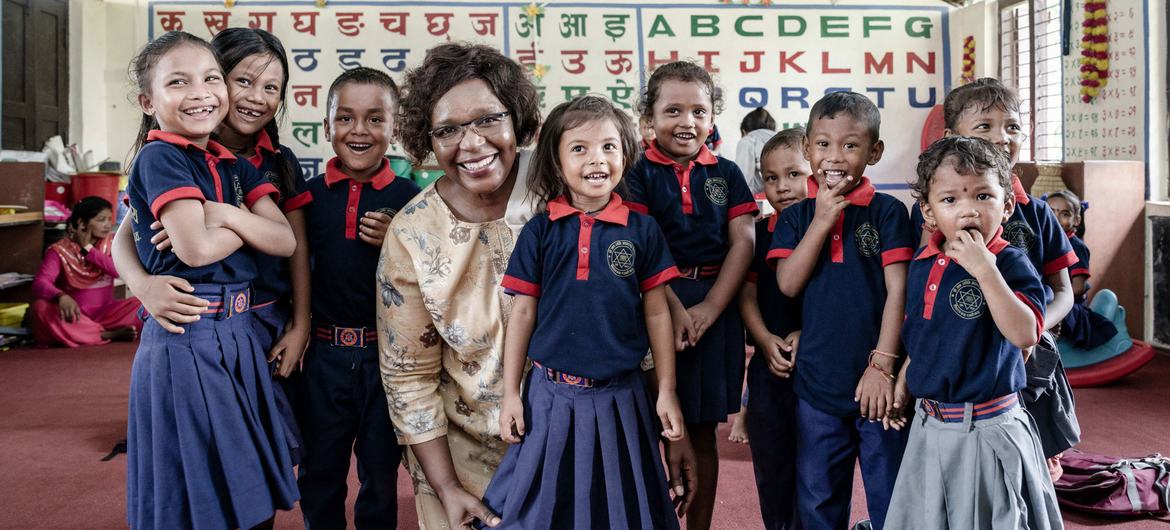
Alice Akunga, UNICEF Representative to Nepal, with a group of young children in a classroom.

Safeguarding the next generation

UNICEF is also supporting efforts to integrate child-sensitive policies into the countries’ Nationally Determined Contributions (NDCs) – the climate pledges under the Paris Agreement.

Nepal’s pledges include commitments to green schools and climate-resilient educational infrastructure. Children were actively involved in the consultations for Nepal’s latest NDC, sharing firsthand stories of how climate impacts their daily lives.

The Maldives’ emphasises youth engagement, clean water access and strengthened health systems in climate-vulnerable areas. Young people are also shaping policy through national mock COPs and direct participation in global climate forums.

This ensures that resilience efforts will extend beyond infrastructure to cover children’s health, education and mental wellbeing.

© UNICEF/Laxmi Prasad Ngakhusi

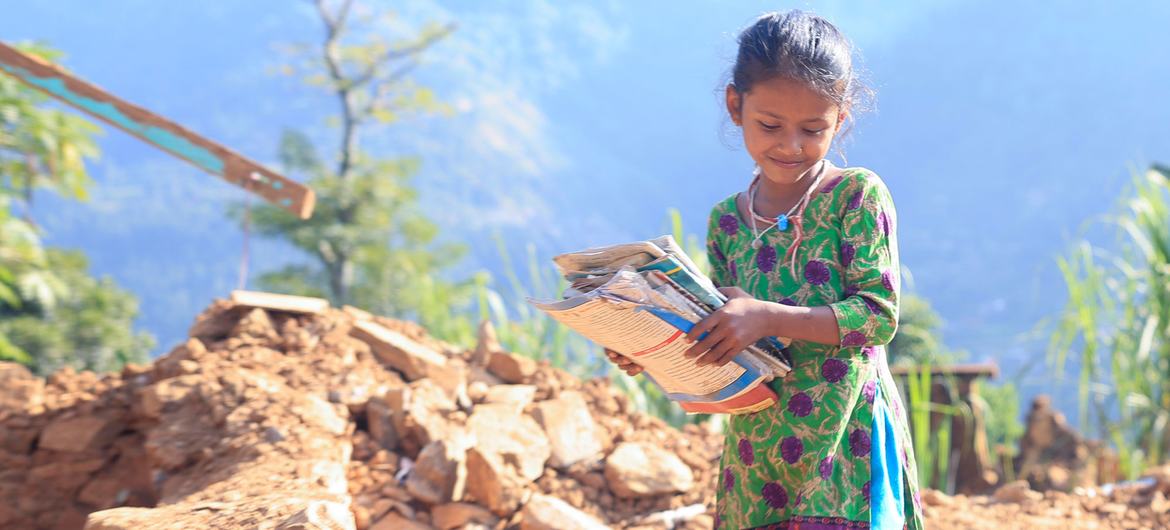
An eight-year-old girl retrieves her textbooks from the rubble of her home, destroyed in an earthquake in western Nepal.

Getting it right, for everyone

The UNICEF officials emphasised what a truly child-inclusive climate plan requires.

It recognises how climate change impacts every aspect of a child’s life – from their lungs to their learning to their access to clean water,” Ms. Akunga said.

“It ensures children can keep receiving health services, continue learning and adapt without anxiety or uncertainty. It’s about securing their survival, growth, and development no matter what climate shocks come.”

Mr. Edward added: “If we get it right for children, we get it right for society.”

“Children are the future caretakers of their land and communities. A climate plan that ignores children’s realities will fail everyone. But when children are healthy, educated, and included, society thrives,”

Children leading the way

Ms. Akunga recalled meeting Sabu, the 11-year-old girl, on a field visit.

“I met this child. I went to her village and met her parents…she has taken it upon herself and mobilised other young girls to learn about medicinal plants – how to nurture them and protect them from extreme weather conditions.”

She spoke of how Sabu is transferring knowledge from elders to peers – bridging generations – and impressing her community with her passion.

Despite the daunting challenges, children like Sabu are stepping up. They are organizing themselves, advocating for change and proposing solutions.

“Their voices matter…children are not just affected by climate change — they are essential partners in responding to it,” Ms. Akunga affirmed.

Mr. Addai echoed this sentiment: “By listening to children and including them in decisions, we build a world where the next generation can live safely and thrive.

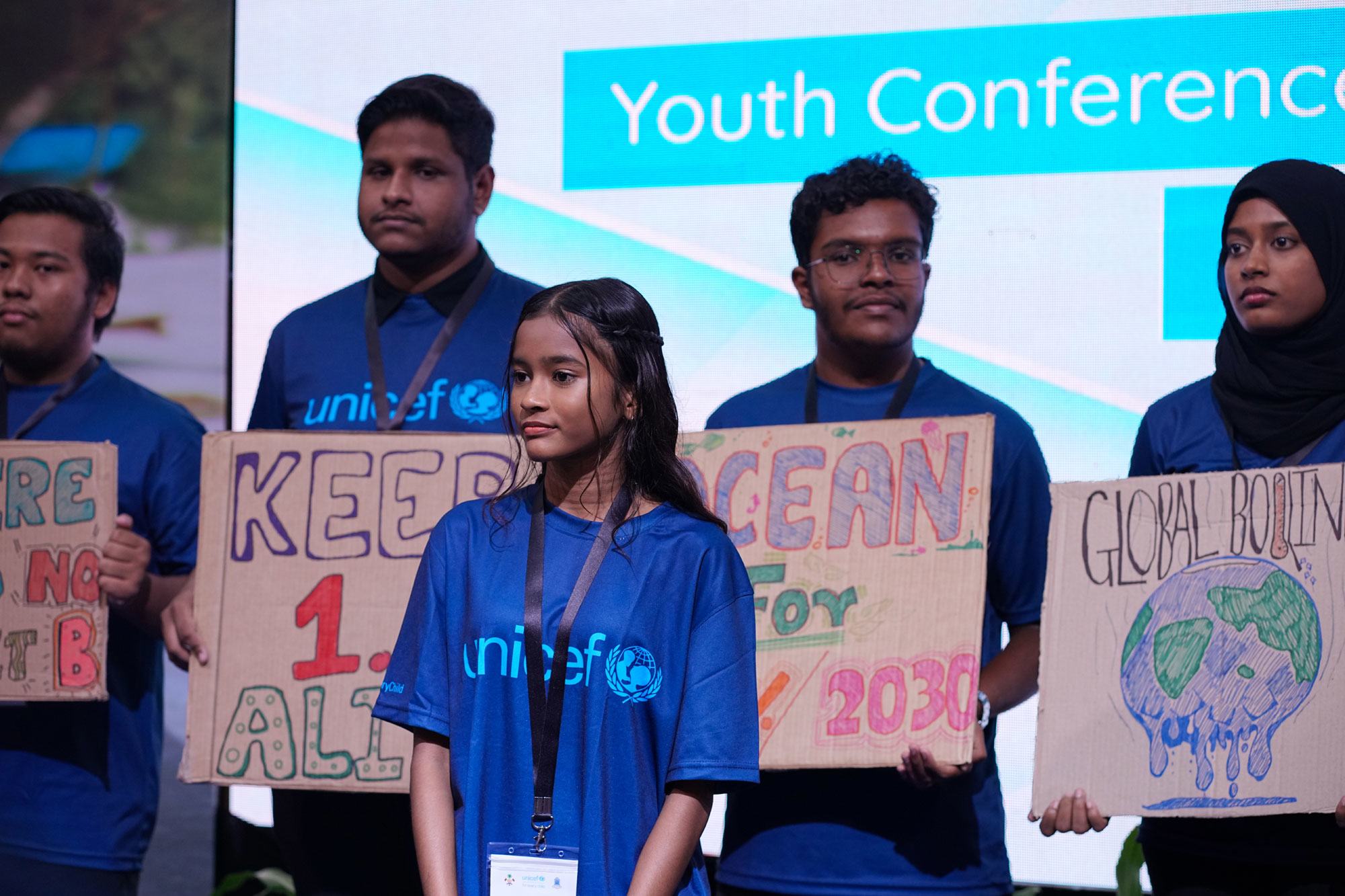
A group of young Maldivians at a national conference as the country prepares for the COP28 climate summit.

Fight against ‘vicious’ tuberculosis epidemic drastically underfunded: UN deputy chief

The High-Level Meeting has been described by the World Health Organization (WHO) as an unprecedented step forward by governments and all partners engaged in the fight against TB.

It comes one year on from a Ministerial Conference on Ending TB held in Moscow last November, which resulted in high-level commitments from ministers and other leaders from 120 countries to accelerate progress to end the disease.

Ms. Mohammed described TB as a “vicious epidemic,” which infects some 10.4 million people across the world, and is fuelled by poverty, inequality, migration and conflict.

The disease, she added, exists in a “vicious cycle that will require an all-systems approach that accounts for the social drivers that perpetuate its spread.”

Better health and social welfare systems, and more investment, are needed to stop this global health crisis, and better tools are needed to overcome anti-microbial resistance: some 60,000 drug-resistant cases of TB are reported every year.

The Deputy Secretary-General called for an approach to ending TB that takes a system-wide approach, promoting the broader health and well-being of entire communities and breaking out of “disease-specific silos and single goals.”

Whilst TB affects all countries and continents, more than half of all new cases occur in just five countries: in some countries – including Mozambique, the Philippines and South Africa – there are 500 cases per 100,000 people, whilst in high-income countries there are fewer than 10 per 100,000. Ms. Mohammed said that much more progress is needed if the UN is to follow through on its promise to leave no one behind.

However, progress, she added, is possible if efforts to end the epidemic are based on the best data and science, informed decisions, empowered communities, and strategic and well-financed action.

Ms. Mohammed said that WHO will lead cross-UN efforts to support governments, working together with civil society and all partners to drive a faster response to TB.

Just one week ago, on 18 September, the WHO released its latest Global Tuberculosis Report, which showed that countries are not doing enough to end TB, and that funding is the most urgent stumbling block.

The meeting concluded with the adoption of an ambitious Political Declaration on TB, endorsed by Heads of State, which is intended to strengthen action and investments for ending of TB, and save millions of lives.


Indigenous Peoples sidelined in global climate fight, UN warns

Launched on Thursday, The State of the World’s Indigenous Peoples exposes a stark imbalance: while Indigenous Peoples make up just six per cent of the global population, they safeguard 80 per cent of the planet’s remaining biodiversity – yet receive less than one per cent of international climate funding.

The report offers a sobering assessment of climate action that is not only lacking in urgency, but in fairness. From green energy projects imposed without consent to policy decisions made in rooms where Indigenous voices are absent, these communities are too often excluded from climate solutions, displaced by them, and denied the resources to lead the way.

“Although we are disproportionately affected by the climate crisis, Indigenous Peoples are not victims,” writes Hindou Oumarou Ibrahim, Chair of the UN Permanent Forum on Indigenous Issues, in the report’s foreword.

We are custodians of the natural world who are committed to maintaining the natural equilibrium of the planet for the generations to come.”

The publication, overseen by the UN, brings together contributions from Indigenous leaders, researchers and the World Health Organization (WHO), combining case studies, data and lived experience from seven distinct regions of the world.

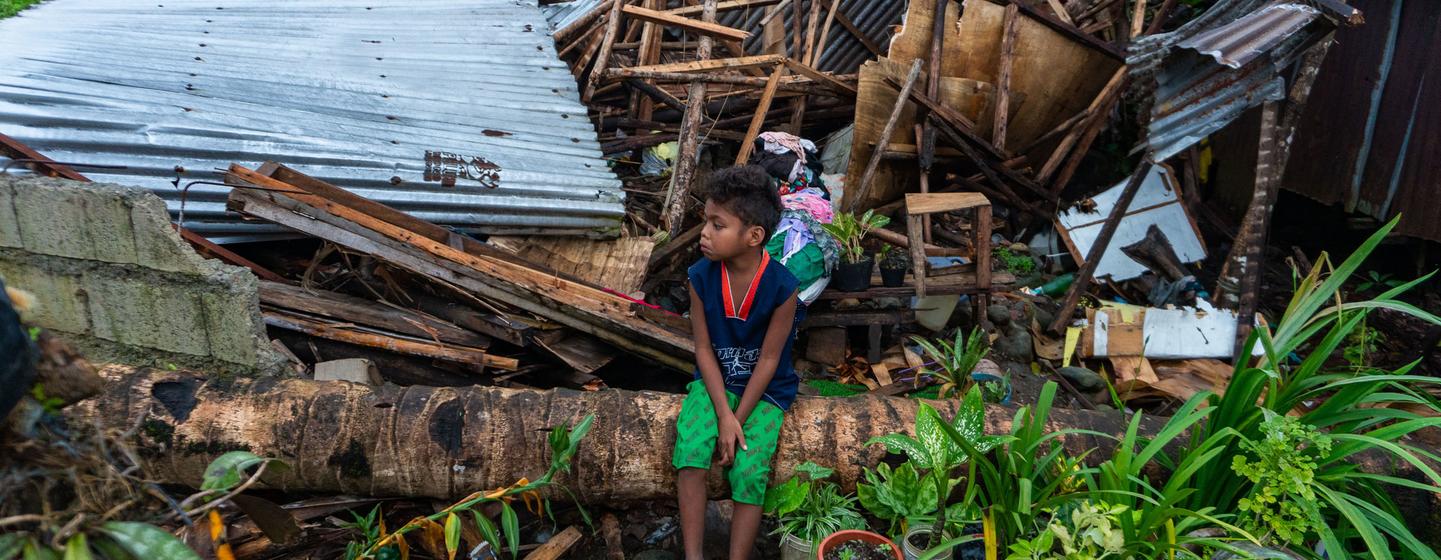
A child from the Badjao Indigenous community in the Philippines sits amid the wreckage left by a typhoon.

Modern problems, ancient solutions

The report calls for a seismic shift in how Indigenous knowledge is understood and respected – reframing it not as “traditional” or folkloric, but as scientific and technical knowledge.

Indigenous knowledge systems, authors argue, are “time-tested, method-driven” and built on direct relationships with ecosystems that have sustained life for millennia.

For example, in Peru, a Quechua community in Ayacucho has revived water sowing and harvesting practices to adapt to shrinking glaciers and drought. These methods, part of ancestral stewardship of hydrological cycles, are now being shared across borders with Costa Rican farmers as a model of South-South climate cooperation.

In Somalia, oral traditions serve as ecological law. The report cites cultural norms such as prohibitions on cutting certain trees (gurmo go’an) as evidence of environmental governance embedded in generational wisdom – passed through proverbs, stories, and taboos rather than policy papers.

Meanwhile, the Comcaac people of Mexico encode ecological and maritime knowledge in their language. Names like Moosni Oofia (where green turtles gather) and Tosni Iti Ihiiquet (where pelicans hatch) act as living data points – “vital  to their survival,” the report emphasises.

© Unsplash/Paul-Alain Hunt

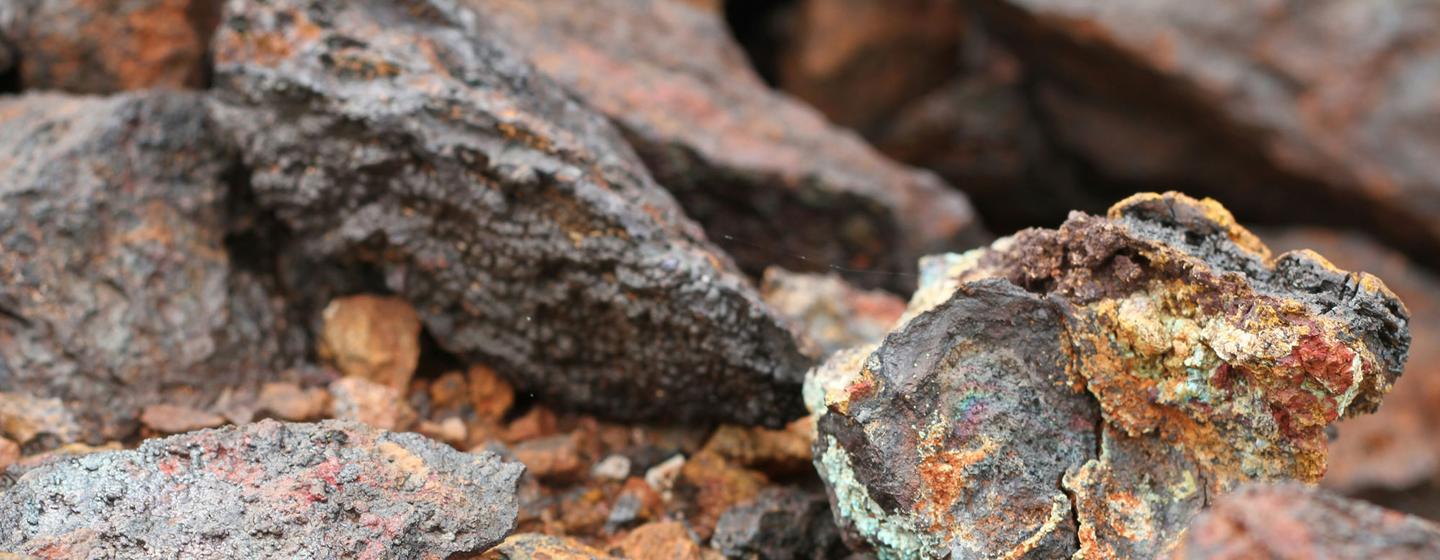
Ore containing copper, cobalt and nickel at a mine.

Green solutions without consultation

The report also looks at how even as the world embraces a renewable energy future, many Indigenous Peoples are finding themselves on the frontlines not as climate partners, but as collateral damage from some of the solutions.

So-called green solutions often pose as much of a threat to Indigenous Peoples as the climate crisis itself,” writes Mr. Ibrahim. From biofuel expansion, carbon offsetting schemes, and mineral extraction for clean energy technologies, the new economy is often being built on old injustices.

For example, in Africa, the report draws attention to how demand for minerals linked to the green energy transition — including lithium and cobalt — has led to extractive activities that proceed without free, prior and informed consent. These projects often result in environmental degradation and displacement, echoing colonial patterns of land exploitation.

In several countries across the Americas, carbon offset projects tied to forest conservation have also been implemented without consultation – often on Indigenous lands – resulting in environmental degradation and exclusion from financial benefits.

Throughout, the report warns that if climate actions continue to be designed and implemented without Indigenous Peoples at the centre, they risk replicating the extractive and exclusionary systems that fuelled the crisis in the first place.

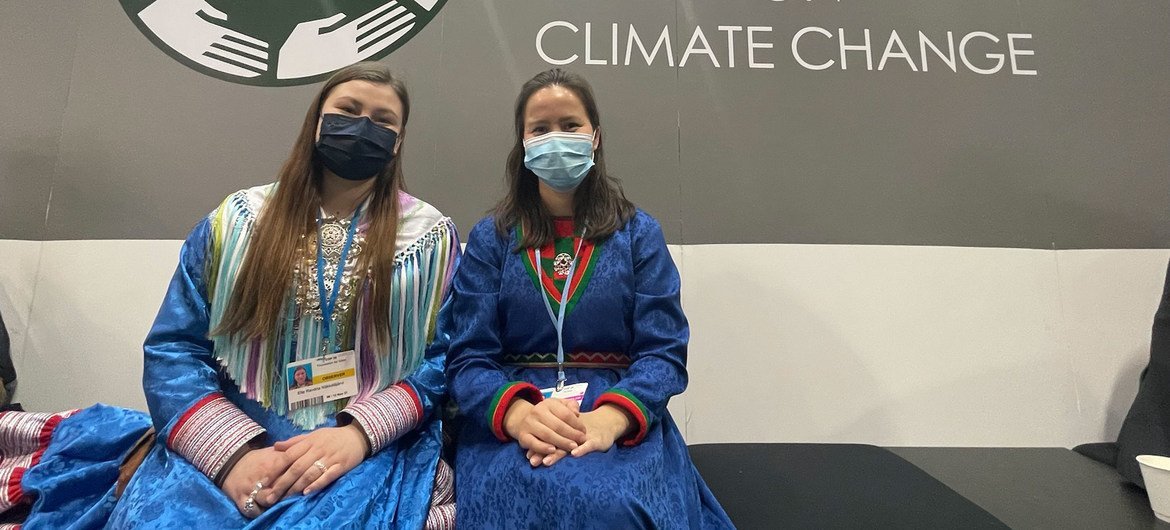
Indigenous young women representatives of the Sami People at the COP26 pavilions.

Climate change is a health crisis

The report also includes a chapter commissioned by WHO that details how climate-related health impacts intersect with the social, cultural, and spiritual lives of Indigenous communities.

In the Arctic, changes in temperature, wildlife migration, and weather patterns are disrupting traditional practices like hunting and harvesting. These disruptions are causing stress and threatening food security.

Indigenous women are particularly affected by the intersection of climate change and health. In East Africa, for example, women are more vulnerable to neglected tropical diseases such as schistosomiasis, leishmaniasis, and soil-transmitted helminthiases.

In the Amazon, climate-induced biodiversity loss has reduced access to traditional foods and medicinal plants, contributing to nutritional deficiencies among pregnant and nursing women, as well as broader community health vulnerabilities.

Despite these challenges, the report emphasises resilience. Communities are implementing locally rooted adaptation strategies, often led by women and elders. These include restoring traditional diets, strengthening intergenerational knowledge sharing, and adapting harvesting calendars to new ecological rhythms.

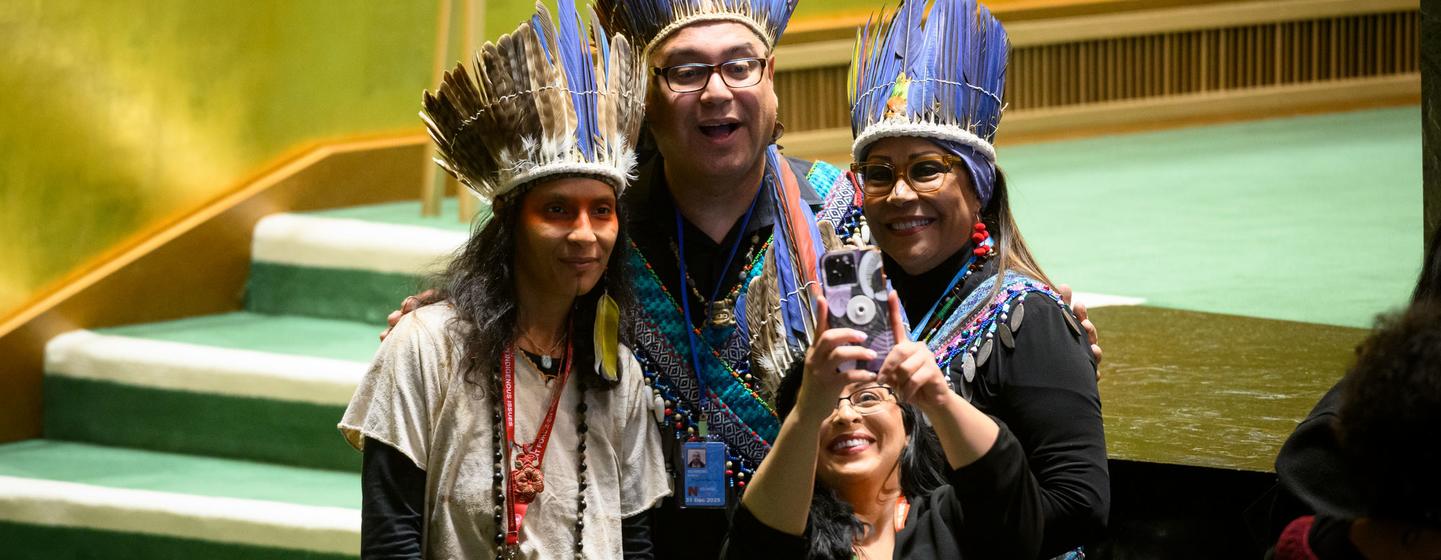
Participants attend the opening of the 24th Session of the Permanent Forum on Indigenous Issues.

Excluded from the table and the funds

Although Indigenous Peoples are increasingly acknowledged in global environmental frameworks, the report reveals that their role in shaping and implementing climate policy remains severely limited — both in terms of funding and governance.

Indigenous communities continue to face structural barriers that prevent them from accessing international climate finance. While significant resources flow through climate initiatives worldwide, less than 1 per cent reaches Indigenous Peoples directly.

The report calls for a fundamental shift: not just to increase funding, but to change who controls it.

Among its key recommendations are the creation of Indigenous-led financial mechanisms, formal recognition of Indigenous governance systems, and the protection of data sovereignty – ensuring communities control how knowledge about their lands and livelihoods is collected and used.

Unless these systems are transformed, the report warns, climate action risks reproducing the same patterns of exclusion and dispossession that have long undermined both Indigenous rights and global environmental goals.

Source link