Yet, amid this rapid transformation, one question rises above all: how can innovation truly serve the people, as more and more of them migrate to cities?
That question lies at the heart of this year’s World Cities Day, which will be celebrated in Bogotá, Colombia, under the theme People-Centred Smart Cities.
Organized by the UN’s urban agency, UN-Habitat, the event brings together mayors, experts on city life and community leaders from around the world to explore how data, design, and digital tools can build communities that are not only smarter, but also fairer, greener, and more inclusive.
By 2050, nearly 70 per cent of humanity is expected to live in urban areas, intensifying demands for housing, services, and climate resilience.
In his message for the day, UN Secretary-General António Guterres emphasized that innovation must close gaps, not widen them.
“A truly smart city puts people first, especially the most vulnerable,” Mr. Guterres said. “When we place people at the centre, digital innovation can help drive fairness and sustainability for all.”
Bogotá’s big experiment
Bogotá, long known for urban experimentation, has earned global recognition for combining technology with citizen engagement.
From TransMilenio, its influential bus rapid transit system, to Ciclovía, which turns streets into car-free community spaces every Sunday, the city has redefined how urban design can foster social connection and sustainability.
For Elkin Velásquez, UN-Habitat’s Regional Director for Latin America and the Caribbean, Bogotá offers a compelling example of how data and dialogue can shape better futures.
“The global observance here will foster international dialogue on people-centred smart cities — where technology enhances quality of life and strengthens community bonds,” he said.

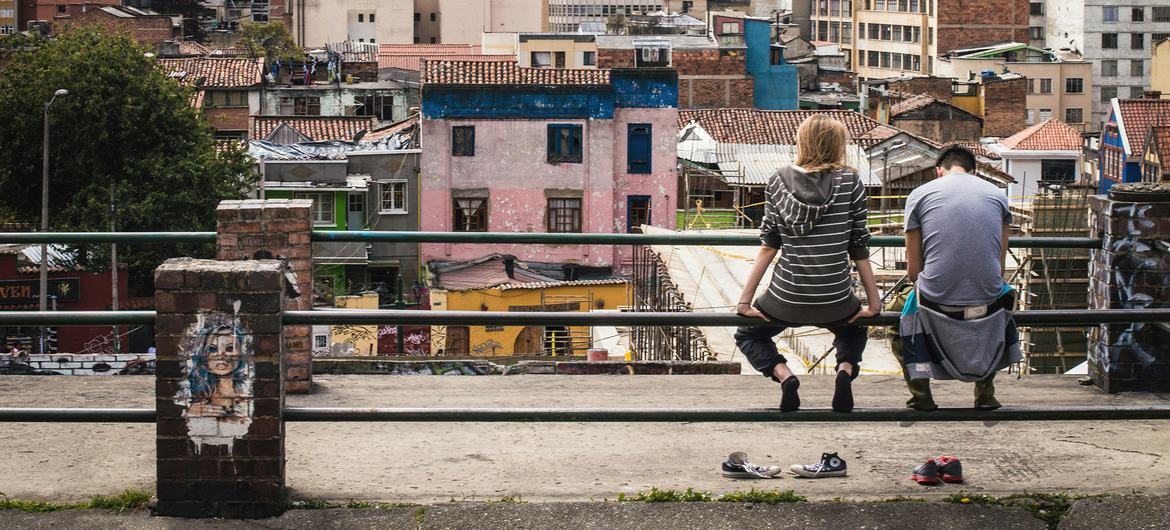
Bogotá, Colombia’s capital city.
Listening to the city
Among the keynote speakers in Bogotá is Carlo Ratti, architect, engineer, and director of the MIT Senseable City Lab in the United States, as well as curator of the 2025 Venice Architecture Biennale.
Mr. Ratti, one of the world’s leading thinkers on urban innovation, believes that cities must evolve beyond the notion of the “smart city” toward what he calls the “senseable city.”
“I’m not fond of the term ‘smart city,’” Mr. Ratti said. “It often implies a top-down system guided by technology alone. Cities must first and foremost be about people — responsive, inclusive, and adaptive. A ‘senseable city’ uses technology not for its own sake, but to better listen to and serve its citizens.”
For Mr. Ratti, Bogotá embodies this spirit. “It has long intrigued me as a leading city for urban experimentation,” he said. “Projects like TransMilenio and Ciclovía have become global case studies.
“They show how local interventions, when scaled and embraced, can shift urban trajectories.”
On principle, Mr. Ratti believes that in an age of climate emergency and demographic transition, “the most radical act may be not to build or build differently”. As an alternative, he suggests prioritizing reuse, retrofitting, and transformation.
“And if you truly need to build on greenfield sites, learn from the logic of nature. In terms of energy and circularity, a tree is still much smarter than any building we can design”, he concluded.
A people-centred vision
According to Anacláudia Rossbach, Executive Director of UN-Habitat, the city’s approach exemplifies what a people-centred smart city should look like.
“In Bogotá, the smart cities approach is people-centered, aiming to improve well-being and quality of life,” Ms. Rossbach said.
“Programmes like Ecobarrios and Mi Casa focus on resilience and sustainability, while digital initiatives such as Chatico, a virtual agent, use Artificial Intelligence to help citizens access information on public services and participate in consultations.”
These initiatives, she explained, represent a broader effort to advance sustainable mobility, data-driven policymaking, and bridge the digital divide.
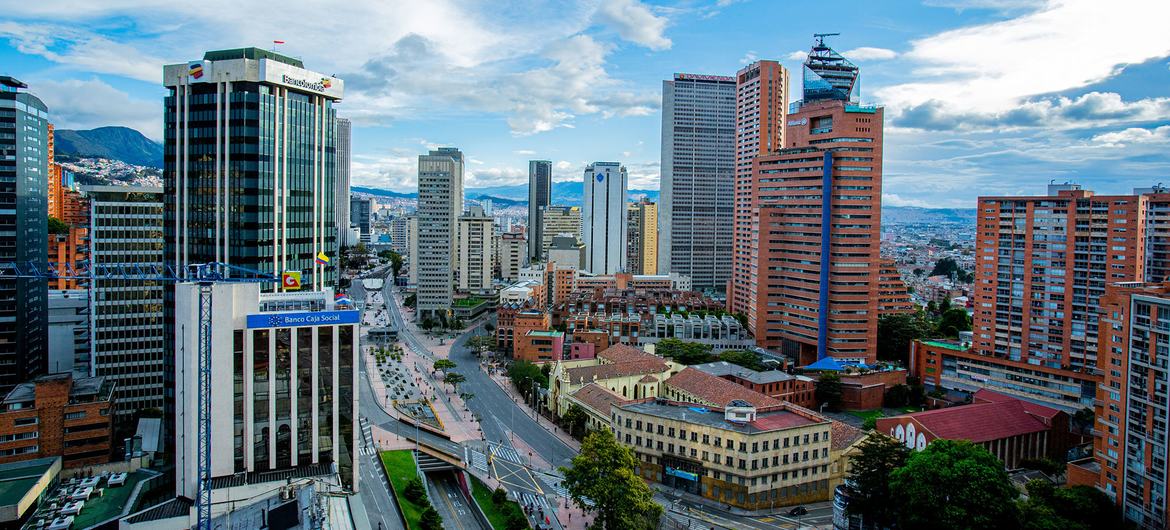
Bogotá, Colombia, is recognized as a leader in smart city initiatives, with a focus on digital transformation, mobility, and urban sustainability.
“These are good examples of technology and innovation that serve people and communities,” Ms. Rossbach added. “It’s vital that such experiences are shared globally, allowing other cities to adapt these lessons to their own contexts.”
A global conversation
World Cities Day marks the conclusion of Urban October, UN-Habitat’s month-long campaign for sustainable and inclusive urbanization. This year’s observance in Bogotá aims to leave behind a legacy, one built on collaboration, learning, and shared commitment to a more equitable urban future.
“The legacy we seek is twofold,” Ms. Rossbach concluded. “First, to showcase the creativity of cities in advancing people-centred smart approaches. And second, to strengthen the networks of cooperation that ensure innovation serves people, and not the other way around.”
As digital tools become ever more embedded in urban life, the challenge for cities is clear: to ensure that smart solutions remain human ones.