Drowning in debt: New forum in Sevilla offers borrowers chance to rebalance the books

The Borrowers’ Forum is being hailed as a milestone in efforts to reform the international debt architecture, supported by the UN and emerging as a key part of the Sevilla Agreement outcome document.

“This is not just talk – this is execution,” said Egypt’s Minister of Planning and Economic Development, Dr Rania Al-Mashat. “The Borrowers’ Forum is a real plan, driven by countries, to create a shared voice and strategy in confronting debt challenges.”

Rebeca Grynspan, Secretary-General of UN Trade and Development (UNCTAD), said developing nations often face creditors as a united bloc while negotiating alone. “Voice is not just the ability to speak — it’s the power to shape outcomes. Today, 3.4 billion people live in countries that pay more in debt service than they do on health or education.”

The forum – one of 11 recommendations by the UN Secretary-General’s Expert Group on Debt – will allow countries to share experiences, receive technical and legal advice, promote responsible lending and borrowing standards, and build collective negotiating strength.

Its launch addresses long-standing calls from the Global South for more inclusive decision-making in a debt system dominated by creditor interests.

‘Silent but urgent’

Zambia’s Foreign Minister, Mulambo Haimbe, told journalists the initiative would foster “long-term partnerships, mutual respect and shared responsibility” and expressed his country’s willingness to host an early meeting.

Spain’s Finance Minister Carlos Cuerpo described the current debt crisis as “silent but urgent,” and called the Forum a “Sevilla moment” to match the Paris Club of creditors, created nearly 70 years ago.

UN Special Envoy on financing the 2030 Agenda Mahmoud Mohieldin said the forum was a direct response to a system that has kept debtor countries isolated for too long. “This is about voice, about fairness – and about preventing the next debt crisis before it begins.”

The launch comes at a time of rising debt distress across the developing world.

The agreement – known in Spanish as the Compromiso de Sevilla – adopted by consensus at the conference, includes a cluster of commitments on sovereign debt reform.

Alongside support for borrower-led initiatives, it calls for enhanced debt transparency, improved coordination among creditors, and the exploration of a multilateral legal framework for debt restructuring.

It also endorses country-led debt sustainability strategies, debt payment suspension clauses for climate-vulnerable nations, and greater support for debt-for-nature and debt-for-climate swaps – albeit with stronger safeguards and evidence of impact.

Frustration over ‘missed opportunity’ to tackle debt crisis

Civil society groups on Wednesday sharply criticised the adopted outcome in Sevilla, calling it a missed opportunity to deliver meaningful reform of a global debt system that is crippling many developing nations.

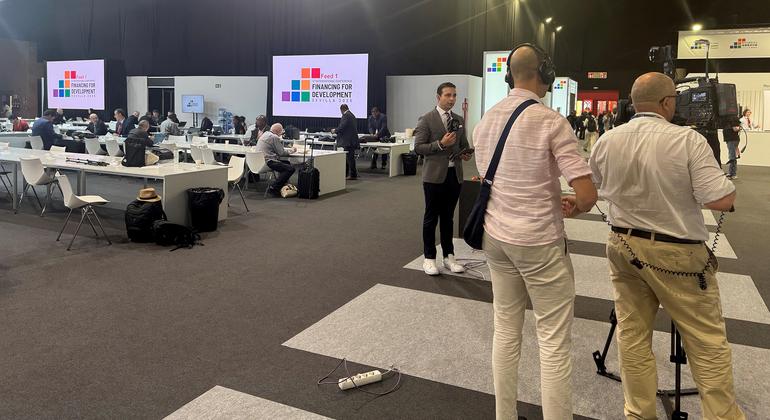
Speaking at a press briefing inside the conference, Jason Braganza of the African Forum and Network on Debt and Development (AFRODAD) said the final outcome document adopted on day one – the Sevilla Agreement – fell far short of what was needed.

This document did not start with much ambition and still managed to be watered down,” he said. “Nearly half of African countries are facing a debt crisis. Instead of investing in health, education and clean water, they’re paying creditors.”

Mr. Braganza praised the leadership of the African Group and the Alliance of Small Island States, which fought for a UN Framework Convention on sovereign debt.

‘False solutions’

Although that ambition was not fully realised, he welcomed a small breakthrough in the form of a new intergovernmental process that could lay the groundwork for future reform.

Civil society leaders also warned of the dangers of so-called “debt-for-climate swaps”, with Mr. Braganza calling them “false solutions” that fail to provide genuine fiscal space for developing nations.

Tove Ryding of the European Network on Debt and Development (Eurodad) echoed those concerns, saying: “We are told there’s no money to fight poverty or climate change — but there is. The problem is economic injustice. And the outcome of this conference reflects business as usual.”

She highlighted the progress made on a new UN Tax Convention as proof that determined countries can bring about real change, adding: “If only we had a tax dollar for every time we were told this day would never come.”

Agreement bears fruit for public health

To help close gaps in access to public services and policies, and to address healthcare cuts that could cost thousands of lives, Spain on Wednesday launched the Global Health Action Initiative aimed at revitalising the entire global health ecosystem.

The initiative, which will channel €315 million into the global health system between 2025 and 2027, is supported by leading multilateral health organisations and more than 10 countries.

Source link

From Himalayan melt to drowning shores, children lead the climate fight

For young people living on the frontlines, climate change disrupts education, health and safety, casting a pall of uncertainty over the future.

As countries race to meet climate goals, the UN Children’s Fund (UNICEF) is stepping in to ensure that children’s voices are not just heard, but central to shaping solutions.

UN News spoke with the heads of UNICEF in Nepal and the Maldives to explore how the agency is empowering youth, embedding climate resilience in schools and driving child-inclusive climate action.

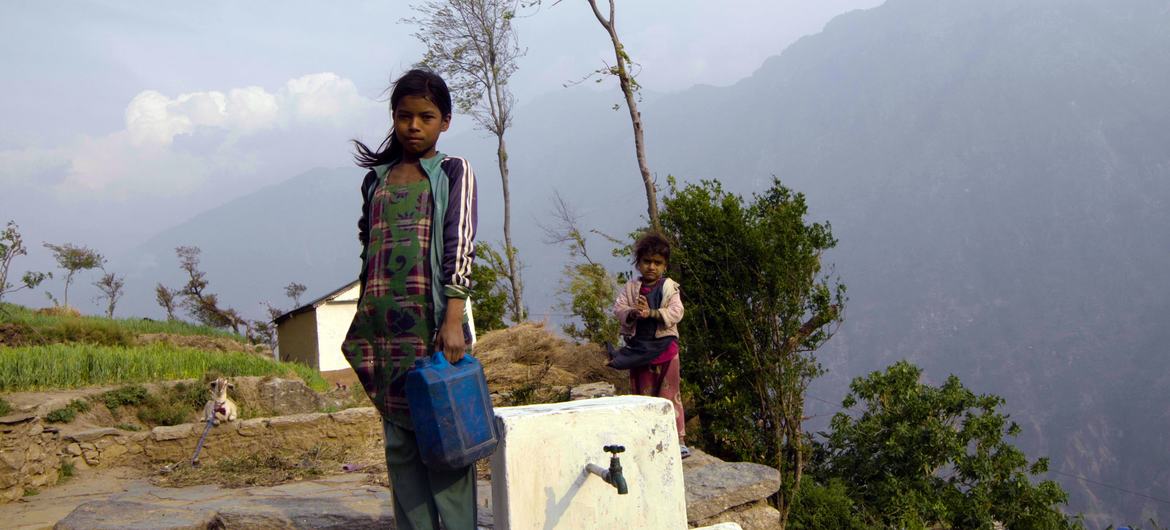
A young girl stands next to a tap with a small jerry can in a mountain village in Nepal. Many houses lack piped water, so children often fetch water on their way home from school.

A daily reality

In a remote village in western Nepal, 11-year-old Sabu and her friends face danger daily on their way to school. Intensifying and unpredictable rains trigger landslides that wash away roads, and floods that submerge homes and farmland.

Children live with anxiety and uncertainty. When it rains and there are floods, they have to trek, bridges are overrun, roads are muddy – and this is what they have to walk through day after day.”

It becomes a huge burden for children to carry,” says Alice Akunga, UNICEF Representative in Nepal.

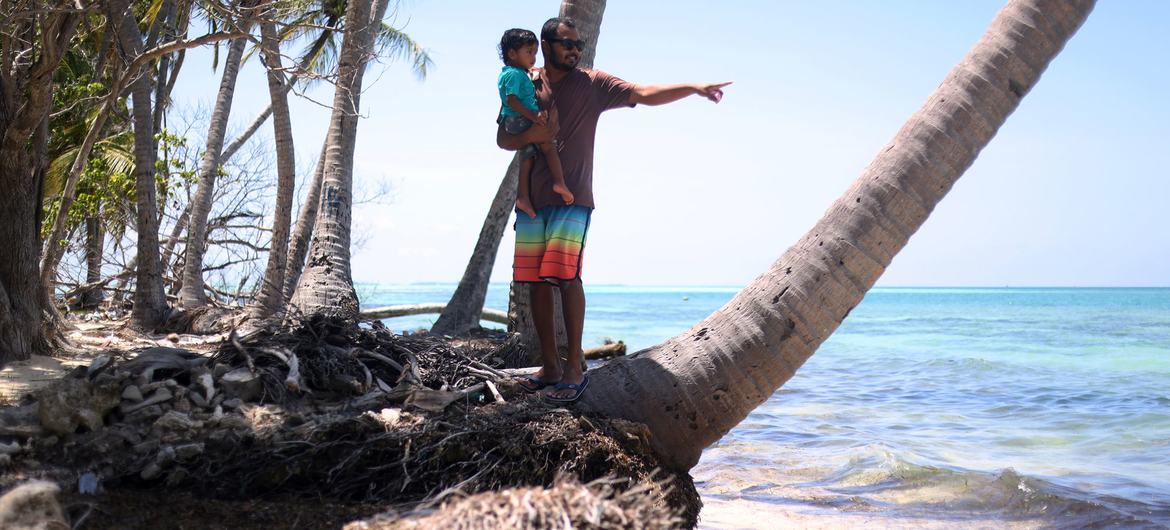
Thousands of kilometers away, in the low-lying Maldives, the threat takes a different but equally devastating form. Sea surges erode coastlines, flood homes and wash away infrastructure.

Erosion is a daily reality for children here…young people see their trees falling, homes at risk and they grow up with the constant fear of losing their islands,” explains Edward Addai, UNICEF Representative in the Maldives.

Climate change is not something far-off – it is part of their lives.

A father and his daughter on a stretch of severely eroded beach in Dhiffushi island, in the Maldives.

Kids at the heart of climate action

UNICEF’s work in both countries is guided by a simple principle: children must be at the heart of climate solutions. This means not only shielding them from impacts but also empowering them to be agents of change.

In Nepal, with the support of UN agencies, the government has integrated climate change education into the national curriculum. Classes go beyond theory, with teacher training, green school initiatives and practical actions like rainwater harvesting and waste management.

“We are supporting updating school safety frameworks…making them more resilient and absorb climate shocks such as heavy rains or floods,” Ms. Akunga said.

At the recently concluded Sagarmatha Sambaad – the Everest climate talks – UNICEF supported a national youth-led dialogue that brought together over 100 children and young people from across Nepal to engage with policymakers and submit a Children and Youth Declaration to the Prime Minister.

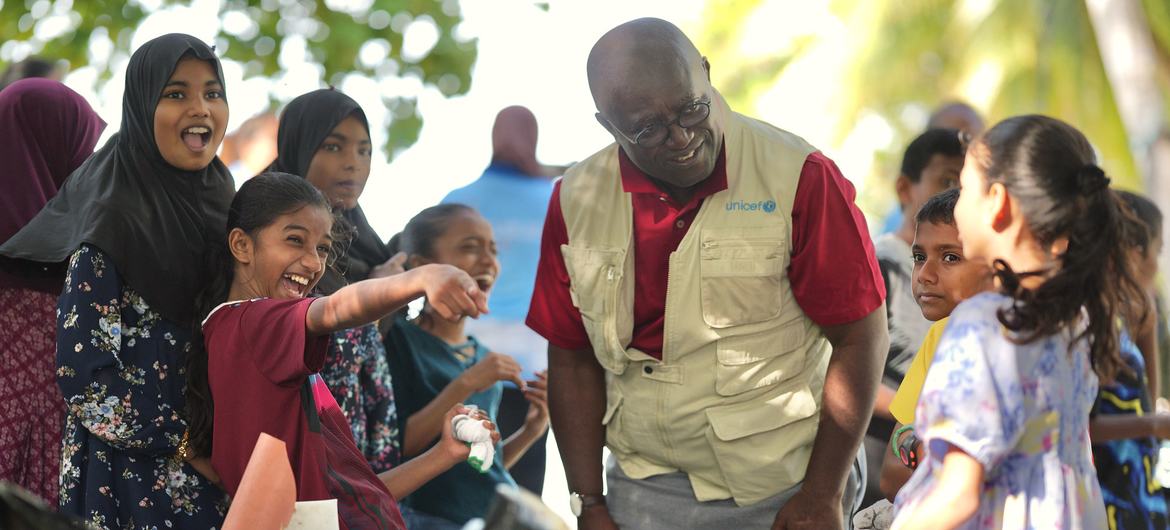
UNICEF Representative to Maldives Edward Addai speaks with a group of girls participating in a plastic clean up drive.

Youth leadership beyond classrooms

In the Maldives, the agency’s approach emphasises community engagement alongside education.

UNICEF has helped establish environmental clubs in schools, providing safe spaces for children to learn, discuss and act on climate issues. It is also working with the health system to introduce solar energy to hospitals, supplanting fossil fuels.

“These clubs are critical for nurturing leadership and connecting school activities to community projects,” Mr. Addai added.

Young people are also at the centre of the Government’s climate plans, engaging in direct dialogue with policymakers and strengthening intergenerational accountability. One such initiative is the Youth Track to COP, a platform co-led by UNICEF and government partners to prepare young people to meaningfully engage in national and global climate discussions.

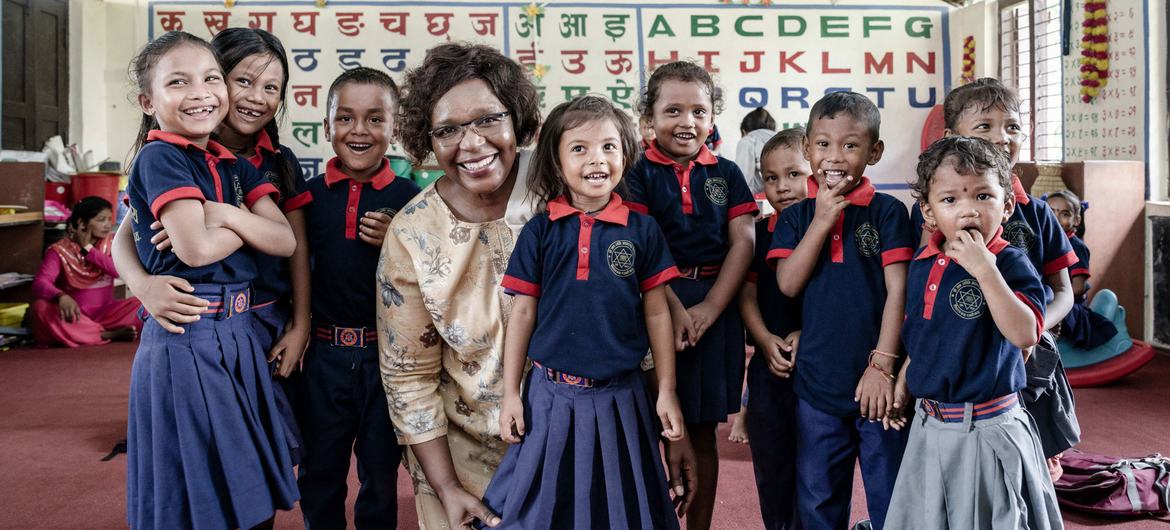
Alice Akunga, UNICEF Representative to Nepal, with a group of young children in a classroom.

Safeguarding the next generation

UNICEF is also supporting efforts to integrate child-sensitive policies into the countries’ Nationally Determined Contributions (NDCs) – the climate pledges under the Paris Agreement.

Nepal’s pledges include commitments to green schools and climate-resilient educational infrastructure. Children were actively involved in the consultations for Nepal’s latest NDC, sharing firsthand stories of how climate impacts their daily lives.

The Maldives’ emphasises youth engagement, clean water access and strengthened health systems in climate-vulnerable areas. Young people are also shaping policy through national mock COPs and direct participation in global climate forums.

This ensures that resilience efforts will extend beyond infrastructure to cover children’s health, education and mental wellbeing.

© UNICEF/Laxmi Prasad Ngakhusi

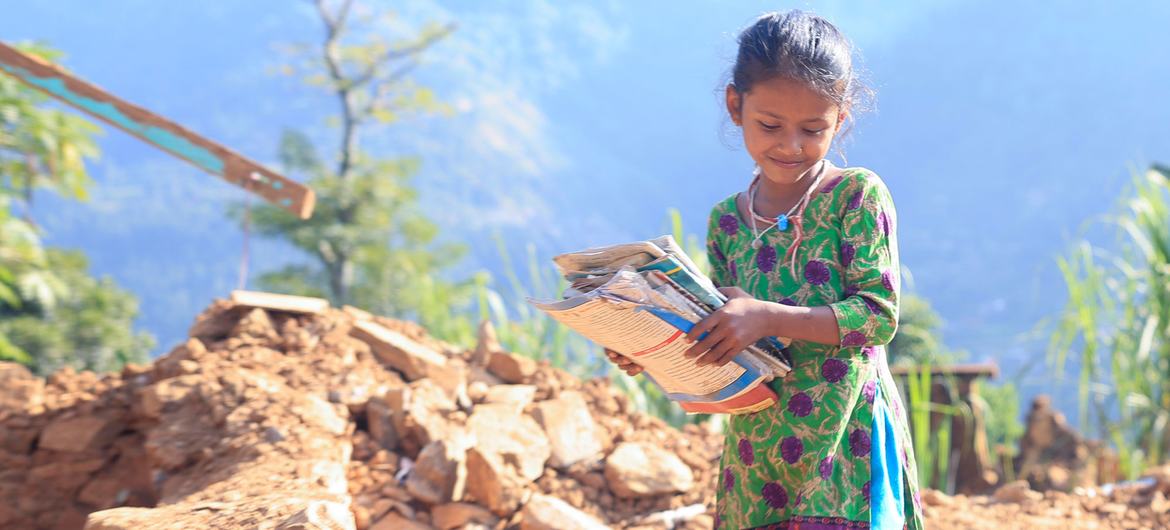
An eight-year-old girl retrieves her textbooks from the rubble of her home, destroyed in an earthquake in western Nepal.

Getting it right, for everyone

The UNICEF officials emphasised what a truly child-inclusive climate plan requires.

It recognises how climate change impacts every aspect of a child’s life – from their lungs to their learning to their access to clean water,” Ms. Akunga said.

“It ensures children can keep receiving health services, continue learning and adapt without anxiety or uncertainty. It’s about securing their survival, growth, and development no matter what climate shocks come.”

Mr. Edward added: “If we get it right for children, we get it right for society.”

“Children are the future caretakers of their land and communities. A climate plan that ignores children’s realities will fail everyone. But when children are healthy, educated, and included, society thrives,”

Children leading the way

Ms. Akunga recalled meeting Sabu, the 11-year-old girl, on a field visit.

“I met this child. I went to her village and met her parents…she has taken it upon herself and mobilised other young girls to learn about medicinal plants – how to nurture them and protect them from extreme weather conditions.”

She spoke of how Sabu is transferring knowledge from elders to peers – bridging generations – and impressing her community with her passion.

Despite the daunting challenges, children like Sabu are stepping up. They are organizing themselves, advocating for change and proposing solutions.

“Their voices matter…children are not just affected by climate change — they are essential partners in responding to it,” Ms. Akunga affirmed.

Mr. Addai echoed this sentiment: “By listening to children and including them in decisions, we build a world where the next generation can live safely and thrive.

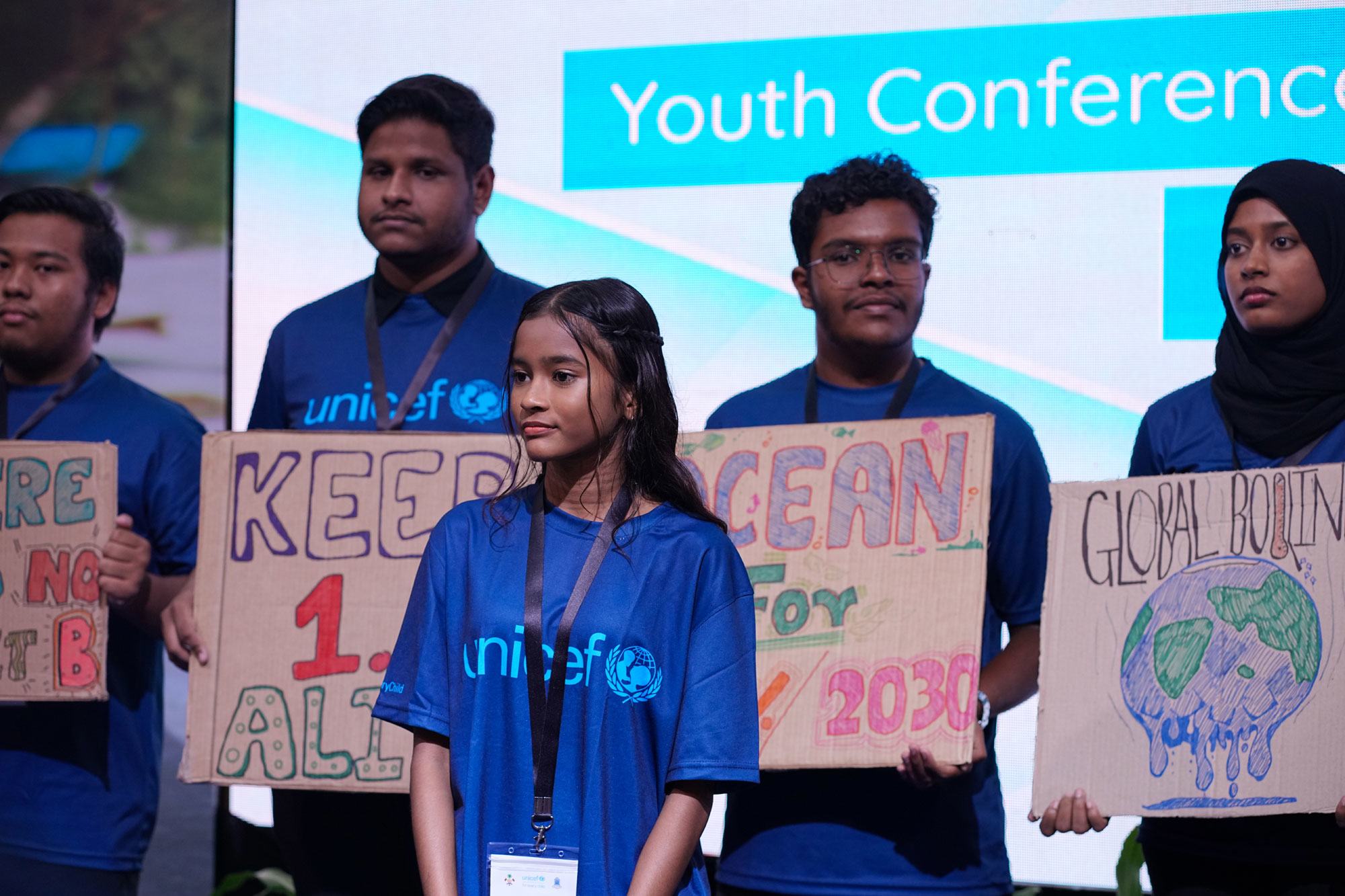
A group of young Maldivians at a national conference as the country prepares for the COP28 climate summit.