‘Cycle of attacks must end’: Lead UN official in Ukraine

The attacks on some of Ukraine’s most important population centres, which reportedly involved almost 400 drones, also left thousands without electricity, heating and water.

Temperatures in the country have dropped to -20° Celsius, and the attacks on energy infrastructure have left families in freezing conditions. Many older persons and people with disabilities are often stuck in their homes in high-rise apartment buildings, without electricity and heating, unable to cook hot meals or recharge their devices to stay connected. 

The latest attacks took place during ongoing peace talks in the United Arab Emirates, involving delegates from Russia, Ukraine and the United States

In Kharkiv, a dormitory housing displaced persons who fled the fighting on the front line came under fire. A hospital and residential buildings were also damaged.

In the capital, Kyiv, thousands of apartment buildings which were gradually being reconnected to basic utilities after the previous wave of attacks on January 9 and 20, were again left without electricity in sub-zero temperatures.

The entire city of Chernihiv and hundreds of thousands of families in the surrounding region were left without electricity.

Repair crews and humanitarian workers continue to work in low temperatures to help the victims.

According to media reports, more than one million people are without power across the country, around 800,000 of whom are in Kyiv.

“This systematic cycle of attacks on energy infrastructure violates international humanitarian law and must stop,” said Mr. Schmale, the Humanitarian Coordinator said in a statement. Ukrainian civilians, he said, should live in their homes in safety and warmth, and not in fear of the next round of destruction.

Source link

Celebrating youth: ‘When young people take the lead, everyone gains’

But after a decade of armed conflict and amidst a severe economic depression, educational toy imports have become way too expensive for many classrooms in Yemen.

Shadia and Fatima, two young entrepreneurs in Yemen, identified this gap after participating in a training course run by the UN Development Programme (UNDP). They decided to begin a youth-led business called Dorri which would create sensory learning tools from locally sourced wood and fabric.

Alone, Dorri will not bring peace to Yemen, nor will it single handedly solve the fact that over a third of youth in Yemen are unemployed. But, according to one of the principals whose kindergarten received the toys, Dorri represents the creative potential of Yemen’s youth.

“When young people take the lead, everyone gains — children, families, schools and entire communities,” the principal said.

Youth in peacebuilding

August 12 is the International Day of Youth, a day which highlights the integral role that 1.9 billion young people worldwide play in creating sustainable futures.

This year, the day is particularly significant according to Felipe Paullier, the UN Assistant Secretary-General for Youth Affairs, because it coincides with other notable dates, including the 10th anniversary of a Security Council resolution affirming the vital role that youth play in advancing peace.

“Young people are leading change with purpose, from local campaigns to global peace efforts, building trust between cultures and creating lasting impact,” Mr. Paulier said.

Creating prosperous livelihoods

By 2050, the people who are currently under 25 will compose over 90 per cent of the global workforce, making their training and education vital to the economy and a prosperous peace.

However, in contexts plagued by conflict or in communities which face displacement, this training and education can be next to impossible to achieve.

Elijah, a Sudanese refugee who is now 27, arrived at a refugee camp in Kenya in 2015 after fleeing violence in his home country. Education proved impossible for him – while he tried to attend school for a few years, he ultimately dropped out because he could not afford the school fees.

But training was very feasible: in his informal facility – which specialises in electronic repair – he has already trained 15 young people like himself. He still hopes to do more.

“My dream is to open the biggest electronics repair facility in Kakuma that will serve the community and also empower young people without a source of livelihood to take care of themselves,” Elijah said.

An intergenerational approach

Mr. Paullier emphasised that empowering youth at a local level must entail more than just supporting initiatives like Elijah’s – rather, genuine empowerment lies in “real trust.”

“Meaningful youth participation means engaging youth as equal partners. It means intergenerational collaboration because investing in youth is not just about the future. It is about the world we live in today,” he said.

In Myanmar, this sort of intergenerational knowledge exchange has taken on a unique form – theatre. Ongoing conflict in this country has upended many livelihoods and created ripe conditions for gender-based violence.

A group of 18 young people in Mon State have formed a performance group which doubles as an educational initiative. Together, they write, direct and put on plays for neighbouring communities of all ages which discuss themes like domestic abuse.

At one performance about ongoing domestic violence, an elderly woman in the front row turned to her neighbour.

“This is my story too,” she said.

Through these performances, the young people have created a forum for an intergenerational conversation: “We’re not just performers — we are community educators, and this stage is our platform for change,” said La Min Cho, one of the performers.

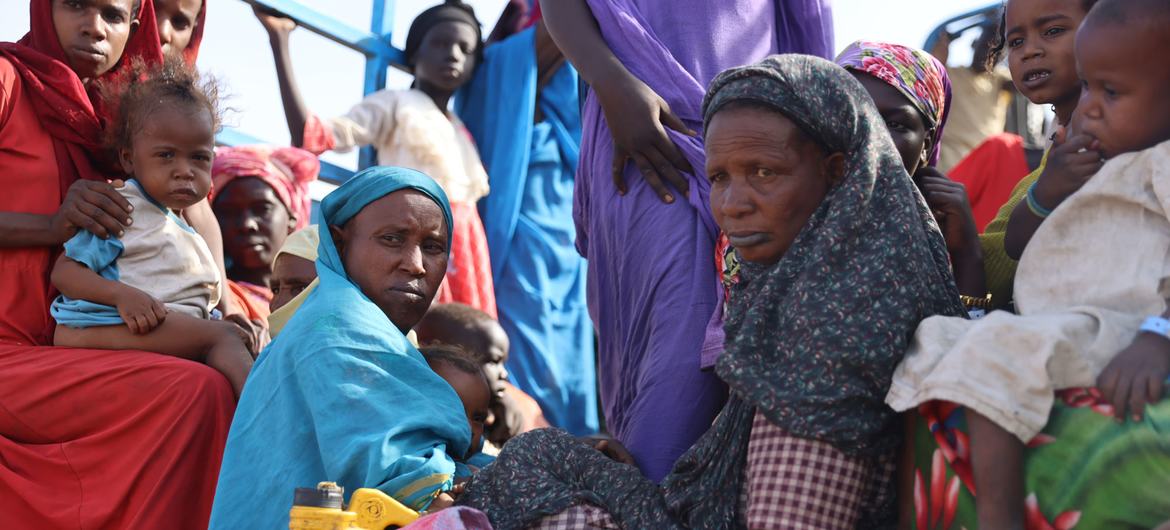
Sudanese refugees in the UN-run transit centre in Renk, South Sudan.

Danger of tokenism

Despite the Security Council’s resolution, young people tend to remain excluded from policy-making decisions. Or if they are included, their participation is sometimes “tokenistic.”

Areej Hussein, the founder of a grassroots feminist organization in Sudan, has experienced the frustration of having her advocacy simply be a symbol for those in power.

“Women and girls are not just victims of war – we are peacebuilders…Enough of using women as slogans. It is time to truly listen to their leadership,” she said.

Ms Hussein has worked to change this in Sudan by mobilising women from all walks of life and empowering them to tell their stories.

And she is not alone – many young people are working around the world to change this. But for each of them, their approach to affecting real change is slightly different.

For Shadia and Fatima, it was tactile toys. Elijah inspires refugees…And for Yie Tone, the answer was theatre. “We may not have the power to change policies, but we do have the power on this stage to change our communities to a safe and equal society,” Mr. Tone said.

Source link

Young people take the lead for a more sustainable future

Observed each year on 12 August, the Day draws attention to the rights, contributions and challenges of young people everywhere.

This year’s theme, “Local youth action for the SDGs and beyond,” emphasises how grassroots youth engagement is vital to achieving the Sustainable Development Goals (SDGs) and shaping more just, inclusive societies.

Young people are bold innovators, resilient organizers and essential partners in achieving the Sustainable Development Goals,” UN Secretary-General António Guterres said in a message marking the day.

“They are driving sustainable development, building more inclusive communities, forging peace and demanding a fairer, greener and more just future.”

Youth-led solutions work

Mr. Guterres also had a direct message to young people worldwide.

To every young person: your voice, ideas and leadership matter,” he said.

“Let us work together to support youth-led solutions and build a more just, peaceful and sustainable world, from the ground up.”

A generation that believes…

Today’s young people are coming of age at a moment of extraordinary global change.

According to UN data, half of the world’s population is 30 or younger, a number which is expected to rise to 57 per cent by 2030. Those under 25 today will make up over 90 per cent of the global prime-age workforce by 2050.

In addition, an international survey of over 27,000 respondents in 26 countries on challenges faced by people in public lives revealed that 67 per cent believe in a better future, with 15 to 17-year-olds expressing the most optimism.

Despite their immense potential for good, young people continue to face systemic challenges.

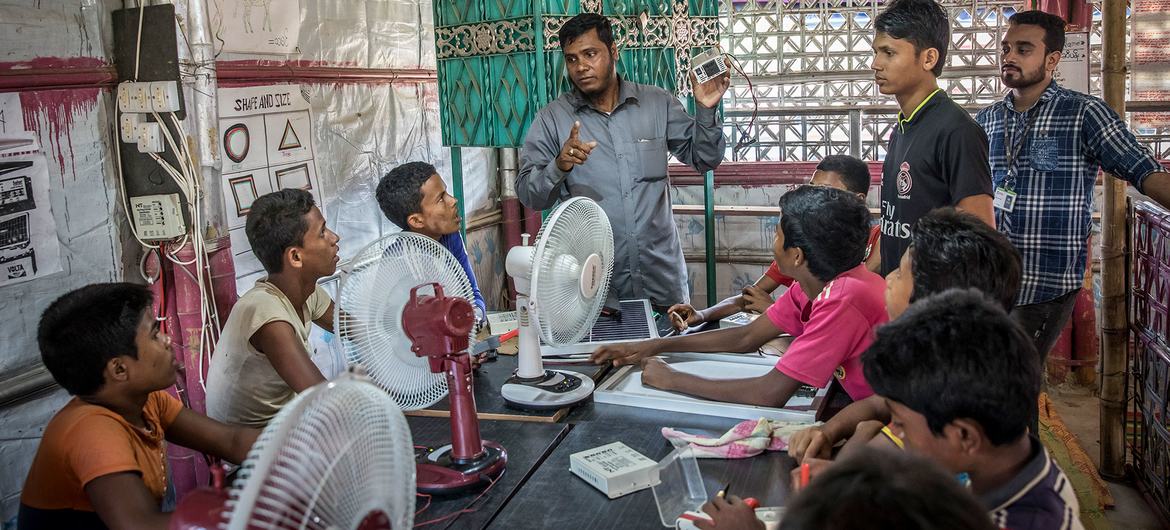
© UNICEF/Siegfried Modola

Young men from the Rohingya community receive electrician training at a refugee camp in southern Bangladesh.

Chronic job shortage

Youth unemployment, although at a 15-year low, still stands at 13 per cent globally.

Among 10 to 19-year-olds, one in seven experience a mental health disorder. In low- and middle-income countries, nearly six in ten 10-year-olds cannot read and comprehend a simple paragraph.

International Youth Day 2025 aims to highlight not only the urgency of these issues, but also the solutions already being forged by youth themselves – in their communities, cities and countries.

As Mr. Guterres emphasised: “Global progress begins in communities. And in every corner of the world, young people are leading the way.

Nairobi to host global commemoration

This year’s official observance will take place in Nairobi, Kenya, organized in collaboration with UN-Habitat, the UN agency focused on sustainable urban development.

Tuesday’s event will bring together youth leaders, city officials, policymakers and UN officials to showcase solutions and strategies for strengthening youth engagement in local development.

International Youth Day was first proclaimed by the UN General Assembly in 1999, building on the World Programme of Action for Youth adopted in 1995.

Source link

From Himalayan melt to drowning shores, children lead the climate fight

For young people living on the frontlines, climate change disrupts education, health and safety, casting a pall of uncertainty over the future.

As countries race to meet climate goals, the UN Children’s Fund (UNICEF) is stepping in to ensure that children’s voices are not just heard, but central to shaping solutions.

UN News spoke with the heads of UNICEF in Nepal and the Maldives to explore how the agency is empowering youth, embedding climate resilience in schools and driving child-inclusive climate action.

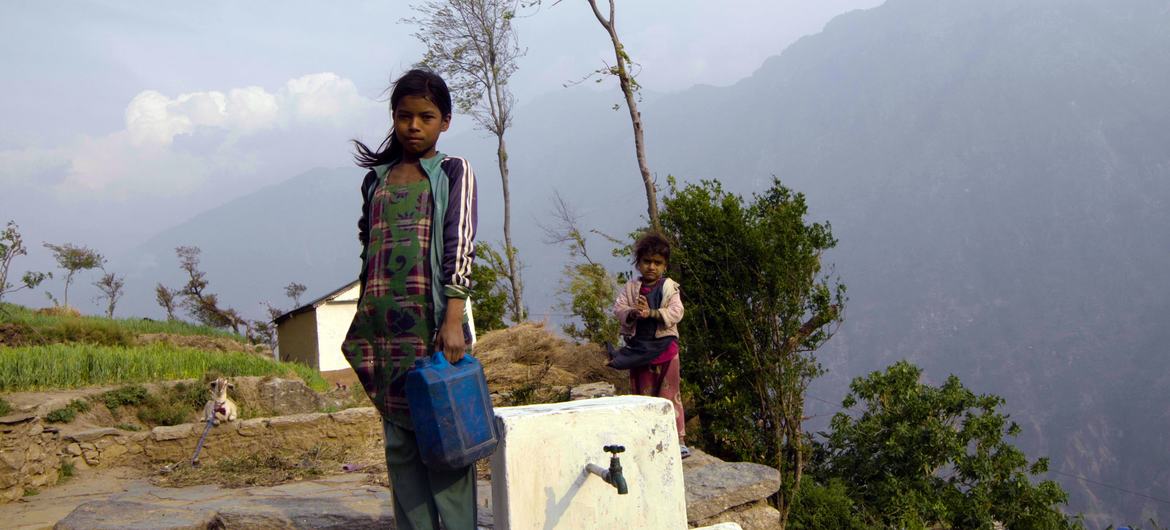
A young girl stands next to a tap with a small jerry can in a mountain village in Nepal. Many houses lack piped water, so children often fetch water on their way home from school.

A daily reality

In a remote village in western Nepal, 11-year-old Sabu and her friends face danger daily on their way to school. Intensifying and unpredictable rains trigger landslides that wash away roads, and floods that submerge homes and farmland.

Children live with anxiety and uncertainty. When it rains and there are floods, they have to trek, bridges are overrun, roads are muddy – and this is what they have to walk through day after day.”

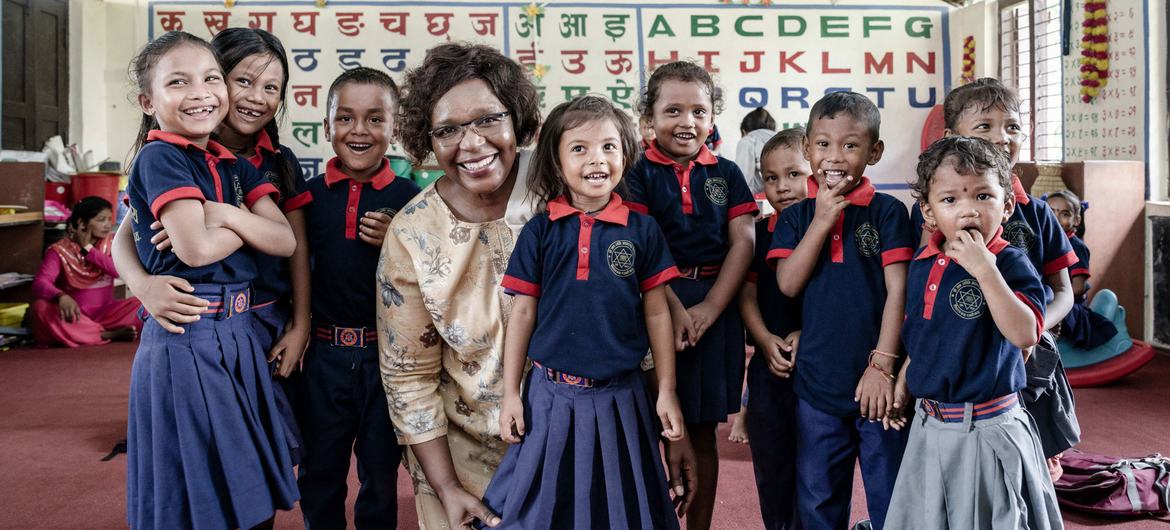
It becomes a huge burden for children to carry,” says Alice Akunga, UNICEF Representative in Nepal.

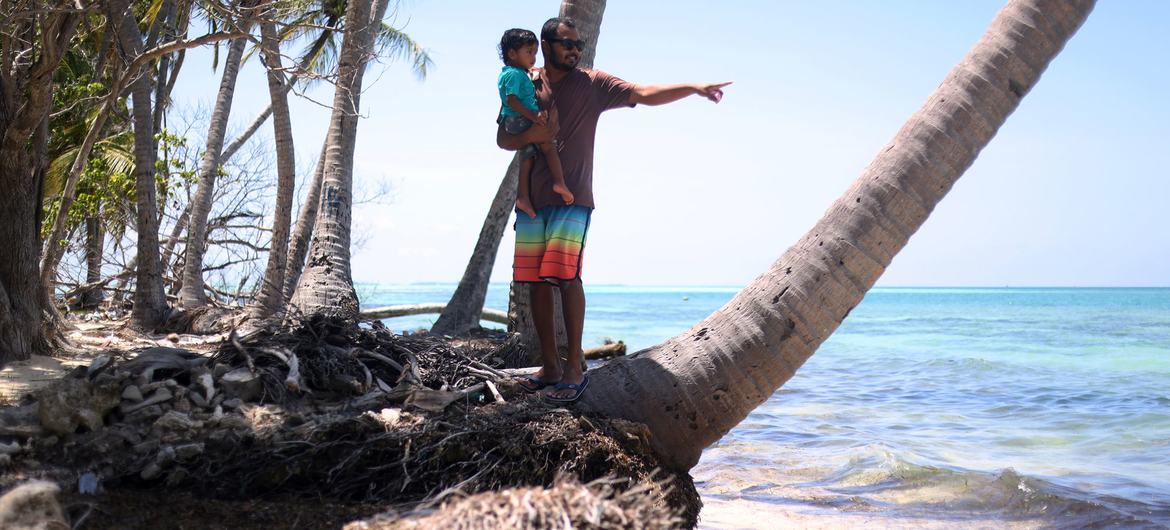
Thousands of kilometers away, in the low-lying Maldives, the threat takes a different but equally devastating form. Sea surges erode coastlines, flood homes and wash away infrastructure.

Erosion is a daily reality for children here…young people see their trees falling, homes at risk and they grow up with the constant fear of losing their islands,” explains Edward Addai, UNICEF Representative in the Maldives.

Climate change is not something far-off – it is part of their lives.

A father and his daughter on a stretch of severely eroded beach in Dhiffushi island, in the Maldives.

Kids at the heart of climate action

UNICEF’s work in both countries is guided by a simple principle: children must be at the heart of climate solutions. This means not only shielding them from impacts but also empowering them to be agents of change.

In Nepal, with the support of UN agencies, the government has integrated climate change education into the national curriculum. Classes go beyond theory, with teacher training, green school initiatives and practical actions like rainwater harvesting and waste management.

“We are supporting updating school safety frameworks…making them more resilient and absorb climate shocks such as heavy rains or floods,” Ms. Akunga said.

At the recently concluded Sagarmatha Sambaad – the Everest climate talks – UNICEF supported a national youth-led dialogue that brought together over 100 children and young people from across Nepal to engage with policymakers and submit a Children and Youth Declaration to the Prime Minister.

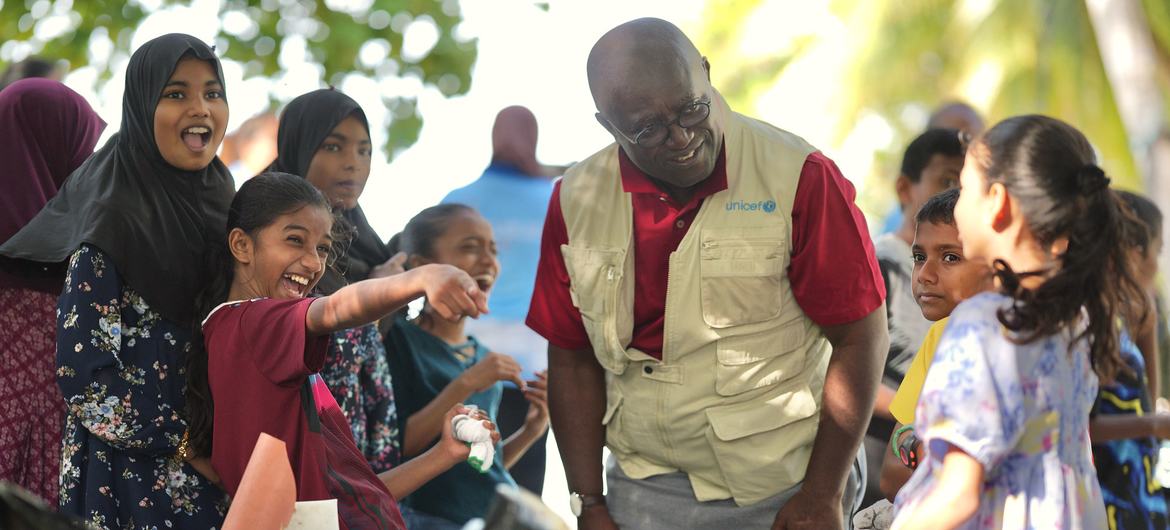
UNICEF Representative to Maldives Edward Addai speaks with a group of girls participating in a plastic clean up drive.

Youth leadership beyond classrooms

In the Maldives, the agency’s approach emphasises community engagement alongside education.

UNICEF has helped establish environmental clubs in schools, providing safe spaces for children to learn, discuss and act on climate issues. It is also working with the health system to introduce solar energy to hospitals, supplanting fossil fuels.

“These clubs are critical for nurturing leadership and connecting school activities to community projects,” Mr. Addai added.

Young people are also at the centre of the Government’s climate plans, engaging in direct dialogue with policymakers and strengthening intergenerational accountability. One such initiative is the Youth Track to COP, a platform co-led by UNICEF and government partners to prepare young people to meaningfully engage in national and global climate discussions.

Alice Akunga, UNICEF Representative to Nepal, with a group of young children in a classroom.

Safeguarding the next generation

UNICEF is also supporting efforts to integrate child-sensitive policies into the countries’ Nationally Determined Contributions (NDCs) – the climate pledges under the Paris Agreement.

Nepal’s pledges include commitments to green schools and climate-resilient educational infrastructure. Children were actively involved in the consultations for Nepal’s latest NDC, sharing firsthand stories of how climate impacts their daily lives.

The Maldives’ emphasises youth engagement, clean water access and strengthened health systems in climate-vulnerable areas. Young people are also shaping policy through national mock COPs and direct participation in global climate forums.

This ensures that resilience efforts will extend beyond infrastructure to cover children’s health, education and mental wellbeing.

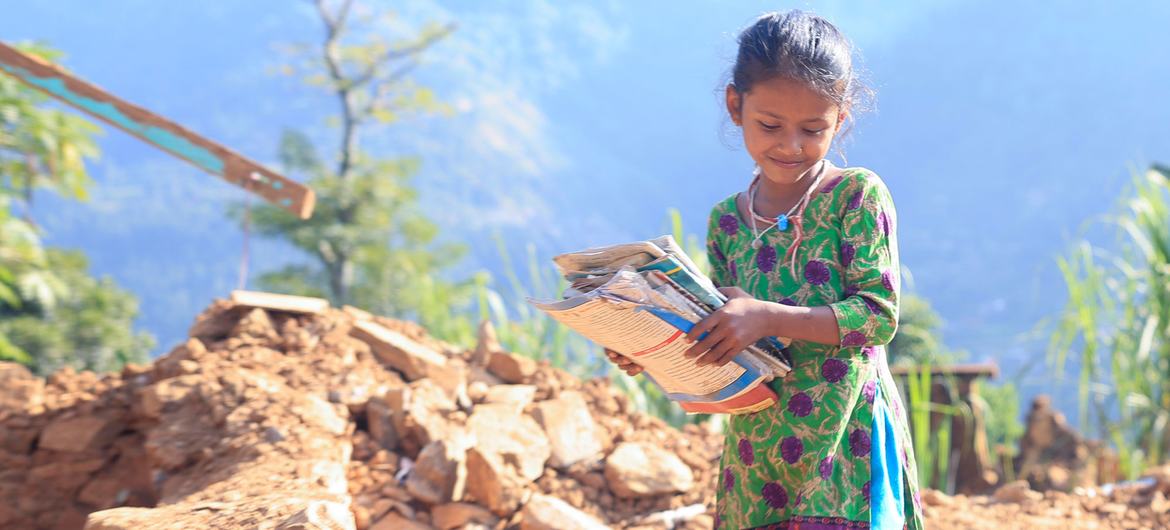
© UNICEF/Laxmi Prasad Ngakhusi

An eight-year-old girl retrieves her textbooks from the rubble of her home, destroyed in an earthquake in western Nepal.

Getting it right, for everyone

The UNICEF officials emphasised what a truly child-inclusive climate plan requires.

It recognises how climate change impacts every aspect of a child’s life – from their lungs to their learning to their access to clean water,” Ms. Akunga said.

“It ensures children can keep receiving health services, continue learning and adapt without anxiety or uncertainty. It’s about securing their survival, growth, and development no matter what climate shocks come.”

Mr. Edward added: “If we get it right for children, we get it right for society.”

“Children are the future caretakers of their land and communities. A climate plan that ignores children’s realities will fail everyone. But when children are healthy, educated, and included, society thrives,”

Children leading the way

Ms. Akunga recalled meeting Sabu, the 11-year-old girl, on a field visit.

“I met this child. I went to her village and met her parents…she has taken it upon herself and mobilised other young girls to learn about medicinal plants – how to nurture them and protect them from extreme weather conditions.”

She spoke of how Sabu is transferring knowledge from elders to peers – bridging generations – and impressing her community with her passion.

Despite the daunting challenges, children like Sabu are stepping up. They are organizing themselves, advocating for change and proposing solutions.

“Their voices matter…children are not just affected by climate change — they are essential partners in responding to it,” Ms. Akunga affirmed.

Mr. Addai echoed this sentiment: “By listening to children and including them in decisions, we build a world where the next generation can live safely and thrive.

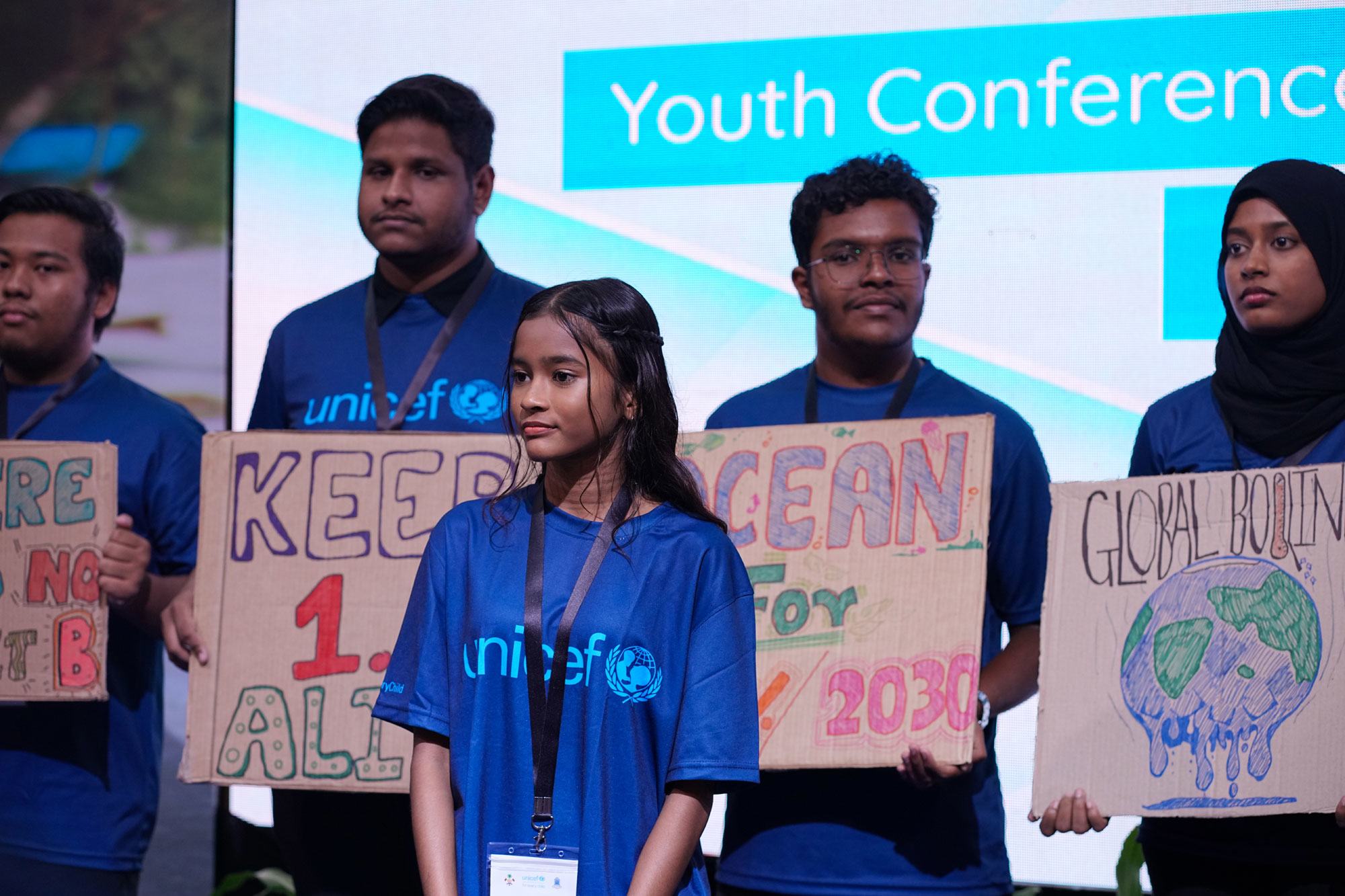
A group of young Maldivians at a national conference as the country prepares for the COP28 climate summit.