Young people must be ‘truly involved’ in transforming education

Yet stark inequalities remain — in the poorest countries, 36 per cent of children and youth are out of school compared to just 3 per cent in the richest — underscoring the urgent need for inclusive, youth-driven approaches to education policy and transformation.

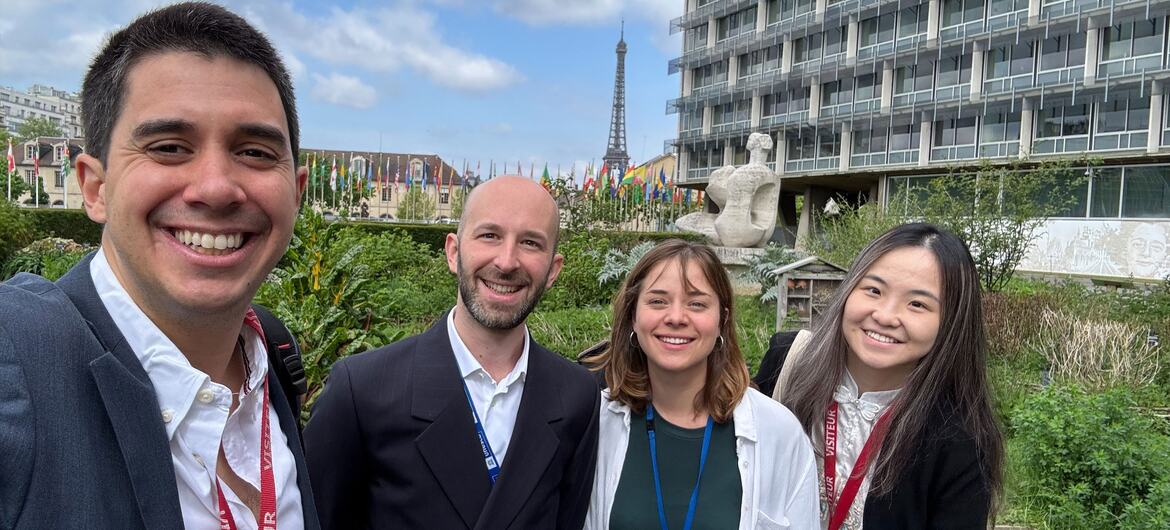
Marco Pasqualini (2nd left) works for UNESCO in Paris.

Ahead of the International Day of Education, the theme for which this year is “The power of youth in co-creating education,” UN News’s Charlotte Frantz spoke with Marco Pasqualini from UNESCO and Jacques Kwibuka, a UN young leader from Rwanda, about the importance of young people’s voices in shaping education systems around the world.

Marco Pasqualini: When it comes to education, young people have a particular stake, because they’re the primary beneficiaries of education, and because educational priorities and reforms have a direct impact on them.

Co-creating education means giving them a voice to define their priorities and acknowledge young people’s willingness to make meaningful change.

Jacques Kwibuka: In the past, those designing policies in the education sector would think about what they were going to implement, assuming that because they were once young, they already understood what young people are facing.

But with co-creation, we don’t only think about young people, we engage them and give them the space and freedom to contribute to the programme or policy being developed.

© Informed Future Generations

Jacques Kwibuka participates in a UNICEF networking event.

It’s not just about consulting young people, but about truly involving them in the decision-making process of the policy, model, or system being built.

Marco Pasqualini: Despite a lot of progress being made, inequalities in access to education are still very strong. There still are 272 million children and youth out of school, and the regional disparities remain stark.

In the poorest countries, out-of-school children and youth represent 36 per cent of the age school population compared to 3 per cent only in the richest countries.

These inequalities are even higher for youth with disabilities, ethnic and linguistic minorities, refugees and migrants as well as LGBTQ youth.

Jacques Kwibuka: Two categories of challenges stand out to me.

The first one is about mindset — the mindset on the side of elders or institutions, especially those working in education.

They often undervalue the voices of young people. They want to hear what young people think, but without giving them a real opportunity to contribute meaningfully.

A young child attends school in Burera District, Rwanda.

Another mindset-related challenge is on the side of young people. Many young people, especially in rural areas, tend to undermine themselves because of low self-esteem or because they think such opportunities are meant only for highly educated individuals. Even when they are given the opportunity to contribute to a policy being designed or created, they hold themselves back and do not speak up.

For organisations like UNESCO, they should create more open spaces, including online platforms, to show that when young people — especially children — are meaningfully involved in co-creating education systems, the results improve.

When young people are not fully involved in shaping education systems or school environments, it often leads to gaps in learning and misinformation.

Marco Pasqualini: Indeed, the lack of platforms is also one of the main barriers.

So, what we created a few years ago is a network of young, I like to call them leaders and

experts, because young people really have an expertise in education. It’s called the SDG4 Youth and Student Network. Today, we have 110 members from 80 countries, which were selected out of 5000 applicants. 

The opportunity that they have through this SDG4 Youth and Student Network to sit with leaders is really bringing a lot of visibility and interest. 

SDG4 is the sustainable development goal number four of the agenda for sustainable development, which focuses on quality education. It’s a global commitment to achieve a certain level of quality education by 2030.

Jacques Kwibuka: I have hope for the future. As technology improves, young people are becoming more informed and meaningfully engaged.

In Rwanda, many young people are leading initiatives that support education. With platforms — such as those supported by UNICEF — we are empowering each other and strengthening our collective voice.

If this continues, I believe the future will include meaningful engagement of young people and children in co-creating health and education models and systems, in Rwanda and beyond.

Marco Pasqualini: Despite the world being in turmoil and multilateralism unfortunately at stake, I see a strong interest in education and everybody wanting to be part of the conversation.

UNESCO is the UN agency leading on education. Our commitment is very strong. And in my case, I’m very happy to be here. I think it’s the right place to be at the heart of this process to change education.

Source link

More young lives lost and devastated in Russia attacks on Ukraine: UNICEF

The development came as Ukrainian President Volodymyr Zelensky and a group of European leaders arrived in Washington to meet President Donald Trump, who held talks on a possible peace deal to end the war with President Vladimir Putin of Russia last Friday.

“More young lives lost and devastated in brutal attacks in Ukraine,” UNICEF said in an online post condemning the attacks. “End attacks on populated areas. Protect children.”

Destruction in Kharkiv

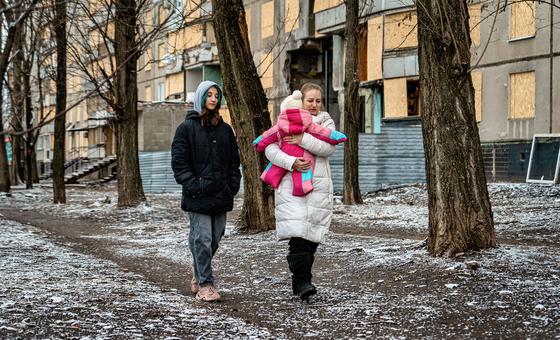
Footage released by the Ukrainian authorities showed an apartment complex in Kharkiv with a massive hole in the shattered roof and upper floors, where fires had been extinguished.

Kharkiv is located in the northeast of the country and just 30 kilometres (18.6 miles) from the Russian border. Ukraine’s second city has suffered heavy destruction and repeated shelling since Russia’s full-scale invasion began on 24 February 2022.

Meanwhile, a separate Russian attack on the southern city of Zaporizhzhia left three dead and approximately 20 injured, according to the Ukrainian authorities, who said they had shot down 88 drones and missiles launched overnight.

A recent update from UN human rights monitors in Ukraine noted that July saw the highest number of civilian casualties in the country since May 2022, with 286 killed and 1,388 injured.

“Aerial bombs caused the biggest rise [and] short-range drones made up 24 per cent of casualties,” said the Human Rights Monitoring Mission in Ukraine (HRMMU).

Russian troops’ push

The increase in the number of civilian casualties between June and July 2025 mainly took place in areas controlled by the Ukrainian Government along frontlines. This indicated the “intensive military efforts by Russian armed forces to capture territory”, the UN monitors explained.

And although long-range missile strikes and other munitions caused about 20 per cent fewer casualties in July compared with June, they were responsible for almost 40 per cent of all non-combatant deaths and injuries, including in the cities of Dnipro, Kharkiv and Kyiv.

Short-range drones were the second leading cause of civilian casualties, accounting for nearly one in four death and injuries (64 killed and 337 injured)said HRMMU.

As in June, nearly all civilian casualties (98 per cent) occurred in areas controlled by the Ukrainian authorities. Civilian casualties were recorded across 18 regions of Ukraine and the city of Kyiv.

Source link

Celebrating youth: ‘When young people take the lead, everyone gains’

But after a decade of armed conflict and amidst a severe economic depression, educational toy imports have become way too expensive for many classrooms in Yemen.

Shadia and Fatima, two young entrepreneurs in Yemen, identified this gap after participating in a training course run by the UN Development Programme (UNDP). They decided to begin a youth-led business called Dorri which would create sensory learning tools from locally sourced wood and fabric.

Alone, Dorri will not bring peace to Yemen, nor will it single handedly solve the fact that over a third of youth in Yemen are unemployed. But, according to one of the principals whose kindergarten received the toys, Dorri represents the creative potential of Yemen’s youth.

“When young people take the lead, everyone gains — children, families, schools and entire communities,” the principal said.

Youth in peacebuilding

August 12 is the International Day of Youth, a day which highlights the integral role that 1.9 billion young people worldwide play in creating sustainable futures.

This year, the day is particularly significant according to Felipe Paullier, the UN Assistant Secretary-General for Youth Affairs, because it coincides with other notable dates, including the 10th anniversary of a Security Council resolution affirming the vital role that youth play in advancing peace.

“Young people are leading change with purpose, from local campaigns to global peace efforts, building trust between cultures and creating lasting impact,” Mr. Paulier said.

Creating prosperous livelihoods

By 2050, the people who are currently under 25 will compose over 90 per cent of the global workforce, making their training and education vital to the economy and a prosperous peace.

However, in contexts plagued by conflict or in communities which face displacement, this training and education can be next to impossible to achieve.

Elijah, a Sudanese refugee who is now 27, arrived at a refugee camp in Kenya in 2015 after fleeing violence in his home country. Education proved impossible for him – while he tried to attend school for a few years, he ultimately dropped out because he could not afford the school fees.

But training was very feasible: in his informal facility – which specialises in electronic repair – he has already trained 15 young people like himself. He still hopes to do more.

“My dream is to open the biggest electronics repair facility in Kakuma that will serve the community and also empower young people without a source of livelihood to take care of themselves,” Elijah said.

An intergenerational approach

Mr. Paullier emphasised that empowering youth at a local level must entail more than just supporting initiatives like Elijah’s – rather, genuine empowerment lies in “real trust.”

“Meaningful youth participation means engaging youth as equal partners. It means intergenerational collaboration because investing in youth is not just about the future. It is about the world we live in today,” he said.

In Myanmar, this sort of intergenerational knowledge exchange has taken on a unique form – theatre. Ongoing conflict in this country has upended many livelihoods and created ripe conditions for gender-based violence.

A group of 18 young people in Mon State have formed a performance group which doubles as an educational initiative. Together, they write, direct and put on plays for neighbouring communities of all ages which discuss themes like domestic abuse.

At one performance about ongoing domestic violence, an elderly woman in the front row turned to her neighbour.

“This is my story too,” she said.

Through these performances, the young people have created a forum for an intergenerational conversation: “We’re not just performers — we are community educators, and this stage is our platform for change,” said La Min Cho, one of the performers.

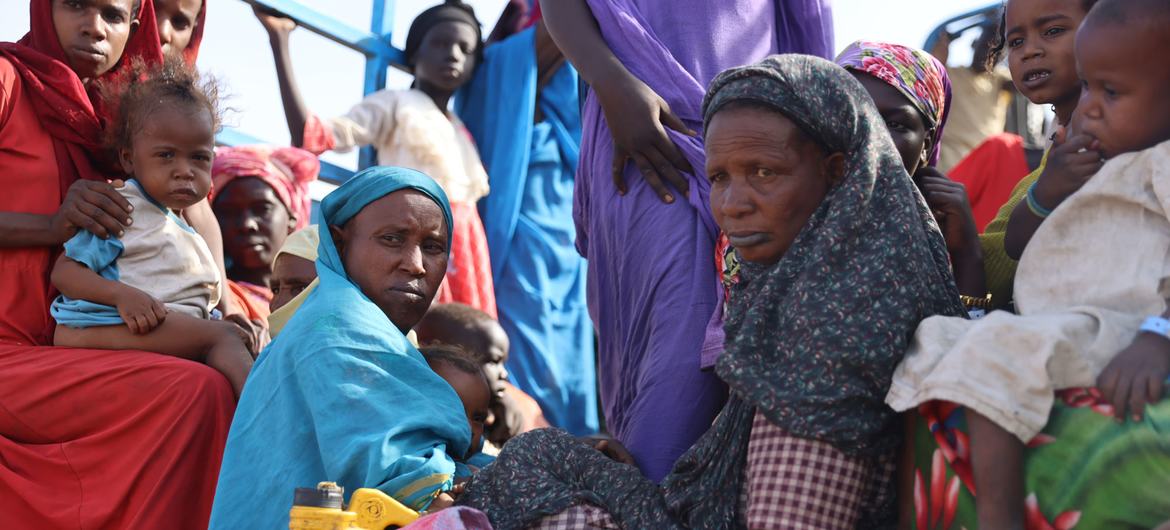
Sudanese refugees in the UN-run transit centre in Renk, South Sudan.

Danger of tokenism

Despite the Security Council’s resolution, young people tend to remain excluded from policy-making decisions. Or if they are included, their participation is sometimes “tokenistic.”

Areej Hussein, the founder of a grassroots feminist organization in Sudan, has experienced the frustration of having her advocacy simply be a symbol for those in power.

“Women and girls are not just victims of war – we are peacebuilders…Enough of using women as slogans. It is time to truly listen to their leadership,” she said.

Ms Hussein has worked to change this in Sudan by mobilising women from all walks of life and empowering them to tell their stories.

And she is not alone – many young people are working around the world to change this. But for each of them, their approach to affecting real change is slightly different.

For Shadia and Fatima, it was tactile toys. Elijah inspires refugees…And for Yie Tone, the answer was theatre. “We may not have the power to change policies, but we do have the power on this stage to change our communities to a safe and equal society,” Mr. Tone said.

Source link

Young people take the lead for a more sustainable future

Observed each year on 12 August, the Day draws attention to the rights, contributions and challenges of young people everywhere.

This year’s theme, “Local youth action for the SDGs and beyond,” emphasises how grassroots youth engagement is vital to achieving the Sustainable Development Goals (SDGs) and shaping more just, inclusive societies.

Young people are bold innovators, resilient organizers and essential partners in achieving the Sustainable Development Goals,” UN Secretary-General António Guterres said in a message marking the day.

“They are driving sustainable development, building more inclusive communities, forging peace and demanding a fairer, greener and more just future.”

Youth-led solutions work

Mr. Guterres also had a direct message to young people worldwide.

To every young person: your voice, ideas and leadership matter,” he said.

“Let us work together to support youth-led solutions and build a more just, peaceful and sustainable world, from the ground up.”

A generation that believes…

Today’s young people are coming of age at a moment of extraordinary global change.

According to UN data, half of the world’s population is 30 or younger, a number which is expected to rise to 57 per cent by 2030. Those under 25 today will make up over 90 per cent of the global prime-age workforce by 2050.

In addition, an international survey of over 27,000 respondents in 26 countries on challenges faced by people in public lives revealed that 67 per cent believe in a better future, with 15 to 17-year-olds expressing the most optimism.

Despite their immense potential for good, young people continue to face systemic challenges.

© UNICEF/Siegfried Modola

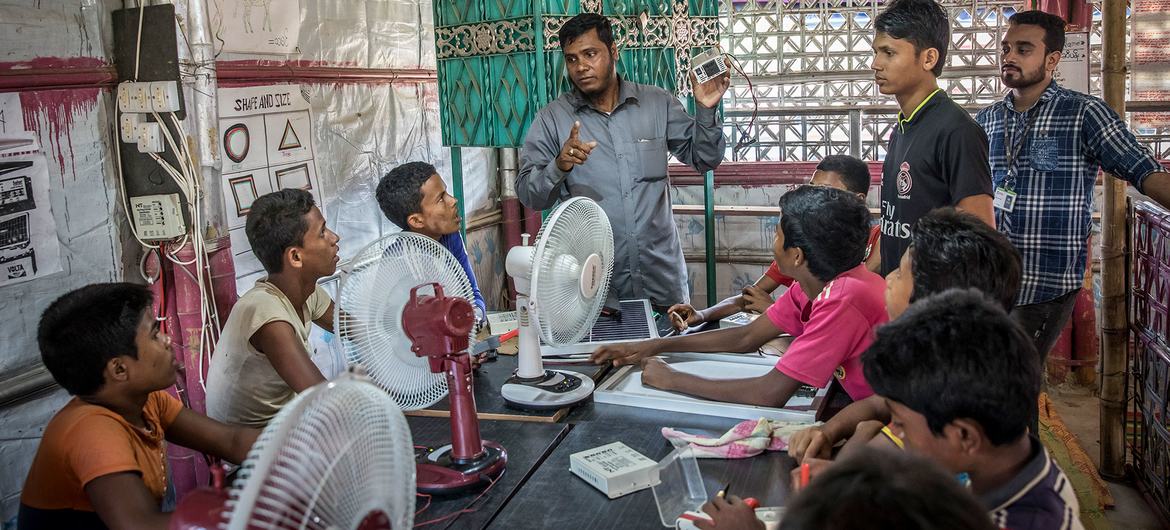
Young men from the Rohingya community receive electrician training at a refugee camp in southern Bangladesh.

Chronic job shortage

Youth unemployment, although at a 15-year low, still stands at 13 per cent globally.

Among 10 to 19-year-olds, one in seven experience a mental health disorder. In low- and middle-income countries, nearly six in ten 10-year-olds cannot read and comprehend a simple paragraph.

International Youth Day 2025 aims to highlight not only the urgency of these issues, but also the solutions already being forged by youth themselves – in their communities, cities and countries.

As Mr. Guterres emphasised: “Global progress begins in communities. And in every corner of the world, young people are leading the way.

Nairobi to host global commemoration

This year’s official observance will take place in Nairobi, Kenya, organized in collaboration with UN-Habitat, the UN agency focused on sustainable urban development.

Tuesday’s event will bring together youth leaders, city officials, policymakers and UN officials to showcase solutions and strategies for strengthening youth engagement in local development.

International Youth Day was first proclaimed by the UN General Assembly in 1999, building on the World Programme of Action for Youth adopted in 1995.

Source link

Landless and locked out: Young farmers struggle for a future

However, this creates challenges by limiting land access for the next generation and diminishing their voice in agricultural policymaking. Without land assets, young people struggle to secure the resources needed to become agricultural producers themselves.

Between 2005 and 2021, the number of youth employed in agrifood jobs declined by 10 per cent, prompting concerns for food production worldwide.  

This is the challenge, examined by the UN Food and Agriculture Organization (FAO)’s inaugural report on youth in agrifood systems examines. Released on Thursday, the report offers insights into the status of youth producers and the challenges they face.  

“Because youth are the next generation of producers, consumers, processors of food, service providers, it is really important to understand how they can benefit from and contribute to agrifood systems,” said Lauren Phillips, deputy director of rural transformation and gender equality at FAO.  

Key agents of change

With over 1.3 billion people worldwide between the ages of 15-24 – and 46 per cent of them living in rural areas – youth can be “key agents of change” for the agrifood sector, which is responsible for producing, processing and transporting the food that sustains the world.  

Agrifood systems currently employ 44 per cent of working youth, especially in low- and lower-middle income countries where 85 per cent of the world’s youth in that age range reside.  

However, over 20 per cent of youth are not in formal employment, education or training, meaning that their potential contribution agrifood and other economic sectors is underutilized.  

Ending worldwide unemployment for these young people could generate $1.5 trillion for the global GDP, $670 billion of which would come from the agrifood sector alone.  

“Young people can drive economic transformation and global prosperity,” said QU Dongyu, Director-General of FAO.  

Vulnerable jobs with low wages

While youth are “key agents of change” for the agrifood sector and the global economy writ large according to the report, they also face many challenges in realizing this potential. 

The next generation of agrifood producers will confront a growing global population requiring more food and increasing climate shocks threatening food supplies.

FAO estimates that 395 million youth live in rural areas expected to see declines in agricultural productivity due to climate impacts.

Despite large numbers employed in agrifood, most youth work in vulnerable jobs: 91 per cent of young women and 83 per cent of young men hold positions that often offer few benefits and are seasonal.

Give youth a reason to pick agrifood

Low wages and hazardous conditions discourage continued employment and drive migration to urban centers.

“Policies really need to make sure that they invest in preparing young people with skills and education so that they can have decent jobs in agrifood systems,” Ms. Phillips said.  

One major barrier for youth aspiring to become producers is lack of social and financial capital – policy makers often overlook youth voices, and young people struggle to access loans, banking services, and land deeds.

Youth involvement in policymaking can sometimes feel “tokenistic.” The report highlights that collective action—whether through informal networks or formal unions and cooperatives—can amplify youth voices.

It also calls for expanded training and restructuring financial systems to improve access for young people.

“FAO is unconditionally committed to stepping up its work with and for youth to ensure their voices are heard and that their participation in and contribution to sustainable and inclusive agrifood systems are fully harnessed,” FAO Director-General QU said.  

Source link

No green without blue: Young ocean explorers set sail for a sustainable future

In the old town of Nice, the 98-meter-long, three-masted barque arrived last week at Port Lympia, where UNOC3 is now under way. Built in 1914 and owned by Norway since 1921, the Statsraad Lehmkuhl – named for former Norwegian minister Kristofer Lehmkuhl – was refitted last year with state-of-the-art ocean science instruments, transforming it into a floating university.

Now, more than a century after its construction, the vessel has become a cutting-edge research platform, bringing together scientists, students, and explorers to unravel the ocean’s secrets.

This transformation is central to the ship’s second One Ocean Expedition, launched on April 11 from Bergen, Norway, with a mission to bridge ocean science, education, and sustainability. The expedition aims to raise awareness and share knowledge about the ocean’s crucial role in a sustainable future for all. It is expected to return to Bergen a year from now.

As part of the UN Decade of Ocean Science for Sustainable Development, a global initiative aimed at reversing the decline in ocean health, this expedition partnered with the ESA Advanced Training Course on ocean synergy remote sensing. Together, they assembled young talent from 28 countries to cross-reference ocean observations from space and sea, bridging the gap between satellite data and in-situ research.

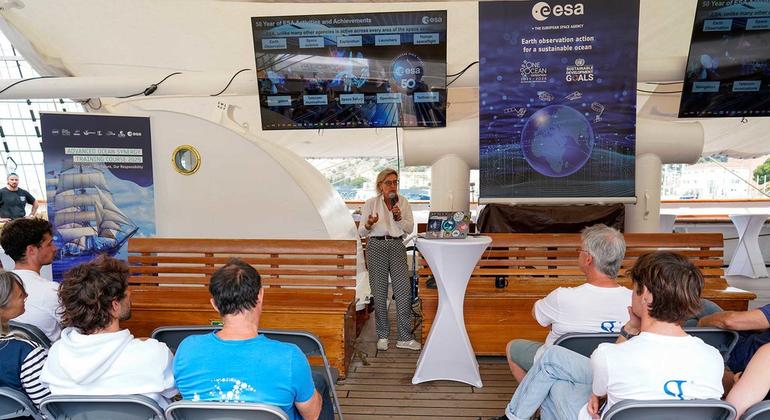
Demonstration of ESA satellite remote sensing.

Space-ocean synergy

“Marrying … the science, oceanographic and sailing traditions is the best way to get inside the ocean from the surface,” said Craig Donlon, the ESA ocean scientist who led the expedition. He also told UN News that real-time satellite data is used to guide on-board research and point students towards areas that need more and better measurement.

Each day, the ESA transmits space-collected data to the ship, delivering it approximately three and a half hours after processing. “Then we come to the captain, and we upset him by saying, we’ve just discovered this new thing, can please we move here?” laughs Mr. Donlon.

Student’s hard work bearing fruit

Mr. Donlon said that cutting-edge oceanographic instruments, including an acoustic Doppler current profiler (ADCP) to measure water movement, hydrophone arrays to capture underwater soundscapes, and Conductivity, Temperature, Depth (CTD) sensors to analyze seawater properties, work together to decode the ocean’s hidden dynamics.

Leveraging these, the students can cross-pollinate between their findings in physics, biology, and air-sea interaction, working individually or in groups on projects including internal solitary waves, drifter trajectories and ocean biodiversity studies.

“It’s quite tough, because they have to work eight hours a day on deck, and the remaining time they have to eat and sleep, but they also find ways to work together,” Mr. Dolon explained. “They made a huge number of measurements […] it’s an amazing journey that they’ve made. We have nearly 15 terabytes of in-situ observations taken aboard this scientific vessel.”

He also spoke highly of the value of these works as evidence-based tools that can ensure the data sets sensibly underpin policies and promote ratification.

“It’s our one Ocean, and we must learn to live in harmony with its majesty because it’s beautiful but fragile. It’s not a global dumping ground. Our future ocean ambassadors, the students aboard this ship, will lead this endeavor,” he insisted.

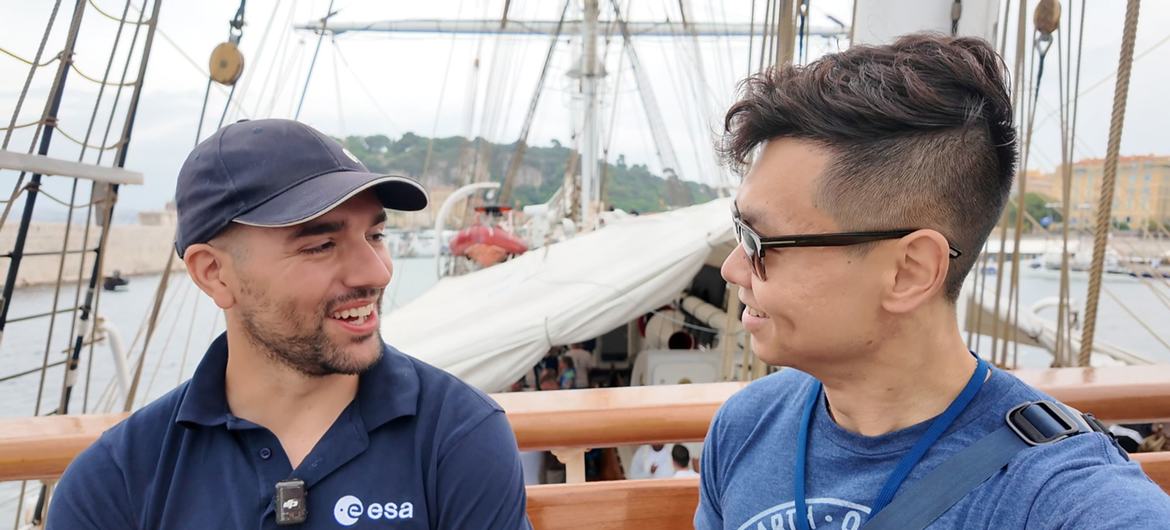
Pablo Álvarez, an ESA training astronaut, talks to UN News.

An astronaut’s blue ambition

Among these young explorers is Pablo Álvarez, an ESA training astronaut set to join the International Space Station before 2030. Before launching into orbit, he’s honing his skills and deepening his knowledge aboard this tall ship – trading the vastness of space for the mysteries of the sea.

He specializes in remote sensing of the ocean’s surface. By analyzing satellite imagery, such as patterns formed by sunlight reflecting off waves, known as ‘sun glitter’, he uncovers insights into surface roughness, wind behavior, and ocean dynamics. These key data points aid both marine scientists and astronauts studying Earth from afar, offering valuable clues that may help predict the ocean’s movement.

“In both fields [Ocean Science and Earth System Science] you’re moving the human knowledge a bit farther with everything you do,” added Mr. Álvarez, “I think it’s in our DNA to explore and to learn more about our environment, and the universe where we are living.” 

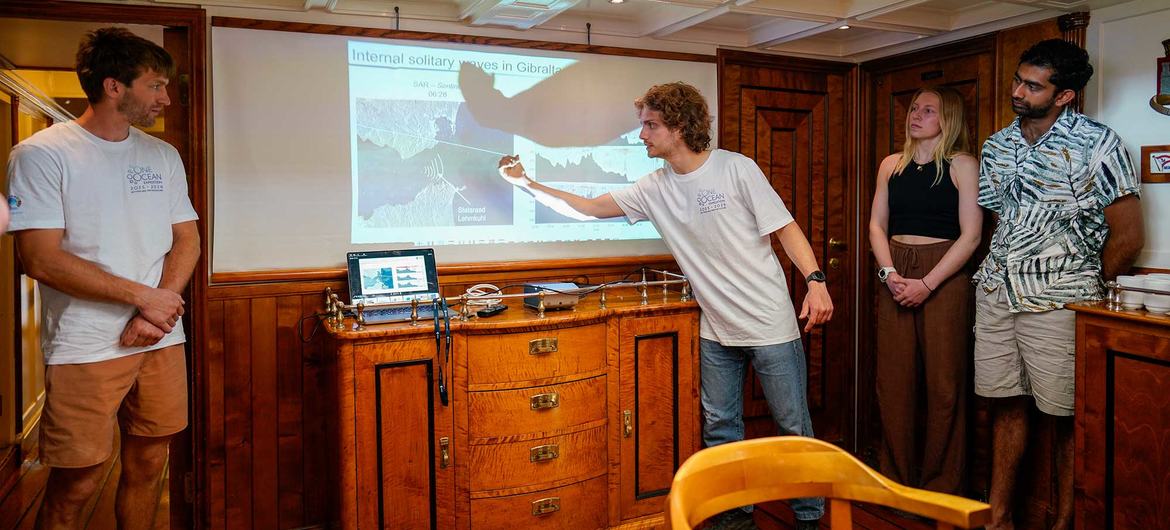
Lena Schaffeld (second from the right) is among students presenting their studies on board.

Women improve scientific study

Among the students aboard, Lena Schaffeld, from Germany, found the expedition particularly inspiring. She felt empowered knowing that female students outnumbered their male peers – a rare and meaningful shift in a field often dominated by men.

“I think we need a lot of women in science, especially ocean science. So, it’s quite nice to be one of them,” Ms. Schaffeld said proudly.

Focused on the increasing abundance and distribution of microplastic pollution in the ocean, Ms. Schaffeld went on to tell UN News that the journey has benefitted her studies as well. “We’ve been passing different seas. We’ve come from the Norwegian Sea and the Arctic Sea, towards the open Atlantic Ocean, and now into the Mediterranean,” she said.

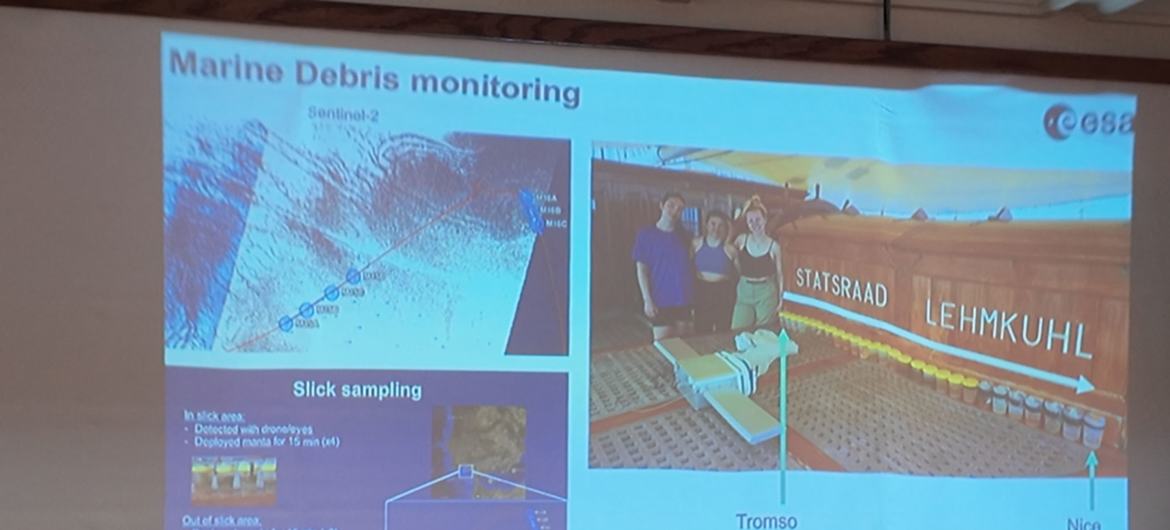
The marine debris monitoring project is conducted by Lena Schaffeld with other two students.

Collecting data along the way, she said she has found more visible plastics in samples taken from the Mediterranean.

“Microplastics are pieces of plastic that are smaller than 5 millimeters, and most of them are invisible,” explained Ms. Schaffeld, who stressed that her work is just beginning and it’s too soon to draw any conclusions.

“Only after [the filtration process] and when I look under the microscope, which is going to happen at the end of this voyage, will we know how much plastic there actually is.”

Looking forward to further studying these samples, she said she will also try to explore ways to use satellite data to detect microplastics in the water, and to lay out a bigger picture about how plastic moves with the currents.

“The water is always moving and plastic on the surface moves along with these currents. So, we’re also going to be applying some numerical modeling to predict or even backtrack [to] where that plastic came from. It’s going to interesting,” she noted with hope.

‘A sustainable ocean is a necessity’

Many students on board the Statsraad Lehmkuhl expressed their gratitude to take part in the training course and to be able to share their stories and experiences as part of UNOC3.

“Bringing the ocean to the people is a job that we’ve tasked our students with,” stressed Mr. Donlon. “They’ve engaged with Peter Thomson, the United Nations Special Envoy (for the ocean). He gave us a mandate to run this course, and we’ve followed that mandate.”

In Mr. Donlon’s eyes, “the UNOC3 is the place where we come together. We discuss the most relevant topics, and we bring a ministerial element to that, to ratify evidence-based decisions”.

He said that he is convinced that the science-based decisions and discussions taking place at the Conference “will make lives and societies stronger”, while at the same time help to protect the environment for future generations. “A sustainable ocean is not a luxury; it is an absolute necessity. There can be no green unless we have a blue thriving ocean,” he reiterated.

Source link

Absent faces, destroyed homes – young students paint the pain of Gaza

Their paintings and drawings range from a portrait of an esteemed Palestinian poet and family members killed in conflict, to a sky blackened by thick smoke – and a child crying in front of his mother’s corpse.

The poignant images are currently on display at UNRWA’s Remal School in Gaza City, which has been transformed into a shelter.

Remembrance and loss

The exhibition provides an opportunity for the children and young people to express and discuss their feelings after nearly 18 months of war.

Fatima al-Za’anin, who was displaced from Beit Hanoun in northern Gaza, cried as she spoke about her artwork. “I painted the Palestinian poet Mahmoud Darwish, I drew mama, baba, my sister and my grandfather,” she said.

Fatima stopped talking to cry once more and turned to a small pencil drawing peppered with red spots. “I drew martyrs’ bodies that were torn to pieces,” she explained.

She pointed to another drawing of a boy called Mohammed “who wished he had one person left in his family, but there was no one left,” she said. “I painted a child who lamented his mother, whom he had lost.”

A specialist from the UNRWA Psychological Support Centre stood beside Fatima and praised her courage in expressing her feelings.

17 year-old Na’emat Haboob, the sole survivor of her family and displaced from Jabalia Camp, stands beside her artwork—a moving tribute to her mother, who was killed in the war.

Praying for comfort

Na’emat Haboob, a 17-year-old student, touched one of her paintings as she spoke about it. The image is of the face of her mother, who was killed in the war. 

“This is mama’s painting.  Thank God I could draw it while I’m trying to get over losing her.  I hope everyone will pray for her.” 

Na’emat continued to run her fingers over the painting as if she wanted to touch her mother’s face and said: “May God grant me comfort for losing her and my siblings.”

May God grant me comfort for losing her and my siblings

She credited the mental health team at the Remal shelter for their support, saying it gave her the strength to turn her pain into art. 

Her grief welled up again and she was unable to go on. Comforted by a hug from the counsellor, she was able to continue, saying the psychological support she receives at the shelter enables her to keep studying. 

“I seek to develop my talents after what I’ve been through during the war,” she said. “I want to try hard to be what my mother wished for me.”

Malak Fayad, a displaced from Beit Hanoun (Gaza) shares the meaning behind her artwork with fellow displaced visitors, using art as a way to express her experiences, resilience, and hope amid the devastation of war.

Lives transformed, hopes destroyed

Another student, Malak Fayyad, stood in front of her colourful paintings. One depicts the clear blue sky and sea of Gaza, showing birds, trees and landscapes. It is a copy of a work she had previously painted which hung proudly on a wall in her family’s home. 

But the house was destroyed along with all their belongings, including the painting.

“I painted it again to remember Gaza as it was, and next to it another painting clouded by black smoke from weapons,” Malak said, before highlighting other works she created, including one which “shows how our lives have been transformed after the destruction and bombing.”

Another of her paintings depicts a Palestinian man who appears to be carrying a bag in the form of a house. She said it “shows that the Palestinian always carries with him the Palestinian cause, even when he is displaced and forced to leave his home.”

The war in Gaza has destroyed hopes of a better future, according to another young artist, Malak Abu Odeh.  

“Not only displacement and destruction, but the war has taken away from us our dearest people, our relatives and loved ones,” she said.

“We’re not well, but I would like to thank the mental health team who are trying to entertain us, help us and support us.”

Commitment to deliver

UNRWA continues to provide psychosocial support services across the Gaza Strip. The agency said its teams responded to around 3,000 cases between 21 and 27 April. 

This support included individual counselling, awareness-raising sessions and response to gender-based violence cases in its health centres, medical points and shelters. 

Source link

Researchers uncover factors linked to optimal aging

What are the keys to “successful” or optimal aging? A new study followed more than 7000 middle aged and older Canadians for approximately three years to identify the factors linked to well-being as we age.

They found that those who were female, married, physically active and not obese and those who had never smoked, had higher incomes, and who did not have insomnia, heart disease or arthritis, were more likely to maintain excellent health across the study period and less likely to develop disabling cognitive, physical, or emotional problems.

As a baseline, the researchers selected participants who were in excellent health at the start of the approximately three-year period of study. This included the absence of memory problems or chronic disabling pain, freedom from any serious mental illness and absence of physical disabilities that limit daily activities — as well as the presence of adequate social support and high levels of happiness and life satisfaction.

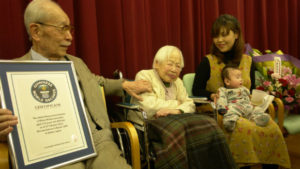
Japan’s oldest woman Misao Owasa receiving Huinness Record for longest living person (http://www.guinnessworldrecords.com)

“We were surprised and delighted to learn that more than 70% of our sample maintained their excellent state of health across the study period,” says the first author, Mabel Ho, a doctoral candidate at the University of Toronto’s Factor-Inwentash Faculty of Social Work (FIFSW) and the Institute of Life Course and Aging. “Our findings underline the importance of a strength-based rather than a deficit-based focus on aging and older adults. The media and research tend to ignore the positive and just focus on the problems.”

There was considerable variation in the prevalence of successful aging based on the respondents’ age at the beginning of the study. Three quarters of the respondents who were aged 55 to 64 at the start of the study period maintained excellent health throughout the study. Among those aged 80 and older, approximately half remained in excellent health.

“It is remarkable that half of those aged 80 and older maintained this extremely high bar of cognitive, physical, and emotional well-being across the three years of the study. This is wonderful news for older adults and their families who may anticipate that precipitous decline is inevitable for those aged 80 and older.”  says Mabel Ho. “By understanding factors associated with successful aging, we can work with older adults, families, practitioners, policymakers, and researchers to create an environment that supports a vibrant and healthy later life.”

Sleep/en.wikipedia.org

Older adults who were obese were less likely to maintain good health in later life. Compared to older adults who were obese, those who had a normal weight were 24% more likely to age optimally.

“Our findings are in keeping with other studies which have found that obesity was related to a range of physical symptoms and cognitive problems and that physical activity also plays a key role in optimal aging,” says co-author David Burnes, Associate Professor at the University of Toronto’s FIFSW and a Canada Research Chair in Older Adult Mistreatment Prevention. “These findings highlight the importance of maintaining an appropriate weight and engaging in an active lifestyle throughout the life course”.

Income was also as an important factor. Only about half of those below the poverty line aged optimally compared to three-quarters of those living above the poverty line.

“Although our study does not provide information on why low income is important, it is possible that inadequate income causes stress and also restricts healthy choices such as optimal nutrition. Future research is needed to further explore this relationship,” says senior author Esme Fuller-Thomson, Director of the Institute for Life Course & Aging and Professor at the University of Toronto’s Factor-Inwentash Faculty of Social Work.


Lifestyle factors are associated with optimal health in later life. Older adults who never smoked were 46% more likely to maintain an excellent state of health compared to current smokers. Previous studies showed that quitting smoking in later life could improve survival statistics, pulmonary function, and quality of life; lower rates of coronary events, and reduce respiratory symptoms. The study found that former smokers did as well as those who had never smoked, underscoring that it is never too late to quit.

The study also found that engaging in physical activity was important in maintaining good health in later life. Older adults who engaged in moderate to strenuous physical activity were 35% to 45% more likely to age well, respectively.

The findings indicated that respondents who never or rarely experienced sleep problems at baseline were 29% more likely to maintain excellent health across the study.

“Clearly, good sleep is an important factor as we age. Sleep problems undermine cognitive, mental, and physical health. There is strong evidence that an intervention called cognitive-behavioral therapy for insomnia (CBT-I) is very helpful for people living with insomnia,” says Esme Fuller-Thomson.

Also Read:

New Algorithm Can Read Your Mind, Shows Study Using Brain Imaging Technology

VMC is biomarker of ageing for nematode; what is its role in Humans?

b-type procyanidin-rich foods consumed in right amounts have multiple health benefits

Higher coffee consumption associated with lower risk of death

Higher coffee consumption is associated with a lower risk of death, according to research presented today at ESC Congress.1 The observational study in nearly 20 000 participants suggests that coffee can be part of a healthy diet in healthy people.

“Coffee is one of the most widely consumed beverages around the world,” said Dr Adela Navarro, a cardiologist at Hospital de Navarra, Pamplona, Spain. “Previous studies have suggested that drinking coffee might be inversely associated with all-cause mortality but this has not been investigated in a Mediterranean country.”

The purpose of this study was to examine the association between coffee consumption and the risk of mortality in a middle-aged Mediterranean cohort. The study was conducted within the framework of the Seguimiento Universidad de Navarra (SUN) Project, a long-term prospective cohort study in more than 22 500 Spanish university graduates which started in 1999.

This analysis included 19 896 participants of the SUN Project, whose average age at enrolment was 37.7 years old. On entering the study, participants completed a previously validated semi-quantitative food frequency questionnaire to collect information on coffee consumption, lifestyle and sociodemographic characteristics, anthropometric measurements, and previous health conditions.

Patients were followed-up for an average of ten years. Information on mortality was obtained from study participants and their families, postal authorities, and the National Death Index. Cox regression models were used to estimate hazard ratios (HR) and 95% confidence intervals (CI) for incident mortality according to baseline total coffee consumption adjusted for potential confounders.

During the ten year period, 337 participants died. The researchers found that participants who consumed at least four cups of coffee per day had a 64% lower risk of all-cause mortality than those who never or almost never consumed coffee (adjusted HR, 0.36; 95% CI, 0.19-0.70). There was a 22% lower risk of all-cause mortality for each two additional cups of coffee per day (adjusted HR, 0.78; 95% CI, 0.66-0.92).

The researchers examined whether sex, age or adherence to the Mediterranean diet had any influence on the association between baseline coffee consumption and mortality. They observed a significant interaction between coffee consumption and age (p for interaction=0.0016). In those who were at least 45 years old, drinking two additional cups of coffee per day was associated with a 30% lower risk of mortality during follow-up (adjusted HR, 0.70; 95% CI, 0.58-0.85). The association was not significant among younger participants.

Dr Navarro said: “In the SUN project we found an inverse association between drinking coffee and the risk of all-cause mortality, particularly in people aged 45 years and above. This may be due to a stronger protective association among older participants.”

She concluded: “Our findings suggest that drinking four cups of coffee each day can be part of a healthy diet in healthy people.”