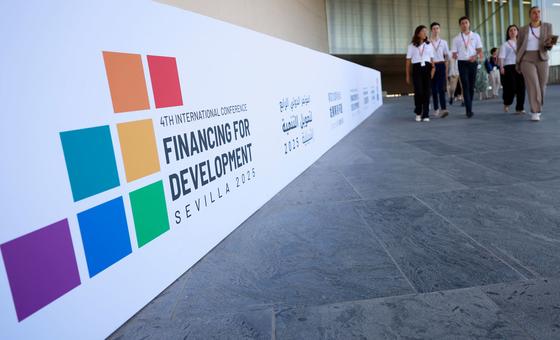
With sustainable development under threat, Sevilla summit rekindles hope and unity

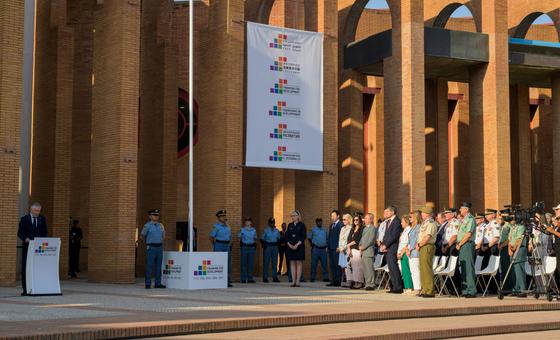
“The human consequences of rising debt burdens, escalating trade tensions and steep cuts to official development assistance have been brought into sharp relief this week,” she told the closing session of the pivotal gathering, amid sizzling temperatures across southern Spain.

Multilateralism at work

But against that backdrop, the conference has delivered a strong response – a unifying outcome document focused on solutions that reaffirms the Addis Ababa commitments made a decade ago, which seeks to “rekindle the sense of hope” through the Sustainable Development Goals (SDGs) and shows that multilateral cooperation still matters and still works, Ms. Mohammed said.

She welcomed host nation Spain’s commitment to help launch a new UN Sevilla Forum on Debt, calling it a crucial step in helping countries better manage and coordinate debt restructuring efforts.

“Sevilla will be remembered not as a landing zone, but as a launchpad for action, to improve livelihoods across the world,” said Carlos Cuerpo, host Spain’s chief finance minister, at the closing press conference.

Together, we have sent a strong message of commitment and trust in multilateralism that can yield tangible results to put sustainable development back on track.”

Li Junhua, UN Under-Secretary-General for Economic and Social Affairs and Secretary-General of the Conference said the week had proved the UN is “more than just a space for dialogue; it is a powerful platform for solutions that transform lives.”

“In Sevilla, we have demonstrated our collective will to confront the most urgent and complex financing challenges of our time,” the DESA chief underscored at the closing.

Concrete plan of action

Ms. Mohammed told the closing press conference delegates had made “a serious and long overdue attempt to confront the debt crisis” while aiming to close the massive financing gap for the 2030 Sustainable Development Goals (SDGs).

She reiterated the three main action areas for the Sevilla Commitment:

  • A major investment push to close the SDG financing gap
  • Concrete steps to address unsustainable debt burdens
  • A greater voice for developing countries in global financial decision-making

Alongside this agreement, over 100 new initiatives were launched under the Sevilla Platform for Action. These include a global hub for debt swaps, a “debt pause” alliance, and a solidarity levy on private jets and first-class flights to fund climate and development goals.

This platform has sparked new partnerships, innovative solutions that will deliver real change in people’s lives,” Ms. Mohammed said. “They’re not a substitute for broader funding commitments, but a sign that creative thinking is finally breaking through.”

Acknowledging criticism from civil society groups about limited access to official discussions, she pledged to push for greater inclusion. “We hear you,” she declared, adding that “this trust needs to be earned.”

Here’s a summary of key commitments going forward from Sevilla:

Tackling debt burdens:

  • Spain and the World Bank will lead a Debt Swaps for Development Hub to scale up debt-for-development deals.
  • Italy will convert €230 million in African debt into development investments.
  • A Debt Pause Clause Alliance of countries and development banks will suspend debt payments during crises.
  • The Sevilla Forum on Debt will help countries coordinate debt management and restructuring efforts.

Mobilising investment:

  • A Global Solidarity Levies coalition will tax private jets and premium flights to raise climate and SDG funds.
  • The SCALED platform will expand blended finance, backed by public and private partners.
  • FX EDGE and Delta will help scale up local currency lending through risk management tools.
  • Brazil and Spain will lead work on fairer taxation of the wealthy.
  • New technical assistance hubs will support project preparation and delivery.

Strengthening financial systems:

  • Country-led financing platforms will support national plans.
  • The UK-Bridgetown coalition aims to expand disaster financing.

Private sector role:

At the International Business Forum, companies pledged to increase impact investment, with $10 billion in projects showcased.

Source link

The Sevilla Commitment: A vital step to rebuild trust in global cooperation

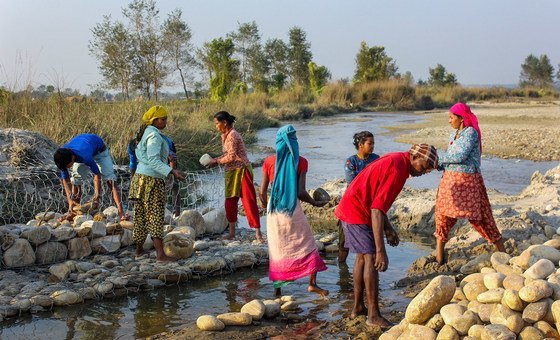
Activists, many from the Global South, attending the talks in Spain, are calling for greater leadership and commitment from wealthier nations to help address long-standing structural inequalities.

The 4th International Conference on Financing for Development (FFD4) carries strong symbolic weight, reflected in the agreed priorities of the Sevilla Commitment.

Courtesy of Paula Sevilla

Paula Sevilla, International Institute for Environment and Development.

However, organizations warn that there is still a long way to go before promises translate into tangible action.

Good timing

That is the message from Paula Sevilla, a representative of the International Institute for Environment and Development (IIED) – a London-based research centre – who has worked for decades on sustainability and climate justice in Latin America, Africa, and Asia.

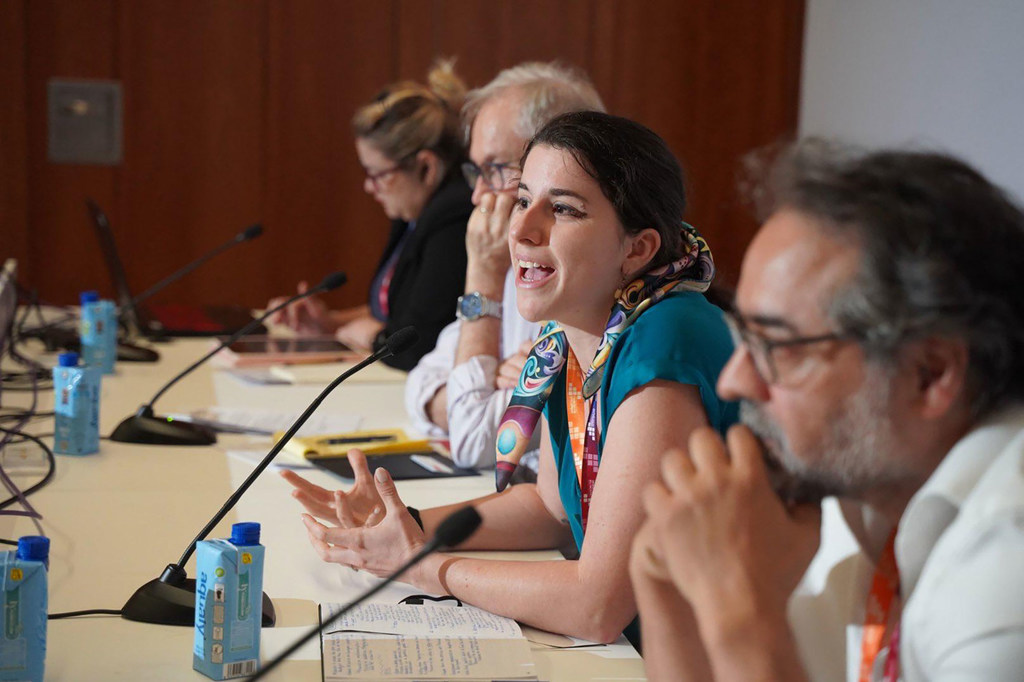
“This summit has come at a crucial time to try to restore faith in international cooperation, especially after the pandemic, which exposed a lack of global solidarity,” she stated.

One of IIED’s main goals in Sevilla has been to ensure that the announced financial commitments actually reach local communities at the forefront of the climate crisis.

To that end, the organization emphasizes the need to address issues such as external debt – draining public budgets – and to support innovative mechanisms like blended finance to direct resources to those who need them most.

“We’re seeing countries spend more on debt payments than on healthcare or education, while inequalities are deepening,” the expert warned, speaking shortly after a respectful but forceful protest inside the conference centre.

A place to call home

Housing solutions linked to sustainable development are notably absent from the summit’s final document.

“It’s regrettable that it’s not even mentioned, at a time when we are facing a global cost-of-living crisis – not only in the Global South but also here in Spain. Housing is a source of anguish and distrust among citizens, and it has been completely ignored,” Ms. Sevilla said.

Despite this, her organization is working to leverage the Sevilla outcome to find ways to channel funding into providing more affordable homes.

Commenting on the initiative led by Spain and Brazil to work towards fair taxation and push back against tax avoidance by the world’s richest – promoting more transparency and accountability – the IIED representative said it could be a useful path toward correcting structural inequalities.

Tax for development

We need leadership from the Global North, where many of the world’s major tax-avoiding corporations are based. Without their commitment, we won’t move forward,” she stated.

She also criticized the absence of the United States from the summit – not  only as a diplomatic setback but also as a worrying precedent following the dismantling of its international development agency, USAID.

“We’re talking about people counting their pills to figure out how many days of life they have left. This is dramatic,” she emphasised.

With just five years remaining to meet the Sustainable Development Goals, Ms. Sevilla warned that time is running out – and that the Sevilla Commitment will be meaningless without real change.

We need political leadership, a will to cooperate, and a commitment to protect democratic space. In the end, it’s organized people who keep hope alive and hold leaders accountable,” Sevilla concluded.

The Sevilla Commitment in brief:

  • The Sevilla Commitment sets out a new global roadmap to raise the trillions of dollars needed each year to achieve sustainable development, building on previous international agreements
  • It calls for fairer tax systems, cracking down on tax evasion and illicit financial flows, and strengthening public development banks to support national priorities
  • The agreement highlights the need for new tools to ease debt pressures on vulnerable countries, including debt-swap schemes, options to pause payments during crises, and better transparency
  • Countries committed to boosting the capacity of multilateral development banks, increasing the use of special drawing rights, and attracting more private investment to support development
  • It also aims to make the global financial system more inclusive and accountable, with improved coordination, stronger data systems, and broader participation from civil society and others

The Commitment launches the Sevilla Platform for Action, which includes over 130 initiatives already underway to turn the pledges into real-world results.

Source link

Sevilla: Without sustainable development, there is neither hope nor security

Development benefits all countries because it is linked to other areas of activity and society, including basic security itself. Without it, there is no hope – and no stability.

That is the key message from the Director of the UN Development Programme’s Bureau for Policy and Programme Support (UNDP), Marcos Neto, to all other nations gathered in Sevilla who have signed up to the plan of action, which gets underway immediately.

The Sevilla Agreement is the centrepiece of the 4th International Conference on Financing for Development, and it has been adopted by 192 of the 193 UN members.

The United States withdrew citing fundamental disagreements with many policy approaches and is absent from the summit taking place amid scorching temperatures in the southern city of Sevilla, Spain.

No lack of money

In his interview during the conference, we asked Mr. Neto to explain in plain language what the Seville Commitment is all about.

This interview has been edited for length and clarity.

Marcos Neto: We are five years away from the Sustainable Development Goals [SDGs]. One of the biggest obstacles to this shared agenda of global solidarity is financing. In other words: where is the money? Where will the money come from?

The Sevilla Commitment is a document that makes it clear that this is not about a lack of money – it’s about aligning public and private capital flows toward those Goals, toward the Paris Agreement, and toward all other international commitments.

The commitment outlines what to do with every kind of money – national, international, public, and private. It is a roadmap that was agreed upon through consensus among UN Member States, involving the private sector, civil society, and philanthropy.

UN News: One of the major absences at this Conference was the United States, which left the negotiations on the Undertaking. How did Washington’s withdrawal influence the Conference?

Marcos Neto: A consensus among 192 countries was reached and approved here. Now, clearly, the United States is one of the world’s largest economies and holds significant weight. I believe it’s crucial to keep the dialogue open and continue engaging all Member States, each according to their own needs.

For example, development financing is directly linked to security. Without development, you cannot have a stable society – one without conflict. What’s your level of poverty? What’s your level of inequality? Development is a security strategy. Development is hope. A people without hope is a people in trouble.

UN News: In conferences like this, documents are adopted, but often people feel they are just empty words that don’t really affect their daily lives. What would you say to those citizens to convince them that these decisions actually make a difference?

Marcos Neto: I’ll give you a very clear example. At the last Conference on Financing for Development ten years ago in Addis Ababa, there was a phrase that envisioned the creation of what we now call Integrated National Financing Frameworks (INFFs). We at UNDP developed this concept in 86 countries. This is real: 47 billion dollars were aligned and mobilized through that mechanism.

50 billion dividend

So, in practice, I can say we have helped put more than 50 billion dollars into the hands of countries. We’ve also helped them reform their national budget processes so that the money reaches where it’s supposed to go.

Our current commitment is to implement the Seville Commitment. We are committed to delivering on it.

From Seville to Belém

UN News: In addition, the Sevilla Platform for Action will also serve to implement various initiatives…

Marcos Neto: Yes, we are leading 11 of the initiatives under the Seville Platform, and I think it was a great move by the Government of Spain to have created this action platform in Sevilla to turn this into implementation.

It’s very similar to what Brazil wants to do at the end of the year at COP30. There is a direct connection between Seville and Belém – the host city of the UN Climate Change Summit in Brazil later this year. These connections are important.

Source link

INTERVIEW: Sevilla ‘a critical test’ of multilateralism

The promises were made at the opening of the Financing for Development Conference (FFD4), currently underway in the Spanish city of Sevilla, when delegates agreed on the Sevilla Commitment

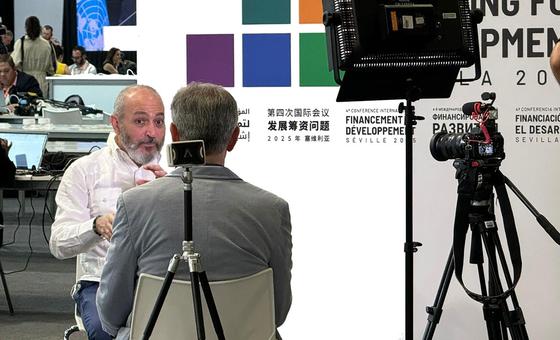
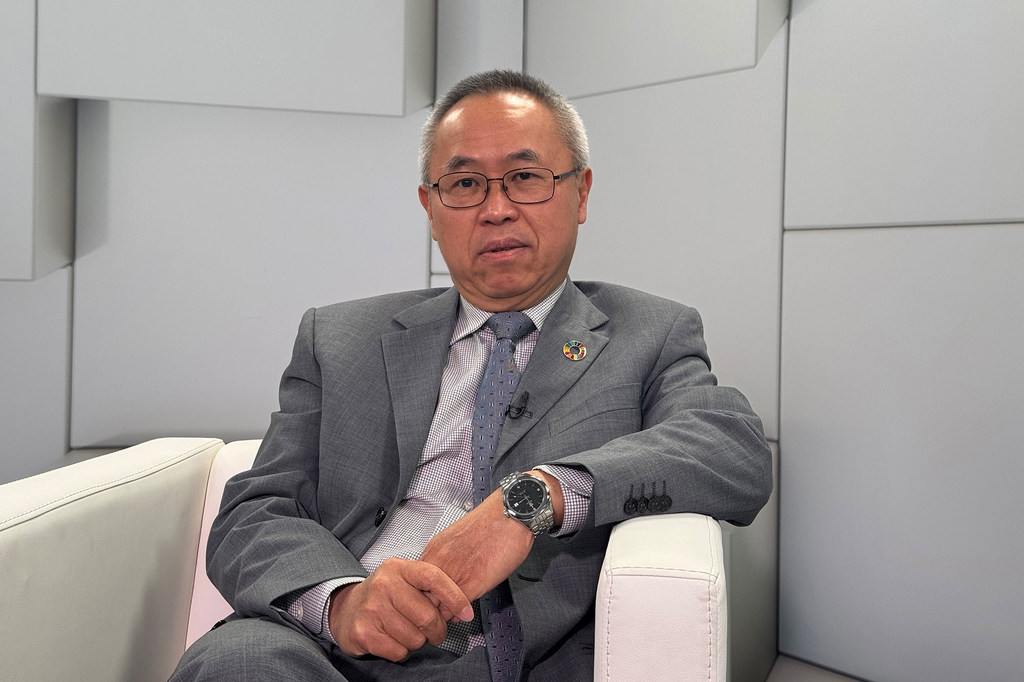
During the conference UN News spoke to Li Junhua, the UN Under-Secretary General for Economic and Social Affairs and Secretary-General of the international summit.

Li Junhua: The adoption of the Sevilla Agreement was an exceptional moment at an event which has brough together some 60 Heads of State and Government and seen 130 major initiatives announced as part of the Sevilla Platform for Action, which is aiming to implement the outcome document and turbocharge financing for sustainable development.

A record number of business leaders from various sectors actively participated in and positively contributed to the entire process and to the outcome of Conference. They all committed to supporting the implementation of the new roadmap.

UN News: What benefits do you think vulnerable communities in developing countries can look forward to, as a direct result of the decisions made here in Sevilla?

Li Junhua, UN Under-Secretary-General for Economic and Social Affairs.

Li Junhua: The Sevilla Commitment firmly recognizes that poverty eradication is indispensable to achieving sustainable development. This is the most essential point for all the developing countries. It proposes a package of actions for a large-scale investment push for the Sustainable Development Goals (SDGs) in the long run. This includes boosting investment in vital areas such as social protection systems, agrifood systems and inclusive, affordable and quality health systems.

Furthermore, it aims to strengthen the global response to crises which affect vulnerable communities the most. For instance, it calls for the implementation of the decision concerning climate finance agreed at the UN Climate Conference in Baku, and also the fund for responding to Loss and Damage.

To me, significant steps and commitments have been made to support countries in special situations to close the significant infrastructure gap in critical sectors. The most vulnerable populations can benefit significantly by gaining essential services and employment opportunities generated by, for instance, energy, transport, ICT [information and communication technology], water and sanitation infrastructure development.

Last but not least, there is a strong resolve to expand access to financial products and services across society, particularly for women, youth, persons with disabilities, displaced people, migrants and other persons in vulnerable situations. These are very tangible outcomes for vulnerable communities.

UN News: In what ways is this conference a real test of multilateralism, at a time when it’s under more strain than ever, and with a deeply uncertain global economic outlook?

Li Junhua: This conference is a critical test of our ability to solve problems together.

We know that, at its core, the sustainable development crisis is a crisis of funding and financing. We need to tackle these challenges to bring the SDGs back on track, but it is far from easy. Commitments on development finance directly impact national budgets, and reforming the international financial architecture will inevitably shift the power dynamics between States.

The fact that Member States adopted the Sevilla Agreement by consensus sends a powerful signal that multilateralism can still deliver. Of course, the real challenge now lies in translating these commitments into actions. So I would say that, ultimately, success depends on the collective efforts of all Member States and all stakeholders.

Source link

Drowning in debt: New forum in Sevilla offers borrowers chance to rebalance the books

The Borrowers’ Forum is being hailed as a milestone in efforts to reform the international debt architecture, supported by the UN and emerging as a key part of the Sevilla Agreement outcome document.

“This is not just talk – this is execution,” said Egypt’s Minister of Planning and Economic Development, Dr Rania Al-Mashat. “The Borrowers’ Forum is a real plan, driven by countries, to create a shared voice and strategy in confronting debt challenges.”

Rebeca Grynspan, Secretary-General of UN Trade and Development (UNCTAD), said developing nations often face creditors as a united bloc while negotiating alone. “Voice is not just the ability to speak — it’s the power to shape outcomes. Today, 3.4 billion people live in countries that pay more in debt service than they do on health or education.”

The forum – one of 11 recommendations by the UN Secretary-General’s Expert Group on Debt – will allow countries to share experiences, receive technical and legal advice, promote responsible lending and borrowing standards, and build collective negotiating strength.

Its launch addresses long-standing calls from the Global South for more inclusive decision-making in a debt system dominated by creditor interests.

‘Silent but urgent’

Zambia’s Foreign Minister, Mulambo Haimbe, told journalists the initiative would foster “long-term partnerships, mutual respect and shared responsibility” and expressed his country’s willingness to host an early meeting.

Spain’s Finance Minister Carlos Cuerpo described the current debt crisis as “silent but urgent,” and called the Forum a “Sevilla moment” to match the Paris Club of creditors, created nearly 70 years ago.

UN Special Envoy on financing the 2030 Agenda Mahmoud Mohieldin said the forum was a direct response to a system that has kept debtor countries isolated for too long. “This is about voice, about fairness – and about preventing the next debt crisis before it begins.”

The launch comes at a time of rising debt distress across the developing world.

The agreement – known in Spanish as the Compromiso de Sevilla – adopted by consensus at the conference, includes a cluster of commitments on sovereign debt reform.

Alongside support for borrower-led initiatives, it calls for enhanced debt transparency, improved coordination among creditors, and the exploration of a multilateral legal framework for debt restructuring.

It also endorses country-led debt sustainability strategies, debt payment suspension clauses for climate-vulnerable nations, and greater support for debt-for-nature and debt-for-climate swaps – albeit with stronger safeguards and evidence of impact.

Frustration over ‘missed opportunity’ to tackle debt crisis

Civil society groups on Wednesday sharply criticised the adopted outcome in Sevilla, calling it a missed opportunity to deliver meaningful reform of a global debt system that is crippling many developing nations.

Speaking at a press briefing inside the conference, Jason Braganza of the African Forum and Network on Debt and Development (AFRODAD) said the final outcome document adopted on day one – the Sevilla Agreement – fell far short of what was needed.

This document did not start with much ambition and still managed to be watered down,” he said. “Nearly half of African countries are facing a debt crisis. Instead of investing in health, education and clean water, they’re paying creditors.”

Mr. Braganza praised the leadership of the African Group and the Alliance of Small Island States, which fought for a UN Framework Convention on sovereign debt.

‘False solutions’

Although that ambition was not fully realised, he welcomed a small breakthrough in the form of a new intergovernmental process that could lay the groundwork for future reform.

Civil society leaders also warned of the dangers of so-called “debt-for-climate swaps”, with Mr. Braganza calling them “false solutions” that fail to provide genuine fiscal space for developing nations.

Tove Ryding of the European Network on Debt and Development (Eurodad) echoed those concerns, saying: “We are told there’s no money to fight poverty or climate change — but there is. The problem is economic injustice. And the outcome of this conference reflects business as usual.”

She highlighted the progress made on a new UN Tax Convention as proof that determined countries can bring about real change, adding: “If only we had a tax dollar for every time we were told this day would never come.”

Agreement bears fruit for public health

To help close gaps in access to public services and policies, and to address healthcare cuts that could cost thousands of lives, Spain on Wednesday launched the Global Health Action Initiative aimed at revitalising the entire global health ecosystem.

The initiative, which will channel €315 million into the global health system between 2025 and 2027, is supported by leading multilateral health organisations and more than 10 countries.

Source link

It’s time to finance our future and ‘change course’, Guterres tells world leaders in Sevilla

António Guterres issued his clarion call noting that sustainable development powered by international cooperation, is now facing “massive headwinds.”

Addressing the opening session of the 4th Financing for Development Conference (FFD4) in baking hot Sevilla, Spain – basking in record high June temperatures – the Secretary-General noted multilateralism itself is also feeling the heat, while trust between nations and institutions fray.

The world is on fire, shaken by inequalities, climate chaos and raging conflicts: “Financing is the engine of development and right now, this engine is sputtering,” he told the conference, attended by more than 50 world leaders, over 150 nations and around 15,000 delegates.

“As we meet, the 2030 Agenda for Sustainable Development – our global promise to transform our world for a better, fairer future – is in danger.”

Some two-thirds of the ambitious Sustainable Development Goals (SDGs) targets agreed in 2015 are significantly off track – hence the staggering $4 trillion investment needed to turn it around.

“We are here in Sevilla to change course. To repair and rev up the engine of development to accelerate investment at the scale and speed required,” said Mr. Guterres.

He described the outcome known as the Sevilla Commitment adopted on Monday – without the United States which pulled out of the process earlier this month – as a “global promise” to low-income nations to lift them up the development ladder.

The UN chief outlined three key action areas:

  • First, get resources flowing fast at home to spur sustainable growth, and for richer countries to honour their pledge under the accord to double aid to poorer countries to boost development. This includes tripling the lending capacity of Multilateral Development Banks and innovative solutions to unlock private cash.
  • Second, fix the “unsustainable, unfair and unaffordable” global debt system. Right now, poorer countries are spending around $1.4 trillion just servicing their vast debts in the form of interest payments. Among the innovations, a new borrowers’ forum will ensure fairer debt resolution and action.
  • Third, reform the global financial architecture, with major shareholders playing their part, so that it empowers every country. “We need a fairer global tax system shaped by all, not just a few.”

The current crisis of affordability and stalled development is “a crisis of people,” he continued, which leaves families hungry, children unvaccinated, and girls left out of education.

“This conference is not about charity. It’s about restoring justice and to facilitate the ability of all people to live in dignity,” said Mr. Guterres.

This conference is not about money – it’s about investments in the future we wish to build together.”

A tangible and actionable’ roadmap

King Felipe of Spain spoke just ahead of the official opening, telling delegates the multicultural city of Sevilla welcomes the world “with open arms”.

He said a new roadmap would emerge that is based on what is “concrete and tangible and actionable”.

The conference must be a success, because cooperation is one of our fundamental pillars of the multilateral world and “the ultimate embodiment of the values that sustain it – especially at this particular point in history where many certainties are melting away and many fears and uncertainties are taking shape.”

‘Our time is now’

Spain’s President Pedro Sánchez told delegates “our time is now and our place is here.” Millions of lives will depend on the choices made in Sevilla and going forward.

We must choose “ambition over paralysis, solidarity over indifference and courage over convenience,” he continued, adding that the eyes of world are on this hall, to see what we are ready to do together and in the face of this historic challenge we must prove our worth.”

Sevilla was “the New York of the 16th century” in diplomatic terms he told delegates – and a cradle of globalism – we must all do that legacy justice today.

‘Sevilla is not an end point’

Secretary-General of the conference, Li Junhua – who’s in charge of the Department of Economic and Social Affairs (DESA) – said the week in Sevilla is key moment to mobilise the resources necessary to build a just, inclusive and sustainable future.

The UN effort to finance development has been anchored in multilateralism and solidarity – but today, the whole framework is under “profound stress.”

He said never has sustainable development been so tested but the pact made in Sevilla puts people back at the centre.

Sevilla is not an end point, it is a launch pad for a new era of implementation, accountability and solidarity.” UNDESA is ready to support all nations to translate the commitment into international action, he underscored.

President of the UN General Assembly Philémon Yang told delegates above all, “we need leadership to guide the world forward into a brighter more prosperous future for everyone, everywhere.”

He said the Sevilla framework will renew global partnership for the decade ahead and provide a focus on a debt burden which is crippling the developing world.

President of the UN Economic and Social Council Bob Rae said trust between countries had to be strengthened, because its absence “creates chaos.”

“Most of all I want to congratulate states for bringing forward the ambition, deepening engagement between financial institutions.”

The week represents a real commitment to action, he said.

Ajay Banga, President of the World Bank Group, told delegates ending poverty remains his key mission and the surge in population underway in developing countries requires resources “at an unprecedented scale and pace.”

He said everyone knew that governments, philanthropies and institutions are unable to meet every projection or promise – which is why the private sector is essential to the Sevilla Agreement so that capital can flow.

Mr. Banga added that the bank’s reforms of recent years are about being a better partner to the private sector and government clients.

Improving response time, boosting capital and systems of growth are key – but much more is needed to deliver for the next generation.

Exempt least-developed from punishing tariffs: WTO

Ngozi Okonjo-Iweala, Director-General of World Trade Organization said the conference was gathering at a time of unprecedented difficulty.

After decades of positive contributions, the global trading system has now been “severely disrupted” leaving exports so hampered by unilateral tariff measures and policy uncertainty that the WTO has sharply downgraded growth forecasts.

Further tariff barriers on 9 July – the deadline set by the US administration – will only make the contraction in global trade worse.

She reminded that the WTO has argued for the least developed nations and Africa overall to be exempted from the tariffs, “so we can better integrate them into the world trading system, not further exclude them.”

She said the Sevilla Agreement rightly recognises international trade as an engine of development.

“We therefore need to bolster stability and predictability in global trade,” through action at many levels that can grow national resources through exports, she told delegates.

IMF calls for broader tax base

Nigel Clarke, Deputy Managing Director of the International Monetary Fund (IMF), called for broadening the tax base, building strong financial management systems, coordinating support and addressing debt more sustainably.

“Many countries continue to struggle with high interest costs,” he said, calling on the international community to improve debt restructuring processes.  

Through its capacity development, the Fund is equipping members to chart their own paths and is also providing financial support when they need it most, he added.

Source link

LIVE: World leaders in Sevilla launch ambitious push to finance the future

From rising debt and shrinking investment, to the aid funding crisis and struggles to meet ambitious development goals, the global financial system is failing the people it’s supposed to serve: that’s the challenge facing world leaders gathered in Spain’s sweltering southern jewel of Sevilla this week, as the  UN’s 4th International Conference on Financing for Development gets underway. Follow our live Meetings Coverage below; app users can catch all the action from the opening day here and you’ll find all related stories on our special dedicated page right here.

Source link

Sevilla conference on development financing shows optimism for multilateralism

Today, a $4 trillion financing gap is hindering progress toward achieving the Sustainable Development Goals (SDGs) by the end of this decade.

In response, the Fourth International Conference on Financing for Development (FFD4) will take place in Sevilla, Spain, beginning on 30 June, bringing together stakeholders to advance solutions to the financing challenges threatening sustainable development.

“We’ve seen mounting debt burdens and declining investment, and we’ve seen reduced aid and growing trade barriers. The current system is certainly not delivering for the people it was designed to support,” said Deputy Secretary-General Amina Mohammed at a briefing on Wednesday about the conference.  

She was joined by Ambassador Héctor Gómez Hernández of Spain, and Ambassador Chola Milambo of Zambia.  

Role of stakeholders

More than 70 heads of state and government will attend the Conference, along with leaders of international financial institutions, civil society, philanthropies and the private sector, including those from energy, food systems and digital industries.

“The collective presence alone, I believe, sends a good signal for multilateralism at a time when we’re facing quite a bit of pushback,” said Ms. Mohammed.

Seville Commitment

On 17 June, Member States agreed on the Compromiso de Sevilla, or Seville Commitment, to adopt at the Conference.  

Ms. Mohammed stressed that the Commitment addresses the debt crisis in developing countries that are particularly vulnerable to financing shortfalls, as many spend more on debt interest than on essential services, straining the opportunity for sustainable development.  

Ambassador Milambo explained that this will be done through greater transparency, a global debt registry, and amplifying the voices of debtor countries.

It also aims to catalyse investment by tripling Multilateral Development Bank (MDB) lending, doubling Official Development Assistance (ODA) to developing countries, leveraging private sector investment and ensuring the international financing system is more inclusive and effective.

“This is an agenda that world leaders can do something about. They do have the tools – and the political clout – to make it happen,” said Ms. Mohammed.

Test of multilateralism

Ambassador Hernández emphasised that the Conference comes at a critical time for multilateralism.

“This conference is an appeal to action, and we have the extraordinary opportunity to send a very strong message to defend the international community’s commitment to the multilateral system,” he said.  

Ambassador Milambo later added that the consensus on the Seville Commitment “sends a real message of hope to the world that we can tackle the financing challenges that stand in the way of the SDGs and that multilateralism can still work.”

Despite the consensus, the United States recently announced it will not send a delegation to the Conference.

Speakers urged observers to keep the broader picture in mind: “It is regrettable, but it doesn’t stop us from continuing to engage with that Member State” and urge a change in the course of action, said Ms. Mohammed.

She concluded by noting that, especially given the recent agreement of the Commitment, the discussions the UN is having with other donors on how they are trying to use resources more efficiently will hopefully go a long way.  

Source link

Ahead of UN summit, countries finalise landmark ‘Compromiso de Sevilla’

On Tuesday, Member States at UN Headquarters endorsed the finalized outcome document, known as the Compromiso de Sevilla (the Seville Commitment), following months of intensive intergovernmental negotiations.

It is intended as the cornerstone of a renewed global framework for financing sustainable development, particularly amid a widening $4 trillion annual financing gap faced by developing countries.

A reinvigorated framework

Co-facilitators of the outcome document – Mexico, Nepal, Zambia and Norway – hailed the agreement as an ambitious and balanced compromise that reflects a broad base of support across the UN membership.

“This draft reflects the dedication, perseverance, and constructive engagement of the entire membership,” said Ambassador Alicia Buenrostro Massieu, Deputy Permanent Representative of Mexico.

“Sevilla is not a new agenda. It is a strengthening of what already exists. It renews our commitment to the Addis Ababa Action Agenda and aligns fragmented efforts under a single, reinvigorated framework,” she added.

Nepal’s Ambassador Lok Bahadur Thapa called the outcome a “historic opportunity” to confront urgent financing challenges.

“It recognizes the $4 trillion financing gap and launches an ambitious package of reforms and actions to close this gap with urgency,” he said, highlighting commitments to boost tax-to-GDP ratios and improve debt sustainability.

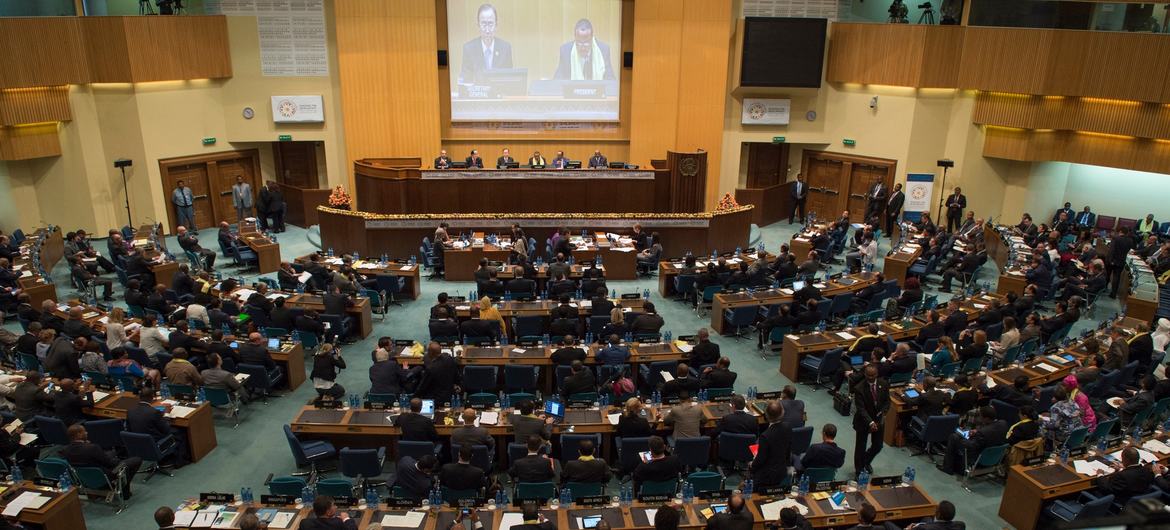
Opening of third International Conference on Financing for Development, in 2015, which adopted the historic Addis Ababa Action Agenda.

United States withdrawal

The agreement came despite sharp divisions on several contentious issues, culminating in the United States decision to exit the process entirely.

“Our commitment to international cooperation and long-term economic development remains steadfast,” said Jonathan Shrier, Acting US Representative to the Economic and Social Council.

“However, the United States regrets that the text before us today does not offer a path to consensus.”

Mr. Shrier voiced his country’s objection to proposals in the draft, which he said interfered with the governance of international financial institutions, introduced duplicative mechanisms, and failed to align with US priorities on trade, tax and innovation.

He also opposed proposals calling for a tripling of multilateral development bank lending capacity and language on a UN framework convention on international tax cooperation.

Renewal of trust

Under-Secretary-General for Economic and Social Affairs Li Junhua welcomed the adoption of the document, calling it a clear demonstration that “multilateralism works and delivers for all.”

He praised Member States for their flexibility and political will in finalizing the agreement, despite challenges.

“The FFD4 conference presents a rare opportunity to prove that multilateralism can deliver tangible results. A successful and strong outcome would help to rebuild trust and confidence in the multilateral system by forging a renewed financing framework,” Mr. Li said.

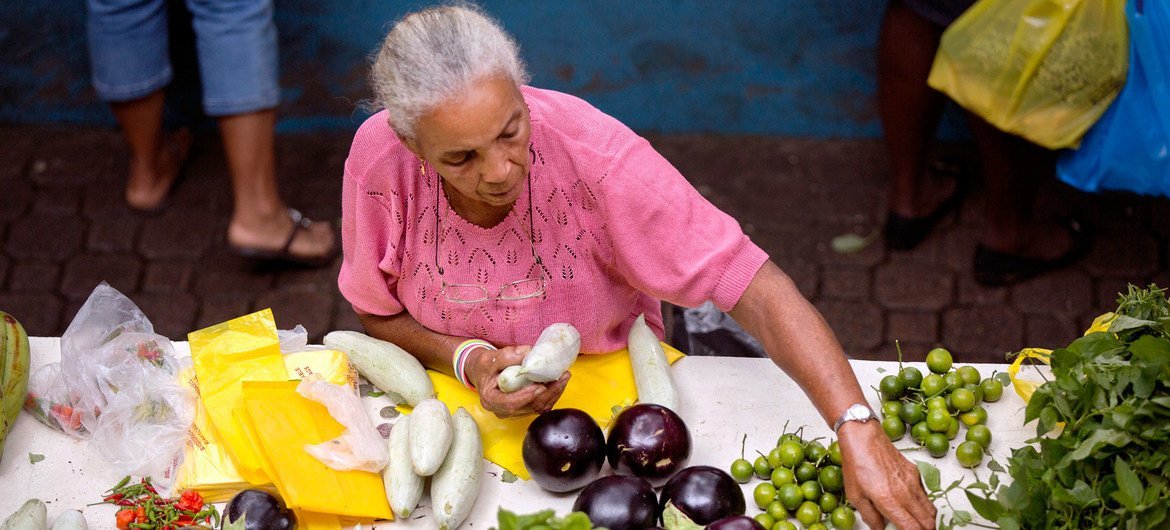
A woman sells vegetables in a market in Seychelles. Despite ongoing efforts, progress toward achieving several SDGs — including those on women’s empowerment – remains off track for 2030.

For the common good

The Sevilla conference, to be held from 30 June to 3 July will mark the fourth major UN conference on financing for development, following Monterrey (2002), Doha (2008) and Addis Ababa (2015).

It is expected to produce concrete commitments and guide international financial cooperation in the lead-up to and beyond the 2030 deadline of the Sustainable Development Goals (SDGs).

“We firmly believe that this outcome will respond to the major challenges we face today and deliver a real boost to sustainable development,” said Ambassador Thapa of Nepal.

Source link