‘Dangerous nostalgia’ is a threat to multilateralism, UN deputy chief tells Danish MPs

The UN’s founding document “is our moral compass,” she said, calling for renewed commitment to multilateralism rooted in solidarity, international law, and human dignity. 

She stressed the need to invest in peace – which the Security Council and General Assembly have both affirmed through resolutions on Ukraine’s sovereignty and territorial integrity, and in support of the two-State solution between Israelis and Palestinians. 

These are examples of how the Charter’s values “have been brought to life”, however “the very foundation those resolutions rest on is being attacked.”  

Yesterday, Venezuela – tomorrow Greenland? 

Ms. Mohammed said that “dangerous nostalgia is what’s threatening international cooperation now, that the rule of law can be interpreted by the whims and caprices of a strong arm.” 

She noted that Secretary-General António Guterres recently reminded that the Charter is not an à la carte menu and all countries have an obligation to uphold it. 

Today, it is smaller countries who are “holding the line on the Charter” because they understand that “if the rules don’t protect the vulnerable, they offer protection to no one,” she said. 

You either stand up for a rules-based order, or you pay the price of ignoring it. Yesterday, the price was Venezuela, tomorrow it may be Greenland,” she warned. 

Fund sustainable development 

The international community must also work to accelerate sustainable development. 

Geopolitical tensions are threatening gains made in slashing poverty, reducing child and maternal mortality, and increasing girls’ access to education, she said. 

Furthermore, “trade wars are closing off markets that have lifted millions out of poverty. And we’re watching a global rollback of the hard-won rights of women and girls.” 

Last year, military spending reached a record high of $2.7 trillion, yet funding for basic development needs faces a $4.2 trillion annual shortfall, which must change. 

Davos echo chamber 

“Davos this week will see the rich getting richer – profits going into the hands of very few. Last year, the wealth of billionaires grew by $2 trillion dollars while the poorest half of humanity owns just two percent of global wealth,” she added. 

Ms. Mohammed pointed to the UN conference on financing for development, held last year in Spain, which “showed us how to create fiscal space for sustainable development, address the debt crisis, and reform the international financial architecture that keep so many outside.” 

Support UN reform 

The Deputy Secretary-General underscored the need to “reset the UN to preserve multilateralism”. 

In this regard, the UN80 Initiative on system-wide reform aims to build a global body “that delivers more effectively, with greater impact, amid the reality of fewer resources and greater needs on the ground in countries.”  

She asked all countries, including Denmark, to “lead the charge and commit to a reformed UN that delivers on the promise of the Charter and the realities of today.” 

Source link

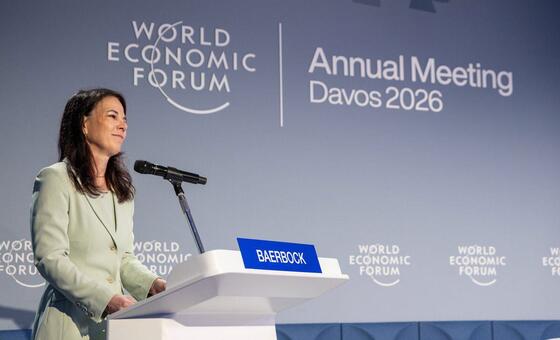
UN Assembly president defends multilateralism, UN Charter in Davos

Speaking at the session Who Brokers Trust Now? at the World Economic Forum, Annalena Baerbock warned that multilateral institutions – long seen as the brokers of global trust – are under unprecedented strain as conflicts multiply and respect for international law erodes.

“Who brokers trust?” she asked. “In ordinary times, there would be a simple answer: multilateral institutions like the United Nations.” But, she added, these are “not ordinary times”.

Ms. Baerbock said the world is facing more conflicts than at any point in recent history. Since the start of 2026, she said, divisions have deepened further, leaving some Member States hesitant to act when circumstances demand principled conviction.

Voices that were once outspoken in their support for all the three pillars of the United Nations Charter – peace and security, sustainable development, and human rights – fall more and more silent in the face of their erosion,” she said.

The UN is not only under pressure but under outright attack.

Facts and truths not up for negotiation

Ms. Baerbock stressed that trust cannot exist without truth and shared facts – foundations she said are increasingly undermined by deliberate disinformation.

“Without facts, you can’t have truth. Without truth, you can’t have trust,” she said, quoting Nobel Peace Prize laureate Maria Ressa.

She cautioned that falsehoods are rarely accidental, but are often deployed to “weaponize mis- and disinformation”, while diplomatic silence in the face of obvious falsehoods only deepens mistrust.

We do not negotiate truths and facts,” Ms. Baerbock said. “We use them to negotiate, to broker trust.

She highlighted the risks posed by artificial intelligence, noting that while AI offers enormous benefits, it is also being used to blur the line between truth and lies. Deepfakes, she said, are “systematically attacking women”, citing figures showing that the overwhelming majority of such content is pornographic and targets women.

UN Charter – ‘world’s life insurance’

Ms. Baerbock also highlighted that trust is impossible without common rules, arguing that respect for international law is not naïve idealism but a matter of enlightened self-interest.

Trust is built on rules,” she said, likening the global system to competitive sports or markets where predictability and fairness are essential. “Why would you put your money into a business if the competition rules are totally unpredictable?

Recalling the founding of the United Nations 80 years ago, she said leaders at the time chose cooperation after witnessing the catastrophic consequences of a lawless international order.

The UN Charter, she added, remains “the world’s common life insurance”, just as a rules-based economic order underpins global business and investment.

A call for broad alliance

The General Assembly President concluded by calling for a broad alliance – spanning governments, businesses and regions – to stand up for the international order and defend shared principles, even when it is politically or economically costly.

“Trust is brokered by those who hold up the common rules and principles, even when it is hard,” she said. “By those who act when action is required…and by those who speak the truth, when silence or distortion would be easier.”

The challenge now, Ms. Baerbock emphasised, is whether today’s leaders can act with the same courage and conviction as those who built the post-war international system.

The founders of the United Nations understood that because they had seen what the alternative would mean, in a world where might makes right, there can be only one outcome: chaos and war.

Source link

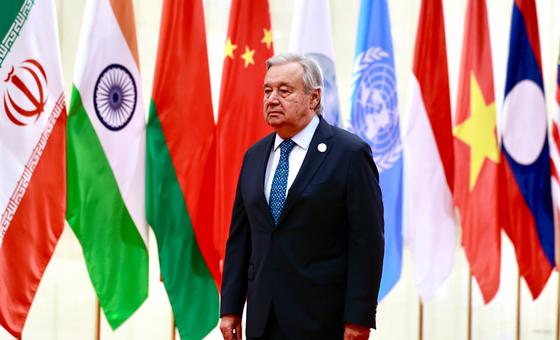
Shanghai Cooperation Organization summit: Guterres calls for strengthening multilateralism

The Eurasian bloc, comprising 10 member states, is the world’s largest regional organization by population and geography.

Mr. Guterres told leaders that “we are moving towards a multipolar world”, which is both a reality and an opportunity.

He said emerging economies are reshaping trade, diplomacy and development, but at the same time, injustices and divisions are widening.

Principled leadership needed

He stressed the need for principled leadership to strengthen multilateralism, uphold the rule of law, and deliver for people everywhere.

“The Shanghai Cooperation Organization is uniquely positioned to help shape a more peaceful, inclusive, and sustainable future,” he said.

The UN chief highlighted four priority areas, starting with peace and security.

Peace in Gaza and beyond

He pointed to the situation in Gaza, where the scale of death and destruction is horrific and famine has taken hold.

“We need an immediate and permanent ceasefire; the immediate and unconditional release of all hostages; and unimpeded, safe and sustained humanitarian access,” he said.

“And we must advance concrete and irreversible steps toward a two-State solution – the only path to a just and lasting peace for both Palestinians and Israelis.”

Mr. Guterres also addressed the war in Ukraine, saying “it is past time for a ceasefire leading to a just, comprehensive and sustainable peace – in line with the UN Charter, international law, and UN resolutions.”

He also called for protection of civilians, fostering dialogue and securing peace in Sudan, Myanmar, the Sahel, Afghanistan and beyond.

“Your leadership in diplomacy and de-escalation is essential, as are your efforts against terrorism and transnational threats,” he told leaders.

Reform and climate action

The Secretary-General called for reform of the global financial architecture to ensure fair representation for developing countries.

“We are no longer in 1945 – and our institutions must reflect today’s realities,” he said.

The third area for action concerns confronting climate change.

“We are reaching a tipping point and need meaningful reductions of emissions. G20 countries – responsible for 80 per cent of global emissions – must lead,” he said.

He urged all governments to submit new climate action plans before the COP30 UN climate conference in Brazil this November. 

“We must also set a clear path to delivering $1.3 trillion by 2030.  Developed countries must honour their commitments. And we need a breakthrough on adaptation,” he added.

He called for doubling adaptation finance, scaling up early warning systems, building resilient infrastructure and phasing out fossil fuels while speeding up the transition to renewable energy.

Cooperation on technology

The final area for action is digital cooperation as new technologies bring both opportunities and risks.

He said the UN General Assembly has just established two mechanisms – an Independent Scientific Panel and a Global Dialogue on governance of artificial intelligence (AI) – to give all countries a voice and prevent fragmentation.

“These mechanisms mark a breakthrough for global AI cooperation – leveraging the unique convening power of the United Nations,” he said.

Put people first

In conclusion, he said that as the UN marks its 80th anniversary, countries must strengthen international cooperation for the 21st century and always put people first.

In this regard, he welcomed China’s Global Governance Initiative, announced that day, which “is anchored in multilateralism and underscores the importance of safeguarding the international system with the UN at its core and the international order underpinned by international law.”


Source link

INTERVIEW: Sevilla ‘a critical test’ of multilateralism

The promises were made at the opening of the Financing for Development Conference (FFD4), currently underway in the Spanish city of Sevilla, when delegates agreed on the Sevilla Commitment

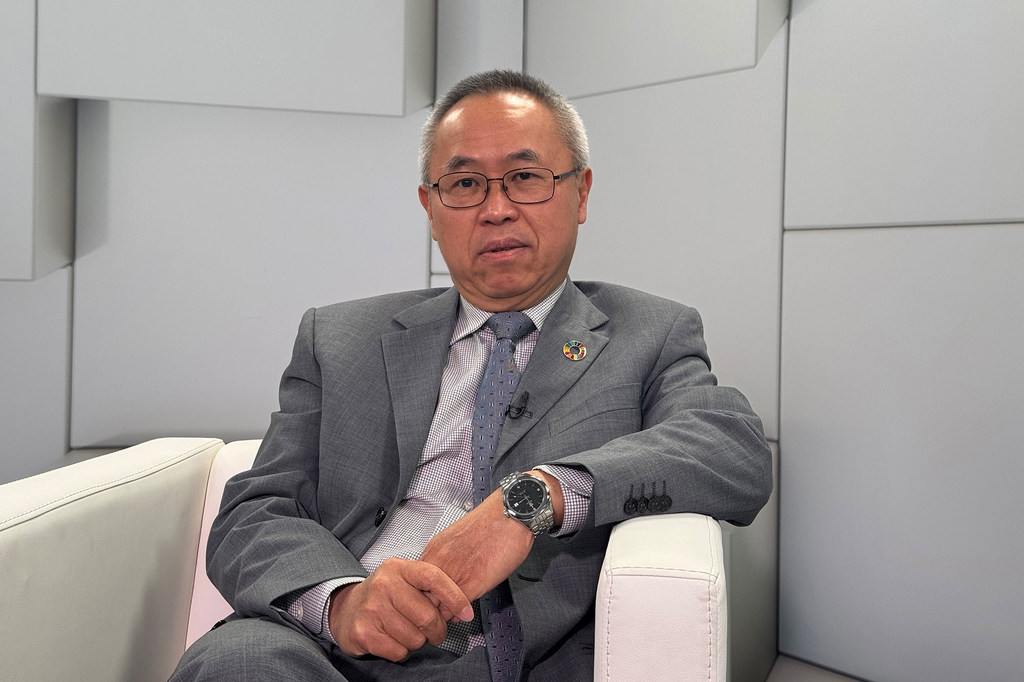
During the conference UN News spoke to Li Junhua, the UN Under-Secretary General for Economic and Social Affairs and Secretary-General of the international summit.

Li Junhua: The adoption of the Sevilla Agreement was an exceptional moment at an event which has brough together some 60 Heads of State and Government and seen 130 major initiatives announced as part of the Sevilla Platform for Action, which is aiming to implement the outcome document and turbocharge financing for sustainable development.

A record number of business leaders from various sectors actively participated in and positively contributed to the entire process and to the outcome of Conference. They all committed to supporting the implementation of the new roadmap.

UN News: What benefits do you think vulnerable communities in developing countries can look forward to, as a direct result of the decisions made here in Sevilla?

Li Junhua, UN Under-Secretary-General for Economic and Social Affairs.

Li Junhua: The Sevilla Commitment firmly recognizes that poverty eradication is indispensable to achieving sustainable development. This is the most essential point for all the developing countries. It proposes a package of actions for a large-scale investment push for the Sustainable Development Goals (SDGs) in the long run. This includes boosting investment in vital areas such as social protection systems, agrifood systems and inclusive, affordable and quality health systems.

Furthermore, it aims to strengthen the global response to crises which affect vulnerable communities the most. For instance, it calls for the implementation of the decision concerning climate finance agreed at the UN Climate Conference in Baku, and also the fund for responding to Loss and Damage.

To me, significant steps and commitments have been made to support countries in special situations to close the significant infrastructure gap in critical sectors. The most vulnerable populations can benefit significantly by gaining essential services and employment opportunities generated by, for instance, energy, transport, ICT [information and communication technology], water and sanitation infrastructure development.

Last but not least, there is a strong resolve to expand access to financial products and services across society, particularly for women, youth, persons with disabilities, displaced people, migrants and other persons in vulnerable situations. These are very tangible outcomes for vulnerable communities.

UN News: In what ways is this conference a real test of multilateralism, at a time when it’s under more strain than ever, and with a deeply uncertain global economic outlook?

Li Junhua: This conference is a critical test of our ability to solve problems together.

We know that, at its core, the sustainable development crisis is a crisis of funding and financing. We need to tackle these challenges to bring the SDGs back on track, but it is far from easy. Commitments on development finance directly impact national budgets, and reforming the international financial architecture will inevitably shift the power dynamics between States.

The fact that Member States adopted the Sevilla Agreement by consensus sends a powerful signal that multilateralism can still deliver. Of course, the real challenge now lies in translating these commitments into actions. So I would say that, ultimately, success depends on the collective efforts of all Member States and all stakeholders.

Source link

Sevilla conference on development financing shows optimism for multilateralism

Today, a $4 trillion financing gap is hindering progress toward achieving the Sustainable Development Goals (SDGs) by the end of this decade.

In response, the Fourth International Conference on Financing for Development (FFD4) will take place in Sevilla, Spain, beginning on 30 June, bringing together stakeholders to advance solutions to the financing challenges threatening sustainable development.

“We’ve seen mounting debt burdens and declining investment, and we’ve seen reduced aid and growing trade barriers. The current system is certainly not delivering for the people it was designed to support,” said Deputy Secretary-General Amina Mohammed at a briefing on Wednesday about the conference.  

She was joined by Ambassador Héctor Gómez Hernández of Spain, and Ambassador Chola Milambo of Zambia.  

Role of stakeholders

More than 70 heads of state and government will attend the Conference, along with leaders of international financial institutions, civil society, philanthropies and the private sector, including those from energy, food systems and digital industries.

“The collective presence alone, I believe, sends a good signal for multilateralism at a time when we’re facing quite a bit of pushback,” said Ms. Mohammed.

Seville Commitment

On 17 June, Member States agreed on the Compromiso de Sevilla, or Seville Commitment, to adopt at the Conference.  

Ms. Mohammed stressed that the Commitment addresses the debt crisis in developing countries that are particularly vulnerable to financing shortfalls, as many spend more on debt interest than on essential services, straining the opportunity for sustainable development.  

Ambassador Milambo explained that this will be done through greater transparency, a global debt registry, and amplifying the voices of debtor countries.

It also aims to catalyse investment by tripling Multilateral Development Bank (MDB) lending, doubling Official Development Assistance (ODA) to developing countries, leveraging private sector investment and ensuring the international financing system is more inclusive and effective.

“This is an agenda that world leaders can do something about. They do have the tools – and the political clout – to make it happen,” said Ms. Mohammed.

Test of multilateralism

Ambassador Hernández emphasised that the Conference comes at a critical time for multilateralism.

“This conference is an appeal to action, and we have the extraordinary opportunity to send a very strong message to defend the international community’s commitment to the multilateral system,” he said.  

Ambassador Milambo later added that the consensus on the Seville Commitment “sends a real message of hope to the world that we can tackle the financing challenges that stand in the way of the SDGs and that multilateralism can still work.”

Despite the consensus, the United States recently announced it will not send a delegation to the Conference.

Speakers urged observers to keep the broader picture in mind: “It is regrettable, but it doesn’t stop us from continuing to engage with that Member State” and urge a change in the course of action, said Ms. Mohammed.

She concluded by noting that, especially given the recent agreement of the Commitment, the discussions the UN is having with other donors on how they are trying to use resources more efficiently will hopefully go a long way.  

Source link

4th BIMSTEC Summit Declaration in Kathmandu vows for Bay of Bengal unity

The Prime Minister, Shri Narendra and the Prime Minister of Nepal, Shri K.P. Sharma Oli witnessing the exchange of MoU between India and Nepal, in Kathmandu, Nepal on August 31, 2018.(PIB)

India’s PM, Bangladesh PM, the Chief Advisor of Bhutan, President of Myanmar, PM of Nepal, President Sri Lanka, and the Prime Minister of Thailand, met in Kathmandu on 30-31 August 2018 for the Fourth BIMSTEC Summit and reaffirmed their commitment to the principles and purposes of BIMSTEC as enshrined in the 1997 Bangkok Declaration.

Recalling the Third BIMSTEC Summit Declaration (Nay Pyi Taw, 4 March 2014) and the BIMSTEC Leaders’ Retreat Outcome Document (Goa, 16 October 2016), they sought to make the Bay of Bengal Region peaceful, prosperous and sustainable by building on our common strengths through our collective efforts;

Recognizing that eradication of poverty is the greatest regional challenge in realization of development objectives and expressing firm commitment to working together for the implementation of the Agenda 2030 for Sustainable Development;Acknowledging that enhanced inter-linkages and inter-dependence within the economies and societies in the BIMSTEC Member States provide greater opportunity to advance regional cooperation;

Underlining the importance of multidimensional connectivity, which promotes synergy among connectivity frameworks in our region, as a key enabler to economic integration for shared prosperity;

Taking into consideration the importance of trade and investment as one of the major contributing factors for fostering economic and social development in the region.

Recognizing the special needs and circumstances of the least developed and land-locked developing countries in the region and underlining the necessity to provide meaningful support to their development process;

The Prime Minister, Shri Narendra and the Prime Minister of Nepal, Shri K.P. Sharma Oli at the inauguration of the Pashupati Nath Dharamshala at Tilganga, in Kathmandu, Nepal on August 31, 2018.(PIB)

Recognizing that terrorism and transnational organized crimes continue to pose a great threat to international peace and security including in the BIMSTEC countries and stressing that combating terrorism and transnational organized crimes require sustained efforts and cooperation and comprehensive approach involving active participation and collaboration of the Member States;

Reaffirming strong commitment to making BIMSTEC a dynamic, effective and result-oriented regional organization for promoting a peaceful, prosperous and sustainable Bay of Bengal Region through meaningful cooperation and deeper integration;

Taking Note of the participation and concurrence by the Chief Advisor of the Interim Government of Bhutan to the Summit decisions and its outcome documents on an ad referendum basis, as these are subject to endorsement by the next elected government;

The vowed to:

  1. Recall the principles enshrined in the 1997 Bangkok Declaration and reemphasize that cooperation within BIMSTEC will be based on respect for the principles of sovereign equality, territorial integrity, political independence, non-interference in internal affairs, peaceful co-existence and mutual benefit.
  2. Agree to intensify our efforts to realize the objectives and purposes of BIMSTEC as embodied in the 1997 Bangkok Declaration, and reiterate our pledge to work collectively towards making BIMSTEC a stronger, more effective and result-oriented organization for achieving a peaceful, prosperous and sustainable Bay of Bengal Region.
  3. Resolve to achieve, leveraging on BIMSTEC’s unique position as a bridge linking South and Southeast Asia, an enhanced level of economic and social development in the region, and remain fully committed to consolidate and deepen cooperation among Member States towards transforming our organization into an effective platform to promote peace, prosperity and sustainability.
  4. Deplore terrorist attacks in all parts of the world including in BIMSTEC countries and strongly condemn terrorism in all its forms and manifestations wherever and by whomsoever committed and stress that there can be no justification whatsoever for any act of terrorism. Affirm that the fight against terrorism should target not only terrorists, terror organizations and networks but also identify and hold accountable States and non-State entities that encourage, support or finance terrorism, provide sanctuaries to terrorists and terror groups and falsely extol their virtues. Reiterate our strong commitment to combat terrorism and call upon all countries to devise a comprehensive approach in this regard which should include preventing financing of terrorists and terrorist actions from territories under their control, blocking recruitment and cross-border movement of terrorists, countering radicalization, countering misuse of internet for purposes of terrorism and dismantling terrorist safe havens.
  5. Repose our faith unequivocally in the principles and purposes of the Charter of the United Nations and strive to strengthen the multilateral system by reforming its rules, institutions and instruments to make it relevant to contemporary global challenges and agree to work together to present a collective voice to safeguard our collective interests for a fair, just, rule-based, equitable and transparent world order.INSTITUTIONAL REFORM
  6. Decide to task the BIMSTEC Secretariat to prepare a preliminary draft of the charter for the organization, building on the 1997 Bangkok Declaration, defining a long-term vision and priorities for cooperation, clearly delineating roles and responsibilities of different layers of institutional structure and decision-making processes, for consideration by the BIMSTEC Permanent Working Committee (BPWC) and other higher bodies with a view to adopting it by the Fifth Summit; and agree to task the BPWC to develop the Rules of Procedure (RoP) for the BIMSTEC Mechanisms.
  7. Decide to establish a BIMSTEC Permanent Working Committee to deal with administrative and financial matters of the Secretariat and the BIMSTEC Centers and Entities, as well as to prepare schedule of meetings, prioritize and rationalize the organization’s activities.
  8. Direct the relevant Ministries/national agencies of our respective governments to explore the possibility of establishing a BIMSTEC Development Fund (BDF), at an appropriate time, with voluntary contributions from the Member States, which will be utilized for research and planning of BIMSTEC and financing of projects, programmes and other activities of BIMSTEC Centers and Entities as agreed upon by the Member States.
  9. Agree to enhance the institutional capacity of the BIMSTEC Secretariat, including through financial and human resources, in order to enable it to coordinate, monitor and facilitate implementation of BIMSTEC activities and programmes; and initiate project proposals as agreed by the Member States as well as fulfil any other responsibility entrusted to it in an effective and efficient manner and agree to raise the numbers of Directors to seven, one from each Member State, in a staggered manner.
  10. Acknowledge the importance of enhancing the visibility and stature of BIMSTEC in international fora by, inter alia, forging common positions, as appropriate, on issues of common interest and seeking group recognition in various multilateral organizations, institutions and processes.
  11. Emphasize the need to accelerate progress in the core areas of cooperation and to review, restructure and rationalize the existing areas of BIMSTEC cooperation and streamline the operational modalities for activities, implementation of programmes and projects under BIMSTEC for bringing out tangible results. Welcome Thailand’s concept paper on the Reprioritization of BIMSTEC Pillars of Cooperation proposing to streamline to five pillars which will be subjected to further discussion in the BIMSTEC Permanent Working Committee.
  12. Agree to take up on priority basis the legal documents and instruments that are pending for internal approval process for finalization and ratification.
  13. Commend the role of Lead Countries for the progress made in the respective sectors, as annexed to this declaration, and encourage them to accelerate their efforts to make further progress.
  14. Express our appreciation for former Secretary-General Mr. Sumith Nakandala’s valuable contribution in advancing the work of BIMSTEC during his tenure and welcome the appointment of Mr. M. Shahidul Islam of Bangladesh as the Secretary General of BIMSTEC.
  15. Convey deep appreciation to Nepal for the able stewardship of BIMSTEC from March 2014 and welcome Sri Lanka as the new Chair of BIMSTEC.
  16. Reiterate the commitment to timely holding of Summit and other meetings of the BIMSTEC mechanisms to intensify the process of regional cooperation.
  17. Agree to make our directives, commitments and statements of our positions on sectoral review expressed at the Annexure as part of this Declaration.
  18. Express our sincere appreciation to the Government of Nepal for the warm hospitality and the excellent arrangements made for the Summit.