INTERVIEW: Sevilla ‘a critical test’ of multilateralism

The promises were made at the opening of the Financing for Development Conference (FFD4), currently underway in the Spanish city of Sevilla, when delegates agreed on the Sevilla Commitment

During the conference UN News spoke to Li Junhua, the UN Under-Secretary General for Economic and Social Affairs and Secretary-General of the international summit.

Li Junhua: The adoption of the Sevilla Agreement was an exceptional moment at an event which has brough together some 60 Heads of State and Government and seen 130 major initiatives announced as part of the Sevilla Platform for Action, which is aiming to implement the outcome document and turbocharge financing for sustainable development.

A record number of business leaders from various sectors actively participated in and positively contributed to the entire process and to the outcome of Conference. They all committed to supporting the implementation of the new roadmap.

UN News: What benefits do you think vulnerable communities in developing countries can look forward to, as a direct result of the decisions made here in Sevilla?

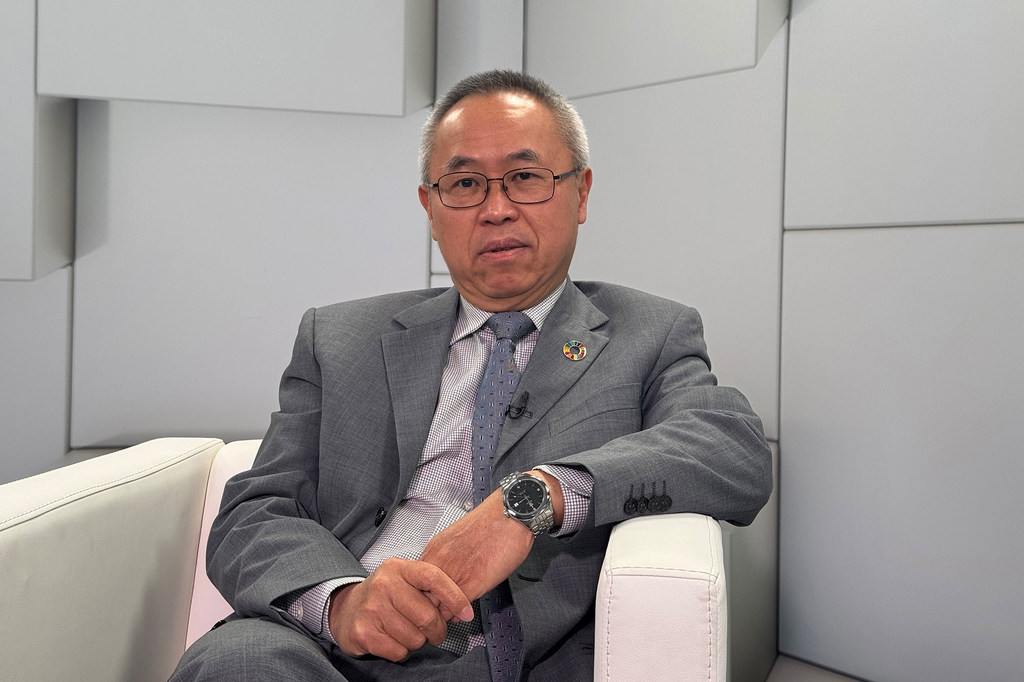
Li Junhua, UN Under-Secretary-General for Economic and Social Affairs.

Li Junhua: The Sevilla Commitment firmly recognizes that poverty eradication is indispensable to achieving sustainable development. This is the most essential point for all the developing countries. It proposes a package of actions for a large-scale investment push for the Sustainable Development Goals (SDGs) in the long run. This includes boosting investment in vital areas such as social protection systems, agrifood systems and inclusive, affordable and quality health systems.

Furthermore, it aims to strengthen the global response to crises which affect vulnerable communities the most. For instance, it calls for the implementation of the decision concerning climate finance agreed at the UN Climate Conference in Baku, and also the fund for responding to Loss and Damage.

To me, significant steps and commitments have been made to support countries in special situations to close the significant infrastructure gap in critical sectors. The most vulnerable populations can benefit significantly by gaining essential services and employment opportunities generated by, for instance, energy, transport, ICT [information and communication technology], water and sanitation infrastructure development.

Last but not least, there is a strong resolve to expand access to financial products and services across society, particularly for women, youth, persons with disabilities, displaced people, migrants and other persons in vulnerable situations. These are very tangible outcomes for vulnerable communities.

UN News: In what ways is this conference a real test of multilateralism, at a time when it’s under more strain than ever, and with a deeply uncertain global economic outlook?

Li Junhua: This conference is a critical test of our ability to solve problems together.

We know that, at its core, the sustainable development crisis is a crisis of funding and financing. We need to tackle these challenges to bring the SDGs back on track, but it is far from easy. Commitments on development finance directly impact national budgets, and reforming the international financial architecture will inevitably shift the power dynamics between States.

The fact that Member States adopted the Sevilla Agreement by consensus sends a powerful signal that multilateralism can still deliver. Of course, the real challenge now lies in translating these commitments into actions. So I would say that, ultimately, success depends on the collective efforts of all Member States and all stakeholders.

Source link

INTERVIEW: Visitors to Expo 2025 appreciate ‘positive vision’ of UN

Visitors can explore the UN’s 80-year history of advancing peace, human rights, sustainable development and climate action and see how the work of the UN system impacts the lives of all people across the world.

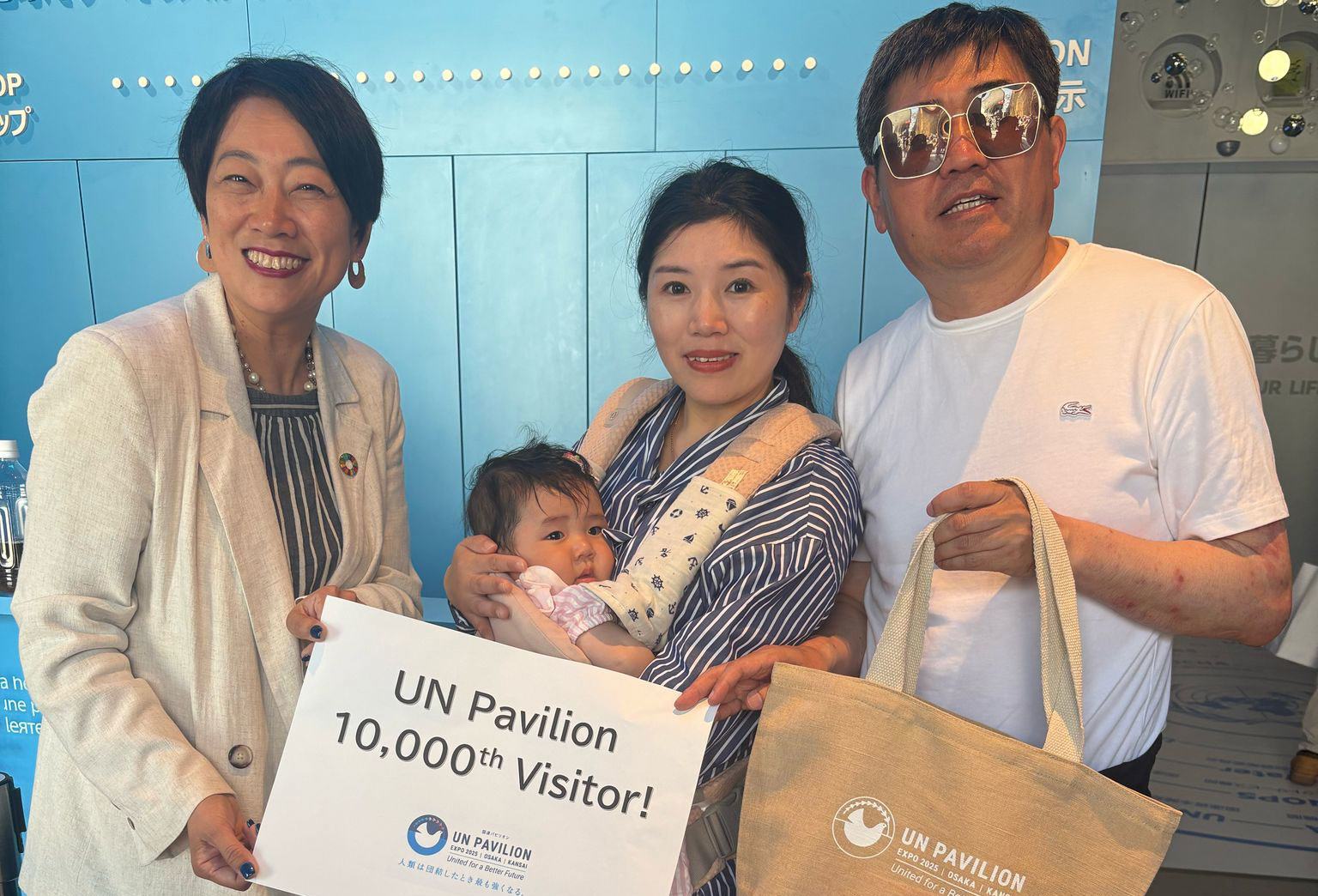
Naomi Ichikawa (left) welcomes the 10,000th visitor to the UN Pavilion in April, just five days after Expo 2025 opened.

What are the different sections of the pavilion and what they’re trying to achieve?

We have four exhibit zones. The first zone portrays 80 years of UN history, highlighting key milestones from 1945 until today. It also shows the changing relationship between Japan and the UN.

In the 1940s following the devastation of the Second World War Japan was a recipient of UN assistance. But after Japan joined the UN (in 1956) it gradually started to take leadership in different areas, for example in climate change issues, disaster risk reduction and in the provision of Universal Health Coverage.

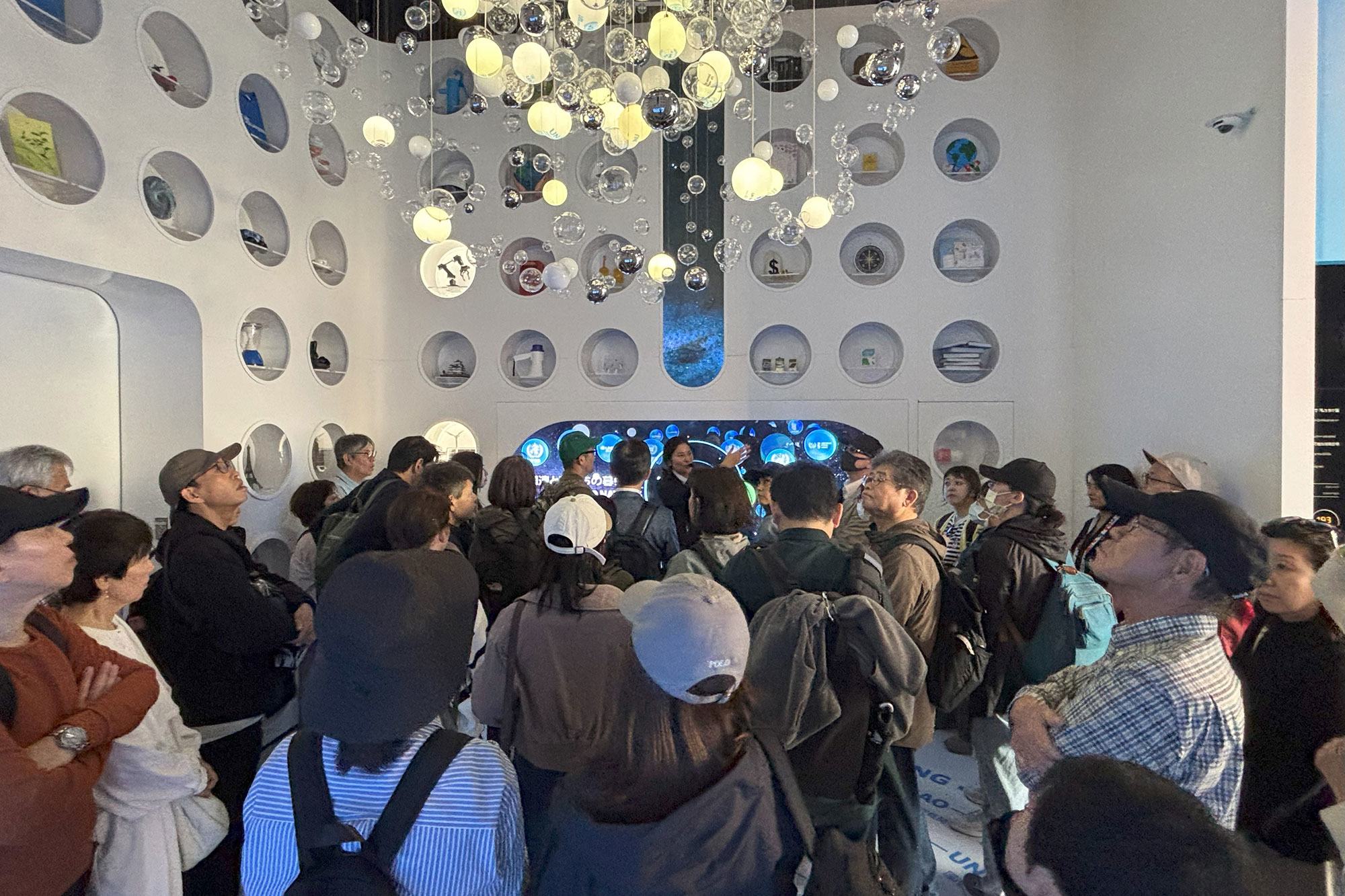
Zone two shows the work of diverse UN entities. Visitors will notice that there are many everyday objects on the wall; a toilet, helmet, car seat, post box but they may not realize that these items are actually closely related to the work of the UN.

Visitors to the UN Pavilion explore the ‘orb’ room.

By tapping on the monitor, the items light up and an explanation is given about its relationship to the work of the UN.

One of the aims of this zone is to demonstrate that the UN is not just about conflict resolution. In Japan, when the UN is mentioned, many people think about the Security Council and ask why Japan isn’t a permanent member. 

We wanted to show in an interesting interactive way that the UN’s work is so much more than that.

In zone three, which represents the future, we show through an immersive movie, a vision of the sustainable future that we can achieve if we work together. In the movie, the UN Secretary-General says that this future is not automatic, but it is one that we can achieve together.

The final part of the pavilion is the special exhibition zone that features the work of different UN entities each week. 

Why is it important that the UN is here at Expo? 

I would say that 90 per cent of Japanese people know about the Sustainable Development Goals (SDGs), but many do not know what they can do in their lives to contribute to the SDGs, or understand the positive role played by the UN in making the SDGs a reality in a global context. So, we felt that it was important to explain that work.

There are some 160 different countries participating in Expo and they are here to showcase their own cultures.

But it’s the UN which can encourage countries to work together to achieve peace and a sustainable world. So, collaboration and multilateralism are key themes of the pavilion.

Why is that message important? 

The world is divided right now and you can sense the anxiety about that, even in Japan. That anxiety is not just focused on political issues but also on the environmental and other global challenges which go beyond the country level. At the UN Pavilion they can learn about these challenges but also the solutions.

I am so proud to be part of a team which explains how the UN is contributing to solving these global problems. It is rewarding to interact with visitors and to support their understanding of the UN.

Many are surprised by the range of work in which the organization is engaged, and everyone leaves inspired by our messages.

What is the most surprising reaction you’ve had from a visitor?

There has been great interest and engagement in the immersive video which envisions a hopeful future that all humanity can enjoy if we work together. It has a very simple message about collaboration which can be easily understood by people of all ages and backgrounds.

Many people have been deeply affected by its message and I have seen some moved to tears.

A boy participates in an event at the UN pavilion to promote the SDGs.

I believe visitors feel closer to the UN after experiencing the video and the rest of the pavilion. I am from Japan and I think many people are surprised to meet a Japanese national working for the UN. That also helps to bring them closer to the work of the UN.

How important and relevant is an Expo in today’s world?

There really isn’t any other place like this, where you can meet people from Uzbekistan, and then next door people from Malta. I think this is such a rare opportunity, especially in this era of the Internet, to be able to discover the culture and values of so many different nations.

Initially, the Japanese people were somewhat sceptical and critical of the cost of putting on Expo, because they said they could find all the information on the Internet.

However, when they visit, they realize that they can actually see, feel and learn about different cultures in person. It’s very different from reading something on the Internet or watching YouTube.

This venue is so special and people come here with an open and enquiring mind.

I think the timing of this Expo is important as there is so much uncertainty and conflict in the world. At the UN, we are here to promote a better world for all people built on equality, dignity and peace, living in harmony with nature and sustaining our Planet. We hope to share this positive vision with as many visitors as possible until the closing of the Expo in mid-October.

Source link