World News in Brief: Executions surge in Iran, nuclear test threat, Burkina Faso declares top official unwelcome

At least 841 people have been put to death by the Government of Iran since the beginning of the year, with ethnic minorities and migrants “disproportionately targeted”, said OHCHR spokesperson Ravina Shamdasani.

Some executions have been carried out publicly, she added, with seven reported this year based on available information: “The real situation might be different. It might be worse given the lack of transparency in the use of the death penalty.”

Imminent executions

Eleven people now face imminent execution; six have been charged with “armed rebellion” owing to their alleged membership of the Mojahedin-e-Khalq group.  

Five others are on death row in connection with their participation in the 2022 protests, following the death in police custody of Mahsa Amini, who was detained by Iran’s so-called morality police for not wearing her hijab correctly.  

Ms. Shamdasani reiterated calls from UN rights chief Volker Türk for Iran to impose a moratorium on the application of the capital punishment, as a step towards its abolition.

UN chief warns against ‘playing with fire’ as nuclear test threat looms

UN Secretary-General António Guterres has issued a stark warning on the International Day against Nuclear Tests, urging world leaders to halt the threat of renewed detonations.

“Stop playing with fire. Now is the time to silence the bombs before they speak again,” he said in his message, which coincides with the 80th anniversary of the first nuclear test on 16 July 1945 – in the New Mexico desert under the Manhattan Project.

A deadly legacy

Since then, more than 2,000 nuclear tests have been carried out worldwide.  

Atmospheric tests in the early decades of the nuclear era spread radioactive fallout across continents, contaminating land and seas, displacing communities and leaving survivors facing health crises passed down through generations.

The international day was declared by the UN General Assembly in 2009, following Kazakhstan’s closure of the Semipalatinsk test site.

It has since become a rallying point for governments, civil society and campaigners pressing for an end to nuclear testing and progress towards full disarmament.

Mr. Guterres stressed that nuclear testing remains a grave danger amid rising geopolitical tensions. He urged States to ratify the Comprehensive Nuclear-Test-Ban Treaty (CTBT), adopted by a large majority in 1996 but still not in force nearly three decades later.

“We must never forget the horrific legacy of over 2,000 nuclear tests,” the Secretary-General said. “The world cannot accept this.”

Burkina Faso declares UN Coordinator persona non grata  

The UN chief has expressed regret of the decision by authorities in Burkina Faso to declare the UN’s Resident and Humanitarian Coordinator in the country, Carol Flore-Smereczniak, persona non grata.

In a statement on Friday, António Guterres said that the transitional authorities had announced the diplomatic sanction declaring her unwelcome, on 18 August.

The UN chief expressed “full confidence” in her “professionalism and dedication and in the broader United Nations system in Burkina Faso.”

During her tenure, Ms. Flore-Smereczniak – who has now left the country – led UN efforts working closely with the Burkinabe authorities to support development initiatives and provide humanitarian assistance.

UN will continue to support Burkinabe

The statement stresses that the UN Charter makes clear the doctrine of persona non grata does not apply to UN officials, as staff members appointed by the Secretary-General are responsible solely to the Organization, and Member States undertake to respect their exclusively international character.

In line with the Charter, the United Nations enjoys privileges and immunities, including the right of its staff to remain and carry out their mandated work.

“Only the Secretary-General, as the Chief Administrative Officer of the Organization, has the authority to decide – after careful investigation – on the withdrawal of any United Nations official.”

Mr. Guterres reaffirmed the UN’s commitment to continue supporting the people of Burkina Faso, and to keep working with the national authorities.  

Source link

Unprecedented Afghan returns are ‘a test of our collective humanity’

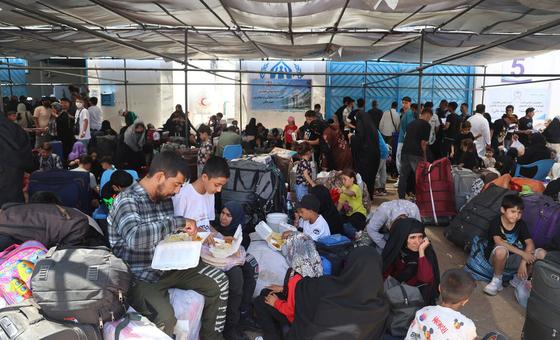
Roza Otunbayeva, the Secretary-General’s Special Representative for Afghanistan, made the appeal during a visit to the Islam Qala border crossing with Iran on Tuesday where she witnessed the daily influx of tens of thousands of returnees.

She also met returnee families, aid partners and regional de facto officials.

Alarm bells should be ringing

What should be a positive homecoming moment for families who fled conflict decades ago is instead marked by exhaustion, trauma, and profound uncertainty,” said Ms. Otunbayeva, who also heads the UN Assistance Mission in Afghanistan (UNAMA).

“The sheer volume of returns – many abrupt, many involuntary – should be setting off alarm bells across the global community,” she added.

It is a test of our collective humanity. Afghanistan, already grappling with drought, and a chronic humanitarian crisis, cannot absorb this shock alone.” 

Local communities overstretched

Since January, more than 1.3 million have been largely compelled to head back to Afghanistan – a country where 70 per cent of the population lives in poverty. 

Women and children face the gravest risks, UNAMA said, as they are returning not only to dire economic hardships but to a context where their access to basic services and social protections remains severely constrained.

The UN has repeatedly highlighted the assault on women’s rights under Taliban rule, including bans affecting higher education, employment and freedom of movement.

Reintegration support critical

The returns are happening at a time when humanitarian operations remain woefully underfunded, forcing agonising choices between food, shelter, and safe passage.

Ms. Otunbayeva also underscored the critical need for immediate reintegration assistance as initial evidence shows that stabilising return communities requires urgent livelihood programmes and community infrastructure investments. 

She warned that without swift interventions, remittance losses, labour market pressures, and cyclical migration will lead to devastating consequences.

These could include the further destabilization of both returnee and host populations, renewed displacement, mass onward movement, and risks to regional stability.

‘We cannot afford indifference’

She urged donors, development partners, and regional governments not to turn away and abandon Afghan returnees.

“What we are witnessing are the direct consequences of unmet global responsibilities,” she said. “We must act now – with resources, with coordination, and with resolve.” 

Meanwhile, the UN in Afghanistan is calling for an integrated approach that resources humanitarian needs while scaling up assistance in areas of return.

At the same time, regional dialogue – including with Iran, Pakistan, and Central Asian states – must be prioritized to halt disorderly returns and uphold the principle of voluntary, dignified and safe repatriation.

“Afghanistan’s stability hinges on shared responsibility: We cannot afford indifference,” said Ms. Otunbayeva. “The cost of inaction will be measured in lives lost and conflicts reignited.” 

Source link

INTERVIEW: Sevilla ‘a critical test’ of multilateralism

The promises were made at the opening of the Financing for Development Conference (FFD4), currently underway in the Spanish city of Sevilla, when delegates agreed on the Sevilla Commitment

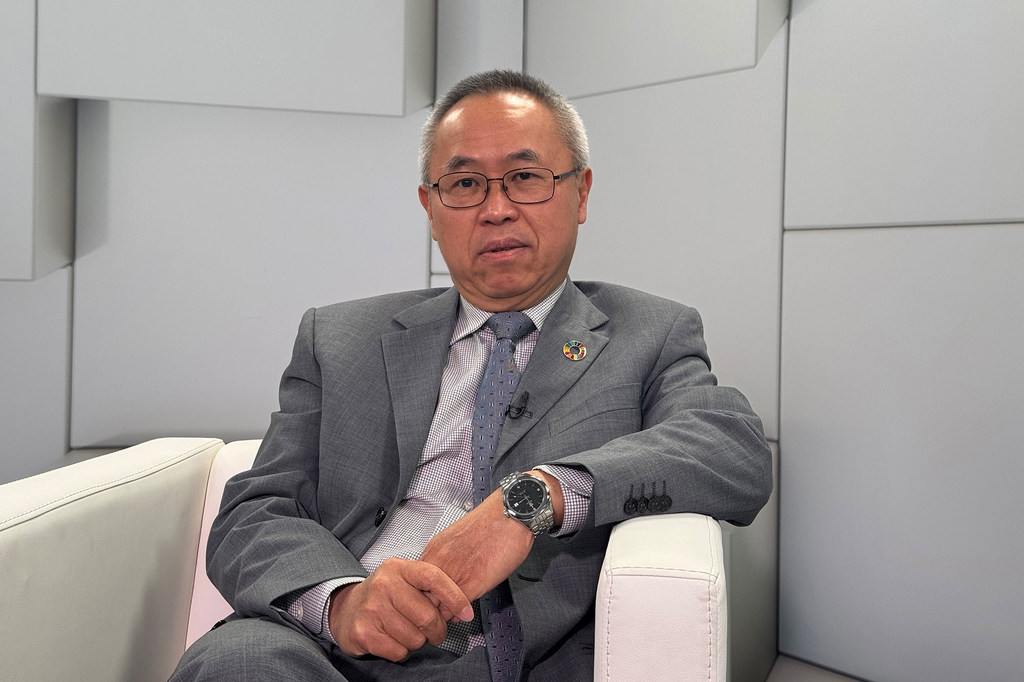
During the conference UN News spoke to Li Junhua, the UN Under-Secretary General for Economic and Social Affairs and Secretary-General of the international summit.

Li Junhua: The adoption of the Sevilla Agreement was an exceptional moment at an event which has brough together some 60 Heads of State and Government and seen 130 major initiatives announced as part of the Sevilla Platform for Action, which is aiming to implement the outcome document and turbocharge financing for sustainable development.

A record number of business leaders from various sectors actively participated in and positively contributed to the entire process and to the outcome of Conference. They all committed to supporting the implementation of the new roadmap.

UN News: What benefits do you think vulnerable communities in developing countries can look forward to, as a direct result of the decisions made here in Sevilla?

Li Junhua, UN Under-Secretary-General for Economic and Social Affairs.

Li Junhua: The Sevilla Commitment firmly recognizes that poverty eradication is indispensable to achieving sustainable development. This is the most essential point for all the developing countries. It proposes a package of actions for a large-scale investment push for the Sustainable Development Goals (SDGs) in the long run. This includes boosting investment in vital areas such as social protection systems, agrifood systems and inclusive, affordable and quality health systems.

Furthermore, it aims to strengthen the global response to crises which affect vulnerable communities the most. For instance, it calls for the implementation of the decision concerning climate finance agreed at the UN Climate Conference in Baku, and also the fund for responding to Loss and Damage.

To me, significant steps and commitments have been made to support countries in special situations to close the significant infrastructure gap in critical sectors. The most vulnerable populations can benefit significantly by gaining essential services and employment opportunities generated by, for instance, energy, transport, ICT [information and communication technology], water and sanitation infrastructure development.

Last but not least, there is a strong resolve to expand access to financial products and services across society, particularly for women, youth, persons with disabilities, displaced people, migrants and other persons in vulnerable situations. These are very tangible outcomes for vulnerable communities.

UN News: In what ways is this conference a real test of multilateralism, at a time when it’s under more strain than ever, and with a deeply uncertain global economic outlook?

Li Junhua: This conference is a critical test of our ability to solve problems together.

We know that, at its core, the sustainable development crisis is a crisis of funding and financing. We need to tackle these challenges to bring the SDGs back on track, but it is far from easy. Commitments on development finance directly impact national budgets, and reforming the international financial architecture will inevitably shift the power dynamics between States.

The fact that Member States adopted the Sevilla Agreement by consensus sends a powerful signal that multilateralism can still deliver. Of course, the real challenge now lies in translating these commitments into actions. So I would say that, ultimately, success depends on the collective efforts of all Member States and all stakeholders.

Source link

Aftermath of Tripoli clashes puts Libya’s fragile stability to the test

Nearly 15 years after Gaddafi’s fall, Libya remains split between the internationally recognised Government of National Unity in Tripoli, and the rival Government of National Stability in Benghazi.

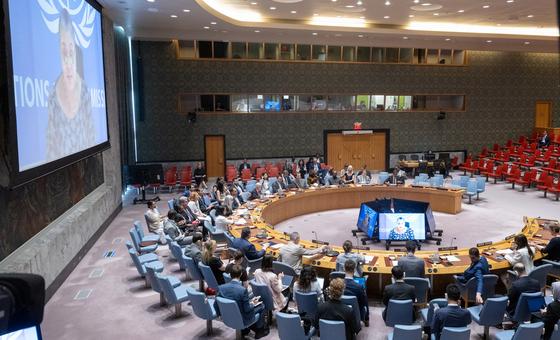
Although a truce was reached on 14 May, the outbreak of fighting last month in the capital “temporarily disrupted UN development and humanitarian operations,” said top UN envoy Hanna Tetteh.

Fragile Truce

On 18 May, with support from the UN Support Mission in Libya (UNSMIL), the Presidential Council established a Truce Committee.

Composed of key security actors, the body has been mandated to monitor the upholding of the ceasefire, facilitate a permanent end to the fighting and ensure the protection of civilians.

As UNSMIL works to ease tensions and prevent further clashes, the Presidential Council has also set up a temporary Security and Military Arrangement Committee, tasked with sustaining peace and reorganising security forces in the capital.

The truce, however, remains fragile, and the overall security situation unpredictable,” said Ms. Tetteh.

Alleged grave violations

The armed clashes that erupted in May resulted in civilian deaths and injuries, as well as damage to critical civilian infrastructure, underscoring the shortcomings of State security forces in adhering to international humanitarian and human rights law, she continued.

Ms. Tetteh expressed alarm over mass graves found in Abu Slim, citing emerging evidence of serious human rights violations – including extrajudicial killings, torture, and enforced disappearances – allegedly by State security forces.

“The presence of charred remains, unidentified bodies in morgues, and a suspected unofficial detention site at Abu Salim Zoo underscores the scale and gravity of these abuses,” she said.

Demand for change

Many Libyans are deeply disillusioned with the prolonged transitional period and have lost confidence in the current institutions and leadership,” said Ms. Tetteh.

As civilians increasingly doubt the current leadership’s willingness to put national interests above their own, there is strong demand for a political process that allows public participation, enables elections, and delivers a democratic government with a clear mandate for real change.

UNSMIL intends to present a time-bound and politically pragmatic roadmap – with the goal of reaching the end of the transitional process – by the time of her next briefing, Ms. Tetteh told ambassadors.

I urge all parties to engage in good faith and to be ready to forge consensus on this roadmap,” she said.

Source link

Pentagon Tests Micro-Drone Swarm Technology

U.S. military has successfully tested more than 103 micro-drones released from 3 F/A-18 Super Hornets, in what it said the largest-ever test for the cutting-edge “swarm” technology.

The swarm of 103 Perdix micro drones, too small and of battery-powered were launched from three separate Super Hornets at China Lake in California, by the Pentagon’s Strategic Capabilities Office, or SCO, in collaboration with Naval Air Systems Command, said a statement.

The micro-drones demonstrated swarm behavior in terms of “collective decision-making, adaptive formation flying, and self-healing,” said a Defense Department release on Monday.

“This is the kind of cutting-edge innovation that will keep us a step ahead of our adversaries. This demonstration will advance our development of autonomous systems,” Secretary of Defense Ash Carter, who created the SCO in 2012. The test was conducted in October 2016 and aired on Sunday’s CBS News program “60 Minutes”.

Perdix micro drones are low-altitude flying devices too small to be detected with naked eye or a radar but they are capable of autonomously conducting intelligence collection and useful for surveillance operations.

Perdix are not pre-programmed synchronized individuals but act like a collective organism, sharing one distributed brain for decision-making and adapting to each other like swarms in nature, said SCO Director William Roper. “Because every Perdix communicates and collaborates with every other Perdix, the swarm has no leader and can gracefully adapt to drones entering or exiting the team.”

These devices were originally developed by engineering students at the Massachusetts Institute of Technology in the Aeronautics and Astronautics Department and they were eventually modified for military application at MIT’s Lincoln Laboratory in 2013.

Earlier, they were test using F-16 flare canisters by the Air Force Test Pilot School at Edwards Air Force Base in 2014 and in 2015. About 90 Perdix missions were undertaken so far under U.S. Pacific Command’s Northern Edge exercise in Alaska.