World News in Brief: Afghan quake update, diplomacy continues to end Sudan war, UN honours victims of 9/11

Women and children face heightened risks, while operational challenges – including restrictions on female UN staff – threaten life-saving relief efforts.

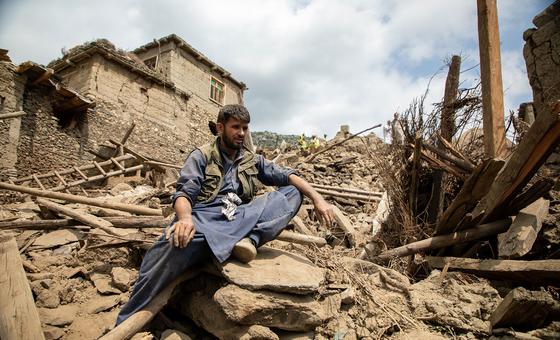
The twin quakes, measuring 6.0 and 6.2, struck on 31 August and 4 September, flattening entire villages in Kunar, Nangarhar, Laghman and Nuristan provinces. Mountainous terrain and landslides blocked key roads, leaving air transport as the only reliable access. 

Assessments indicate over 6,700 homes were destroyed or damaged, forcing most families to shelter in the open without privacy, clean water, or basic services.

Ensuring critical healthcare

UNFPA, the UN reproductive health agency, has deployed health teams to the hardest-hit areas, providing maternal and reproductive healthcare, psychosocial support and counselling. More than 9,500 people have received assistance so far.

“Women and children in particular are extremely traumatized,” said a psychosocial counsellor. “Our goal is to support their emotional and mental health and provide whatever assistance we can, including medicines and dignity kits.”

Among the affected, UNFPA estimates some 11,600 pregnant women face heightened risk due to limited access to health services.

“For pregnant women, a natural disaster can turn an already challenging time into a life-threatening crisis,” said UNFPA Representative Kwabena Asante-Ntiamoah.

World Health Organization (WHO) mobile teams have been deployed to provide trauma care, maternal and child health services, mental health support, immunizations, and emergency nutrition.

The agency has also dispatched 43 tonnes of medical supplies and provided over 4,500 consultations through its clinics.

Sudan: UN envoy heads to region in call for dialogue towards peace

The UN Secretary-General’s Personal Envoy for Sudan, Ramtane Lamamra, has travelled to East Africa to address the ongoing civil conflict there and push for negotiations towards a peace deal.

 In a post on X earlier this week, Mr. Lamamra called on combatants and political actors in Sudan “to engage in constructive dialogue leading to a sustainable solution.”

The goal of the visit is to make progress on the protection of civilians and to strengthen multilateral mediation efforts in the country.

Push for high level consultations

To achieve that, he is working together with the African Union to organize a ministerial-level consultative group meeting in Addis Ababa.

As the rival militaries continue to attack civilians and vital infrastructure, many displaced people and other communities are receiving reduced food assistance, or none at all.

“We continue to reiterate our calls for an end to this conflict that has left 25 million people acutely hungry,” said the UN Secretary General’s Spokesperson Stéphane Dujarric at a press conference on Thursday.

UN honours 9/11 anniversary, stands with New Yorkers

Marking the 24th anniversary of the 11 September terror attacks, the UN reaffirmed its enduring solidarity on Thursday with the people of New York, the city where it has been headquartered for nearly 80 years. 

“New York has hosted the United Nations for 80 years and has been the home to many of our colleagues, as well as to diplomats, staff, and of course all the Secretaries-General. We continue to stand in solidarity with the people of New York, as we did 24 years ago,” said UN Spokesperson Stéphane Dujarric. 

The attacks on the twin towers of the World Trade Center in downtown Manhattan claimed nearly 3,000 lives from over 90 countries and left thousands more injured. 

Decades later, survivors and first responders continue to face long-term health challenges, including respiratory illnesses, cancer, and mental health struggles. 

A place to call home

“New York City has hosted our UN Headquarters for decades and is the place many colleagues call home – so do I,” said Secretary-General António Guterres.

“Today, my thoughts are with everyone who lost loved ones on 9/11, and with all the people of New York City,” he added, in a social media post. 

The UN emphasised its ongoing commitment to commemorate the worst terror attack in US history, honouring the victims, and supporting New Yorkers as the city continues its journey of resilience and healing. 

Source link

‘The real challenge is still ahead’: UN warns on Afghan returnees

“The real challenge is still ahead of us,” Stephanie Loose, Programme Manager in Afghanistan, told journalists in Geneva on Friday.

We’re speaking about the reintegration of people who’ve lost their homes, who’ve lost their assets and also their hope.” 

Millions on the move

Afghanistan is currently facing an unprecedented returnee crisis. 

Since September 2023, some three million Afghans living in Pakistan and Iran were either deported or voluntarily repatriated, with over two million arriving so far this year.  For some, it’s not a return but a new start.

“Many in Afghanistan don’t have a place to go because they’ve never actually lived in Afghanistan,” Ms. Loose said.

“Sixty per cent of those who are returning now are below 18, so they don’t have any social ties, they don’t have any networks, and there is a real risk for them taking negative coping mechanisms.”

Concern for women and girls

Returnees are coming to a country under Taliban rule and where roughly half the population – 22.9 million people – requires humanitarian assistance amid economic, human rights and climate-related crises. 

Ms. Loose noted that Taliban edicts preventing women and girls from attending secondary school, getting a job, or going outside without a male chaperone, present a serious challenge to returnees.

“They’re being pushed back into a country where there’s no education for girls beyond 12, where they don’t actually know where to go, and where there’s actually specifically for women and girls no social and no economic development opportunities,” she said. 

“We also have women-headed households who return to the country. So, you can just imagine actually what it means to them. They cannot actually leave their houses without being accompanied by a mahram, a male guardian, even if they want to go and see a doctor.

Challenges to integration

She added that integration is likely to be further complicated by the high level of needs in Afghanistan, given the fragile political, economic and social situation, linked to more than four decades of conflict.

Afghanistan is also among the top 10 countries impacted by climate change, and droughts, floods and heatwaves have taken a toll on rural livelihoods. They also threaten people living in informal settlements in urban areas who account for up to 80 per cent of the population in these locations.

Given the scale of needs across Afghanistan, Ms. Loose stressed that rebuilding lives goes beyond emergency aid.

People need access to basic services, to water, to sanitation.  And overall, they do need livelihood opportunities…to lead their lives in dignity and to support their families,” she said.

International appeal

Reintegrating large numbers of displaced people will require huge efforts from the international community and the Afghan authorities, she said. 

It is a humanitarian crisis for individuals, but demands systemic, locally grounded approaches, and strong investment in basic services, infrastructures, housing solutions and livelihood opportunities,” she said.

Ms. Loose urged the international community not to forget about Afghanistan and its people, especially women and girls, and to ensure adequate funding is made available so that they can live in dignity. 

Source link

Afghan women returnees face rising risks, UN warns

UN Women – which champions gender empowerment and equality – alongside the international humanitarian agency CARE International and partners, issued the call in a report published on Thursday that also highlights the key challenges and needs of women aid workers assisting the returnees.

The Gender Alert comes amid a surge in returnees to Afghanistan, where the Taliban has ruled for four years, implementing numerous decrees that restrict women’s rights amid economic crisis, climate shocks and immense humanitarian needs.

Strangers in a strange land

Since September 2023, more than 2.4 million undocumented Afghan migrants have returned, or were forced to return, from Pakistan and Iran.

Women and girls account for a third of returnees from Iran so far this year, and about half of those coming from Pakistan.   

Many arrive in a country they have never lived in, with no home, income or access to education and healthcare.

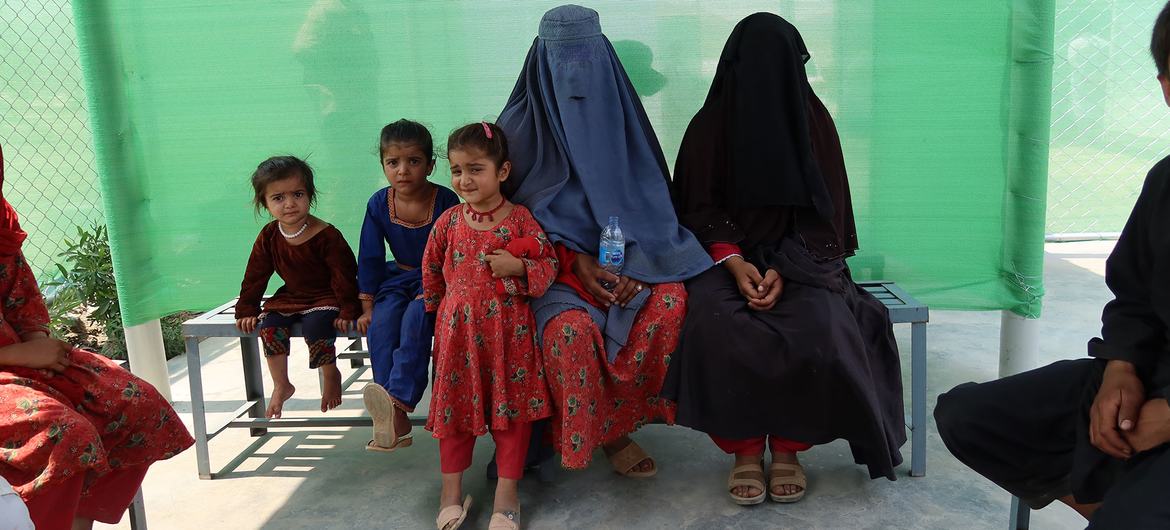
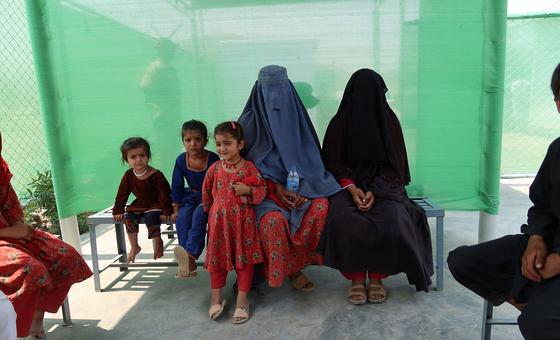
Women and children who have returned to Afghanistan, wait to be seen at a maternity clinic.

A myriad of risks

Like all women and girls in Afghanistan, the returnees face increased risks of poverty, early marriage, violence, exploitation and unprecedented restrictions on their rights, movements and freedoms.  

Vulnerable women and girls arriving with nothing into communities that are already stretched to breaking point puts them at even greater risk,” said Susan Ferguson, UN Women Special Representative in the country. 

We need a place to stay, a chance to learn and a way to earn.

“They are determined to rebuild with dignity, but we need more funding to provide the dedicated support they need and to ensure women humanitarian workers are there to reach them.” 

Housing, income and education

The report outlines urgent and long-term needs, such as safe and affordable shelter, livelihood support and girls’ education.  

As one participant in a focus group in Nangahar province put it, “We need a place to stay, a chance to learn and a way to earn.”

Currently, only 10 per cent of women-headed households live in permanent shelter, nearly four in 10 fear eviction, and all girls are banned from attending secondary school.

Impact of aid cuts

Although women humanitarian workers at border points are critical to reaching female returnees, cuts in foreign aid and movement restrictions increasingly hamper their efforts.

For example, women humanitarians are required to be accompanied by a male guardian, or mahram, when travelling.  However, “funding cuts have sharply eroded staff mahram support in the provinces of Kandahar and Nangarhar, leaving provision inconsistent, delayed, or absent altogether,” the report said.

The funding cuts have severely weakened the capacity of humanitarian organizations to respond, and women humanitarian workers at border points report that they are overwhelmed by the sheer number of arrivals and being unable to meet even their basic needs. 

‘Distressed, disoriented and without hope’

“Witnessing the volume of arrivals and the hardship faced by women, children and families – many distressed, disoriented and without hope – has left a deep impact on all of us responding to this crisis,” said Graham Davison, CARE Afghanistan Director.

He underscored the urgent need for support to provide basic services, safe spaces and protection for women and girl returnees. 

The report noted that Afghanistan is already facing one of the world’s most dire humanitarian crises, driven by decades of conflict, poverty and natural disasters.

As this latest wave of returns threatens to push already fragile communities further into crisis, the partners urged the international community to act now to protect the rights of Afghan women and girls and to invest in the women humanitarians who support them.

Arafat Jamal, the UN refugee agency (UNHCR) Representative in Afghanistan, recently spoke about the surge in returnees from Iran.

Record number of returns

Separately, the International Organization for Migration (IOM) also called for international support as Afghanistan confronts “one of the largest return movements in recent history.”

Returnee numbers are on track to increase as one million more Afghans are expected to return from Pakistan following the Government’s decision not to extend their stay.

IOM operates four reception centres at major border crossings in Afghanistan, including Islam Qala and Milak with Iran, and Torkham and Spin Boldak with Pakistan. 

The UN agency is appealing for additional funding to scale up its response to address growing needs at the borders and in areas of return.

Source link

UNHCR urges Pakistan to stop forced returns of Afghan refugees

He expressed particular concern over the plight of women and girls sent back to Afghanistan, which has been under Taliban rule for four years.

On 31 July, Pakistan confirmed that Afghan refugees would be deported under an ongoing ‘Illegal Foreigners Repatriation Plan’. 

UNHCR has received reports of arrests and detention of Afghans across the country, including PoR cardholders.

Violation of non-return principle

“We acknowledge and appreciate Pakistan’s generosity in hosting refugees for over 40 years amid its own challenges,” said Mr. Baloch.

“However, given that those holding PoR cards have been recognized as refugees for decades, their forced return is contrary to Pakistan’s long-standing humanitarian approach to this group and would constitute a violation of the principle of non-refoulement.”

The situation is unfolding amid a mass return of Afghans from neighbouring countries, including Iran.  

This year, over 2.1 million have already returned or been forced to return to Afghanistan, including 352,000 from Pakistan. 

Listen to our interview with Arafat Jamal, UNHCR Representative in Afghanistan, on returnees coming from Iran.

Concern for women and girls 

UNHCR remains particularly concerned about women and girls forced to return to a country where their human rights are at risk, as well as other groups who might be endangered,” said Mr. Baloch. 

He urged the authorities to ensure that any returns are voluntary, safe and dignified.  

Moreover, UNHCR has continued to seek an extension of the validity of PoR cards, which expired at the end of June, and welcomed the additional one-month “grace period” granted by Pakistan. 

UNHCR strongly urges the Government of Pakistan to apply measures to exempt Afghans with continued international protection needs from involuntary return,” he said.

“We also appeal to Pakistan’s established goodwill to allow legal stay for Afghans with medical needs, those currently pursuing higher education, or in mixed marriages.”

Far-reaching impact

He said the large-scale return of Afghans from neighbouring countries has put immense pressure on basic services, housing and livelihoods, as well as host communities.  

The general policy is worsening an already dire humanitarian crisis in Afghanistan. According to UN aid coordination office OCHA, almost half the population – nearly 23 million people – will require humanitarian assistance this year to survive.

Mr. Baloch warned that “mass and hasty returns significantly heighten protection needs, and risk instability in Afghanistan and the region, including onward movement.” 

Source link

Unprecedented Afghan returns are ‘a test of our collective humanity’

Roza Otunbayeva, the Secretary-General’s Special Representative for Afghanistan, made the appeal during a visit to the Islam Qala border crossing with Iran on Tuesday where she witnessed the daily influx of tens of thousands of returnees.

She also met returnee families, aid partners and regional de facto officials.

Alarm bells should be ringing

What should be a positive homecoming moment for families who fled conflict decades ago is instead marked by exhaustion, trauma, and profound uncertainty,” said Ms. Otunbayeva, who also heads the UN Assistance Mission in Afghanistan (UNAMA).

“The sheer volume of returns – many abrupt, many involuntary – should be setting off alarm bells across the global community,” she added.

It is a test of our collective humanity. Afghanistan, already grappling with drought, and a chronic humanitarian crisis, cannot absorb this shock alone.” 

Local communities overstretched

Since January, more than 1.3 million have been largely compelled to head back to Afghanistan – a country where 70 per cent of the population lives in poverty. 

Women and children face the gravest risks, UNAMA said, as they are returning not only to dire economic hardships but to a context where their access to basic services and social protections remains severely constrained.

The UN has repeatedly highlighted the assault on women’s rights under Taliban rule, including bans affecting higher education, employment and freedom of movement.

Reintegration support critical

The returns are happening at a time when humanitarian operations remain woefully underfunded, forcing agonising choices between food, shelter, and safe passage.

Ms. Otunbayeva also underscored the critical need for immediate reintegration assistance as initial evidence shows that stabilising return communities requires urgent livelihood programmes and community infrastructure investments. 

She warned that without swift interventions, remittance losses, labour market pressures, and cyclical migration will lead to devastating consequences.

These could include the further destabilization of both returnee and host populations, renewed displacement, mass onward movement, and risks to regional stability.

‘We cannot afford indifference’

She urged donors, development partners, and regional governments not to turn away and abandon Afghan returnees.

“What we are witnessing are the direct consequences of unmet global responsibilities,” she said. “We must act now – with resources, with coordination, and with resolve.” 

Meanwhile, the UN in Afghanistan is calling for an integrated approach that resources humanitarian needs while scaling up assistance in areas of return.

At the same time, regional dialogue – including with Iran, Pakistan, and Central Asian states – must be prioritized to halt disorderly returns and uphold the principle of voluntary, dignified and safe repatriation.

“Afghanistan’s stability hinges on shared responsibility: We cannot afford indifference,” said Ms. Otunbayeva. “The cost of inaction will be measured in lives lost and conflicts reignited.” 

Source link

Desperate Afghan refugees return to an unfamiliar home

The agency is calling for calm and cooperation to provide a dignified path forward for millions of displaced Afghans.

More than 1.6 million Afghans have returned from both neighbouring countries in 2024 alone, according to UNHCR – a figure that has already surpassed earlier forecasts for the entire year.

‘From Afghanistan – not of Afghanistan’

The scale and speed of these returns are placing enormous pressure on border provinces ill-equipped to absorb them, exacerbating poverty, insecurity and humanitarian need in a country still reeling from economic collapse and widespread human rights abuses.

Complicating the situation further is the fact that many returnees – especially women and children – are coming back to a country they barely know.

They are from Afghanistan [but] not of Afghanistan – often born abroad with better education and different cultural norms. Their outlook is different from and often at odds with present day Afghanistan,” says Arafat Jamal, UNHCR Representative in the country.

Women and girls in particular face a jarring shift: from relative autonomy in host countries to a context where their rights are severely restricted by edicts from Taliban authorities.

© UNICEF/Shehzad Noorani

Women’s rights in Afghanistan continue to face severe setbacks, with restrictions deepening across education, employment and public life

Disorientated and disorganised

He reported conditions that he had seen for himself recently in Islam Qala, a key border crossing with Iran.

Daily arrivals have surged to around 50,000 people, many of them disoriented and exhausted after arduous journeys. UN officials described scenes of desperation at reception centres.

Many of these returnees have been abruptly uprooted and have undergone arduous, exhausting and degrading journeys – they arrive tired, disoriented, brutalised and often in despair, and they sprawl throughout a crowded centre in often 40°C (104°F) heat,” Mr. Jamal said.

While some returns are voluntary, he added that many are occurring under duress or without proper protections in place. Those returning include both officially registered refugees and people in “refugee-like” situations who may face serious risks upon arrival.

Funding crisis

The UN and humanitarian partners have mounted a broad-based response along the borders, providing food, water, health services, protection and onward transportation.

However, funding shortfalls are critically hampering operations. UNHCR’s response is just 28 per cent funded as of July, forcing aid agencies to ration supplies and make painful choices.

“We are living on borrowed funds,” Mr. Jamal said. “Daily, we are asking ourselves – should we give one blanket instead of four? One meal instead of three? These are heartbreaking, soul-destroying decisions.

The situation is equally dire for other agencies: the wider, UN-led 2025 Humanitarian Needs and Response Plan for Afghanistan – which seeks $2.4 billion to assist nearly 17 million people across the country – is only 22 per cent funded.

Poverty and drought

Recent UN assessments have also warned of deteriorating conditions and deepening poverty within Afghanistan.

The UN Food and Agriculture Organization (FAO) issued alerts over worsening drought across much of the country, while the UN Development Programme (UNDP) reports that 70 per cent of Afghans already live at subsistence levels, as the collapse of public services and ongoing rights violations leaves millions in despair.

As returnees cross the border, often without notice or resources, local populations are being stretched to the limit.

Mr. Jamal noted that this “precarity layered upon poverty” risks fuelling frustration, competition over limited resources and new forms of social tension.

Afghanistan may be welcoming, but it is wholly unprepared to receive this volume of returnees,” he said. “The communities who are taking people in are doing so with great generosity, but they are themselves in crisis.”

Global attention

The growing emergency comes just days after the UN General Assembly overwhelmingly adopted a resolution expressing “deep concern” over deteriorating conditions facing Afghans.

The resolution, passed with 116 votes in favour and only two against, urged the Taliban to reverse repressive policies and called for renewed international cooperation to support Afghan civilians.

The resolution highlighted the need for “coherent approaches” that bridge humanitarian, development and political efforts. It also called on donor countries to maintain or increase support.

Source link

Shelter and safety elude Afghan women returnees from Iran and Pakistan

Since September 2023, more than 2.43 million undocumented Afghan migrants have returned from Iran and Pakistan.

Women and girls account for about half of the returnees from Pakistan, while their share among those returning from Iran has been steadily rising, reaching around 30 per cent in June.

The escalating pace of returns is straining Afghanistan’s overstretched humanitarian system, with women and girls bearing the brunt of the impact, reported the Gender in Humanitarian Action Working Group, a consortium of humanitarian actors led by UN Women and the UN reproductive health agency (UNFPA).

Vulnerabilities at the border

Women and girls are arriving with little protection or support.

“A tent would be my only protection. I have no appropriate clothes or hijab to wear, no food to eat, no contact number and no relatives to stay with,” one woman told UN Women at the border.

Those traveling without a mahram – a male guardian – face particular risks. Interviews and discussions conducted by Working Group revealed reports of extortion, harassment and threats of violence at border crossings.

“They took 6,000 rupees (about $21) and gave me only 2,000 back. Now, I do not know where to go with this money,” said a woman at Torkham. In Islam Qala, others reported “mistreatment and harassment…causing fear and distress.”

Heightened protection risks

Returnees face rising exposure to gender-based violence, early and forced marriage, trafficking and transactional sex – exacerbated by a lack of basic resources.

A humanitarian worker in Kandahar recounted: “A widow with four daughters was looking to see if she could sell one or two daughters to someone here to have money for survival.”

Humanitarian agencies report a critical shortage of safe spaces and Mental Health and Psychosocial Support Services (MHPSS), especially at border crossings, where many women arrive distressed and disoriented.

Shelter, livelihoods and education

Across provinces, women cite shelter, livelihoods and girls’ education as top needs.

“We need a place to stay, a chance to learn and a way to earn,” said a returnee woman in Nangarhar province.

Only 10 per cent of women-headed households live in permanent shelters, and nearly four in ten fear eviction. In Herat, 71 per cent of women reported rent disputes, and 45 per cent of women-headed households were living in inadequate housing.

“Many families lack sufficient financial resources to afford food and basic necessities,” said a woman in Herat.

Women who previously worked in trades such as tailoring or handicrafts now struggle to restart due to a lack of tools, restrictions on movement, and limited networks or documentation.

Looking ahead

With forced returns expected to continue, humanitarian agencies urge the scale-up of gender-responsive services, including safe spaces, mental health care, livelihood support and education access.

UN Women and its partners are calling for increased funding and sustained international support to meet the urgent and long-term needs of Afghan returnee women and girls.

Source link

Afghan women face near total social, economic and political exclusion

But recently, the level of participation has reached a new low – zero.

Zero women in national or local decision-making bodies.

Zero girls projected to be in secondary education following a December 2024 ban.

These numbers are part of the index released Tuesday by gender equality agency UN Women which is the most comprehensive study on gender inequality in Afghanistan since the Taliban resumed de facto control in 2021.

It paints a sobering picture of the state of gender equality in Afghanistan.

“Since [2021], we have witnessed a deliberate and unprecedented assault on the rights, dignity and very existence of Afghan women and girls. And yet, despite near-total restrictions on their lives, Afghan women persevere,” said Sofia Calltorp, UN Women chief of humanitarian action, at a briefing in Geneva.

Second-widest gender gap in the world

The report released by UN Women noted that while the Taliban regime has presided over “unparalleled” gender inequality, disparities existed long before 2021.

“The issue of gender inequality in Afghanistan didn’t start with the Taliban. Their institutionalised discrimination is layered on top of deep-rooted barriers that also hold women back,” Ms. Calltorp said. 

According to the index, Afghanistan currently has the second-worst gender gap in the world, with a 76 per cent disparity between women’s and men’s achievements in health, education, financial inclusion and decision-making.

Afghan women are currently realizing only 17 per cent of their potential, and recent policies by the de facto government — including the December 2024 ban on women in secondary education and the increasingly stringent restrictions on women’s movement — will perpetuate and perhaps worsen this under-realized potential.

Systematic exclusion and social effects

This sort of systematic exclusion of women from society at all levels not only impedes progress on the Sustainable Development Goals (SDGs) and gender equality but also exacerbates poverty and instability more broadly, making it harder for the economy to diversify labour sources.

“Afghanistan’s greatest resource is its women and girls. Their potential continues to be untapped,” said UN Women Executive Director Sima Bahous.

Right now, only 24 per cent of women are part of the labour force, compared to 89 per cent of men. Continued protracted economic strife has led to the number of women in the workforce increasing.

“Overlapping economic, political, and humanitarian crises — all with women’s rights at their core — have pushed many households to the brink. In response – often out of sheer necessity — more women are entering the workforce,” Ms. Calltorp said.

Nevertheless, women are still predominantly working in lower-paid and less secure positions and are overwhelmingly responsible for all unpaid domestic work.

Ms. Calltorp noted that despite the “devastating” daily constraints that Afghan women face, they continue to advocate for themselves and their rights.

“[Afghan women] continue to find ways to run businesses and advocate for their rights – and the rights of all Afghans…Their courage and resilience spans generations,” Ms. Calltorp said.

Stark choices

Alongside a deteriorating gender equality landscape, the aid outlook in Afghanistan is increasingly bleak with only 18 per cent of the 2025 humanitarian response plan for Afghanistan funded.

This is having tangible impacts on the ground, leading UN agencies and partners to call for action and funds.

“Time and time again in Afghanistan, we have seen how donor support can be the difference between life and death…We make an urgent appeal to donors to increase flexible, timely and predictable funding,” they said.

Women, girls and other vulnerable groups are particularly impacted by these funding shortages — 300 nutrition sites for malnourished mothers and children have shut and 216 gender-based violence points have suspended work impacting over one million women and girls.

“The choices we make now will reveal what we stand for as a global community. If the world tolerates the erasure of Afghan women and girls, it sends a message that the rights of women and girls everywhere are fragile and expendable,” Ms. Calltorp said.

“Afghan women and girls haven’t given up, and we will not give up on them.”

Source link